
Quick Take
- Owling is the practice of observing owls, often at dusk or night, usually during late fall through early spring when activity peaks.
- Habitat varies by species; for example, Screech Owls in forests, Great Horned Owls in backyards; nesting seasons differ by region.
- To support owls, leave dead trees standing, install species-specific owl boxes, and join community science projects like the Audubon Christmas Bird Count.
Birders searching for owls to photograph or observe often start at dusk, hoping to find them during their active times at night. This is informally known as owling, or sometimes birders will call it an “owl prowl.” Owling can be done any time of year, and best times depend on species. Some North American owls are more active in late fall through early spring, a time known to some as “owling season.” Owling can be done alone or with a group of fellow birdwatchers. To learn all the fascinating details about owling, we spoke via email with Beth Lott, Raptor Specialist at the Audubon Center for Birds of Prey.
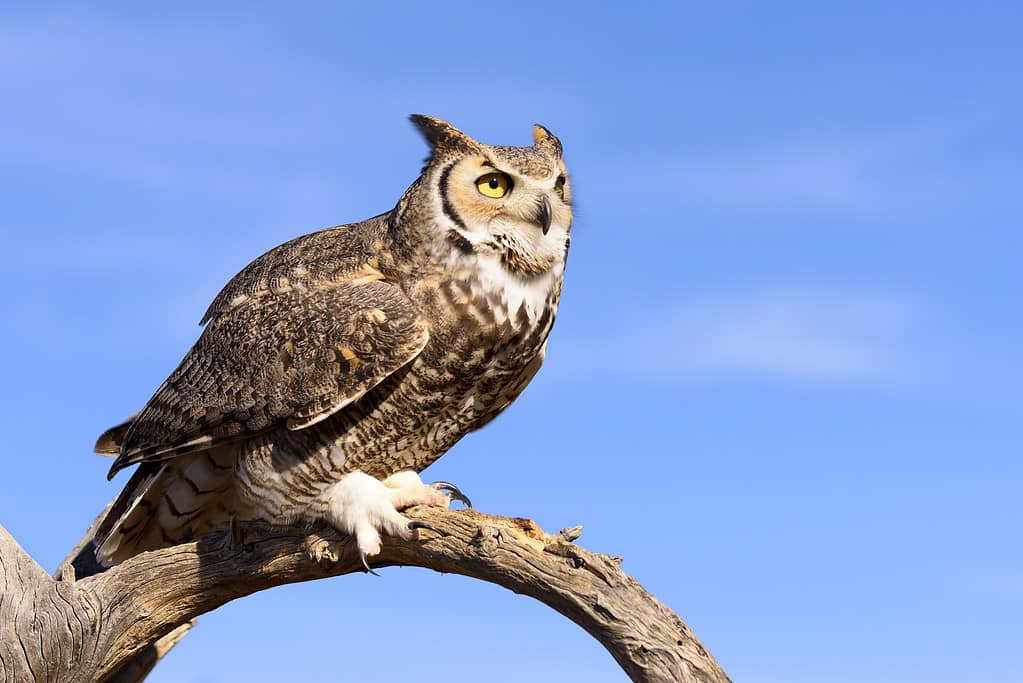
The great horned owl can be found in varying habitats across North America.
©kojihirano/iStock via Getty Images
How To Find Owls
To do some owling, you first need to research the owl species you are interested in finding. Where is the owl’s usual habitat? If you’re looking for an Eastern screech owl, you may want to head to a forested area. However, the great horned owl is often at home in residential neighborhoods. Lott explains, “Owl habitats depend on the species. For example, snowy owls can be found in open areas like fields. Some species can be seen in more suburban areas nowadays since much of the owl’s natural habitat has been modified by people.”
Next, you need to know the owl’s seasonal habits. Your best chance of spotting your favorite owl species is during its nesting season. Lott says, “Owls are seen and heard more around nesting season when they are either finding a mate or strengthening the bonds with a mate they already have.” But nesting season is not the same for every species. Lott explains, “Nesting season varies by species and region. For example, great horned owls begin nesting in late winter. In Florida, barn owls can nest all year.” A benefit of owling during winter is that there are fewer leaves on the trees, making it easier to see the owls.
How Can People Enjoy Owling in Ways That Support Conservation Efforts?
Beyond observing owls in nature, how can we help these beautiful birds? Lott tells us, “When dead trees don’t pose a threat, people can leave them up to allow cavity nesters like screech owls and barred owls to use them. People can also install owl boxes made for specific cavity nesting owl species that will give them a home when natural cavities are lacking in the environment. People can also participate in community science efforts like the Audubon Christmas Bird Count and help provide conservation data about owls and other birds in their area.”
How Did Audubon’s Christmas Bird Count Get Its Start?
The Audubon’s Christmas Bird Count is held every year from December 14th to January 5th. It began on Christmas Day in 1900, when ornithologist Frank M. Chapman, in response to a popular activity of the day known as the Christmas “Side Hunt.” Rather than compete to see how many birds they could kill, naturalists counted the birds they observed in the field.
Watch Out for Baby Owls While Owling
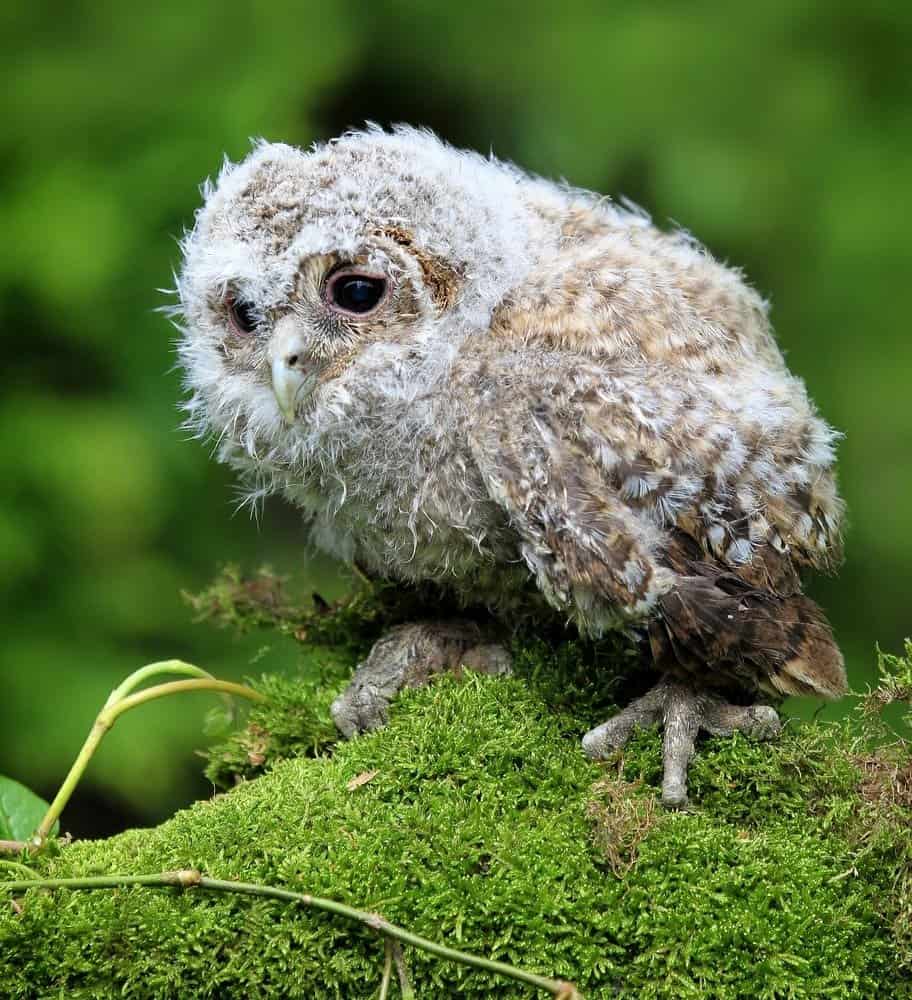
Whether or not an owlet will need help depends on its age and species. Contact a wildlife rehabilitator if you’re unsure. This tawny owl fledgling appears healthy and could probably be left alone.
©Mark Caunt/Shutterstock.com
When you are out searching for owls during owling season, you may find a baby in need of help. Lott says, “Baby owls, called owlets, that hatch during nesting season will sometimes fall out of their nests for a variety of reasons. Many of these youngsters are not injured when they fall out and can be safely put back into their nests to continue to be raised by their parents.”
Some warn that touching a baby bird will result in the parents abandoning the baby, along with the nest. Lott helps dispel this particularly prevalent myth, saying, “Did you know that touching a baby owl won’t stop the adults from taking care of it? If you find a baby owl, contact a wildlife rehabilitator to help get the baby back.”
When dead trees don’t pose a threat, people can leave them up to allow cavity nesters like screech owls and barred owls to use them. People can also install owl boxes made for specific cavity nesting owl species that will give them a home when natural cavities are lacking in the environment.
Beth Lott, Raptor Specialist at the Audubon Center for Birds of Prey
Owls of North America
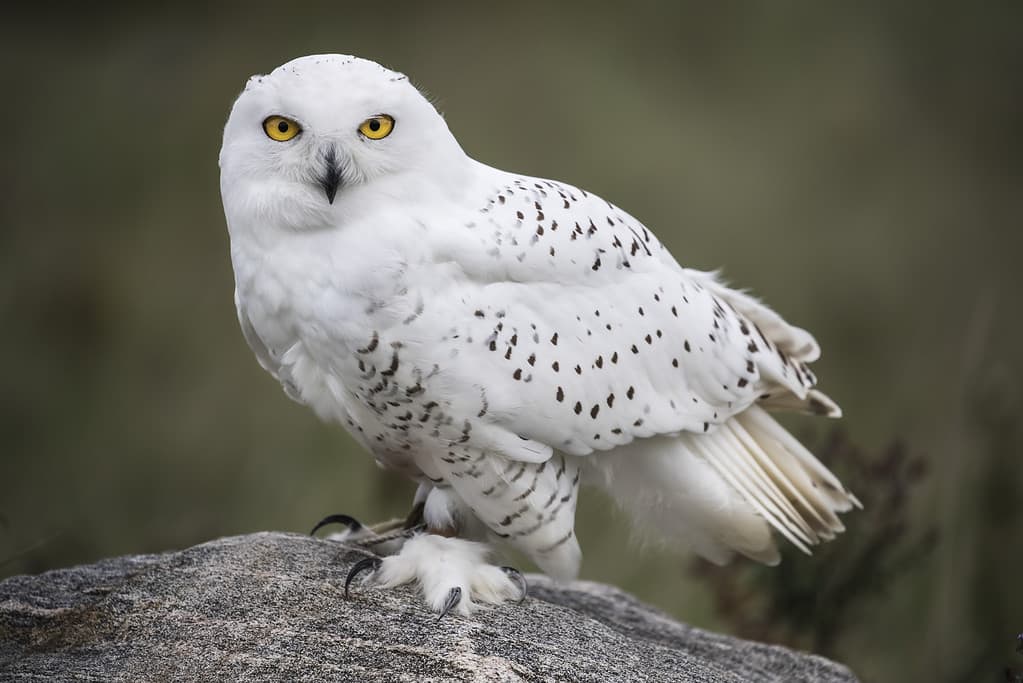
You don’t have to wait for dusk to look for snowy owls. They are active during both day and night.
©Carol Gray/iStock via Getty Images
There are about 19 species of owls living in North America. We’ve categorized by region the most common owls you are likely to find while owling. But remember, each species has its own nesting season, during which it’s more vocal and easier to locate.
Eastern U.S. and Southeastern Canada
- Great Horned Owl
- Eastern Screech-Owl
- Barred Owl
- Barn Owl
- Short-eared Owl
- Northern Saw-whet Owl
Western U.S. and Western Canada
- Great Horned Owl
- Western Screech-Owl
- Barn Owl
- Northern Pygmy-Owl
- Long-eared Owl
- Short-eared Owl
Pacific Northwest
- Barred Owl
- Great Horned Owl
- Western Screech-Owl
- Northern Saw-whet Owl
- Northern Spotted Owl
Southwest
- Great Horned Owl
- Western Screech-Owl
- Elf Owl
- Burrowing Owl
- Barn Owl
Great Plains/Midwest
- Great Horned Owl
- Eastern Screech-Owl
- Barn Owl
- Short-eared Owl
- Long-eared Owl
Northern U.S. and Canada
- Great Gray Owl
- Snowy Owl
- Boreal Owl
- Northern Hawk Owl
- Great Horned Owl