
If you want an easy-to-grow houseplant, a philodendron should be at the top of your list of options. These green leafy plants don’t require a lot of maintenance and care other than periodic watering and the right amount of sunlight. There are a lot of species within the Philodendron genus so you can find one that suits your style and will be an excellent addition to your plant family. Fortunately, the care tips for philodendrons apply pretty much across the entire group of plants.
What Is a Philodendron White Knight?

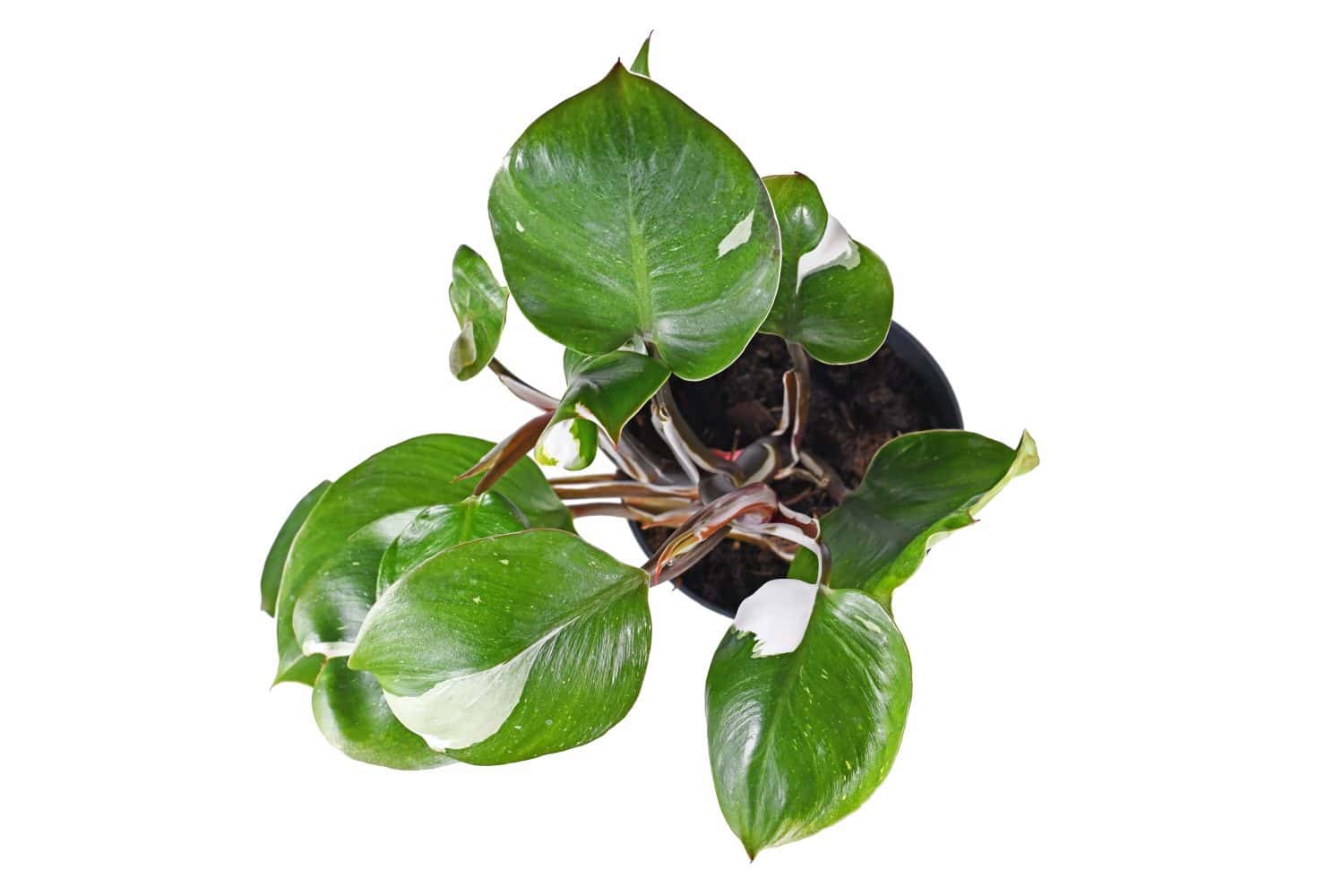
The amount of variegation on the leaves of a White Knight philodendron can vary from leaf to leaf, even on the same plant.
©Firn/Shutterstock.com
A White Knight philodendron is a variety with white and green variegated leaves. Like other philodendrons, it is a climbing plant and has long stems and leaves. The white and green foliage gives it a unique appearance that many people like to add visual interest to their plant displays. It is also easy to grow, just like other philodendrons.
There are a lot of varieties of philodendrons. Some are solid green, while others have variegated leaves or other coloring on their stems. When deciding on the right houseplant, even among philodendrons, you can consider varieties with a lot of color and large leaves, such as the Golden Goddess or Thai Sunrise. Compared to these two options, White Knights have more striking colors on their variegated leaves but may not have the same rich, shiny green coloring.
When they are young, White Knight philodendrons are great on a table or desk. As they grow, putting them in a pot on the floor and letting them grow vertically will generally result in larger leaves and more growth. They like to climb so providing opportunities for them to do this works well with the way that they naturally grow. You can even train it to grow on a trellis, pole, or wall with supports.
Each leaf on a White Knight philodendron is unique. Some are incredibly variegated and have large areas of green or white. Others have little variegation and are mostly green. Even in the same plant, the leaves can grow and develop very differently. Part of the fun of variegated plants is that each new leaf is a new surprise.
Ideal Soil for Philodendron White Knight
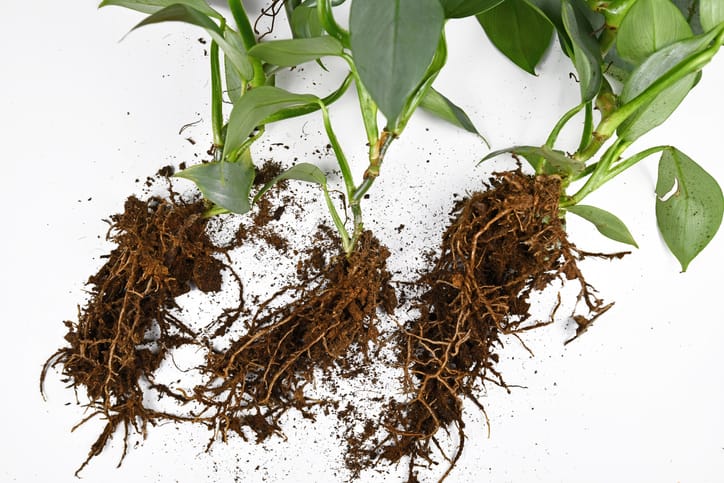
Make sure the roots have plenty of room to grow for every houseplant.
©Firn/iStock via Getty Images
Because they are indoor plants, you can easily control the soil for most philodendrons. They like tropical climates and don’t do well with cold or cool temperatures. You can start a young philodendron from a cutting in a small pot. Once it gets bigger, transplant it to a larger pot and keep it as a houseplant. Any standard houseplant soil will work for philodendrons. You can augment with fertilizer made for indoor plants as well, typically once or twice each year. If you add fertilizer in the late spring or early summer, the plant can use those extra nutrients to kick their growth into high gear during these months.
You should repot a White Knight philodendron when the roots start to press against the pot or extend through the drainage holes. Long roots are a sign of a healthy plant. In order to support these strong roots, make sure to give your plant a pot that is the right size.
Sun Needs of Philodendrons
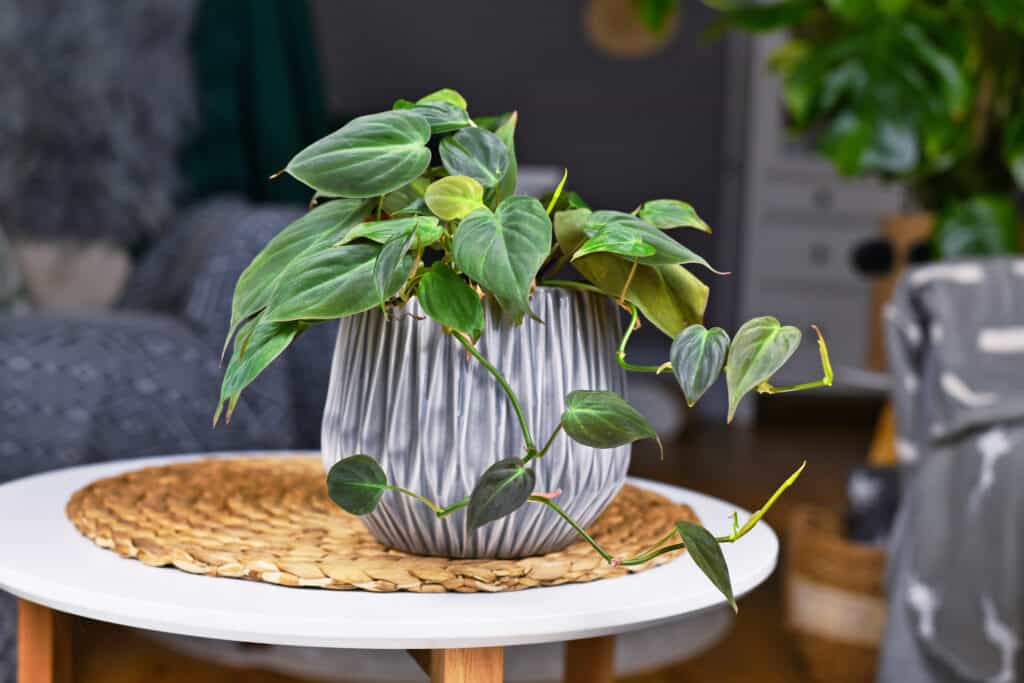
Philodendrons do best in filtered sunlight rather than direct light.
©iStock.com/Firn
One of the unique things about White Knight philodendrons and other variegated plants such as Pink Princess philodendrons is that they don’t have as many opportunities to convert sunlight to food as other plants do. This is due to the different amounts of chlorophyll in its leaves. The more variegated it is, the less chlorophyll it has. This means slower growth, although it isn’t a problem unless you are looking for a very fast-growing plant. Variegated plants can still be healthy but might grow slower than their all-green friends.
White Knight philodendrons need plenty of sunlight, similar to other varieties of philodendrons. Make sure that they are in a bright spot but not in direct, harsh sunlight. The white sections of their leaves can actually get sunburnt if they get too much direct sunlight. Instead, place them a couple of feet away from a window so that they get the light without being in the direct path. You can also use plant lights to augment if you don’t have access to a lot of sunlight.
Watering Tips for Philodendrons
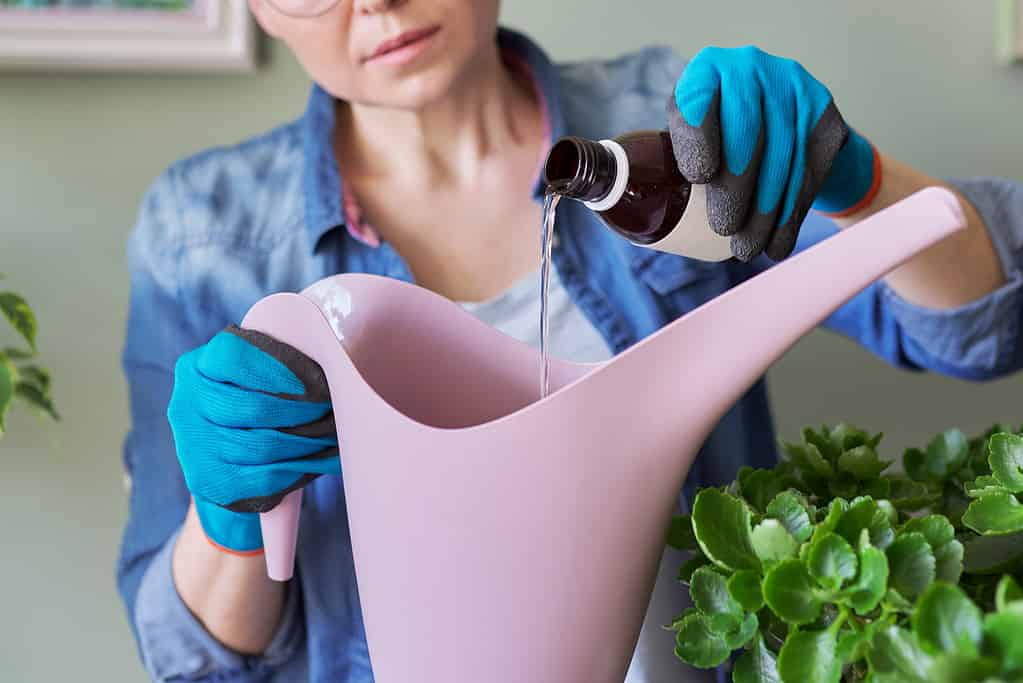
Philodendrons require weekly watering and you can add liquid fertilizers occasionally to provide extra nutrients to the soil.
©Valeriy_G/iStock via Getty Images
Typically, weekly watering is plenty for White Knight philodendrons. You might even be able to go longer between waterings, possibly up to a month, depending on the other environmental conditions. If the soil is dry, it’s time to water. But let the soil dry completely between watering sessions so that it doesn’t get too wet. Be careful not to overwater philodendrons. They are susceptible to root rot, which can occur if their roots sit in too much water or wet soil. In general, philodendrons prefer to be too dry than too wet.
They do like moisture in the air, however. As a tropical plant, philodendrons are used to higher humidity levels. This helps their leaves unfurl and develop correctly. If the air is too dry, you’ll probably see deformed or tightly formed leaves. This can be an indication that you need to adjust the humidity level in your home to keep your philodendron comfortable. An indoor humidifier can do the trick. You might even be able to set up a smaller unit near the philodendron, which can be cheaper and less intrusive to the rest of your plants’ varying needs.
How to Trim a Philodendron

Philodendrons do well as potted houseplants.
©Mid Tran Designer/Shutterstock.com
Pruning and trimming aren’t required to keep your White Knight philodendron healthy. But if you want to trim it back to make it work better in your space, just cut off any dead or withering parts of the plant with a sharp, clean pair of scissors or pruning shears. If you prune your philodendron often, you can shape it into a lower, bushy shape rather than a climber.
If you prune in the spring or summer when the plant is growing faster, you’ll see more noticeable results for your efforts. This is a great step to take if the plant is growing in too many directions. Pruning during the active growing season will encourage the plant to grow in the direction that you want. This can also help ensure that all parts of the plant are getting the sunlight, water, and nutrients that they need to stay healthy.
Keeping Your Plant Free from Pests
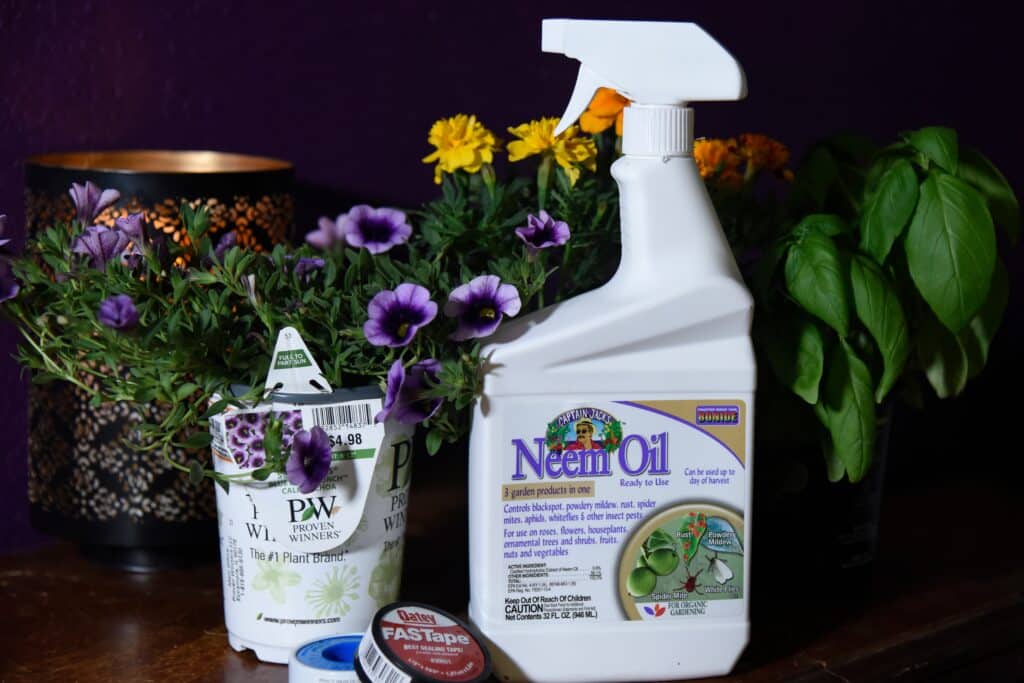
Neem oil spray is easy to make and can also be bought commercially from a number of retailers.
©Wild As Light/Shutterstock.com
White Knight philodendrons aren’t prone to suffering from many pests but some, like spider mites and scale insects, can infect houseplants in general. You can treat signs of any type of infestation, including webs or noticeable damage, with neem oil. This isn’t harmful to the plant if there isn’t an infestation but is good for preventing issues from pests.
Caring for Pets and Philodendrons
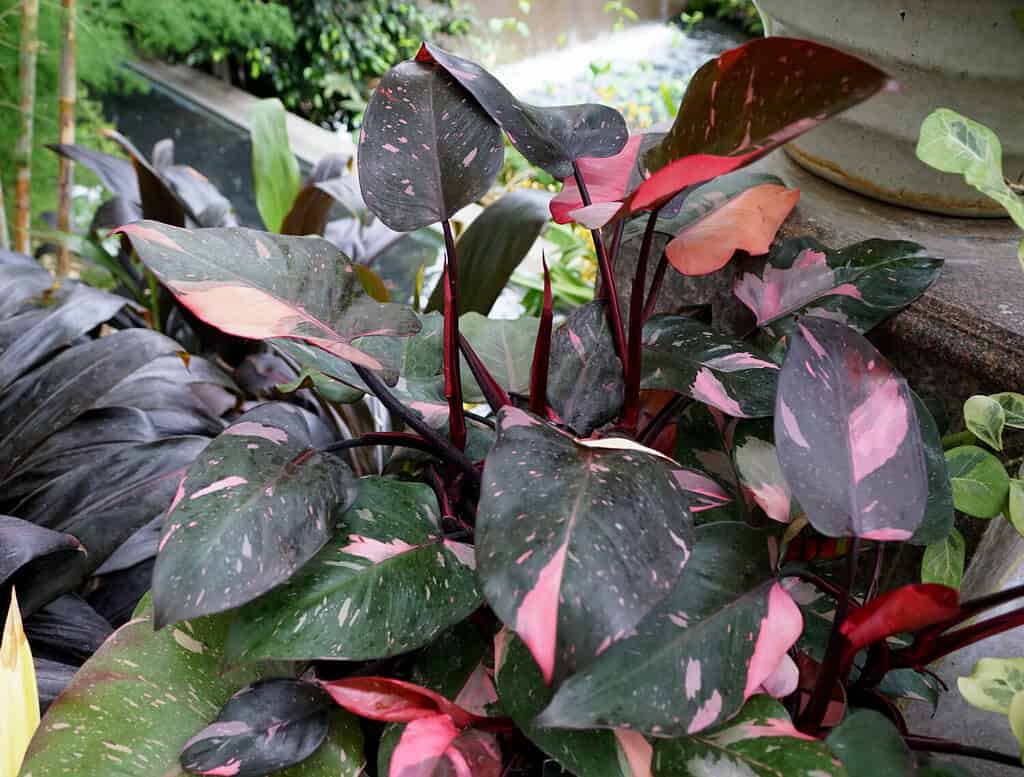
Philodendrons are very easy to care for tropical plants but should be kept out of reach of pets because they are toxic.
©Khairil Azhar Junos/Shutterstock.com
One important tip for pet owners wanting to get a White Knight philodendron is to keep the plants out of reach of your cat or dog. All philodendrons have calcium oxalate crystals that will cause mild to medium irritation and are toxic for pets (and humans if you decide to try eating your plant, which we don’t recommend). It may or may not be fatal, depending on the amount that your pet consumes, their size, and their overall health. Rather than take the risk, it’s best to keep your houseplant out of reach. Keep in mind that some pets can jump onto tables or windowsills, possibly knocking plants onto the floor where other pets can get to them. Taking steps to keep your plants and pets separated will ensure that they can all be healthy and safe.