
Quick Take
- Cockatoos have outsmarted every human attempt to keep them out of garbage cans, and the method they use reveals something unexpected about bird cognition. See their urban tricks →
- Intelligence alone isn't enough for a bird to survive in a city. There's a missing ingredient that scientists only recently started studying. Discover the missing ingredient →
- A cockatoo named Watermelon is teaching researchers something about animal culture that no lab experiment could replicate. Meet Watermelon the cockatoo →
- Australian cities are uniquely positioned to let scientists watch animal culture evolve in real time. Explore Australia's living lab →
Groundbreaking studies of sulfur-crested cockatoos in Australian cities reveal they are more than just intelligent birds. They can also pass on their knowledge and skills through what can only be described as ‘culture’. Here’s what scientists are discovering about these remarkable birds.
The Cockatoos of Eastern Australia
Sulphur-crested cockatoos (Cacatua galerita) are members of the parrot family, one of the most intelligent animal families on the planet. We know that parrots can learn new sounds, including human words. These cockatoos have large and well-developed brains that are around the same size as that of a capuchin monkey. Their brains are three times heavier and contain the same number of neurons as a macaque brain.
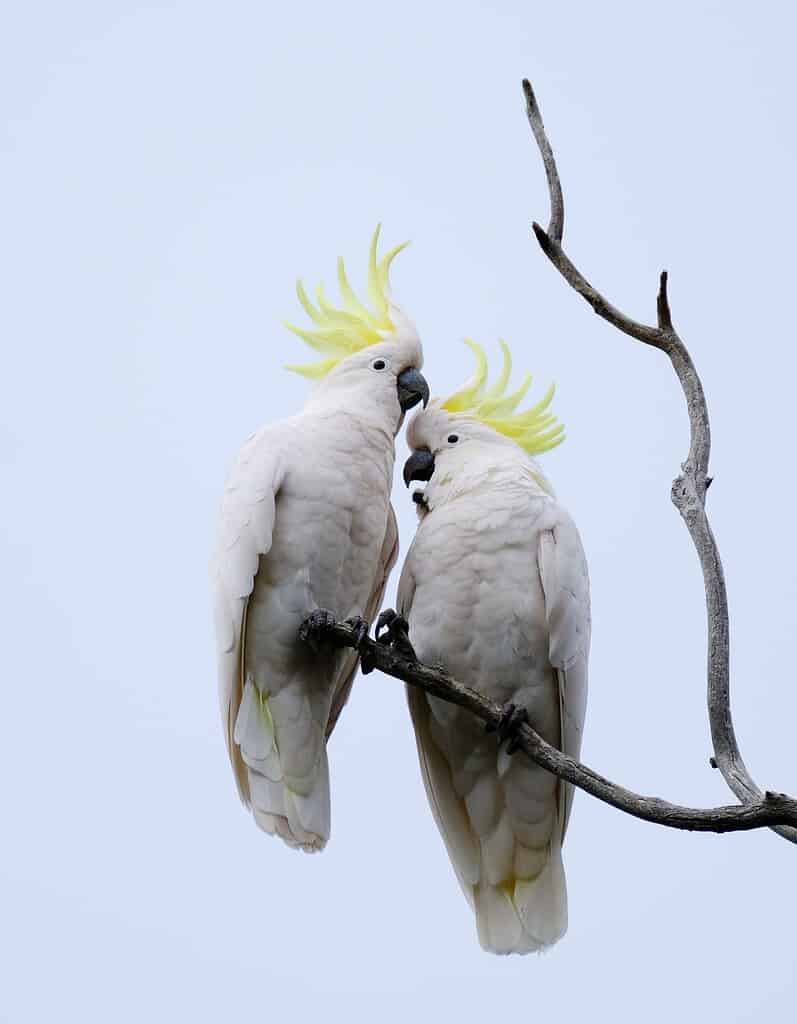
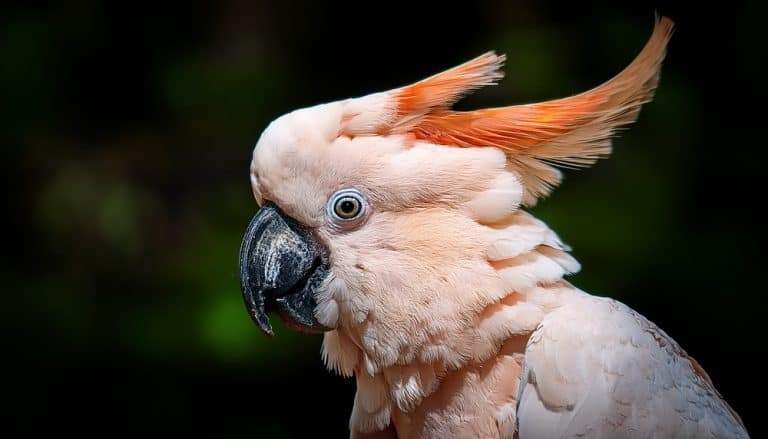
Sulphur-crested cockatoos are intelligent birds.
©Wirestock Creators/Shutterstock.com
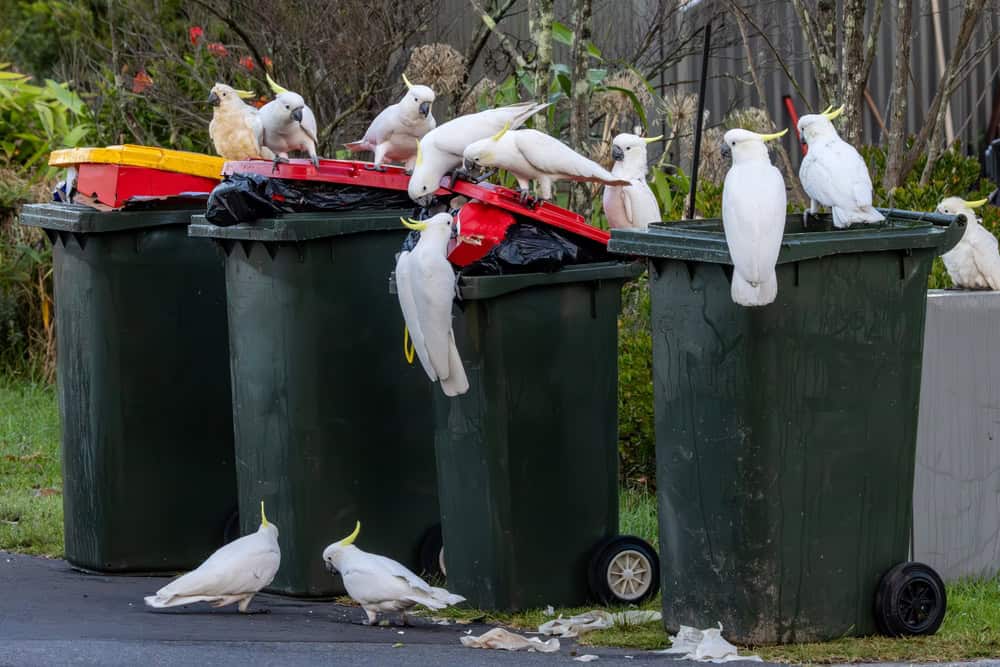
This allows the birds to process information quickly, and they have put their intelligence to good use. Although the residents of western Sydney may not agree. In this area, the birds have learned to twist the handles of drinking fountains with their beaks and claws so that they can get some water. They can also lift the lids off municipal garbage cans to get at the food inside. Their natural diet is seeds, nuts, fruits, roots, and bulbs, but in an urban environment they are happy to switch to human leftovers.
Even when residents try to deter the cockatoos by weighing down the garbage can lids or jamming the hinges, the birds found workaround solutions. Unfortunately, the result is that refuse is scattered all over the ground. But you can’t help but admire their ingenuity!
Why Birds Need More Than Intelligence
The intelligence of cockatoos is no surprise to the scientific community, but the way in which they pass knowledge to other cockatoos is a new area of research. The concept of social learning in cockatoos in Australia is being studied in depth. Previous studies have shown that they learn by watching other cockatoos. This has allowed the birds to learn about new food sources and how to access them. Cockatoos move between roosting communities and clearly take their new knowledge with them.
So, for knowledge to spread, the birds need intelligence, behavioral flexibility, and social networks. In early summer 2026, a team of evolutionary biologists visited Sydney, Australia, to study social learning within the sulfur-crested cockatoo communities in the city.
Studying Cockatoos in Sydney
One group of cockatoos being studied lives at the Royal Botanic Garden near the Sydney Opera House. The researchers have devised a series of tests to assess their motor and cognitive skills. Each of the birds is identified using dabs of paint, feather samples, and lightweight GPS transmitters. Many of the birds have been given names. One is called Watermelon.

Cockatoos live at the Royal Botanic Garden near the Sydney Opera House.
©Lithuaniakid/Shutterstock.com
Most cockatoos are naturally curious creatures and aren’t afraid of people, but Watermelon is especially trusting. He often visits people’s balconies. Watermelon has learned how to open up a compartment in an octagonal plexiglass container to get an almond. He quickly learnt how to pull a lever to get at a nut too. After a bit of trial and error, he even learnt how to twist the bottom of a compartment to release a nut.
The researchers also used video recordings to analyze the technique the birds used to get into garbage cans. Getting at the refuse is physically and cognitively demanding. The birds have to go through several steps to be successful. And yet they manage!
The Importance of Social Networks
Cockatoos are social animals and live in groups. During their lives, the birds interact with thousands of other members of their own species. This allows beneficial behavior to be observed and passed on.
In general, animals did not evolve in urban settings because they did not exist until relatively recently! So, learning about food sources in these environments is a challenge. What’s more, there are risks associated with some of these new (novel) food sources. Accessing them may make an animal vulnerable to predators, or the food itself could be toxic. If an animal sees another of their species eating it successfully, however, it opens up a safe food source for them. So, for example, if a cockatoo sees another cockatoo successfully accessing and eating human garbage, this opens up a whole new foraging opportunity. This is social learning, and it turns out the cockatoos are very good at it!
Scientists define social learning as “learning through the observation of, or interaction with, other individuals or their product”. By relying on the previous experience of other cockatoos, the birds can avoid potential risks of individual learning.
Finally, these Australian cities are great places to investigate this behavior. The cities are young (only around 240 years old), and cockatoos live to be around 50 to 60 years old. This means that only a few generations of birds have lived in this urban environment, so we can study in real time how they are adapting to their surroundings.