
Quick Take
- Thousands of olive ridley sea turtles synchronize their arrival within a few days to nest on Odisha’s beaches.
- These turtles utilize natal homing to return to the same beaches every year.
- The success of the nesting event is threatened by habitat loss and illegal poaching.
One of the most remarkable events in the world is the annual mass nesting event on the coast of Odisha, India, where thousands of sea turtles come ashore every year to nest on the sandy beaches. This mass event is one of the largest reproductive gatherings in the world and is also vitally important for the survival of the next generation of sea turtles. Keep reading to discover why this event happens and which species are involved.
Which Turtles Are Involved?
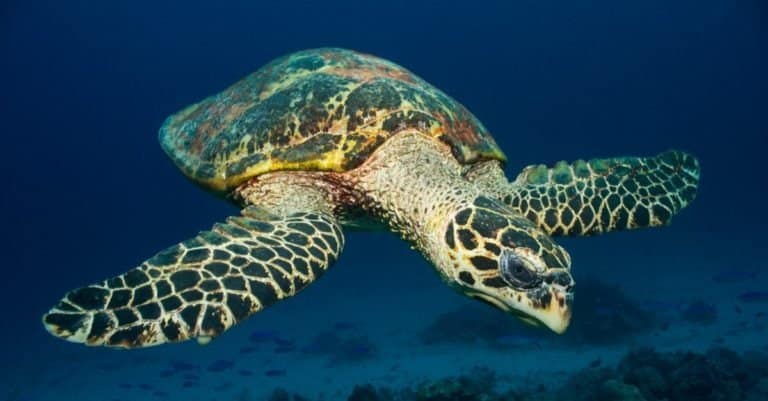
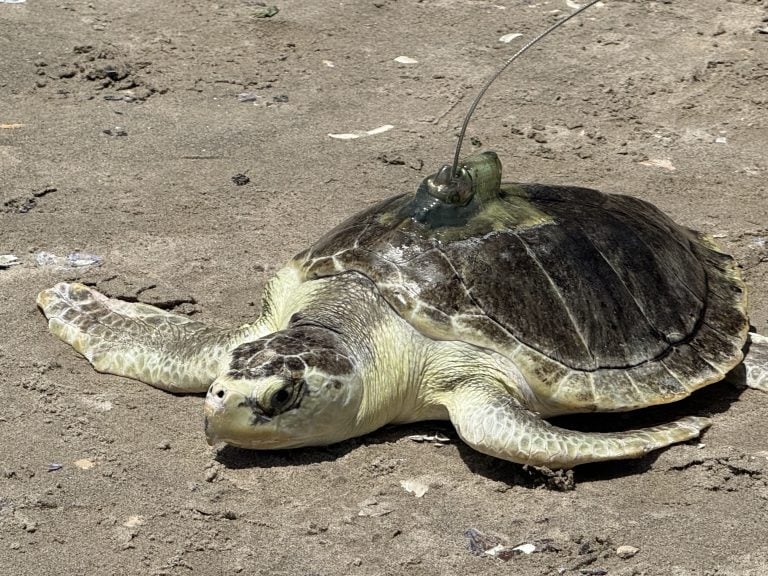
The turtles involved in this extraordinary event are olive ridley sea turtles (Lepidochelys olivacea). Olive ridley sea turtles are olive green and have a distinctive heart-shaped carapace. They are the second smallest species, reaching approximately two to 2.5 feet in length—just marginally larger than Kemp’s ridley sea turtles.
Olive ridley sea turtles inhabit warm, tropical waters worldwide and are the most abundant sea turtle species. However, they are still classified as a vulnerable species. Their population is declining due to threats such as bycatch, loss of nesting sites, and egg harvesting.

Olive ridley sea turtles return to the same beaches every year to nest.
©Daniel Alvarado Calderon/iStock via Getty Images
Olive ridley sea turtles spend most of their lives at sea, but females return to land every year to nest. They are known for their unique nesting behavior, and these mass nesting events are known as an arribada, which is Spanish for “arrival.” During an arribada, thousands of olive ridley sea turtles come ashore over just a few days to nest side by side on the beaches above the high tide line. This unique event is believed to be a survival strategy to overwhelm predators. By doing this, more eggs have a chance to hatch, and the hatchlings have a greater chance of survival.
Why Thousands Nest on Odisha’s Coast
Every year, thousands of sea turtles arrive in Odisha specifically to nest there. These nesting sites have been used for generations, and the reason that the turtles keep coming back year after year is that they provide the perfect conditions for them to successfully reproduce. Odisha offers plenty of sandy beaches with gently sloping shorelines. These are easy for the turtles to access, and the loose sand is perfect for nesting. Additionally, the mild currents in the area help guide the turtles to the beaches by bringing them closer to the coast.
Gahirmatha, Rushikulya, and the Devi River mouth are the three main nesting sites in Odisha. They are particularly favorable locations due to the conditions that they provide. Gahirmatha is regarded as the most important olive ridley nesting site in the world and was first recorded as a mass nesting location in 1974. It is also the only designated marine wildlife sanctuary in Odisha, established in 1997.
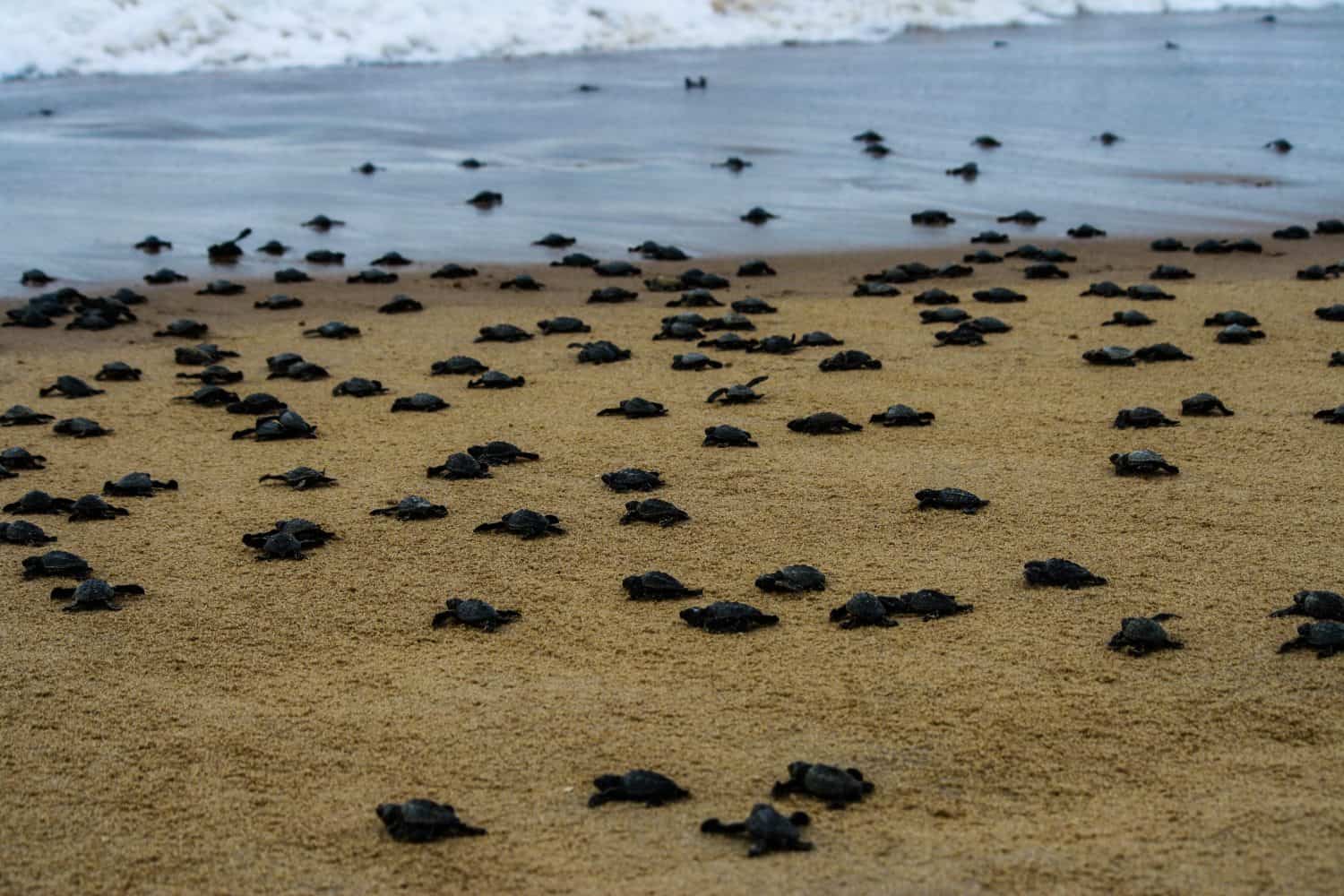
Sea turtles use natal homing to remember the location of their birth.
©EKTA CHAURASIA/Shutterstock.com
There’s another reason that olive ridley sea turtles return to the same locations every year – an instinct known as “natal homing.” Natal homing is a behavior that leads to turtles returning to the same place where they hatched to lay their own eggs.
This behavior involves both chemical and magnetic cues that guide the turtles. Evidence suggests that sea turtles can sense the Earth’s magnetic field, using its angle and intensity to determine the latitude and longitude of locations they have ‘mapped’ using this method. Hatchlings also use a combination of scents, sounds, ocean currents, and the magnetic field to remember the location of their natal beach.
When Does Nesting Happen?
Olive ridley sea turtles typically nest on Odisha’s coast between late January and March. During an arribada, thousands of sea turtles come ashore to lay their eggs. The exact numbers are impossible to determine; however, estimates for the 2025 nesting season in Odisha put the figures at around 600,000 to 700,000 turtles. Once they arrive, the beaches are quickly teeming with females as they start to create their nests.
Olive ridleys lay between 100 and 110 eggs per clutch, and they can lay up to three clutches per season. The eggs are laid in the warm sand and hatch after approximately 45 to 65 days. After laying her eggs, the female covers them with sand and returns to the sea, leaving the eggs to incubate on their own.
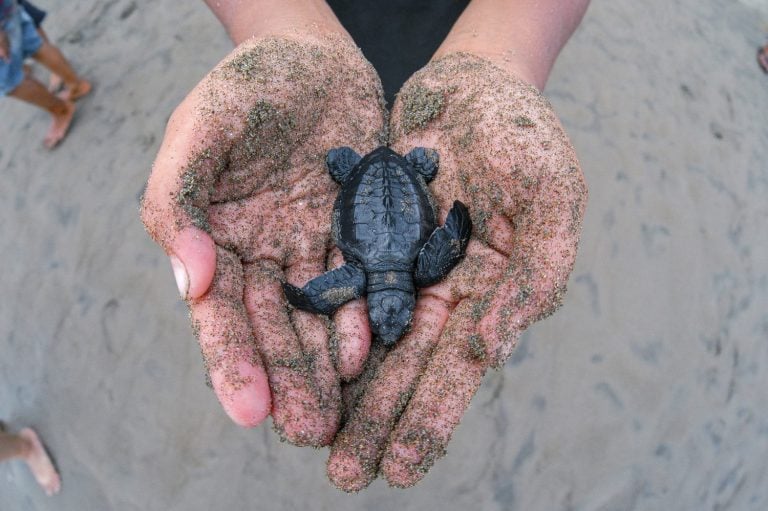
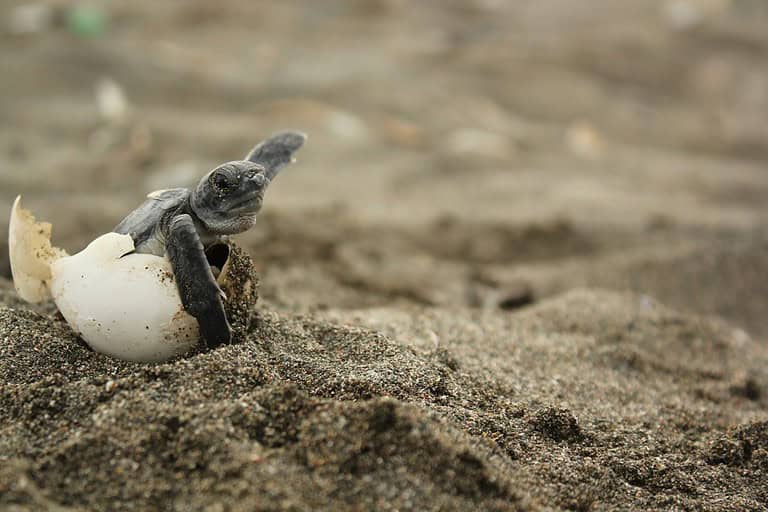
The eggs incubate in the sand, and the sand’s temperature is critical for the development of the hatchlings. Remarkably, the temperature of the nest determines the sex of the hatchlings. Temperatures between 88 and 90°F produce females, while cooler temperatures below 82°F typically produce all males. Hatchlings are approximately two to three inches long and head straight to the sea after emerging from the nest.

Olive ridley turtles lay their eggs in the loose sand on the beaches.
©Scupix/Shutterstock.com
Why Do Nesting Beaches Need Protection?
Although mass nesting offers some protection against predators, it is not without risks. One of the biggest threats to olive ridley turtles is entanglement in fishing nets around the coast, with both gillnets and trawl nets causing issues. However, even if the turtles make it ashore, there is also the risk of illegal poaching of their eggs. Additionally, habitat loss is a factor, resulting from both natural degradation of the beaches and human activities such as the growing tourist industry.
Thankfully, measures are in place in Odisha to counter the risk to the turtles. The areas around several of the beaches are designated no-fishing zones during the nesting season. Also, the use of Turtle Excluder Devices (TEDs) is mandatory in fishing trawlers so that the turtles can escape the nets.
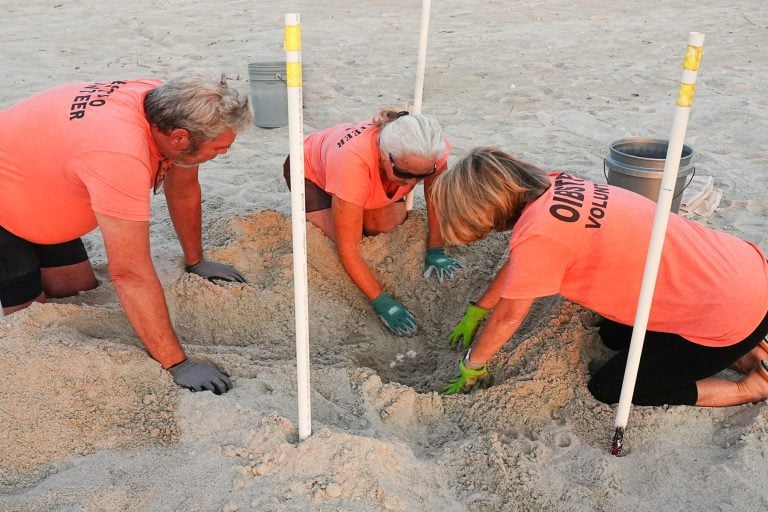
The Indian Coast Guard also runs “Operation Olivia” annually from November to May, which includes patrols and surveillance of the beaches by both water and air. Additional patrols are carried out by forest officials and volunteers who monitor the beaches and ensure that humans do not encroach on the nesting sites. These measures are used alongside programs that monitor the hatching success of eggs to ensure the continued success of Odisha’s arribadas.