Quick Take
- This buck isn't losing his antlers, and what he's really doing to that tree sends a message.
- Size decides who gets the most mates, but bigger isn't the only way to win.
- When bellowing fails to settle a dispute, things turn physical in a surprising way.
- A medieval park and 350 deer: the setting has a backstory worth knowing.
Why does this buck look like it’s fighting a tree? A video from Knole Park, located in Sevenoaks, Kent, England, shows a male deer repeatedly jumping at low-hanging branches as he aggressively shakes his antlers. This is a fallow deer in the middle of rutting season. His seemingly odd behavior is fairly normal during the deer rut, which occurs in the fall.
Why Is This Buck Thrashing His Antlers Against a Tree?
The deer in the video is a male fallow deer (Dama dama) living in Knole’s parkland. While it may appear the buck is attempting to shed his antlers, what he’s really doing is quite different: issuing a formidable territorial display.
Knole’s deer park dates back to medieval times, when Archbishop Bourchie fenced off the area to allow deer hunting. Today, the park is a Site of Special Scientific Interest (SSSI) and is home to a herd of around 350 fallow and sika deer (Cervus nippon).
How Fallow Deer Compete During the Rut
Each autumn, visitors to the park can witness the exciting behavior of the bucks during the deer rut. This is breeding season when testosterone levels rise in the male deer. The males establish and defend a small territory known as a rutting stand where they mate with females.
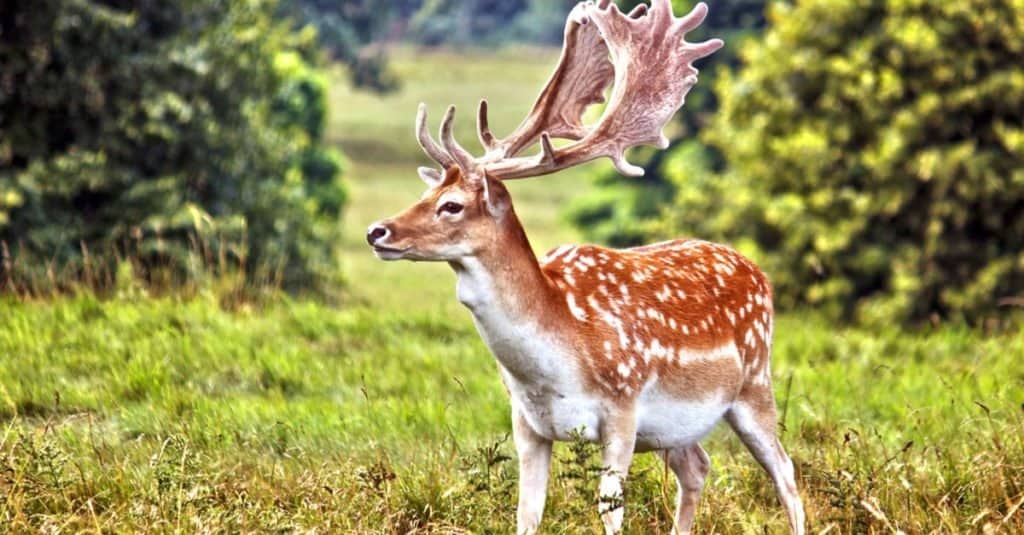
Fallow deer are known for their impressive palmate antlers.
©Neil Clarke/Shutterstock.com
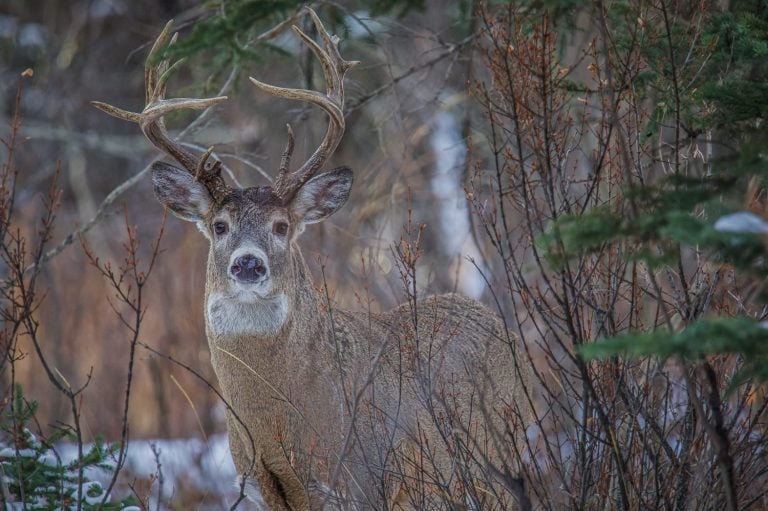
The stag in the video is likely marking his rutting stand by thrashing vegetation and rubbing trees with his antlers. They may also paw the ground to create scrapes. By doing this, the males advertise their presence and readiness to mate with females. Typically, the larger the stag, the more females he will have in his harem.
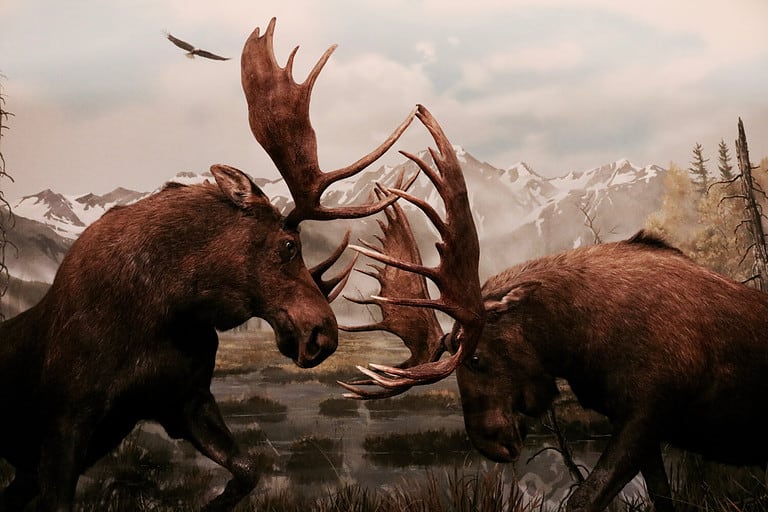
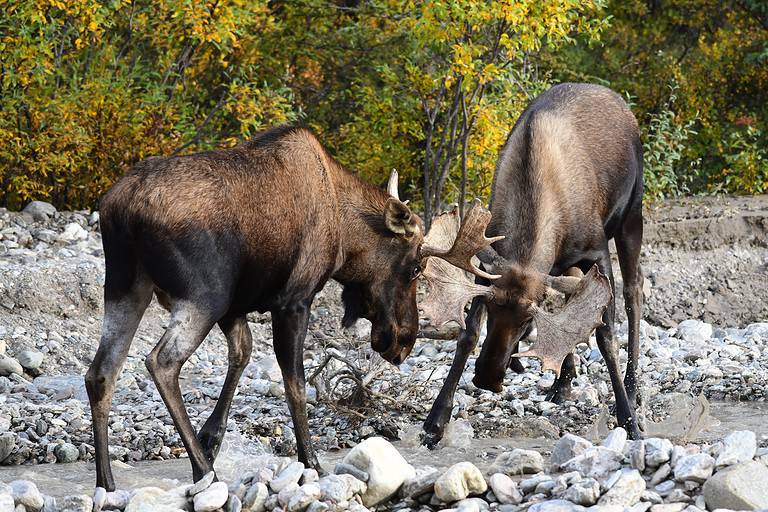
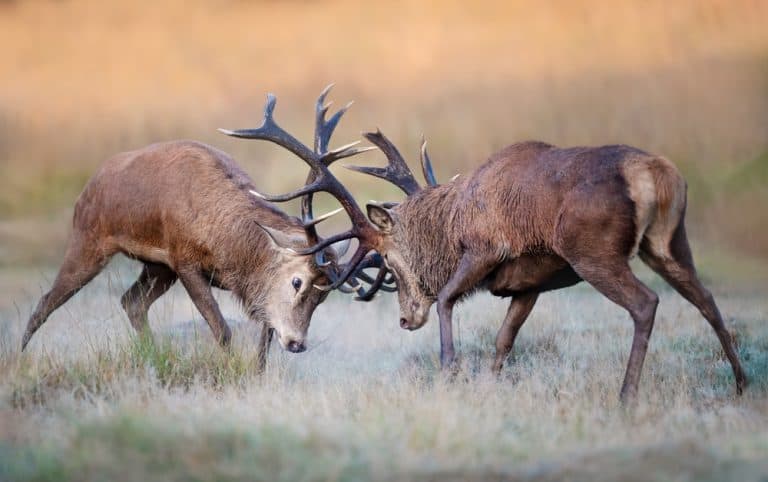
Visitors may also hear the males groaning and bellowing challenges to each other. If neither back down, it may turn into a physical match where the deer fight by locking antlers.
Fallow Deer Have Some of the Most Distinctive Antlers
The other deer species at Knole Park, the sika deer, also engages in rutting behavior. However, male fallow deer can be identified by their broad palmate antlers. Bucks shed their antlers each spring and grow new ones over the summer. By the fall, the antlers have grown large into the distinctive flattened, shovel-shaped antlers known as palmate.
Dominant males have better opportunities to mate with more females. Smaller or younger stags may try to mate with does that are on the fringes of the group, or after a dominant buck has grown tired from combat.
What Happens After Mating Season?

Female fallow deer usually give birth to one fawn, which stay with their mother for about one year.
©gudfoto/Shutterstock.com
Once the rut ends, the males’ behavior calms down, and they no longer act as aggressively. Their large antlers remain attached through the winter, and the females give birth in the summer after a gestation of around 229 days.