
Quick Take
- The fluffiest, most innocent-looking caterpillar on this list is also the most toxic one in Pennsylvania, and it is spreading into new territory. Meet Pennsylvania's most toxic →
- These caterpillars don't need to bite you. Their venom delivery method is far more passive, and far harder to avoid. See passive venom delivery →
- A simple brush against one of these caterpillars can escalate well beyond a rash, with some reactions reaching a level most people would never associate with a bug this small. See the severe reactions →
- Of Pennsylvania's 2,000-plus caterpillar species, only a handful are dangerous, and knowing which ones are nearly impossible to tell apart by looks alone matters more than you'd think.
A caterpillar is the larval stage, or the immature form, of a butterfly or moth. It represents the second phase of a four-stage life cycle: egg, larva, pupa, and adult. During this stage, a caterpillar’s main role is to eat plant matter and grow quickly. It then enters the pupa stage, encasing itself in a chrysalis or a cocoon to undergo metamorphosis before emerging as an adult insect. Pennsylvania is home to over 2,000 varieties of caterpillars, and about 12 of those species are considered stinging or toxic. Here is a look at six of the ones you are most likely to encounter.
Spiny Oak Slug Caterpillar
The spiny oak slug caterpillar (Euclea delphinii) is one of Pennsylvania’s venomous caterpillars. These caterpillars mature into spiny oak slug moths. They are toxic caterpillars covered in hollow, venomous spines called setae. Rather than injecting venom through a bite, they defend themselves passively when they are touched.
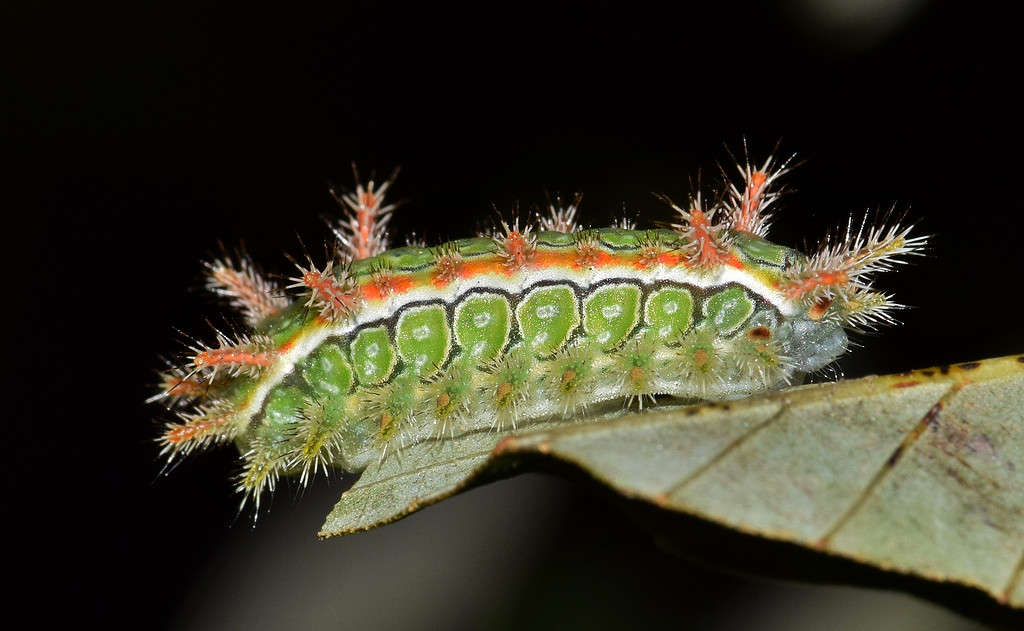
Spiny oak slug caterpillars are covered in venomous spines.
©Brett_Hondow/iStock via Getty Images
When a person or predator brushes against a spiny oak slug caterpillar, the sharp tips of these spines pierce the victim’s skin, the very tips of which often snap off inside the wound. Once embedded, these detachable urticating hairs cause an itchy or burning sensation and inflammation at the point of contact. These caterpillars, which are between 0.5 and 0.75 inches long, feed on a wide range of deciduous trees and shrubs.
Buck Moth Caterpillar
The venom of the buck moth caterpillar (Hemileuca maia) is delivered through hollow spines or hairs, called setae, similar to those of the spiny oak slug caterpillar. However, the setae of the buck moth caterpillar are engineered to break away from the caterpillar. Contact with these spiny hairs causes an immediate burning sensation, followed by inflammation or blistering, which is not long-lasting. Allergic individuals can experience more severe reactions, including respiratory problems, migraines, shock, gastrointestinal disorders, and hemorrhaging.
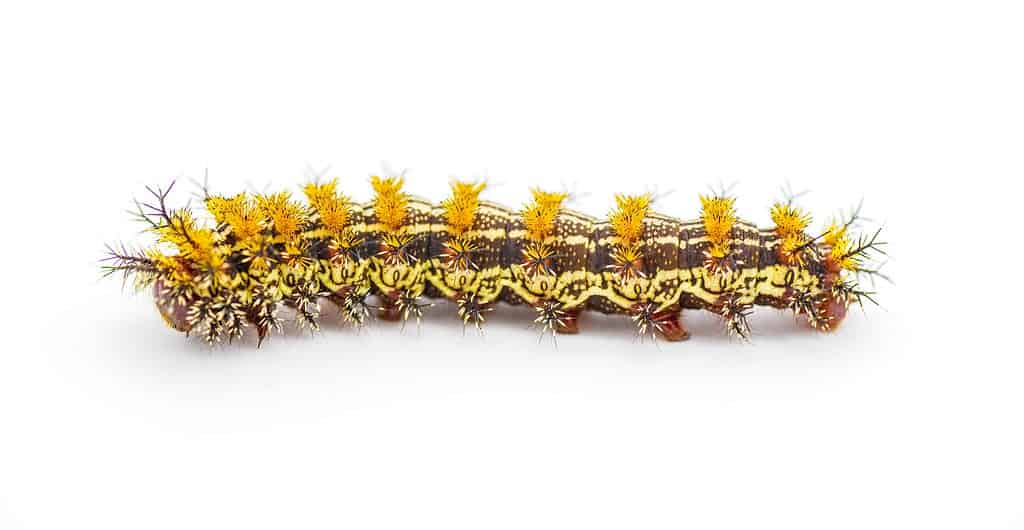
The buck moth caterpillar is covered in spiny hairs that are designed to break off.
©Chase D'animulls/Shutterstock.com
Buck moth caterpillar larvae are around 0.15 inches long in their first instar, but will be 2.5 inches once fully grown. They commonly feed on vegetation like scrub oak.
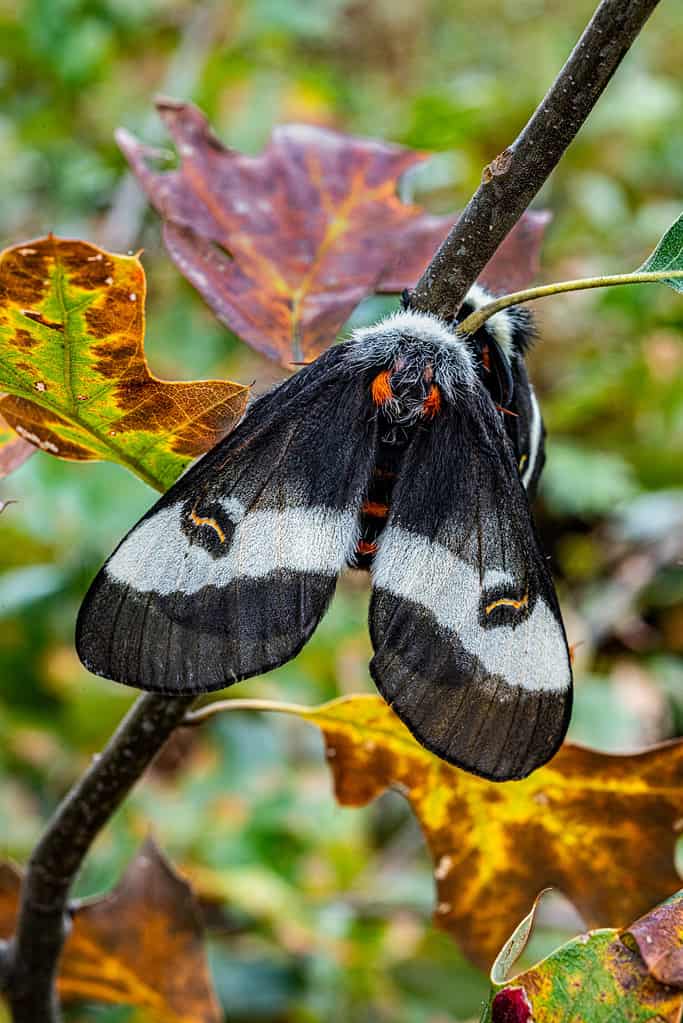
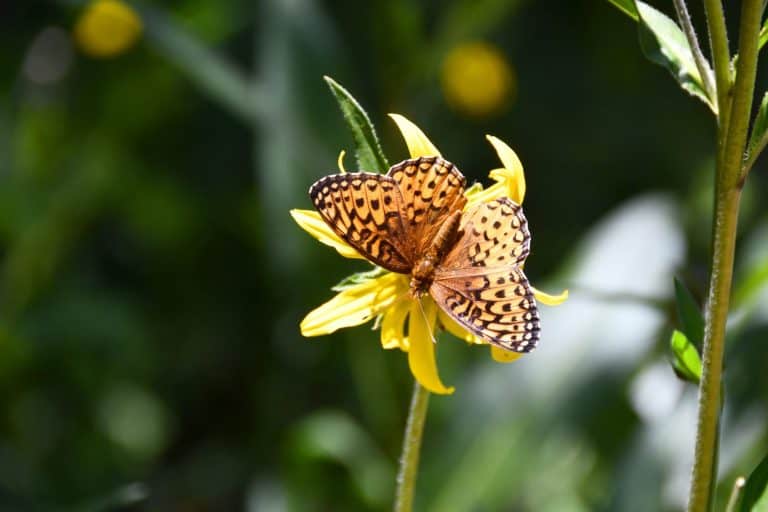
The buck moth caterpillar will transform into a buck moth.
©Alan B. Schroeder/Shutterstock.com
Hickory Tussock Caterpillar
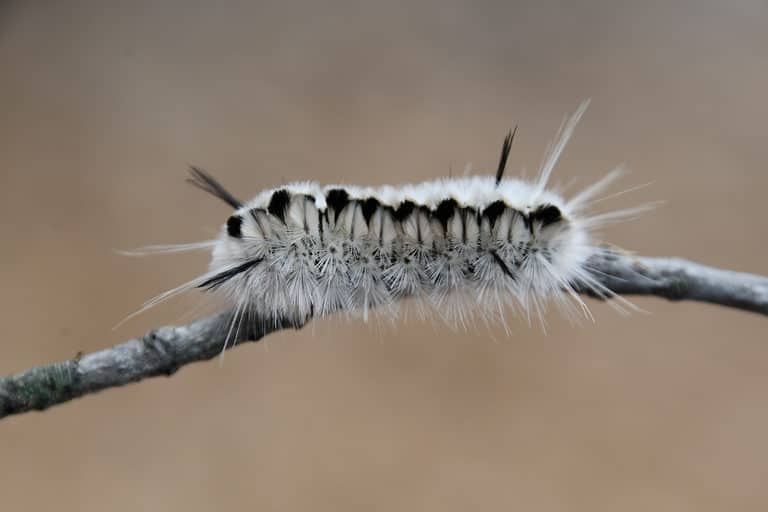
The hickory tussock caterpillar (Lophocampa caryae) is a venomous caterpillar found in Pennsylvania’s suburban areas and deciduous woods. Like other toxic caterpillars, the hickory tussock caterpillar is covered in microscopic, needle-like hairs that are barbed, and easily break off and embed themselves in skin upon contact. This causes a rash, burning, pain, swelling, and nausea. These larvae start out tiny, barely measuring 0.05 inches long, but they will be 2 inches long when fully grown. Hickory tussock caterpillars feed on walnut, hickory, oak, apple, and willow trees, as well as garden plants and shrubs.
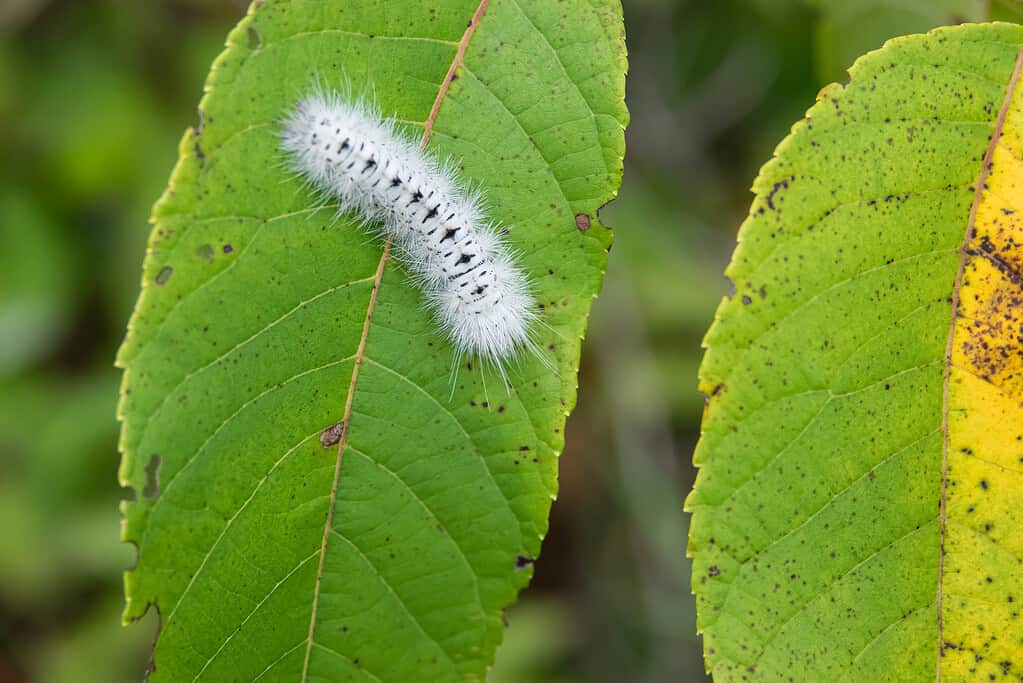
Hickory tussock moth (Lophocampa caryae) caterpillar on leaf in summer.
©ErikAgar/iStock via Getty Images
Monkey Slug
While the monkey slug caterpillar (Phobetron pithecium) possesses venomous, detachable spines that can release toxins on contact, reactions are usually limited to mild localized irritation. Hatchlings measure 0.15 inches in length, but will grow to around 2.5 inches long before they pupate.Monkey slugs feed on a variety of plants and trees, including blackberry, alder, cherry, hickory, hackberry, pear, maple, and wisteria. These caterpillars are primarily found in deciduous woodlands and suburban areas.
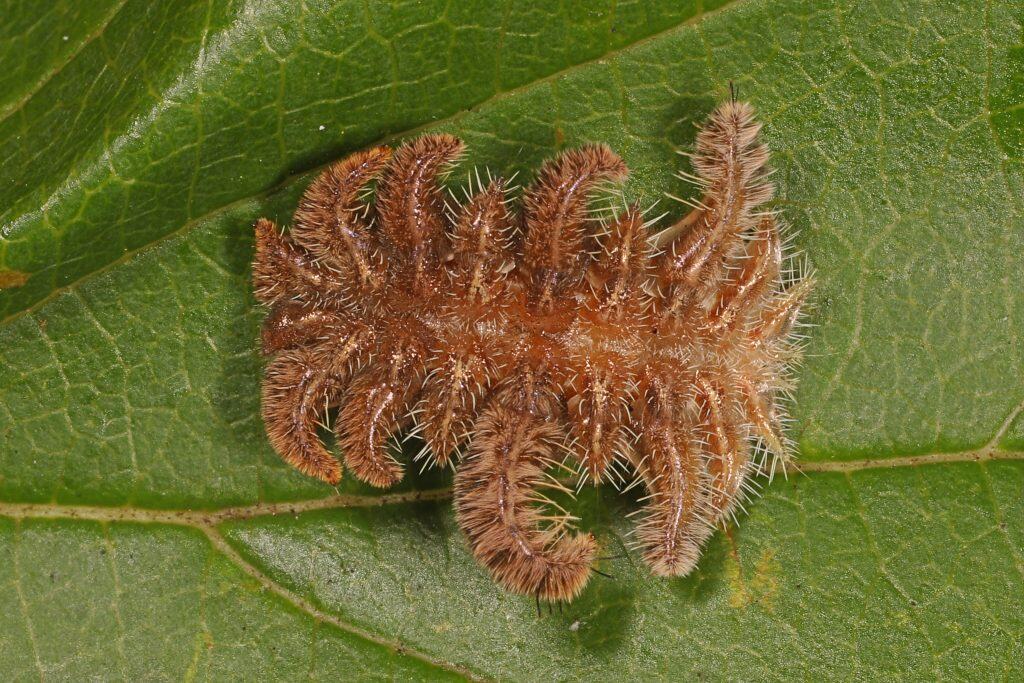
The monkey slug caterpillar becomes the hag moth.
©Some rights reserved by Judy Gallagher – Original / License
Saddleback Caterpillar
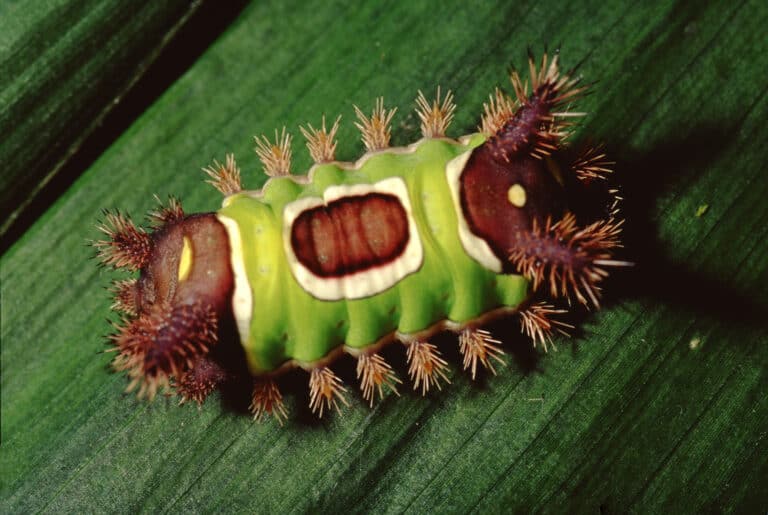
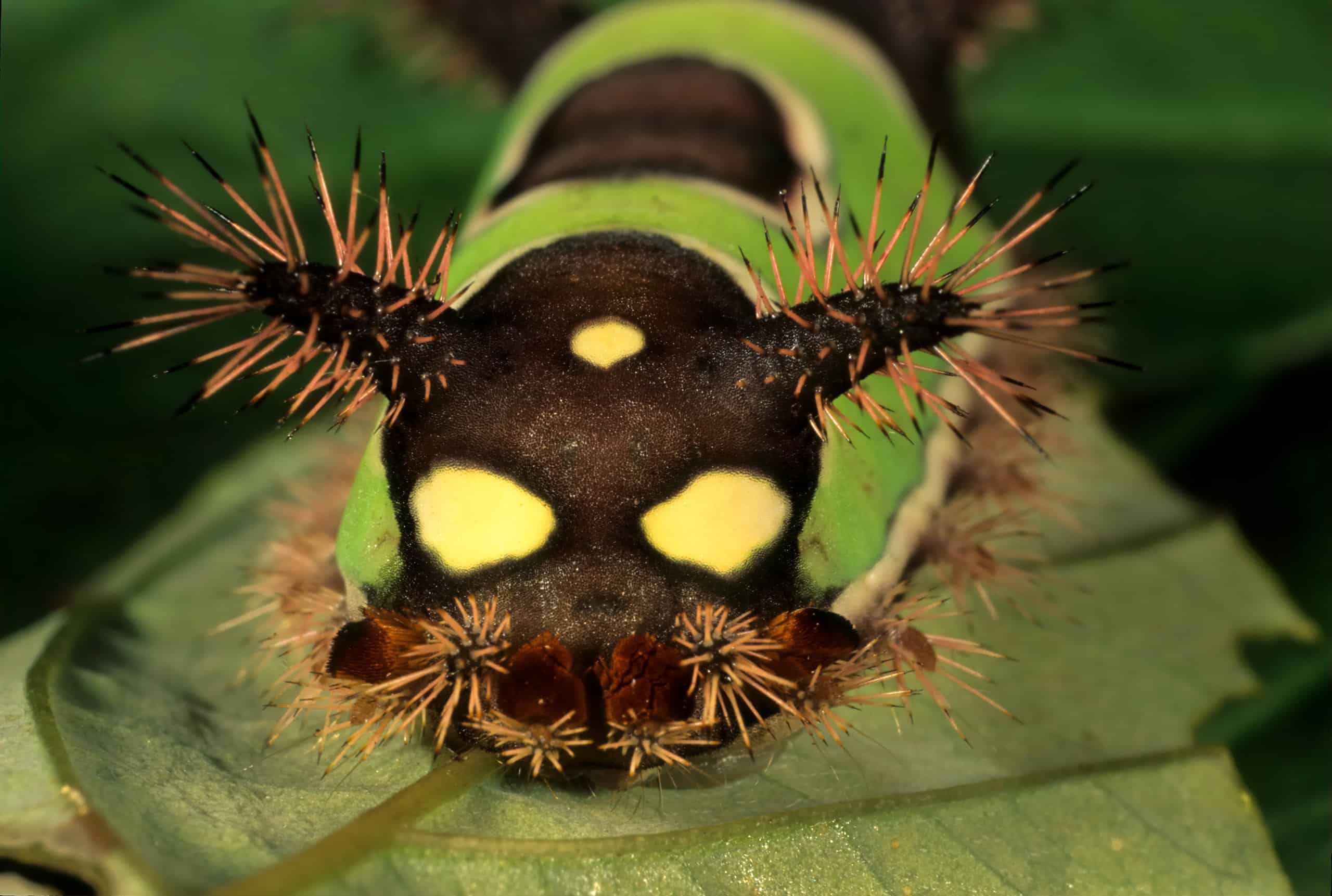
Saddleback caterpillars (Acharia stimulea) are among the most toxic caterpillars in North America. Contact with a saddleback caterpillar causes intense burning, redness, and blistering at the site, which can last for hours and may leave a red mark. In more severe cases, symptoms include shock, migraines, respiratory issues, gastrointestinal disorders, and hemorrhaging.
Mature saddleback caterpillars that are prepared to pupate can be as long as one inch. Their diet consists of apple and oak leaves, cabbage, and grass. Saddleback caterpillars are commonly found in fields, woodlands, gardens, and the edges of wetlands.
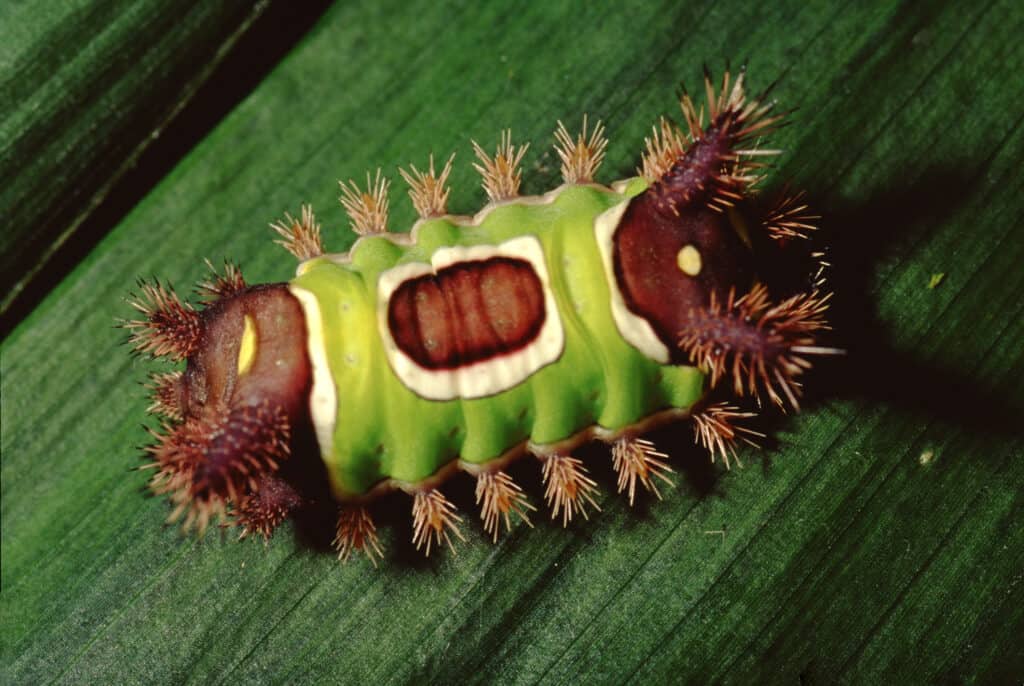
The saddleback caterpillar appears to be wearing a saddle on its back.
©Liz Weber/Shutterstock.com
The Southern Flannel Moth Caterpillar (Puss Caterpillar)
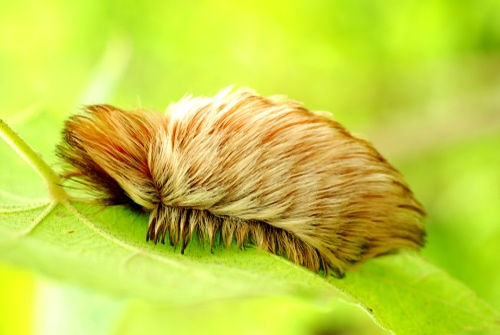
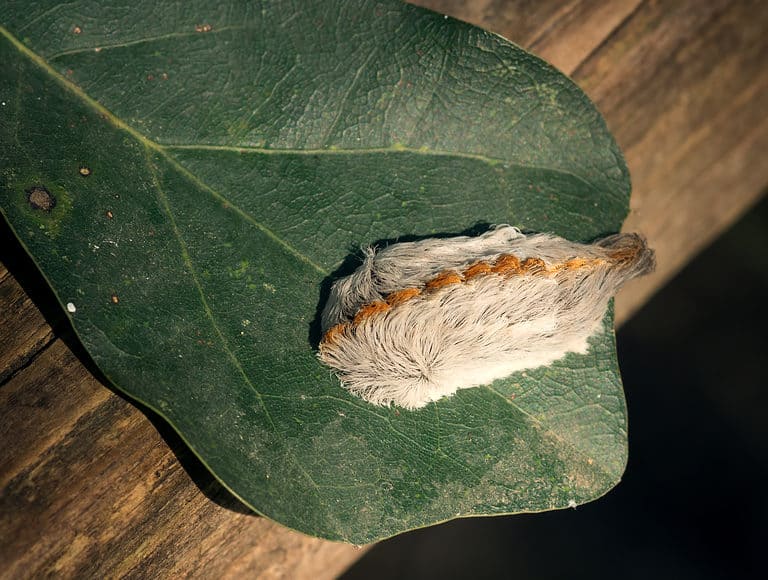
The Southern flannel moth caterpillar (Megalopyge opercularis) is the most toxic caterpillar in Pennsylvania. Its fluffy, hair-like coating hides highly toxic spines. Contact with these spines can cause a severe burning sensation, intense rash, nausea, and, in severe cases, respiratory distress.
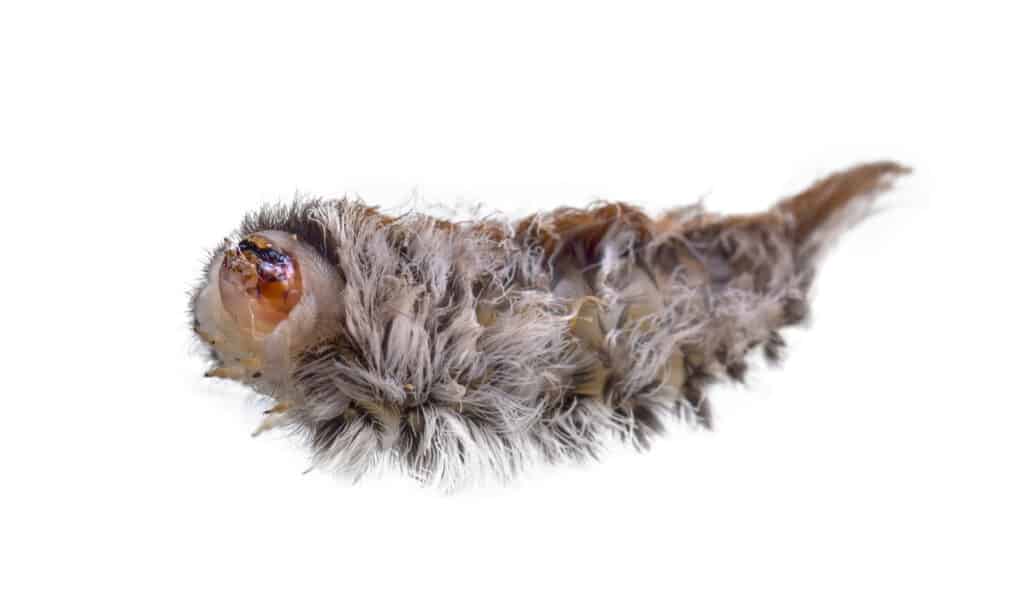
The Southern flannel moth caterpillar, also called the puss caterpillar, is the most venomous caterpillar in North America.
©iStock.com/irin717
These caterpillars metamorphose into the Southern flannel moth. Hatchlings are tiny, only measuring 0.05 inches, but will reach 1.6 inches long before entering the pupa stage. These caterpillars feed on plants and trees, including ash, apple, dogwood, birch, hickory, elm, oaks, and other woody plants.
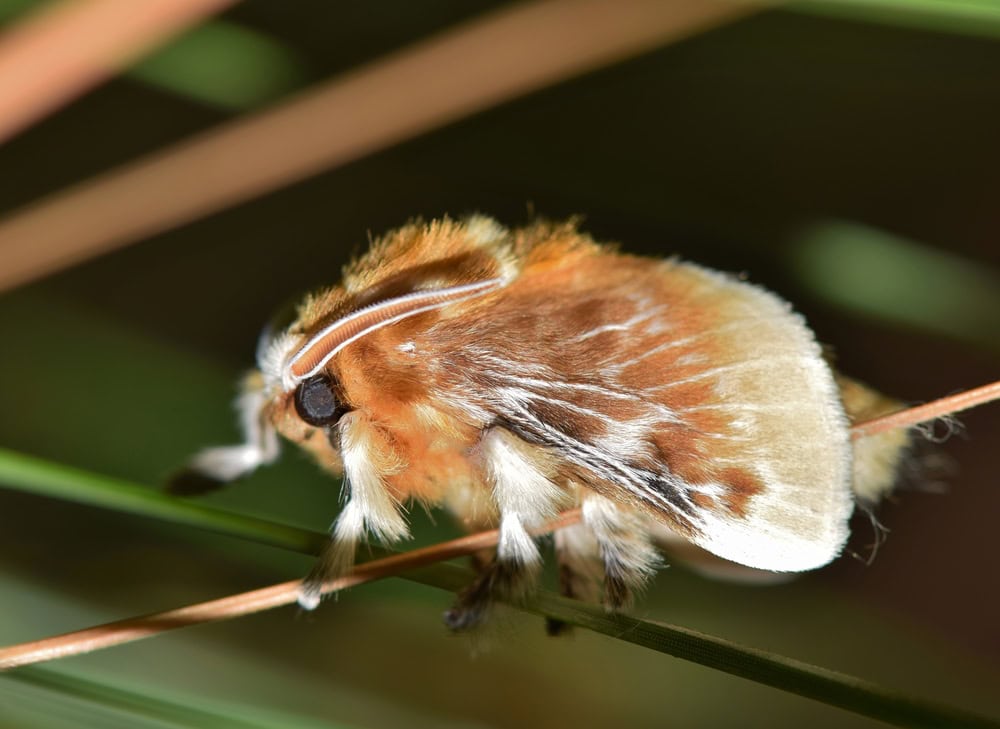
Although the Southern flannel moth retains much of the furriness of the caterpillar, it is completely harmless.
©Brett Hondow/Shutterstock.com
Once exceptionally uncommon in Pennsylvania, the Southern flannel moth is becoming more widely distributed, with its range extending up the East Coast to New Jersey and into Pennsylvania, with sightings increasing due to warming climates.
Once restricted to the Southeastern U.S., reproducing populations are now being increasingly recorded farther north as warming temperatures allow them to survive in environments that were previously too harsh.