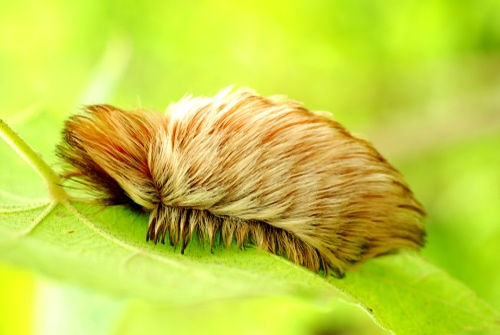

While caterpillars may seem harmless, they are often more dangerous than we realize. While many caterpillars are small and relatively safe to interact with, some species have very powerful ways of defending themselves. One such species is the puss caterpillar, a hairy caterpillar that delivers a painful sting. This Instagram post by @insetices shows the caterpillar up close. Read here to learn more about this species and its intense sting.
About the Puss Caterpillar
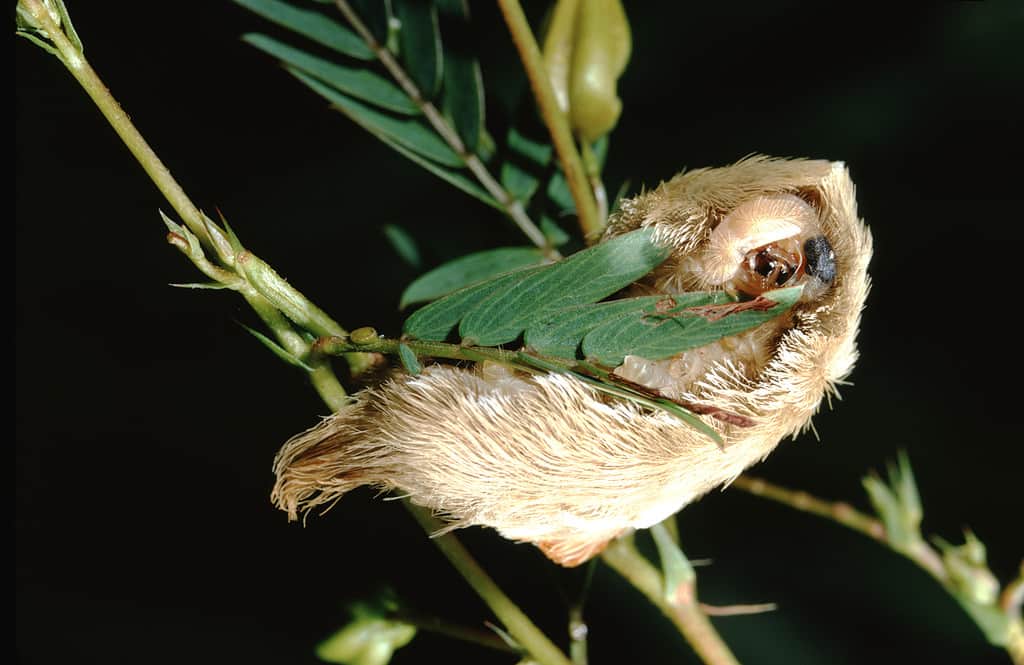
The puss caterpillar is covered in hair.
©Weber/iStock via Getty Images
The puss caterpillar, also known as the asp, is the larval stage of the Southern flannel moth. They are found throughout the southeastern United States, ranging from eastern Pennsylvania and New Jersey south to Florida, and west to central Texas, southeastern Oklahoma, and Arkansas. They are most often found in wooded areas and gardens on trees and shrubs. You are most likely to see them on oak, elm, and apple trees. They feed on the leaves of these trees, which helps them grow and develop. They also feed on a variety of hardwood trees, including oak, elm, and maple, highlighting their diverse diets.
These caterpillars are covered in dense hair and fur over their entire bodies. While their appearance may make them seem cute and tempting to touch, it is extremely dangerous to do so. The fur on these caterpillars conceals venomous spines underneath. These caterpillars are among the most venomous in the United States, so it’s important to be cautious. Their venom contains proteins known as megalysins, which are similar to bacterial toxins because of ancient gene transfer, and these proteins are the source of the pain.
Touching these spines can cause intense pain, swelling, nausea, and other symptoms. If you accidentally touch one out of curiosity, there are ways to help alleviate the symptoms. First, remove the spines and then apply an ice pack to the affected area for immediate relief. You can also take antihistamines or apply hydrocortisone cream. However, you should always seek medical attention if these measures do not help.