
Quick Take
- Ethiopian wolves have been discovered to enjoy the sweet nectar of local plants.
- It’s believed that these apex predators function as pollinators, a role previously undocumented in large carnivores.
- This wolf species is different from gray wolves and other similar species in a variety of ways.
You may think you know all there is to know about wolves, but did you know some have a sweet tooth? While most wolf species primarily eat meat, a wild Instagram post shows that the Ethiopian wolf also enjoys snacking on the sweet nectar of local plants. Intrigued? Read on to discover more about this nectar-drinking wolf, what sets it apart from other species, and how you can help protect its dwindling population.
What is the Ethiopian Wolf?
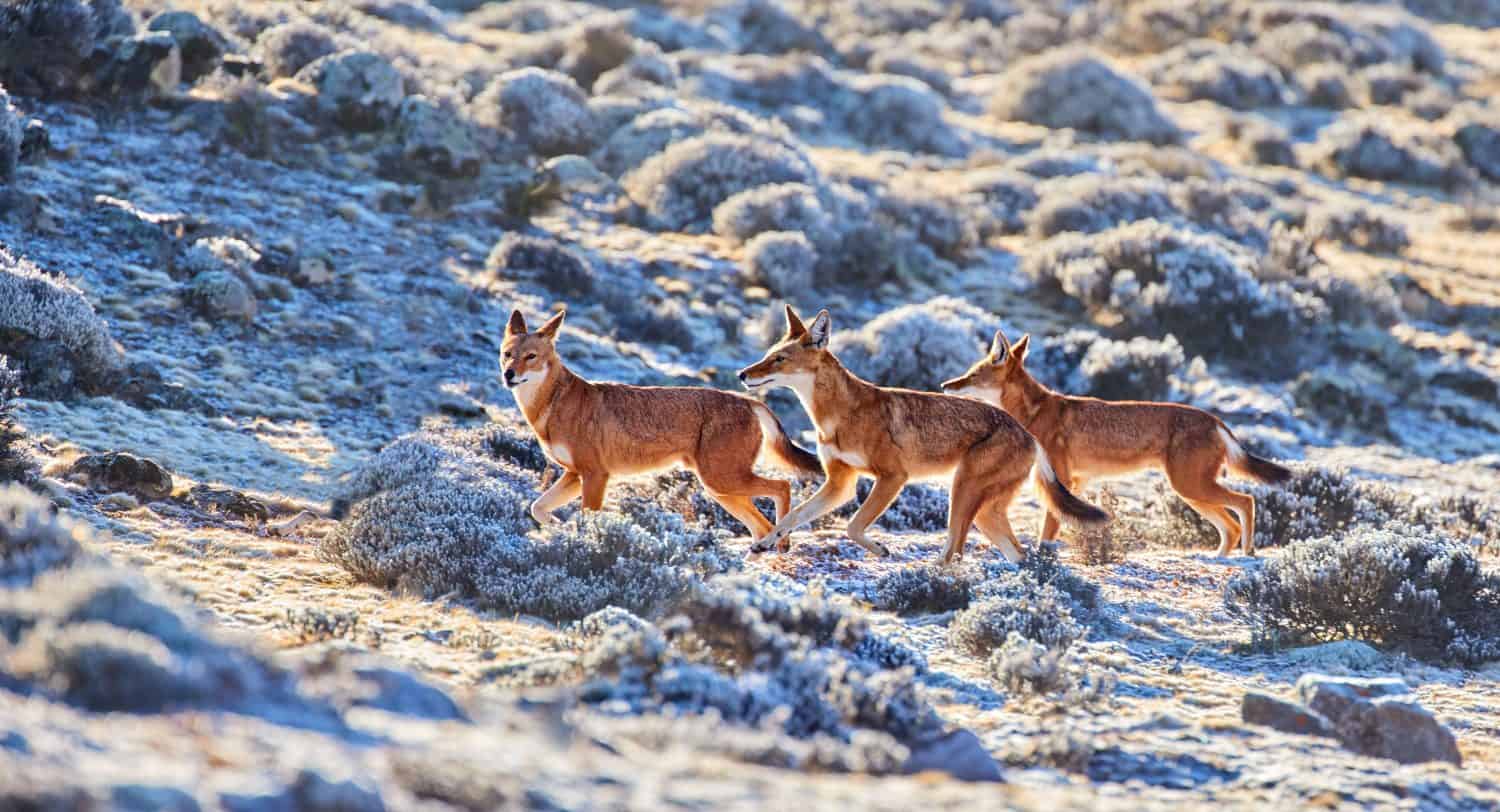
As the name suggests, the Ethiopian wolf is only native to the region in its name.
©Martin Mecnarowski/Shutterstock.com
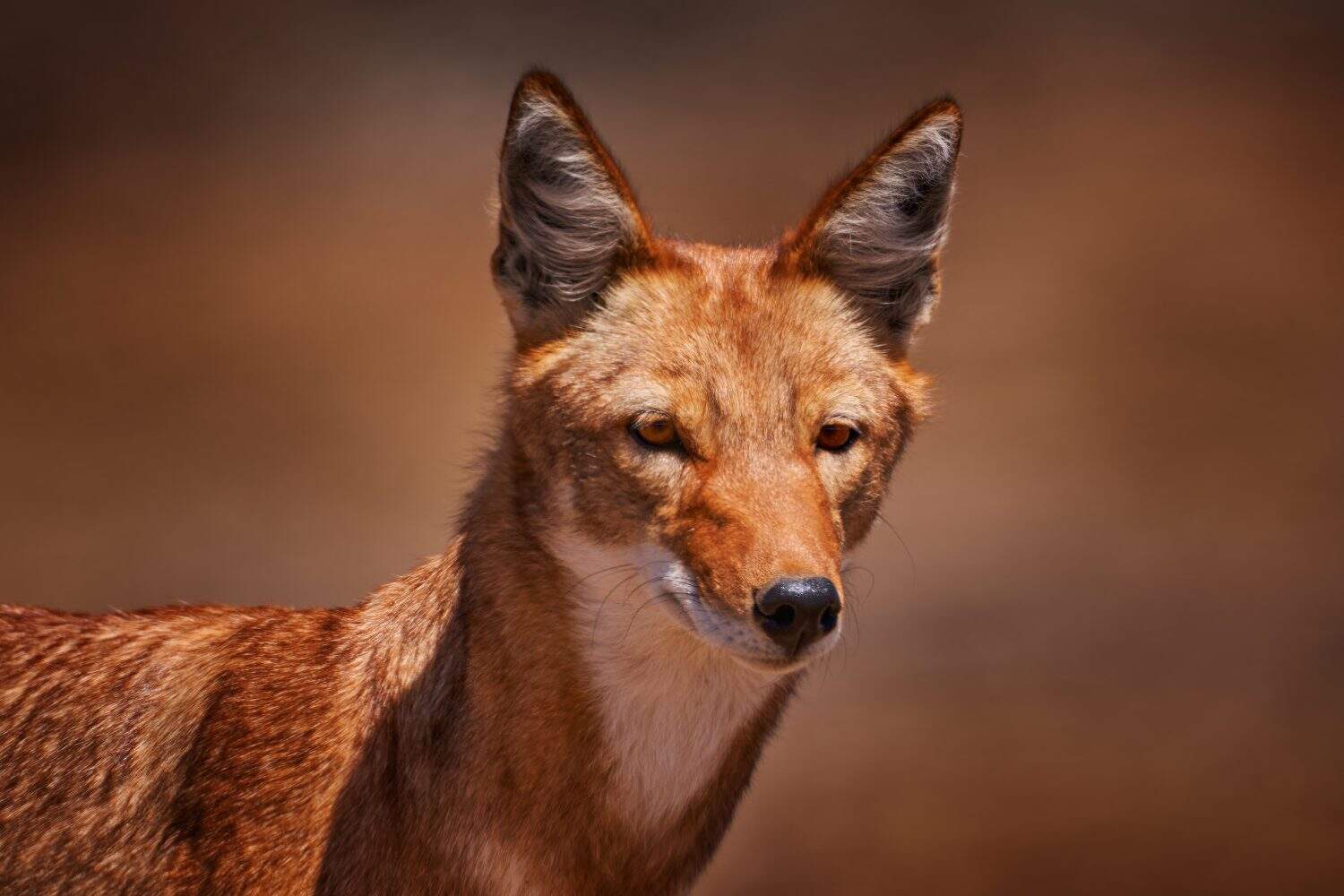
In addition to its nectar-drinking habits, the Ethiopian wolf has many other unique characteristics. Also known as the Simien Jackal, it is easily recognized by its reddish coat, the black stripe on its tail, and its wide, pointed ears. Another way to identify an Ethiopian wolf is by its location. As its name suggests, this species is found only in about a dozen mountain ranges in Ethiopia. Depending on the time of year, you might find the wolf living in the Arssi or Bale mountains, in northeast Shoa, on Mt. Guna, and a few other locations. You will not find this wolf living in a natural habitat outside the continent of Africa.
The Ethiopian wolf prefers grasslands and heathlands, typically on flat or gently sloping terrain. This is the only wolf species in Africa, but with only about 500 left in the world, sightings are rare. However, that didn’t stop a group of researchers from catching them in the act of tasting a sweet natural treat.
Why is the Wolf Sipping Nectar?
So, what’s the story behind this nectar-drinking wolf? The behavior shown in the Instagram post is a fairly recent discovery. In 2024, researchers witnessed this phenomenon and posted their findings in The Scientific Naturalist.
They observed many Ethiopian wolves approaching fully blossomed Ethiopian red hot pokers—flowers of the Kniphofia genus that bloom between May and October. These plants produce large amounts of nectar, which is often consumed by birds, insects, and some small animals. However, the researchers began to notice that Ethiopian wolves were also eating the nectar. The researchers tracked the wolves during one blooming season and observed individual wolves visiting and tasting as many as 30 blooms in a single sitting.
Both adults and juveniles were found engaging in this behavior. The researchers also took plenty of pictures along the way. Many of the images show the wolves walking away from the plants with almost their entire snouts covered in fine yellow pollen after enjoying the sweet snack. It’s believed that this behavior helps spread pollen, much like bees and other natural pollinators. The wolves often returned for more, making nectar-feeding a regular routine for many individuals.
Not a Major Part Of Its Diet
While seeing wolves eating nectar is surprising enough, what makes this routine even more peculiar is that, like similar species, Ethiopian wolves are carnivores. Their primary diet consists of small mammals, such as hares and rodents. They are meat eaters that use their agility and speed to catch their prey in open grasslands. Often, pack members will work together to flush out and chase down their prey. In addition to providing sustenance, their diet also helps control the rodent population and maintain ecological balance in the area. So, nectar is not a regular part of their diet and doesn’t provide significant nutrition. It’s simply a sweet treat.
Other Ways the Ethiopian Wolf Differs
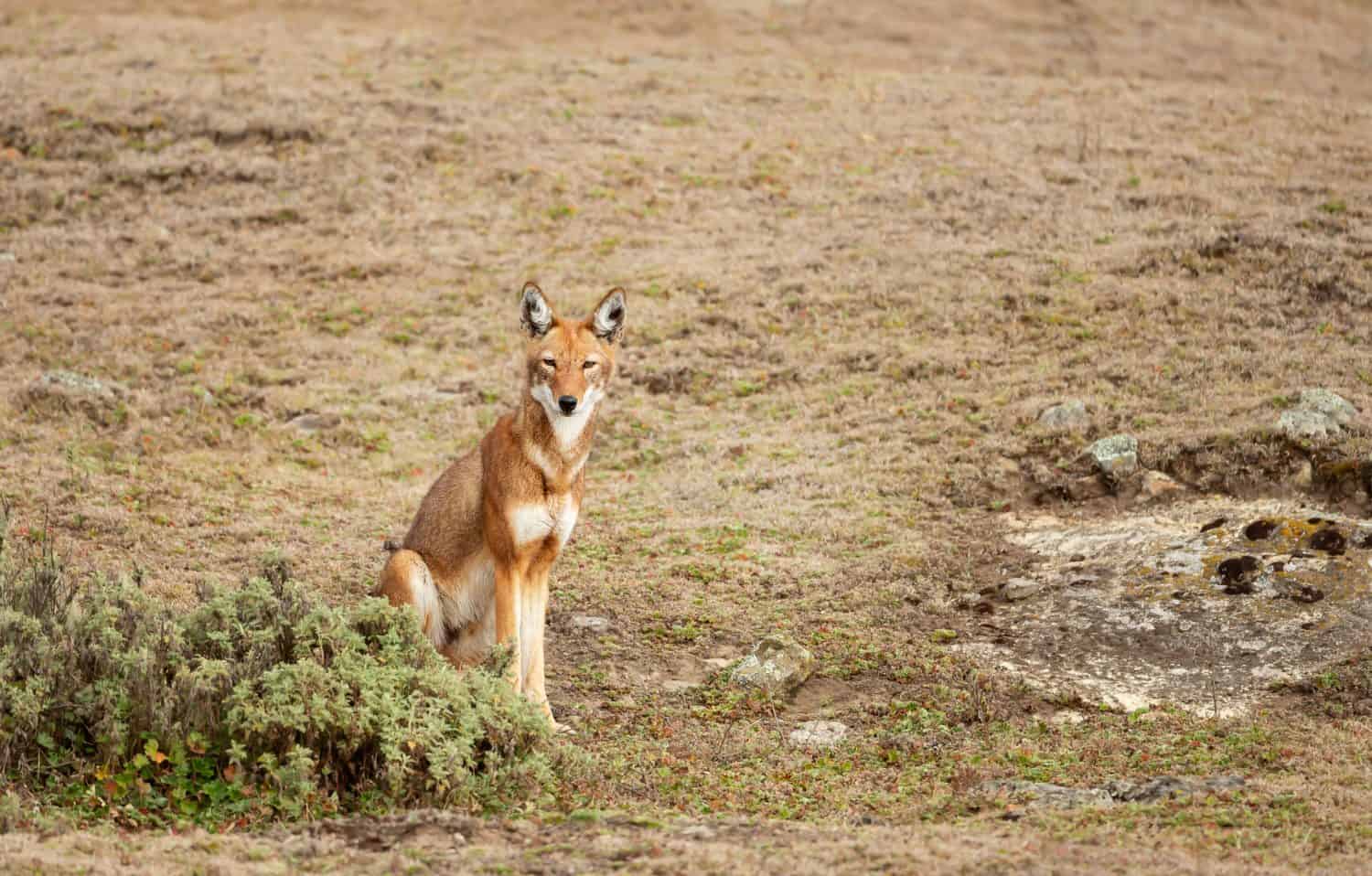
The Ethiopian wolf differs from other wolves in many ways, including the size of the packs in which they roam.
©Giedriius/Shutterstock.com
Beyond its nectar-drinking behavior, the Ethiopian wolf has many other traits that set it apart from other wolves. For example, compared to the more common gray wolf, there are several notable differences.
Appearance and Behavior
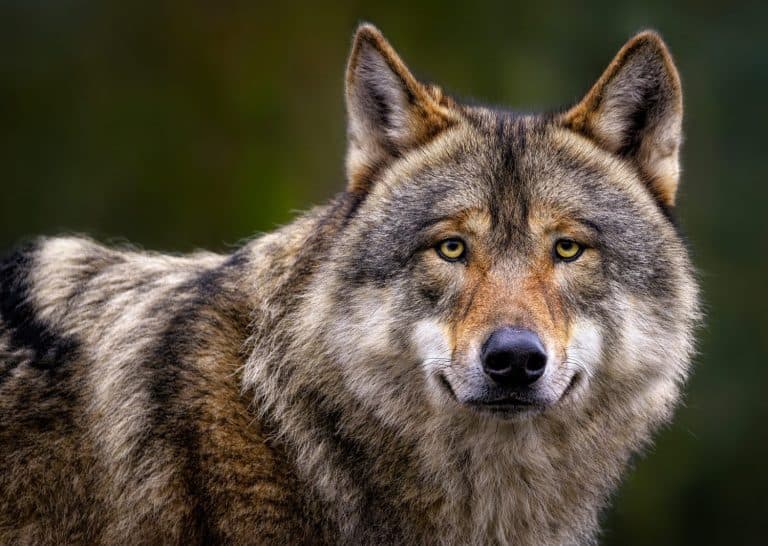
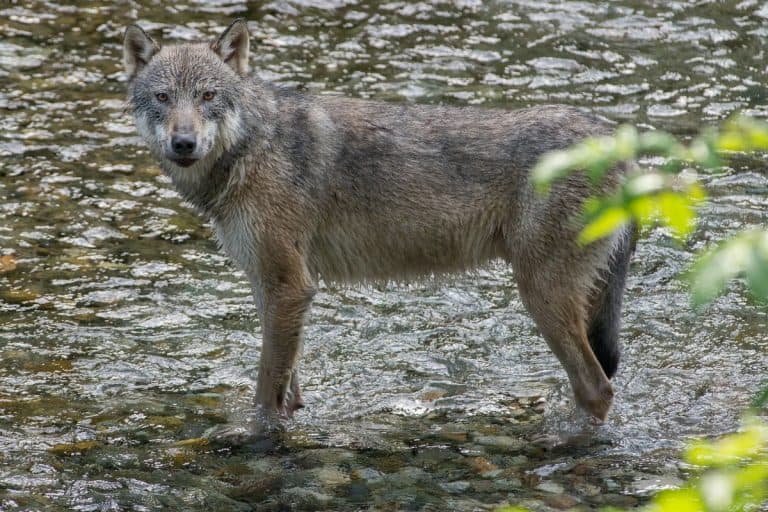
While they are both members of the Canidae family, they differ in appearance and behavior. The gray wolf is much larger and stronger, both in terms of muscle mass and jaw strength. The gray wolf typically has a gray, white, or black coat. The Ethiopian wolf has that reddish coat and is much smaller than other wolves. Additionally, Ethiopian wolves are much slimmer and more agile.
Social Structure
Many other wolves, including gray wolves, have a much broader distribution worldwide, living in North America, Asia, Europe, and elsewhere. In contrast, the Ethiopian wolf lives exclusively in Ethiopia. Finally, while gray wolves live in large packs, Ethiopian wolves have much smaller social groups. Typically, an Ethiopian wolf pack consists of a breeding pair and their offspring, whereas gray wolf packs often include multiple breeding pairs.
Helping the Ethiopian Wolf
Perhaps the most striking difference between the Ethiopian wolf and other types of wolves is their conservation status. While other wolf species are considered endangered, such as the red and Mexican wolves, many, including the gray wolf, have much more stable populations.
The Ethiopian wolf is among the species most in need of conservation. Currently, there are only about 500 Ethiopian wolves left, and they’re listed as Endangered on the International Union for Conservation of Nature’s list of threatened species. One of the main threats to the species is that wolves live in small packs, and the rugged terrain keeps them separated, slowing breeding. Other threats include disease, habitat loss, and vehicle collisions.
If you’re as enchanted by this nectar-drinking wolf as we are, you can help support its survival. Consider donating to organizations like the African Wildlife Foundation, which actively supports dog vaccination programs, public education, and efforts to connect isolated wolf populations so the species can thrive.