Michael Moore was off on his yearly elk-watching pilgrimage as he cruised along the South Fork of the Shoshone River. Located just east of Cody, Wyoming, this area often hosts the Fall elk rut — an exciting time when bull elk clash antlers and compete for mates. On this particular trip, however, the rutting elk did not appear. Still, Moore was not completely disappointed, as he unexpectedly stumbled upon a sight that would shock even the most seasoned elk experts: a piebald elk.
Encounters like this are almost unheard of. Most wildlife photographers, hunters, and even biologists may go their entire lives without seeing a piebald elk in person, which makes Moore’s discovery especially exciting. This rare genetic variation occurs in only a tiny fraction of elk populations, and most elk herds will never produce one. Yet, despite these overwhelming odds, the gene responsible for piebaldism quietly persists among elk and other deer species.
What Is a Piebald Elk?
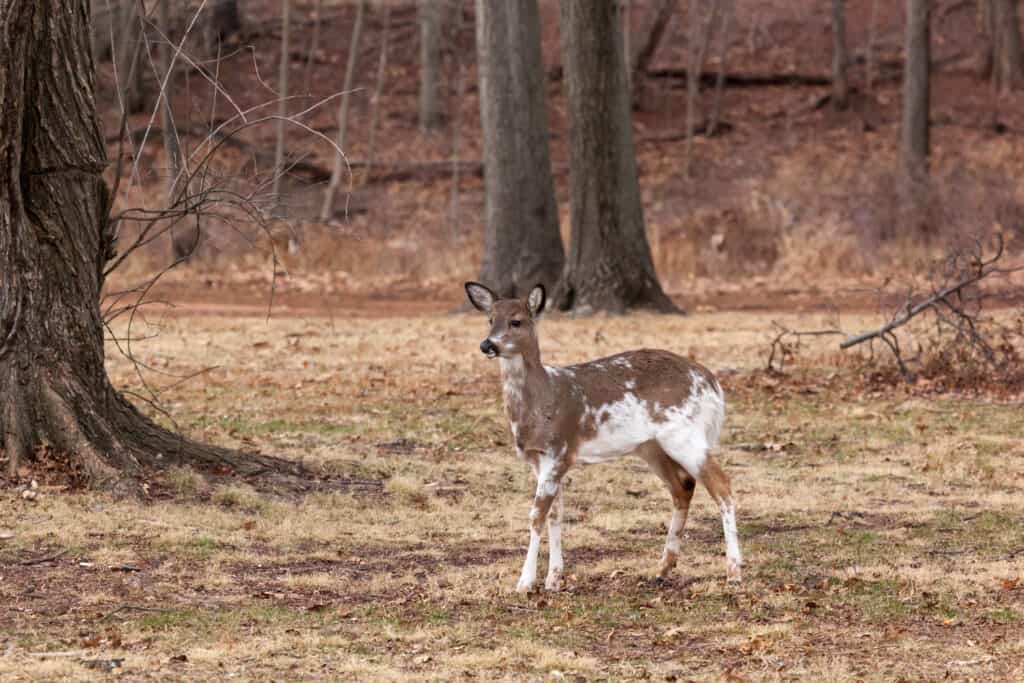
Depending on the animal, piebaldism can affect patches of skin, fur, hair, and even feathers.
©iStock.com/luvemakphoto
Piebald elk are distinguished by patches of white hair that can appear anywhere on their bodies. Sometimes the white is limited to just a few patchy areas, such as the face, while in other cases it almost completely covers the animal. The pattern of white hair patches is entirely random, resembling abstract splashes of white paint.
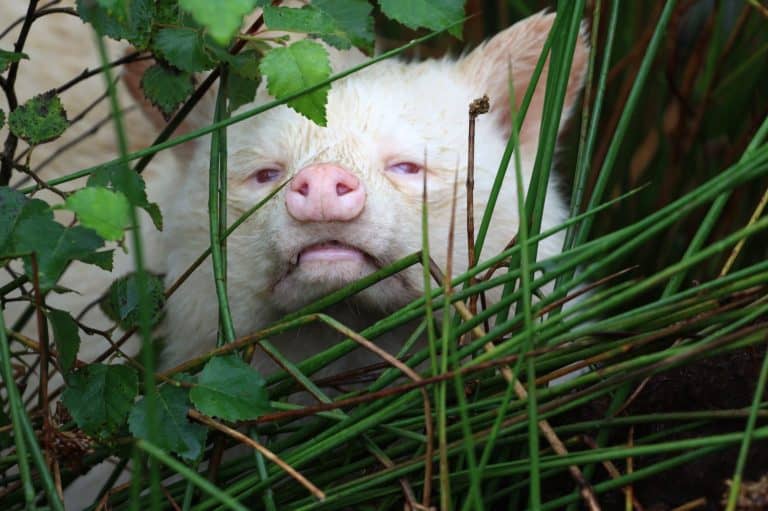
Although a piebald animal may appear completely white, it should not be confused with an albino. Piebald animals still have melanin, so their eye color remains normal, even if their hair is completely white. In contrast, albino animals lack melanin and have red or pink eyes.
The Genetics of Piebaldism
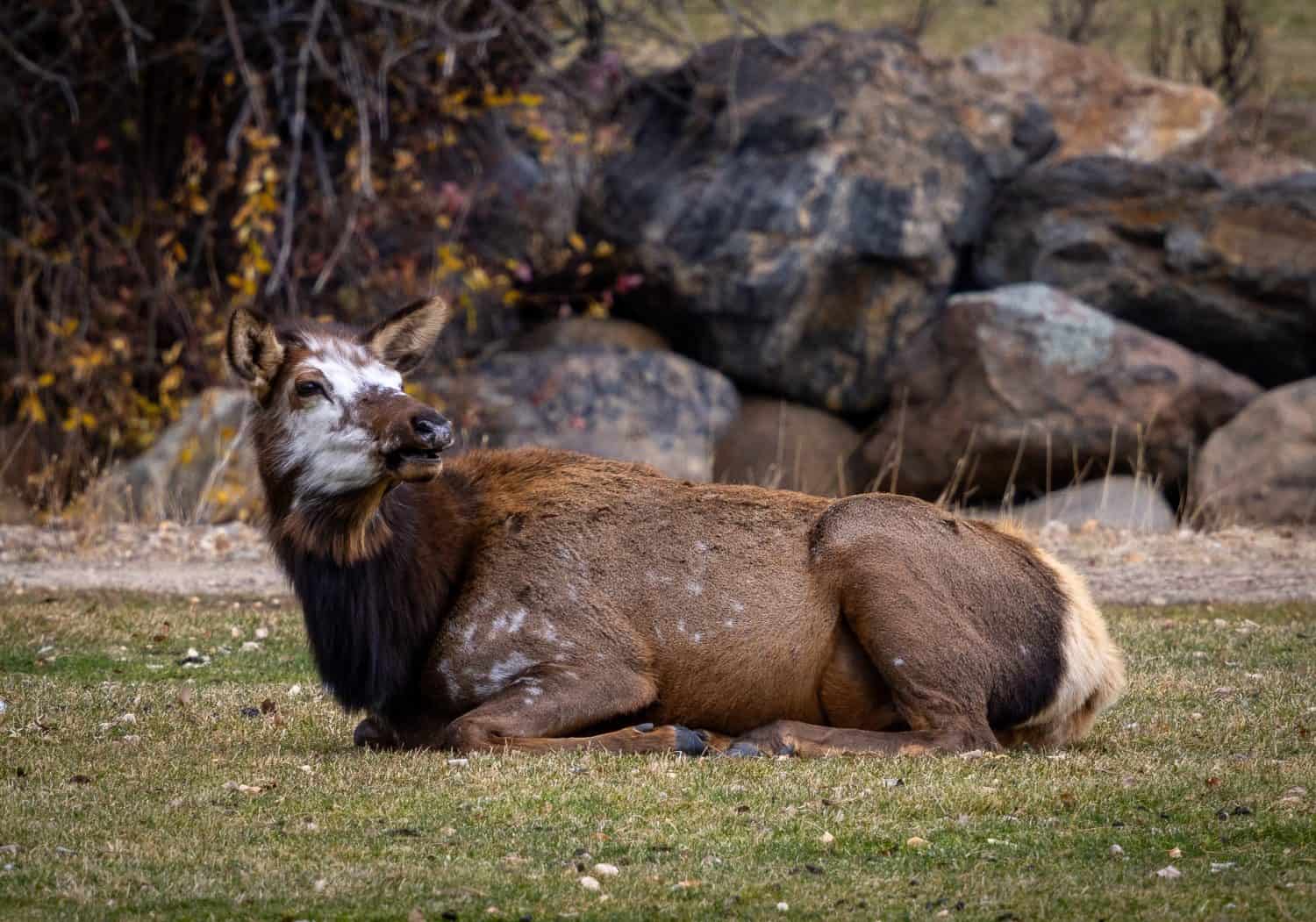
Estimates suggest that piebaldism occurs in less than one percent of elk in the United States.
©Adventures Untamed/Shutterstock.com
The piebald patterning seen in this cow elk is an inherited condition, although its physical expression is surprisingly rare. The genetic trait is recessive, meaning an elk can carry the gene without displaying any white hair at all. For a calf to exhibit piebaldism — with visible white hair — both of its parents must carry a copy of the gene.
If a calf receives only one copy of the gene, it simply becomes another carrier. However, if it inherits a copy from each parent, it will display the characteristic piebald white patches. Estimates suggest that the likelihood of a piebald calf is about one in 100,000.
Passing on the Trait
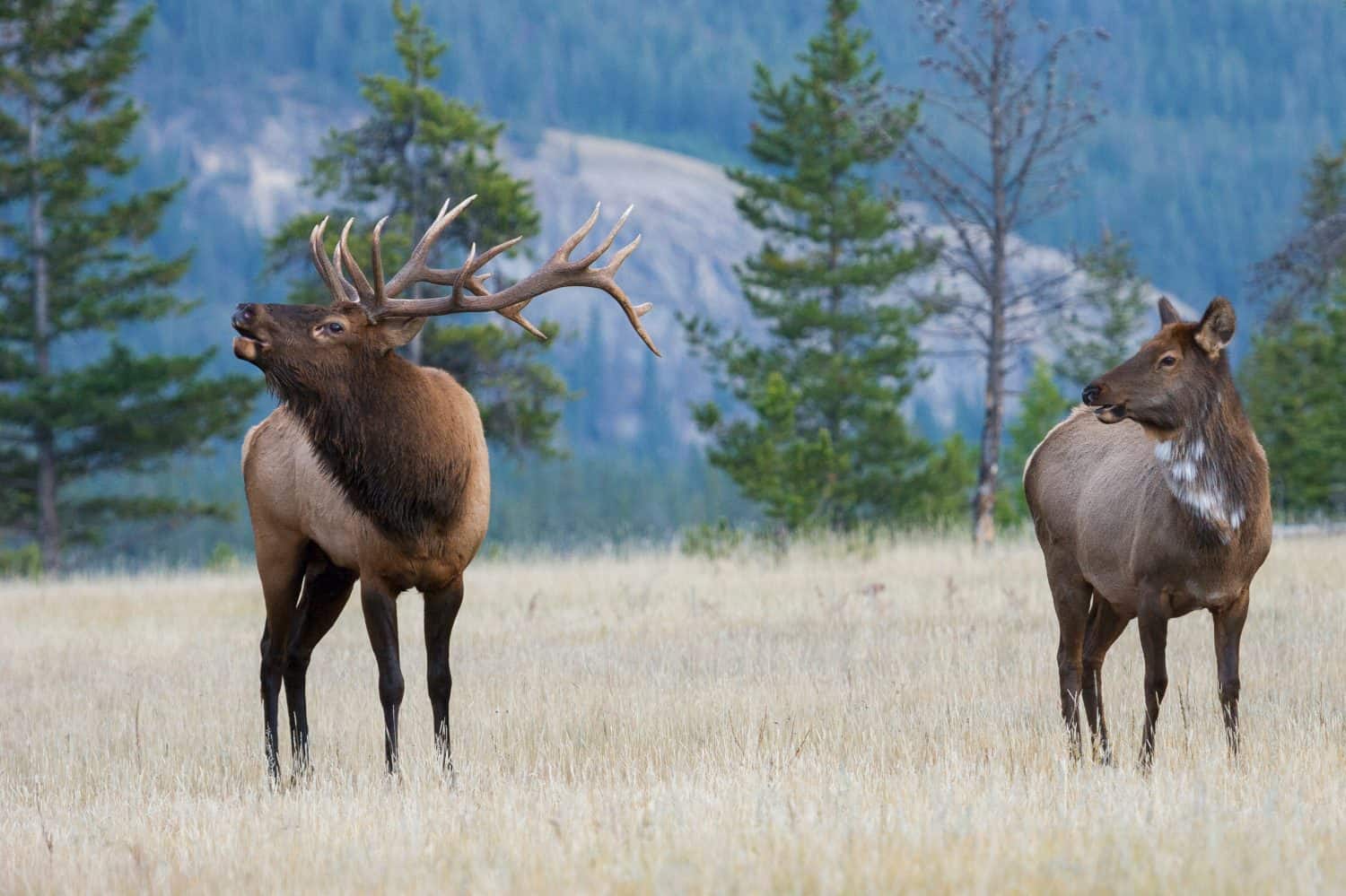
There is no guarantee that a piebald elk will produce piebald offspring.
©Danita Delimont/Shutterstock.com
A true piebald elk — one that displays the characteristic white patches — does not necessarily produce piebald offspring. If the piebald elk mates with a partner who does not carry the trait, her calves may inherit the gene as carriers, but their coats will have normal coloring. A single litter could even include both a piebald calf and a normally colored calf.
In humans, piebaldism often appears as patches of unpigmented skin, but in elk, it primarily affects the fur. The genetic mutation responsible for piebaldism in elk deletes or disables some of the specialized cells that produce pigment or color in the hair. Since those pigment cells do not function properly in certain areas, randomly placed white or light-colored patches appear. Unlike albino elk, piebald elk still have pigment cells; these cells simply do not produce color properly in certain areas.
Potential Complications of Piebaldism
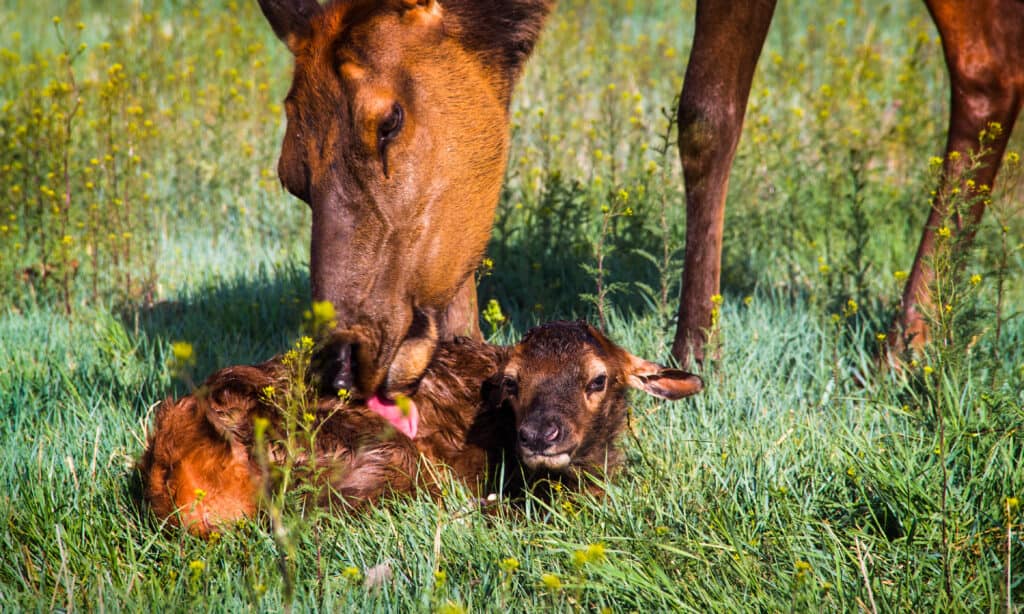
Even healthy calves are extremely vulnerable to predators.
©Karlie Butler/Shutterstock.com
While piebaldism itself does not impact an elk’s overall health, the recessive genes linked to this trait can sometimes cause other issues. Piebald elk are often prone to skeletal or spinal abnormalities, such as crooked legs, malformed hooves, dwarfism, or shortened facial features. These complications also help to explain why piebald elk are so uncommon in the wild, as many of these already-rare calves do not survive to adulthood, making adult piebalds even more rare.
Although rare, piebald elk can thrive despite these genetic quirks, as demonstrated in the young cow that Moore photographed, which overall appears quite healthy.
Other Notable Sightings

Piebaldism is more common in white-tailed deer than in elk.
©Dino Martino Photography/Shutterstock.com
While Moore’s sighting of a piebald elk in Wyoming is certainly incredible, it is not the first. Earlier this year, in fact, a piebald elk was seen a few times in Estes Park, Colorado. In 2024, a hunter in New Mexico harvested a piebald elk, and in 2023, a wildlife biologist photographed a piebald cow near Montrose. Going further back, a 2016 sighting in Benezette, Pennsylvania, revealed an elk with piebald markings on its face. Piebald white-tailed deer have also been documented in various regions.