
Quick Take
- Mongooses are predominantly carnivores, but their diets vary by species and geographical location.
- Some species, such as the banded mongoose and the dwarf mongoose, occasionally supplement their diet with fruit.
- Being a generalist feeder benefits mongooses, but it can be very harmful to the environment in places where they are considered an invasive species.
- Mongooses are mammals, so baby mongooses drink milk from their mothers’ mammary glands.
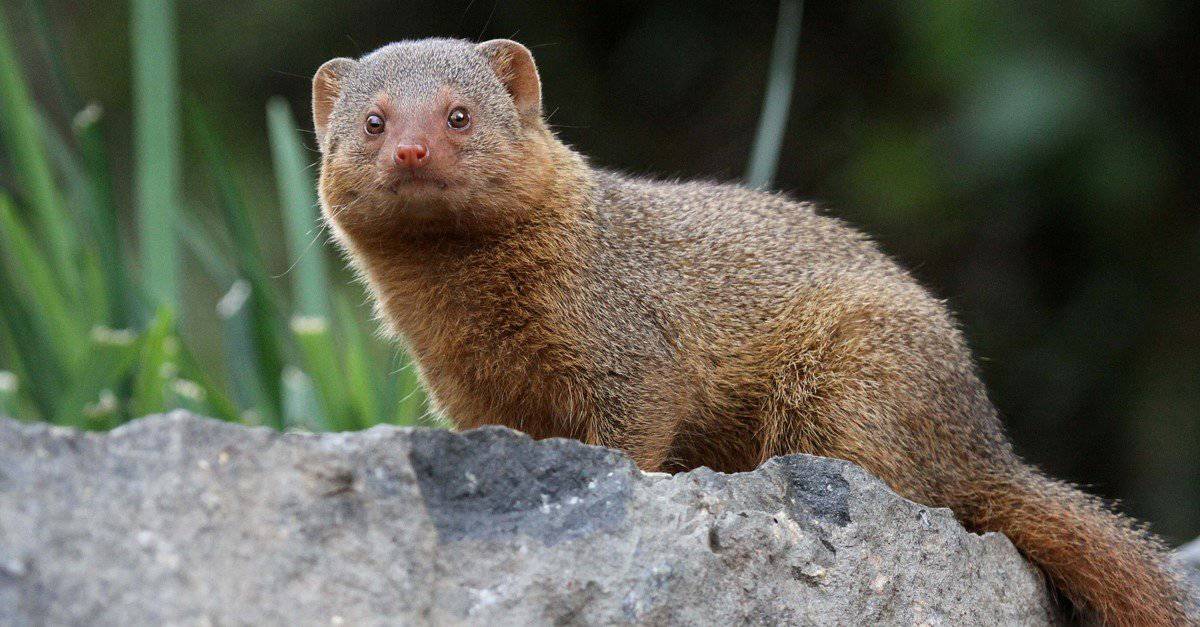
Mongooses are small, weasel-like carnivores with long, brown bodies, short legs, long tails, and pointed muzzles. The most common mongooses are those in the family Herpestidae. There are 34 species in this family, primarily found in Africa and Asia. Some Herpestidae species inhabit southern Europe and various islands, including Hawaii, Jamaica, and the Virgin Islands, among others. There are 11 species in the family Mungotinae, found only in Africa. Mongooses are renowned for their ability to kill poisonous snakes, but do they eat snakes? What else do they eat? Keep reading to learn more about the mongoose diet.
The Mongoose Diet
Mongooses are opportunistic, generalist predators. They are predominantly carnivores, eating rodents, lizards, snakes, birds, eggs, insects, invertebrates, arachnids, and other small reptiles and mammals. Some species, such as the banded mongoose (Mungos mungo) and the dwarf mongoose (Helogale parvula), occasionally supplement their diet with fruit. The small Indian mongoose (Urva auropunctata) in the Virgin Islands is also said to consume plants. Marsh or water mongooses (Atilax paludinosus) eat aquatic animals, including crabs, amphibians, and fish.
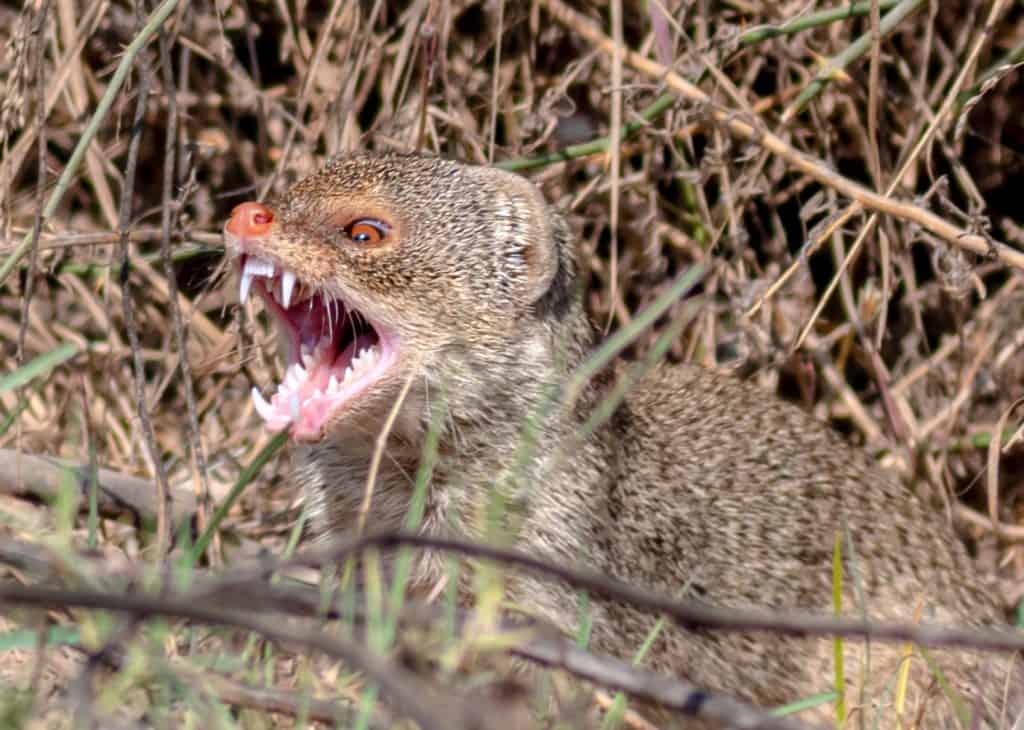
The Indian grey mongoose is native to the Indian subcontinent.
©thsulemani/Shutterstock.com
Although the mongoose diet varies by species and habitat, here are some of the most common foods they eat:
- Rodents like mice and rats
- Insects, such as beetles, grasshoppers, termites, and millipedes
- Birds, primarily nesting birds
- Eggs, including bird eggs and turtle eggs
- Reptiles, including lizards and turtles
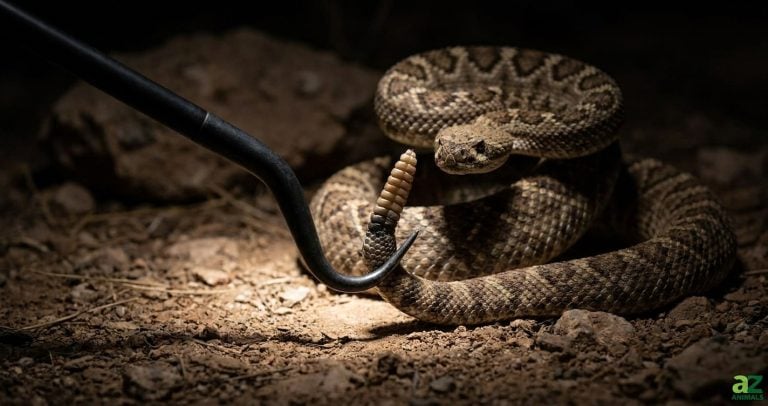
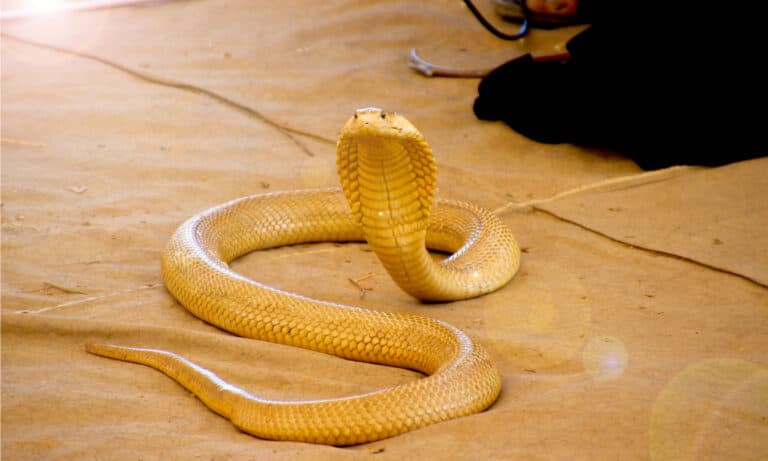
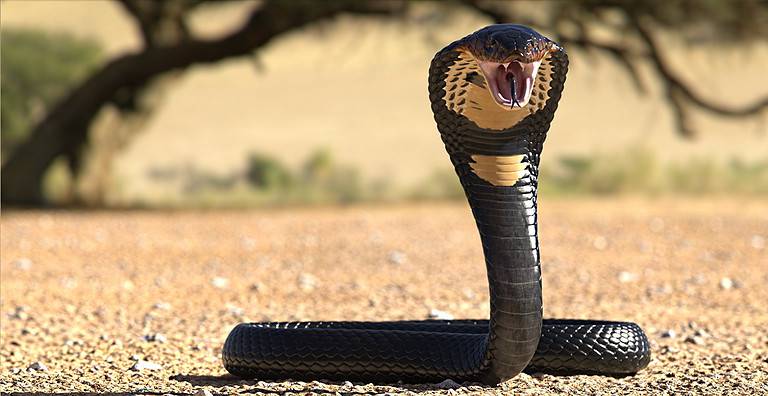
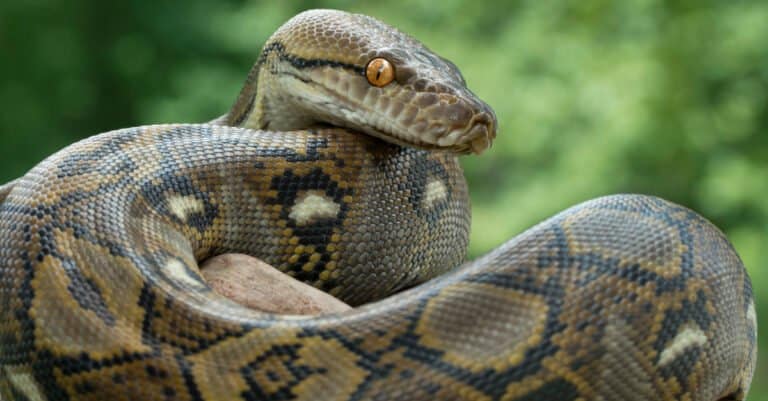
- Snakes, including poisonous snakes such as king cobras
- Amphibians
- Crabs
- Invertebrates, including worms, snails, and slugs
- Fish
- Arachnids, such as scorpions and spiders
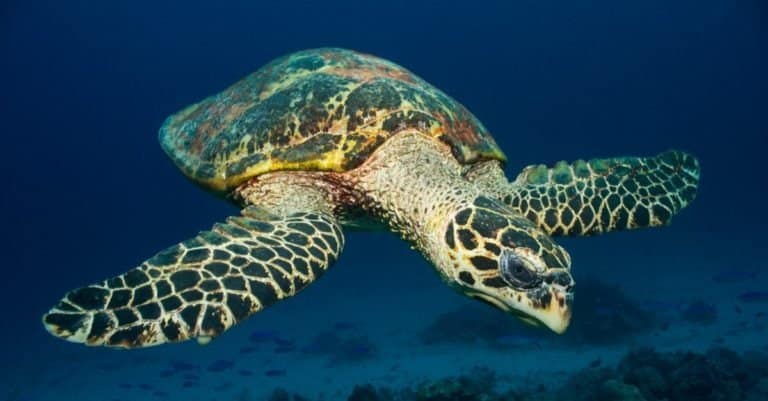
Although being a generalist feeder benefits mongooses, it can be very harmful to the environment in places where they are considered an invasive species. For example, in the Virgin Islands, small Indian mongooses prey on endangered sea turtle nests, such as those of the Hawksbill, green, and leatherback sea turtles, as well as native nesting birds. In Hawaii, they are known to prey on at least 8 species of federally listed endangered Hawaiian birds.
What Do Mongoose Babies Eat?
Baby mongooses are called pups. They are typically born in litters of two to six pups, but this varies by species. In some species, such as banded mongooses, reproduction within the pack is synchronized so that the females give birth within days of each other. Mongooses are mammals, so their babies drink milk from their mothers’ mammary glands. In banded mongoose packs, any lactating female may nurse the pups.
Some mongoose pups begin to eat solid foods before they are fully weaned, but the age at which weaning occurs varies between species. Pups often leave the den with their parents to learn how to forage for food. Banded mongoose pups accompany adults at 5 weeks old, but dwarf mongoose pups do not forage with the pack until they are around 6 months old.
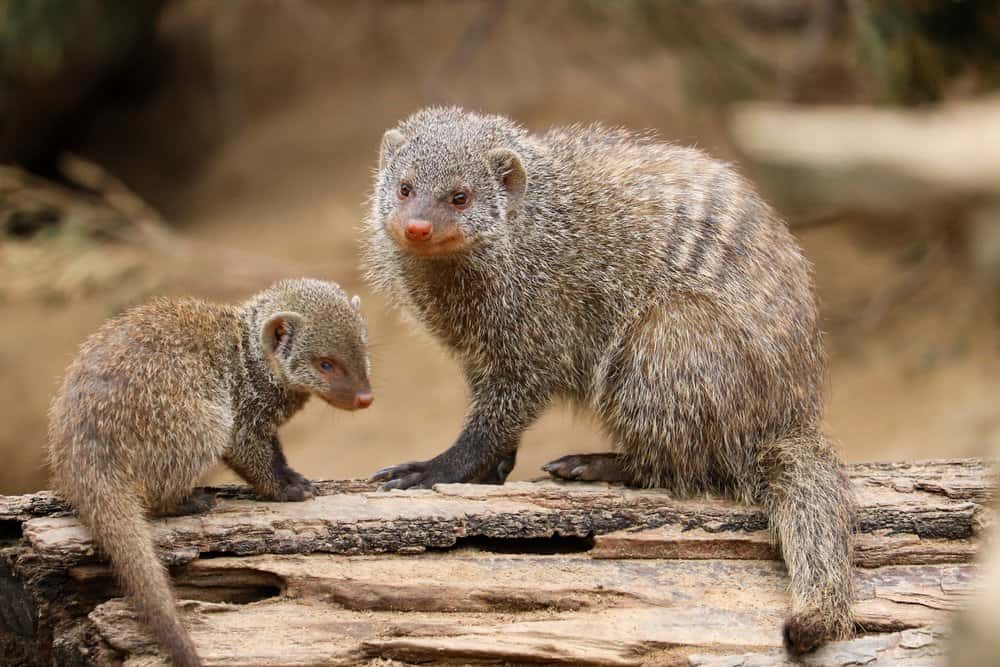
Social mongooses hunt for food as a pack.
©Cassidy Te/Shutterstock.com
How Mongooses Hunt
Social mongoose species, such as dwarf mongooses and banded mongooses, hunt and forage together. By stalking and ambushing prey as a pack, they are able to take down larger animals. Other species, such as the small Indian mongoose, Indian grey mongoose (Urva edwardsii), and Egyptian mongoose (Herpestes ichneumon), are solitary and hunt alone.
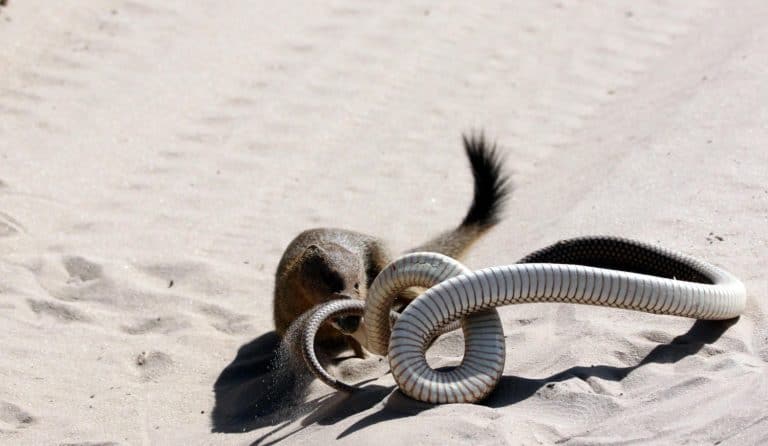
When confronting snakes, mongooses use their fast reflexes to dodge and their sharp teeth to deliver a killing blow to the back of the snake’s neck. They also typically use fatal bites on the heads and necks of mammals or other larger prey. Mongooses use their sharp claws to dig for prey underground, and they are known to break open eggs by throwing them against hard objects.