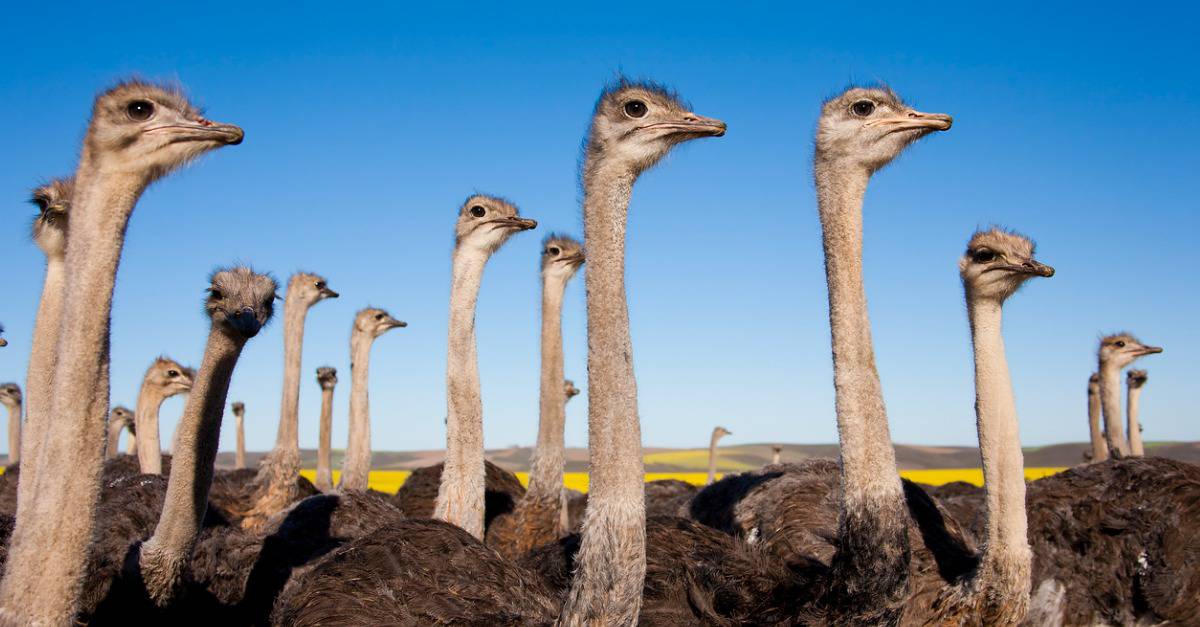

The ostrich is the planet’s largest living bird species. Ostriches can reach up to 9 feet tall and weigh upwards of 300 pounds. Ostriches also lay the world’s largest eggs, weighing an average of around three pounds. Although they cannot fly, they have powerful legs and thighs that allow them to reach speeds of 43 mph. So, what sort of diet does such a big, muscular bird need to remain active and healthy? Keep reading to find out.
The Ostrich Diet
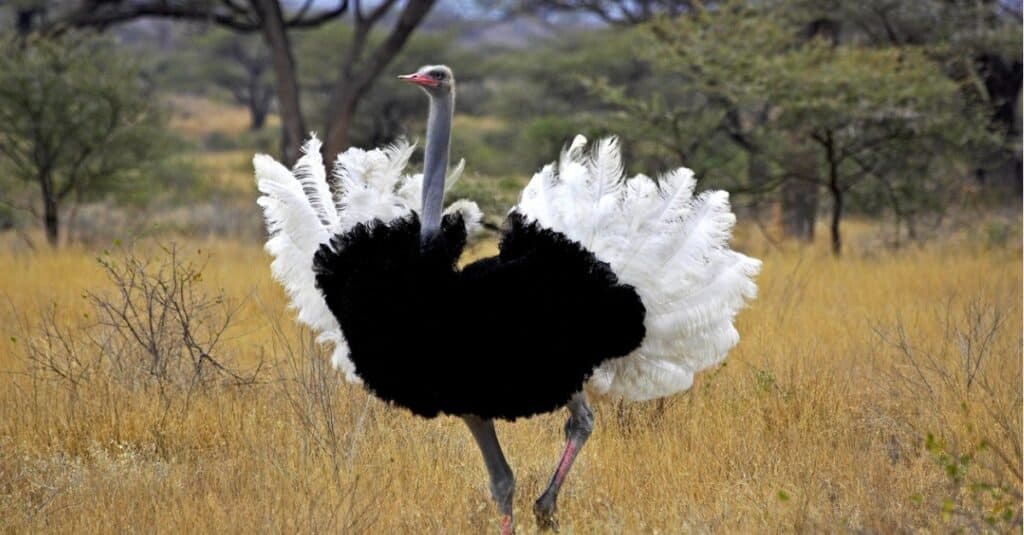
Somali ostriches have blue necks and legs instead of pink, like common ostriches.
©iStock.com/slowmotiongli
There are two ostrich species, both of which are native to Africa. The common ostrich (Struthio camelus) can be found throughout sub-Saharan Africa. The Somali ostrich (Struthio molybdophanes) inhabits the Horn of Africa, which includes Ethiopia, Djibouti, Kenya, and Somalia. Their ranges overlap to some extent, and both species eat a similar diet. However, there are some slight variations due to their preferred habitats and the seasonal availability of resources.
The common ostrich is a grazer, primarily feeding on grass and other vegetation on the arid savannas and open plains. The Somali ostrich is a browser, with a diet consisting mostly of trees, leaves, shrubs, seeds, and flowers in thickly vegetated grasslands and thornscrub. However, all ostriches are omnivores. While most of their diet is made up of plants, they also eat insects and other invertebrates, amphibians, and small reptiles. In the spring and summer, rain brings a wider variety of vegetation. As a result, ostriches eat more green grasses, shoots, seeds, and fruits. In the drier, cooler weather of fall and winter, fresh vegetation becomes scarce, so they may consume tougher plants and more animal matter.
Allowing for species and seasonal variation, the following list includes the types of foods ostriches eat:
- Flowers
- Berries
- Roots
- Grasses
- Seeds
- Leaves of shrubs and bushes
- Sprouts
- Nuts
- Fruits
- Succulents
- Insects and other invertebrates
- Small tortoises
- Lizards
- Snakes
- Frogs
- Small rodents
The Ostrich Digestive System

Ostriches eat sand and small rocks to help break down the food in their gizzards.
©etienneb07/Shutterstock.com
Like other flightless birds, ostriches do not have a crop. The crop is where other bird species temporarily store food, which also helps to soften it before it enters the gizzard for additional breakdown. However, the ostrich’s proventriculus, the glandular stomach located between the esophagus and the gizzard, is large enough to function as storage, serving the purpose of a crop. Like all birds, ostriches lack teeth. So as they forage, they swallow sand and small rocks to help grind down food in their gizzards. The tougher the plant matter, the more grit they need to consume. These stones gradually wear down and eventually pass through the gizzard.
Ostriches can also digest tough plant matter that many other animals cannot. They have long, tough intestines that reach about 46 feet in length. This allows for an extended digestion time of fibrous plants, enabling microbial fermentation. The fermentation process results in the production of volatile fatty acids (VFA) that can be absorbed and used as energy. This is similar to the digestion process of horses. Researchers estimate that ostriches’ ability to digest dietary fiber can supply up to 76% of their energy requirements. Ostriches also obtain water from the vegetation they eat, allowing them to go several days without water. However, they cannot survive long-term without access to open water sources.