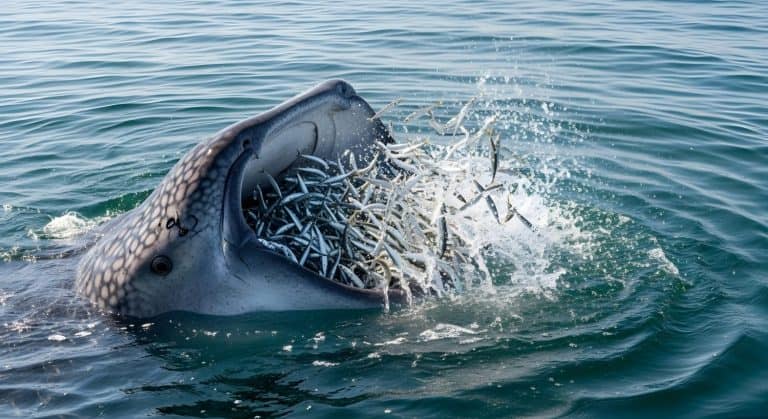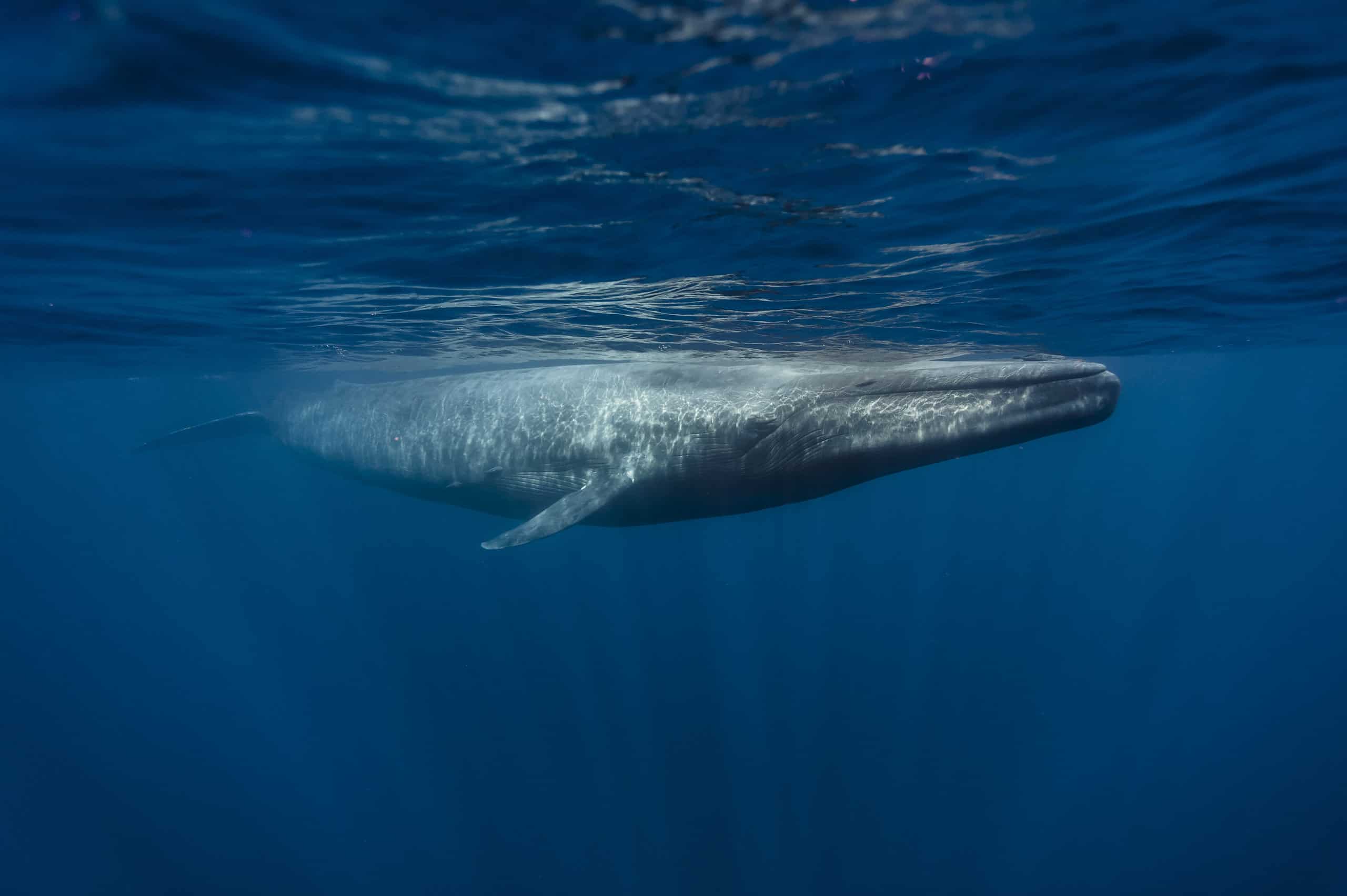

In a recent study published in Nature, researchers have discovered that baleen whales actually consume at least three times as much krill as originally estimated. Previously, scientists estimated the prey consumption of the largest whales using metabolic models, but these models lacked direct observational data. These new results will help researchers correctly determine the whales’ importance to the ecosystem.
Calculating Prey Consumption
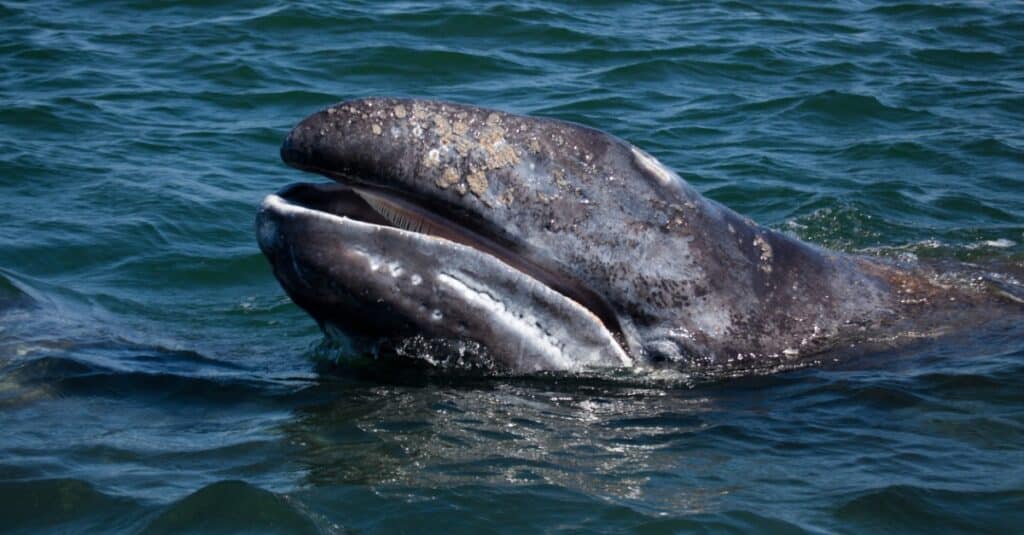
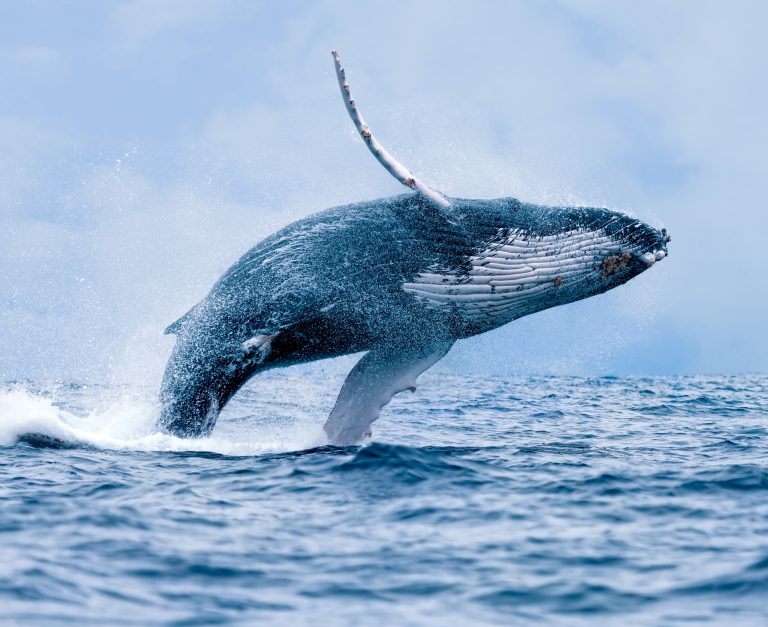
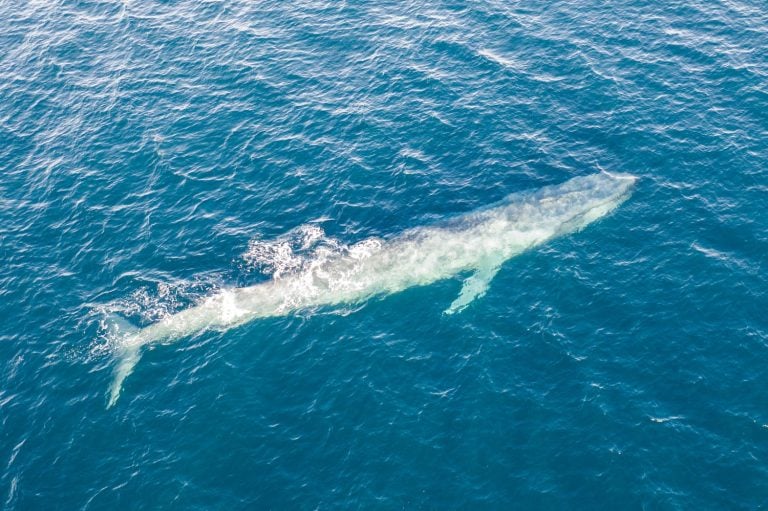
Baleen whales, like this gray whale, primarily eat small marine organisms such as krill.
©Mogens Trolle/Shutterstock.com
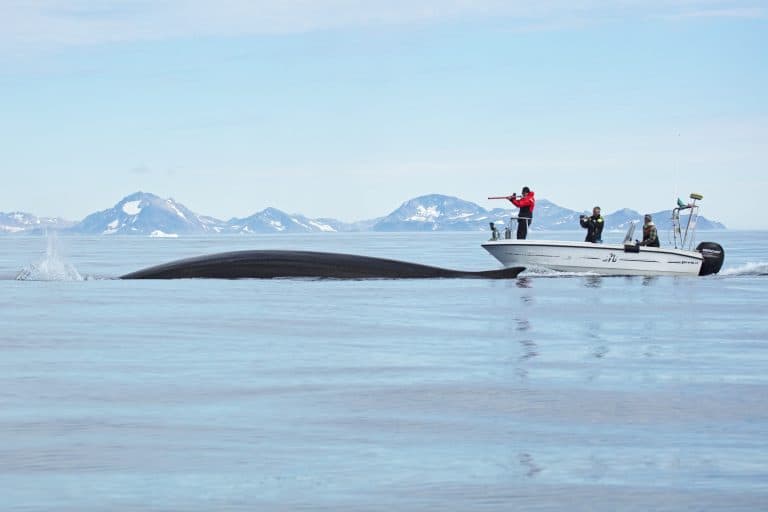
The study followed seven tagged baleen whales as they traveled the Atlantic, Pacific, and Southern oceans. Researchers used aerial drones, echosounders, and tags to measure krill density in the regions inhabited by baleen whales, as well as to determine the whales’ daily and annual prey consumption.
Prior to commercial whaling, baleen whales are thought to have consumed 430 million tons of Antarctic krill per year. This is roughly the size of today’s Antarctic krill population and more than twice the size of the annual global catch by marine fisheries. Previous research underestimated baleen whale consumption by three times or more in certain ecosystems.
Industrial whaling is believed to have removed 80% of whales in the Southern Ocean in just 60 years. This has reduced overall baleen whale populations by at least 90%. These results indicate that with larger whale populations, marine ecosystems are far more productive.
What Are Antarctic Krill?
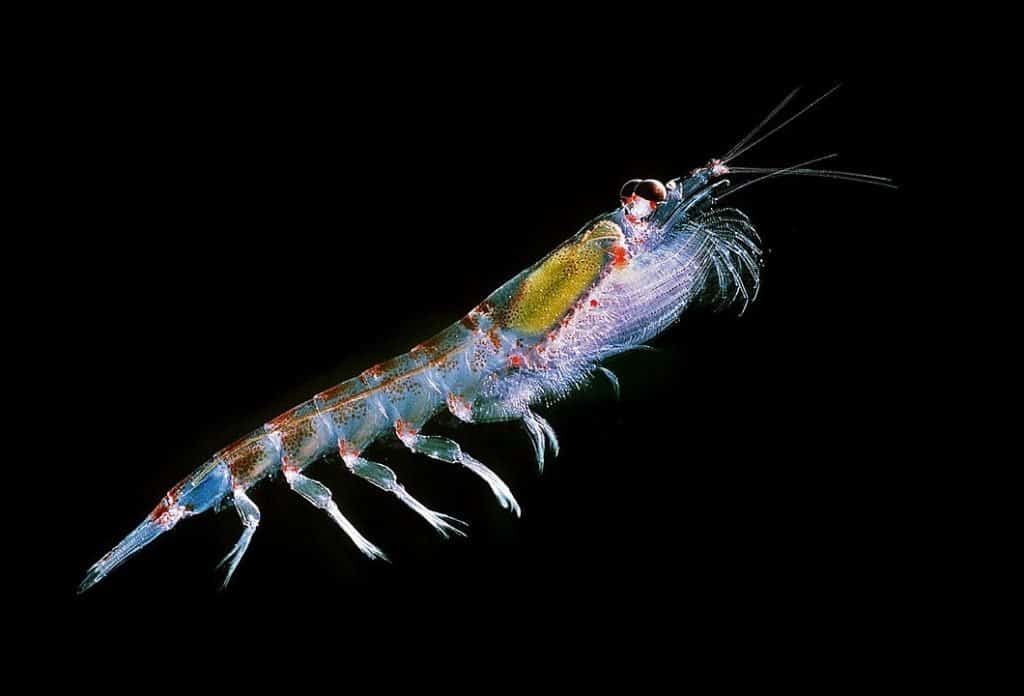
Antarctic krill are tiny crustaceans that resemble shrimp.
©Krill666.jpg: Uwe Kils / Creative Commons – Original / License
Antarctic krill are among the most abundant animal species on Earth, with a total biomass estimated between 400 and 500 million metric tons. These tiny crustaceans look like the more commonly known shrimp.
Krill are found throughout the Southern Ocean, ranging from the Antarctic continent to the polar front. Krill swim in dense schools and are hunted by a variety of other species. Most large whale species, leopard seals, some species of penguins, albatrosses, other fish, and even squid prey on this species of krill.
Even after being digested by predators, Antarctic krill continue to nourish the ocean. Krill contain nutrients, including iron, that help feed phytoplankton — the base of the ocean’s ecological food web. Phytoplankton are food for krill, and they require iron to survive. Antarctic krill are one of the key middlemen of the marine food chain.
Why Do Baleen Whale Diets Matter?
Baleen whales play a significant role in global ecosystems, particularly through the nutrients in their fecal matter. They essentially act as krill processing plants, releasing nutrients from digested krill back into the ocean ecosystem.
The marine ecosystem is a cycle involving whales, krill, and phytoplankton: Antarctic krill feed the whales; the whales then release nutrients needed by phytoplankton; and the phytoplankton, in turn, feed the krill. Other marine species rely on this process in order to survive.
By showing the importance of baleen whales in productive marine ecosystems, this study once again highlights the necessity of rebuilding whale populations. If we support the world’s whales, we will ultimately benefit the health and functionality of the entire ecosystem.