
Bluebirds are striking little birds that are a common sight in rural and some suburban areas of the US. They are very popular with bird watchers both for their vibrant appearance and melodious songs. There are three native species of bluebirds, namely the eastern bluebird, the western bluebird, and the mountain bluebird. They differ by location, size, and color. But in some areas, you cannot see them all year round. Here we explore where bluebirds go in the winter and why they change location when temperatures fall.
Where Do Eastern Bluebirds Go in the Winter?
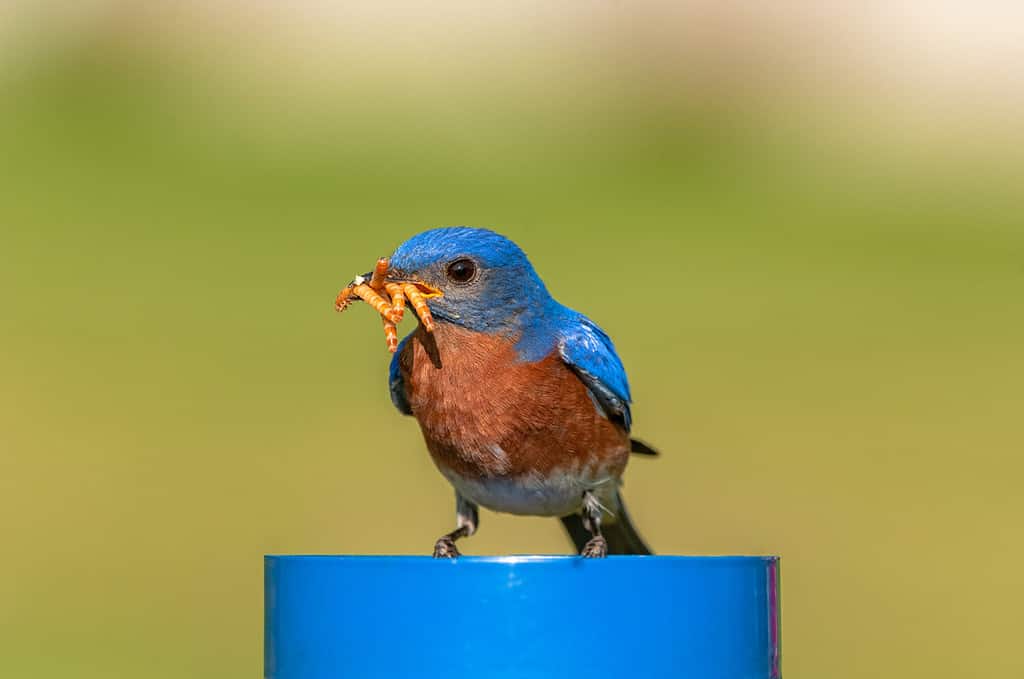
Eastern bluebirds love live or dried mealworms in a feeder.
©Alan B. Schroeder/Shutterstock.com
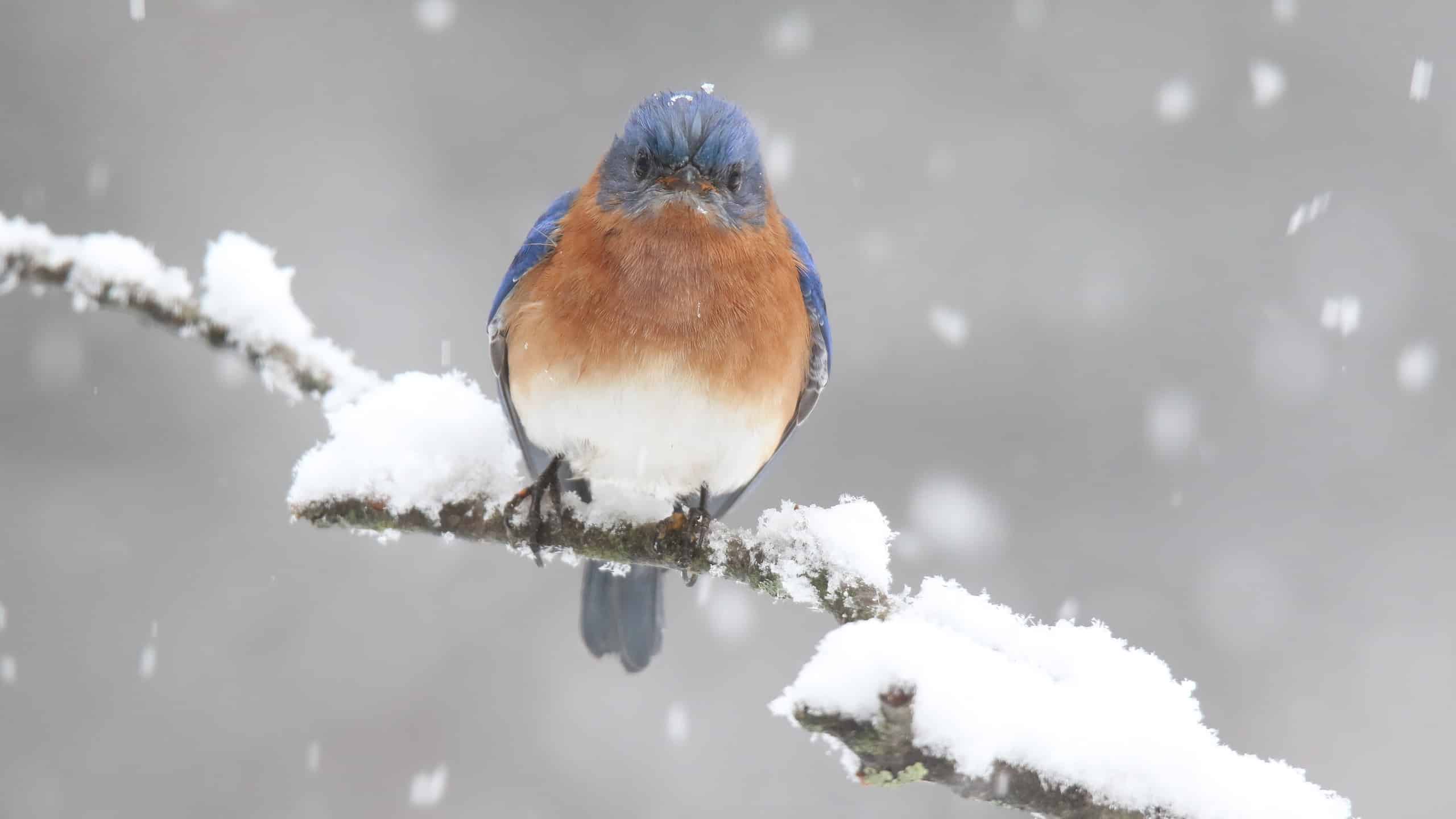
The eastern bluebird (Sialia sialis) can often be spotted sitting on telephone wires and fence posts. There are seven subspecies which have different ranges. Their preferred habitats are in open country with little understory. You may also see them visiting suburban parks and backyards. They don’t often visit garden feeders but may be tempted by mealworms!
The males have brilliant royal blue feathers on their backs and their heads with warm red breasts.
Their diet is made up of mainly insects that they catch on the ground. These include beetles and grasshoppers. They supplement these with wild fruit and berries including blueberries and black cherries. However, they have been spotted catching and eating shrews, salamanders, and even snakes. The oldest ever recorded eastern bluebird was 10 years and six months old!
Their range extends over the eastern portion of the US. Some birds are resident all year round. However, during the winter months (December through to March), birds in the northern range of the boundary move south. They leave locations such as middle Minnesota, north Wisconsin, and Michigan and move to the southeastern US or Mexico. Some have been recorded flying 2,000 miles from western Manitoba to Texas to spend the winter!
Where Do Western Bluebirds Go in the Winter?
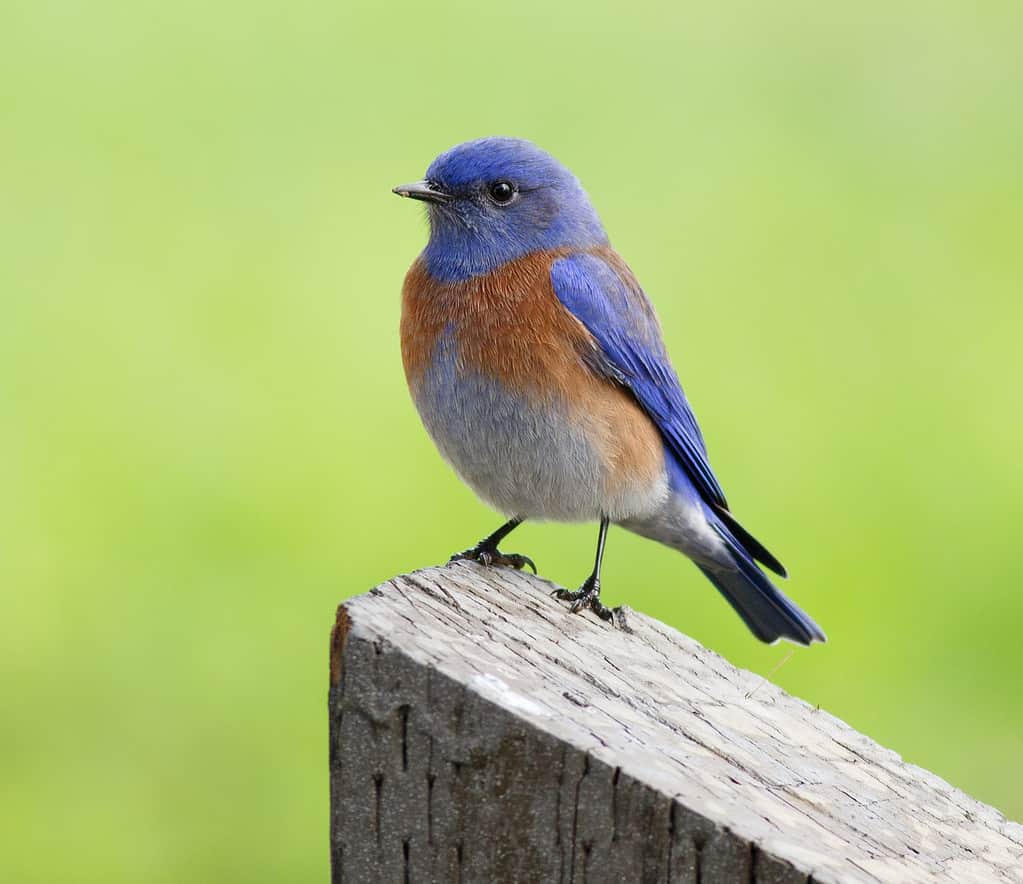
Western bluebirds migrate to Arizona, west Texas and northern Mexico in winter.
©MichaelRLopez/iStock via Getty Images
The western bluebird (Sialia Mexicana) is most likely to be seen in open woodlands or at the edges of woods. Here they perch low to the ground and stay low when they are flying. There are thought to be six subspecies living in different locations that vary in color and size. Their preferred habitats are evergreen and deciduous woods, especially ponderosa pine. In particular, they love areas disturbed by burning and logging where there are dead trees suitable for nesting and perching.
During the summer they eat grasshoppers, ants, wasps, spiders, and snails. In the winter, however, their diet is mainly made up of fruits and seeds including elderberries, raspberries, and poison oak.
Not all populations migrate and when they do it is over a medium distance. If you notice that the bluebirds have gone missing from your area in winter, they may simply have moved to lower elevations. Others leave their breeding grounds in the winter and head for Arizona, west Texas, and northern Mexico.
Where Do Mountain Bluebirds Go in the Winter?
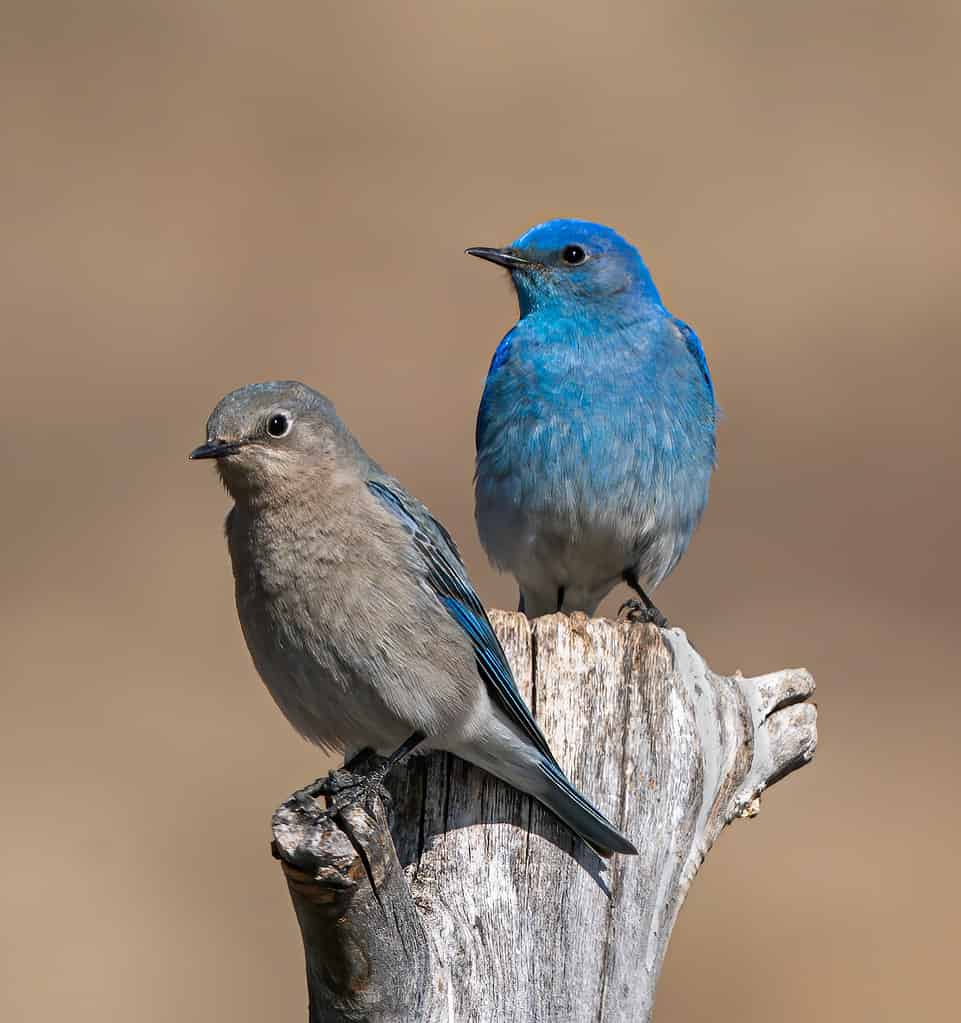
Mountain bluebirds move to lower elevations in the winter.
©Richard Seeley/Shutterstock.com
Mountain bluebirds (Sialia currucoides) live in open areas where there is a mixture of short grasses with shrubs and trees. You are most likely to spot them at the edges of tundra as well as on meadows and alpine hillsides, sagebrush flats, and pastures.
Their diet is made up mostly of caterpillars with beetles and grasshoppers to add variety. In winter, however, they can be seen feeding on small fruits and seeds including elderberries, cedar berries, and the seeds of mistletoe.
These are the most migratory of the three bluebird species in the US. Having said that, they are only a short-to-medium-distance migrant. Their range is the western part of the US and they only extend as far east as Oklahoma and Kansas. Whilst they breed as far north as Alaska, they spend their winters as far south as central Mexico.
Despite their name, these birds tend to come down from the mountains in winter. During the colder months, you are more likely to find them at lower elevations. In winter, their preferred habitats are meadows, hedgerows, prairies, and flat grasslands with a few trees.
Why Do Bluebirds Migrate in the Winter?
Migrating over even short distances uses up a lot of energy for birds and presents them with significant risks so there must be some very good reasons why they do it. One of the main motivations is food availability. As a species that relies mainly on insects as a source of protein, winters are hard for these birds. Insects are less plentiful in colder weather so they travel south to where the insect populations are more plentiful.
Another reason is weather conditions. Extreme cold is challenging for bluebirds – they have to use up a lot of energy keeping warm and finding shelter. By migrating to places with warmer climates they increase their chances of survival.
It is important that we do not just protect the breeding sites of these birds. We also need to conserve their winter habitats so that they can return and breed the next year!