
You might have noticed chickadees around your birdfeeder all year round. These cute and tiny songbirds belong to the Paridae family, which also includes tits and titmice. Ornithologists categorize North American chickadees and several strikingly similar species of Asian and European tits under the same genus, Poecile. These very closely related birds just happen to go by different names on different continents. This article will explore the ranges of the seven North American chickadee species and where they make their homes. Read on to discover where chickadees nest, whether they migrate, how they spend their winters, and more.
Carolina Chickadee (Poecile carolinensis)
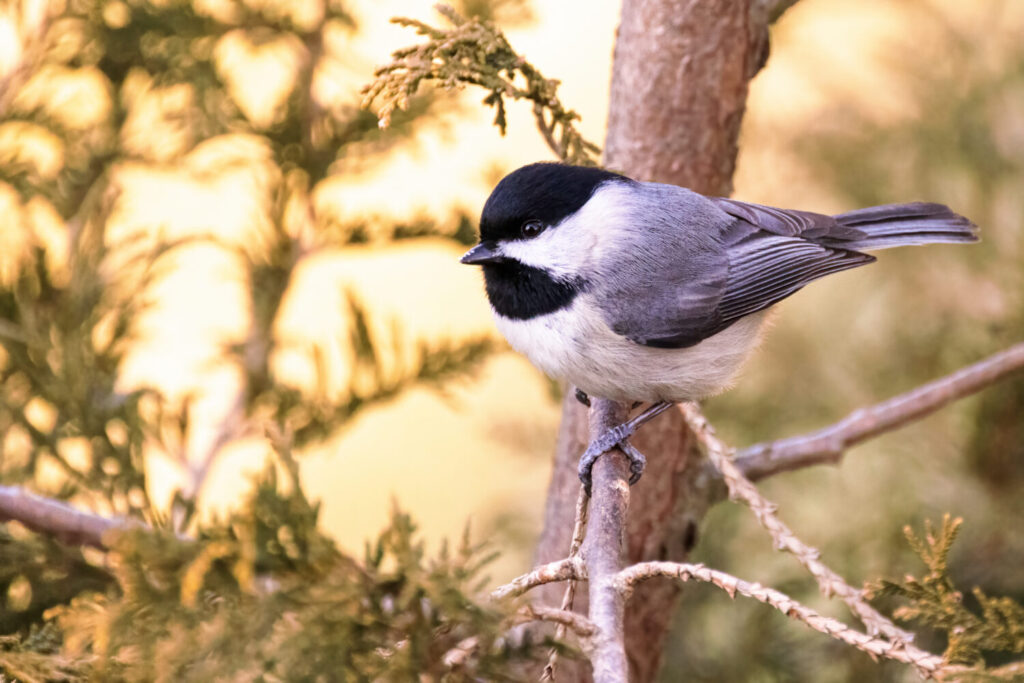
Carolina Chickadees range over much of the eastern United States, south of an arc from Texas to New Jersey.
©Ami Parikh/Shutterstock.com
The Carolina Chickadee has an expansive range covering much of the eastern United States. The range includes almost everywhere south to the Gulf of Mexico and east to the coast, from an arc beginning roughly at Amarillo, TX, through St. Louis, MO, and on to New Jersey. The species does not inhabit a few portions of this zone, including part of the Allegheny Mountains, south Florida, and the southern tip of Texas. Within its range, the Carolina Chickadee is a non-migratory resident of forests, shrublands, wetlands, and urban areas up to elevations of approximately 6,000 feet.
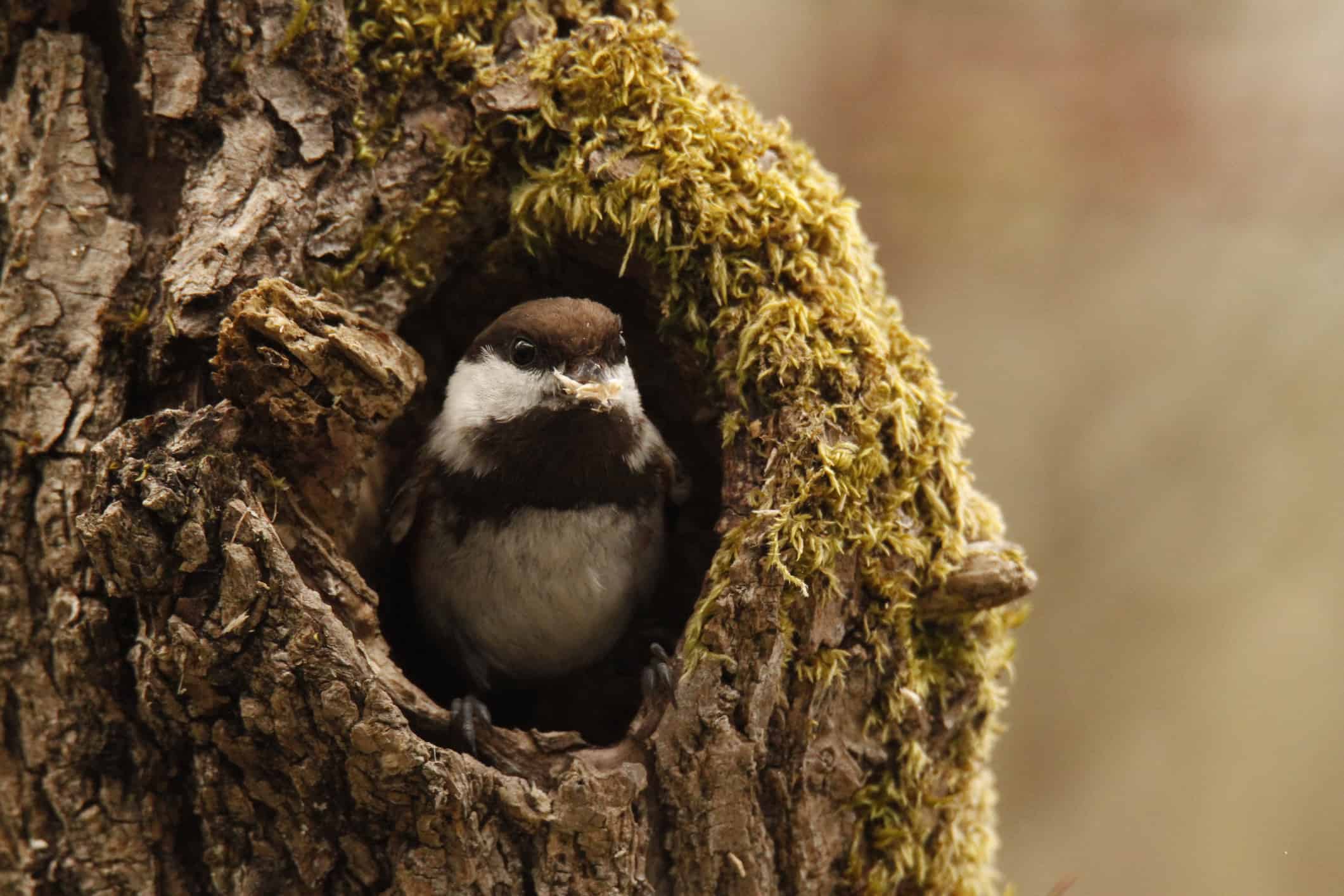
Female Carolina Chickadees build their nests in natural holes in trees or sometimes in holes abandoned by woodpeckers. They form the nests from moss and bark, and then line the nest with animal hair, fur, or soft plant fibers. This species uses torpor to survive the coldest parts of the winter in the northern part of its range.
Black-capped Chickadee (Poecile atricapillus)
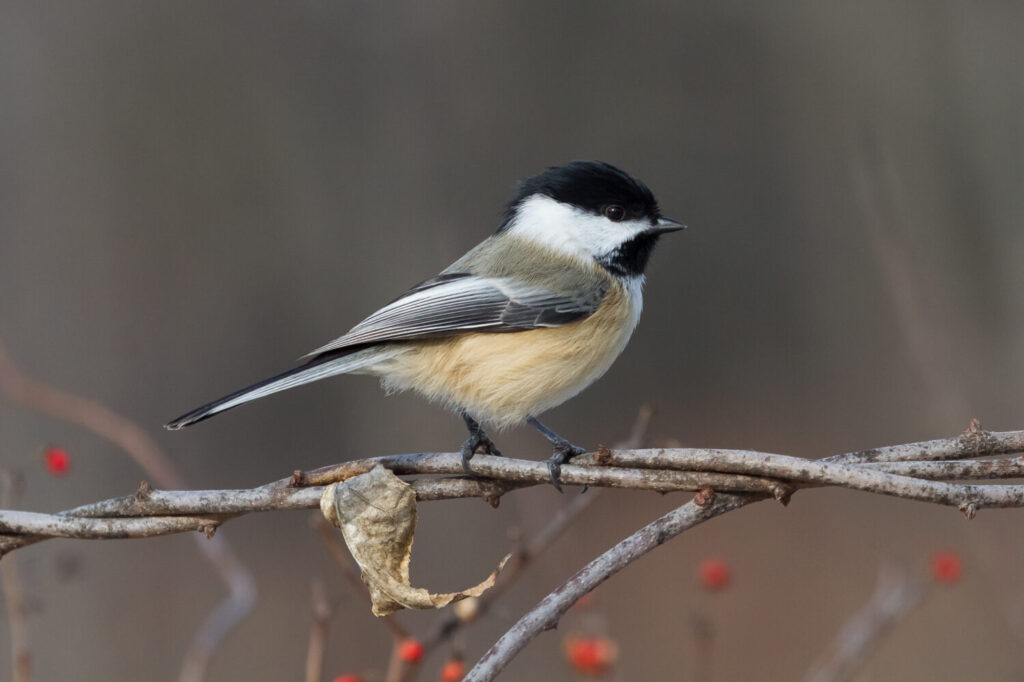
The Black-capped Chickadee ranges over the northern United States and southern Canada.
©Paul Roedding/Shutterstock.com
The Black-capped Chickadee lives mainly north of the Carolina Chickadee, although their ranges do overlap somewhat, particularly in the Appalachian region. The range of the Black-capped Chickadee covers roughly the northern two-thirds of the United States, much of the populated portion of Canada, and southern Alaska. They reside in both temperate and boreal forests, along with rural and urban settings. They rarely migrate unless in need of food.
Black-capped Chickadees usually nest in naturally occurring holes in stumps or dead trees, or in old woodpecker nests. The females fashion their nests from moss and pieces of bark and line the insides with soft plant fibers and animal hair or fur.
Mountain Chickadee (Poecile gambeli)
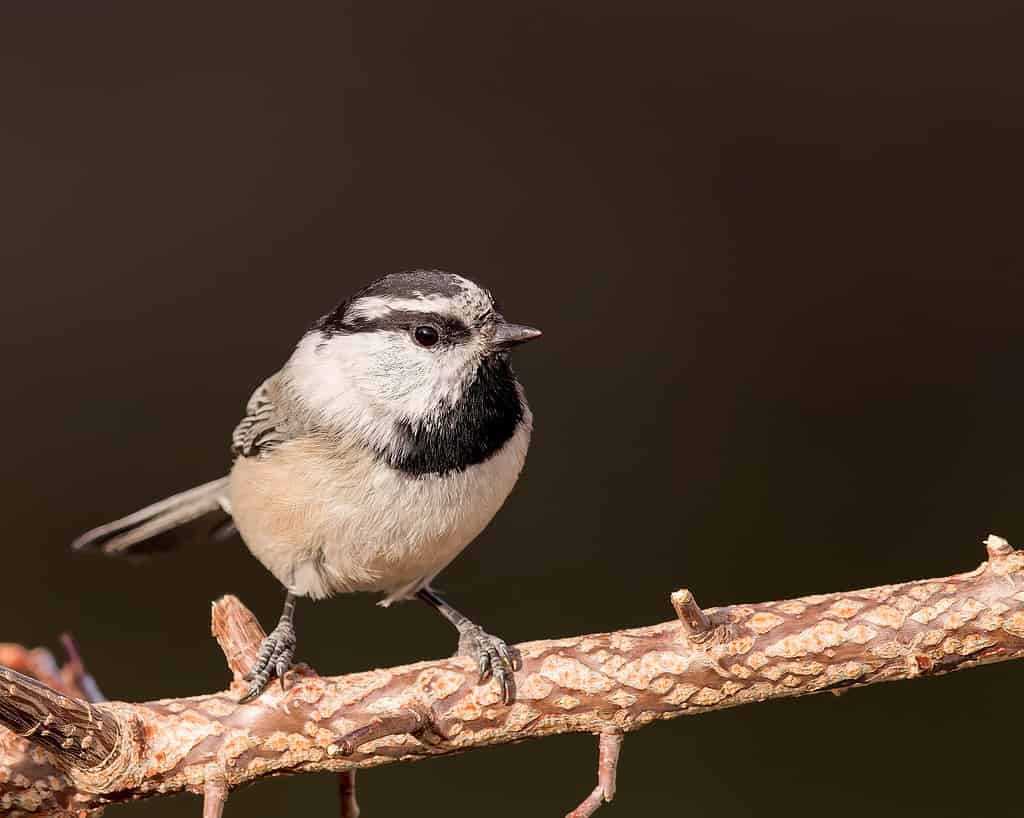
The Mountain Chickadee ranges mainly over the Rocky Mountain region.
©M. Leonard Photography/ via Getty Images
The Mountain Chickadee is unique among chickadees as it is the only one with a white line over its eye running through both sides of its black cap. It lives throughout the Rocky Mountains and surrounding regions. The northern part of their range extends from Yukon, Canada in the north to the northern part of Baja California in Mexico in the south. Mountain Chickadees reside in urban areas and in boreal, temperate, and even subtropical forests, mainly at elevations from 1,900 to 12,000 feet. They often migrate to lower elevations when it is very cold.
Mountain Chickadees usually nest in naturally occurring holes or old nests made by woodpeckers or other animals in trees or stumps. They prefer to nest close to the ground, and they may make use of crevices in rocks or banks, spaces under rocks, or other hidden spots. They also make use of nest boxes if available. Like other chickadees, the female of this species fashions the nest from found materials such as moss, bark, plant fibers, and animal hair or fur. She also makes a cover for the inside of the opening, to conceal the nest.
Chestnut-backed Chickadee (Poecile rufescens)
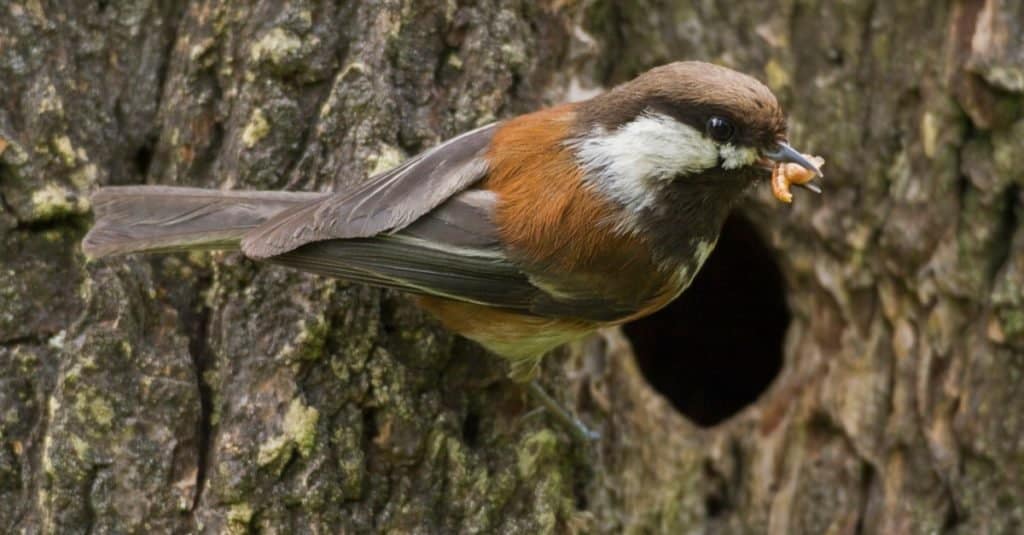
Chestnut-backed Chickadee subspecies have varying amounts of reddish-brown plumage on their flanks.
©Danita Delimont/Shutterstock.com
The Chestnut-backed Chickadee is easily distinguished from other chickadees in its range by its brown cap and bright, reddish-brown mantle. This species lives primarily west of the Rocky Mountains, from the southern coast of Alaska to the middle of California, with a large pocket that extends into the Rockies as far east as Idaho and Montana in the United States and southern Alberta in Canada. They live in boreal and temperate forests and shrublands, agricultural and urban areas at elevations up to 6,000 feet. They do not migrate but move seasonally between higher and lower elevations.
Like most other chickadees, Chestnut-backed Chickadees nest primarily in holes in either live or dead trees or stumps. They may use naturally occurring holes, abandoned woodpecker nests, or nest boxes. The females make the nests, layering fur on top of plant materials such as grasses or moss. Fur from local mammals makes up more than half of the Chestnut-backed Chickadee’s nest.
Boreal Chickadee (Poecile hudsonicus)
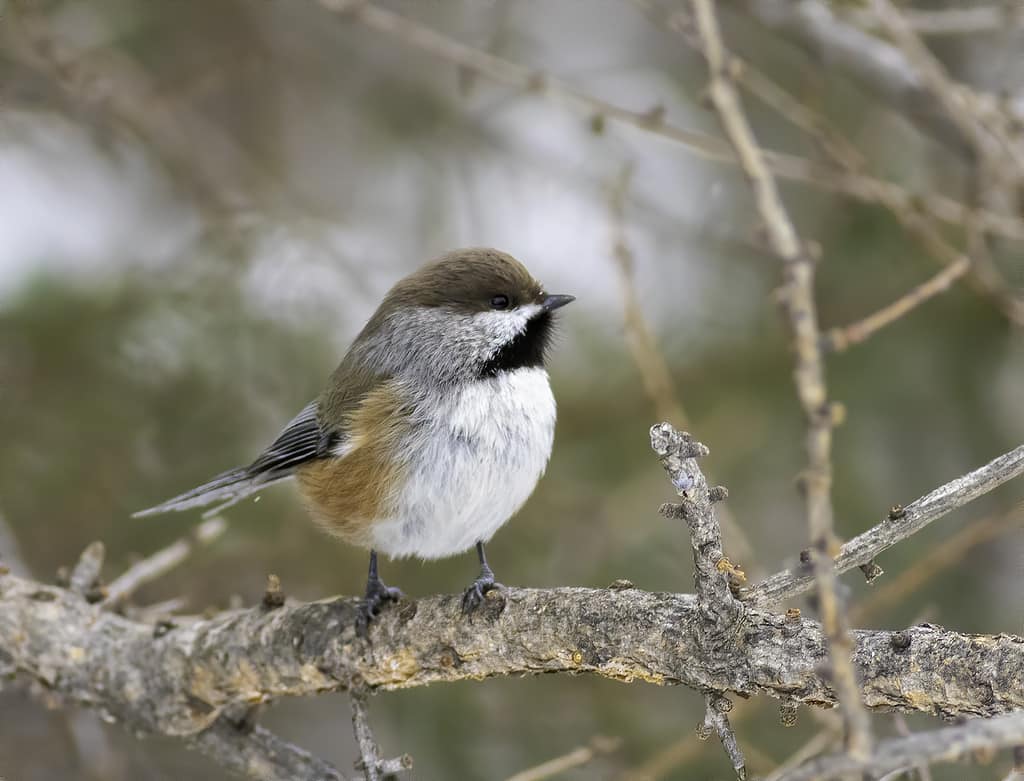
The Boreal Chickadee ranges from Alaska, over much of Canada, and into the northern United States.
©Matthew Jolley/ via Getty Images
The Boreal Chickadee looks much like the Chestnut-backed Chickadee, with its brown cap. But the Boreal Chickadee has a grey-brown mantle instead of bright, reddish brown. This non-migratory species ranges from Alaska through much of Canada all the way to the east coast, and south into the United States in Washington, Montana, the Great Lakes region and parts of New England. It lives in boreal and temperate forests up to elevations of about 6,800 feet.
Boreal Chickadees nest in holes in trees or stumps, either naturally occurring or abandoned by woodpeckers. The female makes the nest from any suitable plant materials such as moss, grasses or bark, covered with animal hair or fur.
Mexican Chickadee (Poecile sclateri)
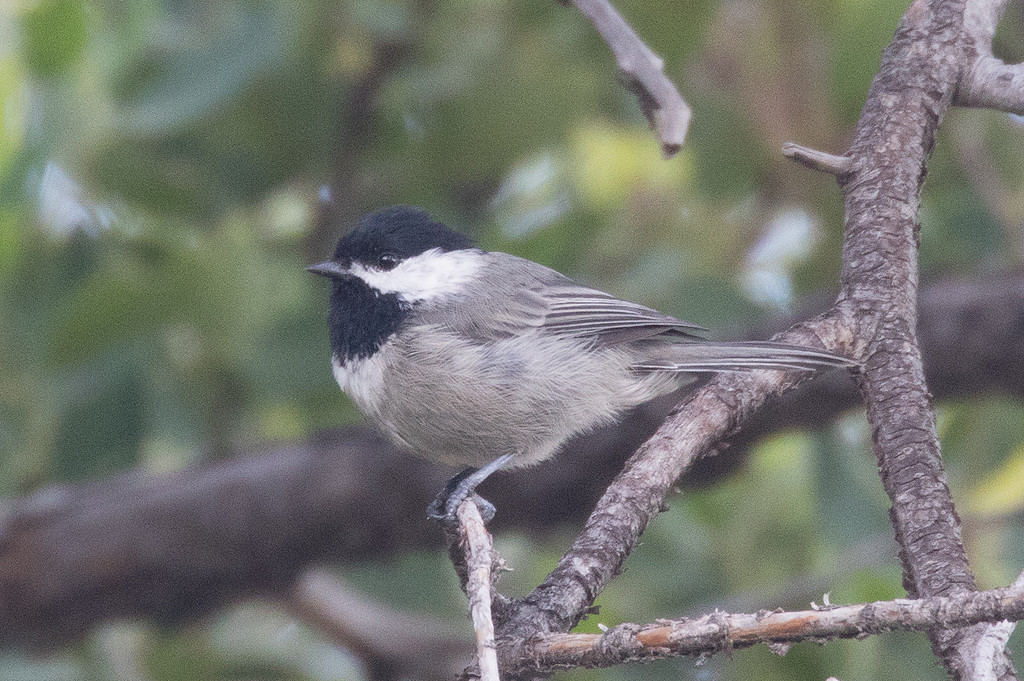
The Mexican Chickadee dwells the furthest south of any of the chickadees.
The Mexican Chickadee has an estimated population of approximately two million individuals. This species lives the furthest south of any of the chickadees. It resides primarily in Mexico across a highly fragmented range that spans the mountainous western region, the southwestern coast, and a swath from the western edge of Michoacán to the eastern coast of Veracruz. Their range includes a few more isolated pockets in Mexico and stretches just barely into New Mexico and Arizona in the United States. Mexican chickadees do not migrate but will move to lower elevations in cold weather.
Scientists know less about the Mexican Chickadee than other chickadee species. They do know that this bird lives mainly in forests and shrublands at elevations between about 6,500 and 10,600 feet. Mexican Chickadees typically nest in existing holes in trees or stumps, usually from 10 to 40 feet above the ground, although they may nest lower. They sometimes also utilize nest boxes. Females build the nest foundation from bark, grass, and moss. They line the nest with fur, animal hair, and soft moss.
Grey-headed Chickadee (Poecile cinctus)
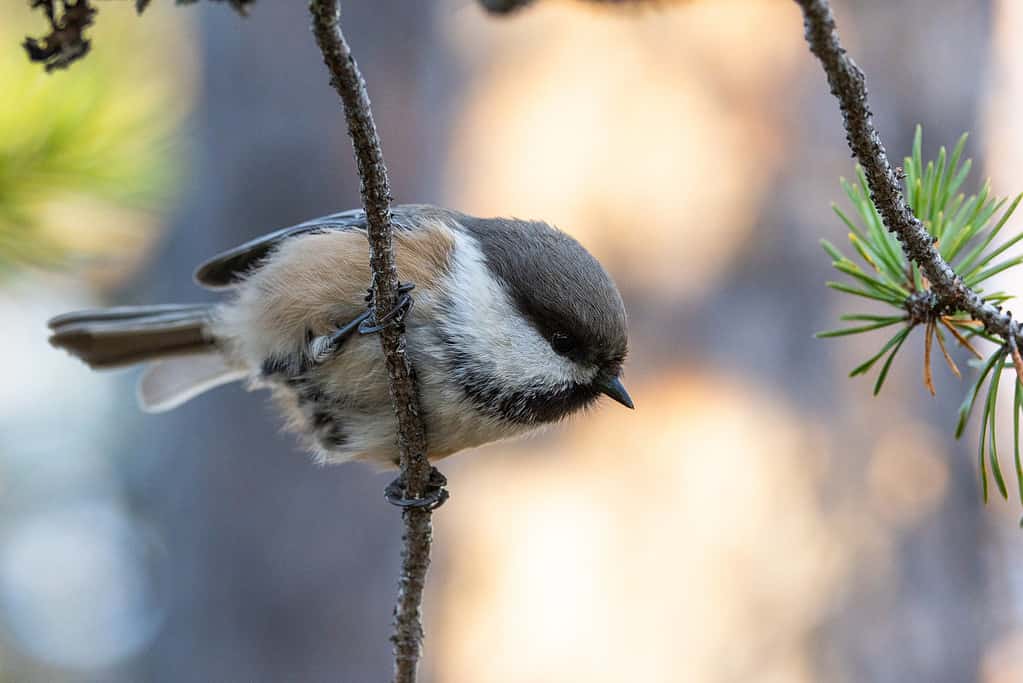
The Grey-headed Chickadee is disappearing in its North American range.
©Karl Ander Adami/ via Getty Images
The northernmost resident on the list is the Grey-headed Chickadee. It is known as the Siberian Tit through all but the North American portion of its range and has an expansive distribution including the majority of Russia and into parts of Finland, Sweden, and Norway in Europe and Kazakhstan, Mongolia, and the far northern tip of China in Asia. In North America, the Grey-headed Chickadee’s range includes only the northern part of Alaska and far northwestern Canada. Unfortunately, in Alaska and Canada, the species is rapidly disappearing. Recent research indicates a dramatic decline of the Grey-headed Chickadee in both numbers and distribution in its North American range.
This species lives in the boreal forest within North America, all the way to the northern limit of where trees can grow. Females build nests in holes in trees, using either naturally occurring recesses or nests that were abandoned by woodpeckers. They prefer to nest low to the ground. They build the nest from pieces of dead wood or bark with moss and grass layered on top. Then they line the inside of the nest with soft fur or hair from mammals in the area.
A Summary of North American Chickadees
The seven chickadee species of North America range from Alaska and far northwestern Canada all the way to southern Mexico. Some exist in much larger numbers and are distributed over much wider areas than others. All seven are listed as species of least concern by the IUCN Red List of Threatened Species, although habitat degradation and climate changes have challenged the birds in some locations. Chickadee lovers can help their populations by providing nest boxes, which most of the species will sometimes utilize, along with bird feeders, especially in cold areas where winter food may be scarce.
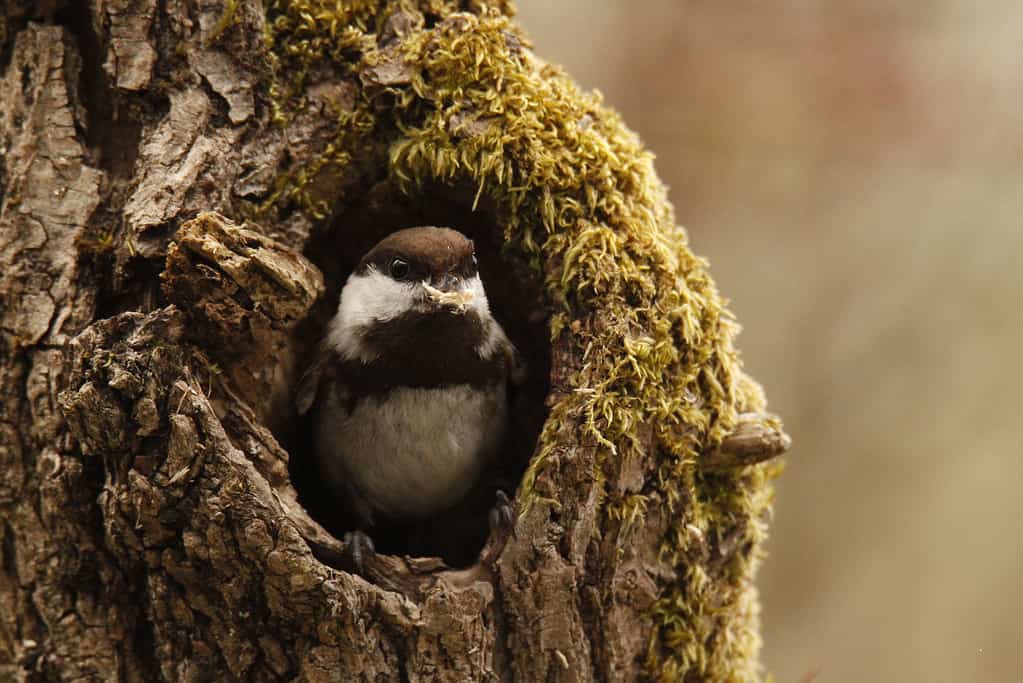
Chickadees most often nest in holes in trees or stumps, but sometimes use nest boxes if available.
©Shayne Kaye/iStock via Getty Images
| Common Name | Scientific Name | Range |
|---|---|---|
| Carolina Chickadee | Poecile carolinensis | Southeastern to south central United States |
| Black-capped Chickadee | Poecile atricapillus | Northern United States and Southern Canada |
| Mountain Chickadee | Poecile gambeli | Mainly Rocky Mountains and surrounding regions south to Mexico |
| Chestnut-backed Chickadee | Poecile rufescens | West Coast from Alaska to California, and part of the Rocky Mountains |
| Boreal Chickadee | Poecile hudsonicus | Alaska, most of Canada, and parts of the northern United States |