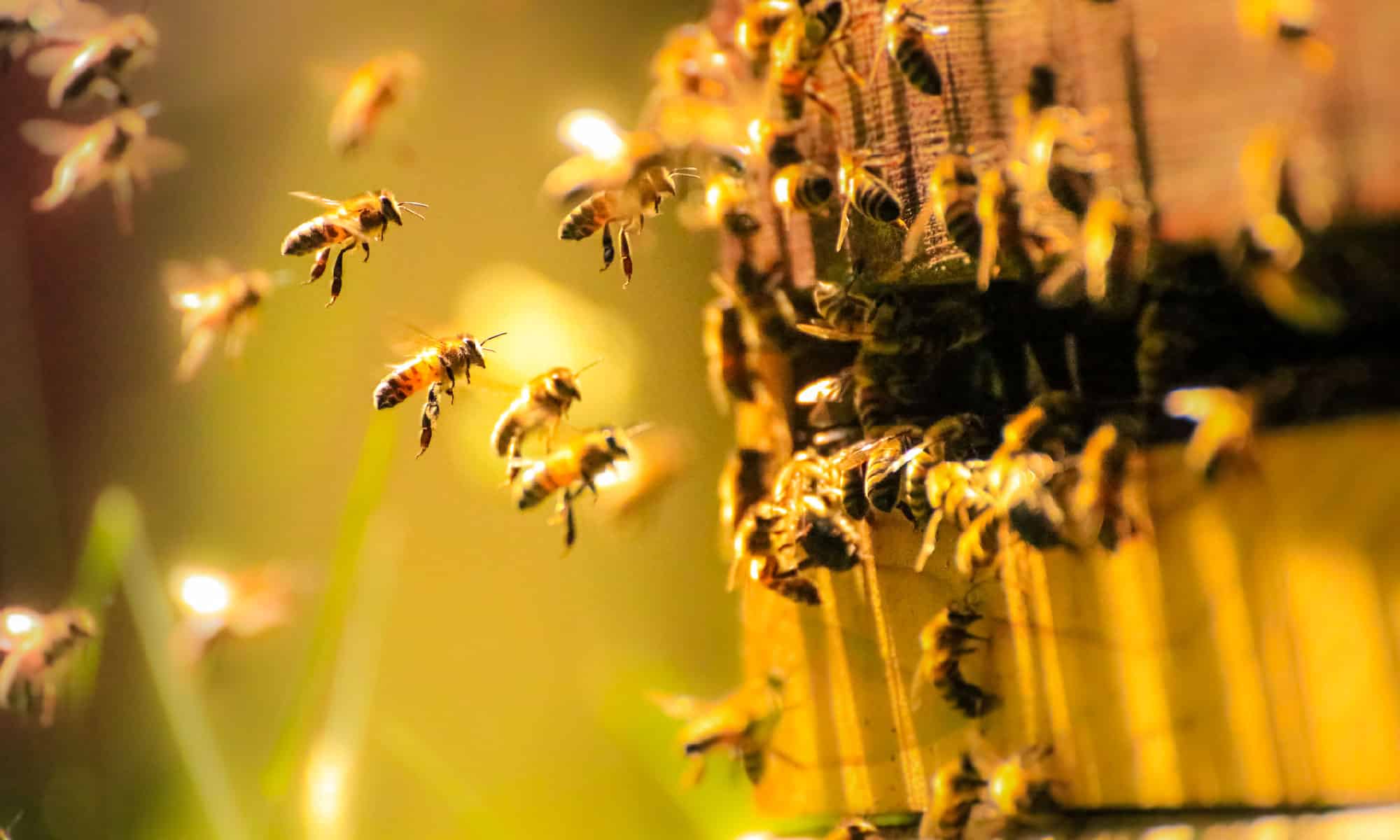

They’re busy little ones, each with a specific job. The sound of them may either pique your curiosity or make your blood run cold, in fear of a sting. But why do bees buzz? Learn why bees make this sound and discover 10 amazing facts about their bodies!
Why Do Bees Buzz?
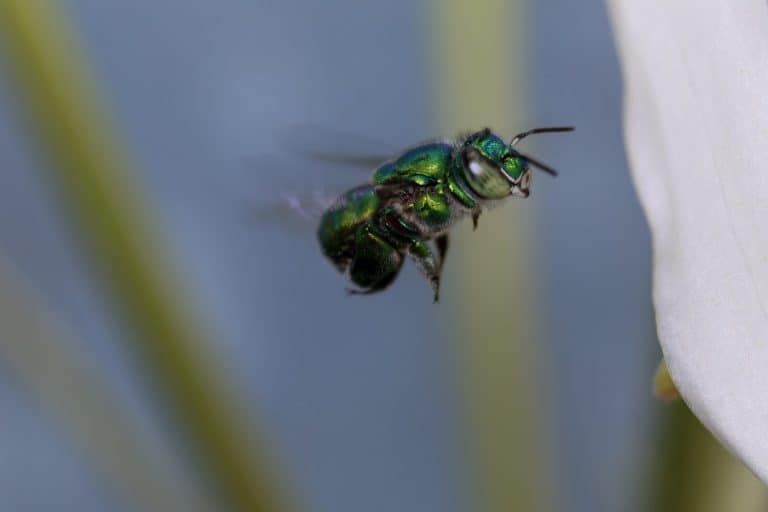
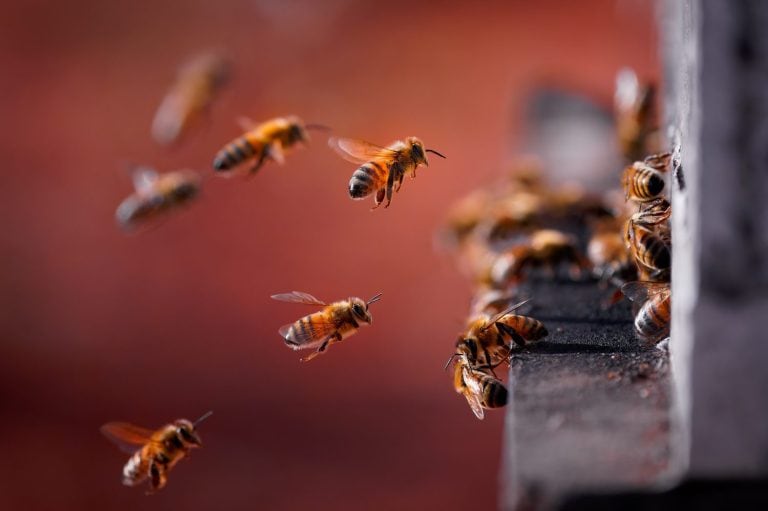
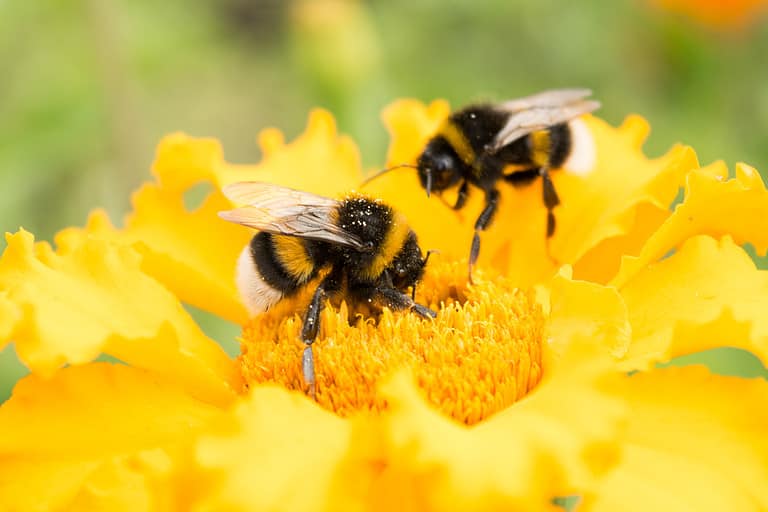
Usually, the reason you hear bees buzz is because of how quickly they beat their wings. They can beat their wings an incredible 230 times a second! This explains the buzzing sound you hear when they zip right past you. However, some bees also produce a buzzing sound via their flight muscles.
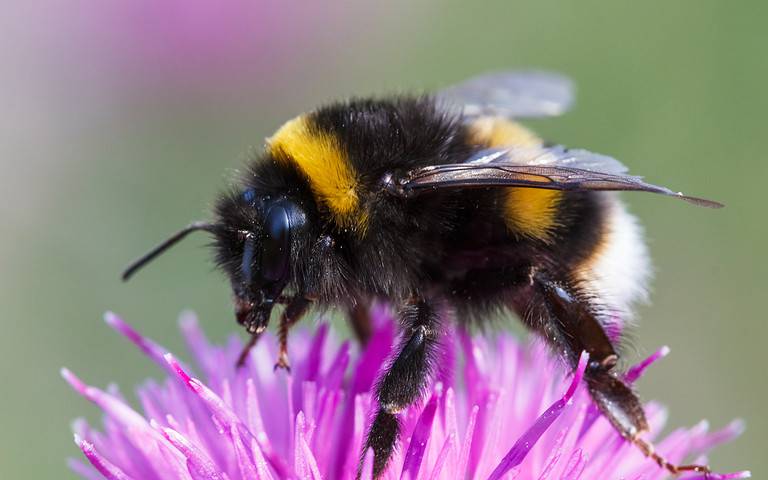
Their flight muscles are located within their thorax. When they vibrate, they also produce a buzzing sound. Bumblebees, for example, use their vibrating flight muscles during pollination. There are certain types of plants that require a specific vibration frequency, which is why bumblebees and some solitary bees can also buzz in this different way.

Bumblebees produce a vibrating sound during pollination via their flight muscles.
©ArtEvent ET/Shutterstock.com
10 Amazing Facts About Bees’ Bodies
1. Their Bodies Regulate Their Hive’s Temperature
Although the climate around a honeybee’s hive may change throughout the year, honeybees work hard to serve as both the heating and cooling mechanism inside their hives. They need the temperature to remain between 93 degrees Fahrenheit and 95 degrees Fahrenheit throughout the year.
When it’s cold, they swarm together to increase their collective body heat. They also seal any cracks to prevent drafts. When it’s hot outside, these bees know to collect water. Then, they cleverly funnel water into their beehive so that it evaporates. They basically form their own unit of central AC.
2. They Have a Hard Outer Shell
Bees may look soft, fuzzy, and squishy, but they have an exoskeleton that protects their vulnerable inside bits (including their midgut and foregut, which is also known as a honey stomach).
3. A Bees Weight Is Hardly Registerable
One bee weighs only 0.00025 pounds. In order to register a pound on a scale, you would have to weigh a total of 4,000 bees together at the same time!
4. A Queen Bee Lays Hundreds of Thousands of Eggs
800,000 to be exact! A queen bee stays busy. Since she only has one role throughout her life — reproduction — she has to take her job very seriously.
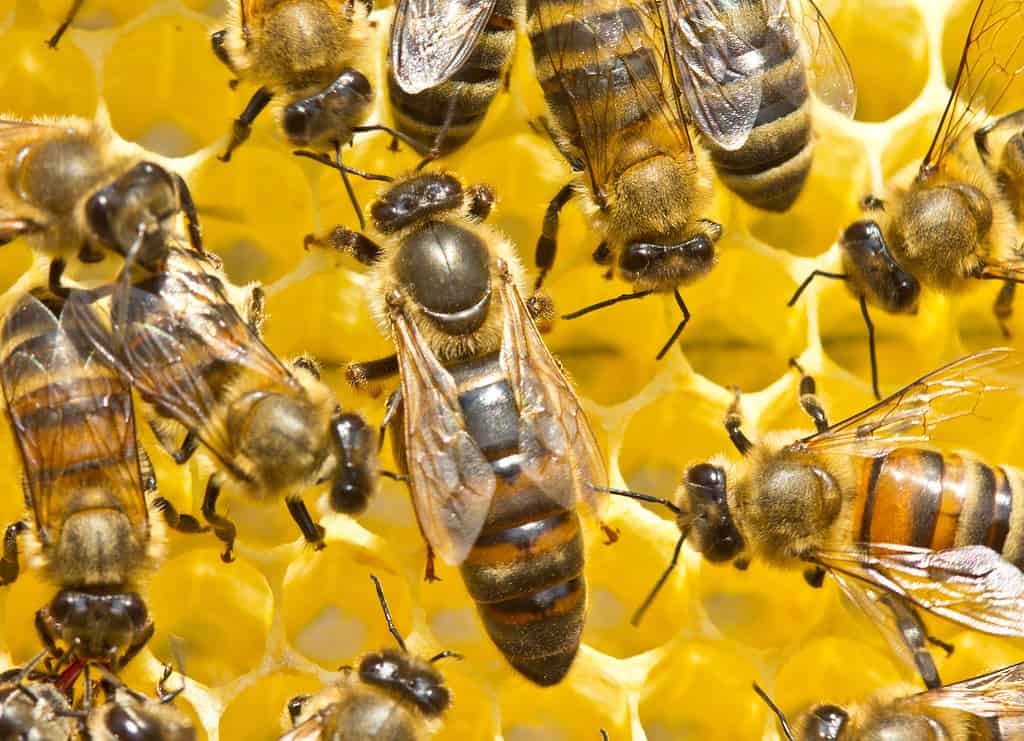
Queen bees have a very important role and they take it seriously, laying hundreds of thousands of eggs.
©iStock.com/Inventori
5. They Have Two Sets of Wings
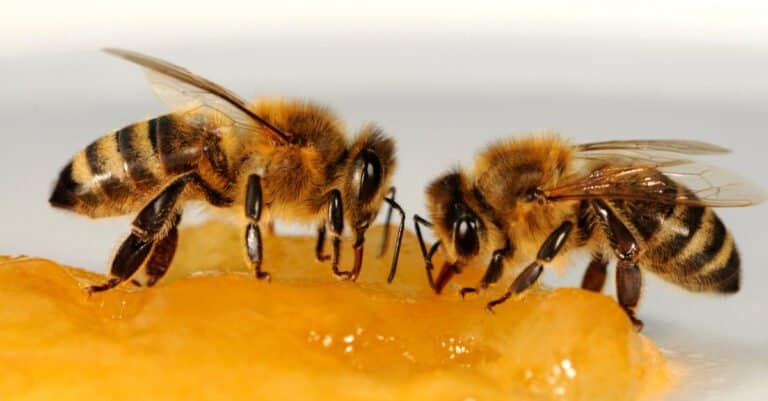
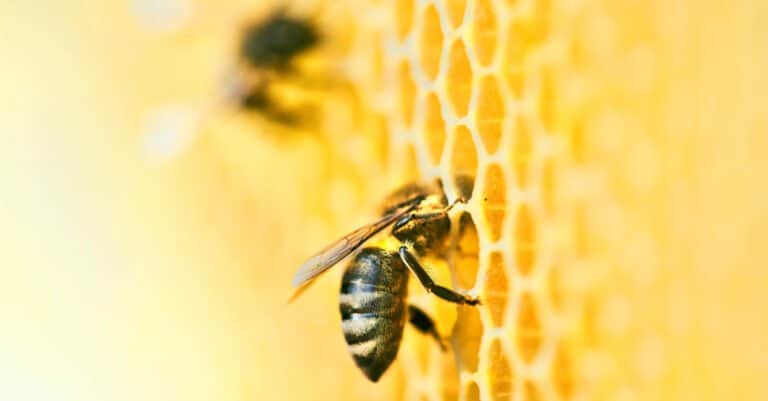
Honeybees have two sets of wings. They have forewings, which are the ones located closest to their head and they also have hind wings, which are the wings situated further away from their head.
6. On Their Heads, They Have Antennae
A bee’s head is equipped with a pair of antennae, which serve as feelers to help them interpret their environment, particularly any current or scent that can direct them toward food sources and their hive.
7. They’re Equipped With Their Very Own Antennae Cleaners
Since a bee’s antennae are constantly collecting useful information, they have to remain clean to pick up on subtle shifts and changes. That’s where their antennae cleaners come in. These cleaners are attached to each of the bee’s forelegs. There are little notches with erect hairs that help them clean their information-collecting feelers.
8. They Have Three Leg Pairs
That’s right, honeybees have six legs. They have their forelegs, which are the ones closest to their head (these are also the ones equipped with antennae cleaners). Then, they have their middle legs and finally, they have their hind legs. If it’s a worker bee you’re looking at, you might notice that its hind legs are equipped with extra tools. This is so they can carry pollen.

Worker bees are equipped with extra tools to carry pollen.
©yod 67/Shutterstock.com
9. They Have a Brain and a Heart
They’re quite small and their hearts and brains are even smaller. But bees display impressive intelligence, able to learn and process memory. Their hearts pump blood through their bodies but not the same way your heart pumps blood in your body. You see, bees don’t have veins or arteries. It’s more of a free-flowing system for them.
10. They Dance to Communicate
As if bees weren’t remarkable enough, they also do a little wiggle when they need to communicate something. Sometimes it’s more of a shake, other times it’s more of a tremble. Sometimes they do a kind of cleaning dance and sometimes they even do a massage dance. The massage dance is especially interesting because it is literally a request for a massage! And yes, other bees oblige.