
Quick Take
- Birds can get electrocuted on power lines, yet they almost never do. The reason comes down to a surprisingly simple physics loophole. See the physics loophole →
- Power lines don't actually keep birds warm, and what stops them from freezing out there is something far more surprising. Find out how birds stay warm →
- Those massive flocks that vanish from power lines overnight aren't random chaos. They're actually running a surprisingly coordinated playbook. Discover the coordinated playbook →
- Only certain birds choose power lines, and the species that do share a trait most people would never think to look for. See which species perch →
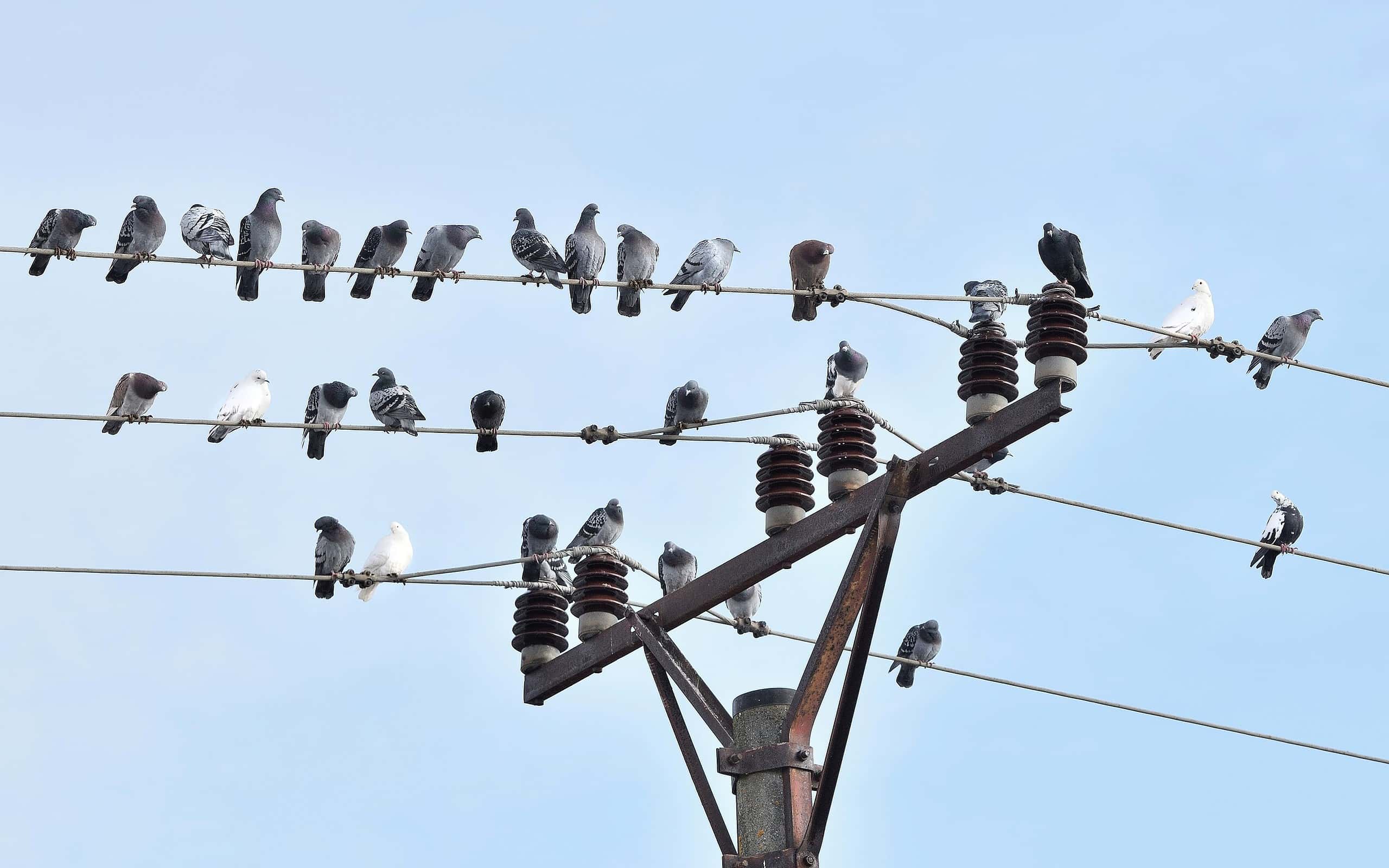
Electrical grids across the world have become the world’s most convenient rest stops. For birds. If you walk outside right now and look up, you will see them. Just sitting there; little, feathered punctuation marks, lined up perfectly on the utility wires. Whether you call them power lines or telephone wires, they are the perfect penthouse apartments for birds. So, why do birds perch on power lines? Continue reading to uncover the reasons behind this fascinating behavior.
Why are Birds Attracted to Power Lines?
Birds want the best possible view of their surroundings, and power lines give them a bird’s-eye view. Power lines provide birds with a safe, elevated vantage point to spot food and watch for predators. These wires also offer a cozy place to absorb residual heat and serve as convenient gathering spots.
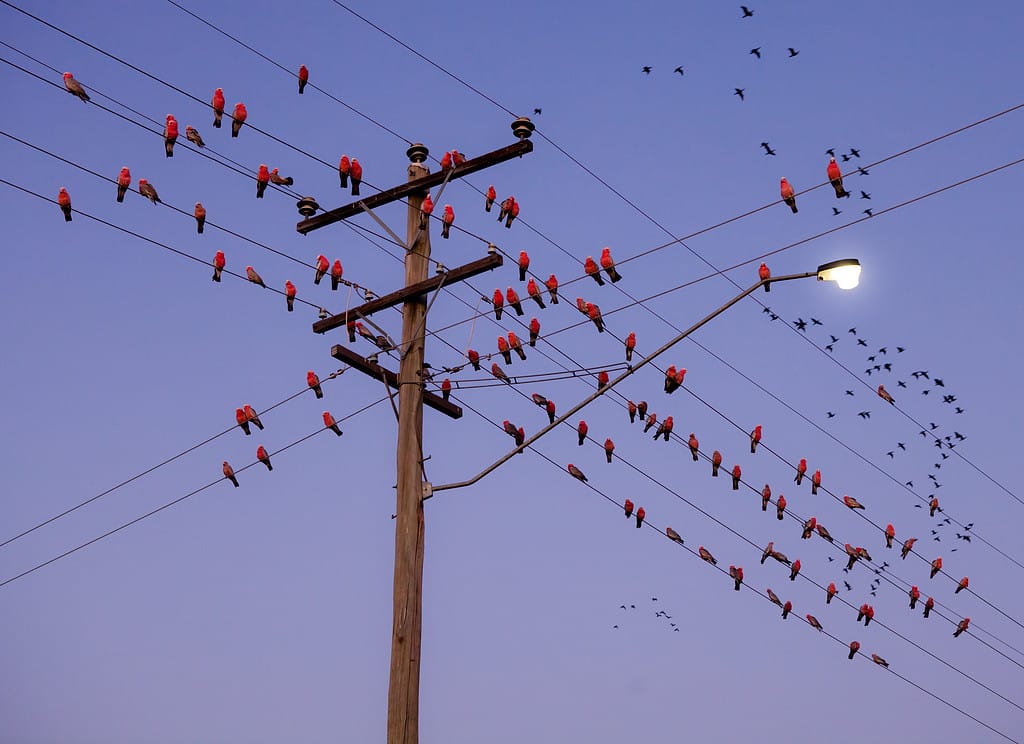
High wires offer a completely unobstructed, 360-degree view of the neighborhood, which helps keep birds safe from predators and allows them to hone in on their next meal.
©Markus Gebauer/Shutterstock.com
When birds perch high up on the power lines, they gain a clear view of their surroundings, homing in on insects, berries, fruit, nuts, and other food they couldn’t see from a lower perspective.
Birds on power lines are also safe from land predators like foxes, cats, and dogs. While some of these animals can climb up after them, the birds have a greater chance of flying away from a power line than from a bush or a tree.
Do Power Lines Keep Birds Warm?
As temperatures drop, power lines offer birds a safe place to come together. You may have noticed that in winter they sit close together, but in summer they spread out more. This is because huddling provides added warmth.
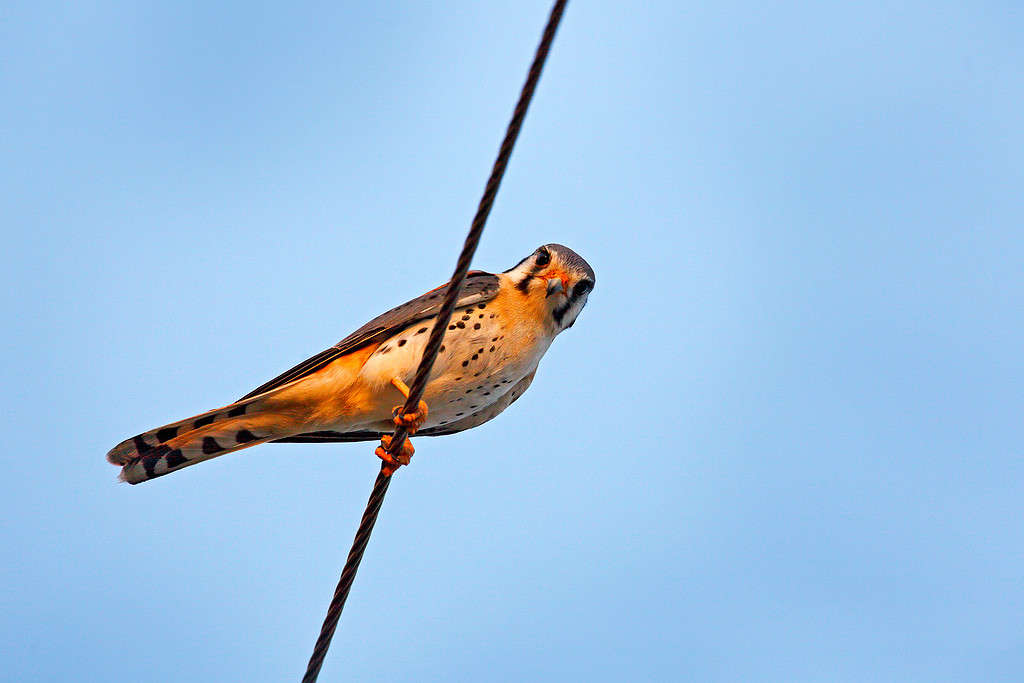
When a bird lands on a wire, its body weight automatically pulls a tendon in its leg, forcing its toes to lock around the wire like a vise. They do not have to exert any energy to stay there; they could literally fall asleep on a high-voltage line and not fall off.
©Ondrej Prosicky/Shutterstock.com
Telephone wires (which carry low-voltage communication signals) do not produce enough electricity or heat to keep birds warm. Although high-voltage power lines may generate a tiny amount of heat due to electrical resistance, the heat is minimal and doesn’t significantly protect birds from freezing temperatures or ice.
The wires also absorb solar energy, which has a minimal effect on bird warmth.
However, birds survive the cold by huddling together, shivering to generate metabolic heat, and relying on thick feathers that trap air against their bodies.
Power lines are often covered in large numbers of migratory birds before they embark on their migration. This is because migrating flocks use power lines as gathering points to synchronize their flight.
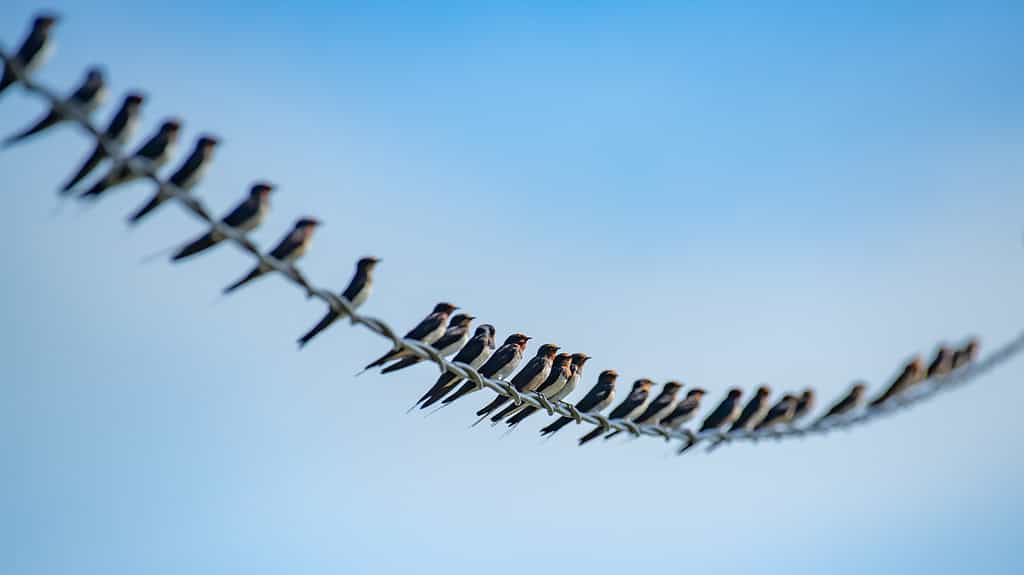
Swallows are often seen gathered together on power lines before they begin their migratory flight.
©Naturalism14/Shutterstock.com
Pay attention next autumn or spring and see what happens. You’ll likely see big groups of a given bird species collecting together on power lines for a couple of days. Then, poof! They’ll be gone for the season.
Why Don’t Birds Get Electrocuted on Power Lines?
Birds can get shocked by power lines, but only if they touch two wires at the same time. This typically happens when a larger bird has a hard time fitting on a single line, although two birds sitting on two different lines can also shock each other if they make contact.
A single bird sitting on a single power line, without touching another bird or line, does not complete the electrical circuit. This means the bird can sit with its wings and tail tucked so they don’t make contact with the power line and won’t get shocked.
The current doesn’t flow unless a circuit is completed. In most cases, a power line consists of only one wire carrying current. The voltage remains the same between the bird and the wire unless something unusual happens, such as the bird closing the circuit by touching another wire or a grounded object.
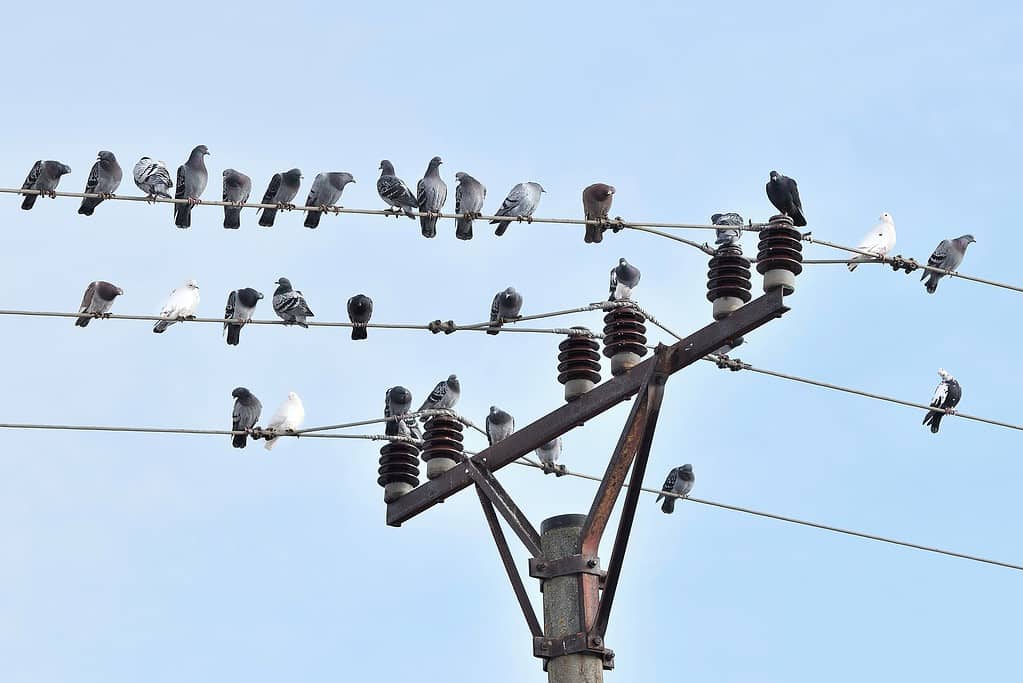
Birds are not great conductors of electricity.
©Coryn/Shutterstock.com
Birds do conduct electricity to some extent, but they do not get shocked when perched on a single power line because they do not complete a circuit between two points of differing electrical potential. Their bodies are not as conductive as metal, but the key factor is that both of their feet are on the same wire, so electricity has no reason to flow through them..
Which Birds Sit on Power Lines?
In most cases, you’ll see small birds sitting on power lines. But not even all small bird species rest on them. You’ll most often witness the following species perched up there.
- Doves
- Pigeons
- Small raptors
- Swallows
- Martins
- Starlings
- Bluebirds
- Western kingbirds
- Loggerhead shrikes
- Blackbirds
- Grackles