
Quick Take
- A city of hundreds of thousands shares its streets with a surprising number of these giants.
- This animal looks lumbering, but its real top speed might change how you see it.
- Unlike deer, a moose doesn't always run away, and that choice can turn dangerous fast.
- One simple move could shield you if it charges. The article reveals what it is.
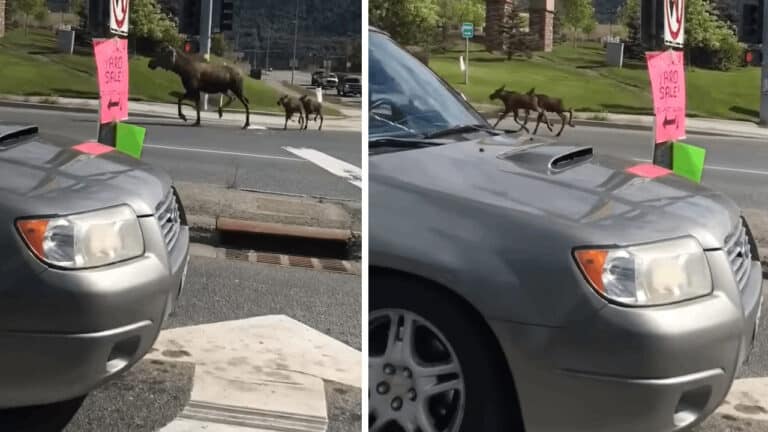
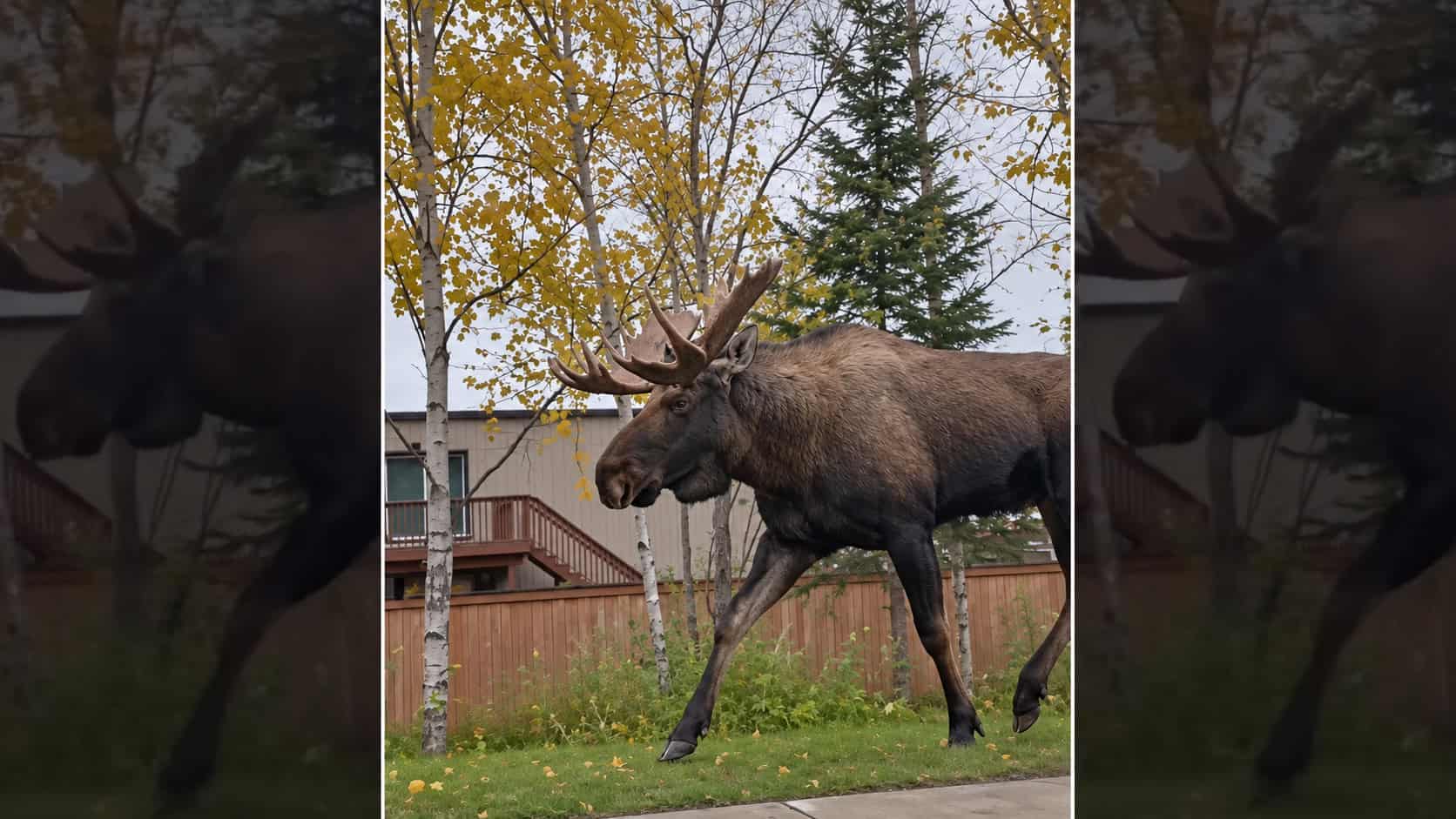
Imagine driving through a quiet neighborhood and spotting something considerably larger than the average pedestrian making its way down the sidewalk. That’s exactly the scene captured in Anchorage, Alaska, where a massive bull moose casually trots past houses, fences, and front yards as a passing vehicle films the encounter.
With its enormous antlers, long legs, and powerful build, the moose looks almost out of place among the homes and sidewalks. But it doesn’t appear to be in any hurry to leave the neighborhood. Instead, it continues moving along at a steady trot, creating the kind of wildlife encounter that would probably stop most visitors in their tracks.
So, what is such a large wild animal doing in a residential neighborhood? As unusual as the sight might seem, encounters like this are a surprisingly normal part of life in Alaska’s largest city. Watch the clip now and see just how easily this enormous animal moves through the neighborhood.
Watch This Massive Moose Trot Through Anchorage
A Massive Bull Moose Takes a Neighborhood Stroll
The footage captures a remarkable sight: a full-grown bull moose moving through a residential area while someone in a passing vehicle records the encounter. The animal’s broad antlers rise above its enormous head, and its long legs carry it along the grassy edge of a neighborhood sidewalk. With houses, wooden fences, and trees in the background, the scene looks like an ordinary suburban street, apart from the enormous animal passing through it.
What’s especially interesting is how comfortably the moose moves through the setting. Despite its size and somewhat awkward-looking proportions, it maintains a steady trot. Moose are remarkably capable runners, and their long legs make covering ground look almost effortless. The footage doesn’t reveal where this particular animal was heading or why it was moving through the neighborhood, but it certainly gives viewers an appreciation for just how big these animals are when they’re standing next to familiar surroundings.
Why Do Moose Wander Through Anchorage Neighborhoods?
Anchorage might be Alaska’s largest city, but it also sits in the middle of excellent moose habitat. Parks, wooded neighborhoods, wetlands, and extensive greenbelts provide places for the animals to feed and travel. According to local wildlife estimates, roughly 1,500 to 1,600 moose live in the greater Anchorage area. Seeing one walking along a neighborhood street, crossing a road, or browsing on someone’s landscaping isn’t particularly unusual.
Moose are herbivores that feed on leaves, shoots, twigs, and other vegetation. In Alaska, willows, birches, and aspens are especially important food sources. Urban neighborhoods can offer some of the same plants these animals would seek out in forests and wetlands. During the winter, deep snow can also encourage moose to move into lower elevations and more accessible areas. A residential street or cleared pathway may simply provide an easier route between feeding locations.
Of course, that doesn’t mean the moose in this video was necessarily searching for food. Without knowing what happened before or after the recording, there’s no way to determine its destination. The important point is that Anchorage’s neighborhoods overlap with the natural movements of these impressive animals.
Just How Big Can an Alaskan Moose Get?
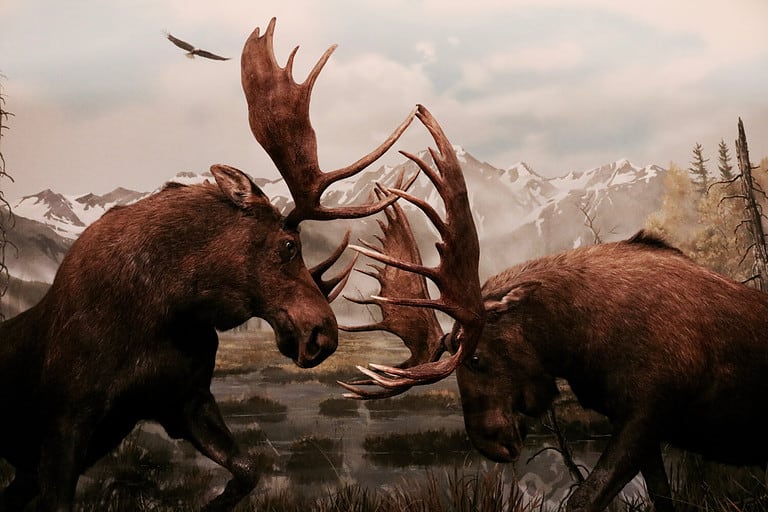
Moose (Alces alces) are the largest living members of the deer family, and the Alaska moose ranks among the biggest. According to the Alaska Department of Fish and Game, an especially large bull can weigh as much as 1,600 pounds and stand over seven feet tall at the shoulder. Add a substantial set of antlers, and it’s easy to understand why one walking beside an ordinary house looks so enormous.
Those impressive antlers also identify the animal in the video as a male. Bulls grow and shed their antlers annually, using them during the fall breeding season to compete with other males. While their size might make them appear slow or cumbersome, moose can reach speeds of up to 35 miles per hour. Their long legs are adapted for moving through forests, wetlands, and deep snow, but they work just as well when an animal decides to trot through a neighborhood.
Are Moose Dangerous When They Enter Neighborhoods?
Seeing a moose walking peacefully through a residential area might make the animal seem approachable, but that would be a serious mistake. Moose aren’t typically aggressive toward people without a reason, yet they can become dangerous when they feel threatened, cornered, or harassed. Females are particularly protective of their calves, while males can become more unpredictable during the fall breeding season.
Unlike deer, which often flee quickly when approached, a moose may stand its ground. Warning signs can include ears pinned backward, raised hair along the shoulders, and other agitated body language. An angry moose can charge, kick, or trample a person. Wildlife officials recommend giving these animals plenty of space and never approaching them for photographs. If a moose charges, getting behind a solid obstacle such as a tree, building, or vehicle can provide protection.
What Should Drivers Do When They Encounter a Moose?
For drivers in Alaska, encountering a moose isn’t just a memorable wildlife experience. It’s also a genuine road safety concern. Moose can enter roadways suddenly, and their height and weight make vehicle collisions especially dangerous. The Alaska Department of Fish and Game advises motorists to slow down, scan roadsides carefully, and leave plenty of room when wildlife is nearby. Drivers should also watch for additional moose, particularly when a female may have calves following behind.
Anyone lucky enough to see an animal like the one in this video should resist the temptation to follow it closely or stop in an unsafe location for a better photograph. Observing from a safe distance is the best approach, and filming should be left to a passenger rather than the driver.
That’s what makes this Anchorage footage so interesting. For many people, seeing an enormous bull moose trotting past their front yard would be a once-in-a-lifetime experience. For residents of Alaska’s largest city, though, sharing the neighborhood with wildlife is simply part of everyday life. Sometimes the biggest pedestrian on the block just happens to have antlers.