
Quick Take
- Scientists have pinpointed an exact square footage cats need, and the answer is probably not what you'd guess. See the space breakdown →
- Floor space matters far less than one dimension most cat owners completely overlook. Discover vertical space tips →
- The litter box math most owners get wrong can cause serious behavioral problems, yet the correct rule is simpler than you think. Get the litter box rule →
- Letting your cat roam outside to compensate for a small apartment may be the worst solution you could choose. See safer outdoor options →
If you have a small apartment and are considering adopting a cat, you might wonder how much space they really need. Cats can be perfectly happy and healthy in small spaces, but they do need room to explore. In this article, we’ll discuss how much space a cat needs to be happy and healthy, how to provide exercise and enrichment to a cat in a small space, and more.
What Does a Cat Need in Their Space?
To help you picture how much space your cat needs, let’s talk about the supplies you’ll need to fit in their space. These include:
- A water and food dish. Cats don’t like drinking where they eat, so you’ll want these in separate areas, such as different sides of a room. Keep food and water away from the litter boxes as well. You will also need a place to store their food that is out of reach.
- Litter boxes. While some cats are okay using a single box, especially in a small space, the general recommendation is one litter box per cat plus one extra. This means that your single cat should have two litter boxes. These should be kept in different corners or, when possible, in different rooms. The places where your cat spends the most time are the best places to put their litter boxes.
- Scratchers. It’s best to have at least one vertical and one horizontal scratcher, at least until you learn which your cat prefers using. They should be at least as long or tall as your cat’s body with its legs completely stretched out.
- Toys. Most cat toys don’t take up a lot of space, but you will want to keep some out for them to play with. You’ll also want a place to store things like wand toys, which should be out of reach when not in use.
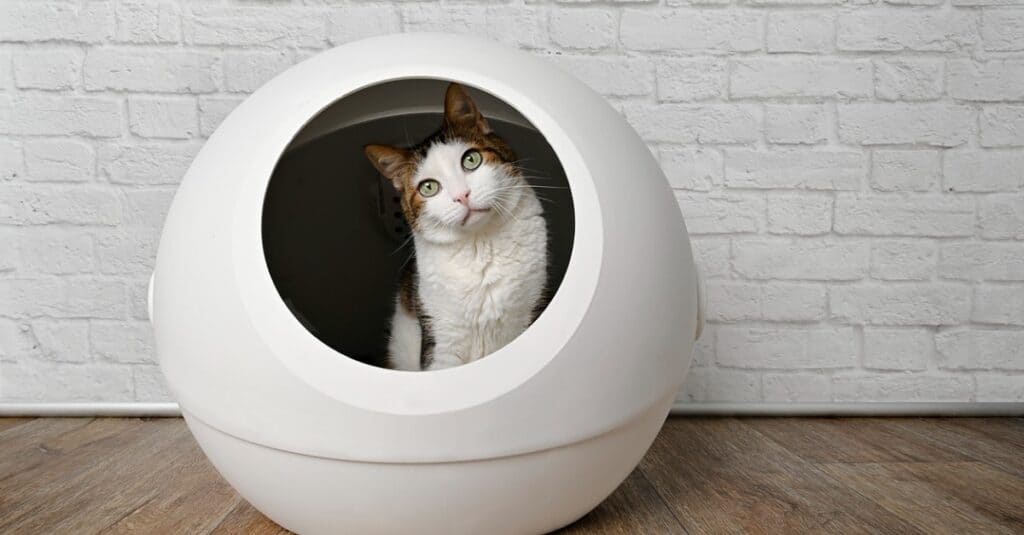
You’ll also need space for supplies, such as litter boxes, scratchers, food and water bowls, and toys.
©iStock.com/Lightspruch
Maximize Your Vertical Space
According to cat behaviorists, cats in the home need a minimum of around 107 square feet per cat (10 m2). Beyond this minimum size, they note that it is the quality of the space rather than the quantity that is important. One reason that cats can live in small spaces is that they utilize vertical space more than dogs. Keeping a cat happy in a small apartment is possible, as long as they have space to run and play and things to climb.
Cat trees are a great option to help you maximize the space, but they might not be enough in a tiny space. Or, you may not have room for a large one. You can also try organizing your existing furniture so it’s safe to climb and gives your cat more space. For instance, you could put a cat bed on top of your bookshelf or clear the top of your dresser to make more running and lounging space.
Cat shelves are another way to add space for your cat without taking up room on the floor. There are sets you can purchase that contain beds, hammocks, little bridges to go over your doorway, and places to hide. However, you can also DIY some nice shelves using wood from the hardware store, carpet scraps, sisal matting, and jute ropes.
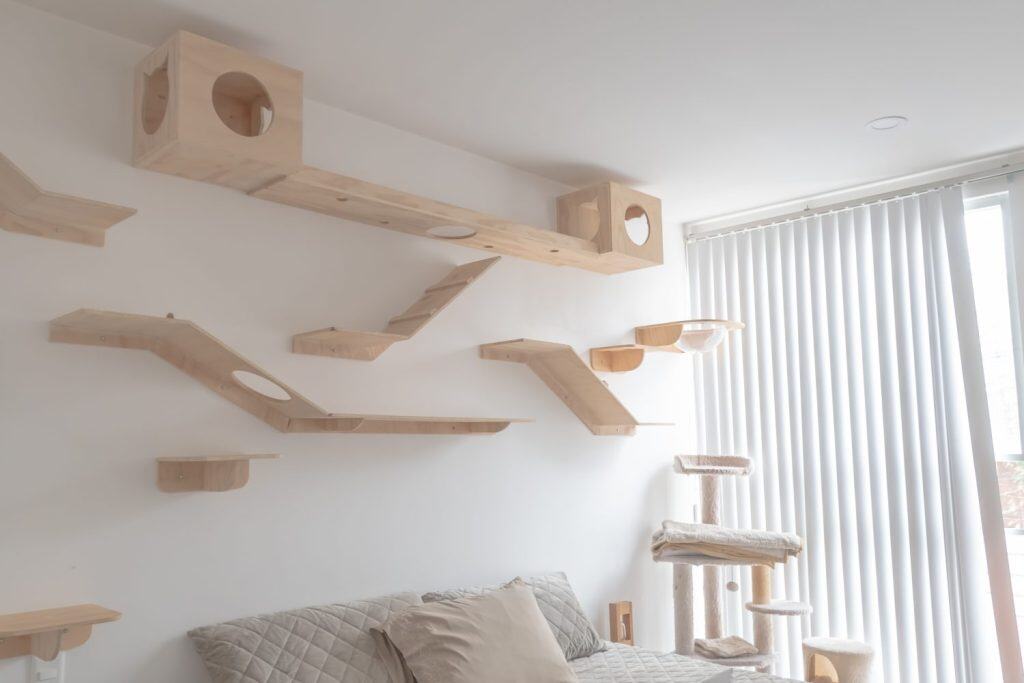
Cat shelves are a great way to maximize the vertical space for your feline friend.
©Claudia Luna Mtz/Shutterstock.com
Utilize Outside Space
Avoid unsupervised outdoor time and try harness training instead. Outdoor cats face many risks to their lives, including disease, cat fights, predators, and cars. They have shorter lifespans and often die tragic deaths. While it can be tempting to let your cat free-roam outside to give them more space, it’s better for their health and safety to use a harness and leash. Cats can learn to go on walks much like dogs, though they typically want to sniff around in a small space rather than walk around the block.
If you own the land or can get permission from the landowner, a catio (cat patio) is a great way to give your cat more space to roam, as well as enrichment. You can purchase a catio that is already built, or you can build one yourself. Choose a location where your cat will be entertained by outdoor activity and where you can also keep an eye on them. You can also build a window catio, which is ideal for small living areas.
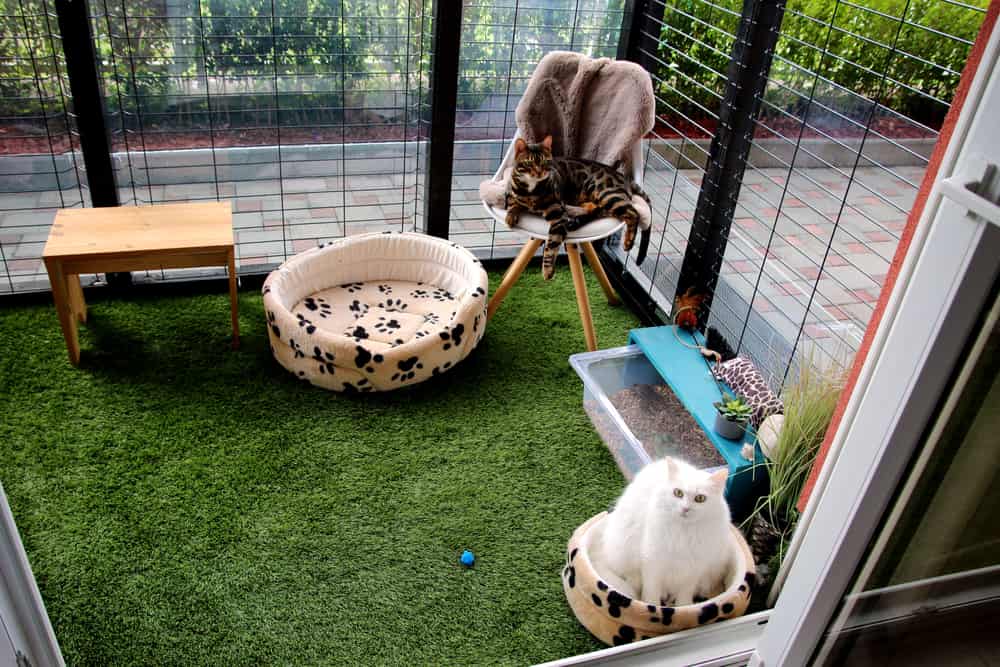
Catios are a good way to utilize your outdoor space.
©TheCats/Shutterstock.com
Exercise and Enrichment
Luckily, most cats average between 8 and 12 pounds, so they can run quite a bit, even in a small space. Encouraging them to use vertical space during play gives them even more opportunity to tire themselves out. However, it is also up to you to provide enrichment to ensure your cat is receiving the mental stimulation it needs as well. One of the main causes of destructive behavior in cats is boredom, so it’s important to keep them mentally engaged and out of mischief.
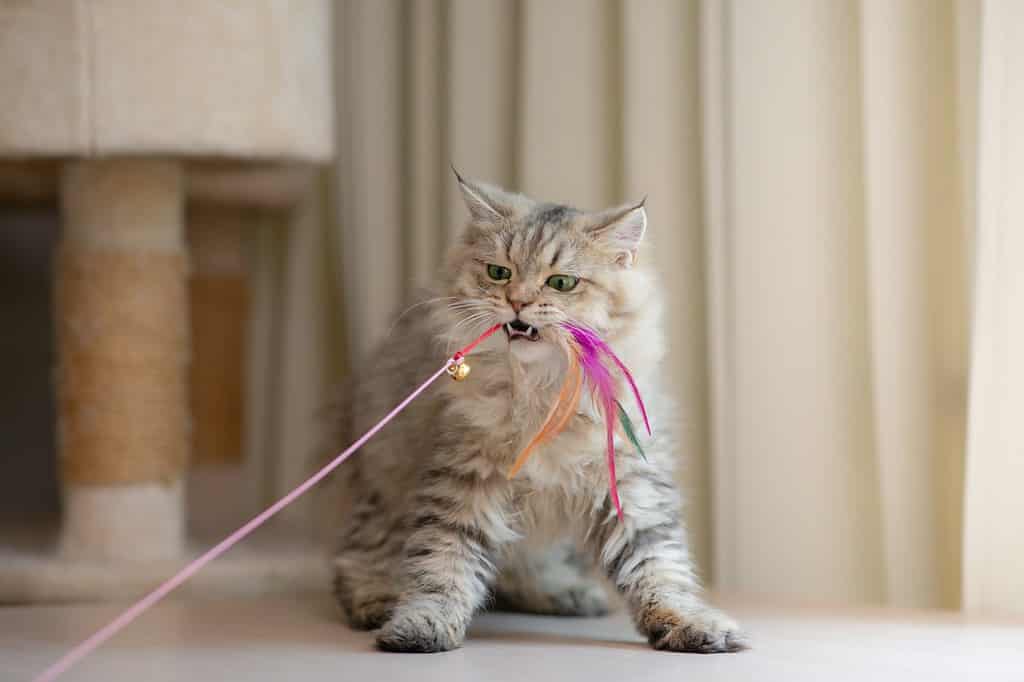
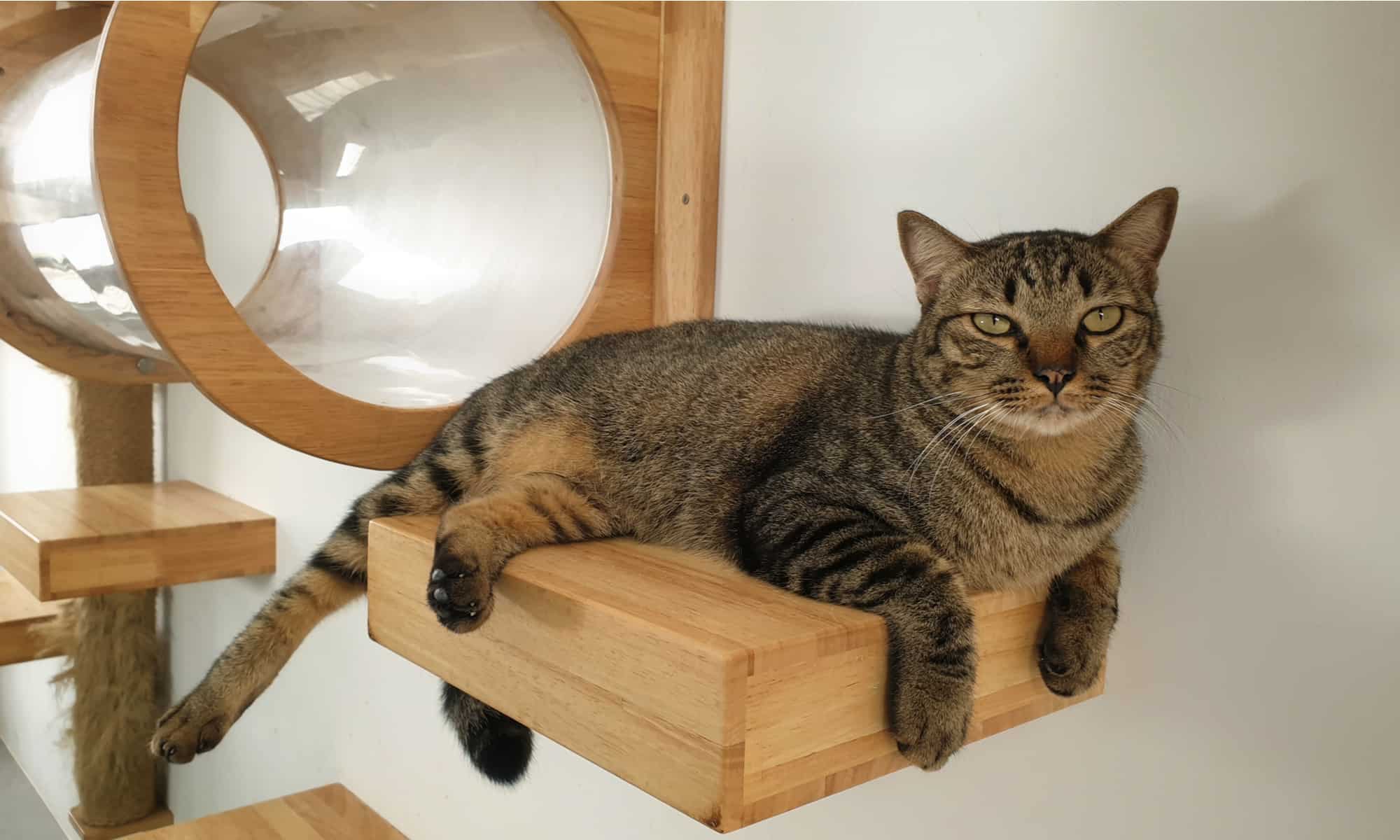
Providing enrichment for your cat will keep them healthy and active, even in a small apartment.
©ANURAK PONGPATIMET/Shutterstock.com
All cats need hands-on, daily play. Try to play for ten to fifteen minutes two to three times a day. If space permits, adopt another feline companion. For a social animal, the best enrichment is a friend of the same species. If you can swing it, the cats will provide one another with play and socialization and can even help teach each other manners.
Another great idea for enrichment is to set up a window seat. a bird feeder outside the window and a cozy bed on the windowsill make a perfect way for your feline to pass the time when you are unable to play.