
Quick Take
- Adopting a puppy and kitten together sounds like the perfect plan. In reality, though, it's actually one of the riskiest moves you can make. See the adoption caution →
- Your beagle's body language holds clues, and missing them could put both pets in danger. Read the body language signals →
- Most owners focus on whether the beagle accepts the cat, yet the cat poses a threat that's easy to overlook. Spot the overlooked threat →
- There's one step in the introduction process that owners almost always rush, and skipping it undermines everything that follows. Follow the introduction steps →
Beagles have strong prey drives and often view smaller animals as prey to be chased. While these loving, happy pups can generally get along with cats, slow introductions are necessary. In this article, we’ll discuss why some beagles might struggle to get along with cats and what you can do to help the two coexist peacefully.
Beagles Were Bred to Hunt
Today, many beagles are pets, not working dogs. However, they were originally bred to hunt small animals such as rabbits and hares. They definitely see rodents as prey, but what about cats? Ultimately, it depends on the individual dog. As a breed, beagles are generally easygoing and they like companionship, as they were bred to hunt in packs. Beagles often get along well with cats, and many people keep the two together without incident.

Beagles were originally bred to hunt.
©Andrii Zastrozhnov/iStock via Getty Images
Other beagles may get along with “their” cats at home but may chase cats they see roaming outside or any new cats brought into the household. Then, there are the beagles who cannot get along with cats at all due to their high prey drives. These dogs will chase cats and may injure or even kill them if given the chance.
Beagle and Cat Adoption Tips
If you plan to introduce your beagle to a cat, or vice versa, there are a few things you can do at the point of adoption that will help things go more smoothly. First, try to adopt a beagle from a foster setting where the dog has experience with cats. While this isn’t a guarantee, it greatly improves the odds that your new beagle will get along with the cats in your home. You can also adopt a cat who’s been around dogs before, as this familiarity will result in a more confident cat around dogs.
Adopting a kitten and a puppy together isn’t as reliable. Puppies’ prey drives are largely unknown, and your beagle puppy may grow to see your cat as prey. It’s also better for kittens to be raised with other kittens at this age, rather than being raised alongside a dog. It can also be challenging for the humans in the home to take on the care of two new species at once, and it can be difficult to train both adequately. However, it sometimes works to raise a beagle puppy alongside an older cat. Especially if the cat is used to other dogs.

It takes an attentive and responsible owner to keep both animals safe and happy.
©kobkik/Shutterstock.com
Beagle and Cat Introduction Tips
To ensure your animals have the best chance of getting along, make slow, gradual introductions. When you first bring the new pet home, they shouldn’t even see the resident pet. Give them time to adjust to the new environment. Let the animals have time to get used to each other’s scent without interacting.
Here are a few other tips for introducing your beagle and your cat:
- Keep your beagle leashed around the cat at all times. Until they’ve shown that they can be calm, and you know the two will get along, a leash is necessary for their safety. Your beagle shouldn’t be allowed to crowd or chase the cat.
- Rotate their spaces. The next step is to rotate their space. If your new cat has been staying in a bedroom, let them out to explore the house while your beagle stays in that room. The animals can sniff one another without the stress of a full interaction. Do this daily for multiple days or weeks.
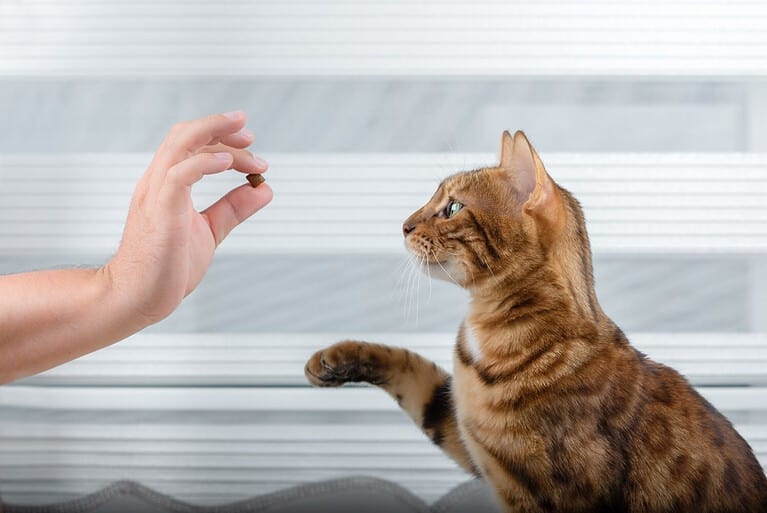
- Use food to build positive associations. For example, give your beagle treats when the cat is nearby and they’re behaving well. Feed both pets on either side of a closed door so they can smell or even see each other, but not interact further.
- Reward your beagle for ignoring the cat. Your goal shouldn’t be for the two to be best friends, but for them to coexist happily. Reward neutral behaviors.
Enforcing Boundaries
It’s important to enforce each animal’s boundaries. Cats and dogs have vastly different body language and usually have difficulty understanding one another. Just because adult beagles are larger than cats does not mean your cat is without defenses. An angry cat could still hurt your dog with its claws or teeth. It is up to you to understand their body language and enforce boundaries between the two so neither pet gets hurt.

Cats may be smaller, but a furious feline could hurt your dog with its claws and teeth.
©struvictory/iStock via Getty Images
Lip licking, yawning, and widening their eyes, sometimes called “whale eye,” mean your beagle needs its space. Your pup may also turn away, sigh, or shake as if wet, in an effort to release tension. Your beagle might attempt to distance itself by withdrawing to its crate or going to a favorite place to lie down. When this occurs, respect your pup’s boundaries. Make sure both the cat and the rest of the family leave your beagle alone until it is ready to interact again.
A flicking or thumping tail and flattened ears are signs that your cat is getting annoyed. Cats may also tense up their bodies, turn their heads away, and pull their whiskers close against their cheeks. Narrowed eyes and/or dilated pupils when they are not in a dark room or playing are another sign that your cat wants its space. Sudden grooming, withdrawing to a high place or under a bed, and vocalizing also signal that your cat is overwhelmed and the animals should be separated.