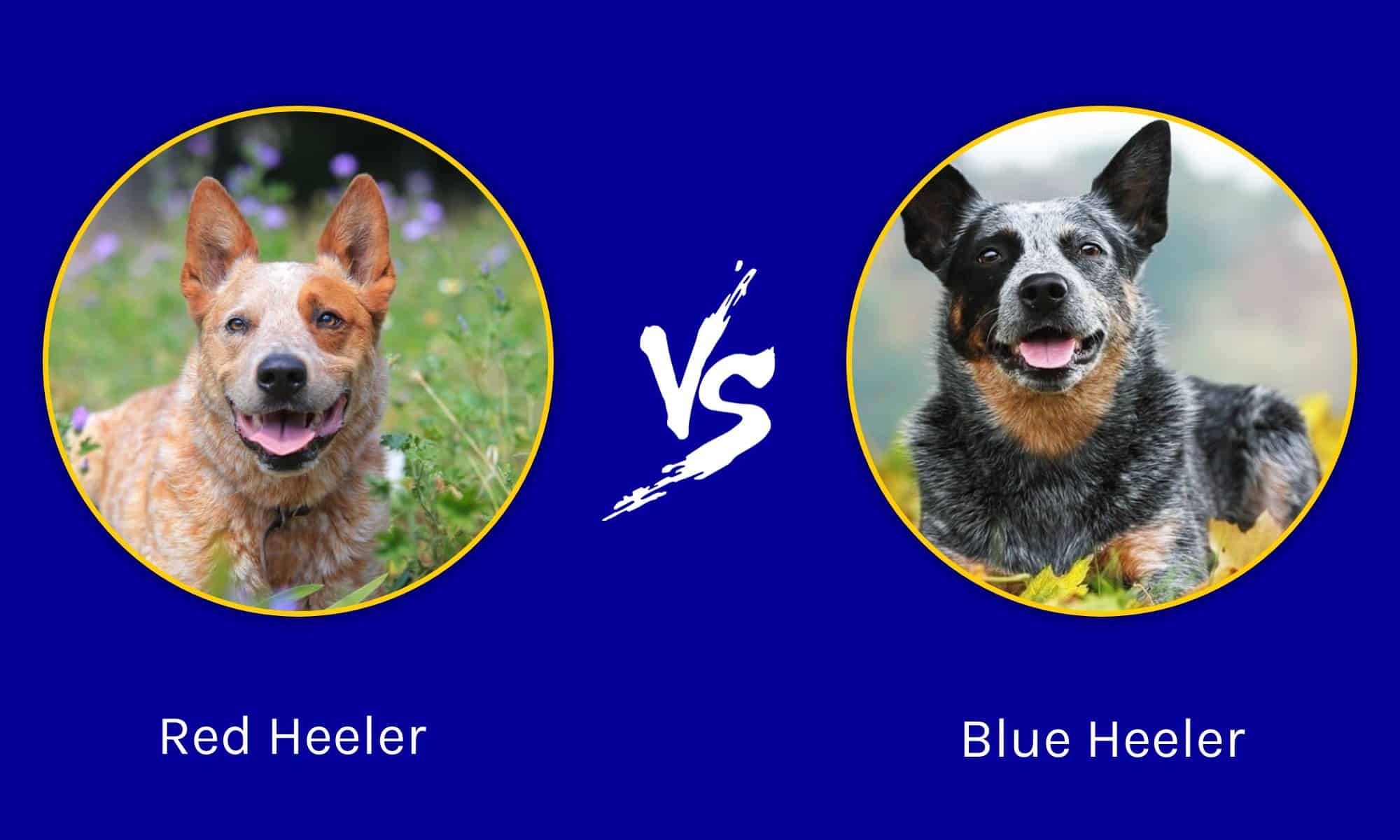

Blue heelers and red heelers are color variations of the Australian cattle dog. The names are based on their coat colors: blue for dogs with a blue or blue-mottled coat and red for dogs with a red or red-speckled coat. Australian cattle dogs were developed by mixing domesticated dingoes with imported herding breeds, including collies and dalmations. Modern Australian cattle dogs are descendants of the breed developed by Thomas Simpson Hall, which he developed by crossing dingoes with various collie strains. Both red and blue heelers have white speckling, tan patches, and a Bentley mark, a white spot of hair on the forehead. Continue reading to learn more about this herding breed.
Key Differences Between Red Heelers and Blue Heelers
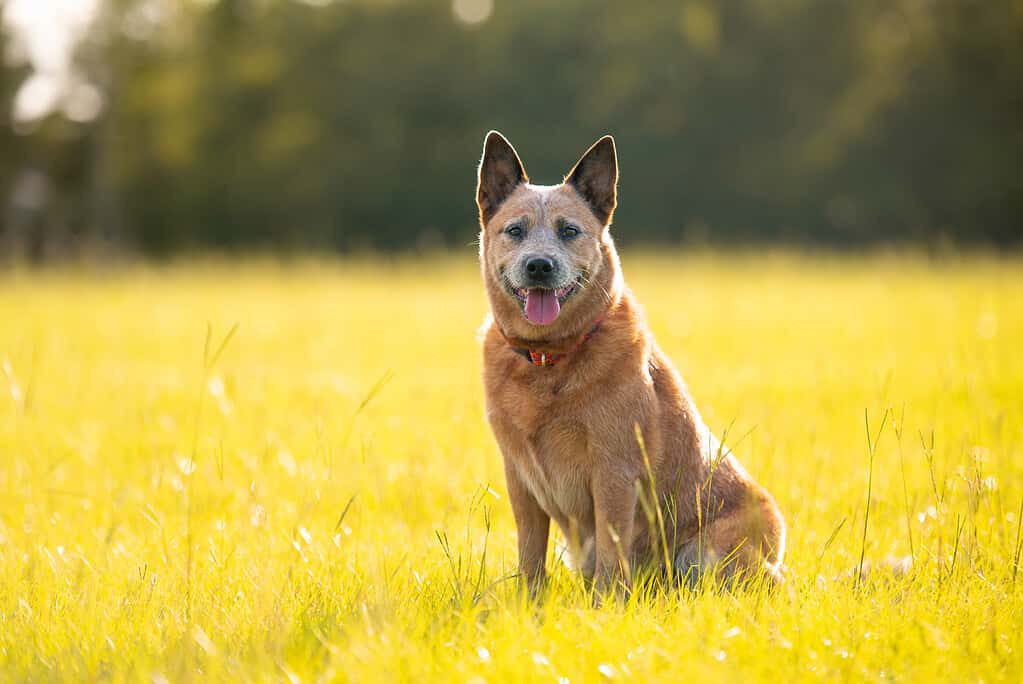
Intelligent working dogs, heelers are an energetic breed.
©Tatyana Consaul/ via Getty Images
Red heelers and blue heelers share the same breed characteristics, temperament, and history, with the color difference being the distinguishing factor. Blue Heelers have dark blue-black fur, while Red Heelers are primarily orange-brown in color.
Size
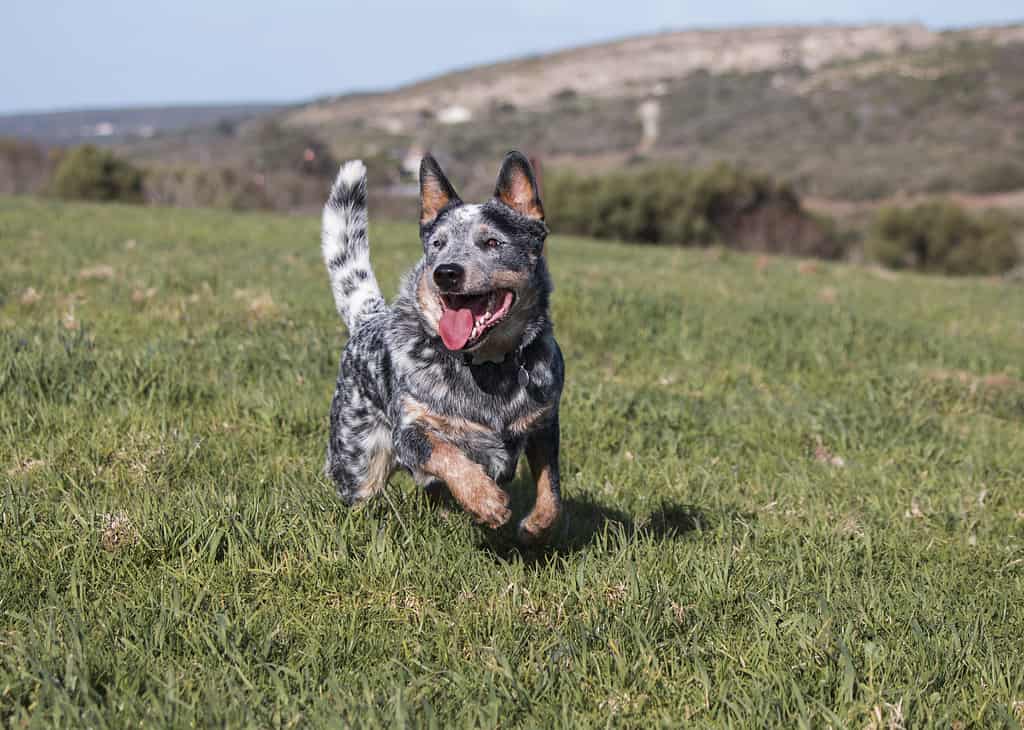
Blue heelers are descended from dingoes, wild dogs native to Australia.
©Madelein_Wolf/iStock via Getty Images
Australian Cattle Dogs stand 17-20 inches tall and weigh 35-50 pounds. There is no size difference between red heelers and blue heelers. However, there is a height difference between males and females. While females measure 17-19 inches tall, males average 18-20 inches tall.
Appearance
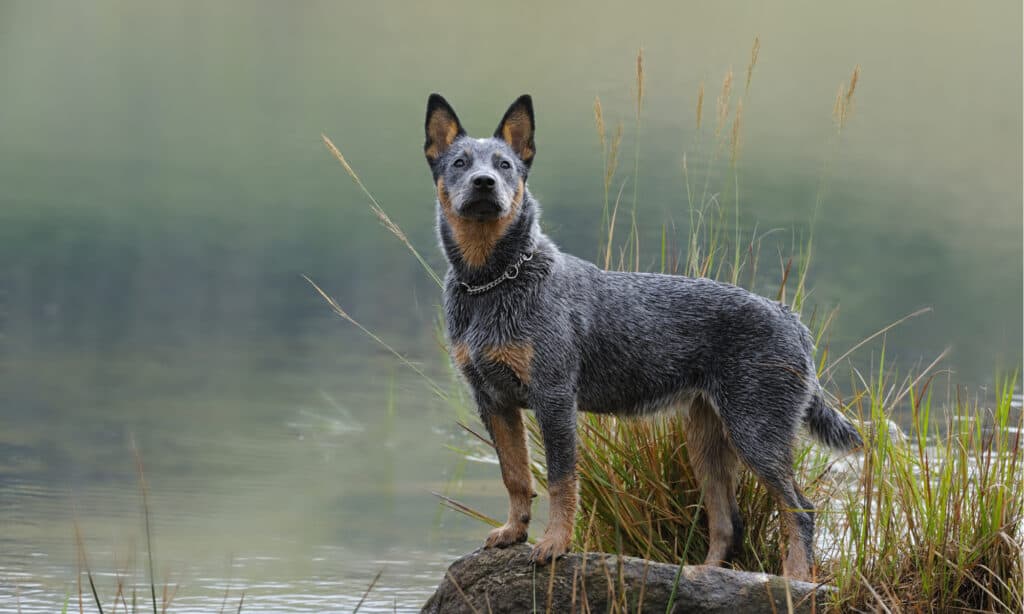
Australian Cattle Dogs also require a large backyard to play and run around in. It should be well-enclosed so they cannot escape, as they tend to roam and may try to escape.
©WOLF AVNI/Shutterstock.com
Both red heelers and blue heelers have a short double coat. Heelers are compact, muscular, and sturdy. Their build facilitates great strength, stamina, and agility. This functional, balanced body was developed for working long hours herding cattle over rugged terrain.
Blue Heelers can have several fur patterns: blue, blue mottled, and blue speckled.
The blue coloration has black fur and white fur growing together, creating a smooth look. Blue-mottled dogs have small patches of white hair among their black fur, while blue-speckled heelers have small patches of black fur growing throughout a white coat.
According to the American Kennel Club (AKC) breed standard, red heelers have two coat types: red mottled and red speckled..
Red-mottled Australian cattle dogs have white hairs interspersed throughout their red coat, while red-speckled dogs have patches of red within a primarily white coat. Australian cattle dogs can have tan markings, and blue heelers may also have black markings, while red heelers have red markings.
Lifespan

©OlgaOvcharenko/Shutterstock.com
Red heelers and blue heelers are long-lived with an average life expectancy of 13-15 years.
The oldest dog ever recorded was a blue heeler named Bluey. Bluey lived to be 29 years and 5 months old. Feeding heelers a well-balanced diet, exercising them daily, and routine veterinary care can effectively lengthen a heeler’s life. Genetics and health also play a role in how long a heeler lives.
Temperament
Heelers are protective, energetic, and intelligent. Bred to herd livestock, they have a strong herding instinct and love to run. Red heelers and blue heelers require exercise to avoid problematic behaviors such as excessive barking or destructive chewing. Australian cattle dogs are protective and make good guard dogs as well as family pets.