

Quick Take
- One of Neosporin's three antibiotics is linked to a serious, permanent side effect, though the route of exposure changes everything. Explore the antibiotic risks →
- Bandaging your dog's wound to prevent licking sounds responsible, but it can actually make things significantly worse. See the bandaging warning →
- Pulling a foreign object out of your dog's wound feels like the obvious first step, but vets say it could be the most dangerous one. When foreign objects need vets →
- Your dog will almost certainly lick off whatever you apply to their wound, but that is not even the main problem with Neosporin. See what licking means →
When our pets are hurt, we want to do everything we can for them. Sometimes, that can lead to home remedies that do little more than make us feel better or even some that can hurt our dogs. You might wonder, is Neosporin safe for dogs, and does it help to apply it to cuts and injuries?
Neosporin in Small Amounts Is Unlikely to Hurt Your Dog
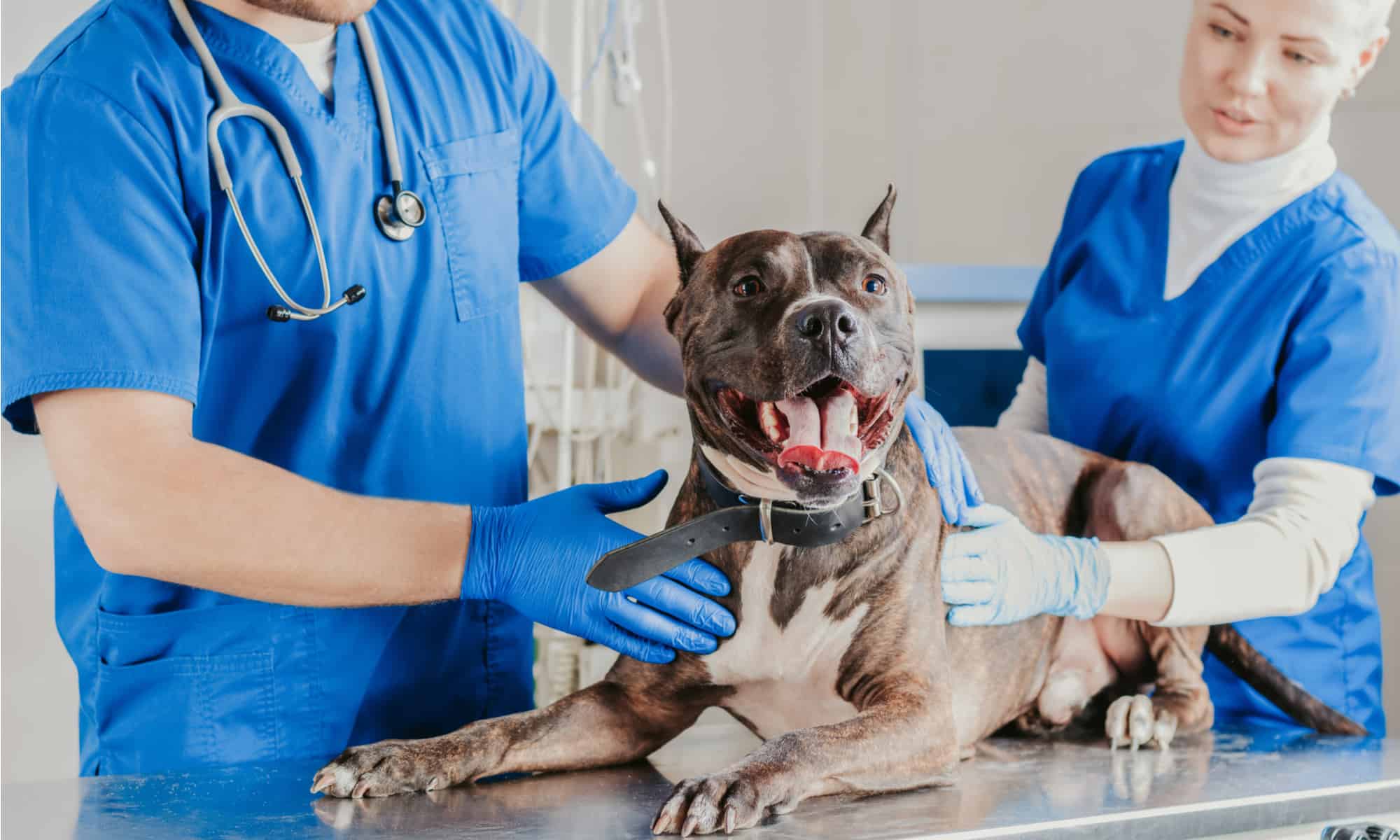
If your dog has a serious injury, such as a bite wound or deep laceration, seek veterinary care. Do not try to treat these types of wounds at home. For smaller injuries, the good news is the little bit of Neosporin you put on a dog’s wound is unlikely to hurt them – especially if they don’t ingest it. Neosporin contains three antibiotics: Bacitracin, Polymyxin B, and Neomycin. Bacitracin and Polymyxin B are safe to use on dogs. When absorbed systemically, Neomycin has been found to cause hearing loss, so use caution when applying Neosporin to wounds your dog may lick.
Some dogs are also allergic to Neosporin, so this is a risk when applying it. Start with very small amounts and wash it off if you notice any irritation. Neosporin on small wounds your dog can’t reach may help lower the risk of infection. It does kill bacteria and creates a moisture barrier over the wound, though it does not necessarily speed up healing. If you put the Neosporin on a wound your dog can reach, they’re likely to lick it off.
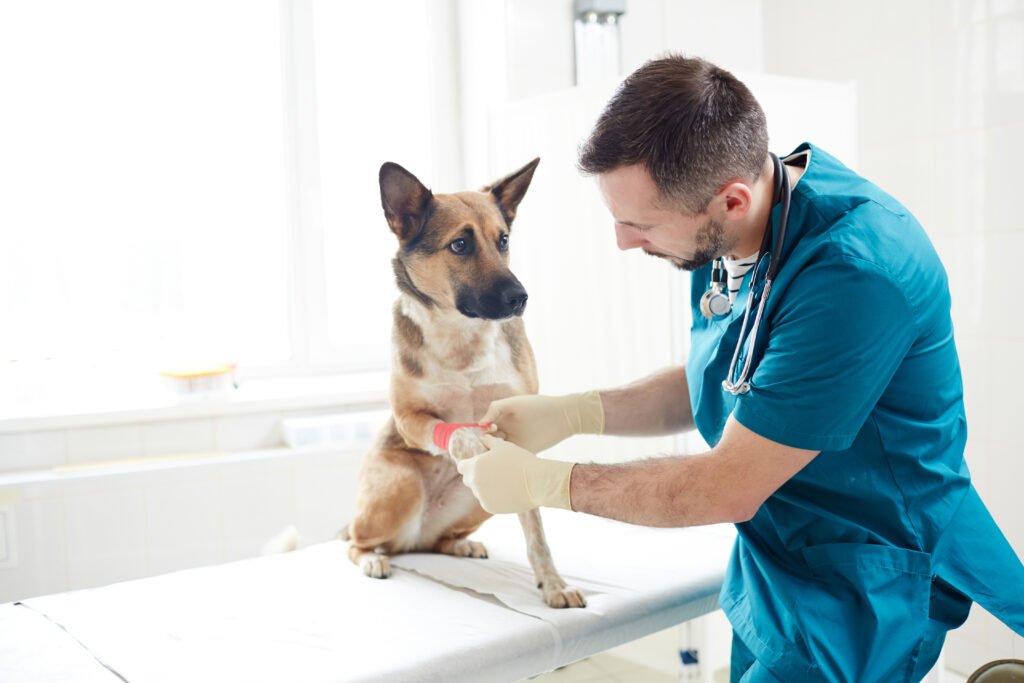
When in doubt, visit your veterinarian.
©Pressmaster/Shutterstock.com
Covering the wound with a bandage to prevent this is not recommended because you may wrap it too tightly and cut off your dog’s blood flow, turning a small wound into a much bigger problem. Dogs are also likely to tear off bandages, making them ineffective at preventing licking.
What to Do If Your Dog Eats Neosporin
Consuming Neosporin can cause stomach upset, with symptoms like vomiting and diarrhea. If your dog does eat Neosporin, clean the remainder of the wound using soap and water. This will prevent them from eating any more.
Then, monitor your dog for signs of GI upset. This will likely pass quickly, but if it is severe or persists for multiple days, please see a veterinarian. If your dog somehow eats a large amount of Neosporin, such as if they get into the packaging, please call your veterinarian for advice.
How to Treat Minor Dog Wounds at Home
What should you do if your dog has been injured and you’ve decided not to apply Neosporin? First, clean the wound with soap and water. Dry it with a clean towel and assess the damage. Mild wounds typically heal well on their own so long as they’re kept clean and dry.
If your dog is bleeding, apply pressure with the towel. This should stop the bleeding on superficial wounds quickly. Wounds that bleed profusely or continue to bleed for more than ten minutes require veterinary attention.
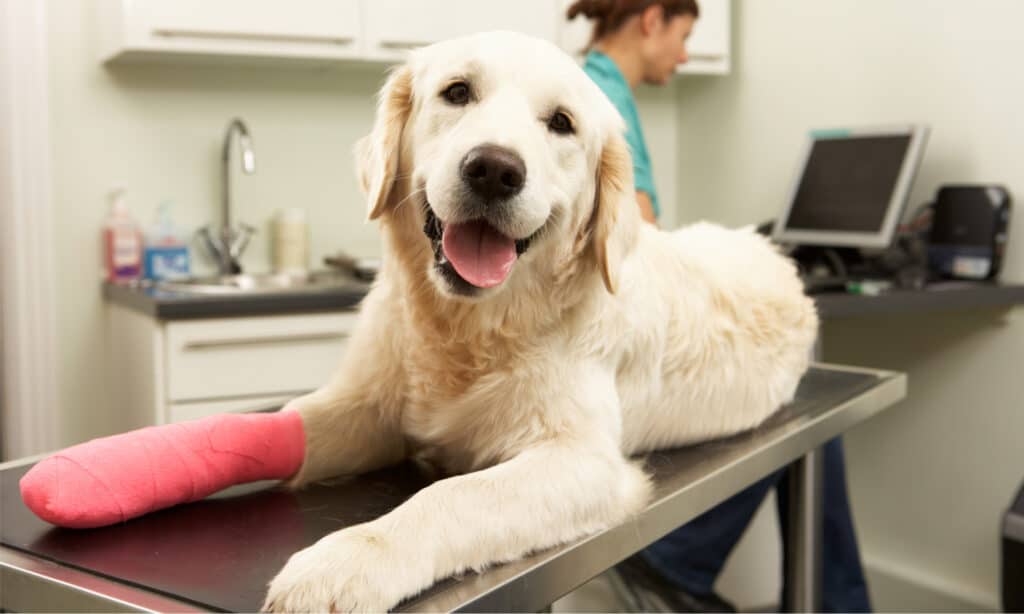
A vet should see burn injuries and wounds with foreign material inside of them.
©monkeybusinessimages/Shutterstock.com
When to See a Veterinarian
When in doubt, always see a veterinarian. It is better to spend the time and money than to fail to provide veterinary care when your dog needs it. That said, a lot of wounds will heal just fine at home. Shallow cuts, for instance, can likely be cleaned and monitored.
As noted above, if a wound will not stop bleeding, take your pup to the vet. If there is anything inside the wound, such as shattered glass, gravel, or other foreign material, see a vet rather than trying to remove it yourself. Larger materials especially should not be removed by anyone other than a veterinary professional. These objects sometimes act as plugs that limit bleeding; removing them could cause dangerous blood loss.
Definitely see a vet for any burn injuries, deep lacerations, or bite wounds. Animal bite wounds have a high risk of infection because they tend to create puncture wounds with a small surface area that penetrate deeply. As the wound closes at the surface, it’s easy for bacteria to get trapped inside. Also, see a veterinarian if you notice signs of infection, including redness, swelling, pus, slow healing, and the wound being hot to the touch.