

Quick Take
- Some dog breeds carry a genetic mutation that turns a routine heartworm medication into a life-threatening risk. See the MDR1 mutation risks →
- Giving ivermectin to a dog that already has heartworms can trigger a fatal reaction, though the danger involved is not what most people expect. Understand the heartworm danger →
- Ivermectin is sold over the counter at many pet stores, but that easy access is exactly what makes it dangerous. Why vet guidance matters →
- The correct ivermectin dose shifts dramatically depending on what parasite you're treating, and getting it wrong in either direction has consequences. See dosing ranges by condition →
Has your veterinarian prescribed ivermectin to protect your dog against heartworm disease? Or have you seen commercials about ivermectin for dogs on TV or social media? If so, you may have questions about this medication and how it works. Read on to learn everything you need to know about ivermectin use in dogs.
What Is Ivermectin?
Ivermectin is an anti-parasitic medication used in human and veterinary medicine. It is most commonly used to prevent heartworm disease in dogs and cats, but it can be used to treat other intestinal and external parasites seen in pets as well.
Ivermectin works by targeting the parasite’s nervous system and interfering with the nerve and muscle systems. This process paralyzes the parasite and leaves it defenseless, ultimately resulting in its death. The treatment protocol will vary based on the parasite that is being treated.
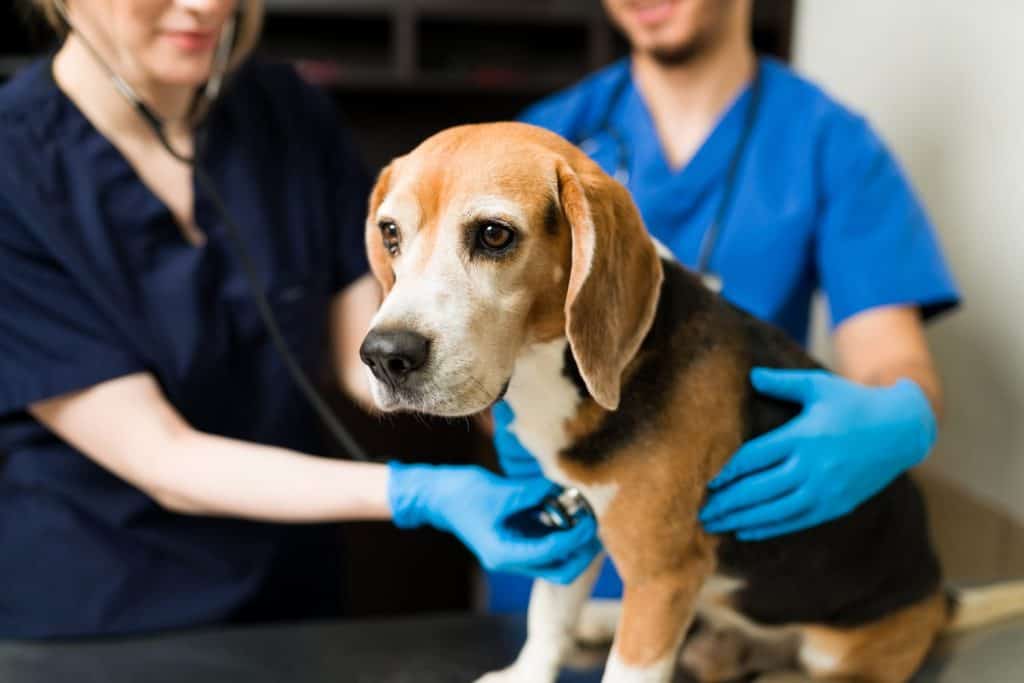
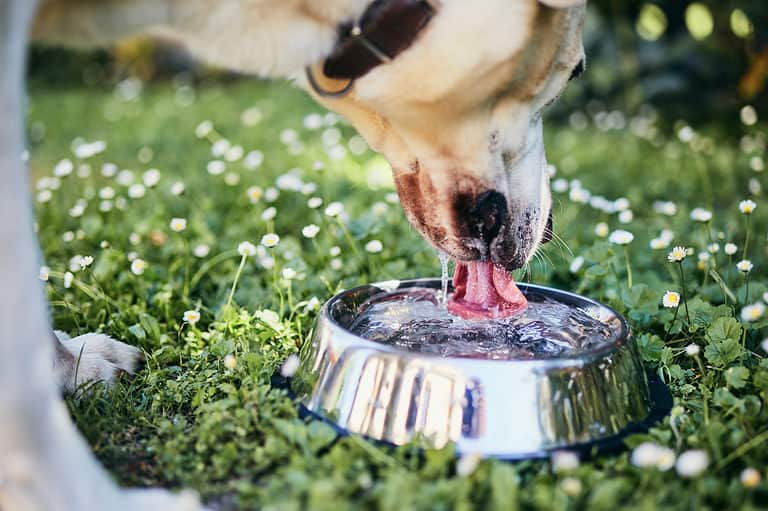
Your veterinarian may prescribe ivermectin to rid your pup of parasites.
©Beach Creatives/Shutterstock.com
Why Do Dogs Take Ivermectin?
Dogs take ivermectin to treat and manage a variety of parasitic infections. Some of the most common parasites that ivermectin can treat include:
- Heartworm (prevention)
- Roundworms
- Ear mites
- Mange
- Scabies
- Lungworms
While ivermectin can technically treat the parasites listed above, your vet will often use other deworming agents like pyrantel and fenbendazole to treat intestinal parasites. Veterinarians occasionally use ivermectin off-label, so it is possible that your veterinary team may suggest the use of ivermectin for conditions that are not listed above.
Is Ivermectin Safe For Dogs?
Ivermectin is safe for use in dogs when following your veterinarian’s dosing instructions. while ivermectin is generally safe when following proper dosing guidance, it can lead to serious health complications if your dog receives the incorrect dose for their condition.
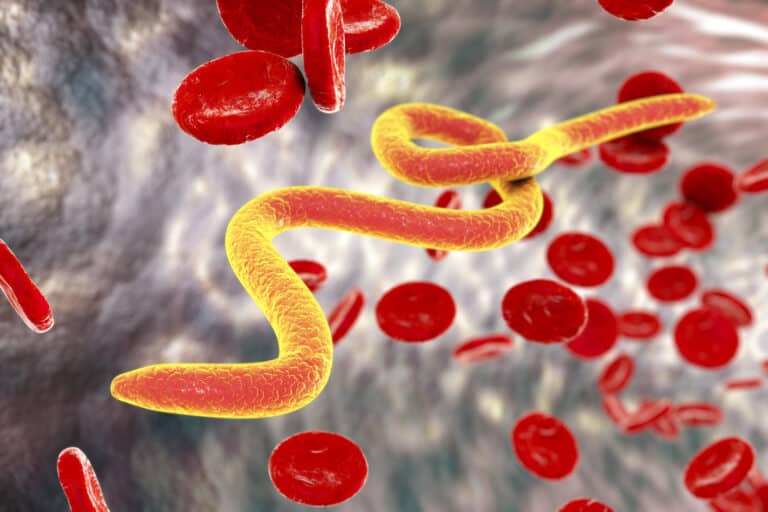
Even if your dog is being treated for heartworm disease, ivermectin can be dangerous to use without guidance. If a large amount of microfilariae (baby heartworms) are in the dog’s bloodstream when the ivermectin is given, the ivermectin may cause the microfilariae to die suddenly, triggering a shock-like reaction that can be fatal. An overdose of ivermectin in dogs can also lead to severe neurological symptoms like muscle tremors and seizures.
Ultimately, ivermectin is only safe when following veterinary guidance. This is worth noting given how many feed stores and pet stores sell ivermectin over the counter. If you do choose to purchase an ivermectin product over the counter, be sure to consult your vet for dosing guidance before giving it to your dog.
How to Administer Ivermectin
Ivermectin can be found in pill, chewable, topical, paste, powder, and injectable form. It can be given with or without food, but some dogs may struggle with nausea or vomiting soon after administration when it is given on an empty stomach. We suggest giving it with a small meal if this is the case for your little one.
Ivermectin may also be combined with other deworming medications. This helps to ensure that not only is your dog being protected against heartworm disease, but they are being treated for intestinal parasites as well. Combining ivermectin with other deworming agents is most effective when treating parasites like hookworms, roundworms, and whipworms.
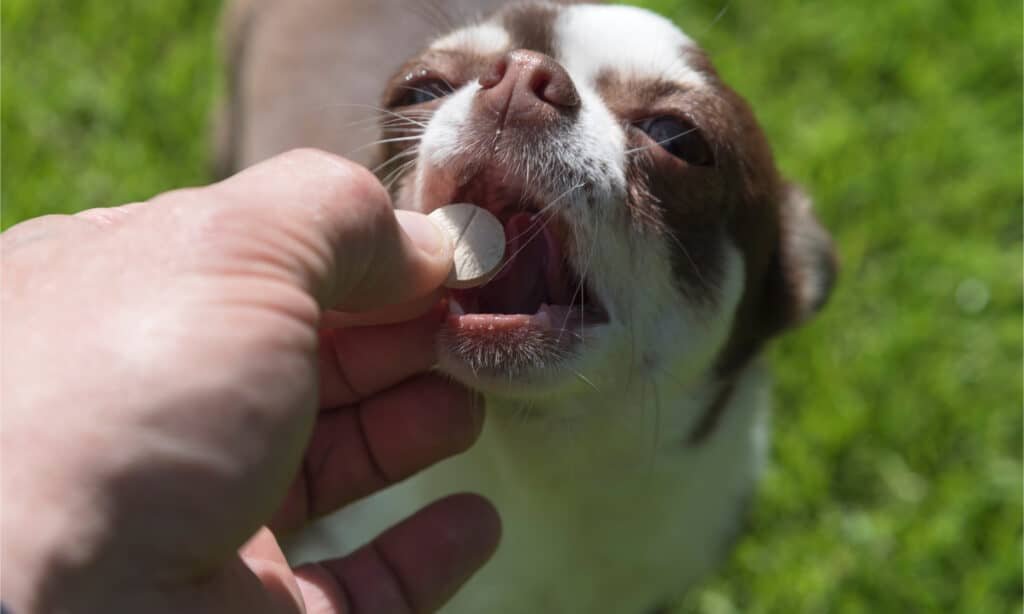
Ivermectin is often combined with other deworming agents to fight off intestinal parasites.
©Alexsander Ovsyannikov/Shutterstock.com
The Standard Dosing Range for Ivermectin in Dogs
Before listing the standard doses, we want to emphasize again that you should never give your dog ivermectin without veterinary approval. With that in mind, there is a standard ivermectin dose range that most veterinarians follow.
The standard dosing range for monthly ivermectin for heartworm prevention is 0.0015 to 0.003 mg per pound of body weight. The ivermectin dose for skin mite treatment is typically 0.15 mg per pound of body weight for 10 to 14 days. Finally, the standard dose for intestinal parasites is 0.1 mg per pound of body weight one time.
Ivermectin Side Effects and Signs of Toxicity
Ivermectin is generally well-tolerated when it is given under veterinary guidance. As we noted above, some dogs may experience mild stomach upset if the medication is given on an empty stomach. The most common adverse effects with ivermectin use occur when there is an accidental overdose. This is most common when ivermectin is given over long periods to treat skin mites, or if the dog accidentally consumes a large amount of the medication.
Some of the most common signs of an ivermectin toxicity in dogs include:
- Vomiting
- Diarrhea
- Disorientation
- Wobbly gait
- Increased salivation
- Dilated pupils
- Body tremors
- Seizures
- Collapse
Take your dog to a vet immediately if they experience any of the above symptoms after ingesting ivermectin. An ivermectin overdose can be life-threatening if left untreated.
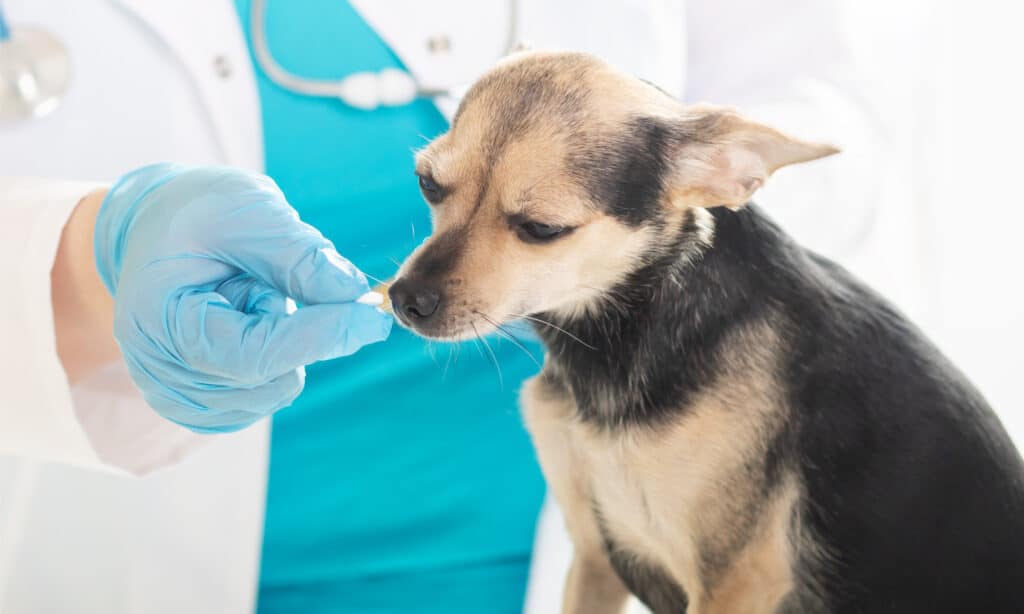
Ivermectin is typically well tolerated by most breeds when given according to veterinary guidance.
©iStock.com/Yana Tikhonova
Risks Associated with Ivermectin Use in Dogs
It’s important to keep in mind that some dogs can be more sensitive to ivermectin than others. Some herding and sighthound dog breeds have a specific genetic mutation (MDR-1 gene deletion) that makes it harder for them to tolerate ivermectin. The blood-brain barrier that keeps drugs out of the central nervous system is more permeable in dogs with this mutation, increasing their risk of life-threatening toxicity. Vets are either extremely cautious when prescribing ivermectin to these sensitive breeds, or they use an alternative heartworm prevention method altogether.
Researchers have determined that the following breeds have this mutation:
- Australian shepherds
- Miniature Australian shepherds
- Collies
- English shepherds
- Longhaired whippets
- McNabs
- Old English sheepdogs
- Shetland sheepdogs
- Silken windhounds
- White German shepherd dogs
How Can I Get Ivermectin For My Dog?
Ivermectin should only be purchased at your vet’s office, and it should only be given under veterinary guidance. If you do choose to purchase it over the counter, reach out to your veterinary team for dosing instructions. Involving your dog’s care team can significantly reduce the risk of ivermectin toxicity.