
Quick Take
- Most Maltese owners overlook the one daily habit that silently prevents heart, lung, and kidney disease. It has nothing to do with exercise or diet. See the daily habit →
- A majority of Maltese are living with a liver disorder right now, yet most will never show a single symptom. So what separates the ones who do? Explore the liver disorders →
- One Maltese condition looks terrifying in the moment but is among the easiest to treat, and knowing which one it is could save you an unnecessary emergency vet panic. See the treatable condition →
- There's a fatal Maltese condition where every symptom mimics something minor, and the window to act before it becomes irreversible is shorter than most owners realize. Learn the urgent warning signs →
Maltese dogs are a relatively healthy breed with few genetic health problems, some of which can be screened for by a reputable breeder. However, like humans, every Maltese will get sick at some point in their lifetime. In this article, we’ll discuss common Maltese health problems, their symptoms, and how they’re treated. We’ll also talk about how long the breed lives and how to keep your dog healthy.
1. Dental Disease
As small dogs, Maltese are more prone to dental disease than larger breeds. The most common dental issue to watch for is periodontal disease, which is infection and inflammation of the tissues that surround and support a dog’s teeth. It can lead to deep-rooted infections and teeth falling out. Brush your Maltese’s teeth daily to fight plaque build-up and prevent dental disease. Examine their mouth as you brush, looking for redness and swelling in the gums, cracked or chipped teeth, and bad breath.
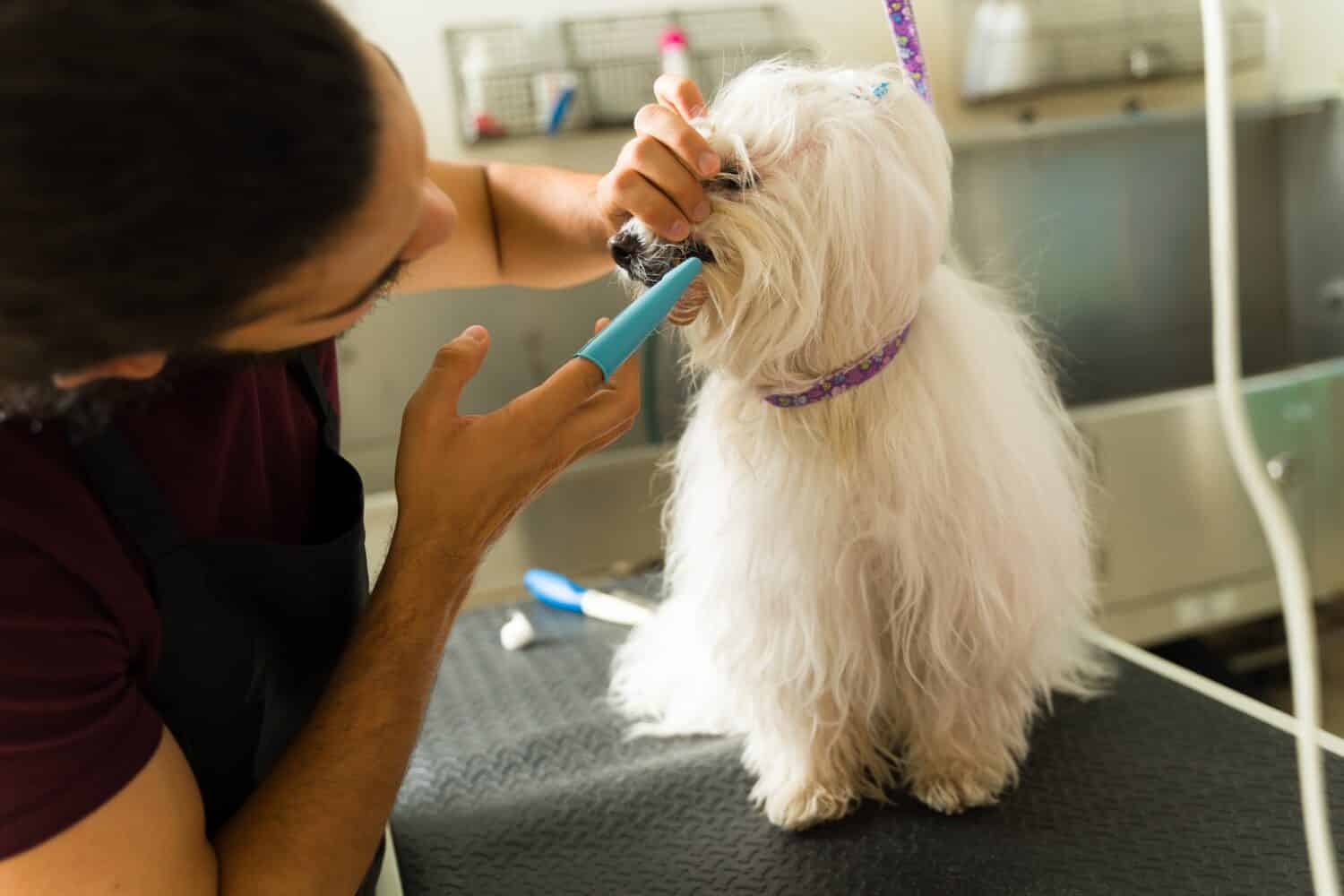
Brushing your Maltese’s teeth regularly can help to prevent dental disease.
©antoniodiaz/Shutterstock.com
During your dog’s yearly check-up, your vet should look at their teeth and let you know whether they recommend a dental cleaning or any other dental work. Dental disease is incredibly painful for dogs and can also lead to a range of other health problems, including heart, lung, and kidney disease. It’s also expensive to treat compared to the cost of a toothbrush and some dog toothpaste.
2. Cardiovascular Issues
Reputable Maltese breeders will screen for cardiovascular issues in their dogs’ lineage and will never breed dogs with hereditary heart conditions.
Some heart problems Maltese are prone to include:
- Congestive heart failure – Congestive heart failure is most common in senior Maltese. The first symptom is increased respiratory rate, which can go unnoticed if you don’t monitor it at home. (A normal resting rate for dogs is 15-30 breaths per minute.) As the disease progresses, your Maltese might have trouble breathing or exercising, cough, or faint.
- Patent Ductus Arteriosus (PDA) – The ductus arteriosus is a blood vessel that keeps blood from unnecessarily going to the lungs as the puppy is developing in the mother’s uterus. The blood vessel normally closes off shortly after birth to allow blood to flow through and oxygenate the lungs. PDA is caused by the ductus arteriosus remaining open (patent), resulting in serious changes in the way that the heart pumps blood through the body. It is generally detected by a continuous heart murmur.
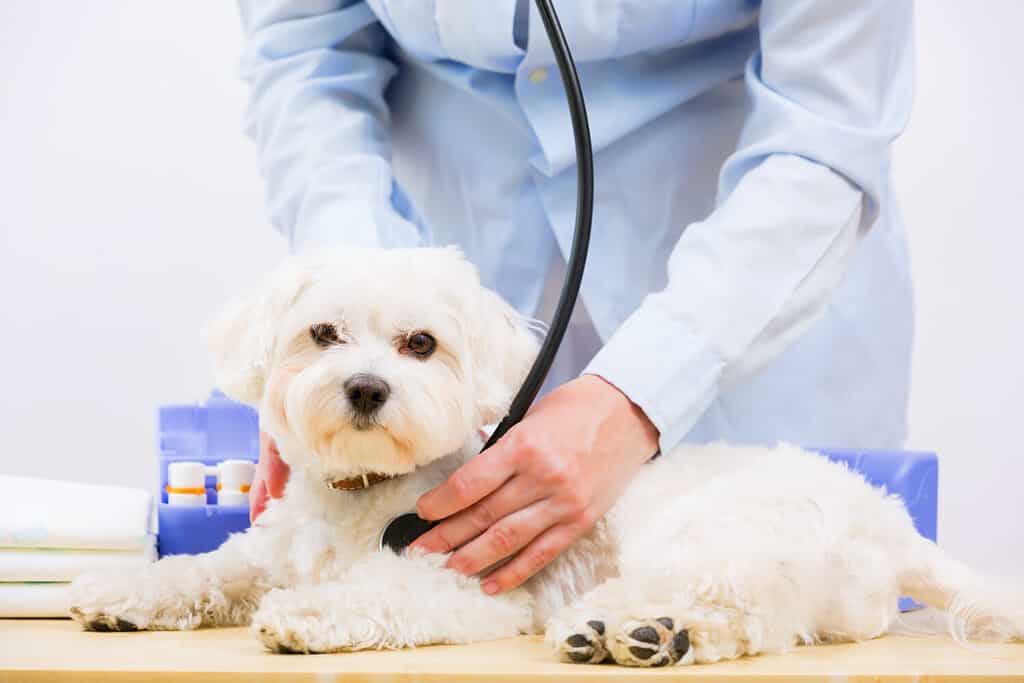
Heart murmurs are common in older Maltese and in dogs with PDA.
©gorillaimages/Shutterstock.com
3. Hypothyroidism
Hypothyroidism is the most common hormonal issue in dogs. With hypothyroidism, the thyroid fails to produce enough hormones. Scientists believe this is most often due to the immune system attacking the thyroid gland. The body’s metabolism slows, leading to weight gain despite a lack of changes to a Maltese’s diet or exercise routine. Other signs include hair loss, skin issues, a dry coat, slow heart rate, and cold intolerance.

If your Maltese has hypothyroidism, symptoms will not present until they are between 4 and 10 years old.
©YULIYA AKSIONAVA/Shutterstock.com
Symptoms most commonly present when your Maltese reaches 4-10 years old, with the average age of onset being 6-7 years. If hypothyroidism is suspected, veterinarians can order blood tests such as T3, T4, and the TSH Stimulation test. If hypothyroidism is suspected, veterinarians can order blood tests such as T3, T4, and the TSH Stimulation test to diagnose this condition. Treatment typically consists of synthetic hormone medication. Dogs with hypothyroidism live a normal lifespan.
4. Hydrocephalus
Hydrocephalus is often diagnosed in small brachycephalic dog breeds such as the Maltese. It typically develops soon after birth and is caused by congenital defects. Water accumulates around the brain, either because it cannot drain properly or is overproduced by the body.

A particularly dangerous health condition for Maltese is hydrocephalus, or “water on the brain.”
©Arthur Lookyanov/Shutterstock.com
This condition is also known as “water on the brain.” Your vet may prescribe medication to provide temporary relief until they can operate and place a shunt. Your primary veterinarian may refer you to a surgical or neurological specialist to perform the procedure. Not treating the condition can lead to permanent brain damage, disabilities, or death.
5. Luxating Patella
One of the most common health concerns in Maltese and other toy dogs is luxating patella. In a dog with this condition, the kneecap forms improperly, causing it to slip out of the groove and become dislocated. This condition ranges in severity.

Some Maltese may have a kneecap that slides out of place and could require surgery.
©iStock.com/Mindaugas Dulinskas
X-rays are used to diagnose the severity of the issue. Some Maltese can live with it their entire lives with no intervention, while others need surgery to correct the issue. You may see your dog stop using one of their legs temporarily only to quickly return to walking on all fours. Half of dogs are affected in both knees.
6. Ear Infections
Due to their floppy ears, ear infections in Maltese are common and typically not severe. Moisture and microorganisms such as yeasts can become trapped in their ear canals, causing an infection. Their ears should be checked regularly for dirt, debris, and wax. The hair should also be clipped around the ears to keep them tidy.

Take your dog to the vet if you notice symptoms of ear infections, such as head shaking and redness.
©Lucky Business/Shutterstock.com
It’s important to get your dog to the vet as soon as you notice symptoms, which include head shaking, odor, itching, redness, warmth, tenderness, and swelling in the ear. Waiting to treat an ear infection can lead to it spreading deeper into the ear, and even to other parts of the body. When caught early, simple ear infections can be treated by cleaning the ear and applying medicated ointment prescribed by your vet.
7. Deafness
Some Maltese lines are prone to hereditary deafness. With proper accommodations, deaf dogs can live just as richly as hearing dogs. However, it’s important to only purchase from reputable breeders who don’t breed deafness into their lines.

Maltese can be born deaf or lose their hearing later in life.
Your Maltese might also develop deafness throughout their life. If your dog loses their hearing, please see a veterinarian to determine the underlying cause. Treatments such as clearing wax buildup might restore your dog’s hearing, or they may have a severe health problem that needs to be addressed. Deaf dogs do require changes in routine, such as using hand motions rather than verbal cues and approaching your Maltese slowly to avoid startling them, since they cannot hear you approaching.
8. Inflammatory Bowel Disease (IBD)
A common digestive disorder in Maltese is inflammatory bowel disease (IBD). Signs are typically diarrhea and vomiting. If the problem lies in the stomach and upper part of the small intestine, vomiting is the most common symptom. Diarrhea is more common when the colon is the problem. You may notice mucous or some blood in the stool.

IBD often responds to medical interventions such as dietary change and medication.
©Jeffry S/Shutterstock.com
Your vet may recommend dietary changes or medications. Extensive testing may also be required to rule out other causes. Most dogs can live normal lives with various therapies, but it is a lifelong condition that requires ongoing monitoring.
9. Collapsed Trachea
A collapsed trachea occurs when the cartilage in a dog’s trachea, or windpipe, loses its rigidity and collapses, obstructing their ability to breathe. Symptoms include a honking cough and exercise intolerance.

Middle age is when you commonly see signs of collapsed trachea in a Maltese, though it can occur earlier.
©Carnivorka/Shutterstock.com
Collapsed trachea can happen at any age but most commonly begins in middle age, as it is a progressive disease that worsens with age. Some Maltese can be successfully treated with medications, while others will need surgery to correct the issue.
10. Liver Problems
Liver shunt, or Portosystemic Vascular Anomalies (PSVA), is when blood flows around the liver instead of to it. In most cases, puppies are born with these shunts. In Maltese, the most common type is the extrahepatic (outside the liver) shunt. Shunts can lead to decreased liver size, impaired central nervous system functioning, and impaired liver function. You might notice a lack of normal growth, muscle development, and neurological symptoms. Prognosis varies based on severity. Surgery can be curative in mild cases, and many dogs can get relief through medications and dietary changes which allow them to live longer lives than they could without treatment.

Microvascular dysplasia in Maltese is overwhelmingly asymptomatic.
©iStock.com/Laures
A much more common liver disorder in Maltese is microvascular dysplasia (MVD). Instead of bypassing the liver as in PSVA, MVD happens at the cellular level. Blood circulates through the liver, but at lower levels. A majority of Maltese have MVD, which can be symptomatic or asymptomatic. Luckily, most Maltese with MVD are asymptomatic and live normal lives with no medical intervention required. The few that are symptomatic have symptoms similar to PVSA and may require medication and a special diet. Responsible breeders test their puppies for liver issues via the Total Serum Bile Acids Test.
11. White Dog Shaker Syndrome
Often known simply as shaker syndrome, this condition primarily affects small white dogs like Maltese, but breeds without white coats may have it also. Dogs will typically develop tremors at one to two years old. These tremors vary in severity and may worsen when your dog is excited or during exercise. Some researchers speculate that it may be a mild form of granulomatous meningoencephalitis (GME).

Small dogs with white coats are most prone to shaker syndrome.
©Tomsickova Tatyana/Shutterstock.com
Though it can seem scary, it is easily treated. Most dogs recover well with glucocorticoids as treatment. Even if a dog relapses, corticosteroids can help with the symptoms, and they can go on to live full, happy, and tremor-free lives.
12. Encephalitis (GME)
GME is an inflammatory autoimmune disease where the body’s immune system begins to attack itself for unexplained reasons. In Maltese, it typically attacks the central nervous system, generally the brain, but it may also attack other areas, such as the optic nerves and eyes. Any neurological symptom can be a sign of GME. Get your dog to the vet immediately if they appear to have any type of neurological disorder.
Veterinarians will use bloodwork to rule out other diseases. GME is diagnosed via MRI and a spinal tap to test cerebral spinal fluid. If left untreated, the outcome will most likely be fatal. The inflammatory process must be treated immediately and aggressively, typically with high doses of steroids, followed by chemotherapy drugs. Remission is possible, but the prognosis varies by the individual. The sooner a dog is treated, the better the outcome.

Some Maltese can live to be over 15 years old.
©Dora Zett/Shutterstock.com
How Long Do Maltese Live?
Maltese live an average of 12-15 years, with some living beyond these numbers. While you can never fully control how long your Maltese lives, following the advice above and staying informed about your dog’s health gives them the best chance at a good quality of life and a longer one.
How to Keep Your Maltese Healthy
There are a few things you can do to help ensure your Maltese stays as healthy as possible. These include choosing a reputable breeder, feeding your dog a good diet, daily exercise, regular veterinary checkups, and monitoring your pup at home for any changes. Take an in-depth look at each of these suggestions in the sections below.
Choosing a Reputable Breeder
Reputable breeders run extensive health testing on their dogs to ensure they aren’t breeding genetic conditions into their puppies. Never adopt from a breeder without up-to-date OFA health testing on both parents and a reference number for their veterinarian.

Choose a reputable breeder that tests their puppies for genetic conditions.
©Mihalovna/Shutterstock.com
A Good Diet
One of the most important ways to keep your Maltese healthy is to feed a high-quality, veterinarian-recommended kibble in the right amounts. Most vets recommend foods that meet WSAVA guidelines, meaning they’re scientifically proven to be healthy for our dogs. This is especially important since we don’t yet know for sure what’s caused the influx of heart disease in dogs, which may be linked to certain ingredients used in grain-free foods and boutique dog food brands. Feeding the right amount of food keeps your Maltese at a healthy weight, which can give them several more years of life than overweight dogs.
Daily Exercise
Small breeds may need less exercise than larger dogs, but they still need daily exercise to maintain good health. Most Maltese require a half hour or more of exercise each day. This can include daily walks, playtime inside, or running around the backyard. Just like people, Maltese who are physically fit tend to stay healthier for longer.

Diet, exercise, and veterinary care can extend your Maltese’s lifespan.
©iStock.com/kimrawicz
Regular Veterinary Check-Ups
A good vet can make a world of difference in your dog’s health. Your Maltese should see the vet for a check-up once yearly throughout young adulthood and every six months once they enter their senior years.
Monitoring Your Dog’s Health at Home
Monitoring your Maltese’s health at home means you’ll pick up on health problems earlier than you would if waiting for your yearly appointment. Check over your dog’s body while grooming, including their eyes, ears, and mouth. Watch them for changes in behavior, which are often the first symptoms of illness or pain. If you notice anything amiss, schedule an appointment with your veterinarian to have your dog seen as soon as possible.