
Quick Take
- Giving your pregnant Newfoundland a common supplement most owners consider harmless could actually trigger a life-threatening condition.
- Changing her diet too early in the pregnancy can do more harm than good. The timing of when to increase her food intake is more precise than most owners expect. See when feeding increases →
- There's a specific week when parasite risk spikes for the developing puppies, and missing it has consequences that can't be undone after birth. Check the deworming window →
- What the mother does with the placenta after delivery looks alarming, though intervening could actually be the wrong move. See post-birth behavior guidance →
Newfoundlands are a large working dog breed and are direct descendants of the extinct St. John’s water dog. They were originally bred to assist Canadian fishermen in hauling fishing nets onto boats in the North Atlantic Sea. Newfoundlands are known for their huge size, with males weighing between 130 and 150 pounds and females weighing between 100 and 120 pounds. They are intelligent, sweet-natured, social, and loving dogs, making wonderful family companions as they are great with children. If your Newfoundland is pregnant, there are different things to look out for each week, and these massive dogs will need extra special care when pregnant.
Pregnancy Symptoms
At first, it may be difficult to determine if your dog is pregnant. A Newfoundland, like any other dog, will exhibit a wide variety of symptoms during their pregnancy, such as:
- Decreased activity
- Enlarged abdomen
- Increased appetite
- Weight gain
- Unusual behavior
- Nesting behavior
- Enlarged or discolored nipples
If your dog has any of the above symptoms, take her to the vet for a complete checkup to find out if she is pregnant or if there is another underlying health issue.

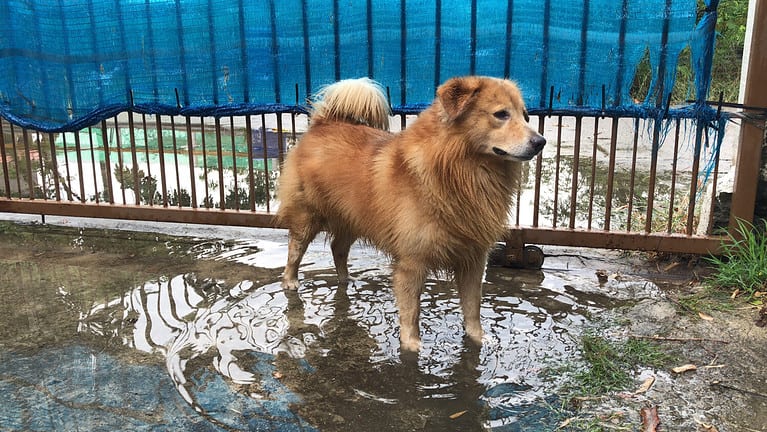
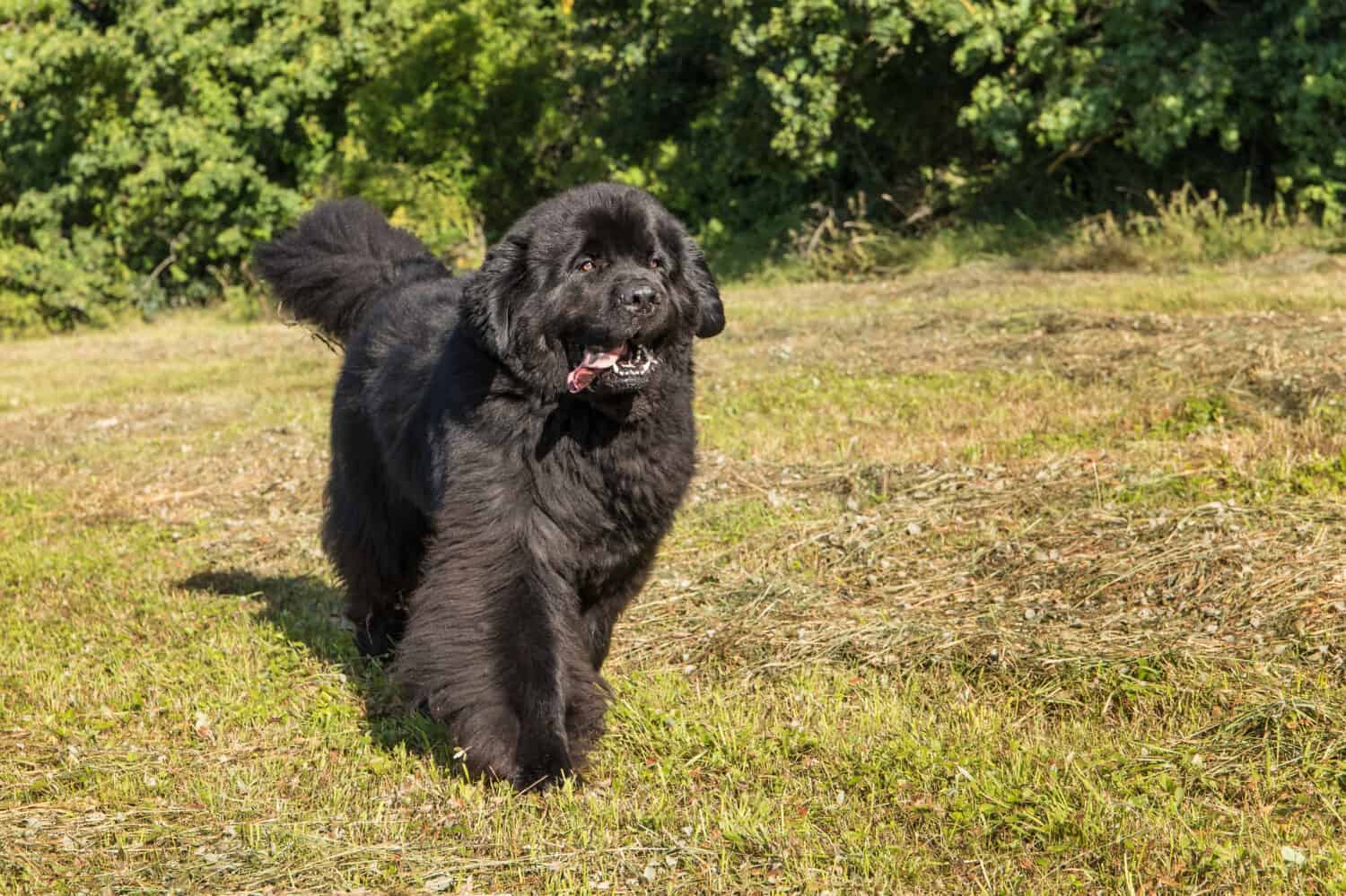
Newfoundlands are known for their huge size, with females weighing up to 120 pounds.
©Pandas/Shutterstock.com
How Long Are Newfoundlands Pregnant?
Most dogs are pregnant for approximately nine weeks. However, in the first month of a dog’s pregnancy, you might not even notice that they are pregnant. It will become more apparent in the second month. The gestation period is an average of 63 days, but it can vary by several days, depending on breed and the dog’s condition. When dealing with planned breeding, it is best to take note of the exact date when mating occurred.
Pregnancy Care for Newfoundlands
As with other dog breeds, when a Newfoundland is pregnant, there are certain steps to take care of her. Proper nutrition is a must. Therefore, the mom should receive good quality food and should be at a healthy weight. Unless directed to do so by a veterinarian, her diet does not have to be changed in the first two-thirds of the pregnancy, as increasing her food intake could be harmful. Only in the last few weeks of gestation should food portions be increased gradually. Also, smaller meals more frequently are ideal, as big meals may cause discomfort. Owners must not give the mother additional calcium during pregnancy, as it could cause eclampsia.
Exercise is also very important in a Newfoundland pregnancy. Some vets believe normal exercise is fine during the first few weeks of pregnancy. However, shorter, more frequent walks are recommended toward the end of the pregnancy. Regular visits to the vet will help your dog stay healthy during her pregnancy. A vet can confirm the pregnancy and advise on what to do and expect. In addition, a vet can tell you if your Newfoundland will be able to have a normal birth or if a cesarean may be necessary.
Average Litter Size for Newfoundlands
The average litter size of a Newfoundland is about 8 to 10 puppies, but this can vary depending on the mother’s age and condition. These puppies should drink their mother’s milk for at least the first month of their lives. They can then start on a milk replacer and high-quality dry food. By the time they are eight weeks old, they can eat dry food.
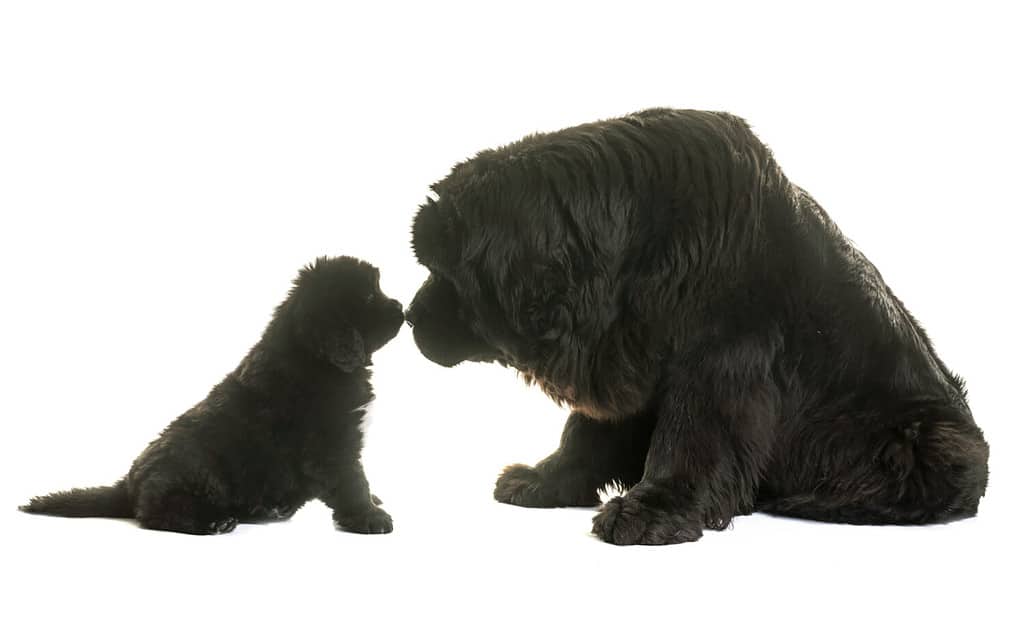
The average litter size for a Newfoundland is between 8 and 10 puppies.
©cynoclub/Shutterstock.com
What to Expect in Weeks 1 Through 9
For the first few weeks, you may not see many changes in your dog. However, as the pregnancy progresses, there are a few things to watch out for. Here is what you should expect during each week of your Newfoundland’s pregnancy.
Weeks 1 and 2
In week one, several eggs are fertilized in the fallopian tubes and slowly migrate down to the uterine horns. In addition, the mom will experience some hormonal changes even though there will not be any physical changes yet. At this stage, owners should carry on as normal, feeding and playing with their dogs. Her energy levels should be the same as before she was pregnant, and grooming can continue normally. At this stage, changes to her diet or supplements are not needed yet, unless prescribed by a vet.
What to Expect in Weeks 3 and 4
In week three, there are still no visible changes in the mom. However, the puppies in the womb are protected in a membrane layer that offers them the necessary nutrients. Also, there is still no need to alter the mom’s daily routine and the amount of food she eats. By week four, you should visit the vet for a check-up. The vet can do an ultrasound to check on the puppies’ health and litter size and give an accurate birthing date.
What to Expect in Week 5
In week five, the embryogenesis stage has ended, and the puppy’s organs are beginning to form. The embryos are called fetuses during this stage of the Newfoundland’s pregnancy. Additionally, in week five, the mom will start to put on a lot of weight. It is advisable to begin feeding the mom more at this stage, but a vet can advise on quantity, portion sizes, and frequency. Do not give your dog any supplements, especially calcium, unless prescribed by a veterinarian.
What to Expect in Week 6
Week six is when the puppies develop more distinct organs, cells, and claws. Mom should be given a higher-energy diet with more proteins and minerals. However, she may have a diminished appetite due to the discomfort of the pregnancy. Also, she should eat smaller, more frequent meals instead of 2 big meals a day.
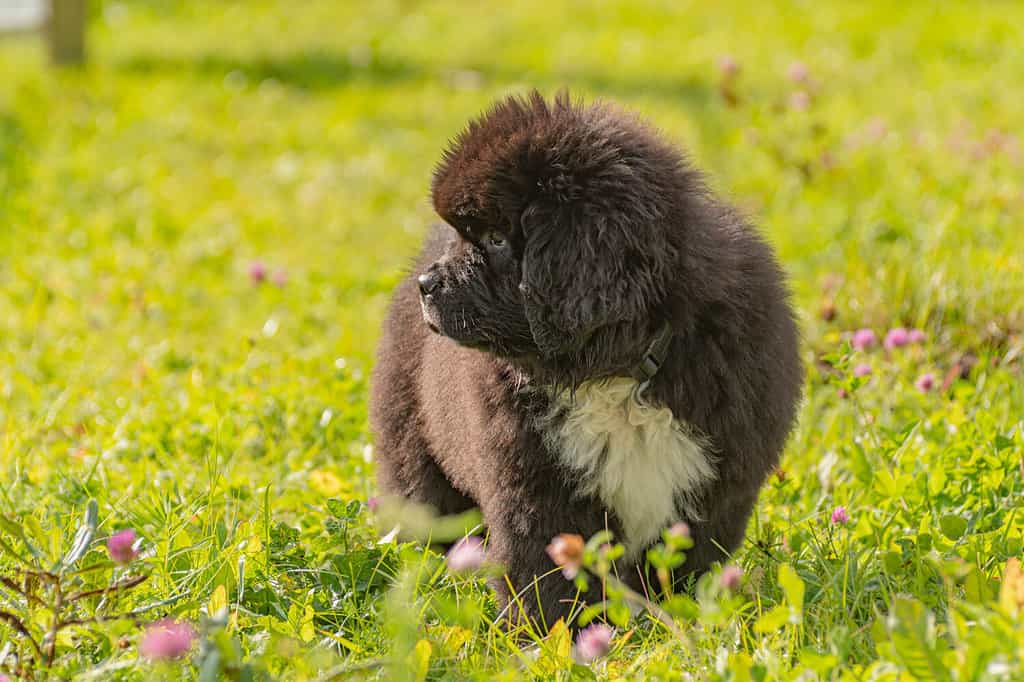
For healthy pups, the mother should be given a higher-energy diet with more proteins and minerals.
©ABphotopro/Shutterstock.com
What to Expect in Week 7
The puppies will start developing hair in week seven, and their skeletons will begin solidifying. These are some of the last features to develop. However, at this stage, parasites are a concern. Therefore, the mom must be up to date with her vaccinations and deworming.
What to Expect in Week 8
Week eight should be around days 50 to 56. The vet might decide to perform an x-ray to check the puppies and decide on a final birthing plan. However, not all vets will choose to do an X-ray. At this stage, some milk might come from the mom’s teats. This normally occurs about 1–3 days before giving birth, although it can sometimes happen up to a week prior.
What to Expect in Week 9
In the last week, the mom might start nesting, looking for a quiet, warm place to give birth. The owners should provide a warm, comfortable area with blankets. Also, the mom should be prepared for delivery: her teats and rear end should be cleaned, and if there is a lot of hair in those areas, it should be cut to provide the puppies with a hygienic birth.
How to Prepare for Labor and Delivery
There are a few things that can be done to make labor and delivery as smooth as possible with a Newfoundland pregnancy, including:
- Setting up a quiet, clean delivery area.
- Have a tin of puppy milk on hand, just in case.
- Have extra clean towels and linens nearby the birthing area.
- Have disposable gloves on hand.
- Have extra kitchen towels close by.
- Have a scale to weigh the puppies when they are born.
- Have your vet’s phone number on hand in case of an emergency.
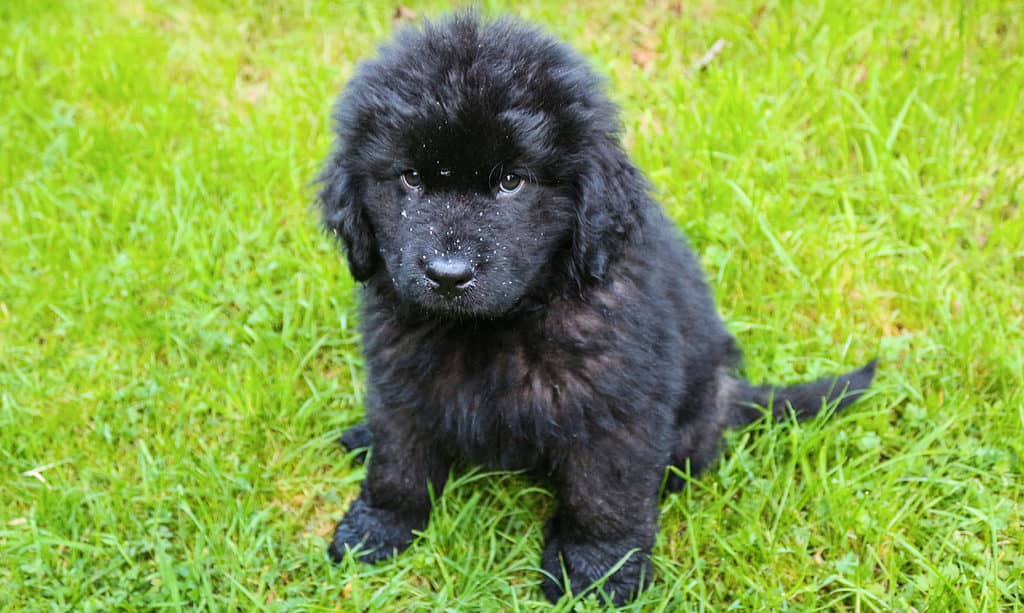
The birthing area must be kept warm, as puppies cannot regulate their body temperature yet.
©LigaP/Shutterstock.com
How to Care for Your Newfoundlands After Birth
After the puppies are born, the mother should clean them straight away. She will remove the sack and lick them clean. Then, they must start nursing within one to three hours after birth. An owner should not remove the placenta immediately, as the mom might want to eat it to regain all the nutrients she put into her pregnancy. Additionally, the birthing area must be kept warm, as puppies cannot regulate their body temperature yet.
Owners must take the mom and puppies to the vet to check if everyone is healthy. Also, other dogs should be kept away from the puppies for the first few days. The mom must not be washed for a few weeks after birth, if possible. While the mom is breastfeeding, it is advisable to feed her high-quality puppy food. Lastly, the mom’s hair around her teats must be kept clean and cut, and the owner should check her mammary glands for infection daily.