
Quick Take
- The cutest Pomeranian face type comes with a hidden health cost most buyers never consider before purchasing. See the health costs →
- Of the three Pomeranian types, only one is considered a "real" Pomeranian by official standards, and it happens to not be the most popular one. Meet the official standard →
- A Pomeranian's skull shape can cause a brain condition most owners have never heard of. Learn about Chiari malformation →
- Most buyers completely overlook one obvious breeder red flag, even though it's visible before you ever see the puppy. Spot the breeder red flags →
There is only one Pomeranian breed that is officially recognized by major kennel clubs. Although there are some variations based on their facial structure, including fox face, teddy bear face, and baby doll face, only the fox face Pomeranian meets breed standards. Below, we’ll talk about the different types of Pomeranians and how to find an ethical Pomeranian breeder or rescue.
What Is a Pomeranian?
Pomeranians are the smallest of the Spitz breeds. These dogs were bred down to miniaturized versions of the bigger, stronger Spitz-type dogs bred to pull sleds in the Arctic. They are named for a region called Pomerania, an area of central Europe that includes parts of modern-day northwestern Poland and northeastern Germany.
They are small dogs measuring around 6-7 inches tall and weighing 3 to 7 pounds. They’re affectionate, intelligent, adaptable, vocal, and protective. This breed is popular for good reason. Pomeranians are cute, require only moderate exercise, and suit many people’s lifestyles well. They have a thick double coat with a frill that can extend over their chests and shoulders.
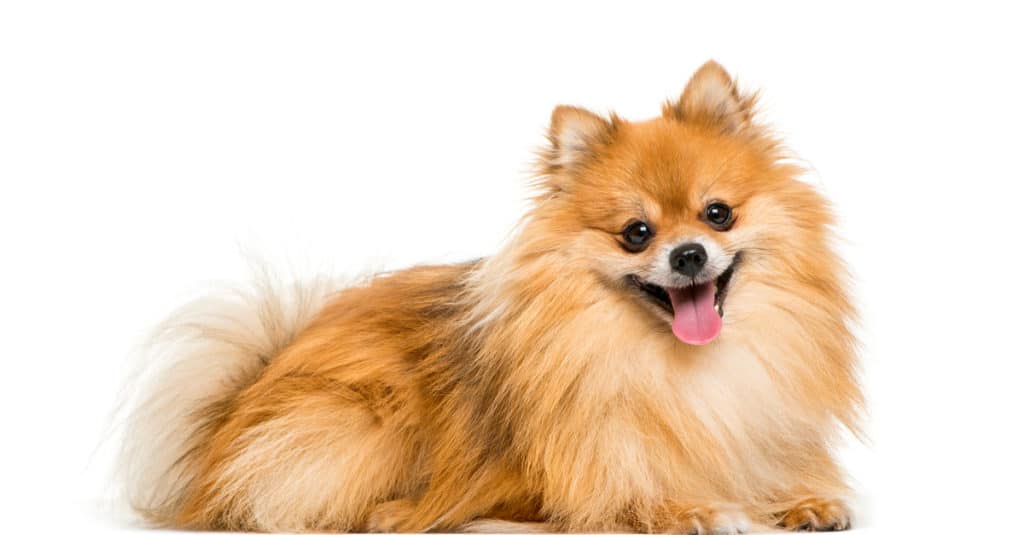
These little dogs are cute, require moderate exercise, and suit many people’s lifestyles well.
©Eric Isselee/Shutterstock.com
1. Fox Face Pomeranian
Fox-face Pomeranians are bred to follow American Kennel Club (AKC) breed standards. They should have high set, erect, triangular ears and relatively short, straight muzzles with the ratio for the length of the muzzle to the skull being one-third to two-thirds. Breed standards also note that their expression “may be referred to as fox-like” to indicate their intelligence and alertness.
When bred to AKC standards, fox face Pomeranians are typically healthy dogs that can live 12 to 16 years. Reputable breeders screen their dogs for genetic issues such as luxating patellas, hypothyroidism, congestive heart failure, seizures, collapsing tracheas, and black skin disease (Alopecia X).

Fox face Pomeranians are the only official Pomeranians bred to follow AKC standards.
©Jen Ottepka/Shutterstock.com
2. Teddy Bear Pomeranian
Teddy bear Pomeranians are bred to have shorter snouts, rounder faces, and large eyes set close to the muzzle. Their ears also tend to be shorter and rounded. The biggest problem with these dogs is their shortened muzzles. While well-bred Pomeranians have average length (mesocephalic) snouts, teddy bear Pomeranians have brachycephalic snouts.
Dogs with brachycephalic snouts struggle in their day-to-day lives and are prone to a variety of health problems. They have trouble breathing, exercising, and maintaining their body temperature. Brachycephalic Obstructive Airway Syndrome is common in these dogs. They have small nostrils and elongated bones and a soft palate in the mouth and throat, which can block their airway. They also have other abnormalities in their airway that hinder their ability to breathe and can cause other health problems.
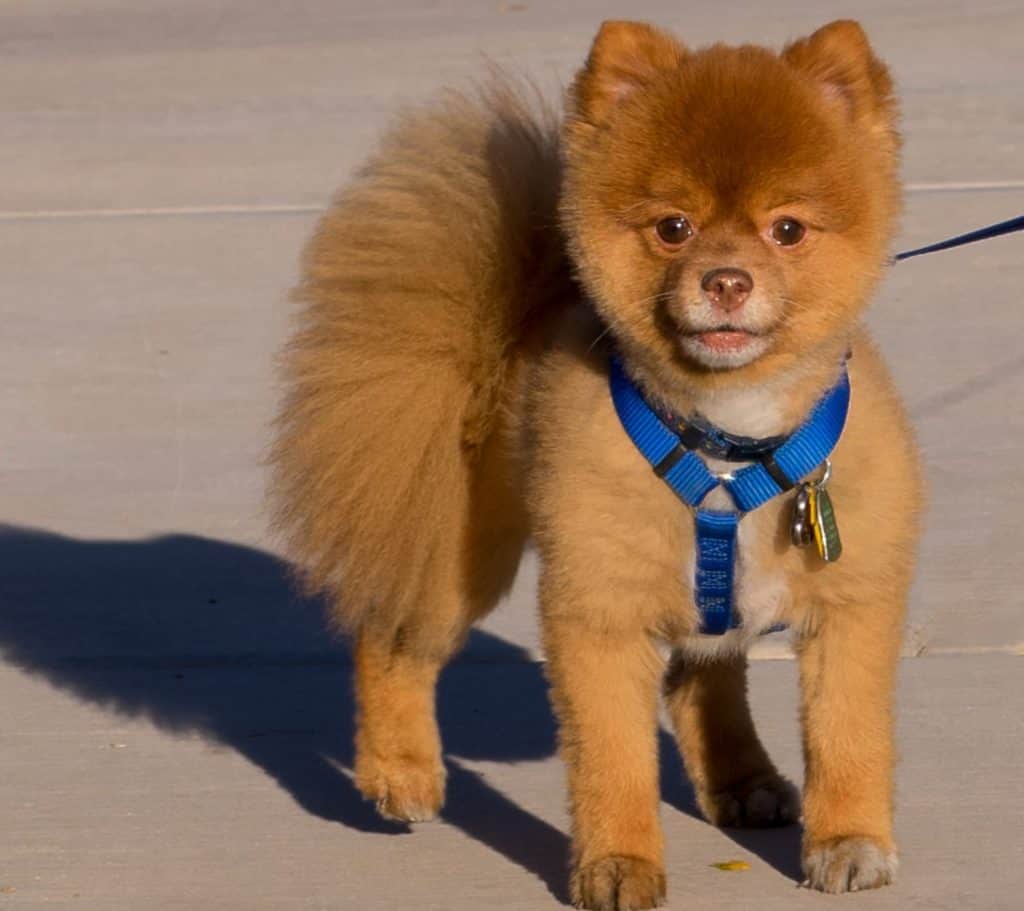
Teddy bear face Pomeranians have shorter muzzles, fuller cheeks, and a very round face.
©shuttermutt/Shutterstock.com
3. Baby Doll Face Pomeranian
Baby doll face Pomeranians look similar to teddy bear face Poms, but in addition to their round faces and large, round, expressive eyes, they have a more delicate bone structure. They also have the shortest muzzle of the three face types. This means these Pomeranians have brachycephalic snouts and can suffer from the respiratory issues described above.
The unnaturally shortened skulls of baby doll face Poms can lead to conditions such as Chiari malformation, where the skull is too small for the brain, leading to the cerebellum pushing on the spinal cord. This condition causes chronic neuropathic pain and hypersensitivity.
What About Pomeranian Mixes?
In recent years, there has been an influx of “designer dogs,” or mixed breeds, sold at a very high price. Some common Pomeranian mixes you might see include Pomchis (Pomeranian Chihuahua mixes), Yorkie-Poms (Yorkshire Terrier Pomeranian mix), or Pomapoos (Pomeranian Poodle mixes). Mixed breeds are not necessarily unhealthy. The problem is when the only incentive for breeding these dogs is money — some breeders have no other purpose and do not breed ethically.
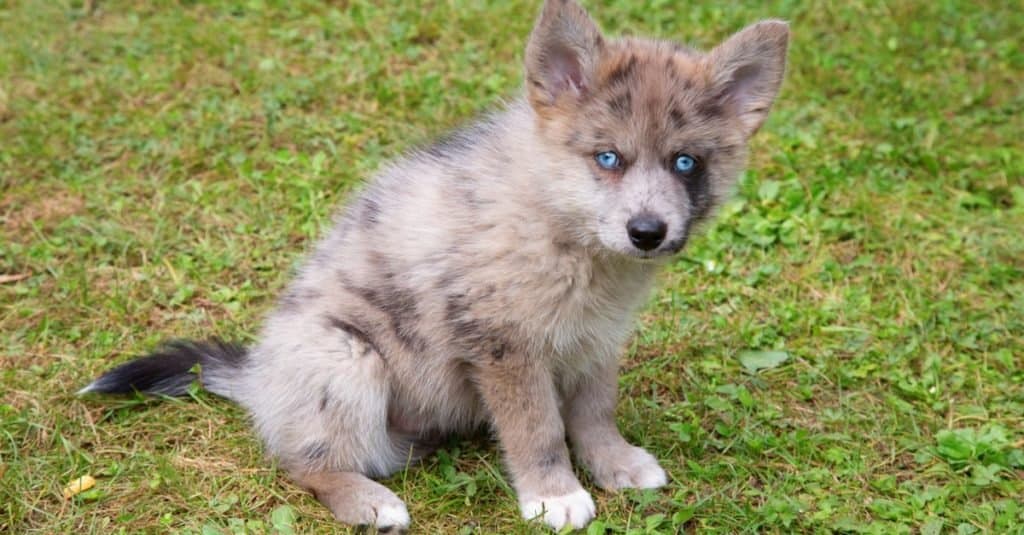
The responsible way to adopt a mixed breed dog, like this Pomsky, is to visit your local animal shelter or rescue.
©Fedor Selivanov/Shutterstock.com
This means they don’t perform genetic health tests, which can ensure the parent dogs don’t pass down health conditions to the puppies. They might keep the dogs in poor conditions, neglect them (especially the parents!), and not care where their puppies end up. This can lead to more dogs in shelters, neglected, or abused. The responsible way to adopt a mixed breed dog is to visit your local animal shelter or dog rescue. There are even Pomeranian-specific rescues that will take in both purebreds and mixed breeds.
How to Find Reputable Pomeranian Breeders
Remember, reputable breeders will only breed fox face Pomeranians, as teddy bear face and baby doll face Pomeranians can have additional health problems due to their shorter muzzles.
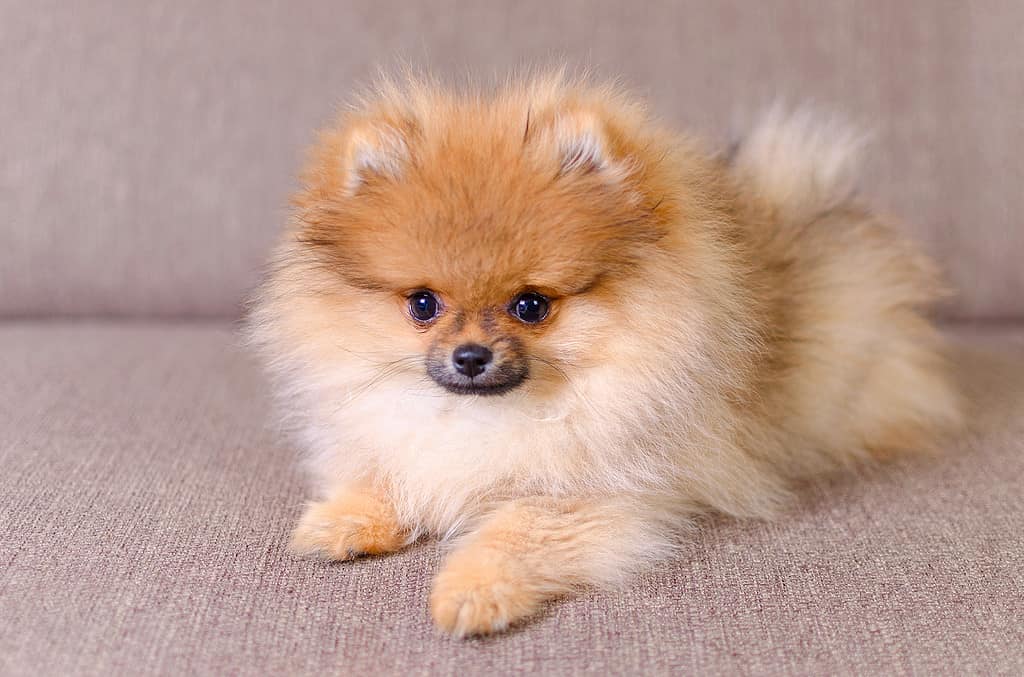
Reputable breeders only breed fox face Pomeranians.
©iStock.com/nadisja
Look for the following signs to ensure a breeder is reputable:
- Wait list. It’s difficult to wait, but reputable breeders don’t breed more puppies than they have homes for. They have homes lined up before breeding their dogs.
- Genetic testing and ancestry. Reputable breeders can provide proof of their dog’s ancestry. They also have a veterinarian perform genetic health testing to ensure healthy puppies.
- Vet visits. Your breeder should be able to show proof that the litter has received vet care, like vaccines, deworming, and check-ups.
- Knowledge and honesty. Reputable breeders are knowledgeable about Pomeranians and breeding and will answer questions honestly.
- Asking questions. No responsible breeder will hand over a puppy to just anyone! They should have questions about your family and home to ensure a good fit.
- A return policy. Reputable breeders never want their dogs to end up in shelters. They make adopters sign a contract stating they’ll return the puppy to the breeder if they need to rehome.
- The ability to meet the mother. Reputable breeders will let you meet the mother dog. They’ll also allow you to see where the dogs live. It should be a clean home environment with plenty of space and access to food and water.
Dogs shouldn’t be in small crates, outdoors, or in overcrowded environments. If a breeder wants to meet in a neutral place, they may not be keeping their dogs in adequate conditions. - Not selling multiple litters at once. Reputable breeders shouldn’t have more than a couple litters at a time. If they are selling a variety of breeds or litters, they may be a puppy mill.