


P
Species Profile

Pomchi

Canis lupus familiaris

Tiny mix, huge attitude
Flabygasted/Shutterstock.com

Pomchi Distribution

Click a location to explore more animals from that region

Origin Location

This map shows the native origin of the Pomchi. As a domesticated species, they are now found worldwide.

Loading map...

Found in 1 state/province

Size Comparison

Human 5'8"
Pomchi 8 in

Pomchi stands at 12% of average human height.

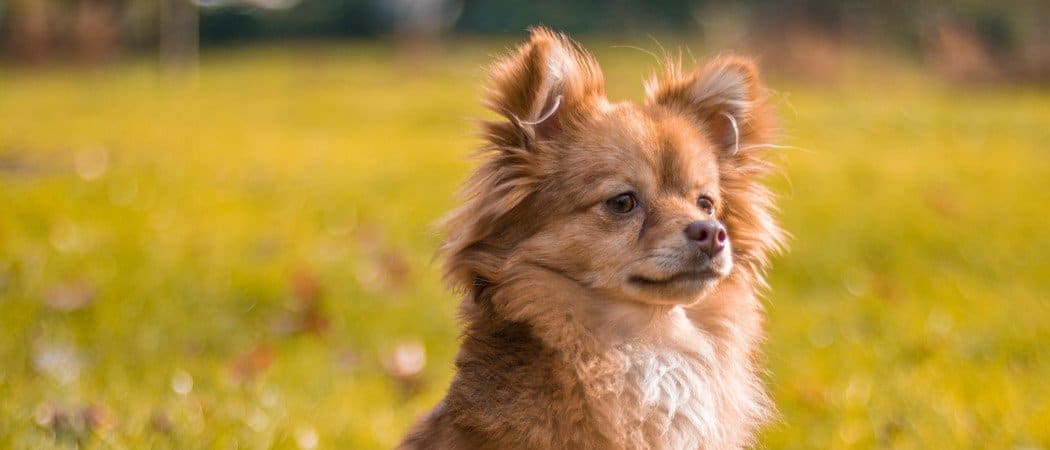
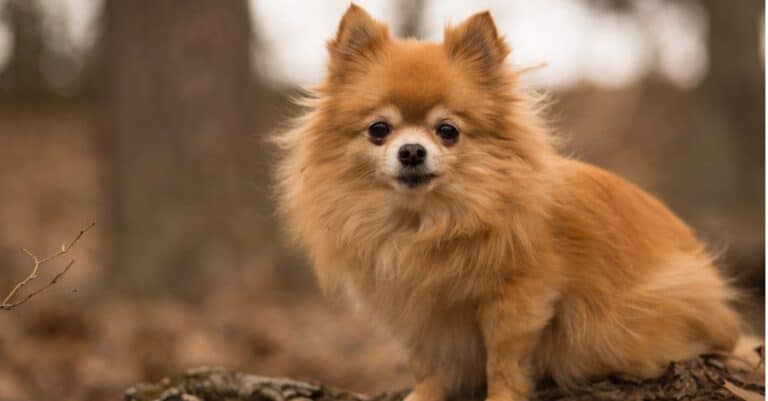
Pomchi close-up

At a Glance

Domesticated
Also Known As Pom-Chi, PomChi, Chi-Pom, Pomeranian–Chihuahua cross
Diet Omnivore
Activity Diurnal+
Lifespan 5 years
Weight 5 lbs
Status Not Evaluated
Did You Know?

Pomchis aren't a standardized breed-size, coat, and temperament can vary greatly depending on which parent they take after.

Scientific Classification

A small companion dog commonly produced by crossing a Pomeranian with a Chihuahua. As with most “designer” mixes, traits (size, coat length, ear shape, temperament) can vary widely between individuals depending on parentage.

Kingdom
Animalia
Phylum
Chordata
Class
Mammalia
Order
Carnivora
Family
Canidae
Genus
Canis
Species
lupus

Distinguishing Features

  • Toy-sized dog; appearance varies but often a Chihuahua-like head with Pomeranian-influenced coat
  • Coat can be short to long; may have a fluffy ruff/tail like a Pomeranian
  • Ears often erect; body compact
  • Temperament often alert and companion-oriented, but variable by lineage and socialization

Physical Measurements

Males and females differ in size

Height
9 in (7 in – 11 in)
8 in (6 in – 10 in)
Length
1 ft 2 in (11 in – 1 ft 6 in)
Weight
9 lbs (6 lbs – 14 lbs)
8 lbs (4 lbs – 12 lbs)
Tail Length
4 in (3 in – 6 in)
6 in (4 in – 7 in)
Top Speed
16 mph
running

Appearance

Primary Colors
Secondary Colors
Skin Type Domestic dog skin; may be sensitive with seasonal shedding and potential dryness/allergies, especially under dense coats.
Distinctive Features
  • Domestic dog hybrid (Pomeranian × Chihuahua), not a wild Canis lupus form; appearance varies widely by parentage.
  • Small companion-dog build compared with the base species (wolf/dog species context): markedly reduced size, shorter muzzle in some lines, and rounder skull possible.
  • Head shape ranges from Chihuahua-like "apple head" to Pomeranian-like "fox face"; muzzle length varies from short to moderate.
  • Ears usually upright and triangular; size can be oversized relative to head, with fringes in longer-coated individuals.
  • Eyes often large and prominent; some individuals show more tear staining or ocular irritation sensitivity.
  • Coat length ranges from short/smooth (Chi-like) to medium-long and fluffy (Pom-like); may be single or double-coated with a neck ruff.
  • Tail commonly carried high and may plume/curve over the back; curl tightness varies.
  • Temperament and behavior can be variable: alert, vocal, and attached; may be cautious with strangers depending on socialization.
  • Cold sensitivity common, especially in short-coated individuals; sweaters and reduced cold exposure often needed.
  • Heat stress risk in very small dogs; avoid overexertion and ensure shade and water.
  • Dental crowding and periodontal disease risk typical of toy dogs; daily tooth brushing and routine dental cleanings recommended.
  • Orthopedic concerns: patellar luxation and general joint fragility; maintain lean body condition and use ramps for furniture.
  • Airway issues can occur (e.g., tracheal collapse-like cough); use a harness instead of a neck collar.
  • Metabolic concerns in tiny individuals: hypoglycemia risk, especially in puppies; consistent feeding schedule important.
  • Grooming needs range from low (smooth coat) to frequent brushing (long/double coat) to prevent mats and manage shedding.

Sexual Dimorphism

Sexual dimorphism is mild: males are often slightly larger with a broader head/neck. Females may appear finer-boned and may carry more body condition during heat cycles or after spaying.

  • Often slightly heavier with a sturdier chest and thicker neck ruff in long-coated individuals.
  • May show more prominent facial breadth and a more robust stance.
  • Often slightly smaller with a finer-boned frame and narrower head.
  • May show subtle body-shape changes around heat cycles or after pregnancy.

Did You Know?

Pomchis aren't a standardized breed-size, coat, and temperament can vary greatly depending on which parent they take after.

Both parent breeds are "toy" dogs, so Pomchis typically stay small and are popular for apartment living (with training and enrichment).

A Pomchi may inherit a fluffy double coat like a Pomeranian or a shorter, sleeker coat closer to a Chihuahua-grooming needs follow the coat type.

Many Pomchis inherit very large, upright ears (common in Chihuahuas), contributing to their sharp alertness to sounds.

Like many small breeds, Pomchis are prone to dental crowding, so consistent tooth brushing is one of the most impactful care habits.

Because they're small, even modest weight gain can stress joints and the heart-portion control matters more than many owners expect.

Pomchis often bond intensely with one person, a common companion-dog trait amplified by Chihuahua-style attachment.

Unique Adaptations

  • Extreme domestication relative to the base species (gray wolf): Pomchis are bred for companionship rather than hunting, territorial pack living, or long-distance endurance.
  • Toy-body scaling: reduced size makes them efficient indoor companions but increases vulnerability to injury from falls and rough handling-safe home setup is a practical "adaptation" for the breed type.
  • Coat flexibility: mixed ancestry can yield anything from short single coats (more heat sensitive) to thicker double coats (more cold tolerant but higher shedding).
  • Enhanced human-attunement: like many companion-line dogs, Pomchis often excel at reading human cues and routines (mealtime, attention, walk rituals).
  • Thermoregulation trade-offs: small bodies lose heat quickly; many benefit from sweaters in cold weather, while thick-coated individuals need careful summer heat management.
  • Craniofacial variation: head shape can range toward "apple head" Chihuahua types, which may be associated with issues like dental crowding and (in some lines) risk of hydrocephalus.

Interesting Behaviors

  • "Alarm system" barking: many Pomchis quickly vocalize at door knocks, footsteps, or unfamiliar sights; early training helps prevent chronic reactivity.
  • Shadowing and "velcro" behavior: they may follow a favorite person room-to-room and prefer lap time over independent play.
  • Fast zoomies in short bursts: toy dogs often sprint briefly, then settle; short play sessions suit their stamina.
  • Selective social confidence: some are bold and outgoing (often Pom-like), while others are cautious with strangers (often Chi-like).
  • Burrowing and blanket nesting: common in small companion dogs, especially individuals that get chilly easily.
  • Resource guarding can appear if not addressed early-trade-up games and gentle handling practice reduce risk.
  • High sensitivity to handling: because of small size, rough play or sudden grabs can create fear responses; calm, predictable handling builds trust.

Cultural Significance

Pomchi (Pomeranian × Chihuahua mix, Canis lupus familiaris) are modern "designer" mixes combining a Victorian-era Pomeranian and Mexico-linked Chihuahua. They are popular as lapdogs, city pets, and social media dogs, but mixed outcomes can vary.

Myths & Legends

In Mesoamerican tradition, small dogs like Chihuahua ancestors appear in stories as spiritual helpers who guide souls to the underworld; regional dog burials and artifacts support this cultural link.

A folk belief calls Chihuahuas "little heat sources" that comfort people by curling up close. This loving idea matches their real habit of seeking warmth and burrowing into blankets.

Pomeranians come from bigger northern European Spitz working dogs. Stories say they became small, fashionable pets in European courts, and Queen Victoria's love helped make their 'royal lapdog' image.

Pomchi is a modern name made from two words and part of pet folklore. Owners swap origin stories about 'a tiny dog with a lion's ruff and deer's ears,' showing its mixed looks vary.

Conservation Status

NE Not Evaluated

Has not yet been evaluated against the criteria.

Population Stable

Life Cycle

Birth 2 pups
Lifespan 5 years

Lifespan

In the Wild
2–12 years
In Captivity
10–18 years

Reproduction

Mating System Polygynandry
Social Structure Managed Domestic
Breeding Pattern Transient
Fertilization Managed Selective
Birth Type Managed_selective

Pomchis follow domestic-dog patterns: mating is typically human-managed, with selected pairs and no lasting pair bond. Reproduction uses internal fertilization with a copulatory tie; small size and parent mismatch can increase dystocia risk and prompt assisted breeding or C-sections.

Behavior & Ecology

Social Pack Group: 3
Activity Diurnal, Crepuscular, Cathemeral
Diet Omnivore Highly palatable, animal-protein-forward small-breed diet (e.g., chicken or turkey-based kibble/wet food sized for toy breeds)

Temperament

Species context (domestic dog vs. wolf): highly human-attuned, reduced cooperative hunting, flexible social bonds with people.
Breed/mix distinction: toy-size companion with higher alertness and vocal reactivity than many dogs.
HUBS pattern: lap-dog affection plus watchdog behavior; individuals vary by Pom vs Chihuahua influence.
Often bonds intensely to one person; may be wary of strangers without structured social exposure.
Can be bold and feisty despite small size; may display "small-dog syndrome" if boundaries inconsistent.
Trainability: responds well to positive reinforcement; harsh handling increases fear and defensive snapping.
Social play: enjoys short bursts of play; may prefer parallel play and proximity over rough wrestling.
Common challenges: barking for attention/alerting, reactivity on leash, resource guarding, handling sensitivity.
With children: best with calm, respectful kids; injury risk from falls/rough handling is significant.
Energy needs: moderate; multiple short walks and indoor games usually sufficient, avoid overexertion.
Health concerns common in toy dogs/mix: patellar luxation, tracheal collapse, dental disease/overcrowding.
Other possible issues: hypoglycemia (especially small juveniles), obesity, heart disease (e.g., mitral disease).
Care requirements: use a harness (not collar) to reduce airway strain; keep warm in cold weather.
Grooming varies widely: may need regular brushing (Pom-like coat) or lighter coat care (Chi-like).
Preventive care priorities: daily dental hygiene, weight management, early joint/airway screening.
Separation risk: can develop clinginess/separation anxiety; build independence with gradual alone-time training.

Communication

High-pitched alert barking
Yapping/rapid bark sequences
Whining for attention or anxiety
Growling during guarding or discomfort
Play barks
Occasional howling or "talking" in some individuals
Ear carriage changes (upright/sideways/back) and head turns to signal uncertainty
Tail position/wag speed varies with arousal; may tuck quickly when startled
Lip licking, yawning, paw lift as stress signals during handling or vet exams
Pawing, nudging, lap-climbing to solicit contact; persistent attention-seeking common
Play bow and quick darting movements for play invitations; may prefer chase over wrestling
Freezing, hard stare, body blocking over toys/food as early resource-guarding cues
Scent marking on walks; frequent checking/returning to handler for reassurance
Trembling may reflect cold, excitement, or anxiety-interpret alongside posture and context

Habitat

Biomes:
Temperate Forest Boreal Forest (Taiga) Tundra Temperate Grassland Mediterranean Desert Hot Desert Cold Savanna Tropical Dry Forest Tropical Rainforest Alpine Freshwater Wetland Marine +8
Terrain:
Plains Hilly Mountainous Valley Coastal Island
Elevation: Up to 16404 ft 3 in

Ecological Role

Domestic companion omnivore within human ecosystems (synanthropic canid), with minor opportunistic predation/scavenging tendencies.

companionship and psychological benefits to humans alert/guard barking that can deter intruders minor household/yard pest deterrence (opportunistic rodent/insect chasing) participates in human-managed nutrient cycles via pet food consumption and waste (requires responsible disposal)

Diet Details

Main Prey:
Complete and balanced commercial dog food Animal-based proteins Fruits and vegetables
Other Foods:
Berries and other safe fruits Safe vegetables Grasses Starchy plant foods

Human Interaction

Domestication Status

Domesticated

Domestic dogs (Canis lupus familiaris) come from gray wolves (Canis lupus). People long ago bred wolves for less fear and more friendliness, then later made many dog types. The Pomchi is a recent cross of Pomeranian and Chihuahua, made by people and kept as an indoor companion, handled, trained, groomed, and given regular vet care.

Danger Level

Low
  • Biting/defensive snapping, especially with poor socialization or rough handling (small dogs can still cause puncture wounds)
  • Resource guarding (food/toys) in some individuals
  • Injury risk to the dog leading to human conflict (e.g., people may get scratched/bitten while breaking up scuffles)
  • Zoonotic/parasite risks typical of domestic dogs if veterinary care and hygiene are neglected (e.g., intestinal parasites, ringworm), generally preventable with routine care

As a Pet

Suitable as Pet

Legality: Pomchi (Pomeranian × Chihuahua mix, Canis lupus familiaris) is generally legal to keep as a pet in the U.S. Most places require a dog license, leash, shots (like rabies), and follow housing or HOA rules; local laws can vary.

Care Level: Moderate

Purchase Cost: $300 - $1,500
Lifetime Cost: $15,000 - $35,000

Economic Value

Uses:
Companion animal/pet industry Veterinary services (preventive care, dentistry) Grooming services Pet retail (food, accessories, training) Breeding/sale of designer mixes
Products:
  • Pet sales/adoption fees (designer mix market)
  • Routine veterinary care (vaccines, parasite prevention, wellness exams)
  • Dental cleanings/extractions common in small breeds
  • Spay/neuter services
  • Grooming (brushing, de-shedding, trimming, nail care)
  • Training and socialization classes
  • Small-breed products (harnesses, sweaters, carriers, dental chews)

Relationships

Predators 5

Coyote
Coyote Canis latrans
Bobcat
Bobcat Lynx rufus
Great horned owl Bubo virginianus
Red-tailed hawk Buteo jamaicensis
Dog
Dog Canis lupus familiaris

Ecological Equivalents 5

Animals that fill a similar ecological role in their ecosystem

Pomeranian
Pomeranian Canis lupus familiaris One parent breed; contributes many Pomchi-typical companion traits, often a fluffier double coat, spitz-like silhouette, and high alertness and vocality. Pomchi individuals that lean toward the Pomeranian side may require more frequent brushing, tend to shed more, and can be prone to small-breed dental disease and patellar luxation.
Chihuahua
Chihuahua Canis lupus familiaris When one parent is a Chihuahua, offspring often inherit very small size, bold terrier-like confidence, and a shorter coat. Pomchis that lean toward Chihuahua parentage tend to be more sensitive to cold, more fearful without early socialization, and may be prone to dental crowding, luxating patella, or heart disease.
Papillon
Papillon Canis lupus familiaris Similar niche as a small, biddable companion/toy dog. Often overlaps with Pomchi in size, indoor adaptability, and exercise needs (short daily walks and play). Common care parallels include an emphasis on dental hygiene and gentle handling to avoid injury from falls.
Yorkshire Terrier
Yorkshire Terrier Canis lupus familiaris Comparable urban companion niche and small-dog management needs, including house-training consistency and barking tendencies. Like Pomchi, can be prone to dental disease and patellar luxation, and requires routine grooming depending on coat type.
Russian Toy Canis lupus familiaris Fulfills a similar ultra-small companion role and shares vulnerabilities (predation risk, cold sensitivity, and fragility). Highlights the key Pomchi distinction from the base species (domestic dog): extreme miniaturization and toy-breed care priorities.

The Pomchi is an exquisite cross between a Pomeranian and a Chihuahua. While these two breeds may sometimes reproduce on their own, this dog is most often deliberately engineered by people. The two breeds synergize well together in terms of their appearance and temperament.

The Pomeranian is a small spitz-type toy breed, originating from the Pomerania region, which spans parts of northeastern Germany and northwestern Poland, with a very fluffy coat of fur that can be in colors of black, white, orange, brown, or even blue. It has a hardy constitution and a lively personality.

The Chihuahua is a toy breed, originating from Mexico, with a spunky and outgoing personality. It comes in many different varieties, including short-haired or long-haired, apple-headed or deer-headed, and almost any color combination you can think of. It also comes in a few different sizes, including regular and teacup varieties.

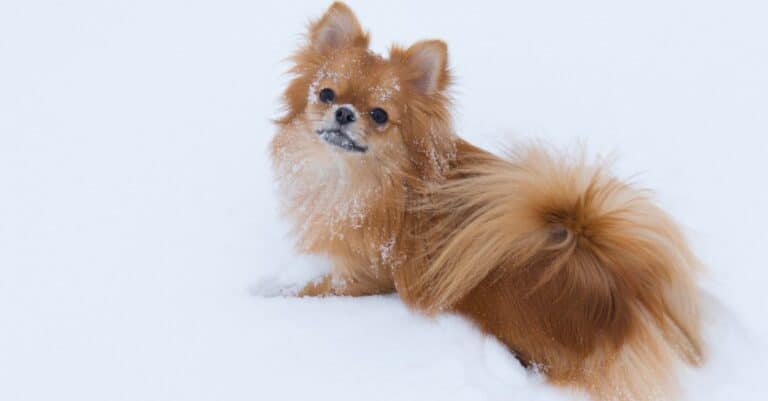
As a result of all this variation, the Pomchi can inherit a huge variety of different traits from its two parents. Most of them are quite small. Many have a long double coat of fur. Sable and brown are the most common colors, but the Pomchi can also come in blue and tan, black and tan, cream, and more. Appearances can vary dramatically even within the same litter. Sometimes you won’t know what you get until the dog has become full-grown.

History Of The Pomchi

The origin of the Pomchi is actually a mystery. There’s no information on who bred the first one or for what reason. But it has become a popular practice for dog breeders to mix varied breeds to create designer breeds. We do know that Pomchis began popping up in the late 90s or early 2000s as breeders began to intentionally breed them. Their origin was probably North America. Mystery or no, this designer dog has stolen the hearts of countless owners and is a great pet to own.

3 Pros And Cons Of Owning A Pomchi

Pros!Cons!
Affectionate and Outgoing
The Pomchi has a big personality that endears it to people.
Small, Fragile Body
The Pomchi should be handled with care.
Energetic and Playful
This dog loves exercising and interacting with people
Prone to Health Issues
While most individuals are generally healthy, this mix may inherit some serious health problems.
Intelligent
Despite its size, this mix can learn lots of different tricks and commands.
Stubborn
This mix may have a slight stubborn streak.
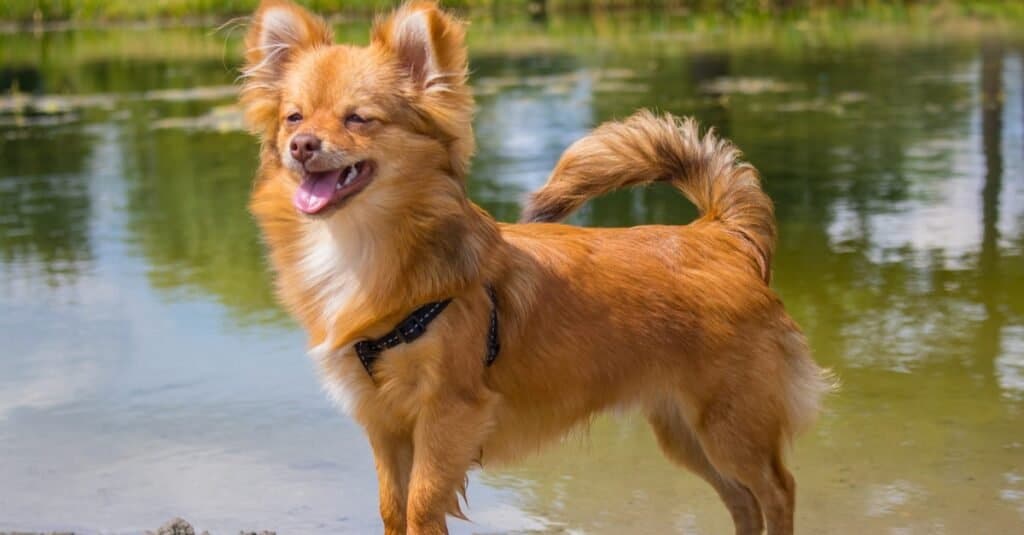
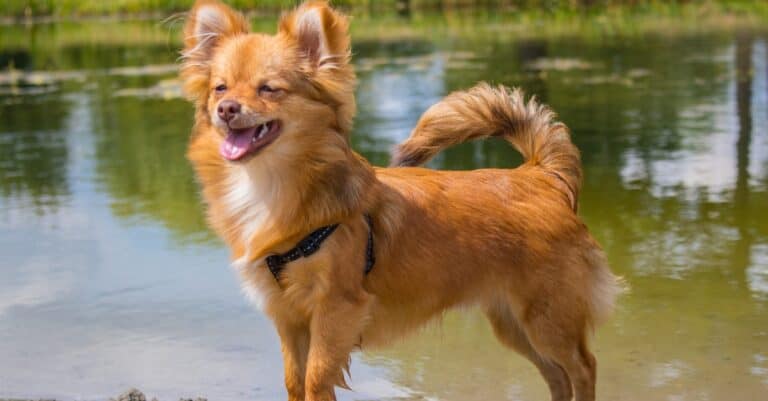
Pomchi near pond of water enjoying the sun.

Pomchi has a big personality and loves interacting with people.

Size And Weight

The size of a full-grown Pomchi will obviously depend on the size of the parents. Since there obviously isn’t an accepted breed standard, its size can vary slightly. The smallest kinds of Pomchis will come from a cross with a “teacup” Chihuahua, so-called because it’s small enough to fit inside a teacup.

Height (Male) 6 to 9 inches
Height (Female) 6 to 9 inches
Weight (Male) 2 to 11 pounds
Weight (Female) 2 to 11 pounds

Common Health Issues

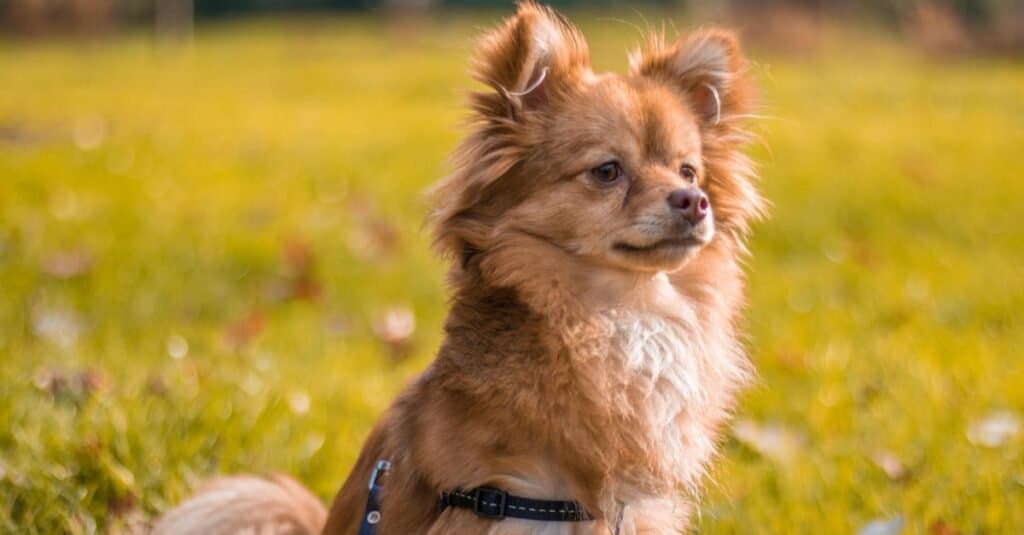
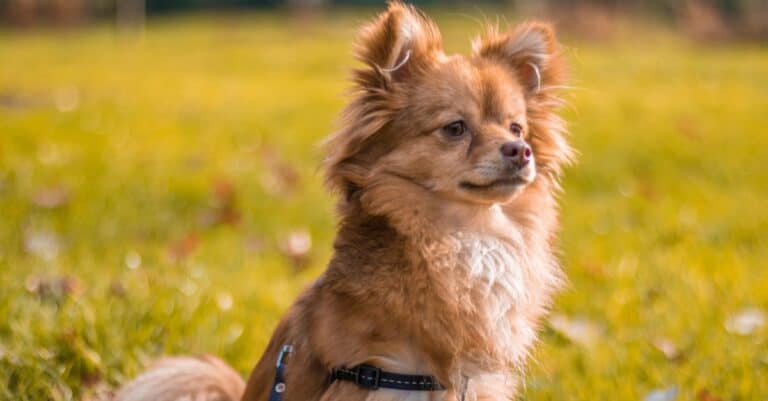
Close up of Pomchi in the park sitting on grass.

The Pomchi may inherit health conditions from either parent breed.

As a dog of mixed breed, the Pomchi may inherit any number of different health conditions from either parent in such a way that might be difficult to predict. Some of the more common health issues may include heart problems, epilepsy, cataracts, cancer, progressive retinal atrophy, hypothyroidism, and dental and gum diseases. You should also be aware of rare conditions such as Legg-Calve-Perthes disease (stiffness and pain in the hip joint) and patellar luxation (a loose and floating kneecap).

The quality of its breeding will usually have a major impact on its health. Trusted, respectable breeders will only select the healthiest stock to breed from; they should also perform a thorough health evaluation to have their dogs certified by experts for a clean bill of health. Routine checkups at the vet throughout the Pomchi’s entire life are necessary as well. Despite the long list of health problems, this mix can enjoy a nice, long lifespan of 10 to 18 years with proper breeding and a bit of luck. In summation, these are the most common health issues:

  • Cataracts
  • Progressive retinal atrophy
  • Hypothyroidism
  • Dental and gum disease
  • Cancer

Temperament

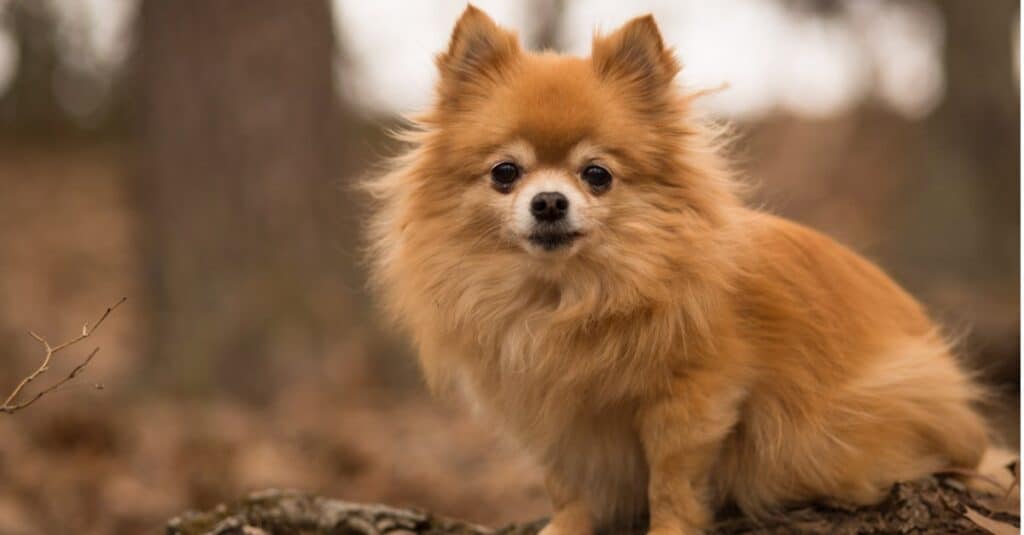
Pomchi sitting in the garden.

Pomchis need daily exercise to burn off their excess energy.

The Pomchi has a real firecracker of a personality that belies its small stature. They can be sassy, playful, affectionate, outgoing, and a bit comical. They’re also highly loyal and attached to their owner. The Pomchi thrives in the presence of people and craves companionship. Despite a tendency to be a little clingy, they can be left alone for hours, provided they have enough toys and activities. They also need enough daily exercise to burn off their excess energy and prevent destructive behavior. If you have a trusted friend or family member who can keep them company while you’re away, then all the better.

How To Take Care Of The Pomchi

The Pomchi is a good choice for all kinds of owners who want a small lapdog and companion. They do require a moderate amount of care, so be prepared to set aside some time every day. These are mostly indoor dogs and should not be left alone for hours outside.

The Best Dog Food For Pomchis
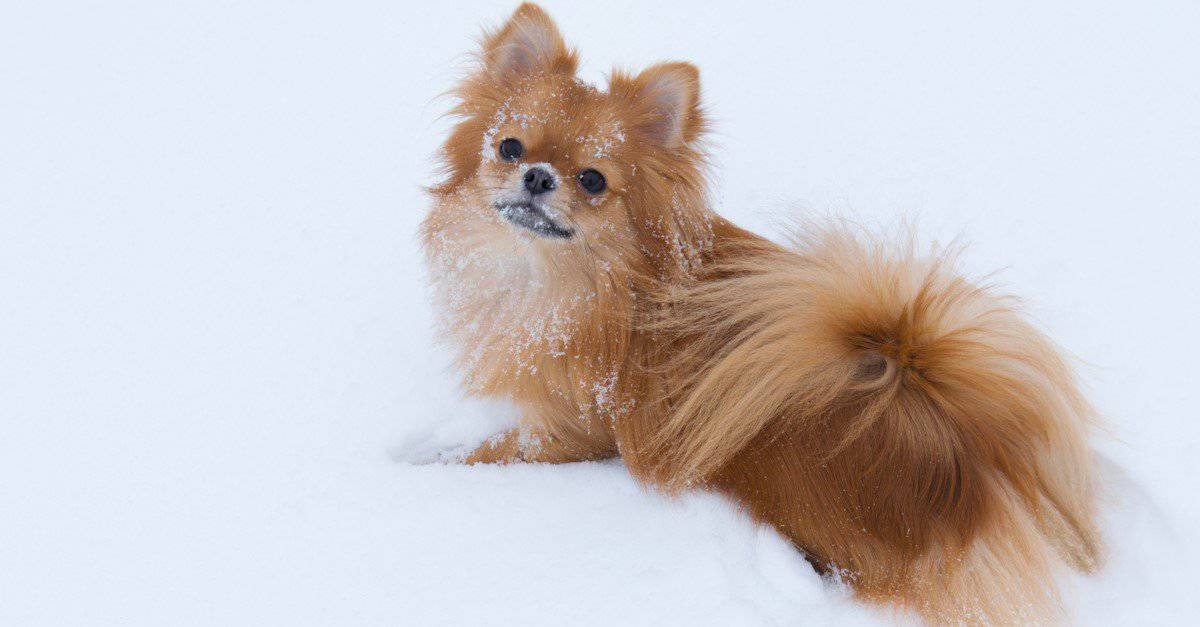
Pomchi isolated on white background

Pomchi dogs are prone to dental and gum disease, and dry kibble is a better choice than wet canned food.

The Pomchi will only need about 1.5 to 2 cups of food per day, specially formulated for small dogs with lots of energy. Since this type of dog tends to gain weight, you should be cautious and conservative about the amount of food you give it. Schedule meals at predictable intervals throughout the day and do not leave out food to munch on. Dogs like the Pomchi that are prone to dental and gum diseases should eat dry kibble instead of wet canned food.

Maintenance And Grooming

The Pomchi will need to be brushed at least once a week to remove loose hairs and prevent matting. Long-haired dogs will need more frequent grooming compared with short-haired dogs. Haircuts should be given at regular intervals; if you don’t want to give the haircut yourself, then have a professional handle it. Because of its vulnerability to dental issues, you should set up a regular oral hygiene routine by talking with your vet. You will also need to trim the nails regularly, perhaps about once a month, to prevent them from cracking or splitting. Finally, you should check the ears regularly for signs of infection or wax buildup and then clean them out as needed.

Training
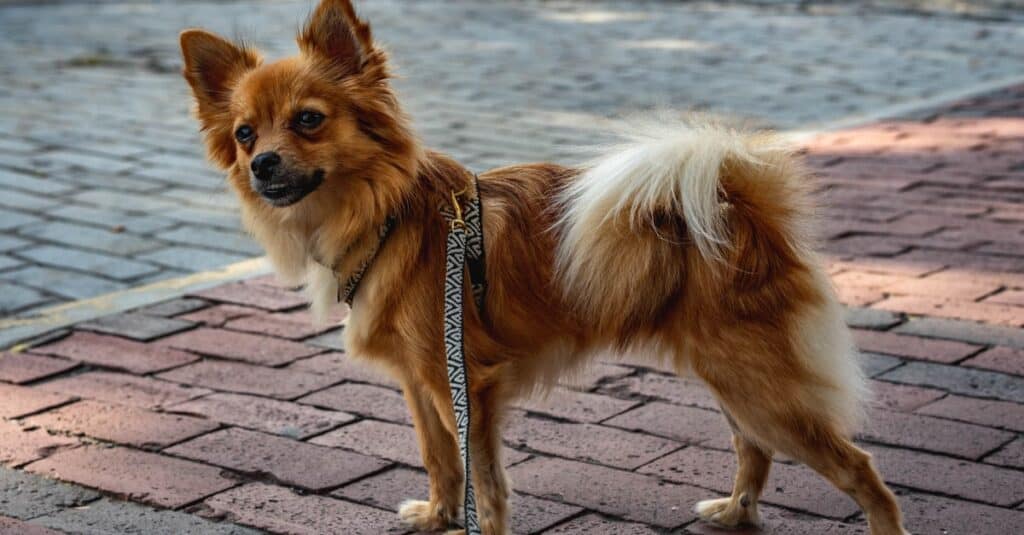
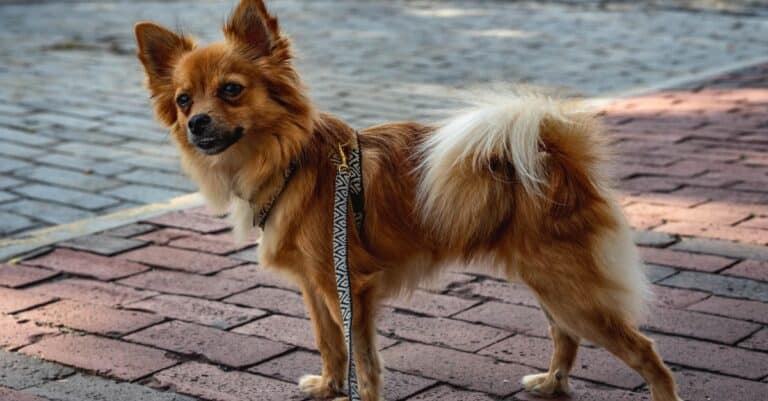
Pomeranian Chihuahua Mix, Pomchi, standing on brick sidewalk.

Pomeranian Chihuahua mixes are smart and eager to please, but can have a stubborn streak.

The duration and difficulty of Pomchi training can vary quite a bit. While this dog is intelligent and eager to please, it might have a little stubborn streak that could make it difficult to train. Owners will need to exhibit great patience and understanding to get the most out of it. Don’t permit your pup to get away with bad behavior, but since this mix is a little sensitive, it may shut down and ignore you if pressed too hard. Positive and engaging methods should work best. Firmly communicate boundaries, but don’t overdo it.

Exercise

The Pomchi will probably need somewhere between 30 and 60 minutes of exercise per day. Brisk walks, games, and other activities should be enough to satisfy its energy needs. While it may enjoy vigorous exercise in short bursts, its fragile body should not be pushed too hard. Also, keep in mind that when you go outdoors, this dog may be sensitive to cold weather.

Puppies

Because of its big, expressive personality, which can manifest in all kinds of mischievous ways, your puppy will need rigorous training and frequent socialization to mold it into a well-behaved full-grown adult. Poorly trained Pomchis may act very badly and become fearful around strangers. Classes, daycare, play dates, and other activities are all recommended to set your puppy on the right path. Crate training, while not mandatory, can also help your puppy with any housebreaking or behavioral issues. Juveniles should be handled with extreme care and slowly eased into exercise.
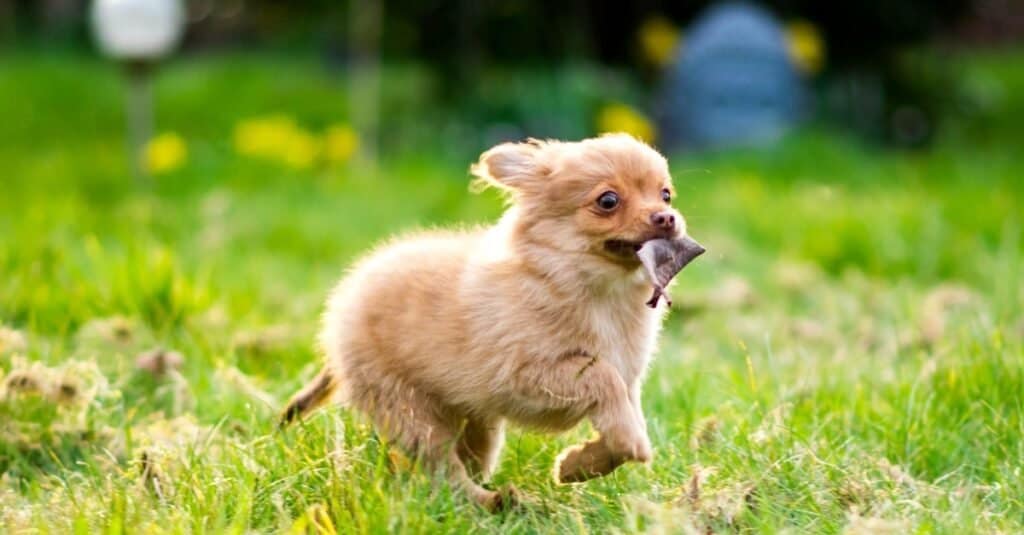
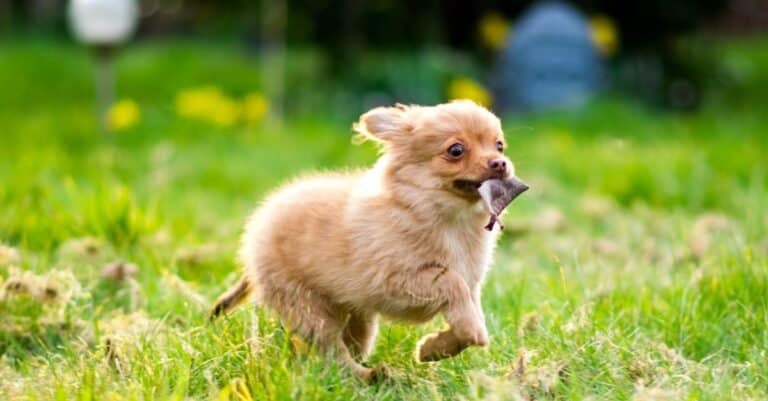
Pomchi puppy running through garden (Pomeranian chihuahua mix)

Pomchis (Pomeranian Chihuahua mix) have big, expressive personalities, and training is recommended at an early age.

The Pomchi And Children

Because of its small, fragile body, the Pomchi may not tolerate rough play very much. It may prefer the company of older children and adults who know how to handle this kind of dog. If you do decide to pair up the dog with younger children, then adults should always be present to supervise all interactions between them.

Dogs Similar To The Pomchi

Despite being a mixed breed, the Pomchi is comparable to several other toy breeds from around the world.

  • Shih Tzu: A favorite breed of Chinese aristocracy, the Shih Tzu has a history dating back several centuries, making it one of the oldest toy breeds still living. This outgoing and affectionate lapdog has a very long, straight coat that reaches all the way down to the floor. It can come in many different colors and patterns.
  • Pekingese: This long-haired toy breed with a flat face and short snout made frequent appearances at the Chinese imperial court. This is an affectionate, loyal, and distinctive breed of great nobility and bearing. A large range of color combinations and patterns is accepted.
  • Papillon: The name of this dog, which means butterfly-eared in French, is an apt description for the long, flowing fringes on the ears. This breed is very intelligent, sociable, and self-assured. It is classified as a type of spaniel, or gundog, so expect some hunting instincts to remain.
View all 246 animals that start with P

Sources

  1. Dog Time / Accessed September 28, 2021
  2. The Happy Puppy Site / Accessed September 28, 2021
Melissa Bauernfeind

About the Author

Melissa Bauernfeind

Melissa Bauernfeind was born in NYC and got her degree in Journalism from Boston University. She lived in San Diego for 10 years and is now back in NYC. She loves adventure and traveling the world with her husband but always misses her favorite little man, "P", half Chihuahua/half Jack Russell, all trouble. She got dive-certified so she could dive with the Great White Sharks someday and is hoping to swim with the Orcas as well.
Connect:

Thank you for reading! Have some feedback for us?


Pomchi FAQs (Frequently Asked Questions)

The Pomchi is a cross between a Chihuahua parent and a Pomeranian parent. This results in a small lapdog with a big personality, plenty of energy, and a good lifespan.