
Quick Take
- Poodles were bred for a job that could make them a serious threat to your cat, though their other defining trait is what changes everything. See prey drive details →
- Adopting a puppy instead of an adult poodle might seem like the safer bet for your cat, though it is actually the riskier move. Get adoption tips →
- One subtle thing your poodle does when it's overwhelmed is easy to miss, and ignoring it is exactly how cat introductions go wrong. Spot the stress signals →
- Your cat running away from your poodle isn't just a sign of fear. It can actually make things worse for both animals. Understand chase behavior →
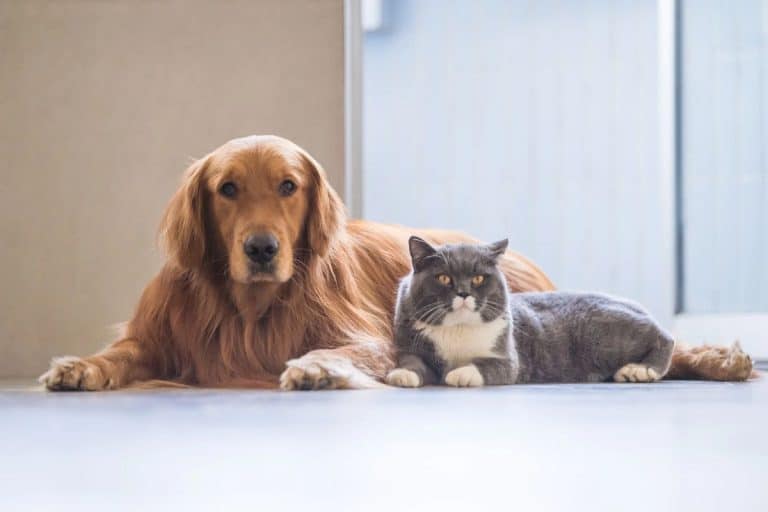
Do poodles get along with cats? If you’re considering adopting a new pet, you may be asking yourself this question. Your poodle and cat don’t have to be best friends, as long as they can coexist peacefully. In this article, we’ll discuss whether cats and poodles can get along, as well as offer some adoption and introduction tips.
Poodles Tend to Do Well with Cats
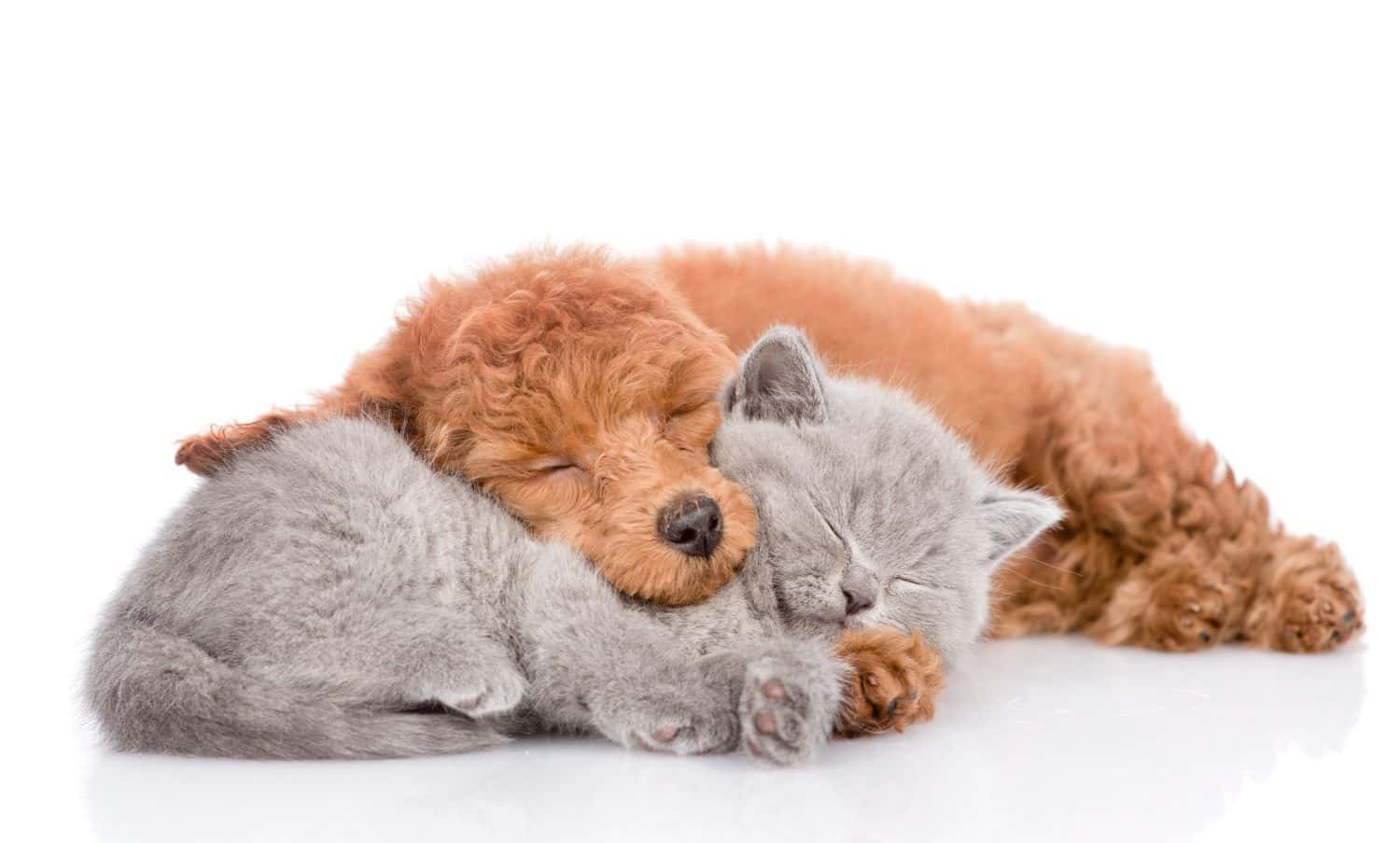
Toy, miniature, and standard poodles all tend to get along very well with cats. Poodles are typically good-natured dogs and are accepting of other animals, including cats. However, every dog is different, so there may be some poodles who absolutely cannot live with cats.
If you already have a poodle, think about their prey drive and energy levels. Do they jump up on people or play rough when they get excited? Do they like to chase small animals? Dogs who get overexcited may hurt cats by mistake or while trying to play. These considerations should be taken seriously, especially for standard poodles who are much larger than cats, and thus can hurt them more easily.
Poodles were originally bred as bird dogs and waterfowl retrievers. Dogs with strong prey drives may therefore chase cats. However, poodles are also highly intelligent. Owners say poodles can easily be trained out of this behavior by redirecting them.

Boisterous poodles can hurt cats by mistake, so it’s important to take personality and age into account.
©Velimir Zeland/Shutterstock.com
Tips to Help Your Cats and Poodle Get Along
With patience and the correct approach, your poodle and cat can learn to live together peacefully. They may even learn to become companions. Here are a few tips to help set your pets up for success:
- Consider fostering first. This way, you can try fostering multiple dogs until you find one good with cats or return the cat to the rescue so it can find a better fit if things don’t work out with your poodle.
- Adopt a grown poodle who is used to cats. Puppies can be unpredictable when it comes to prey drive, since prey drive tends to develop later in adolescence. For best results, adopt from a rescue that keeps its adoptable pets in foster homes.
- Adopt a cat who is comfortable around dogs. A cat who is comfortable around dogs will be more confident and is less likely to run away, which can trigger your dog’s prey drive.
- Make introductions slowly. Begin by allowing the new animal to get used to the home without meeting your resident pets, then perform a scent swap without allowing them to interact or see one another physically. This will take at least a couple of weeks.
- Keep your poodle on a leash around the cat until you’re sure they can be trusted. Never let your poodle crowd or chase the cat.
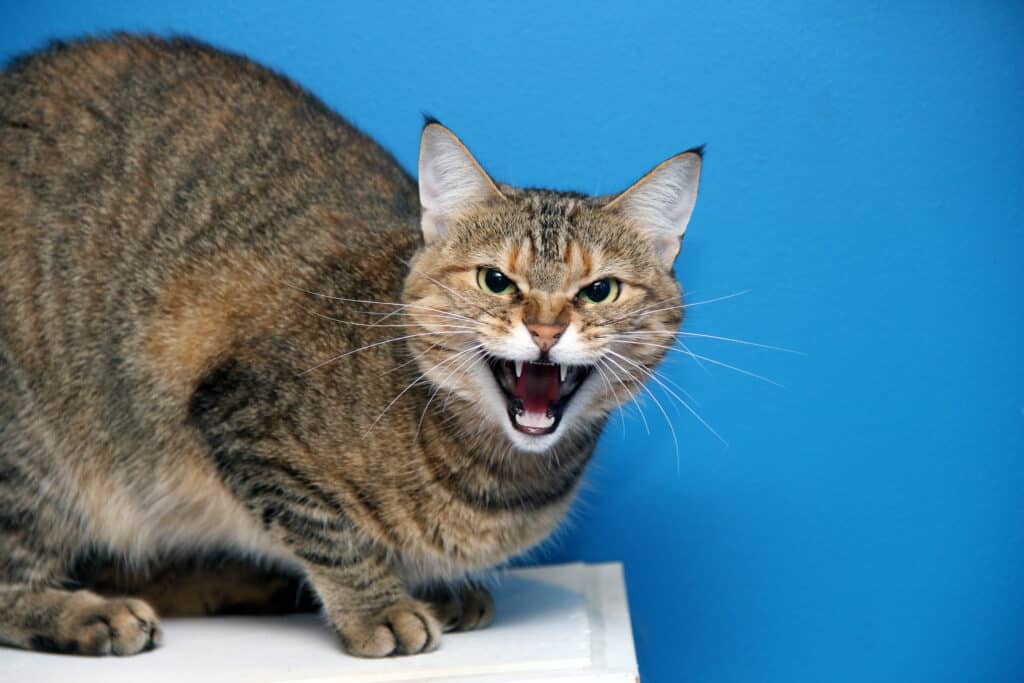
If your cat hisses at your poodle, the animals should be separated for their safety.
©Anastasia Tveretinova/Shutterstock.com
Learn Canine and Feline Body Language
If you don’t know your pets’ body language, it’s going to be difficult to make safe introductions. Signs of discomfort can be subtle, and cats and dogs communicate very differently. It’s up to us humans to interpret and enforce boundaries for them so that things don’t escalate.
Some subtle signs that your poodle needs space include rapid, repetitive licking of its humans, lip licking, yawning, and showing the whites of its eyes (often called “whale eye”). Your dog may also try to create distance by turning its head or body away, stiffening and becoming still, or retreating to its crate or another place it feels safe. If your dog shows any of these signs, keep the cat and the kids away until the dog is ready to interact again.
Watch for signs of agitation in your cat, such as a thumping tail, dilated pupils, and flattened ears. Sudden grooming, hiding, retreating to a high place, and walking away when approached are more overt signs that your cat wants to be left in peace. If your cat’s body becomes rigid, its fur puffs up, and/or you hear growling or hissing, these are signs of aggression and the animals should be separated immediately for their safety. Cats may be smaller, but their claws and teeth can still injure your pup.