
Quick Take
- Most husky owners think daily walks cover their dog's exercise needs, but the reality is a lot more demanding than that. See adult exercise demands →
- Exercising your husky puppy too hard sounds like a good problem to have, but it can trigger permanent damage that won't show up until years later. See safe puppy exercise limits →
- If your husky still acts wired after hours of physical activity, the fix probably has nothing to do with more exercise. Try mental stimulation instead →
- A husky that doesn't get enough exercise doesn't just misbehave. The health consequences quietly mirror what happens to sedentary humans. See the health consequences →
Siberian huskies are high-energy working dogs that were originally bred as companion dogs and endurance sled dogs in northeastern Asia. As one of the most active dog breeds, huskies may leave you wondering how much exercise they actually need. In this article, we’ll discuss how much exercise huskies need at different ages, plus activities you can try with your husky to keep their bodies and minds active.
How Much Exercise Does a Husky Puppy Need?
Overworking your puppy can have detrimental effects later, such as hip dysplasia and other joint issues. This is especially a problem in large-breed dogs, but it can also be an issue for active breeds like huskies. Until your husky is fully grown, avoid jumping, pulling, and other intense forms of exercise, such as long runs or hikes.
If you want your adult Husky to pull you on a scooter or sled or to participate in agility when they’re older, you can begin training now, just avoid training exercises that are hard on the joints until they’re old enough. You can still get them used to a harness, train them to maneuver around obstacles, and more.
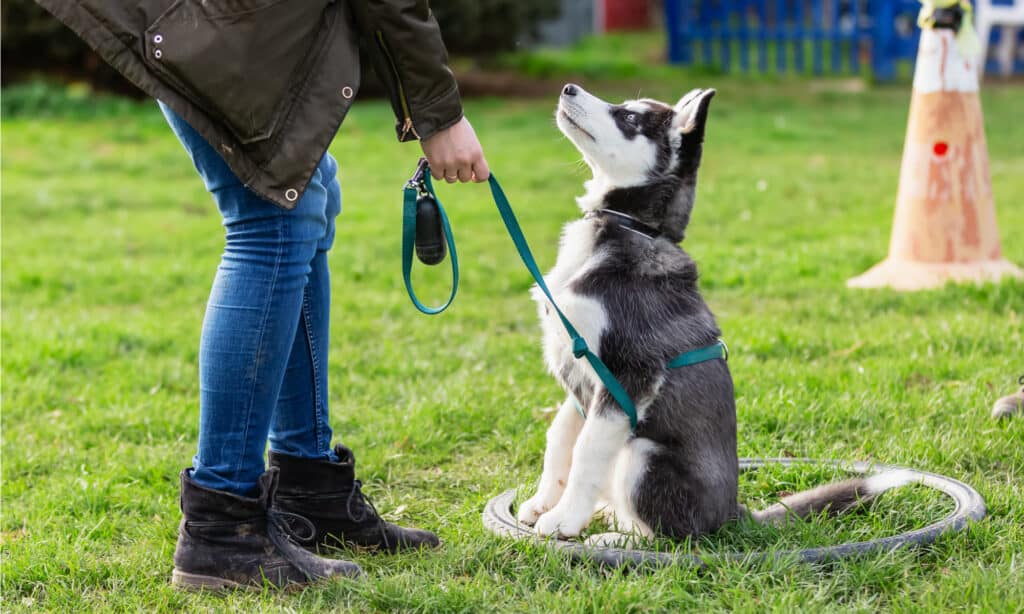
Husky puppies need enough activity to tire them out, but too much can strain their joints.
©Christian Mueller/Shutterstock.com
The best activities for husky puppies are those that last short amounts of time and aren’t hard on their joints. These include:
- Walks or short runs
- Short games of tug, fetch, or chasing a flirt pole
- Playing in the snow in the winter
- Playing with other well-behaved dogs of a similar size
Keep in mind that puppies need to sleep up to 20 hours a day, so you don’t need to fill your husky’s day with activities yet. They prefer short but frequent play sessions. Like adults, husky puppies also need mental stimulation to tire their brains. Try hiding treats around the living room, feeding their kibble in puzzle toys, and training basic cues.
How Much Exercise Does an Adult Husky Need?
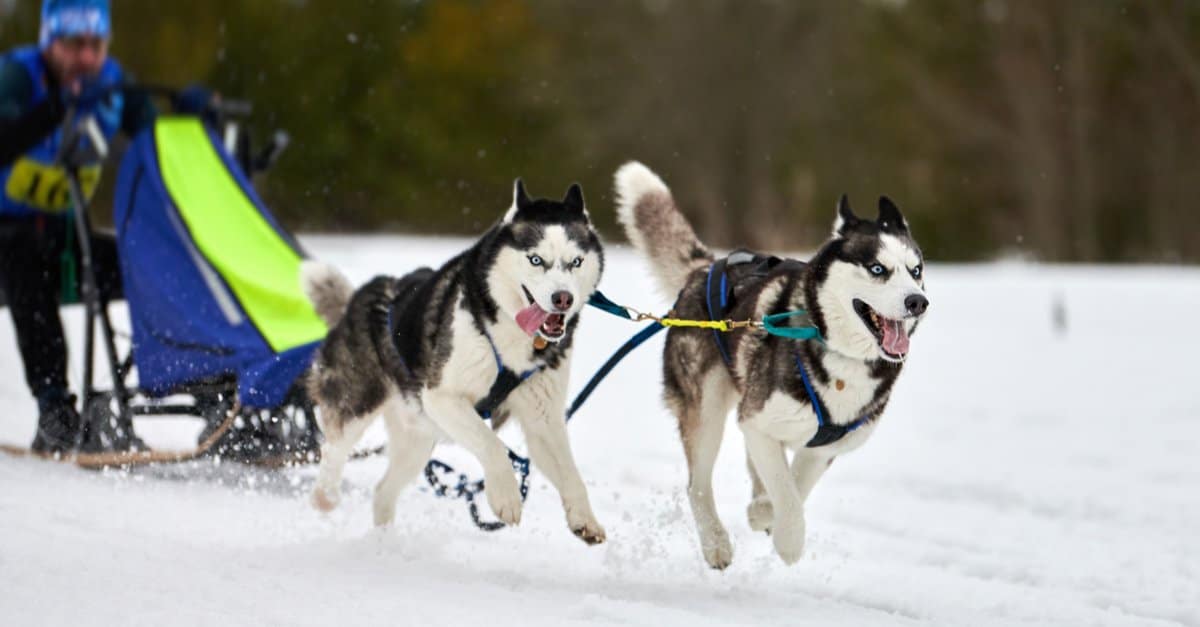
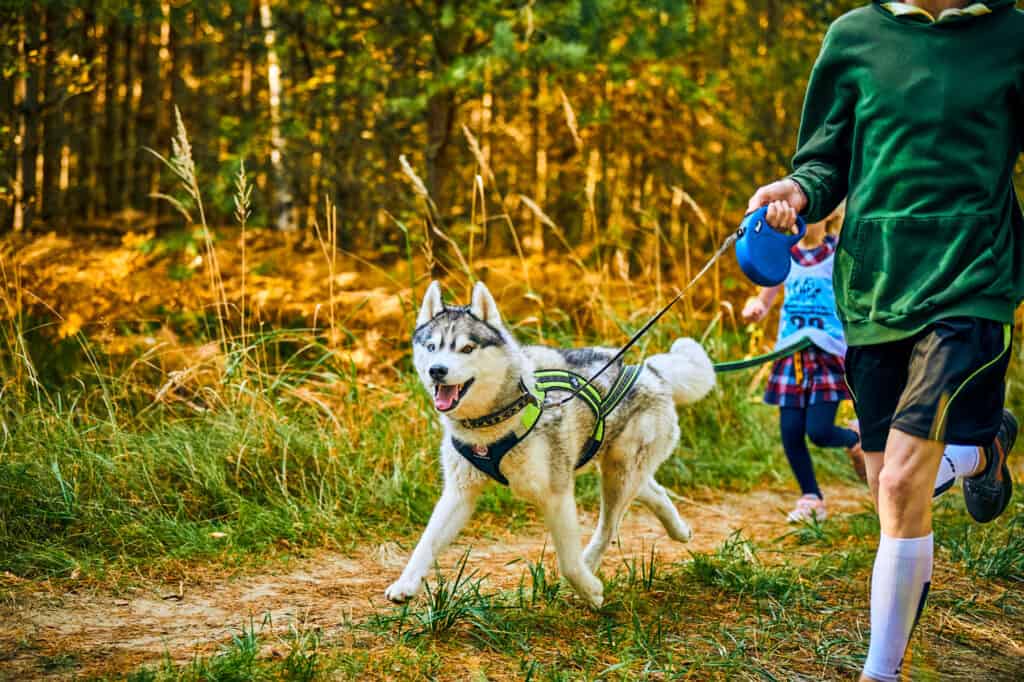
Adult huskies need around two hours of strenuous exercise each day. As mentioned previously, these dogs were bred to pull sleds, and they have a ton of stamina. They’re perfect for active people who want to take their dogs on hikes or runs or participate in dog sports.
However, daily walks aren’t enough for huskies. Though walks are good, your husky needs more activity than this. Jogging, biking, swimming, and energetic play are a few exercises that can help tire your husky out. Since these dogs were bred to run, they will do so any time they have the chance. It is important to always keep your husky on a leash, in a harness, or in a securely fenced back yard.
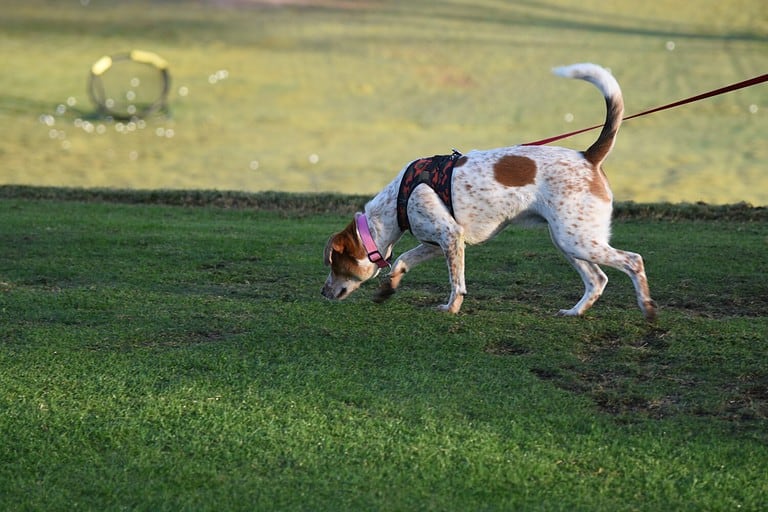
Senior huskies still need regular exercise, though less intense than adults. Experts recommend two to three 15-minute walks or 30 to 45 minutes of daily activity split into multiple low-impact sessions. This can include easy walks on flat surfaces or sniff walks that focus on exploration. Also, keep in mind that huskies have thick double coats, making them prone to overheating. During warm weather, limit walks to early mornings or evenings, or switch to indoor exercise for huskies of all ages.
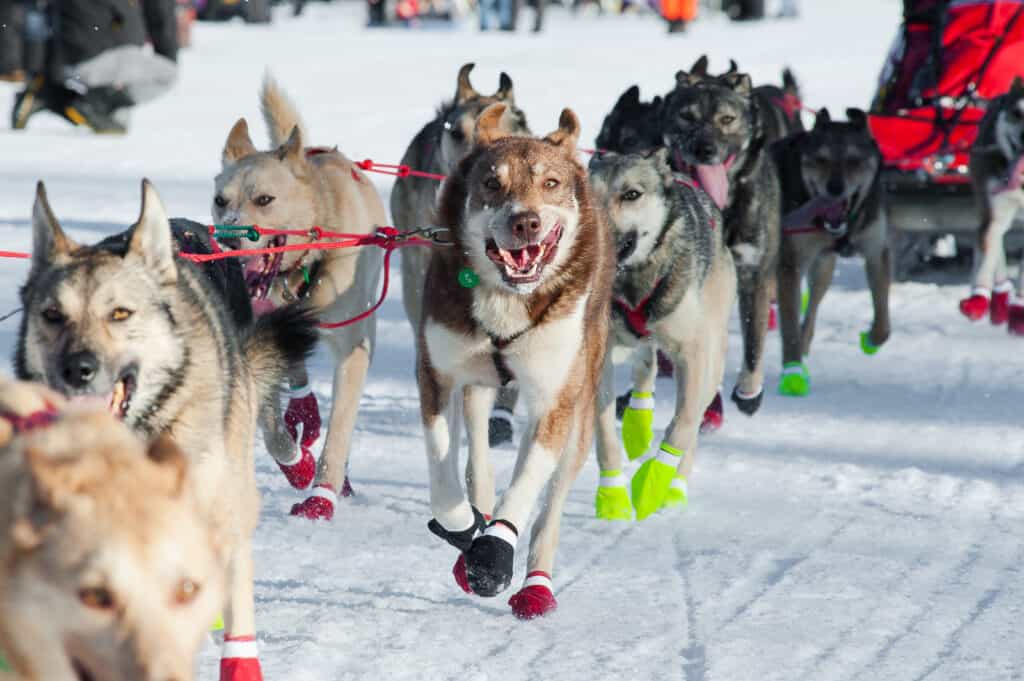
Huskies were bred to pull sleds, and as pets, they require hours of daily exercise.
©iStock.com/Jeff Manes
How to Tire Out a Husky
Do you feel like you constantly exercise your husky, but they’re still not tired? They might not need more physical activity but more mental stimulation. Mental stimulation refers to any activity that engages your husky’s brain. Here are a few games you can play with your husky that are also a great mental workout.
- Fetch: Huskies can get bored quickly, so limit games of fetch to around 10–15 minutes.
- Tug-of-War: Always use the same toy and limit games to short bursts. Let your dog win sometimes, and make sure to teach them a “give” or “drop” command to use if they get overstimulated.
- Flirt Pole: A flirt pole, also called a flirt stick, is a pole with a string and toy attached to the end, much like a cat toy for dogs. These are great for channeling your dog’s high prey drive. You can also teach them cues like “take it” or “leave it.”
- Hide-and-Seek: Hiding treats, toys, or even yourself encourages your husky to use its nose and draws on its working breed instincts and intelligence.
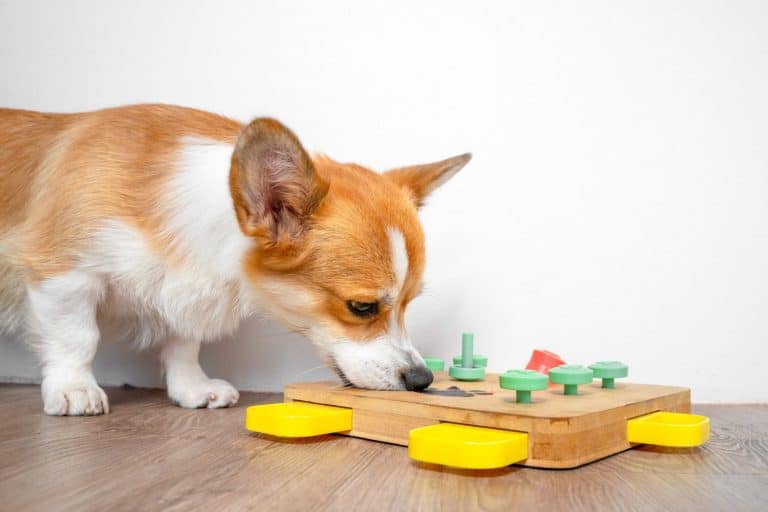
- Puzzle Toys and Scent Work: Use multi-step treat-dispensing puzzles to keep them busy and prevent destruction due to boredom.
- Obedience Training: Experts recommend tiring your husky out a bit before focusing on training sessions. “Recall” (coming back to you) is particularly important due to their independent streak and high prey drive.
What Happens When Huskies Don’t Get Enough Exercise?
Huskies need an appropriate amount of exercise to remain happy and healthy. If they do not remain active, this can lead to both behavioral problems and health problems. Take an in-depth look at these issues below.
Behavioral Problems
Huskies that don’t get enough exercise tend to misbehave. They may become destructive, chewing up your belongings. They might bark excessively while you’re gone or bark to get your attention while you’re home. A house-trained dog may start eliminating indoors. Training may become more difficult, and you’re likely to see more stubbornness than usual. They might break the rules they usually follow to get your attention.
Lack of exercise can lead to boredom, depression, hyperactivity, obesity, and other behavioral and health problems.
©iStock.com/TRAVELARIUM
Your husky doesn’t want to misbehave or make you upset. It’s their only way of asking for what they need. Remember that exercise isn’t an optional thing that your husky wants, but something it needs to stay happy and healthy.
On the other end of the spectrum, some huskies will become depressed due to lack of exercise. They may sleep a lot, eat less, and act like they don’t want to do anything. It’s important not to mistake this behavior for laziness, and equally important to see a vet to rule out other health issues if your dog behaves this way.
Health Problems
Aside from behavioral issues, you’re also likely to see health problems if your husky doesn’t get enough exercise. They may gain weight, which can put pressure on their bones, leading to the early onset of joint issues such as hip dysplasia and arthritis.
Like humans, huskies who exercise and eat well tend to live longer, healthier lives. Those who live sedentary lives may face muscle deterioration, making it difficult for them to support their own weight. Also, as in humans, a lack of cardiovascular exercise may lead to deconditioning, possibly impairing coronary vascular capacity, which is the heart’s ability to get enough blood and oxygen through the blood vessels, especially during physical activity.