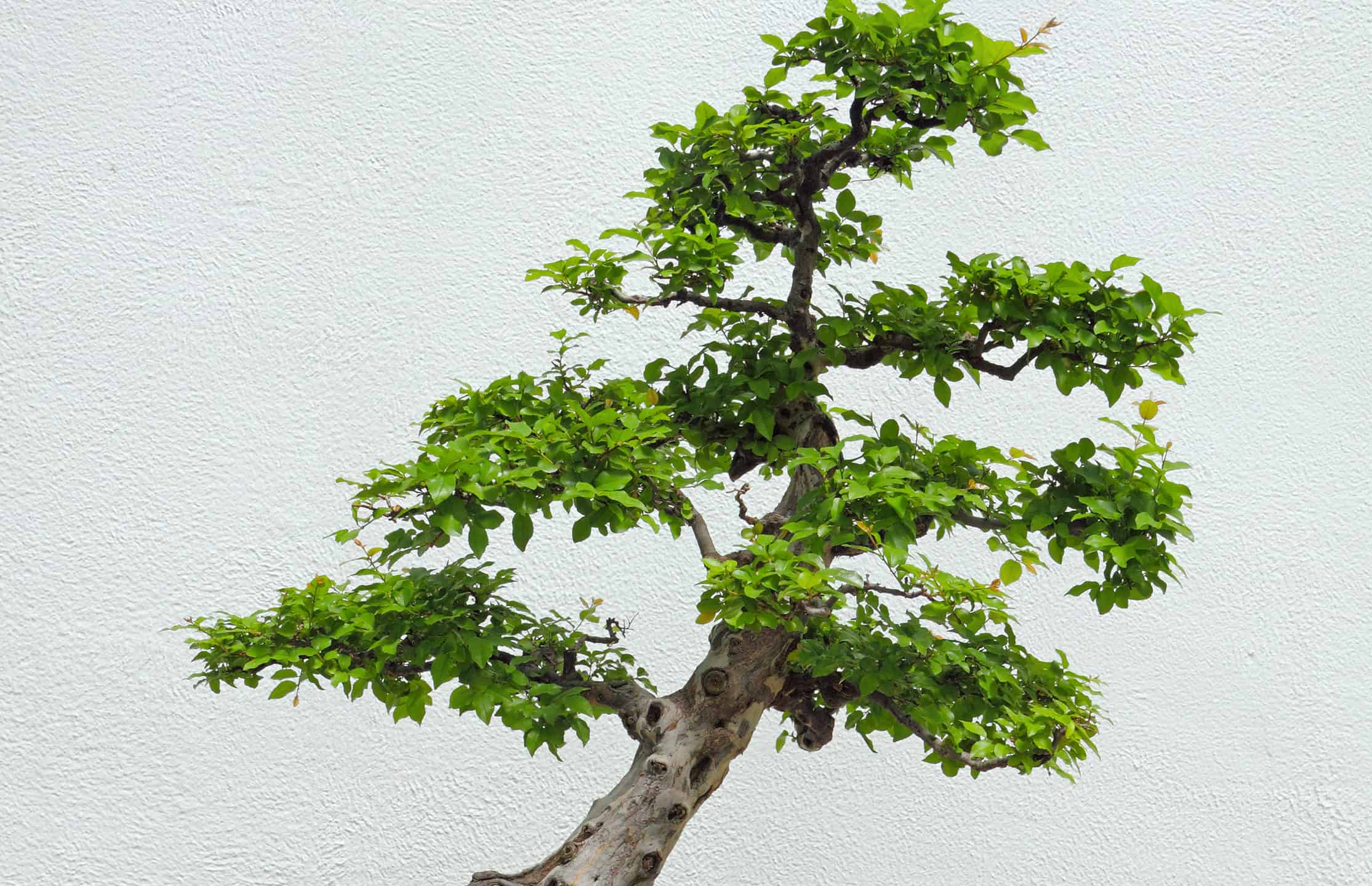

Known by many names, including bird plum, Chinese sweet plum or sageretia, this beautiful little shrub is a top choice among bonsai artists, thanks to its aesthetics and unique growing challenges. The tree is primarily selected for indoor bonsai growing and adds a lot of character to any space.
The bird plum bonsai has vivid, glossy green leaves, flaky bark of red to tan shades, stunning tiny white flowers, and grows beautiful, edible plum-like fruits that humans and birds alike love to nosh on. And in tiny form, they’re even more beautiful and intriguing.
The plant is more commonly grown by intermediate and experts, though, so let’s take a look and see why.
What Makes Bird Plum Good for Bonsai?
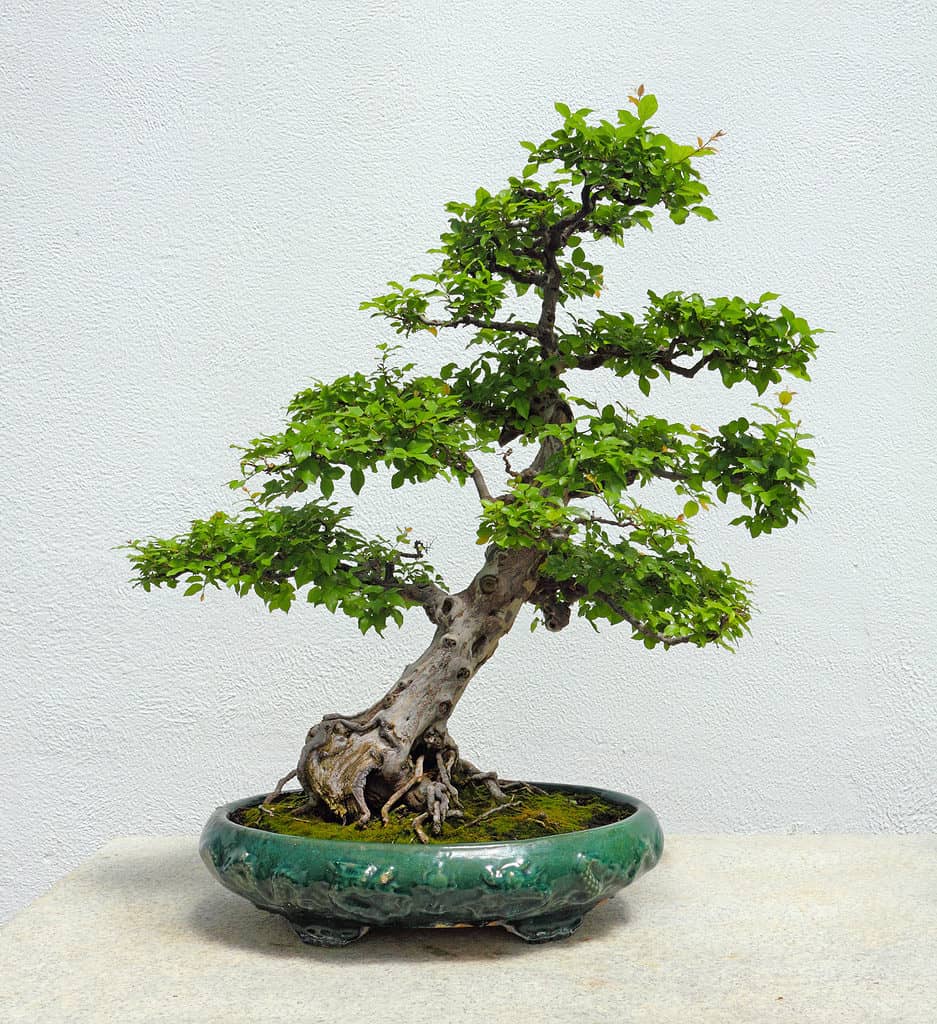
Bird plum bonsai are one of the species that thrive indoors.
©Claude Huot/Shutterstock.com
The natural features of the bird plum make it an organically obvious choice for the art of bonsai. The tiny fruits, flowers, and leaves lend themselves to the ornamental nature of tiny trees, with their natural beauty and vibrant colors encouraging enthusiasts toward them. They are a bit more challenging than many species of bonsai, however, and are best left to at least intermediate growers.
Bird Plum Classification
The bird plum, also known as “brown ivory” in Namibia and other parts of the world, goes by many names. Its scientific moniker is sageretia theezans. Some other common names for this shrub in the Rhamnaceae family include sageretia, mock buckthorn, Chinese sweet plum, or simply sweet-plum.
The evergreen plants are native to southern China but they grow around the world.
Bird Plum Bonsai Description
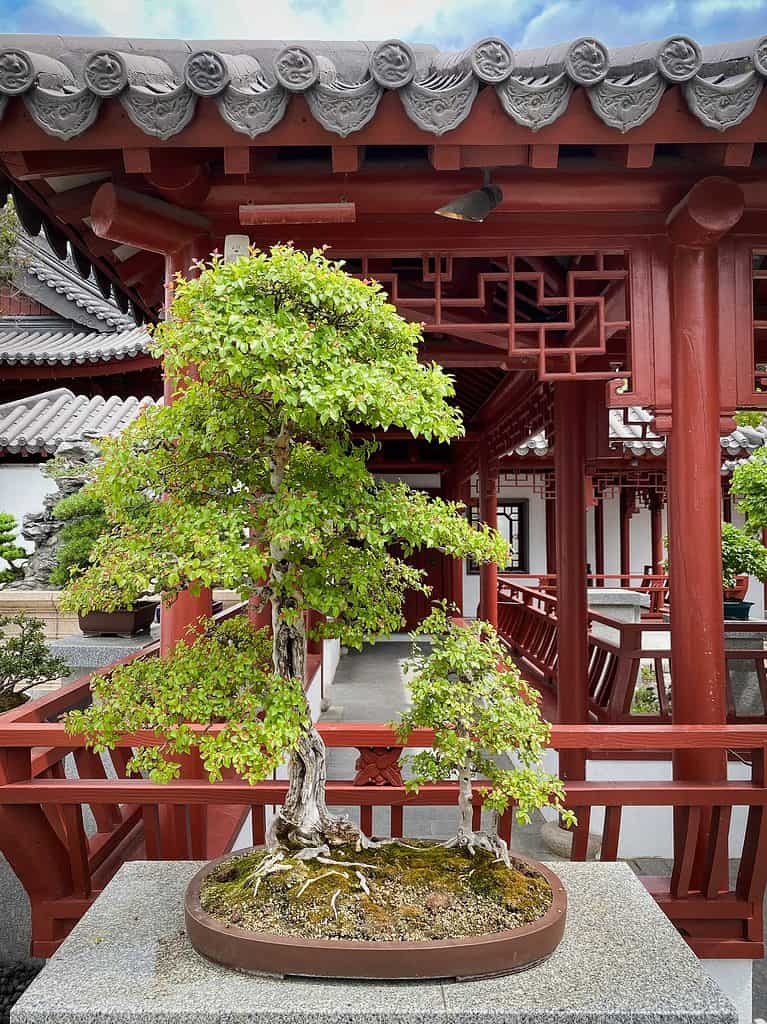
They primarily should be grown indoors, but some outdoor locations are well-suited to bird plum bonsai.
©EWY Media/Shutterstock.com
Untrained and wild, bird plum trees typically grow between 3 and 9 feet tall, with small green leaves that reach between 0.6 and 1.6 inches in length. The trunk is multicolored and leathery. The flowers are on the smaller side and often go unnoticed in full sized plants. The fruits are also tiny, and edible, and grow only to be about 0.4 inches in diameter.
The leaves are oval and are probably the most visibly distinctive part of the bird plum tree. They have herring-bone venation that’s sunken at the upper leaf and prominent on the underside of the leaves. You’ll also notice a groove along the upper side of the leaf stalk.
The flowers are small and green to yellow in shade, growing between spring and summer, while the fruits are tiny and oval and start out as blue-green and mature into pale yellow and eventually orange. The tiny fruits are rich in Vitamin C and are extremely popular with birds. For this reason, they should be protected from wildlife when grown outdoors.
Varieties of Bird Plum Bonsai
Bird plum bonsai may come in single pink or double pink varieties, meaning they have single or double flowers in pink. You may also find golden leaves, large-leafed, and narrow-leafed varieties.
Care Notes on Bird Plum Bonsai
There are many care guidelines that apply to all bonsai, whether you’re talking Ficus trees or bird plums, but each plant does have its own specific requirements for exceptional health.
In particular, avoid use any air fresheners near your bird plum, and encourage them with plant invigorators to keep them pest-free and growing healthy.
How to Grow Bird Plum Bonsai
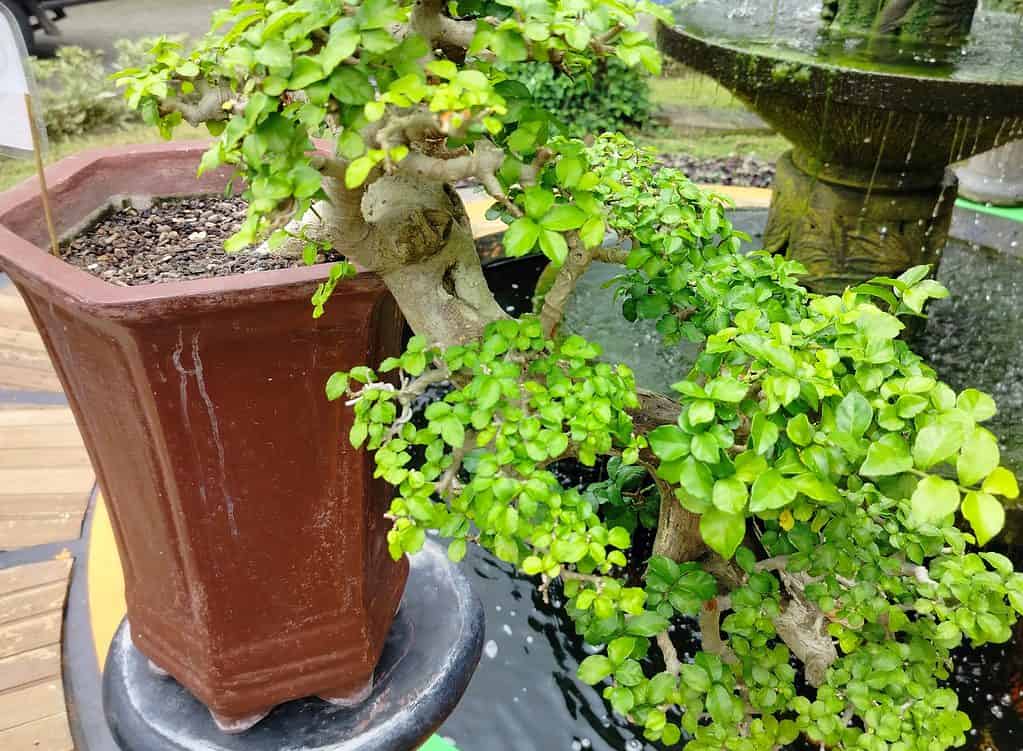
Bird plum bonsai may be shaped in multiple styles.
©Palra/Shutterstock.com
Planting Location
If you’re placing your bird plum outdoors in summertime, you will want to place it where it will receive bright, vigorous sunlight for at least 6 hours a day. They should have some shielding to prevent scorching, however, so it’s best to place them where some shade will be offered in hotter climates.
In the wintertime, your bird plum should be brought indoors before temperatures drop below 50 F. Place them on a windowsill or in a grow tent or greenhouse where they will continue to receive 6 or more hours of light.
Lighting
Bird plum prefer at least 6 hours or more of direct sunlight. If you’re keeping the plant indoors, you want to provide grow lights, unless you have a protected area where the tree will receive enough light daily.
Temperature
Bird plum bonsai may be kept indoors year-round or placed outdoors in semi-shaded areas during warmer months. When you’re keeping the tree indoors, whether year-round or seasonally, ensure it’s placed in a south- or west-facing window, with protection from intense sunlight. The temperature should be kept between 53 F and 72 F in cooler months.
Misting, Watering & Humidity
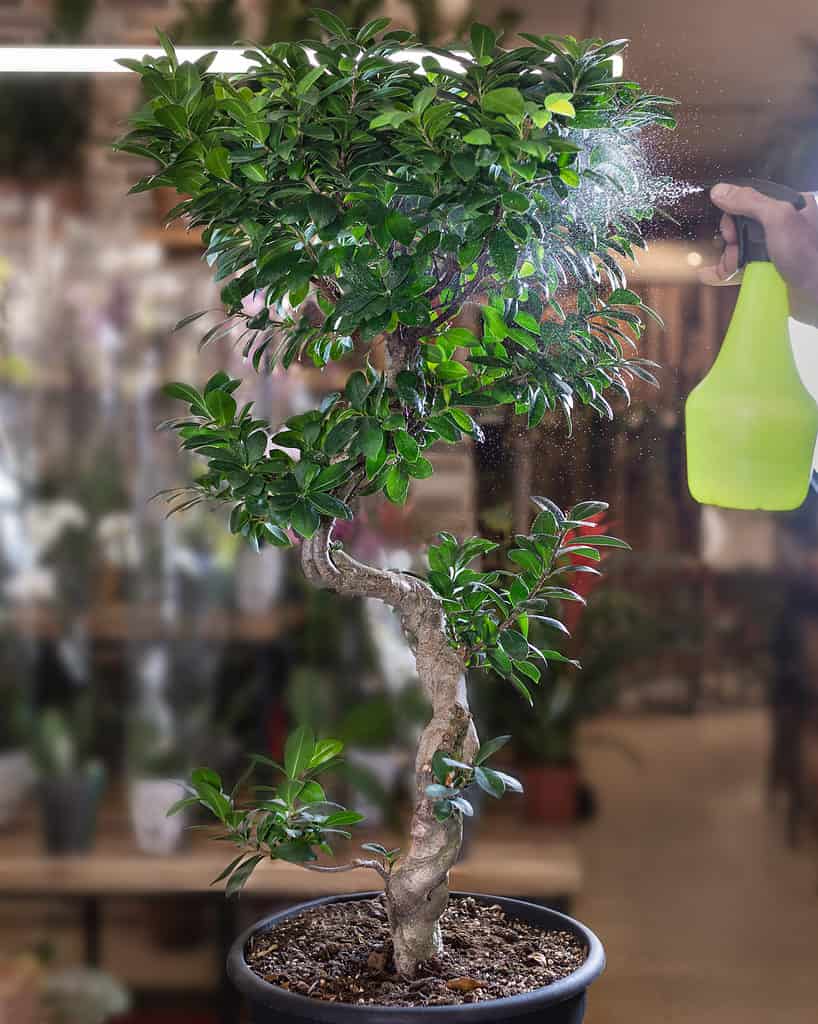
Keeping bird plum bonsai moist and hydrated is critical for their survival.
©Farhad Ibrahimzade/Shutterstock.com
Because bird plum bonsai are tropical/semi-tropical trees, they have some pretty specific needs regarding moisture, humidity, and watering. And, although misting of the leaves isn’t absolutely necessary, the plants will do better when this occurs, especially during winter months when the air dries out.
Daily check the soil on your bird plum to ensure it never gets dried out. The tree may recover from dryness but it will not thrive if this happens more than rarely. Because of this need for constant moisture, it’s recommended that you use a moisture meter to ensure the plant remains hydrated at all time.
Pour in water until it begins to overflow through the drainage holes in the pot all year, and in winter, you will probably want to keep it indoors in a tray filled with gravel. Fill the tray with water and keep it filled, allowing your bird plum to draw additional water from the tray as necessary.
The plant also needs a reasonable amount of humidity, so it may be best to keep it in a greenhouse or grow tent during the driest parts of winter.
Feeding
Bird plum bonsai require proper fertilization to keep them healthy. They take well to general purpose liquid fertilizer, though specific bonsai fertilizer is usually a better choice. Just use about half the recommended dose, applying it about once a month every month save wintertime.
If you prefer, use foliar feeding techniques with water-soluble fertilizer applied via spray every other month.
Pruning
Trimming and pinching keep your tree miniature. Pinch and trim back the new growth to the farthest safe point. Never should all of the new growth be removed. A little should be left to sustain the health of the tree. Tropical and sub-tropical trees used for bonsai will require periodic pinching and trimming throughout the year. Since different trees grow at different rates, it is necessary to evaluate each tree’s rate of growth and adjust your trimming and pinching to accommodate it.
Shaping
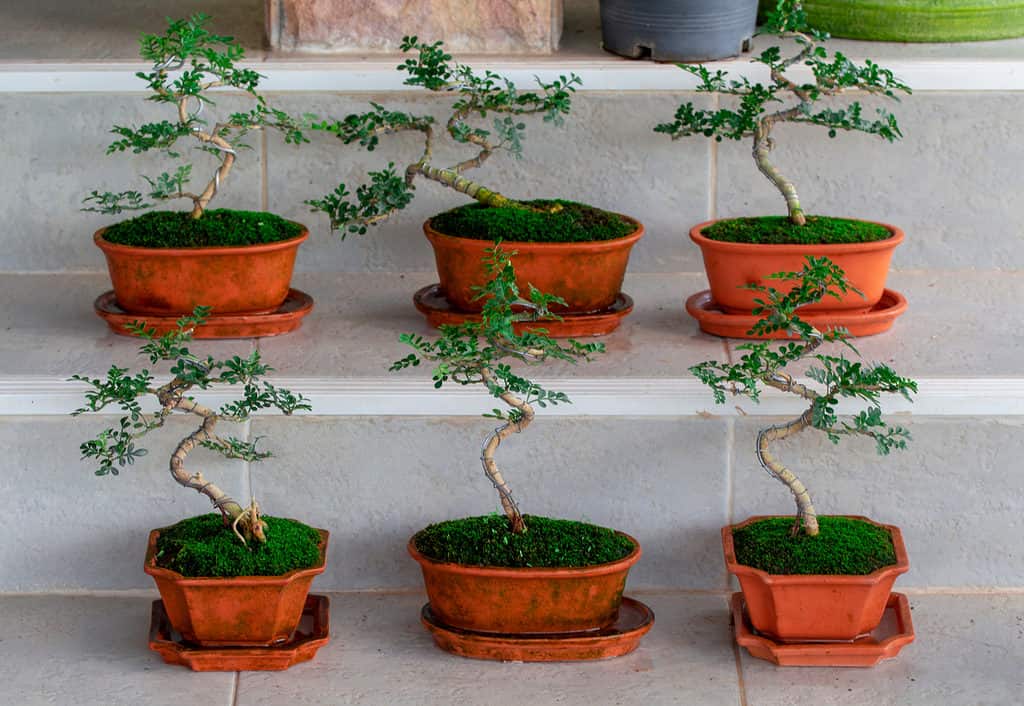
Sweet plum bonsai may be shaped in numerous ways.
©K Stocker/Shutterstock.com
Bird plum bonsai are fast-growing trees, so frequent pruning is likely to be on your to-do list in their care. They also area easy to style and groom, so this actually makes it an enjoyable part of the process for most bonsai enthusiasts. The new shoots even look amazing, flecked with reddish tones, adding some extra intrigue and beauty to the trees shortly after pruning.
Keeping shoots trimmed will encourage back budding as well, allowing and encouraging new leaf growth during spring and summer.
Allow shoots to grow about 1.6 inches before trimming with sharp shears back to two new leaves. Within 4 to 6 weeks, you should see new shoots emerging.
Wiring
The bird plum bonsai may be wired throughout its lifetime, emphasizing the wiring of young branches, rather than older branches. The young branches and shoots should be wired in springtime. Older branches will be stiff and will maintain their shaping fairly easily, once established, so you’ll only rarely wire these. If you do wire older branches, this should also be done in springtime.
Re-potting
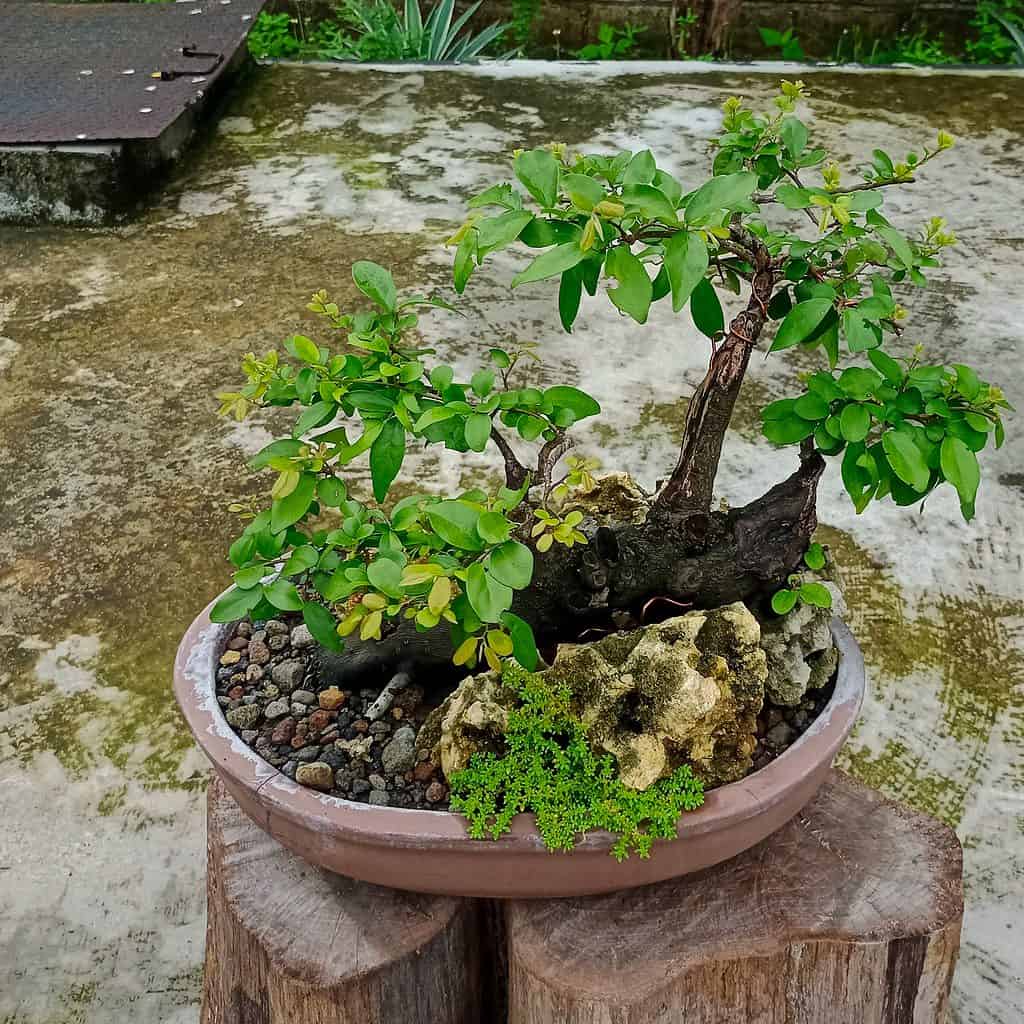
Chinese sweet plum bonsai don’t require fancy pots, just ones with proper drainage.
©Pratmi Su/Shutterstock.com
As bonsai mature and grow, re-potting needs to happen to allow the root systems to grow properly and maintain a healthy balance for the plants. Some species grow faster than others, requiring more frequent re-potting. Most deciduous trees require re-potting every two to three years, while evergreens need re-potting every four or five years. However, every tree is a little different, so you should examine your bonsai tree roots annually to determine if this is the year or not to re-pot.
Your bird plum will need to be re-potted every four or five years once initial growth has petered out into a more measured pace. When it is time, though, you’ll want to re-pot during mid-summer months (in the northern hemisphere, this means mid-July to early August).
Take the tree, along with all of its existing soil, and remove it from the current pot. Gently remove the soil from the roots and then remove about a quarter of the root mass. Ensure you don’t over prune the roots, however, as this will cause damage and could even kill the bird plum bonsai. Add a screen to the new pot to improve drainage, then add a layer of gravel, and then replace the plant into the new pot (or old) with new, fresh soil.
Use enough soil to elevate the tree to its previous height in the pot (or approximate in the new pot) and fill in the holes around the freshly pruned roots with more fresh soil. Avoid leaving air pockets.
Now, thoroughly water the bonsai by submerging the entire pot into a rub of water.
Maintain the plant as usual once the soil has dried out some.
If need be, use some moss or ground cover to prevent soil erosion when watering.
Common Problems of Bird Plum Bonsai
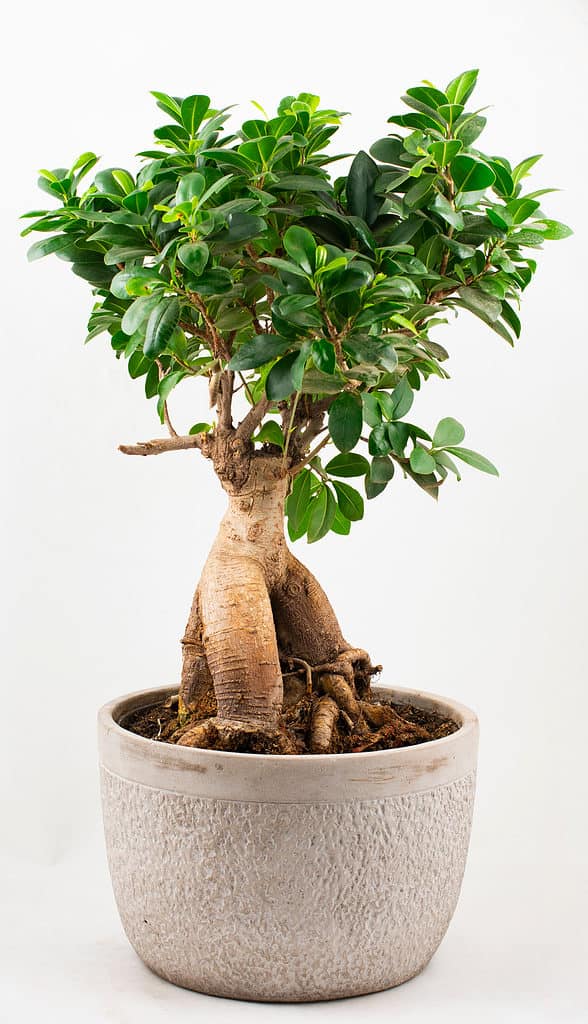
The trees may grow thick trunks, when properly cared for.
©yfpro/Shutterstock.com
Sweet plum bonsai are most susceptible to four problems: mealy bugs, spider mites, fungus gnats, and other mites.
Note: Never use pesticides or fungicides on bonsai when the soil is dry.
Mealy Bugs
Mealy bugs will appear under the shedding bark of your bird plum bonsai. When this occurs, use tweezers to manually remove the insects and then use a gentle pesticide on the tree to preserve the tree’s aesthetics and improve its health.
Spider Mites
Most commonly, spider mites will appear on indoor bird plum bonsai. The reason for this is typically the poor circulation of air in most homes and indoor spaces. Use insecticides and fungicides that come in soapy rinses and sprays to deal with them. Gently apply the treatments every month or two, ensuring the treatments are non-toxic, following the package instructions.
Fungus Gnats
Another primarily indoor bonsai problem is fungus gnats. They tend to come on due to the consistently moist soil of indoor bonsai trees. Treat the infected bonsai with pyrethrin for mites, spraying the plant once, followed by a second application three days later.
Other Mites
If you notice any red or brown pinpoints that move around, you likely have other mites on your bonsai. They may also form web-like blobs on the tips of branches, and the leaves will yellow. To eliminate these, find a non-toxic insecticide and apply as directed.
How to Propagate Bird Plum Bonsai
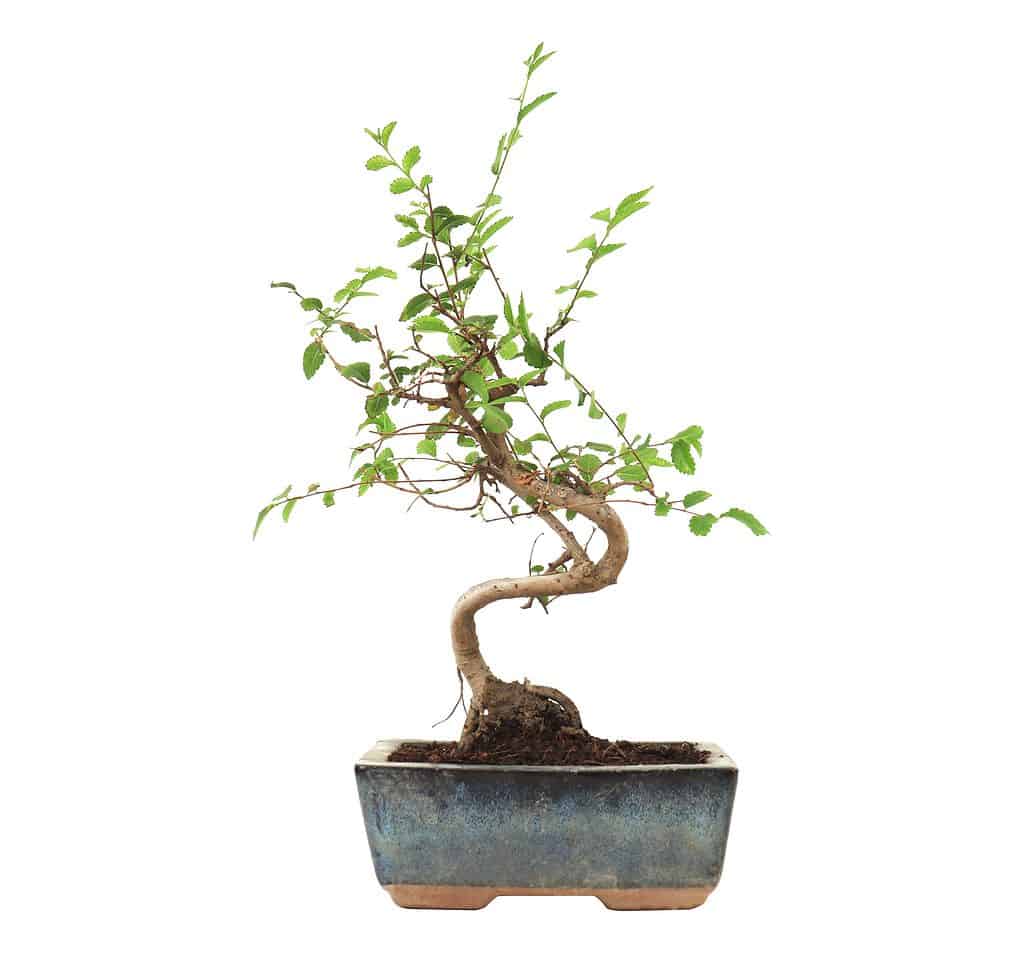
The unique tree thrives in many styles and shapes.
©96 Creative Graphics/Shutterstock.com
Most bonsai enthusiasts recommend growing bird plum bonsai from cuttings or starting out with a young plant, rather than trying to use a kit or growing from seeds on your own. The kits often don’t germinate properly and therefore disappoint.
Most recommend purchasing your first bird plum as an existing tree and propagating from this plant by taking cuttings.
- Take the cuttings in springtime from either softwood or hardwood, for the healthiest, most productive results.
- Allow the plant to grow new shoots out to 3.5 to 5 inches length before pruning with clear, sterilized shears.
- Place the cut ends into fresh compost in a small pot and water immediately.
- Mist the cuttings regularly, keeping them moist and hydrated throughout.
- Elevate the humidity to keep the cuttings healthy as they begin to root. So, ideally, keep them in a greenhouse with high humidity, while the containers/planters drain properly to avoid root rot.
Fun Facts on Bird Plum Bonsai
Bonsai trees generally are considered symbols of peace, order of thought, balance, and harmony. This is, perhaps, due to the need for all of these elements in the healthy keeping of bonsai trees.
The bird plum bonsai is specifically thought of as symbolizing health, wishes being granted, and health, as well as new life, creativity, and renewal.
In Namibia, the bird plum bonsai is known as brown ivory or in Afrikaans, it is referred to as “wilde dattel,” “Voëlpruim,” or “Bruin Ivoor” (brown ivory). The German name is also “wilde dattel.”
The genus of the plant refers to the French botanist M Bercham, the first person catalogue and collect and describe the species.
The tree is referred to as a discolor, which doesn’t mean that it has discoloration, but rather than some varieties or specific specimens may have “different color” than the known traditional. This specifically refers to bird plum trees with dark green leaves above and pale green leaves below.
In the Cuvelai area of north-central Namibia, the tree is often a single-stemmed tree, instead of a multi-stemmed tree so often seen in bonsai, growing up to 60 feet tall. The tree there usually has a rounded crown of dense leaves, but it may actually be leveled off due to the birds eating away at it. Usually, the trees will stand as solitaries in fields.
In the wild, bird plum are popular among many animals, particularly birds. In Namibia, they are browsed by giraffe, elephants, kudus, impalas, and dik-diks quite happily, as well as baboons and various species of monkeys. The sweet fruit draws them in, while the flowers draw in pollinators. Humans eat the fruit either fresh or dried and pounded down and mixed in with other foods like maize or mahangu for a flavor boost.
Up Next:
- Spruce Bonsai Tree
- The Best Fruit Bonsai Trees
- Ash Bonsai Tree
- The 10 Best Outdoor Bonsai Trees