Popping up in late winter or early spring, often through the snow, crocuses are some of the most sought after flower bulbs in the world. The stunning blooms come in an array of shades in white, purple, or yellows, and offer some of the needed early food for pollinators after a long, cold winter. The gorgeous plants are fairly easy to care for, when planted properly, and add vivid color to the garden patch, particularly when grow in large drifts.
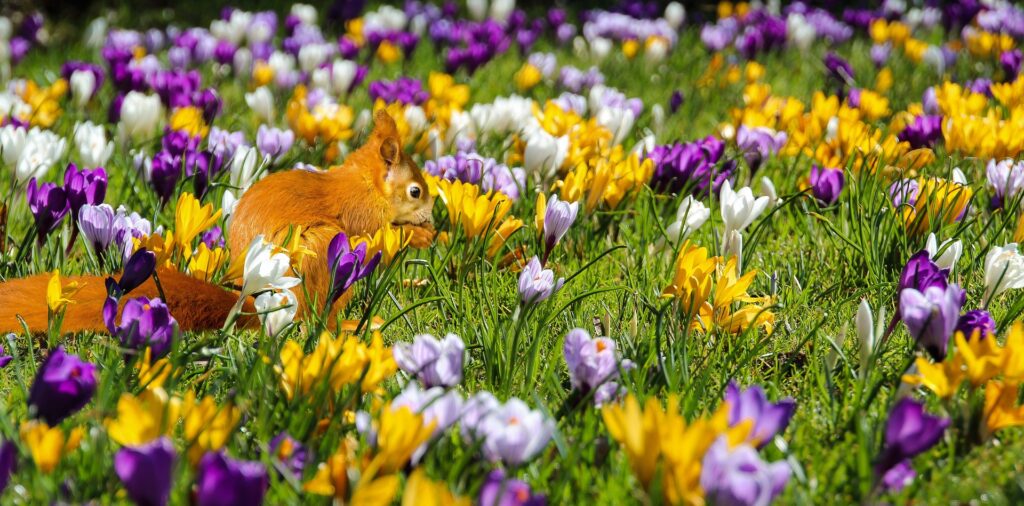
Learn more about three main types of crocuses: Dutch crocus (spring bloomers), golden crocus (late winter bloomers), and autumn bloomers (including saffron crocus and Crocus speciosus).
©
| Botanical name | Crocus; C. vernus or c. chrysanthus, or c. sieberi |
| Popular varieties | C. chrysanthus ‘Ard Schenk’, C. chrysanthus ‘Zwanenburg Bronze’, C. Tommasinianus – Snow Crocus, C. chrysanthus ‘Cream Beauty’, C. sativus – Saffron Crocus, C. chrysanthus – Blue Pearl, C. chrysanthus – Orange Monarch, C. vernus ‘Grand Maitre’, C. chrysanthus Advance, C. vernus Yellow Mammoth, C. sieberi subsp. atticus ‘Firefly’, C. vernus ‘Pickwick’, C. vernus ‘Jeanne d’Arc’, C. vernus ‘Zenith’, C. sieberi ‘Tricolor’, C. chrysanthus ‘Skyline’, C. vernus ‘Flower Record’, C. chrysanthus ‘Romance’, C. chrysanthus ‘Gipsy Girl’, C. chrysanthus – Golden Crocus, C. bifloris – Scottish Crocus, C. tommasinianus ‘Barr’s Purple’, C. tommasinianus ‘Ruby Giant’, C. Vernus ‘Blue Moon Mix’, C. minimus ‘Spring Beauty’, C. tommasinianus – Roseus Crocus |
| Light needs | Full sun to partial shade, more shade in summer in hot climates |
| Water needs | Crocuses should receive about ½ to 1 inch of water per week; avoid over watering |
| Soil needs | Well-draining, average soil |
| USDA Hardiness Zones | 3 to 8 |
| Beginner friendly? | Yes |
| Special care notes | Though they require regular watering in spring and autumn, crocuses should never be over watered or they could easily develop bulb or root rot. Use a moisture meter, if need be, to help ensure they are watered properly. |
What Are Crocus Bulbs?
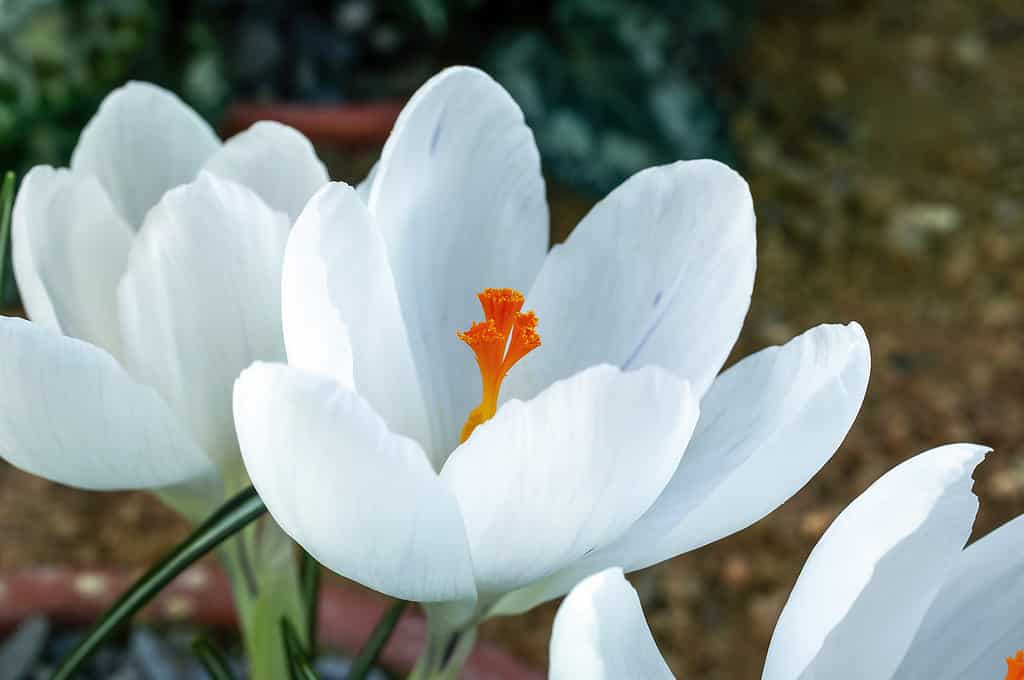
C. vernus ‘Jeanne d’Arc’ (Joan of Arc) – a popular bright white crocus variety
©iStock.com/TonyBaggett
Crocuses technically grow from corms, rather than bulbs, but most folks interchangeably use the term to describe the fleshy storage structures from which these blooms spring.
Crocuses or croci (the technical plural of crocus) are a genus of flowering plants that belong to the iris or Iridaceae family. There are about 100 species of crocuses, they are low-to-the-ground growing plants, and offer white, yellow to orange, or purple blooms in practically any shade within those colors. Crocuses bloom in early springtime, often in late winter before snow leaves the ground, and go dormant after they bloom. The flowers close up at night and reopen each morning during their blooming time.
The plant is grown both ornamentally as a flowering plant in gardens and as ground cover, as well as in herbal gardens, as crocuses are the source of the spice saffron.
What’s the Difference Between a Bulb and a Corm?
The term “bulb” technically is used for plants that grow plants from a fleshy storage structure that grows underground. However, not everything that has this general storage structure is actually a bulb, as in the case of crocuses. A bulb stores the nutrient reserves of the plant and contains the full life cycle in this underground structure. A corm, on the other hand, does not contain the visible storage rings when cut in half like a bulb does.
How are Crocuses Used?
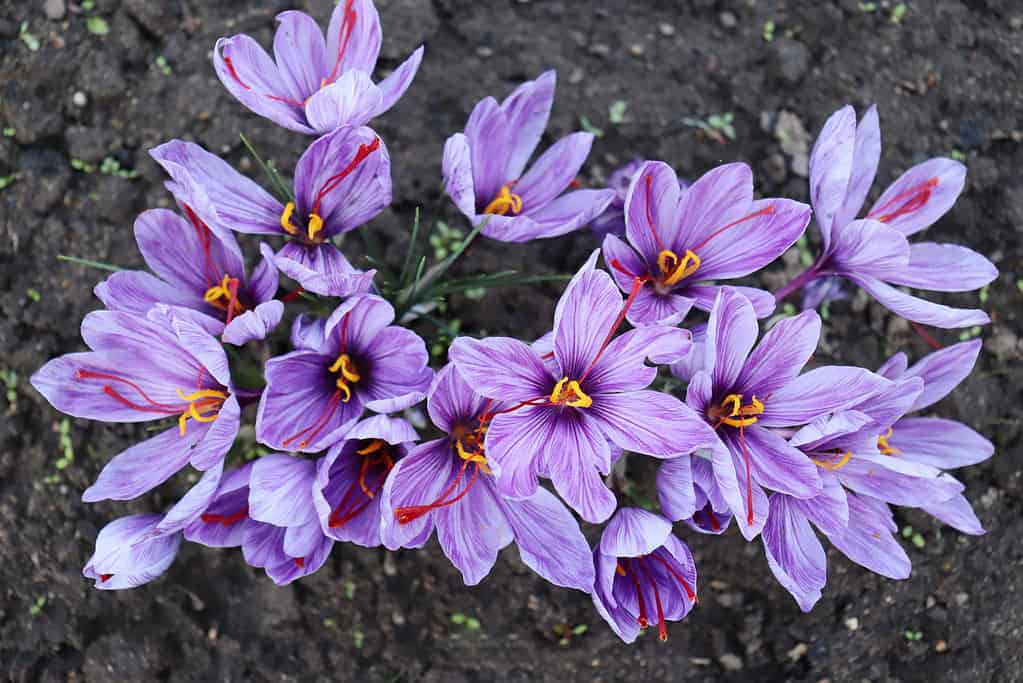
The Saffron crocus
©iStock.com/Hana Richterova
Crocus bulbs or corms are used to grow the beautiful plants for a number of purposes.
- For harvesting the saffron spice – The red stamens of some varieties of crocuses are dried to become saffron, taking approximately 4,000 per ounce of the spice.
- As ground cover – Crocuses are low-growing plants that easily spread quickly and cover the ground with attractive foliage and blooms in early springtime or autumn.
- In bee gardens – Because they are early bloomers, crocuses are often used to produce the earliest blooms needed for bees as they come out of winter dormancy.
- As flower garden additions – Also because of the early blooming, crocuses are often favored among flower gardeners to provide the first attractive blooms of the season or late autumn blossoms as the seasons begin to turn over.
- Traditional medicine – The corms of crocuses have been used traditionally in medicines and in the prevention and treatment of diseases such as cancer.
When Do Crocuses Bloom?
Depending on the variety of crocus, these plants may bloom anywhere from January (early winter) to April (mid-spring). There are a few varieties that bloom in autumn, as well, though they are far less common.
Varieties or Types of Crocuses
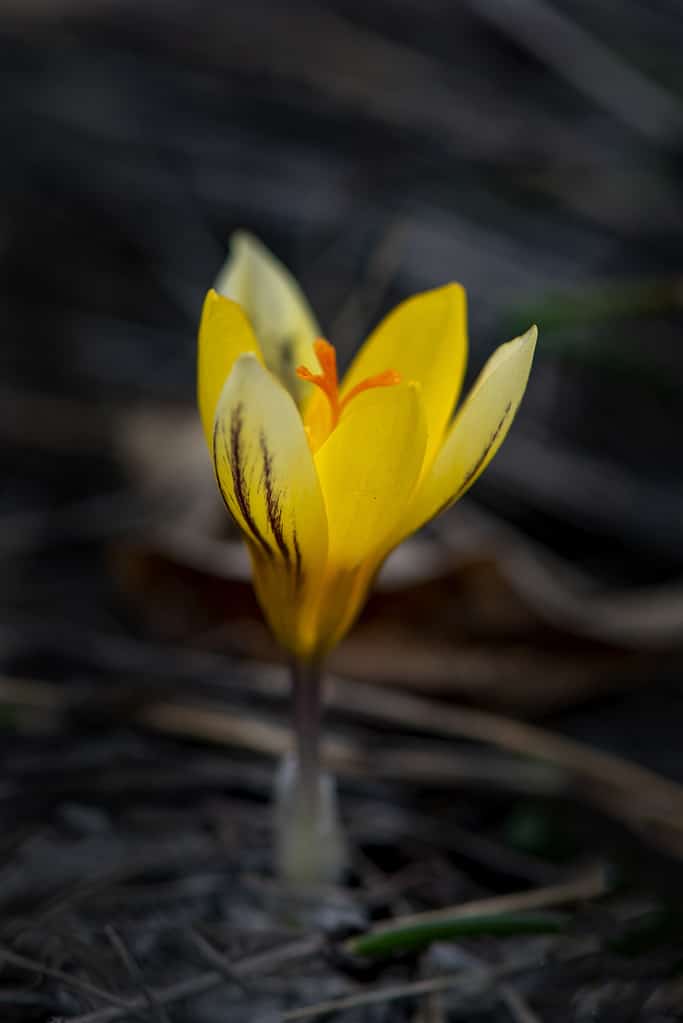
A close-up of the unique Crocus chrysanthus ‘Zwanenburg Bronze’
©iStock.com/valdy
There are around 100 species of crocus, offering many varieties and cultivars. Some of the most easily found varieties include:
- C. chrysanthus ‘Ard Schenk’ – white blooms with orange anthers and golden heart
- C. chrysanthus ‘Zwanenburg Bronze’ – yellow blooms with a red tinge
- C. Tommasinianus – Snow Crocus – lavender flowers
- C. chrysanthus ‘Cream Beauty’ – white to pale, lemon-yellow blooms
- C. sativus – Saffron Crocus – purple blossoms with red stamen
- C. chrysanthus – Blue Pearl – pearl blue blossoms
- C. chrysanthus – Orange Monarch – orange-gold blooms
- C. vernus ‘Grand Maitre’ – purple blossoms with white hearts and bold gold-orange stamen
- C. chrysanthus Advance – bicolor yellow and purple blossoms
- C. vernus Yellow Mammoth – yellow flowers
- C. sieberi subsp. atticus ‘Firefly’ – purple flowers
- C. vernus ‘Pickwick’ – textured purple and white blooms
- C. vernus ‘Jeanne d’Arc’ – white blooms
- C. vernus ‘Zenith’ – blue flowers
- C. sieberi ‘Tricolor’ – purple flowers with white hearts and deep golden-orange stamens
- C. chrysanthus ‘Skyline’ – striated blue on white blossoms
- C. vernus ‘Flower Record’ – deep purple flowers
- C. chrysanthus ‘Romance’ – buttery-yellow to orange flowers
- C. chrysanthus ‘Gipsy Girl’ – yellow flowers
- C. chrysanthus – Golden Crocus – orange-yellow flowers
- C. bifloris – Scottish Crocus – white with purple striped flowers
- C. tommasinianus ‘Barr’s Purple’ – purple blooms
- C. tommasinianus ‘Ruby Giant’ – deep purple flowers
- C. Vernus ‘Blue Moon Mix’ – white, light purple, or dark purple flowers
- C. minimus ‘Spring Beauty’ – lilac flower with deep purple or white hearts
- C. tommasinianus – Roseus Crocus – violet purple blooms with orange centers
How to Care For Crocus Bulbs
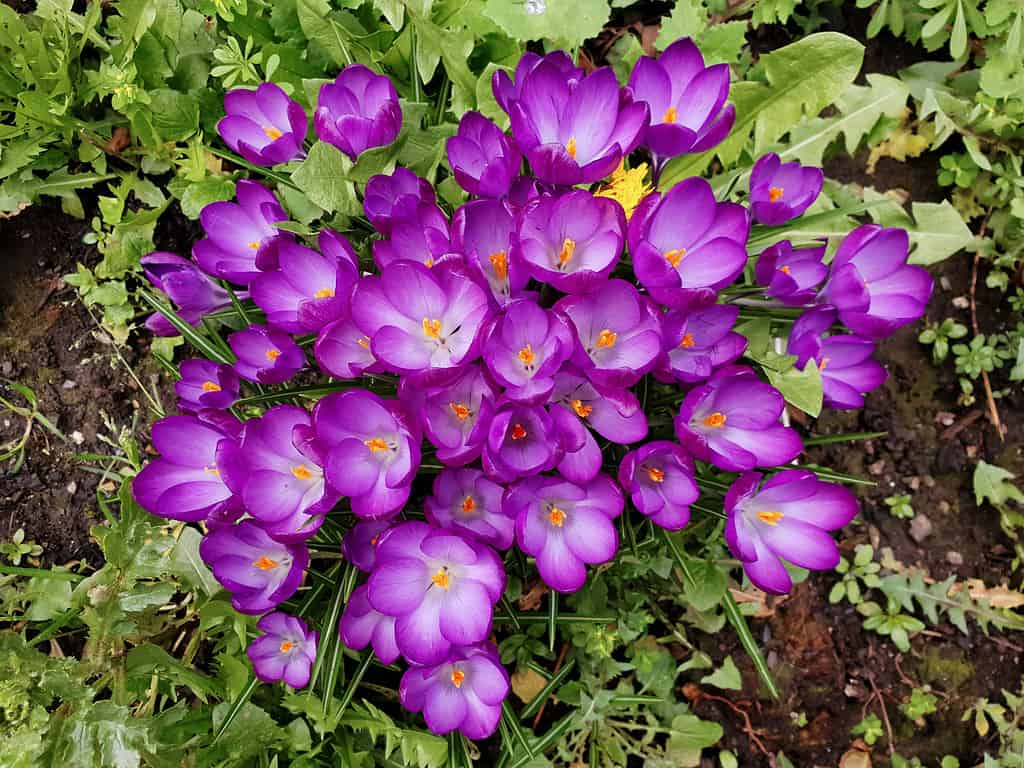
Top view of Crocus tommasinianus known as the ‘Ruby Giant’
©iStock.com/Wirestock
Whether you’re growing your crocuses outdoors in an herb garden or garden bed, a few specific care points well help them thrive.
Light Requirements
Crocuses thrive in full sun to partial shade and may be shaded in the hottest parts of the summer to remain alive and healthy without burning out.
Water
Crocuses do best when they receive anywhere from a half inch to 1 inch of water each week. This may come by natural sources (rainfall) or by watering, and ideally with purified water or rain barrel water. In the summer and following dormant periods, watering should be dramatically reduced to avoid bulb rot.
Soil Conditions
Find a full sun location and plant the crocuses in well-draining soil. If they are being grow in containers, make sure there is gravel or other medium at the bottom of the container with drainage holes, beneath loose soil, to ensure proper drainage occurs.
Fertilizer
Crocuses thrive without much care, including the rare need for fertilizer. As they store their entire life cycles in their corms, they only need a hint of care in this area, in the form of top dressing of the corm, bone meal in the autumn, or bulb food, if they are planted in poor quality soil.
How to Propagate Crocus Bulbs
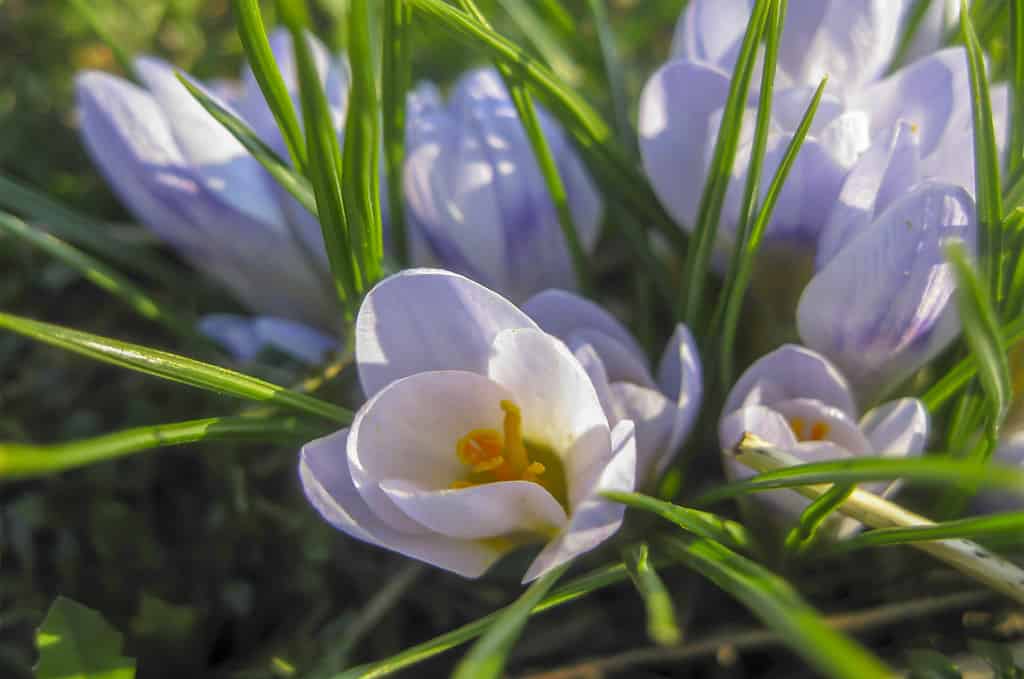
The beautiful and unique Blue Pearl crocus
©iStock.com/Lyubov Kulikova
Most folks opt to propagate their crocus bulbs by digging to the roots and separating out healthy corm offsets. Separate them out carefully, avoiding damage to the mother corm, and replant the young corms in healthy, well-draining soil, about 3 inches apart. Ideally, any new bulbs should be planted in January.
Care for as usual.