
Practicing the art of bonsai is one of the most rewarding, naturally founded, and beautiful practices a person can choose for a hobby. Each tree lends beauty and grace to the space where they grow, along with some peaceful, healthy activity to the grower’s life. Choosing the right tree to plant and care for, however, may be the tricky part.
If you’re ready to choose the right kind of bonsai tree and learn for yourself how to grow and care for one, the firethorn is an excellent beginner option to choose. They’re typically grown as ornamental plants when in full-size form anyway and happen to be both reasonably easy to shape and don’t require a lot of special care.
What Makes Firethorn Good for Bonsai?

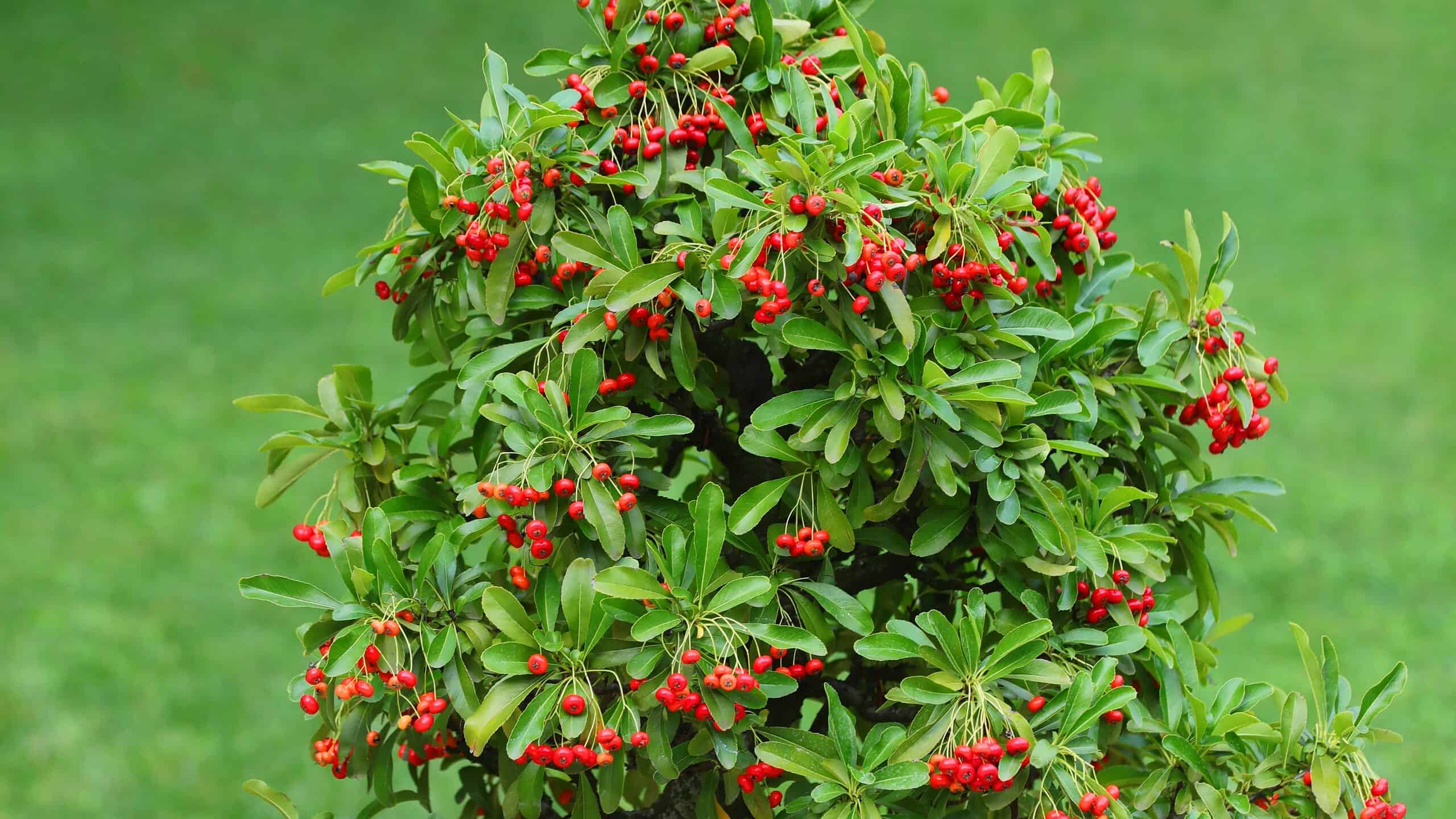
During fruiting season, the firethorn bonsai may overflow a bit.
©Real Moment/Shutterstock.com
Firethorns are usually planted as ornamental shrubs when standard size. The beautiful berries and easy care make them a great choice for even beginners looking to try out the bonsai art. It responds well to pruning and may be shaped fairly easily, as well, making it a truly great choice.
Firethorn Classification
The firethorn, scientifically named as Pyracantha coccinea, belongs to a family of broadleaf evergreen plants, in a genus containing 10 species (the Pyracantha genus). The name comes from the Greek, pyr, meaning fire, and akanthos, meaning thorn.
Firethorn Bonsai Description
Identifying the firethorn is reasonably easy, thanks to a few distinctive features.
Fruits and Seeds
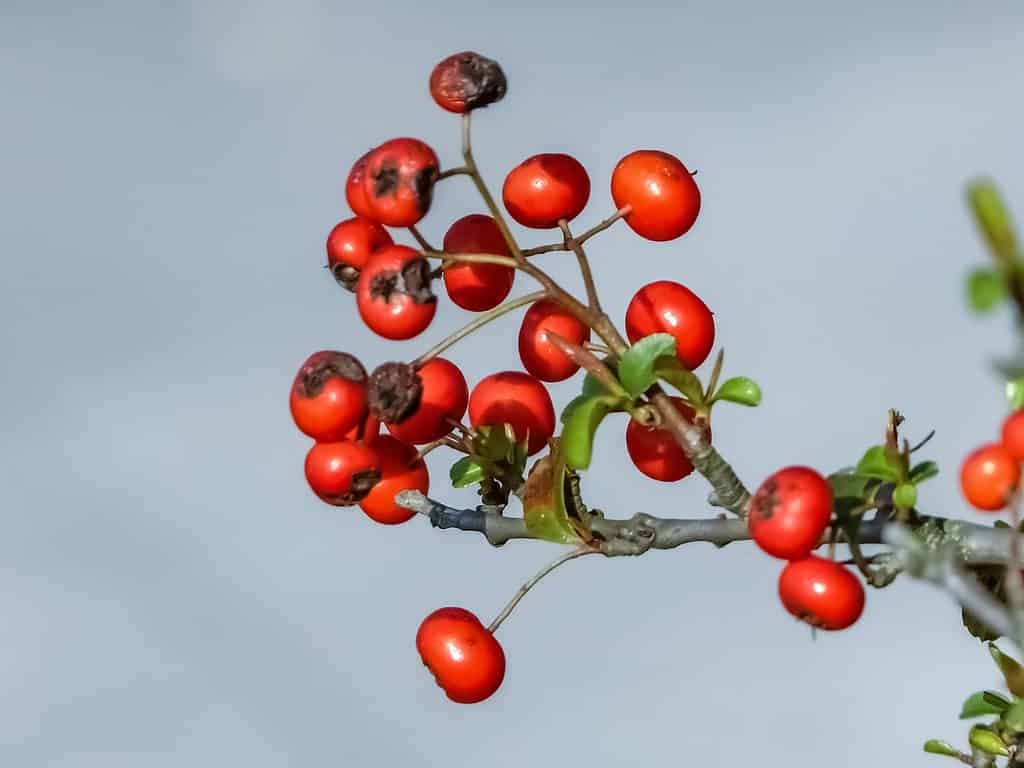
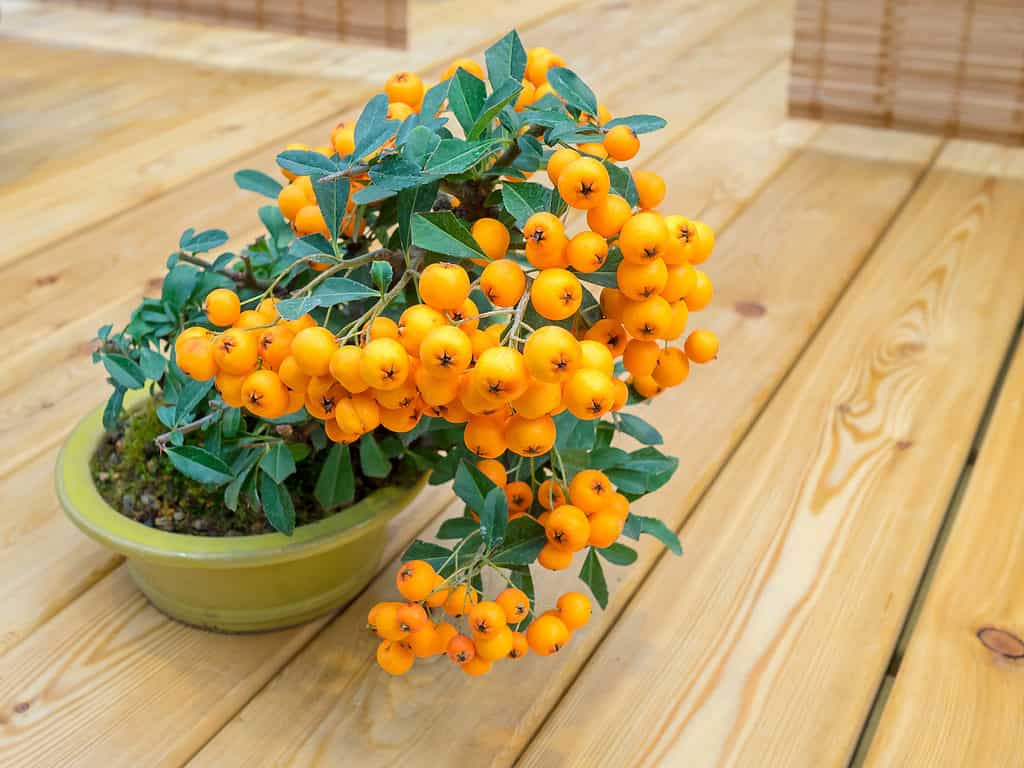
Firethorn bonsai fruit may be bright red to orange or yellow.
©HelloRF Zcool/Shutterstock.com
Firethorns bear yellow, orange, or red fruit that is generally described as “muted” or extremely mild in flavor. The power is the color, though, which is part of why it is so often chose as an ornamental shrub rather than a fruiting shrub. The fruits may be turned into firethorn jelly or used to make pies and other things, generally blended with other fruits, though. The fruit of the firethorn is referenced as a pome and contains the mildly toxic seeds of the tree.
Leaves
The firethorn has green, glossy leaves that deepen, depending on the season. In vividly bright seasons, like summer and late springtime, the leaves will be a brighter, lighter green. In winter months, the leaves darken into a richer green.
The leaves have smooth or slightly serrated edges, based on the specific variety being grown, and lance or oval-shaped. The specific variety will also determine if the leaves grow alternately or in clusters.
Flowers
The flowers of the firethorn are white and are made up of several stamens and five petals in radial symmetry. The flowers start out looking a bit like closed umbrellas in clusters and then open out into the full five-petal flower appearance as spring progresses. The plant is a self-pollinator, so does not require cross-pollination, but it may still benefit the production of fruit.
Origins and History of Firethorn
The firethorn is an evergreen shrub native to southeastern Europe and throughout Asia. Firethorns have been cultivated for many years as ornamental plants, thanks to their colorful fruits, often used as hedge rows. They have been naturalized in many areas and are often espaliered or trained to glow flat against fences and walls.
Varieties of Firethorn
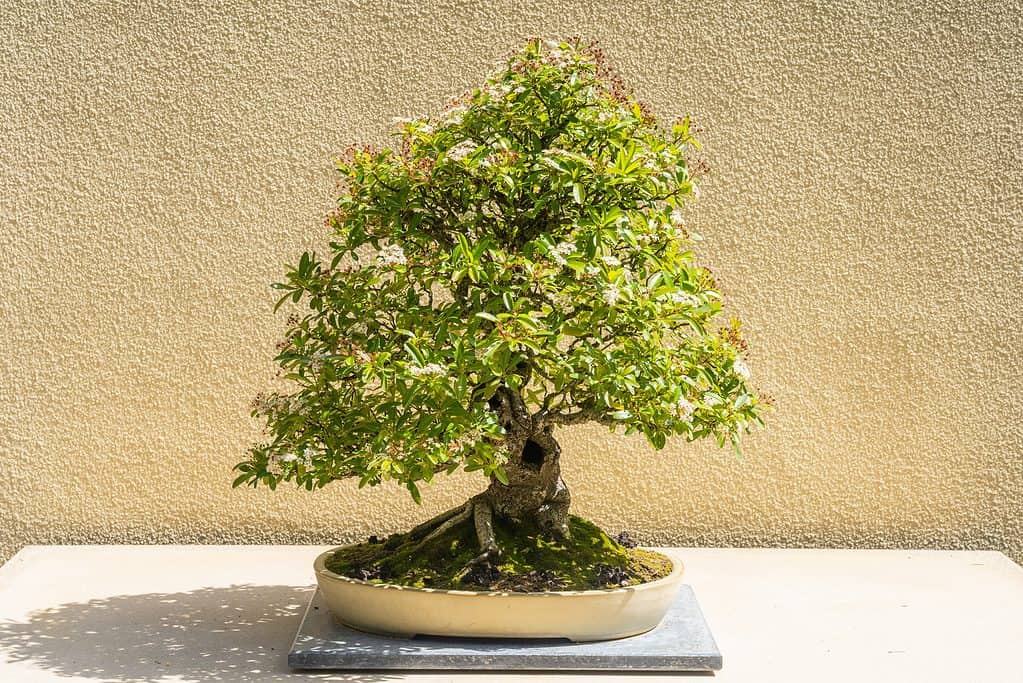
Narrowleaf firethorn bonsai are gorgeous any time of year.
©Mariusz S. Jurgielewicz/Shutterstock.com
There are ten identified species in the Pyracantha species, though the most commonly referred to as the ornamental firethorn is the Pyracantha coccinea. There are some other popular choices for using as bonsai, as well.
Pyracantha angustifolia – Narrowleaf Firethorn
This variety of firethorn has a narrow leaf (the meaning of the name), with orange-yellow berries. This variety is native to China.
Pyracantha coccinea – Scarlet Firethorn
The more commonly used firethorn is this variety, which is more frost-hardy than the angustifolia variety. These have yellow, orange, or red berries, and are broad-leafed.
Other Varieties and Species
Additionally, other varieties and species you may find include:
Species:
- Pyracantha rogersiana – Asian firthorn
- Pyracantha crenatoserrata – Chinese firethorn
- Pyracantha crenulate – Nepalese firethorn
- Pyracantha koidzumii – Taiwanese firethorn
- Pyracantha atalantioidoides – or Gigg’s firethorn
Variants:
- Pyracantha ‘Orange Glow’
- Pyracantha ‘Teton’
- Pyracantha rogersiana ‘Flava’
- Pyracantha Saphyr Orange (‘Cadange’)
- Pyracantha Saphyr Rouge (‘Cadrou’)
How to Grow Firethorn Bonsai
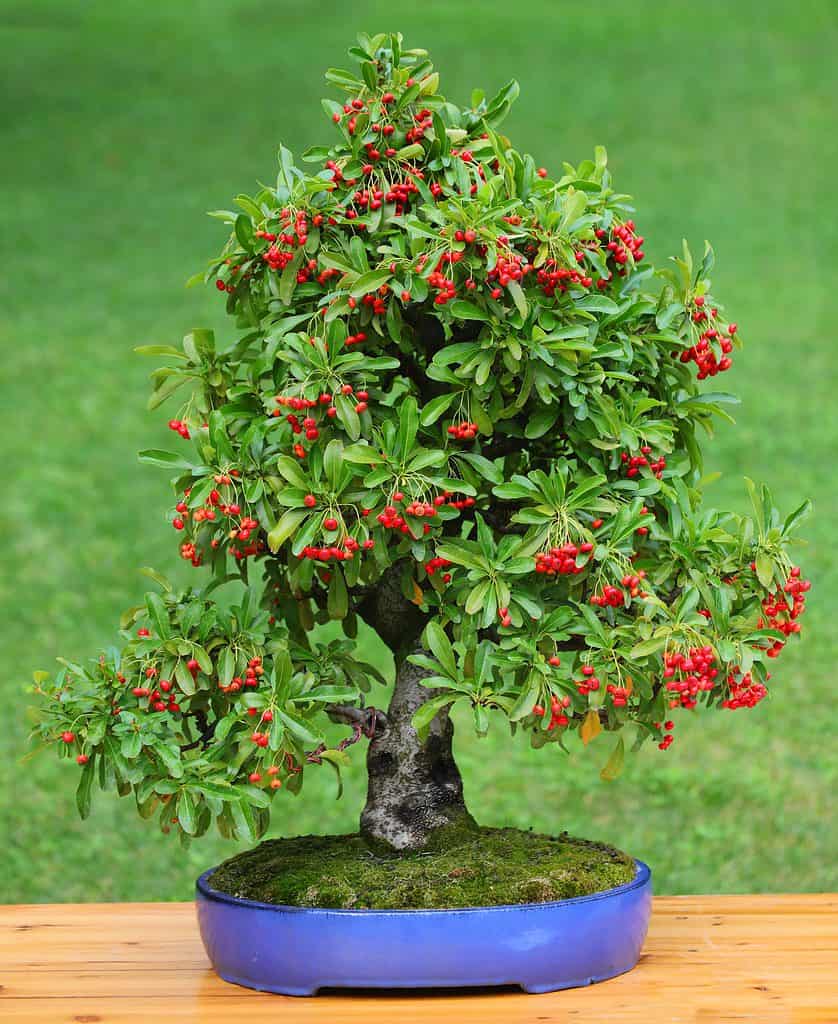
Firethorn bonsai trees are beautiful any time of year, but particularly when it’s fruiting season.
©ChiccoDodiFC/Shutterstock.com
Planting Location
The firethorn is a sun lover! But it has some issues with burning, so you have to carefully place the firethorn bonsai where it will get direct sunlight in the morning and afternoon of cooler months and just the morning and evening of hotter months. That is, firethorn shouldn’t be in direct, hot sunlight in the hottest months for very long.
It’s best to place the bonsai where you’ll easily be able to adjust its shade protection during hotter seasons when the sun is directly overhead. You’ll also need to shelter it against cold temperatures. Many folks opt to bring them indoors in winter or keep them in greenhouses.
Lighting
The firethorn is greedy for its rays all year, so there are three things to keep in mind with lighting for these evergreens.
- They need loads of light year-round
- They cannot handle a lot of heat, so hot months, they need shade protection
- If kept indoors at all, they need grow lights with full-spectrum lights
Temperature
This shrub or bonsai tree needs to be kept between 54 and 68 F in cooler months. This means that if your wintertime temperatures drop below this, you’ll need to keep them in greenhouses, grow tents, or indoors with climate control.
Watering
Firethorns need a lot of water, but they also need properly draining soil. Because of this, its best to keep the plant in a pot with proper drainage holds that are kept unobstructed.
During the warmer months (i.e., any time of year save winter), the firethorn bonsai will needs its roots kept moist. It’s a thirsty plant, so generally this means daily waterings. Check the soil daily and ensure it doesn’t get dry, as this could cause some issues for the plant. However, you don’t want to waterlog the plant, either, as that may cause root rot.
During the wintertime, you won’t need to water the tree as frequently. Continue checking the soil daily to ensure it doesn’t dry out, but don’t water until it’s semi-dry and not moist.
Feeding
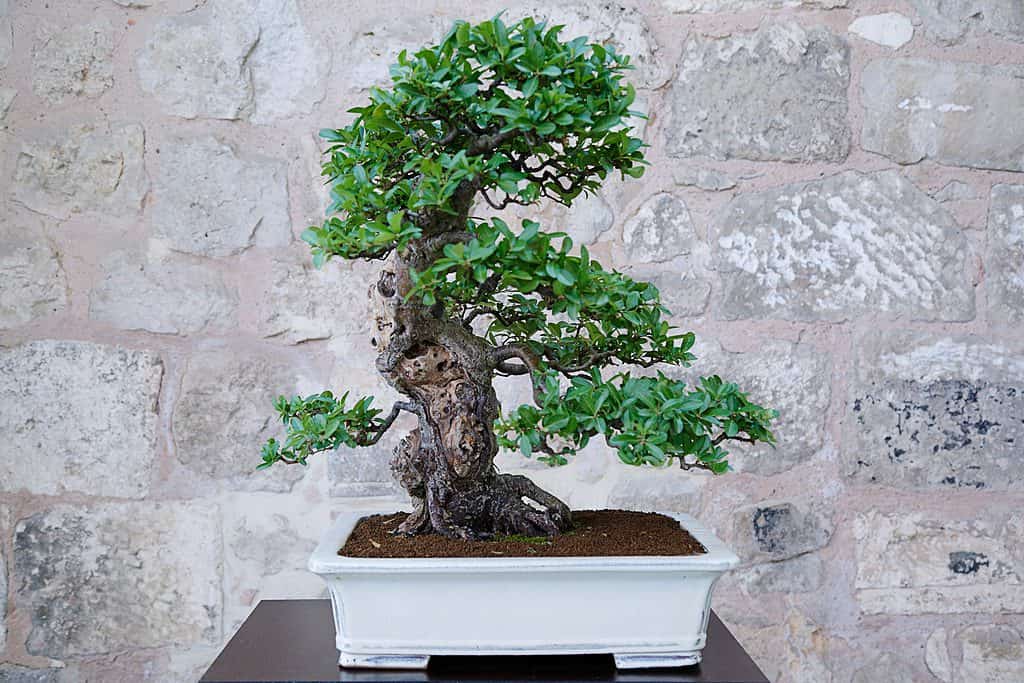
When grown properly, the firethorn looks like a hardy tree rather than a shrub.
©Raquel Pedrosa/Shutterstock.com
You may use either a liquid bonsai or pellet bonsai fertilizer for your firethorn bonsai. Primarily the focus for feedings will be in the growing season (early spring to early autumn). If using liquid fertilizer, add the solution to the water once a week. If going with pellets, feed these once a month.
Fertilizer tips:
- Find a balance in your fertilizer with potassium and phosphorous to produce flowers and therefore fruit
- Avoid going too heavy with nitrogen supplementation, as this will produce more leaves and fewer flowers
- Slow down feeding when autumn hits, but maintain some feedings as the tree is an evergreen and needs to store food for the winter
- Stop feedings once it is full-on wintertime
Pruning
It’s time to prune when you start seeing long shoots growing on your firethorn bonsai in wintertime. Cut back to the second node to encourage healthy growth in the right shape and size. Remove dead twigs and leaves, as well. It’s best to leave pruning for wintertime, unless you see larger leaves forming in the growing season, then prune back to help keep the plant a bonsai.
Shaping
Wintertime pruning is when you’ll be able to work on the shaping of your firethorn bonsai. This is the plant’s resting period, which means the shaping will slowly take. However, if your tree is somehow “off season” and has hardwood only during this time, you’ll want to wait for the softwood season to occur for wiring, so that you can shape and mold the branches without them breaking off.
Shaping firethorn should be done using the clip and grow technique for a natural, healthier shaping method.
Wiring
There are particular notes about the types of wire or styles to use. Firethorn bonsai are relatively easy to wire, but they should only have wiring done on them during softwood season. The branches may become brittle and snap off, otherwise.
Re-potting
The firethorn bonsai tree needs re-potting fairly frequently.
©Kusska/Shutterstock.com
Younger firethorn (under seven years) should be re-potted every two to three years. Once they reach seven or eight years, re-potting may take place every five or so years. As the tree matures, ensure that you have a deep container, as the roots are long and grow deep.
As you re-pot, be sure to lightly prune the root ball after raking out some of the dirt for clean placement. Don’t cut the major roots – just the smaller roots – unless the major roots are too long and are forcing their way out of the drainage holes in the pot.
Overwintering
Firethorn bonsai do not tolerate cold weather particularly well, and so they must be protected against frosts and cold temperatures. The plant tolerates temperatures down to 23 degrees F occasionally, but should not consistently be kept in these temperatures. Ideally, they will be kept in unheated tents or greenhouses during winter, though some heat may be necessary during permafrost periods.
If you have temperature control in your home, they could be wintered indoors, but this is not really recommended, as being kept too warm may cause issues with the plant consuming its storage substances and will be weakened in the growing season.
Common Problems of Firethorn Bonsai
Some bonsais, like acacia, are fairly free of issues with pests and diseases. Unfortunately, firethorn is one of the more susceptible species used in the artform.
Indoor firethorns are prone to mold and tiny insects that drain sap and starve leaves. Outdoor firethorn bonsai are prone to aphids, scale insects, caterpillars, fireblight, leaf miners, and root rot.
Using a non-toxic, organic pesticide to deal with insects or non-toxic, organic fungicide will deal with these issues in nearly every situation. If the plant becomes moldy or develops signs of root rot, resituate it to a dryer area while maintaining its water levels and ensure that the pot in which it grows is draining properly.
How to Propagate Firethorn Bonsai
There are two primary ways of propagating new firethorn bonsai, via seeds and cuttings, though some folks may use air layering, as well. For the sake of this piece, we’ll be focusing on the faster growing methods from seeds and cuttings.
Seeds
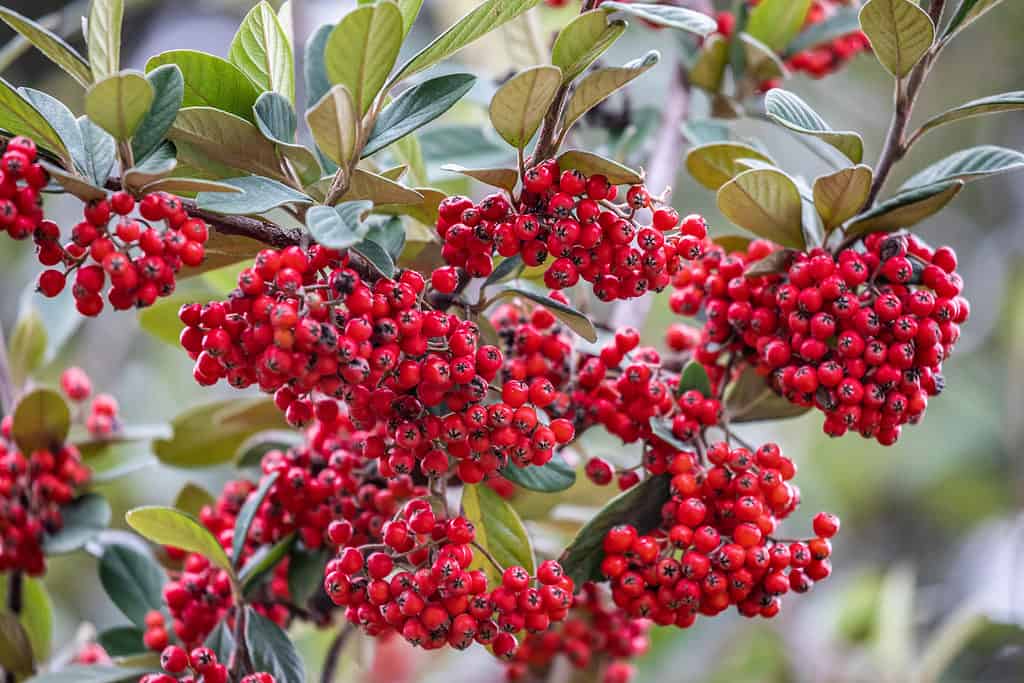
The firethorn fruit has to be stripped of the pulp to plant the seed.
©Mehmet Cetin/Shutterstock.com
If you have access to healthy firethorn seeds – or can find a high-quality kit – you grow some firethorn from seeds. The seeds are found in those colorful berries.
- Remove the outer coating (the berry part) and pulp to get to the seed.
- Put the firethorn seeds into bonsai growing mix, at least one inch apart from each other, then cover lightly with the medium, and water immediately.
- Ensure the container can drain properly.
- Cover the planting container with a clear bag to keep the moisture in or place the seed tray into a grow tent or greenhouse.
- Keep the soil moist and warm.
- Mist the growing tray throughout the process to keep the soil moist while avoiding water logging.
- Seeds that are successful should start to pop out signs of life within four to six weeks.
- Wait until the stems are at least three inches long with three layers of leaves before you remove the covering.
- Keep the seedlings indoors with indirect light until the following spring, keeping them away from air conditioning, air vents, and drafty windows.
Cuttings
The easiest way to propagate firethorns is via cuttings.
- Take semi-hardwood cuttings in early to mid-summer, when the semi-hardwood branches out.
- The cuttings should be three to six inches long.
- Remove the leaves from the lower part of the cuttings, and gently clean with distilled water.
- Cut off a tiny bit of bark at the bottom tip and cover the tip with rooting hormone powder.
- Place the cut end of the branches into bonsai growing medium and water immediately.
- Place the cuttings in a warm, moist area like a greenhouse, and cover the pot with a clear bag.
- Keep them in direct sunlight in the mornings and shade in the afternoons.
You should see leafy growth within six to eight weeks. When these new leaves arrive, it’s safe to pot the cuttings separately.
FAQs About the Firethorn Bonsai
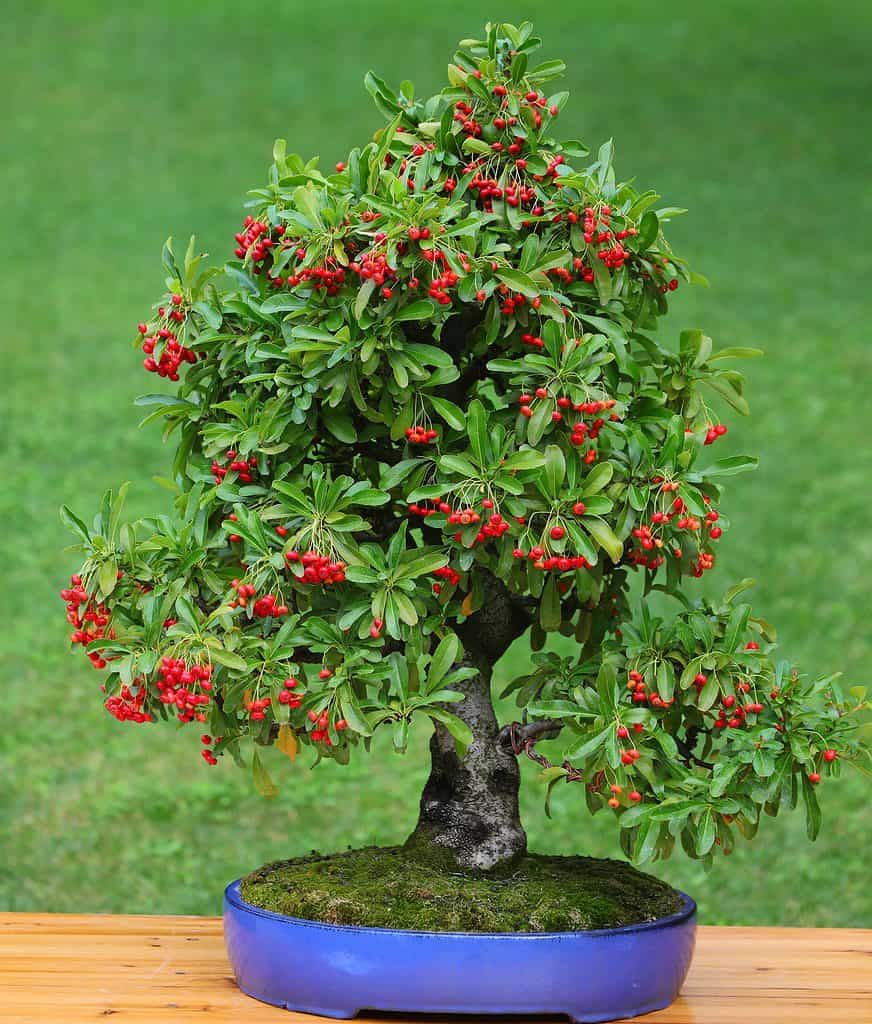
Firethorn bonsai produce an abundance of fruit.
©ChiccoDodiFC/Shutterstock.com
Can you eat the berries of firethorn bonsai?
The pulp of the firethorn berry is often used in recipes in the indigenous locations of the plant, however, the seed of the berry is mildly toxic and may make you ill, resulting in digestive issues and stomach upset.
Is firethorn poisonous to dogs and cats?
Dogs and cats both will have an adverse reaction to firethorn berries, leaves, and other parts of the plant. Birds likely will nibble on the fruit and may be fine, but mammals should not eat them, even if they think they want to.
If you have a dog or cat that tends to eat plants, you probably want to avoid keeping firethorn in the home with them.
Is the firethorn a bush or a tree?
Technically, firethorn are shrubs and not trees, but when they’re grown as bonsai, you’ll likely hear them referred to as trees. They are styled to look like trees rather than shrubs, as are the majority of bonsai.
Can I opt to style firethorn bonsai like a shrub?
You certainly can! If you want to keep the firethorn bushy, prune the plant throughout spring and summer, cutting back from the nodes on a branch when the second set of leaves appears. As new shoots appear, repeat the process. This keeps the branches twiggy in nature.
Avoid too heavy pruning in the summer, however, to avoid missing out on the flowers and fruits, as the plant will be focused on producing leaves. Choose a season when you don’t mind less flowers and fruits for creating this kind of shape.
Up Next:
- Discover the 20+ Different Types of Bonsai Trees
- Bonsai Styles: Everything You Need to Know
- The 10 Best Outdoor Bonsai Trees
- Serissa Bonsai Tree