
Quick Take
- Beavers don't just gnaw randomly. They engineer exactly where a tree lands, and the technique is more calculated than most people expect. See the gnawing technique →
- A beaver's teeth never stop growing, and that biological quirk is central to why trees must come down in the first place. Discover the tooth biology →
- How fast a beaver fells a tree depends on more than just tree size, and there is one overlooked factor that separates a slow beaver from a fast one. Explore the speed factors →
- Some trees are essentially off-limits to beavers, though hunger and location can override every preference they have. See which trees they avoid →
If a tree falls in the woods and no one is there to witness it, does it make a sound? If a beaver is involved, the answer is a definitive yes. Beavers are skilled at felling trees, making short work of those they target. But knocking down trees is not a game for beavers. Instead, these tiny lumberjacks chew through trees to survive and can do so in a matter of minutes. Here’s how.
Why Beavers Gnaw on Trees
Beavers are known for gnawing on trees. A viral YouTube video from @scannerguy1968 shows just how easily and quickly a beaver’s sharp teeth can bring a tree down. But why do beavers knock down trees? As it turns out, there are several reasons.
Beavers will not live in areas where trees are scarce. Trees are both a source of food and construction material. Therefore, trees are integral to a beaver’s survival.
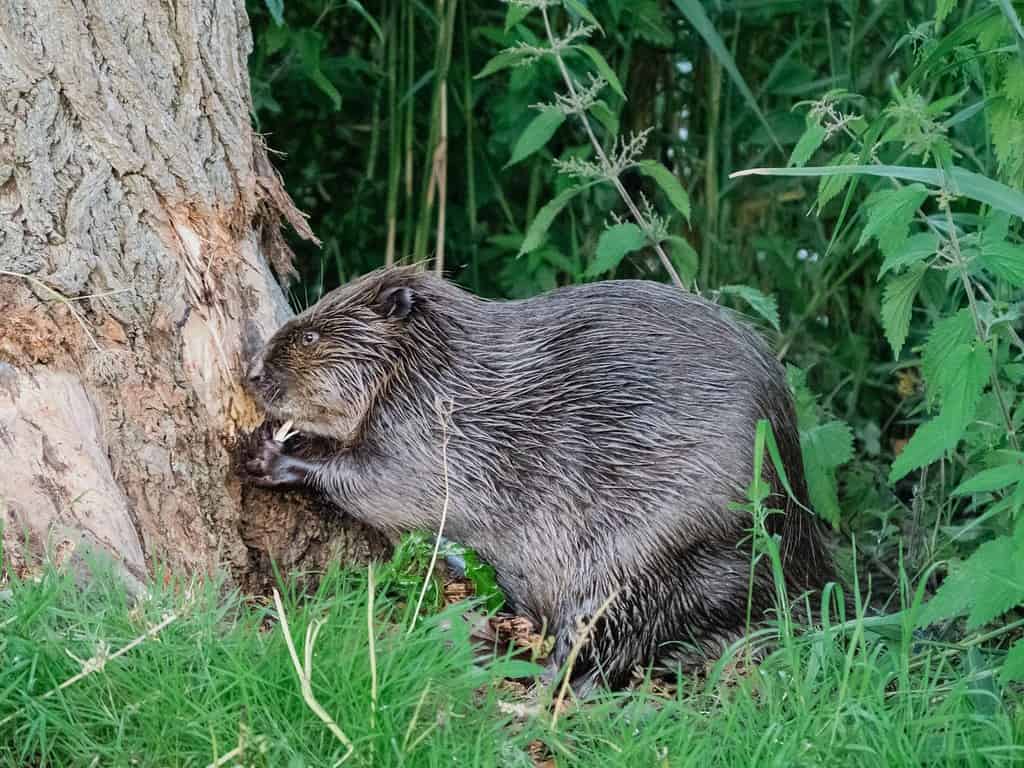
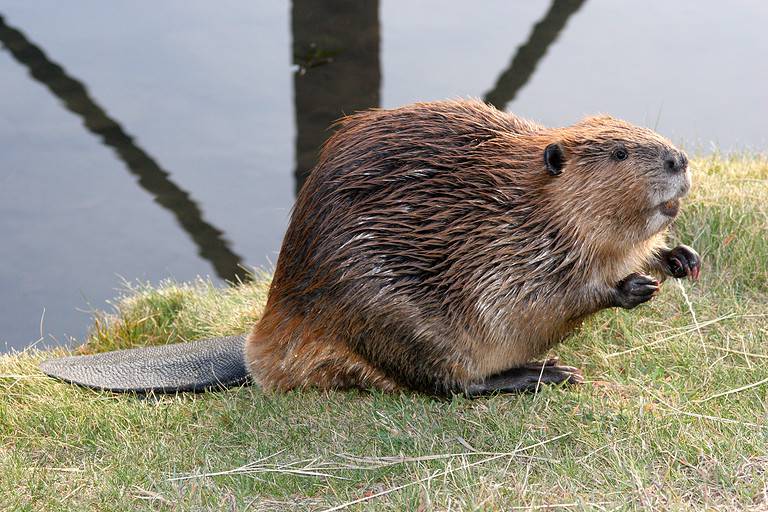
Beavers gnaw on trees for food, to keep their teeth healthy, and to create a living space.
©Dolfilms/Shutterstock.com
The reason that beavers are reliant on trees is as follows:
- The inner bark of a tree is a beaver’s food source
- Gnawing on trees keeps a beaver’s teeth sharp, but more importantly, the right length, given the teeth never stop growing
- Beavers use trees to create dams and lodges
- Trees are cut down and stored for the winter, submerged near beaver lodges
Through their dam-building and tree-removal skills, beavers are engineers of their ecosystems. They keep the wetlands they live in healthy and diverse, creating an ideal habitat for all that lives there.
How Do Beavers Ensure Trees Will Fall in the Right Direction?
Just as loggers or arborists are skilled when it comes to safely knocking down trees, beavers are as well. With their strong teeth and strategic gnawing, beavers are in control of how a tree falls.
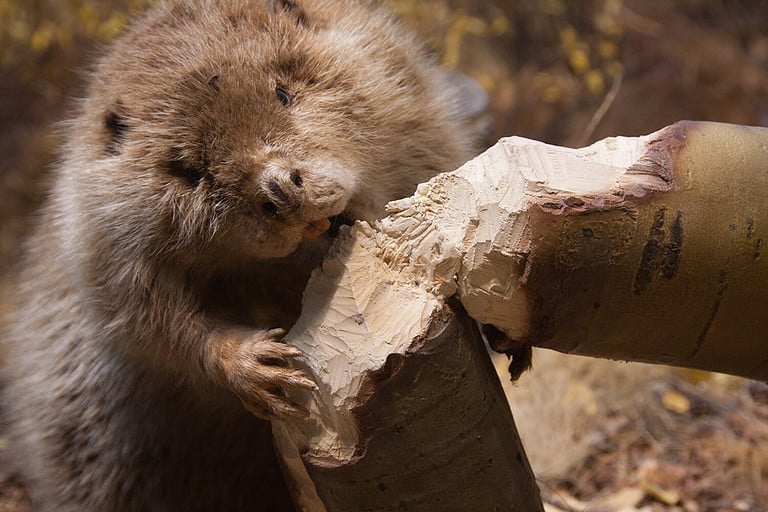
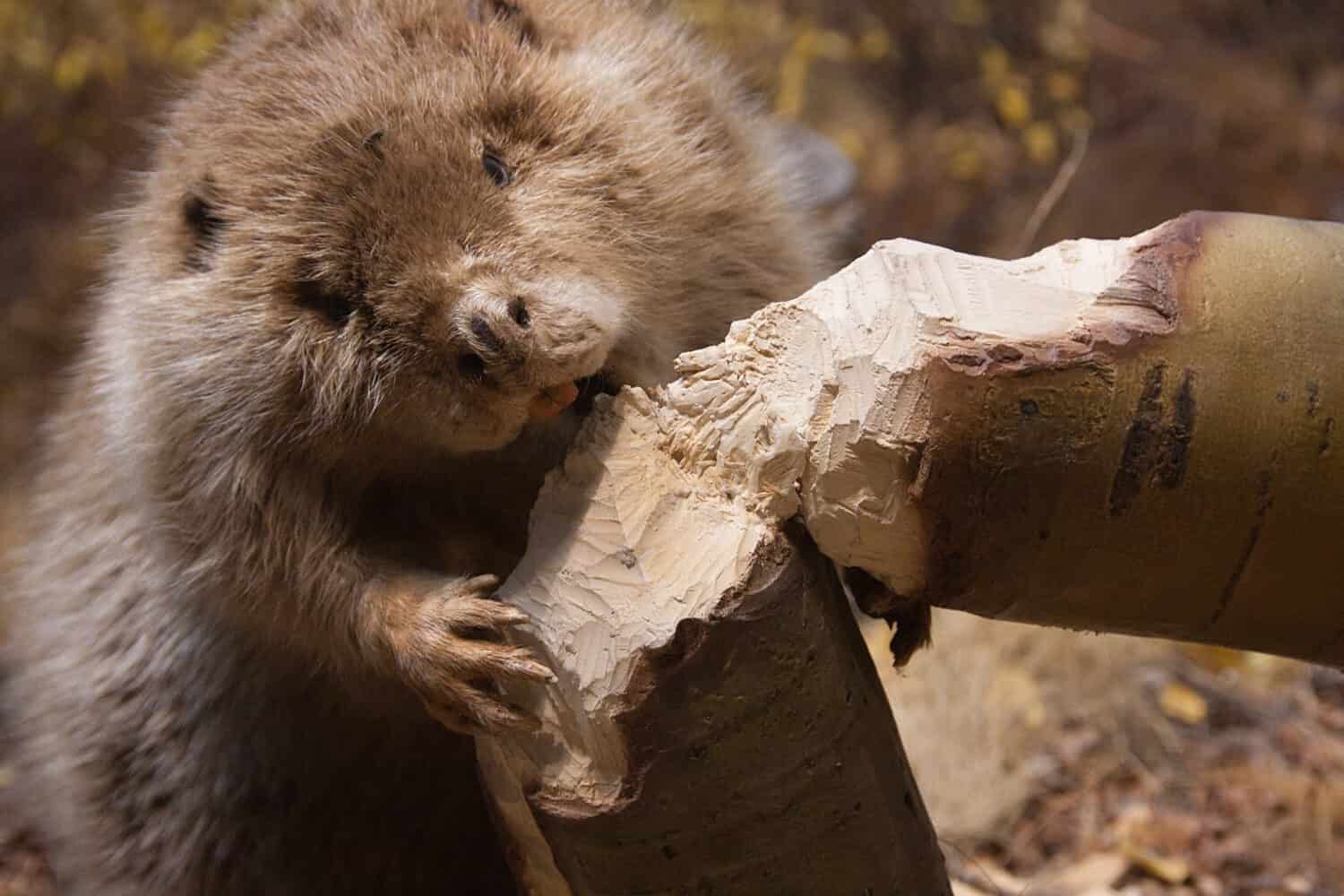
As beavers bring trees down to build dams, they do not want to work hard after taking the time to gnaw through a tree. Consequently, they will choose trees that are within 100 feet of water to fell. Beavers work in a circular motion around the tree, first stripping off the bark. They then begin to remove the softer inner bark with their teeth.
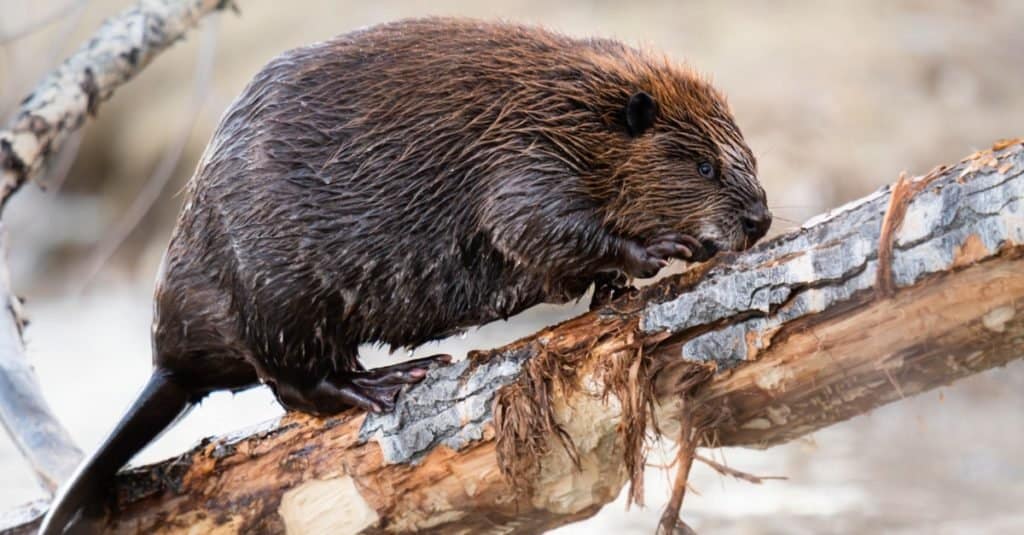
Beavers chew through a tree, ensuring it falls toward the water to make their engineering work easier.
©Ghost Bear/Shutterstock.com
The tree becomes weaker as more of it is removed by the beaver. As the beaver works its way around the tree, the largest portion of the tree that will be gnawed away is that which is closest to the water. This will ensure that the tree falls toward the dam being built.
Once the tree falls, the beaver will bite through sections of it to make it into smaller, more manageable pieces. These are then transported to the building site and integrated with the other sticks and logs previously collected.
How Long It Takes for a Beaver to Knock Down a Tree
The time it takes a beaver to gnaw through a tree depends on the type of tree and its diameter. Size does not deter a beaver. However, it will take more time for the beaver to complete its job.
A typical timeframe for a beaver to knock down a tree includes:
- Small trees, ranging from five to six inches in diameter: Eight minutes to 50 minutes
- Medium trees, ranging from 10 to 12 inches in diameter: Several hours to eight hours
- Large trees, ranging from 24 to 30 inches in diameter: Days to weeks
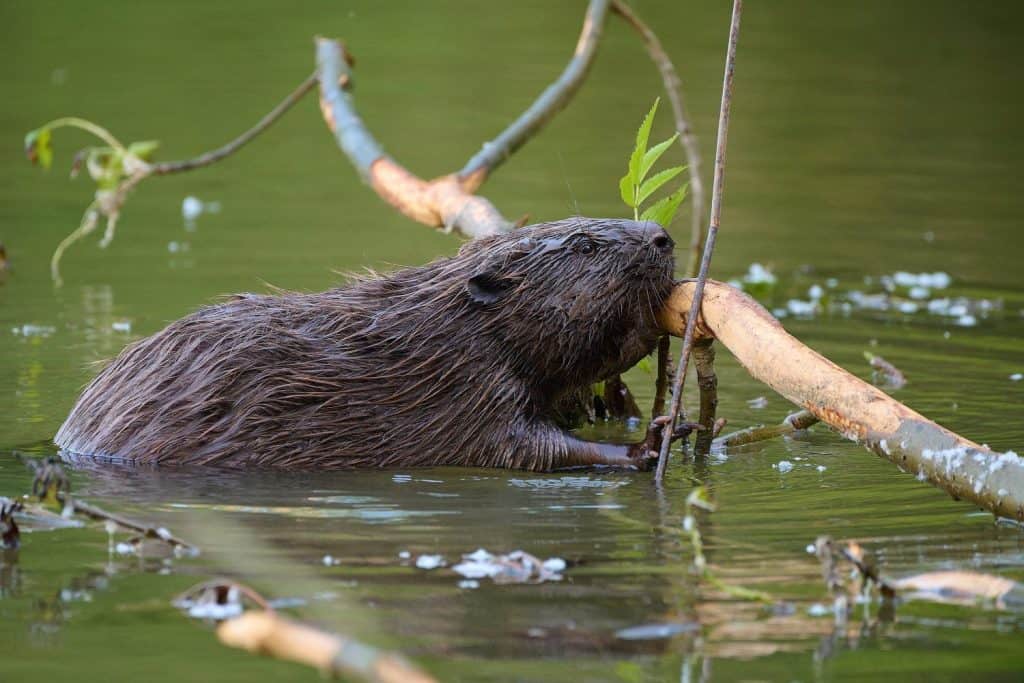
It can take a beaver several hours to weeks to bring a tree down.
©Tomas Palsovic/Shutterstock.com
In addition to the size of the tree, there are other factors to take into consideration when it comes to how quickly a beaver can chew through a tree. Everything from the hardness of the tree to the experience and tooth health of the beaver comes into play in determining how quickly a beaver can chew through a tree.
It takes experience and skill to knock down a tree. The more trees a beaver gnaws through, the quicker it will become.
Beavers Will Avoid Certain Trees if Possible
Beavers choose trees based on how easy they are to gnaw on. This means that if the effort far outweighs the reward, beavers will leave a tree alone.
Beavers tend to avoid the following types of trees if possible:
- Trees that are too hard to gnaw through
- Trees with low nutritional value
- Trees that have too much of a chemical taste
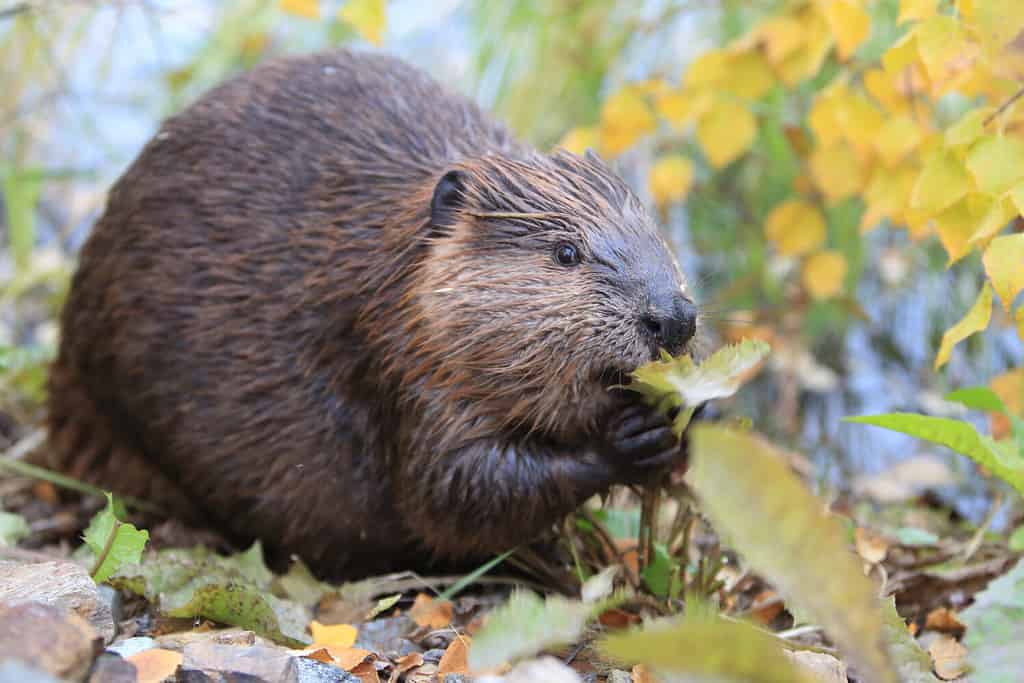
If possible, beavers will avoid hardwood trees, those with low nutritional value, or those with a chemical taste.
©Frank Fichtmueller/Shutterstock.com
Examples of trees that beavers often avoid include pine, fir, oak, hickory, and some willow species. However, if there are not many options and beavers are hungry, or if a tree happens to be near the water and can be used for building, preferences may go out the window.
Beavers are opportunistic when it comes to tree selection. While they would prefer to work smarter, not harder, to topple a tree, that is not always possible. Therefore, in beaver territory, almost no tree is completely safe.