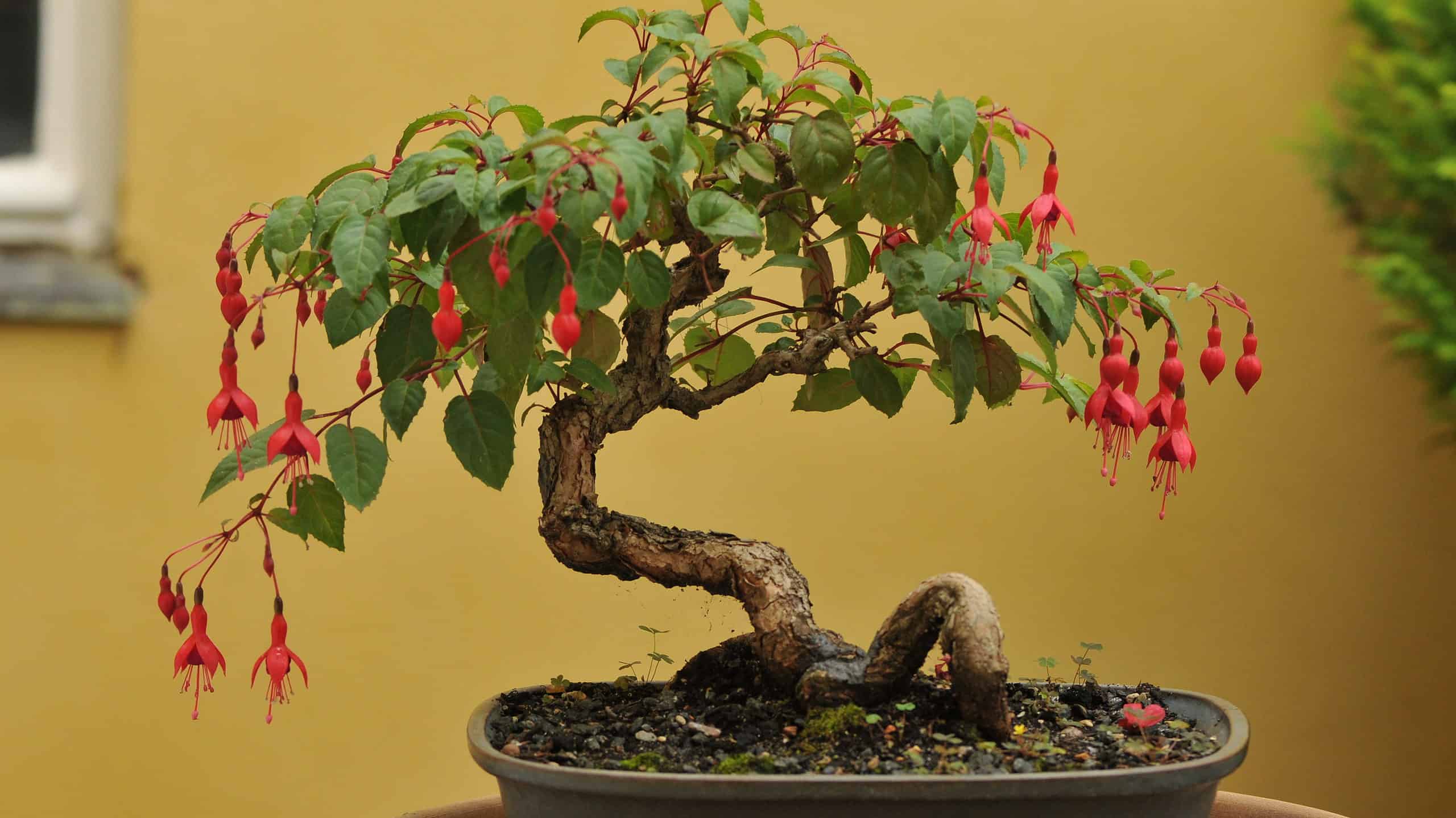

Almost any species of tree or shrub could technically be grown and shaped as a bonsai. Most commonly, folks might think of evergreen trees like cedar or fir, but the evergreen perennial fuchsia is an excellent and beautiful option for growing as a bonsai.
The stunning flowers offer incredible color while the tree itself is modestly easy to grow and maintain, as long as you have some time to dedicate to your art. The trees are native to warm climates (think the Caribbean) and high humidity, so your environment will also impact whether or not this will be a great species for you.
Let’s take a closer look at the fuchsia bonsai and see if this stunning bloomer is right for you.
What Makes Fuchsia Good for Bonsai?
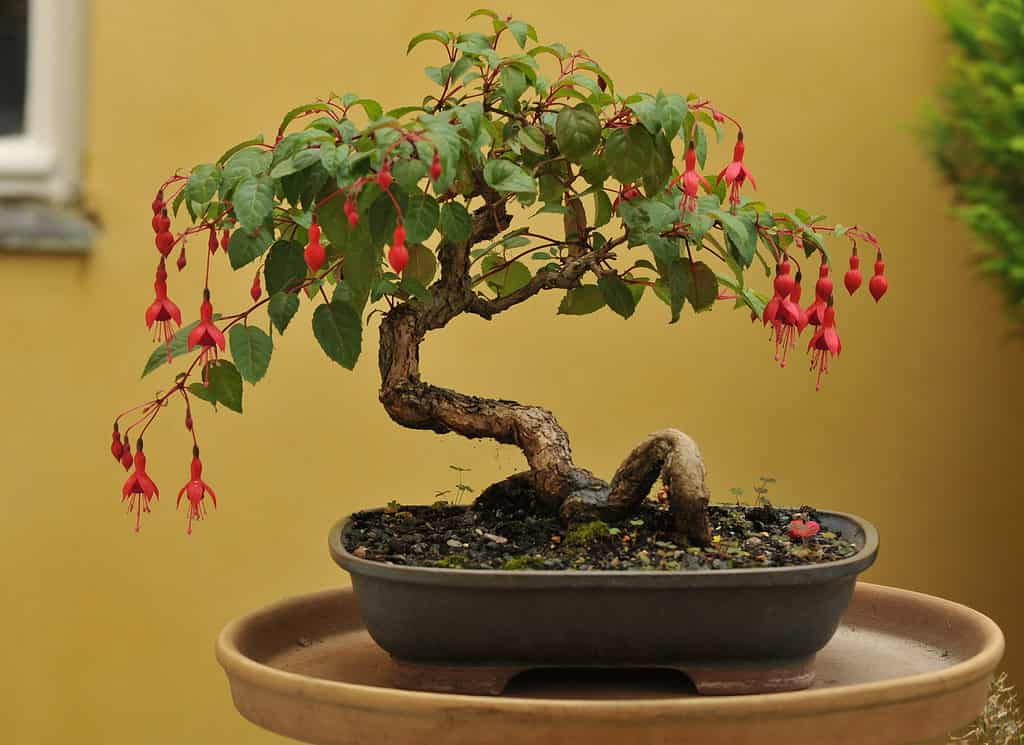
Stunning fuchsia plants make for excellent bonsai partially for their beauty.
©pytralona/Shutterstock.com
One of the reasons fuchsias make for excellent bonsai is that they are fast-growing trees or shrubs and are evergreen. They have vibrant coloring flowers that add to the aesthetics of any space and they are moderately easy to care for. They do require a good bit of attention, but the kinds of attention an enthusiastic beginner may take on.
Fuchsia Classification
Fuchsia is actually a genus of flowering plants that has over 8000 species within it (though some list only 3000 variants). Generally, when folks talk about fuchsia bonsai, they are speaking of the Fuchsia triphylla, one of the species that is most commonly used in the bonsai art. You will also find Fuchsia microphylla and Fuchsia magellanica are commonly used. The flowering plant is considered a shrub or small tree, depending on the species within the genus. They belong to the Onagraceae family.
Fuchsia Description

Stunning fuchsia bonsai have flowers in many shades.
©Walter Pall/Shutterstock.com
The fast-growing shrub or small tree known as fuchsia are an evergreen or deciduous species that typically live about 10 years. They have leaves that grow 1 to 2 inches in length, though the species will determine the size as some have larger leaves. They produce vibrant pendulous flowers that are tubular or bell-shapes, usually in colors ranging between red, pink, and purple, though occasionally white flowers are found as well. The flowers are where we get the name of the color fuchsia.
Origins and History of Fuchsia
In the late 16th Century, the first fuchsia was documented in the Dominican Republic, on the isle of Hispaniola. French monk and botanist, Charles Plumier, was exploring the Greater Antilles, on his third expedition, when he came across the plant. He named the species after the German botanist Leonhart Fuchs. This discovered species was the Fuchsia tripylla, one of the most commonly grown species in the fuchsia family.
The plant was introduced into cultivation, but it took until 1929 for the American Fuchsia Society to be founded. The species were exchanged between nations and ultimately the popularity of the plant blossomed, and more and more hybrids were created as other species were discovered.
Varieties of Fuchsia
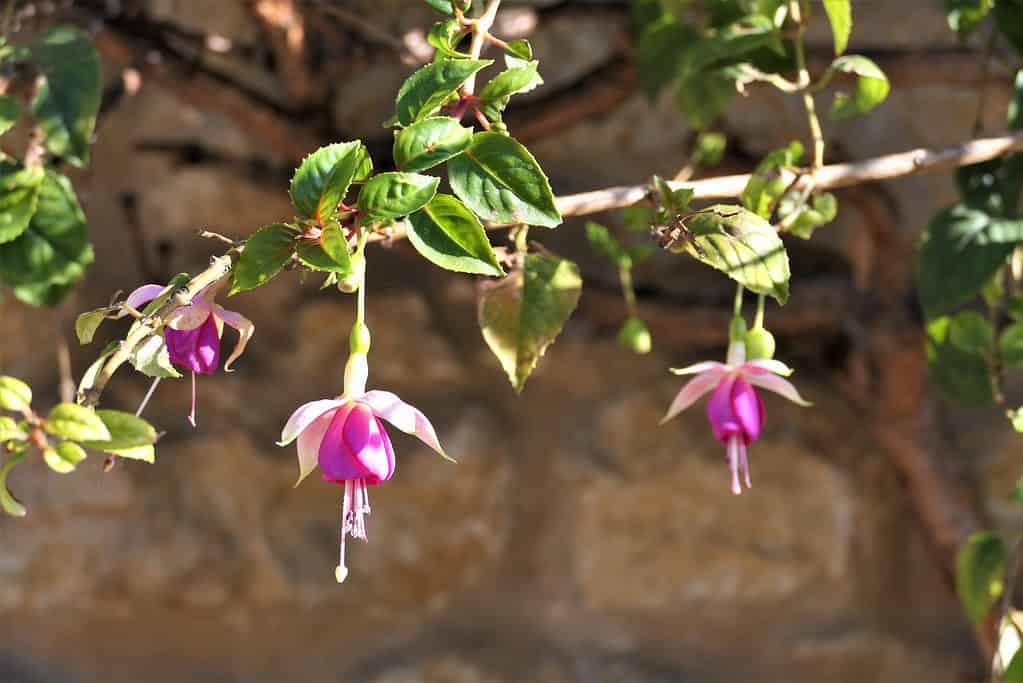
Fuchsia flowers have a distinctive shape.
©goumi/Shutterstock.com
With so many varieties, literally thousands, there are more species and variants than we could possibly speak of in the scope of this article. The primary varieties used in bonsai is the Fuchsia triphylla, Fuchsia microphylla, and Fuchsia magellanica so they likely will be the easiest to find for your own bonsai growing.
Care Notes on Fuchsia
Every species used in the bonsai art has special care instructions to follow for the healthiest, happiest plants. Before you choose one, be sure to determine if the requirements (such as lighting and watering needs) suit your schedule and lifestyle.
How to Grow a Fuchsia Bonsai Tree
Growing a bonsai, no matter the species, requires certain kinds of special instructions, even the easiest species. Most (if not all) fuchsia species and varieties require the same basics of care.
Planting Location
Fuchsia bonsai should be grown outdoors for most of the year. During winter months, however, they should be brought indoors. They should be placed in bright sunny spots, both indoors and out, with some shade in the afternoon so as not to scorch the plant.
Lighting
Fuchsia bonsai require a fair bit of direct light, though they need shade protection in heat and generally do best with shade protection in the afternoon. When they are placed indoors, they should be kept near windows or grow lights but kept away from drafts and air vents.
Temperature
Fuchsia bonsai trees need to be kept between 48- and 53-degrees F in wintertime and kept in shade when temperatures reach into the upper 70s. They should not be in temperatures exceeding 80 degrees F.
Humidity & Watering

The distinctive shape of the fuchsia blooms may change slightly, depending on the variety.
©Evgeniya Uvarova/Shutterstock.com
Because they are tropical plants, fuchsia require higher humidity than many species of bonsai. To help with this, whether kept indoors or out, you can mist the leaves with water daily, particularly in hot months and when kept indoors. You may also keep them in bathrooms with showers, as long as they receive enough light.
They also require plenty of water throughout the spring and summer, with less frequent waterings in wintertime. Be sure to not let the roots dry out, though, in any season, as this may harm the tree.
Feeding
You should feed your fuchsia bonsai from spring to autumn, never in winter. Feed them every two weeks spring, summer, and fall. Generally, follow the instructions on the package for your bonsai fertilization. You may opt for either liquid or pellet food, depending on your particular care style and preferences.
Pruning & Shaping
Because fuchsia are fast-growers, pruning and shaping them is an important part of maintaining them as bonsai. You can prune and shape them any time of year, since they are evergreens, though you don’t want to prune too deeply in spring or you’ll prevent flowering.
Shorten branches down to one or two pairs of leaves. Prune consistently throughout growing season to prevent the plant from getting too large. Do weekly pinching to keep new growth healthy and encouraged toward branching instead of producing larger leaves. Avoid pruning new shoots to keep flowers blooming all season long.
Wiring and Pinning
You may wire and pin fuchsia bonsai, as well, depending on the style of shaping you wish to do. You should start the process when the branches are young and flexible, using soft aluminum wire to avoid scarring the bark and branches.
You may pin the branches lower or higher, as needed, using wire that is larger in gauge than the space is between the branch and trunk. Position the wire by pushing one end of the branch and the other end into the trunk to create the desired shape. Wire during the prescribed season for the safety and growth of your fuchsia bonsai.
Re-potting
Every one to two years, your fuchsia bonsai needs to be re-potted in the springtime. Prune the roots to reduce and keep the roots in healthy shape, encouraging growth without overexpansion, and repot into healthy bonsai medium.
Gradually increase the size of your bonsai pot each year.
Common Problems of a Fuchsia Bonsai Tree
Fuchsia bonsai typically have fives primary enemies that attack them when they’re vulnerable. Caterpillars and moths, spider and gall mites, and aphids are frequent nibblers on fuchsia bonsai trees. To treat for these issues, use a gentle, non-toxic pesticide.
They may also be attacked by mildew and mold when the soil becomes too wet or don’t have proper air circulation. To combat this issue, first deal with the soil by making sure the pot has proper drainage. Stop watering for a bit until the soil is nearly dry (but not totally). If the soil is severely wet, you may need to clean the roots with a root rake and re-pot early, using new soil that is only lightly moist. Then, place the bonsai in a location where it will not stagnant or be rained on.
How to Propagate Fuchsia Bonsais
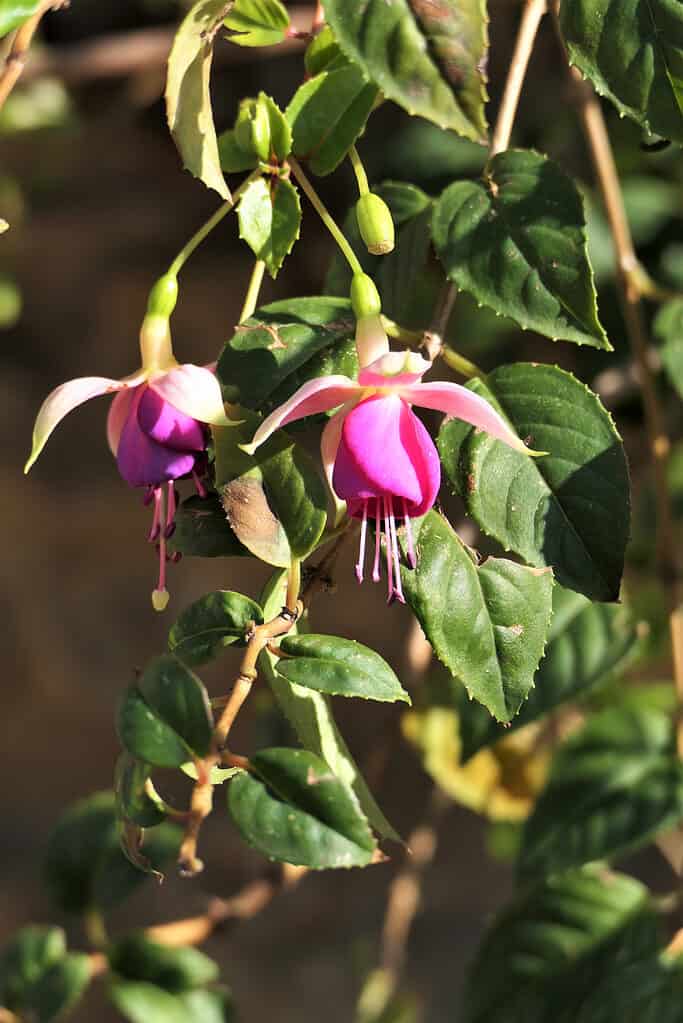
Taking cuttings from full sized fuchsias works well for creating fuchsia bonsai.
©goumi/Shutterstock.com
There are two primary ways that bonsai enthusiasts propagate fuchsia bonsai. The first is rooted cuttings, the second is using an established plant and shaping it into a bonsai. Depending on your care and growing style, either may be equally useful a choice.
Rooted Cuttings
- Ensure the plant you’re taking cuttings from is healthy and has been watered within the past several hours.
- Take the tip cuttings from new growth, about three-quarters of an inch long.
- Plant the cutting in peat-based compost and add some perlite for best results.
- Water the cuttings immediately afterward.
- Maintain watering every day in the morning; do not water at night.
- If the soil is already quite moist, check the next morning instead and water then.
- Once the cuttings have rooted, transfer them into a 2-inch pot with drainage holes.
- Maintain watering as usual.
- When the roots start to poke out of the drainage holes, repot into larger pots.
Established Plants
- Visit the nursery or garden center to find your fuchsia plant.
- To form an established plant into a fuchsia bonsai, you’ll want to start with a smaller plant that has small flowers and leaves to begin with.
- Remove the topsoil from the pot the plant comes in and gently ease out the root ball.
- Place into the proper pot, with proper drainage holes and all new soil.
- Prune the root ball if necessary, but only gently.
- Prune away all flowers and foliage, remove unwanted stems, and cut back lateral stems to about a third for the plant size and shape you intend to grow.
- Water as usual.
- After four weeks, feed high nitrogen food and begin daily misting or spray the plant, ideally with rainwater.
Fuchsia Bonsai Tree FAQs
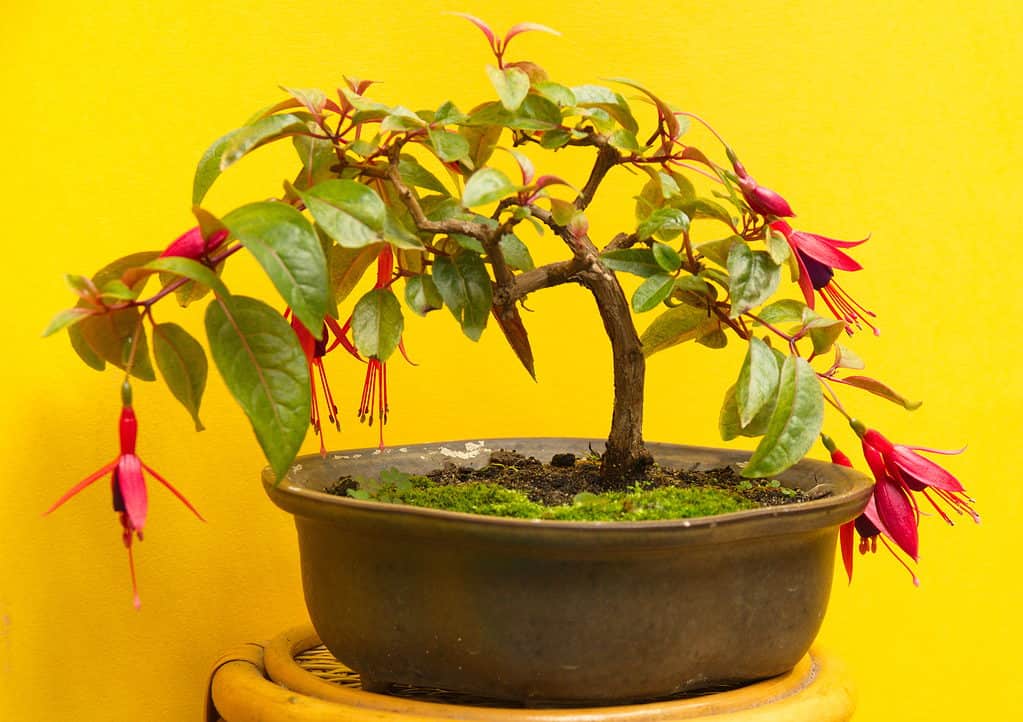
The flowers are still fairly large, despite the smaller size of the bonsai.
©pytralona/Shutterstock.com
How Long Does it Take to Grow Fuchsia Bonsai?
Fuchsia bonsai are fast to moderately fast growers, meaning they will likely need re-potting every one to two years. It will be a fully established bonsai within 5 years from propagation. Some of the hybrids may take longer, particularly variegated (which are not recommended for bonsai). And, of course, all of this is dependent on the level of care that each fuchsia receives along the way.
Can I use any fuchsia for bonsai?
Technically, yes, you could use any variety of fuchsia for your bonsai. However, the variegated hybrids are not particularly recommended for bonsai.
Up Next:
- The 11 Best Indoor Bonsai Trees
- The 10 Best Outdoor Bonsai Trees
- 16 Best Flowering Bonsai Trees
- Discover the 20+ Different Types of Bonsai Trees