
Quick Take
- One plant on this list earned the nickname 'suicide plant,' though the reason has nothing to do with its appearance. Meet the suicide plant →
- Killing one of these plants doesn't make it safe to touch, because its sting can still last for months after it's dead. See how dead plants still sting →
- One of the most painful stings on this list comes from a plant that many people have in their own yards and mistake for a common weed. Discover the backyard stinger →
- A brush with one of these plants can trigger blurred vision, muscle weakness, and respiratory distress, all without any insect required. Explore ongaonga's severe symptoms →
Nature has a way of giving nearly every living organism a way to defend itself. This is true even of plants, as seen with common offenders such as poison ivy. While this notorious plant’s chemical compound causes unpleasant symptoms, they usually subside with basic medical care. But there are some plants out there that make poison ivy’s oily resin look like child’s play.
Stinging plants pack a punch, and itching is typically the mildest side effect of a brush with one of these organisms. Around the world, these plants cause symptoms like swelling, hives, and severe pain that lasts for months. Their bite is worse than their bark–and they rival the stings of many common pests.
Common Stinging Nettle (Urtica dioica)
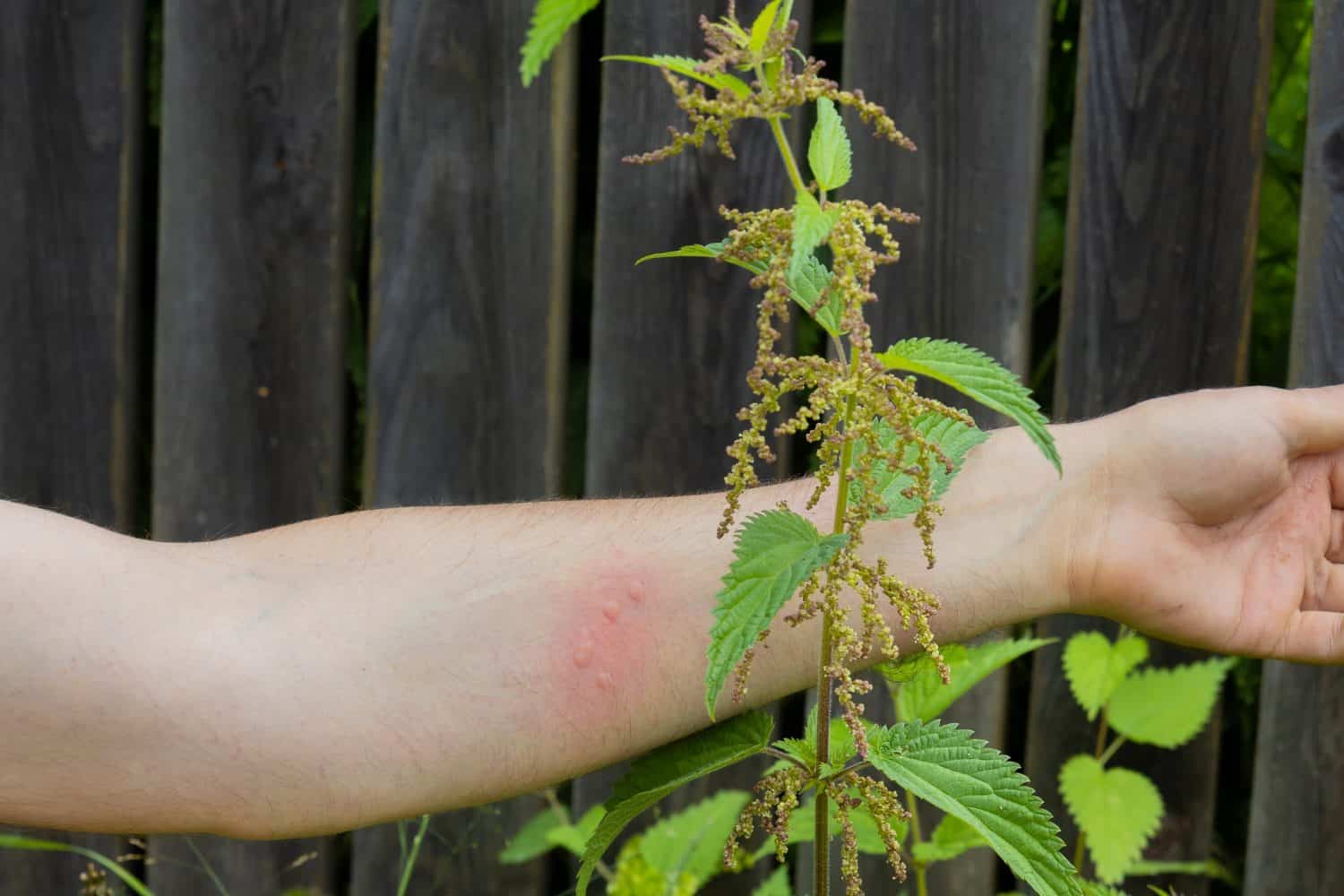
Common stinging nettle is native to North America. Many people don’t realize they have it in their yards until feeling a burning sensation several minutes after pulling it. Most times, it’s mistaken for a weed. And while it is considered a pest, stinging nettle is both painful and holistic, depending on how it’s handled.
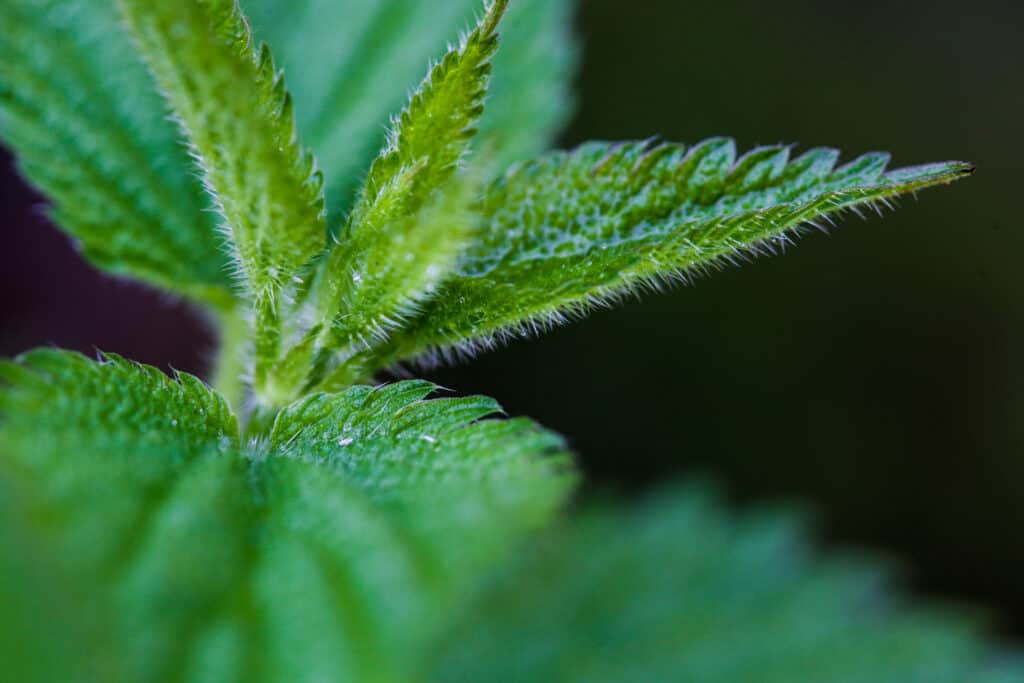
Common stinging nettle can be rendered inert by drying, boiling, or crushing leaves to remove stinging hairs.
©iStock.com/CatEyePerspective
In its raw form, stinging nettle is covered in hairs, but not all of them sting. Those that contain histamine, serotonin, and formic acid are typically longer and are found on the leaves of the plant. When these are touched, the end of a tube-like structure within the hair breaks. As it does, it releases the needle beneath, which injects toxin into the skin. The resulting stinging, burning sensation occurs when these needles pierce the epidermis, and typically continues until they’re removed.
While symptoms are usually mild, severe stings can cause blistering in the affected area. However, these nettles also contain histamines and are nutrient-dense. This makes them a popular holistic option for managing allergy symptoms, reducing joint inflammation, and supporting urinary tract health.
Tread-Softly (Cnidoscolus stimulosus)
Also known as the bull nettle, the tread-softly plant also contains histamine and formic acid within its hollow needles. However, the pain from this plant is more akin to a wasp sting rather than a nettle sting. When brushed, the hollow hairs puncture the skin and release their toxins.
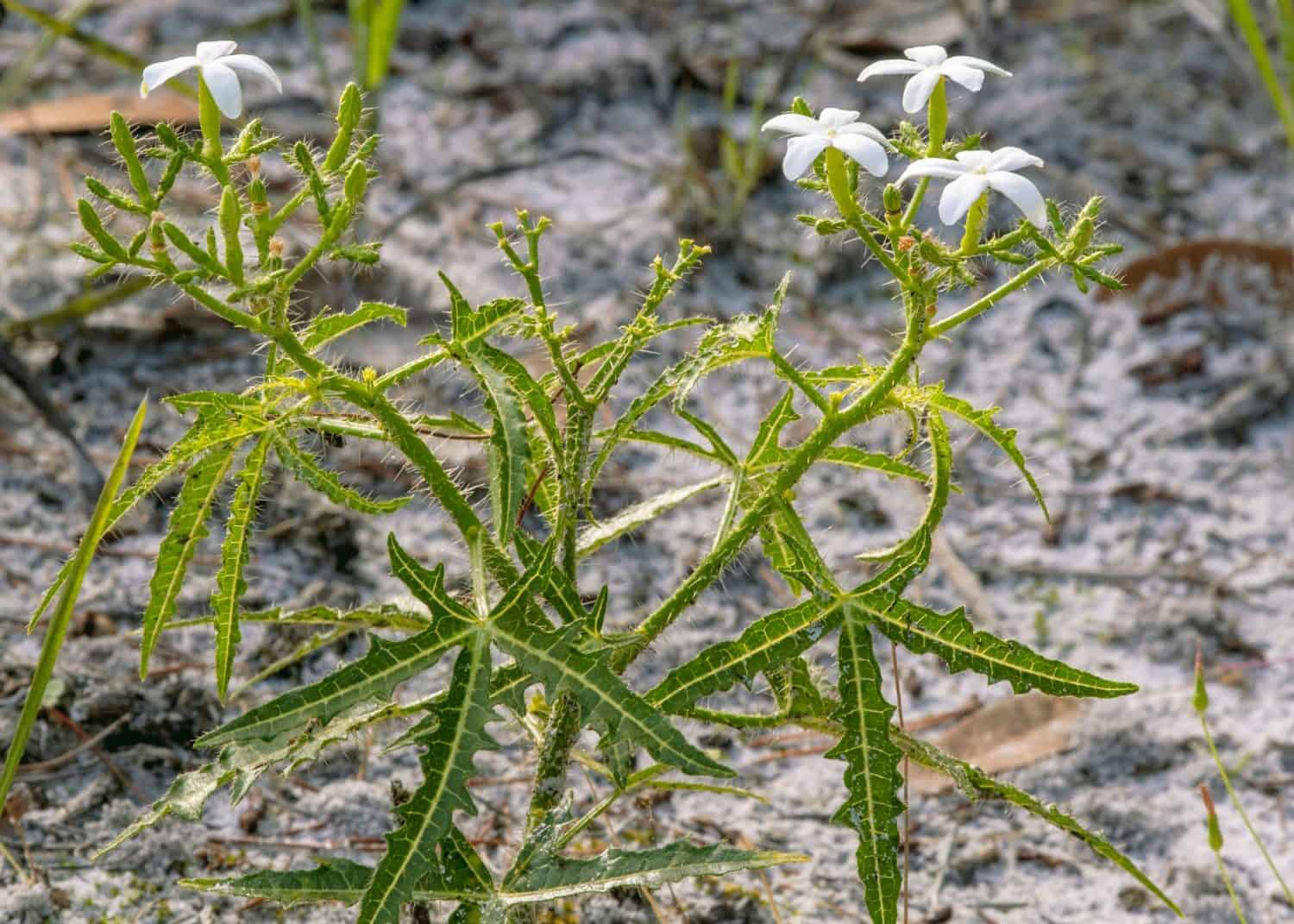
Tread-softly plants fool many people because of their beautiful white flower blossoms.
©Donna Bollenbach/Shutterstock.com
As each hair releases its chemical compound, the irritants remain lodged, causing pain, swelling, and irritation for hours. Even after the hairs are removed, a red rash soon appears, causing intense itching and burning at the site of contact. The best way to limit the symptoms is to use a piece of tape to remove the hairs, then treat the resulting rash topically.
Burning Nettle (Urtica urens)
The burning nettle lives up to its name. Similar to others in the Urticaceae nettle family, this plant releases hairs that contain histamine, acetylcholine, serotonin, and formic acid. This harsh chemical mixture targets nerve endings, sending pain signals to your receptors. This is quickly followed by histamine, acetylcholine, and formic acid, which result in skin blistering, local swelling, redness, and intense itching.
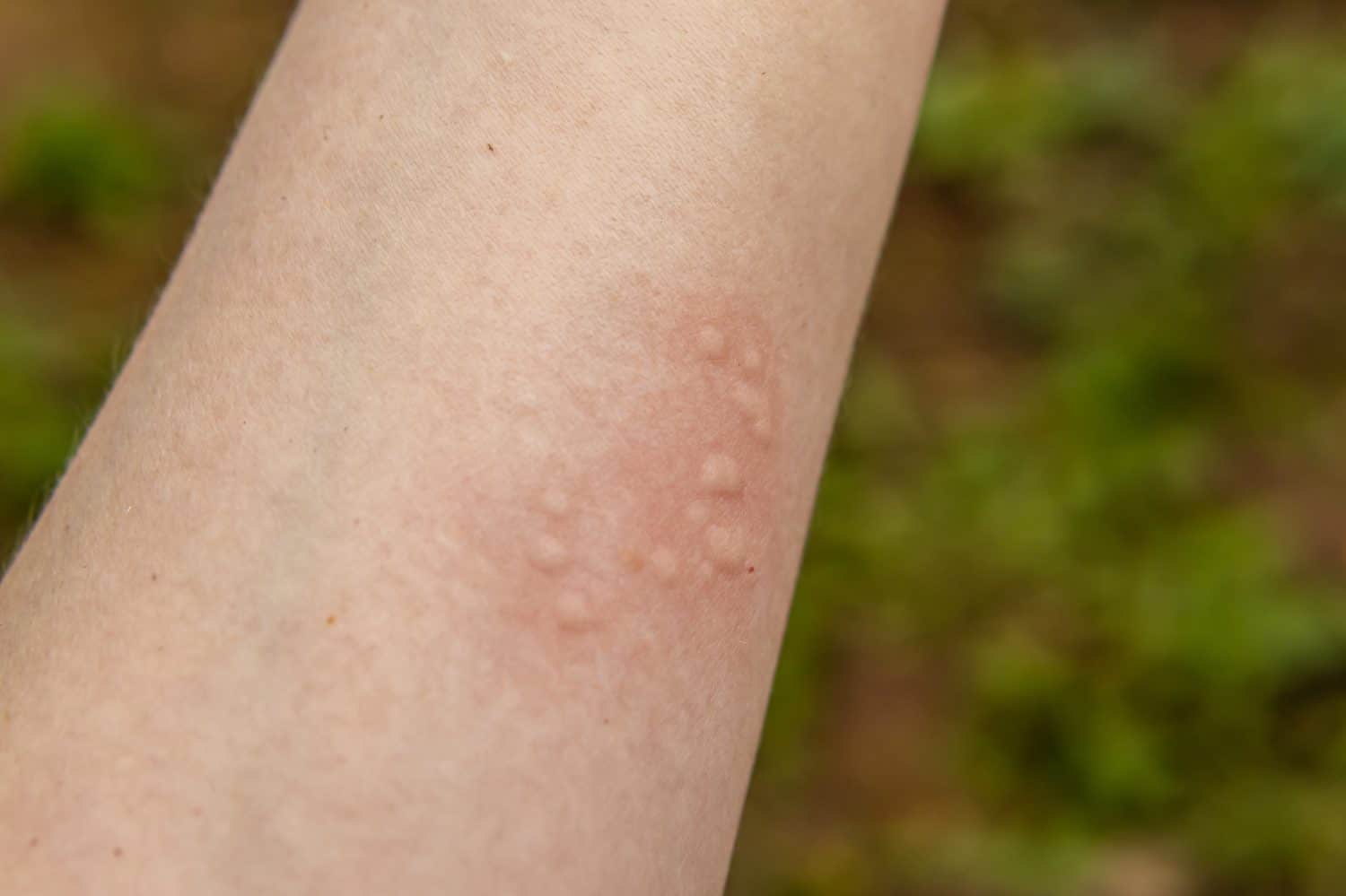
Burning nettle can leave blister-like welts in severe cases.
©Svetlyachock/Shutterstock.com
The rash from a burning nettle resembles a second-degree burn in appearance and can often feel that way, depending on the severity of contact. The best practice to remove the hairs is to avoid touching them for at least ten minutes, as rubbing the sting site can force these tiny hairs further into the skin.
After the toxins have dried, washing with soap and water, then using a wax strip or strong tape to remove nettle hairs is recommended. Antihistamine and Hydrocortisone cream are typically the only avenues for relief from this plant, along with oral antihistamines. Unfortunately, the sting from the burning nettle typically lasts for several hours. In extreme cases, symptoms can persist for up to 48 hours.
Ongaonga (Urtica ferox)
Stinging nettle is found throughout most of the world, and Ongaonga is native to New Zealand. Also known as “annoying,” “irritating,” or tree nettle, this barbed plant has larger hairs than common stinging nettle. This also means its toxin is particularly potent, with longer-lasting symptoms than the others.
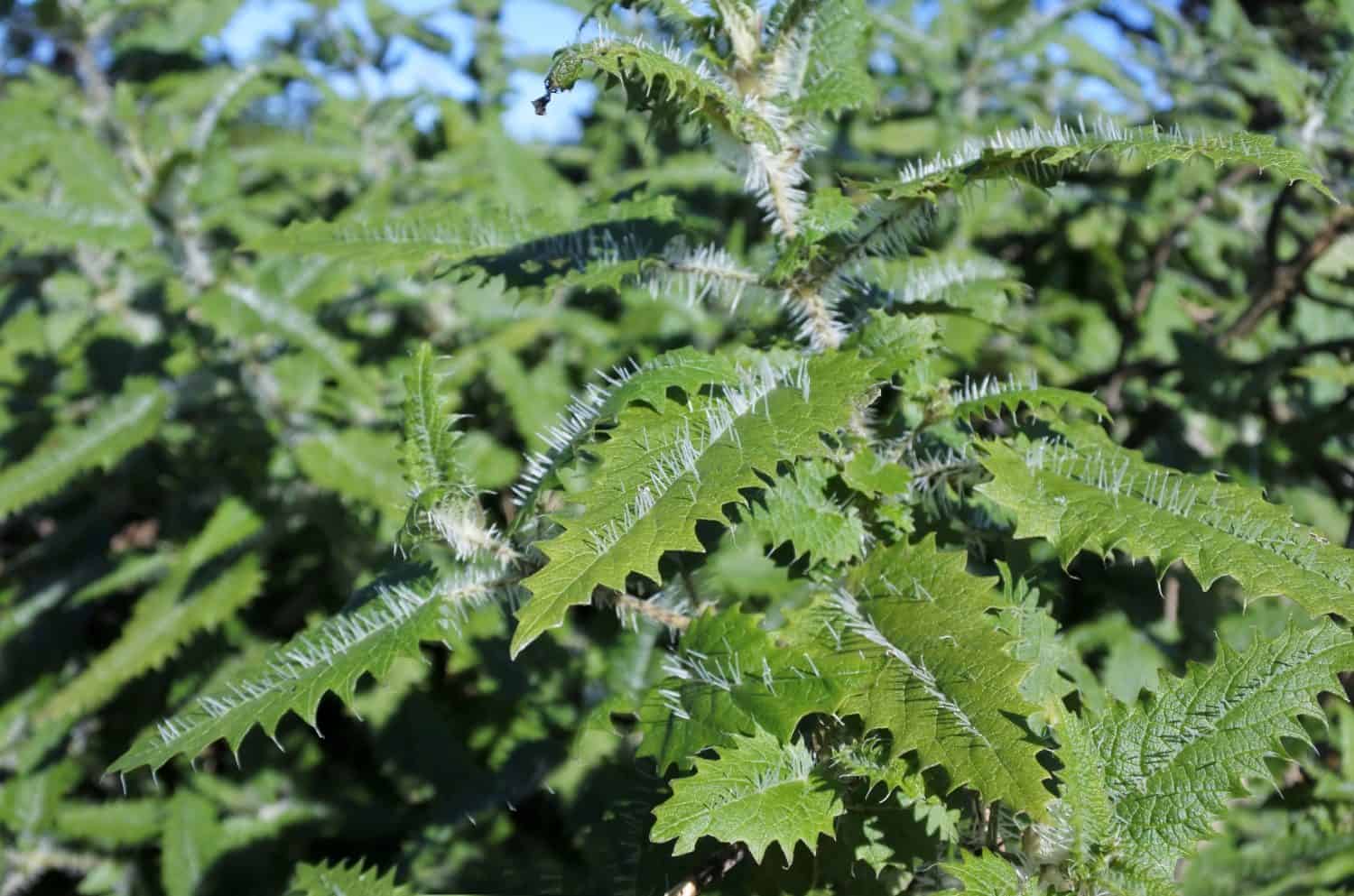
The hairs on ongaonga are visible, but people still brush them accidentally as they blend with other foliage.
©ChameleonsEye/Shutterstock.com
While the hairs are easy enough to pull out using the tape method, by the time they’ve stung, it’s too late to stop the side effects. A sting from the ongaonga plant can last days to weeks, depending on the severity of contact. These longer hairs inject a potent amount of poison, and can lead to blurred vision, muscle weakness, and even respiratory distress in severe cases. Because of this, it’s earned a reputation as one of New Zealand’s most poisonous plants.
Small-Leaved Stinging Tree (Dendrocnide photinophylla)
Native to eastern Australia, the small-leaved stinging tree, also known as the shiny-leaf stinging tree, is covered in tiny silica hairs. These are microscopic and virtually impossible to fish out of skin once a person has made contact with the tree leaves. Its shiny leaves are also misleading, causing many to touch them unaware of the stinging hairs.
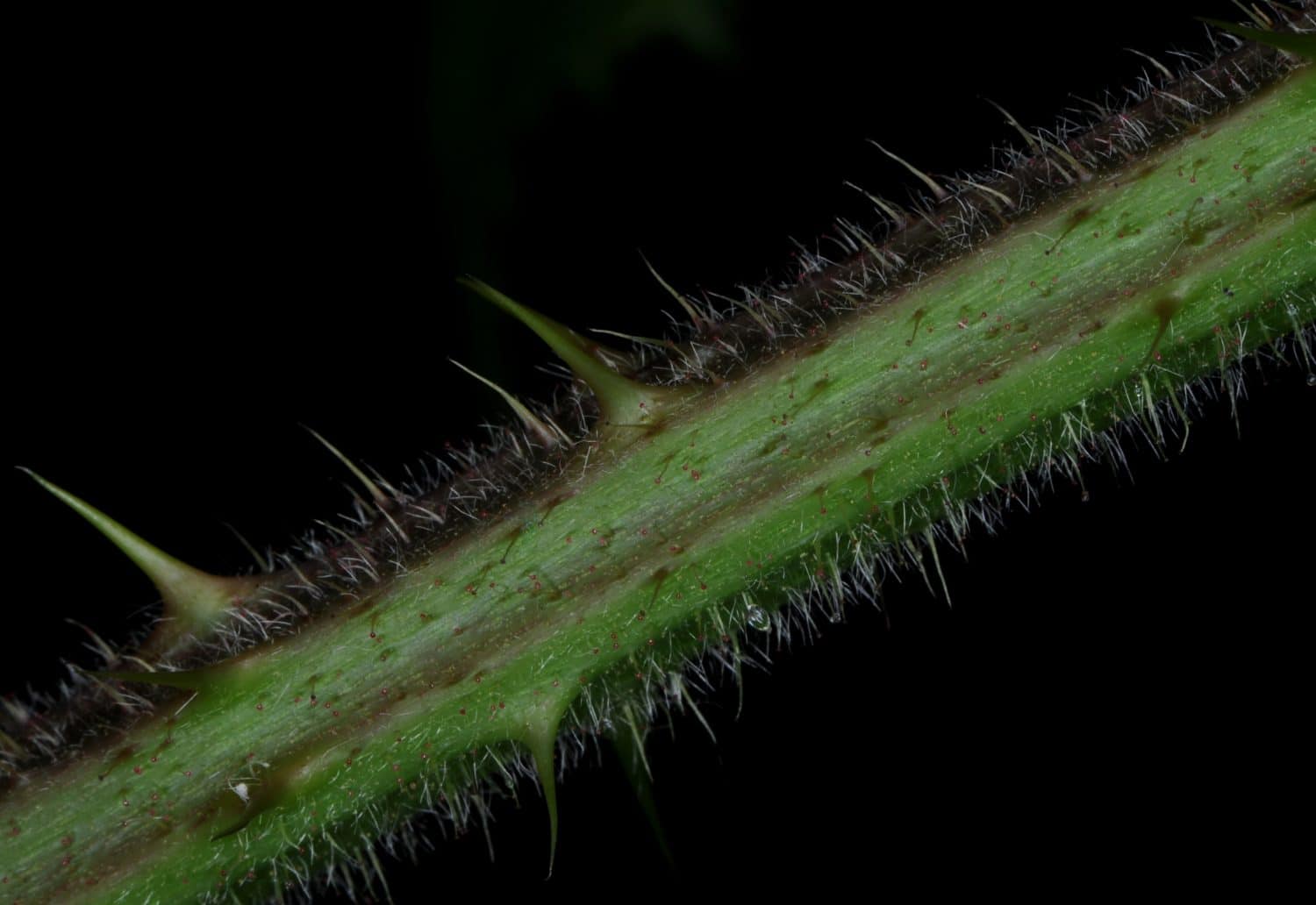
The needle-like tubes on stinging plants are the perfect delivery system for toxins.
©valda butterworth/Shutterstock.com
The tube-like structures are nature’s hypodermic needles, which inject a potent neurotoxin directly into the skin. The sting is extremely painful, feeling akin to an acid burn or electrocution. Temperature changes can also re-trigger the toxin. Some victims of the small-leaved stinging tree report recurring pain or sensitivity for weeks or even months if hairs remain embedded.
Giant Stinging Tree (Dendrocnide excelsa)
A member of the Urticaceae family, the giant stinging tree delivers a potent neurotoxin called gympietide in each sting. This neurotoxin has been described as spider-like, due to its pain level and long-lasting severity. When it is injected into the skin by hollow hairs, its miniprotein binds to sensory pain receptors, which delays the inactivation of sodium channels.
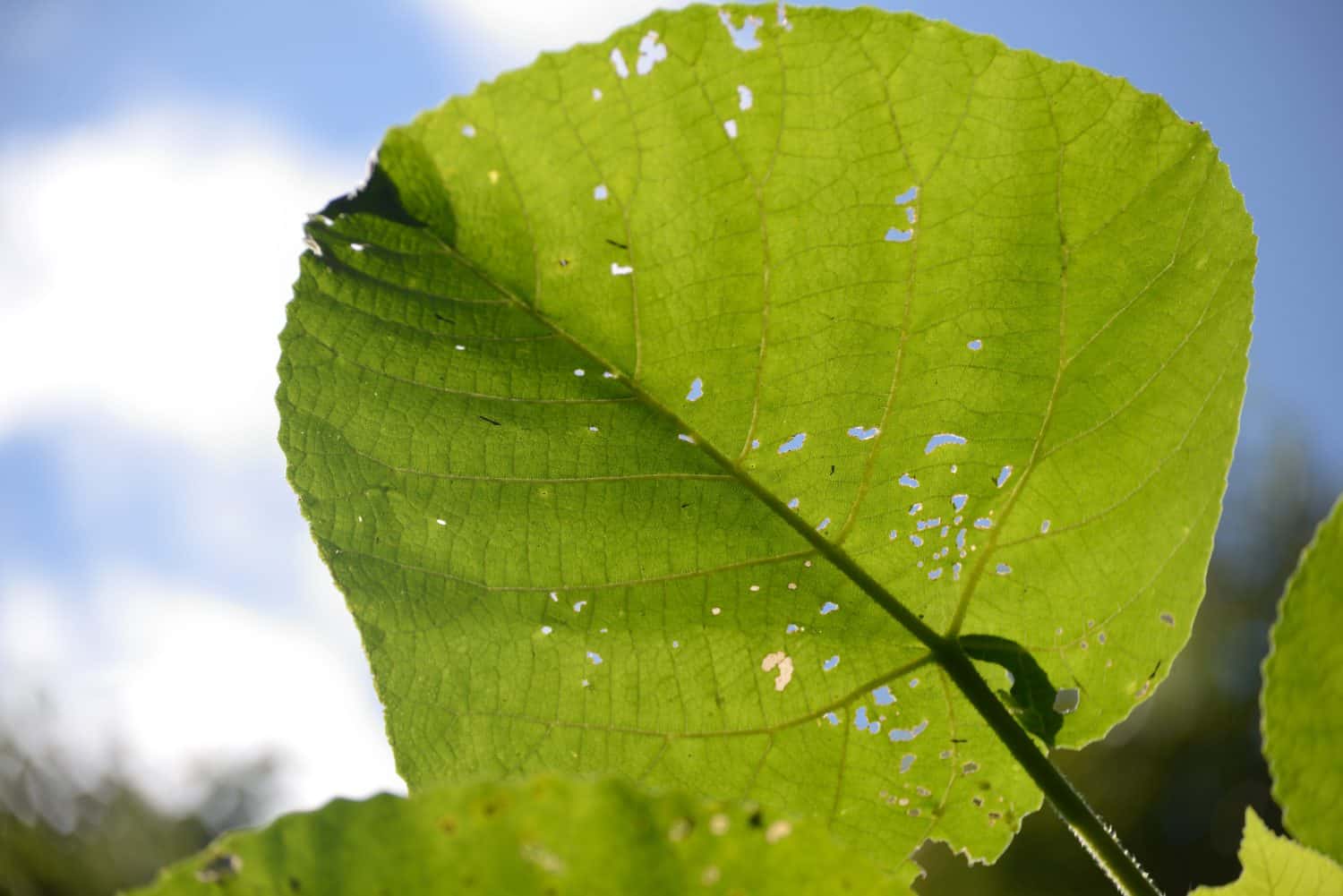
The giant stinging tree is unassuming, but can leave victims in pain for weeks.
©Lakeview Images/Shutterstock.com
This is what can cause the sting to persist for weeks, and in rare cases, even months. Unfortunately, unlike other nettle species, even dry and seemingly dead plants can still deliver an extremely painful sting. Since the genetic makeup of this neurotoxin is so stable, it continues to hold its potency long after the plant has perished.
Gympie-Gympie (Dendrocnide moroides)
Also known as the “suicide plant,” the gympie-gympie is native to Australia’s rainforests. Similar to the giant stinging tree varieties, it also contains a gympietide neurotoxin. However, the toxin found within this plant’s silica hairs is one of the most potent in the world.
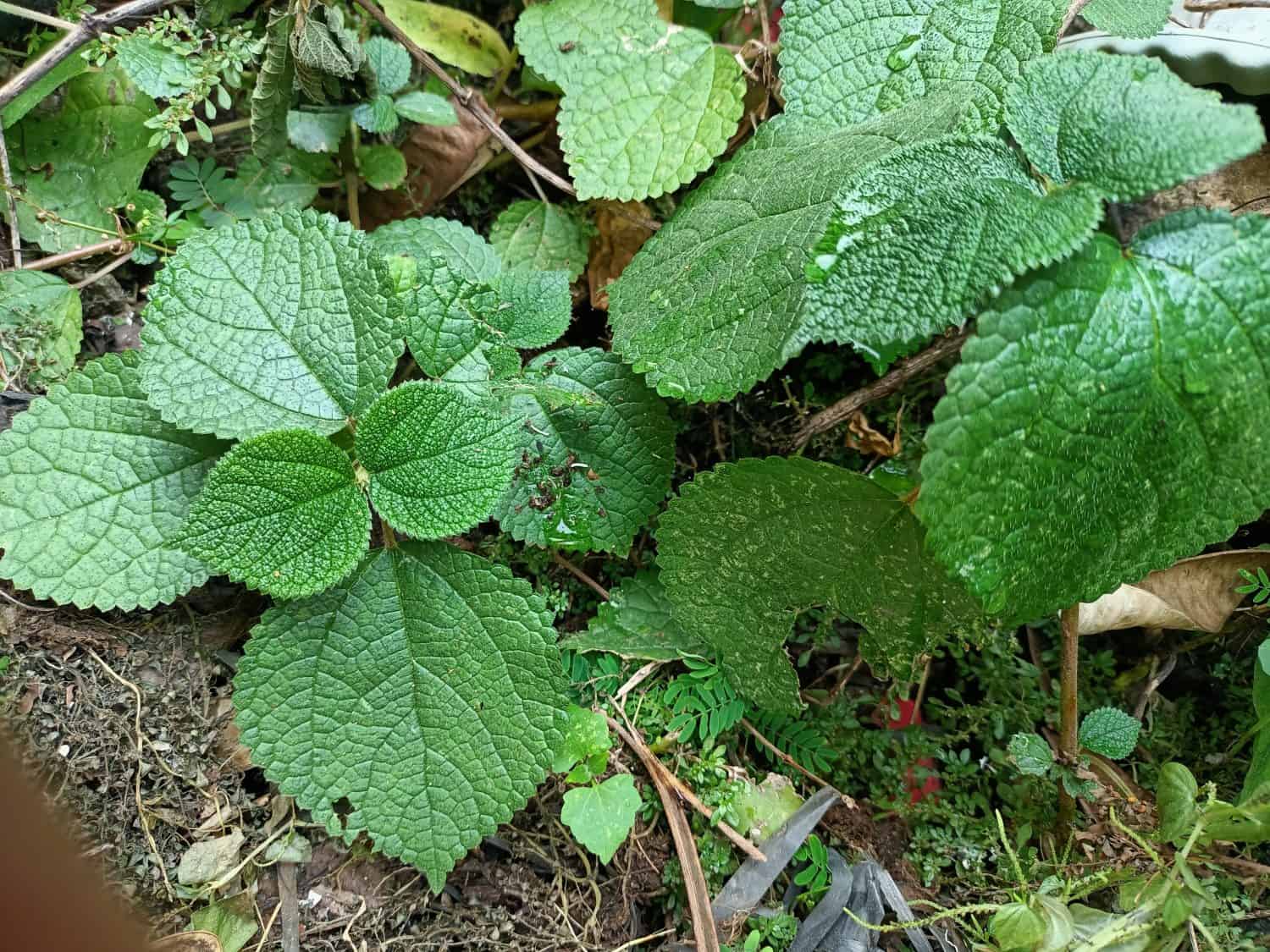
Stings from the gympie-gympie can cause pain for months with little relief.
©GMY Camera/Shutterstock.com
These small hairs can remain embedded in the skin for up to six months, which constantly triggers new waves of throbbing pain. The intense burning, electrifying feeling of being stung can only be helped, but not cured, until every silica hair works its way out of the skin. Because of this, victims may have severe reactions, including respiratory distress and severe allergic reactions.
It’s recommended that medical attention be sought out immediately after being stung by this plant so that its small hairs can be removed as soon as possible using wax strips or adhesive tape.