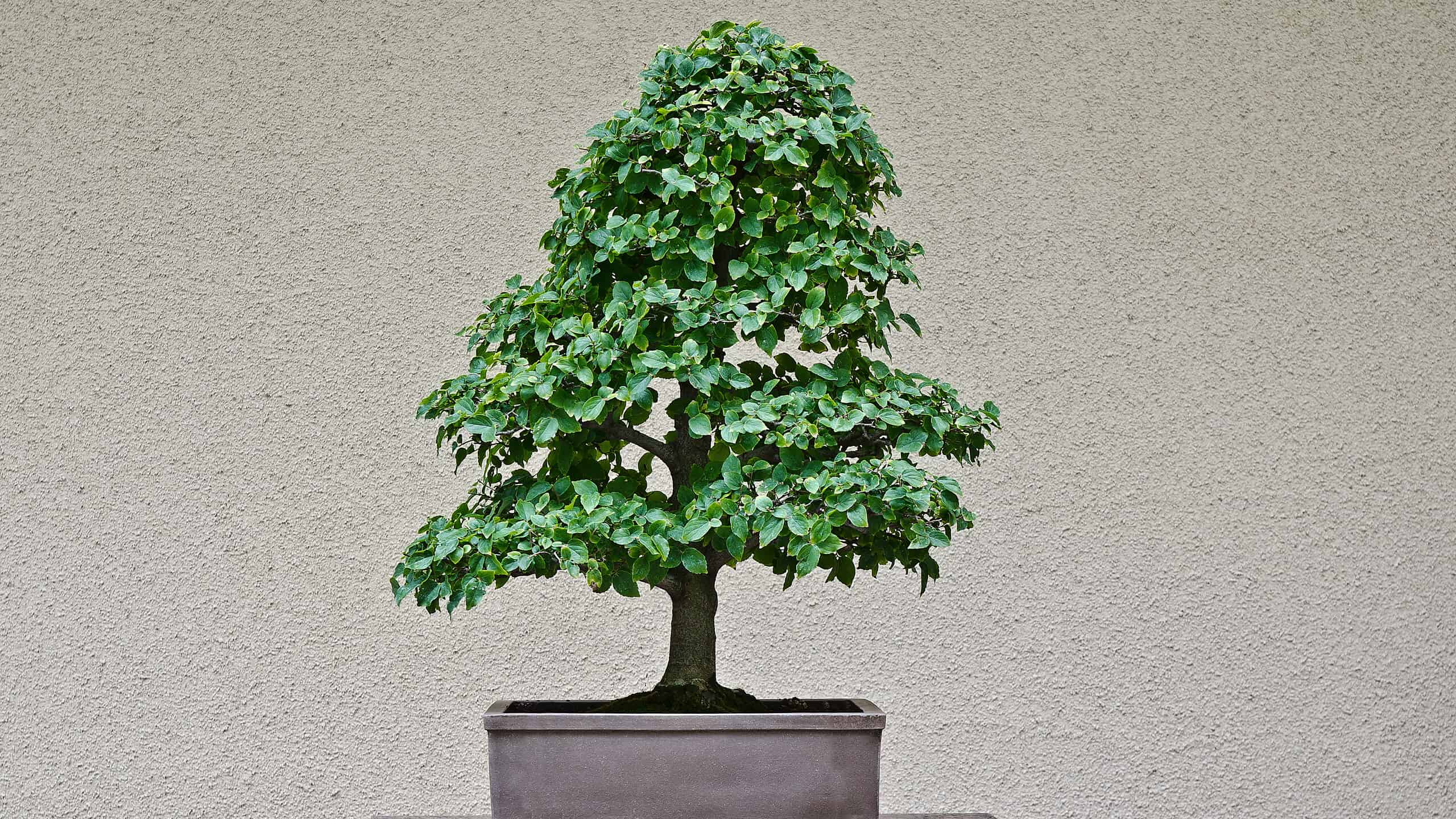

Whether you are new to bonsai or are considering adding another specimen to your collection, the hackberry bonsai tree is a good choice. These trees make for hardy specimens that are simple to care for and are suitable for a wide variety of bonsai styles. They are tolerant of pruning, are vigorous and adaptable growers, and are easy to propagate from seed or cutting.
We will cover a brief history of bonsai, discuss tips for proper plant care, and elaborate on exactly why the hackberry is such a popular choice for the bonsai garden.
| Hackberry Bonsai Tree | |
|---|---|
| Botanical Name | Celtis sp. |
| Popular Options | Chinese hackberry (Celtis sinensis), African stinkwood (Celtis africana) |
| Sunlight | Full sun, both indoors and outdoors. |
| Soil | Well-draining bonsai mix. Can include grit-sized organic material. Some akadama clay. |
| Water | The planting medium must be kept moist, especially outdoors. |
| For Beginners? | Yes, beginner friendly. Versatile plant with flexible wood, well-suited for many bonsai styles. |
| Indoors or Outdoors? | Works well either indoors or outdoors. Pay careful attention to lighting indoors and soil moisture outdoors. |
| Pairs Well With… | Well-proportioned stones and mosses. A versatile plant, well-suited for many styles. |
What is Bonsai?
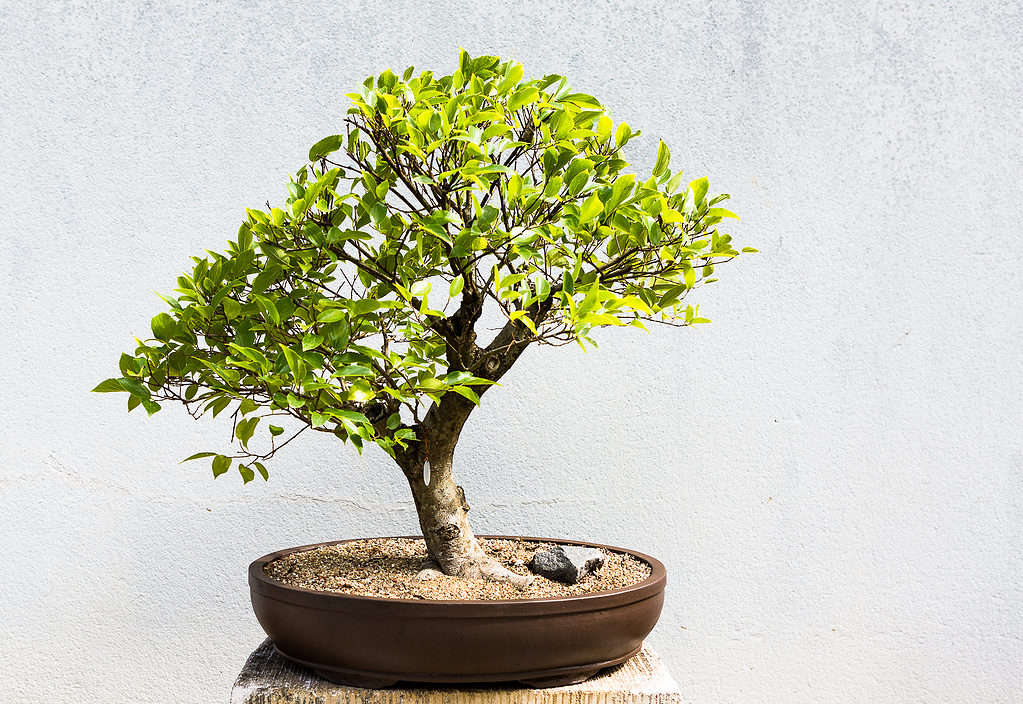
Bonsai is the art of sculpting miniature trees.
©Will Rodrigues/Shutterstock.com
The first reference to bonsai is in a Chinese scroll from the year 800 AD. By this time, the document suggests, the practice of sculpting miniature trees to create striking landscapes and singular, beautiful specimens was already well-developed, having likely been in practice for nearly a millennium prior. Its popularity has been timeless, continuing into the modern day and capturing the attention of artists, philosophers, and hobbyists all over the world.
Virtually any tree or woody shrub can be used in the ancient art of bonsai. The hackberry, though, makes for a particularly hardy, adaptable, and beautiful specimen to experiment with.
What Species of Hackberries Are Used in Bonsai?
While there are over 60 hackberry species in the genus Celtis, most of them are not used in bonsai. If you want to grow a hackberry tree to use for bonsai, there are a couple of species you will want to look into.
Chinese Hackberry (Celtis sinensis)
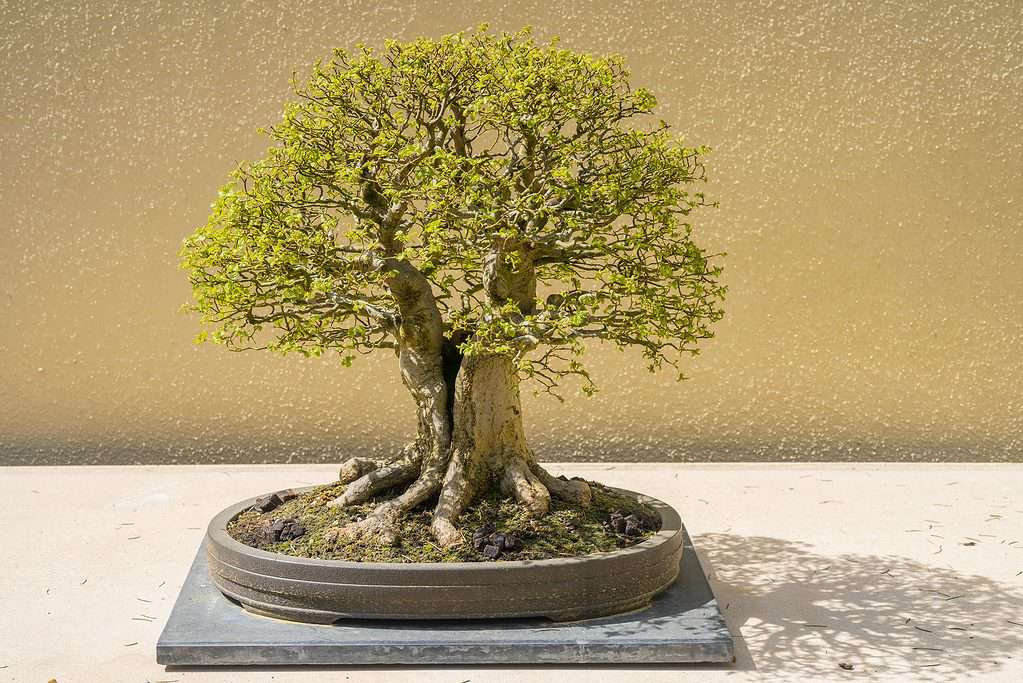
Despite its name, the Chinese hackberry is also native to Japan, Taiwan, and Korea.
©Mariusz S. Jurgielewicz/Shutterstock.com
The Chinese hackberry is the most commonly chosen hackberry to be used in bonsai. Often referred to only as the Chinese hackberry, this tree is also native to Japan, Taiwan, and Korea. When grown without restriction, the tree is long-lived. It tends to grow to heights of 40-50 feet, with a wide, naturally spreading crown. It is the translation of this character into a miniature that makes the hackberry so popular. When used in bonsai, it tends to grow a sturdy trunk with narrow branches that terminate in even finer twigs.
This hackberry is monoecious and self-fertilizing, which means that its spring flowers give way to edible, bright orange fruits in summer. Seeds can be taken from these ripe fruits and used for propagation. Celtis sinensis exhibits vigorous growth during warmer summer temperatures. Even very young trees may need to be repotted as frequently as once per year once established.
White Stinkwood (Celtis africana)
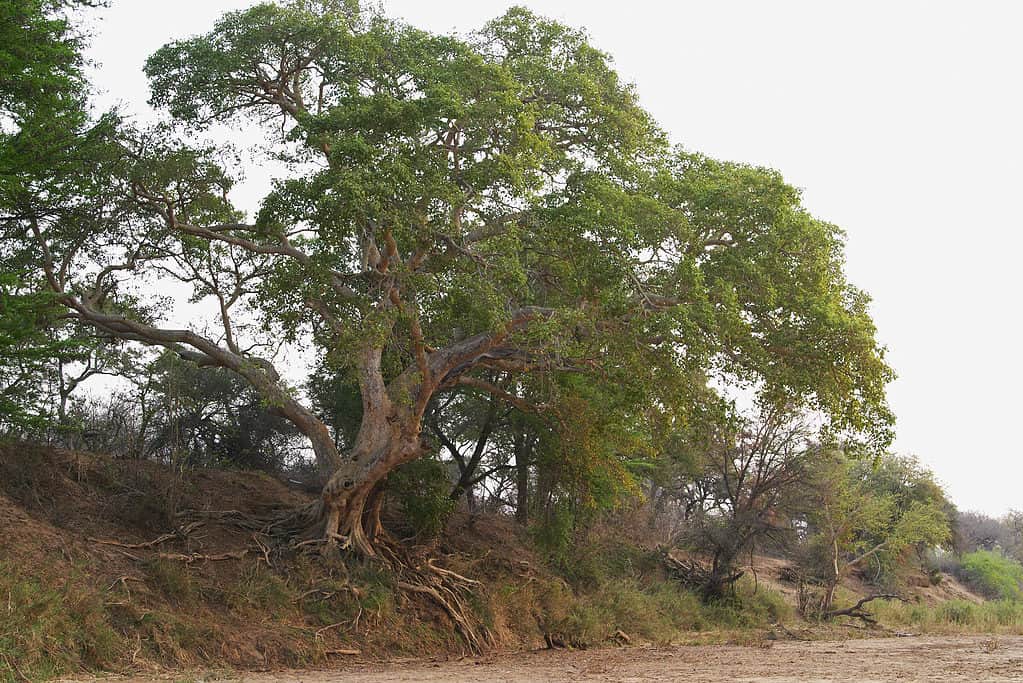
The white stinkwood is a popular tree for bonsai.
©John Lindsay-Smith/Shutterstock.com
The white hackberry, or white stinkwood tree, is another Celtis species that is used in bonsai. Originating in Africa, this plant features smooth, pale grey to white bark that can become over time. In spring, new leaves are pale green, serrated, and finely haired, darkening and becoming rougher with age. Alongside the season’s new leaves, the tree generates small, inconspicuous, green flowers which turn to fleshy, edible stone fruits in the summer. Like the Chinese hackberry, the seeds produced from these fruits are viable for propagation. Seeds germinate in 2 weeks to a month, producing hardy specimens that can grow up to 6 feet per year in the wild.
Hackberry Bonsai Tree Care
When grown at home, these plants retain their hardiness and vigorous growth characteristics and accept a fairly wide range of growing conditions. To keep your bonsai healthy, however, there are some specific care requirements that you will need to keep in mind.
Light
These trees require many hours of full sun over the day to do their best. They can be grown indoors in an area such as a window or beneath a skylight on a side of the house that receives sun all day long, but an unshaded outdoor setting is the best location to keep your tree. Be aware that leaving the plant in direct sun will increase the rate at which it dries out.
Water
The extra warmth of direct sunlight on hot days will dry out your plant quickly. Hackberries require a lot of water, especially when placed in an outdoor setting. It is crucial, however, to avoid waterlogging, as this can create an anaerobic environment and cause your hackberry bonsai to develop root rot. You can avoid the problem of root rot can entirely by choosing a soil structure that promotes oxygenation and drainage.
Soil Composition
While these trees prefer rich, loamy soils in the wild, they will grow very well on an inorganic, well-draining soil base for bonsai. Due to its need for frequent watering, well-draining soil is necessary to avoid root rot, which will quickly wreak havoc on your plant.
Typical bonsai soil will contain a mix of lava rock, pumice, fine grit, and akadama, a Japanese baked clay pellet. The added clay content of mixes that include akadama allows for better nutrient uptake due to higher cation exchange capacity, and the porosity of pumice and lava rock aid in both moisture retention and drainage. This soil structure also allows for good oxygenation of roots. You can add very small pieces of organic material to the mix to add some water retention, as well as to promote nutrient exchange and support long-term nutritional needs.
Fertilizer
Given that bonsai trees are grown on mostly inorganic soil mixes, fertilization becomes particularly important to support healthy growth. You should fertilize your hackberry bonsai weekly with low-nitrogen liquid fertilizers throughout the spring and summer. Switch to nitrogen-free fertilizers between summer and early fall, until the plant drops its leaves. At this point, fertilization should be halted until the conclusion of the winter dormancy period.
How to Prune Your Hackberry Bonsai Tree
Bonsai trees must be pruned to keep them healthy and growing in your intended style. This part of the process best allows the bonsai gardener to let their creativity flow, choosing shapes and directions that most express their vision.
Minor pruning of hackberry bonsai trees is done regularly throughout the summer when growth is most vigorous. Pinching back the new buds can slow down the growth rate of this fast-growing tree during this period. Once the tree drops its leaves and becomes dormant, you can carefully remove larger branches. Make sure, though, that they are not cut flush with the main trunk. This is particularly important to ensure that the branch collar can produce enough disease-resistant wound wood to properly seal up the cut.
Placement
If temperatures remain above freezing in your area, it is safe and even ideal to keep your bonsai tree outdoors year-round. Any danger of frost requires that they be covered, kept in a greenhouse, or brought inside. Your hackberry tree, being deciduous, also requires a dormant period throughout the winter to remain healthy. During this period, the plant needs cooler temperatures that mimic wintertime in its native range.
Styles for Your Hackberry Bonsai Tree
Due to its fast-growing nature, acceptance of pruning, and flexible wood, the hackberry is suitable for many popular styles of bonsai. Below, we have included a couple of simple, but visually striking styles that you may wish to try with your Hackberry.
Chokkan, the Upright Style
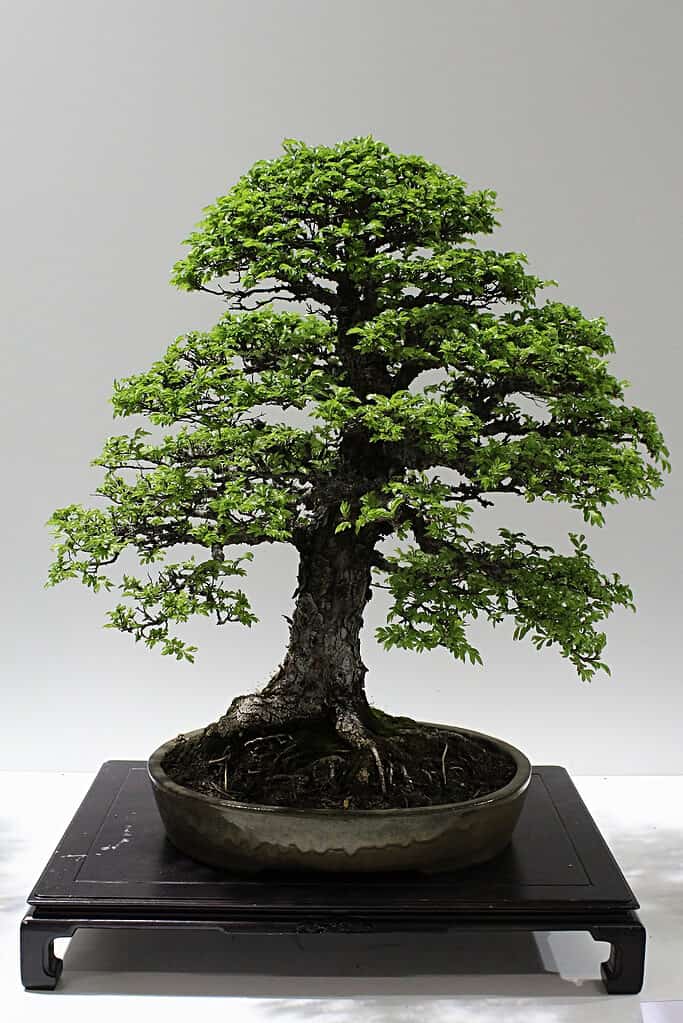
A Chinese elm bonsai tree in Chokkan style.
©ZayacSK/Shutterstock.com
Chokkan is almost always referred to as the simplest and most formal of bonsai styles. It is very beginner friendly and features an upright, single trunk, with branches that are maintained to produce an overall conical shape. You can also create a trunk that tapers toward the crown by pruning the top of the tree more heavily than the bottom, allowing the lower limbs to stretch and fill out. This process can take a lot of time and practice to perfect.
Hokidachi, the Broom Style
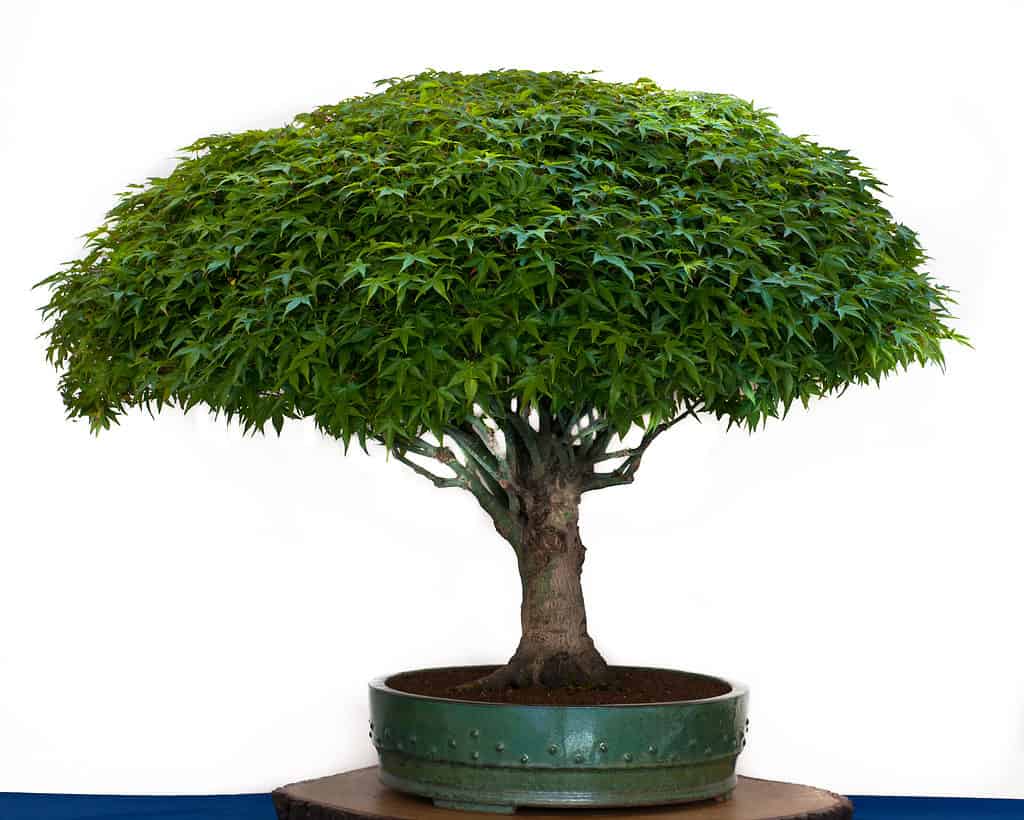
An Acer palmatum, or Japanese maple, bonsai in Hokidachi style.
©Bernd Schmidt/Shutterstock.com
Hokidachi is a great style to choose for your hackberry bonsai. When grown in this style, bonsai trees exhibit a stout trunk, from which many small branches extend to form a semi-spherical crown. This style is simple, familiar, and pleasing to the eye, but delicate and especially intricate when leaves have fallen. Due to its tendency to grow narrow limbs and fine twigs, the hackberry is commonly grown in this style.
Using Wire to Shape Your Hackberry Bonsai Tree
The shaping of a bonsai can be better directed by the use of copper wire to gently bend its limbs in a specific direction. These wires are kept on the tree until the branch has settled and retains the intended shape on its own.
Wiring is usually done in the late spring and early summer months while the wood is still flexible and sturdy. Take care to avoid breaking or damaging bark during the wiring process, as this can kill branches and allow pests and diseases to infect your tree. Do not attempt to shape your tree with wire during the winter months, as the previous wood from the previous season becomes too brittle and will likely break.
Common Problems with Hackberry Bonsai Trees
When grown outside, you may have to contend with pest insects. While hackberry trees are hardy and versatile plants, they can struggle with pests and diseases if their growing conditions are not well maintained. Below are a few common pests to look out for.
Hackberry Caterpillar
These light green to yellow caterpillars are easy to identify. In addition to their bright coloration, hackberry caterpillars have pale, narrow lines that run down the sides of their bodies. They have two darkly colored horns on their heads and two lighter-colored spikes on their rears. Care should be taken to remove these insects from your bonsai, as they can strip your small tree of its vital foliage.
Calico Scale
These scale insects attach themselves to the woody limbs and leaves of hackberries and, like aphids, tap into their vascular structure. The waste products that they produce can encourage mold growth. Scale insects can weaken trees and make them more vulnerable to secondary disease and more sensitive to changes in their environment.
Woolly Hackberry Aphid
Shivaphis celti, the woolly hackberry aphid, primarily infests the Chinese hackberry, but will also target other Celtis species. This small, fluffy, white, or bluish, insect is not native to North America but has established itself across the lower portion of the United States. They occur from Florida westward through Texas, and from there as far north as Illinois. Just like scale insects and other aphids, the waste produced by these aphids can cause black, sooty mold growth on parts of the tree.