
There are many incredible species of bonsai that may be kept indoors. One of the most popular is the myrtle bonsai, which is a tender flowering plant that produces gorgeous white to pink flowers, blue-black or amber berries, and is a slow grower with pliability and beauty for the patient bonsai enthusiast. There are, perhaps, other species more commonly known to be bonsai trees, such as fir, pine, or spruce trees, but the varieties of myrtle used in the art form are a truly beautiful option for those interested a long-term investment in the work.
There are two main varieties of myrtle commonly grown as bonsai, with the most frequent being the common myrtle. This plant is also known as Roman myrtle, bride’s myrtle, sweet myrtle, true myrtle, sweet Roman myrtle, and true Roman myrtle. So, if you see any of these names attached to plants at nurseries, you know you’re looking in the right area.
Now, let’s take a look at this beautiful plant and see why it may make an excellent indoor or outdoor bonsai plant for you.
Myrtle Classification
The common myrtle, or true myrtle, is the most common variety of myrtle tree used in the bonsai art form. Known as Myrtus communis, the plant is classified as a flowering, evergreen shrub in the family Myrtaceae or myrtle. There are many other species in the myrtle family.
The plant is native to southern Europe, North Africa, Macaronesia, Western Asia, and the Indian subcontinent. It is commonly also known as the Corsican pepper and is cultivated in many regions of the world for its ornamental use.
Myrtle Description
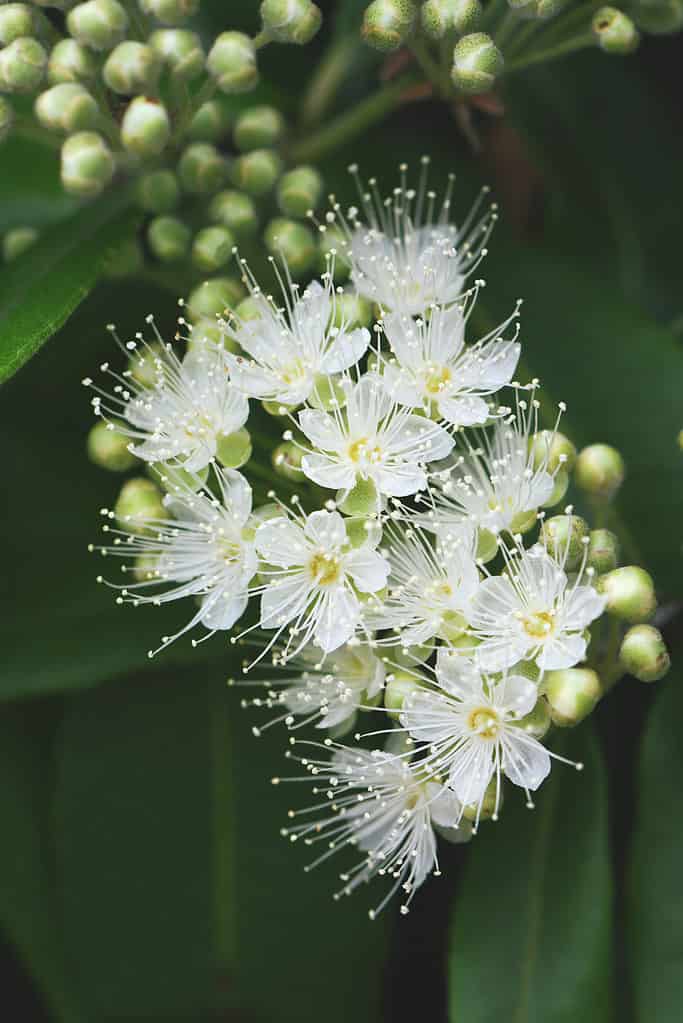
The myrtle flower has 5 petals, sometimes a yellow center, and many stamens.
©KarenHBlack/Shutterstock.com
Not to be confused with crepe myrtle, the common myrtle and other varieties typically used in the bonsai art form, myrtles are evergreen shrubs and small trees that may grow up to 25 feet in height when they are left to their own, natural growing patterns. The leaves of the plant are fragrant, often used in essential oils, and grow about 1 to 2 inches in length.
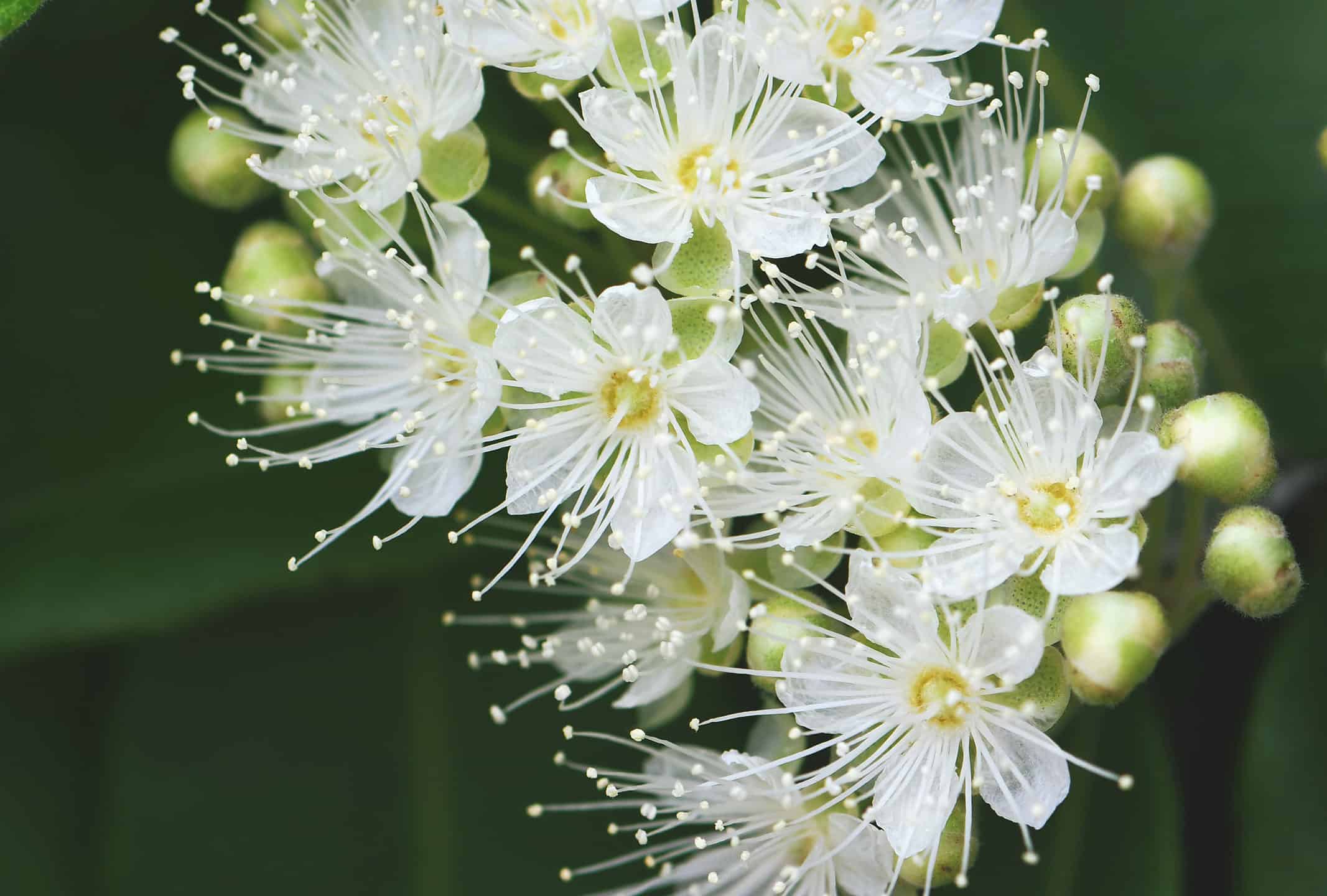
Myrtle flowers are white, sometimes with yellow centers, and sometimes tinged with pinks. The flowers have five petals and multiple stamens. The flowers produce fruits that are blue-black berries and edible. Some varieties with yellow-amber berries also exist.
The stunning flowers are often what draws enthusiasts to this unique tree for the bonsai art form. The many stamens of the blooms make the flowers appear fuller and “fluffier” than many other, more compact flowering plants. And though certain shapes are difficult with this variety (cascades, we’re looking at you!), the flowers can help glamorize and add similar effects in the flowering season.
Origins and History of Myrtle
The myrtle tree, as you might guess, would not naturally occur in Europe, due to its tropical growing characteristics. However, the plant was extremely popular in ancient Rome and Britannia, as well as other European locations, both in the Mediterranean Basin and elsewhere on the continent. The plant was later reintroduced to England in the 1700s, when orange trees were also brought here by Sir Walter Raleigh from Spain. The popularity of the tree spread throughout the regions, thanks to its ornamental beauty, and though it couldn’t technically thrive, the popularity remained, ultimately resulting in the myrtle becoming a popular choice with bonsai enthusiasts who can make the plant more adaptable to climates, thanks to the natural characteristics of the artform of bonsai.
Varieties of Myrtle
There are two primary varieties of myrtle trees kept as bonsai. The first is the common myrtle, or Myrtus communis, and the second is the Myrtus apiculata.
Myrtus Communis
The common myrtle is a broadleaf, evergreen variety of myrtle shrub that grows aromatic foliage that is dark and glossy. Their bark is rough and textured. In the spring they produce white flowers with yellow centers and black fruits.
The common myrtle also has a dwarf cultivar known as the compact version or the Myrtus communis ‘compacta’. This cultivar is like its larger version, only more compact, and the flowers have proportionately longer stamens.
Myrtus apiculata
The Myrtus apiculata is a smaller variety of myrtle that has cinnamon-red-brown bark that often peels easily, revealing creaming colors beneath. The leaves are also evergreen, but they aren’t glossy and they are oval-shaped. They also produce small white flowers, and then have either black or red fruit in summer.
Basic Care for Myrtle Bonsai
Planting Location
In nearly every case, it is recommended that bonsai trees are kept outdoors for warmer months. Myrtle bonsai trees are no exception to this, however they are one of the species that may well thrive indoors year-round, particularly if you’ve got the right setup for lighting and live in a cooler climate.
In winter, myrtles need to be in warmer climates (50+ degrees F), with grow lights and a south-facing window when kept indoors. In spring through autumn, myrtle bonsai should be kept in locations where they will receive warm, direct light without scorching light of hot summer temperatures. Provide them with afternoon shade in the heat of summer. They also need to be sheltered from any intense winds, so if you live in areas like Chicago or coastal regions, for example, you’ll need to provide them a sunny location with shielding like a wall, fence, or other plants that can block most of the high wind gusts.
Soil Needs
Myrtle bonsai have a few specific soil requirements.
- They need lime-free soil (and water).
- Myrtle bonsai require neutral to acidic soil.
- Avoid heavy clay soil types.
- Add peat of Kanuma if you use standard soil mix.
- Avoid excess watering to prevent iron chlorosis.
- Consider a mix of 1 part loam to 2 parts 2 to 1 part peat as the potting mix.
Lighting
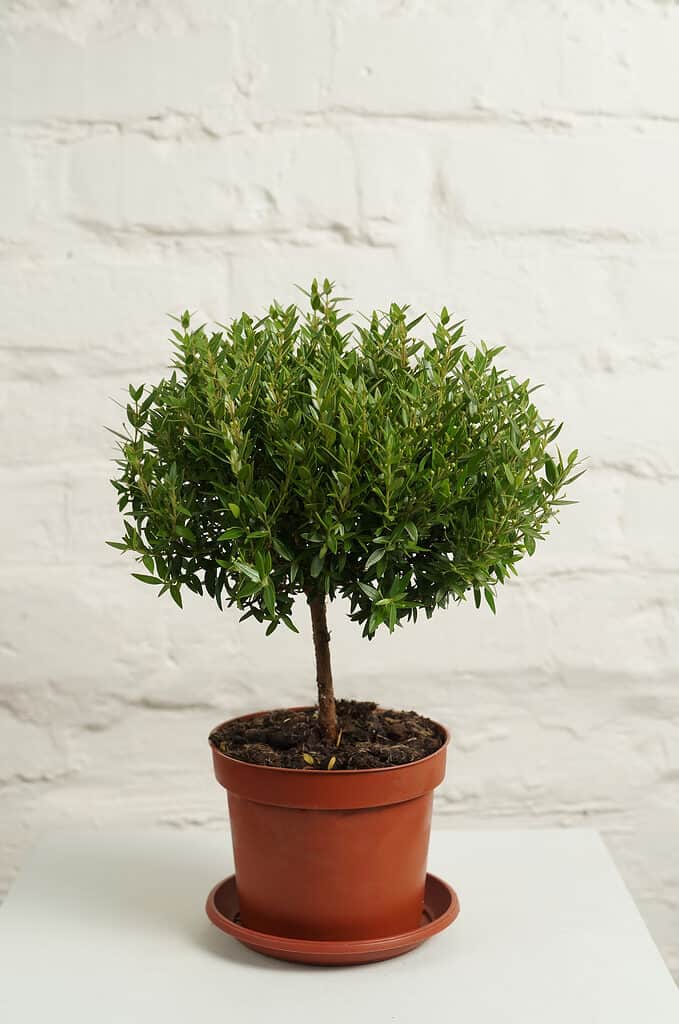
The soil of a myrtle should never be left to get completely dry – but it also should never be allowed to water log.
©Sergey Lazarenko/Shutterstock.com
Myrtle bonsai prefer outdoor living for that fresh air and vibrant light, but even in summer, they need partial shade during hot months. They need plenty of light, though, year-round, with grow lights and south-facing windows indoors in winter and vibrant direct sun spring and autumn, with that partial shade to protect it from direct UV light in the hottest months.
Temperature
Myrtle bonsai trees do best in environments kept around 50 degrees F in winter and warmer throughout the year. They are a tropical plant, so they thrive in warmer weather. This means that if your climate encourages temperatures below 50 degrees F, you’ll need to bring your myrtle bonsai indoors in the cooler months. The plant thrives in hot weather, even in temperatures over 100 degrees F.
Watering & Humidity
It’s important to keep your myrtle bonsai tree’s soil moist – it should never get dry. Pour water in each time until the water starts to flow out of the drainage holes on the bottom of the pot. Check the soil daily for moisture levels, or, if possible, use a moisture meter to ensure the soil doesn’t dry out while also preventing the soil from becoming waterlogged.
Additional watering tips:
- Reduce watering during winter months.
- Avoid spraying flowers if you mist the plant. Moistening the flowers will cause fading and droppage.
- When the plant is kept indoors, place the pot in a shallow tray with pebbles, and keep the tray full of water to help maintain the plant’s health (i.e., environmental moisture levels).
- Use rainwater or soft, lime-free water to water your myrtle bonsai.
- Never over water your myrtle, as root rot will develop.
Feeding
Myrtle trees requires fertilization throughout the year to keep it healthy and thriving. This is particularly true for bonsai, though, because of the nature of bonsai growth. The trees are kept in small pots without a lot of soil, meaning that the soil has less nutrients for the plant to absorb and use for growth.
Apply fertilizer once monthly, save during winter, at either full-strength if you’re using a bonsai specific fertilizer, or half strength if you’re using a general-purpose liquid fertilizer. Avoid fertilizing right before and during flowering, however, to encourage flowering rather than leave growth.
Pruning
To keep your myrtle bonsai a, well, bonsai tree, you have to consistently trim and pinch your myrtle. The new growth is good and healthy, but too much of it will encourage your myrtle to outgrow its smaller size.
Prune your myrtle in both spring and summer. Let the branches grow out 6 inches, then cut back to 2 or 3 leaves in the early stages of the plant shaping and training. Be sure to stop the trimming before flowering begins, or you will lose all flowering for the season or year.
Other basic tips:
- When the bonsai looks messy, trim back the foliage with sharp scissors, shears, or even nail clippers.
- Write down growth pattern observations on your bonsai. Each tree grows at a different rate, so different timing will be needed for each bonsai on the trimming schedule.
Shaping & Wiring
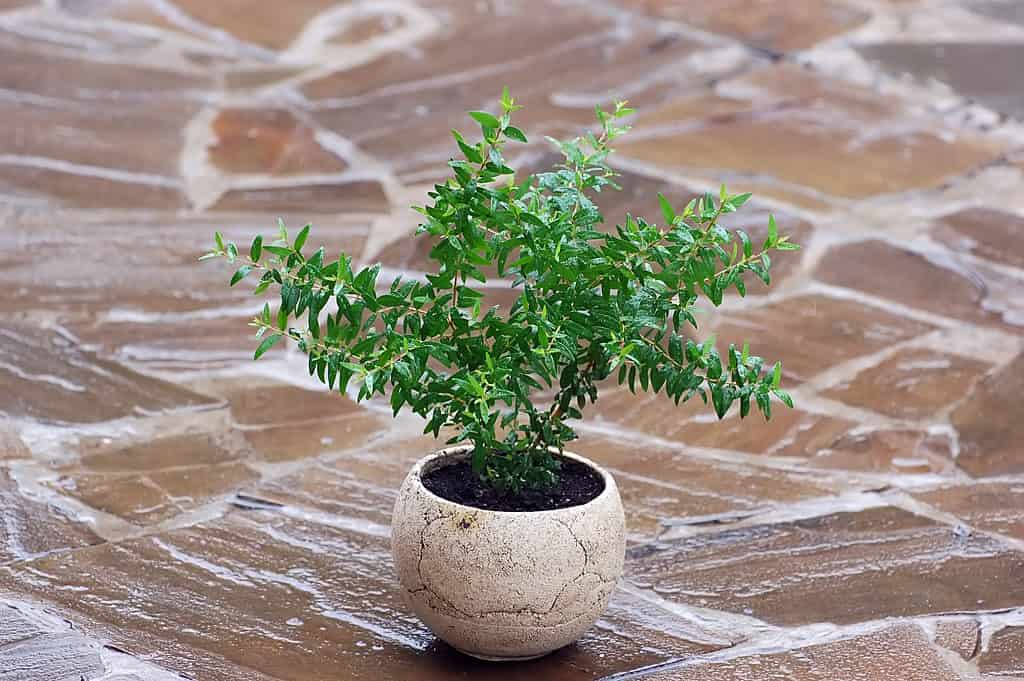
Myrtle bonsai are often grow in “bushy” shapes.
©Sergey Kamshylin/Shutterstock.com
Because myrtle bonsai has thin bark, it’s important that you use soft, aluminum wire instead of the harsher copper wire. Cut back older branches and shape the younger, instead, shaping branches up to three years only. The older branches will break and be damaged.
Most commonly, you’ll see bushier shapes for myrtle bonsai, do the nature of the plant itself being naturally bushy. The shrub, however, may be trained for other shapes, such as formal upright, informal upright, and broom. The cascading or sweeping styles would be much harder to develop, but you may find that you may train your myrtle to do forest, literati, clump, or raft styles, as well as double trunk in very carefully curated situations.
Re-potting
Every other year in springtime, you should re-pot your myrtle bonsai.
- Do not do any hard pruning of heavy roots.
- Reduce roots slowly over several years, rather than all at once in one hard pruning.
- Use lime-free bonsai soil mix.
- Ensure the tree is planted in a well-draining container.
- Ideally, use 40% grit and 60% organic matter as your re-potting mix, with ericaceous compost.
Common Problems of Myrtle
Aphids, spider mites, and similar infestations may occur, with the occasional disease, issues with dry rot, or other environmental issues.
To treat aphids, spider mites, and other insect infestations, purchase a gentle, nontoxic pesticide to gently treat your myrtle bonsai. For issues such as dry rot, mildew, or mold, check your environmental conditions and make humidity and moisture adjustments. You may also need to re-pot the tree in new, clean, fresh soil that isn’t infested with rot or overwatered. At the very least, you’ll need to improve drainage and deal with the waterlogged roots.
How to Propagate Myrtle
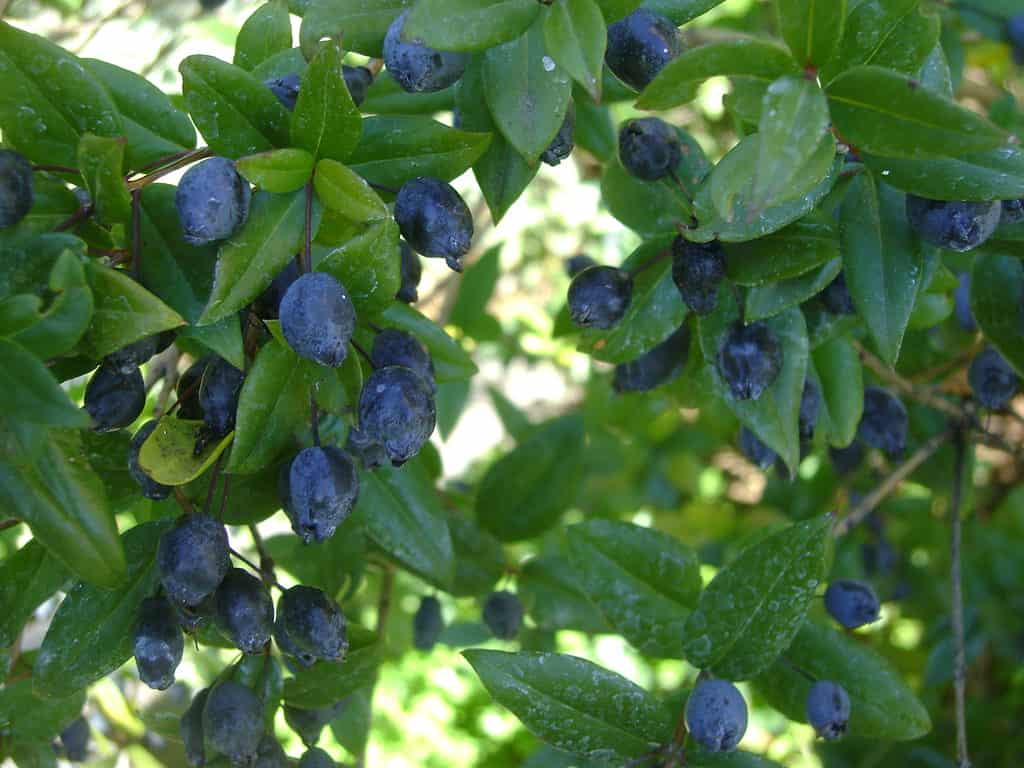
The berries look like a cross between blue-berries and grapes.
©Japs 88 on Wikipedia/Shutterstock.com
There are two primary methods for successful propagation of Myrtle trees as bonsai.
Growing from Seeds
The more challenging method of the two is propagation from seeds. If you choose this route, collect seeds immediately after the berries ripen. The seeds don’t need any special pre-sowing treatment, but there’s only a 50% germination rate of seeds, and pretty much will only happen under precise conditions, including moderate humidity, temperatures between 77- and 86-degrees F, and skilled used of substrate (growing medium).
To grow myrtle from seeds, it’s recommended you find some expert materials that focus solely on this process for the highest success rates possible.
Growing from Cuttings
More commonly, and significantly easier, myrtle bonsai tree propagation from cuttings is the way to go in most folks’ opinion. There’s a much higher success rate than that of using seeds. For this, use semi-hardwood cuttings from spring or summer pruning that are carefully planned for the purpose of propagation.
Use proper cuttings propagation techniques for best results, including using a healthy hormone powder recommended for bonsai tree propagation.
Fun Facts About Myrtle Bonsai
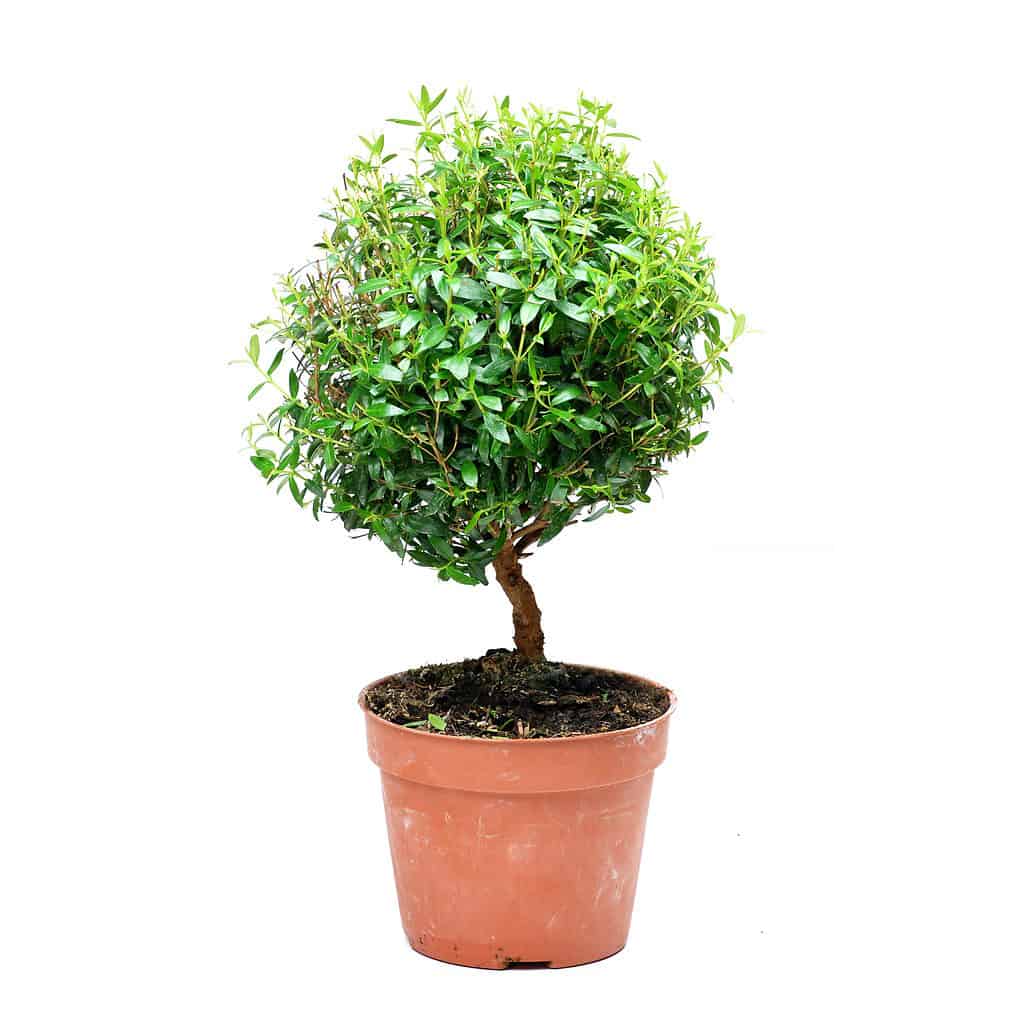
Myrtle make for stunning potted plants and bonsai alike.
©Igorsky/Shutterstock.com
There are many fascinating cultural components of the history of myrtle trees, both within and without the bonsai artform.
The plant has properties considered to be medicinal, and has been cultivated both for its aesthetic beauty and these healing properties since at least 600 B.C.E. The plant has been used to represent honor, prosperity, justice, hope, happiness, love, and generosity. During the Renaissance in Europe, it was known as the symbol of love, which led to the flower being used in bridal bouquets. That tradition continues to stand, even today.
In Greco-Roman mythology, the flower is used to represent many gods, including Aphrodite, the goddess of love, and Demeter, goddess of the harvest.
The myrtle is also key for many Jewish traditions, including as one of the four species used in the Sukkot, a festival of harvest times after Yom Kippur. It is also recorded in the Old Testament as a purification plant and has been given the symbolic meaning of recovery and restoration.
Additionally:
- Sweet myrtle has been deemed the symbol of divine generosity.
- The bark and roots are used in leather tanning in both Turkish and Russian leatherwork. This leaves behind a unique, delicate scent that can actually help identify authentic Turkish and Russian work.
- Myrtle scent is used to create perfumes, soaps, and potpourris.
- The leaves of the myrtle are used in fragrant essential oils.
- Myrtles are slow-growers and naturally take between 10 and 20 years for maturity in natural settings. It takes a long time as bonsai, as well, but with patience and persistence, this time can be somewhat reduced as the crafting of the tree will naturally lend itself this way.
Up Next:
- Spruce Bonsai Tree
- Serissa Bonsai Tree
- The 10 Best Bonsai Trees for Beginners
- Juniper Bonsai Tree