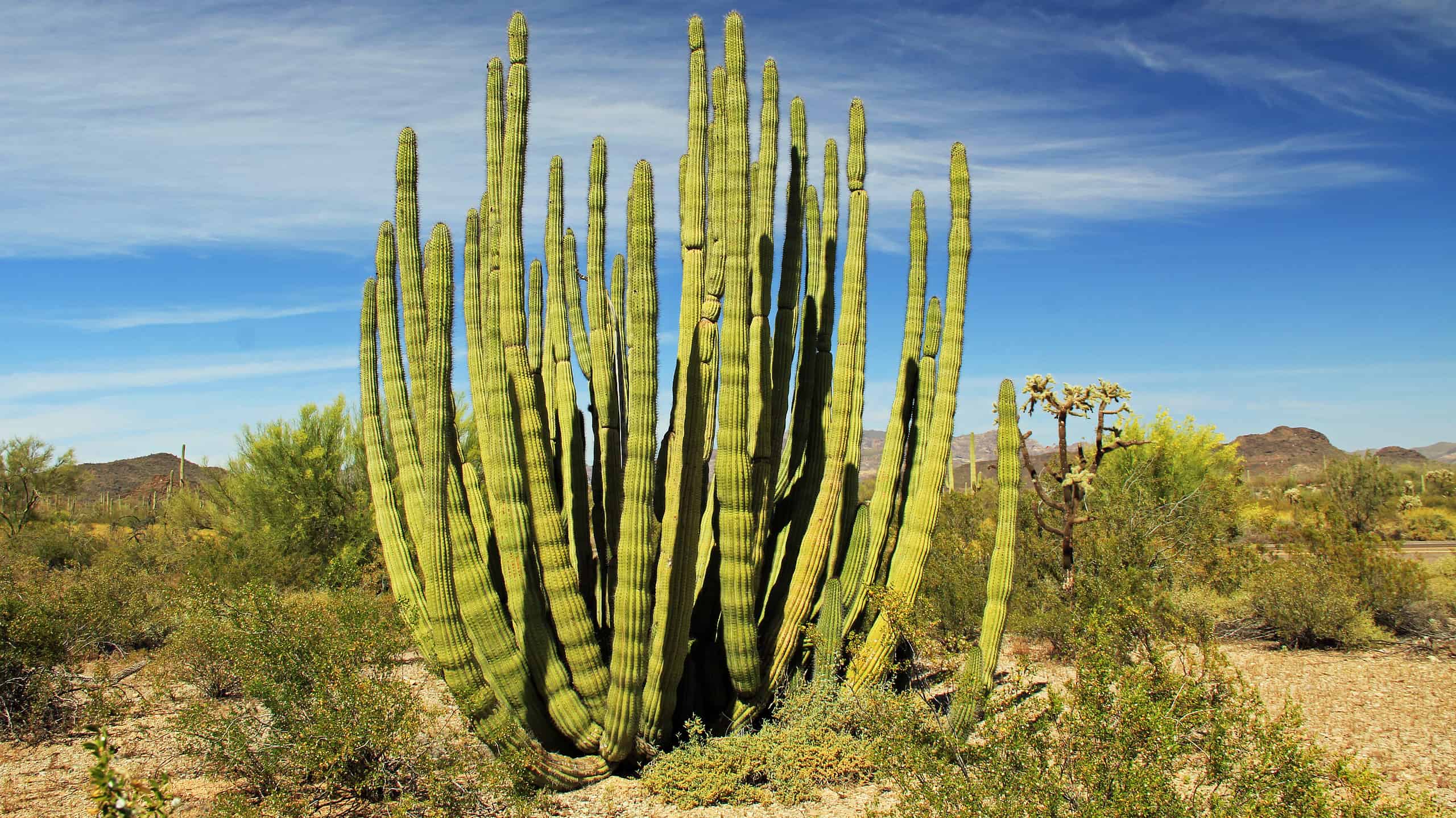

Stenocereus thurberi, or the organ pipe cactus, gets its common name from the way it grows in several directions and resembles the pipes of large church organs. Only warm to hot places with space for a plant that can easily reach 26 feet tall can support the growth of the organ pipe cactus. This species of cactus is a fascinating plant, but because it grows slowly, some plant parents might be too impatient to deal with it. That being said, it is definitely rewarding to grow this species of cactus.
This plant is a popular home cactus because it is drought-tolerant and has an excellent aesthetic payoff. Provided you can wait a few years for it to develop, it’s definitely worth it! In this guide, we’ll explore what an organ pipe cactus is, where it grows, and how to keep your own specimen at home with minimal effort.
What is an Organ Pipe Cactus?
Stenocereus thurberi, also known as the organ pipe cactus, is a cactus species that is part of the Stenocereus genus. As a member of this genus, this cactus is closely related to the octopus cactus, the creeping devil caterpillar cactus, the pitayo cactus, and many other species. Its common name was given due to the fact that it looks similar to the pipe organ instrument.
Anatomy of the Organ Pipe Cactus
This species of cactus has multiple vertically ascending, slender stems that originate from just one small trunk slightly above the soil. While it has been reported to grow up to 23 to 27 feet tall, these chunky stems are around six inches wide and grow to a whopping height of up to 26 feet. Sometimes, this species can grow even taller.
Rarely branching, these stems instead develop yearly from the tip of the previous growth. The plant’s mature breadth can be up to 12 feet. Each stem contains 12 to 19 half-inch-high ribs that are covered in dark brown to black spines. They eventually turn gray as the stem ages. Around 150 years are needed for full maturity of this species, and it is considered a very long-living cactus species similar to the saguaro cactus.
The elder plants of this species produce three funnel-shaped white blooms with a purple or pink tinge that emerge at night and shut by morning. Typically, they grow throughout April, May, and June.

Organ pipe cacti (pictured) can easily reach 26 feet in height or even taller in the wild.
©iStock.com/Cavan Images
Use of the Organ Pipe Cactus
Bats are responsible for fertilizing organ pipe cacti. Just as well, a fruit the size of a small tennis ball is produced by the plant. The fruit’s ruby flesh, which has been said as tasting better than watermelon, lies behind its prickly skin. The Seris people have long collected this fruit and utilized it as medicine.
Organ Pipe Cactus Native Environment
Both Mexico and the US are home to the organ pipe cactus. The species is mostly found in Sonora, southern Baja California, and northern Sinaloa, which are all rocky desert regions. While being more uncommon, it is also known in the United States, with the noteworthy exception being Organ Pipe Cactus National Monument.
Mostly located on rocky hillsides up to 3,000 feet in height, organ pipe cacti can be found there. Because of its sensitivity to frost, the species is uncommon in low desert locations where it may be more likely to freeze. The plant grows slowly and prefers full light, well-drained soil, and climate. It will, however, grow beneath a “nurse tree” when it is in the seedling stage since it needs shade. Until it develops a suitable root system, which is mostly in the top 4 inches of soil, it will require this for a number of years.
Organ Pipe Cactus Varieties and Subspecies
The organ pipe cactus has two known subspecies. The main species Stenocereus thurberi is substantially bigger and may be found in northern Baja California, southern Arizona, and mainland Mexico. The subspecies of this cactus is Stenocereus littoral, which is considerably smaller and often reaches heights of 10 feet or less. It is only found in southern Baja California.
Colors of the Organ Pipe Cactus
The organ pipe cactus is typically a greyish-green or bluish-green. Its long stems, which resemble a pipe organ, are usually uniform in their color. Older plants, sun-damaged plants, and dehydrated plants can take on a brown or black hue.
The fruit of this cactus is usually red, purple, yellow, or green when first developing. It is covered in white spines, as is the rest of the cactus. The flowers of the organ pipe cactus are white or cream, with light pink or purple petal edges.
When Will My Organ Pipe Cactus Bloom?
Large blooms are produced by organ pipe cacti as they develop and thrive. To make it easier for bats and insect pollinators to access the blooms, organ pipe cactus flowers often grow far away from the cactus on very thick, long stems. Bats or even moths can pollinate this cactus, predominantly at night. The flower blooms at dusk and closes before dawn.
The best months to observe organ pipe cactus blossoms are April, May, and June. Having said that, it could be extremely challenging to get this species to blossom when grown indoors. Just as well, outdoor specimens won’t blossom until they’re at least at the ripe old age of 35 years old. These are very long-living cacti, so keep that in mind!
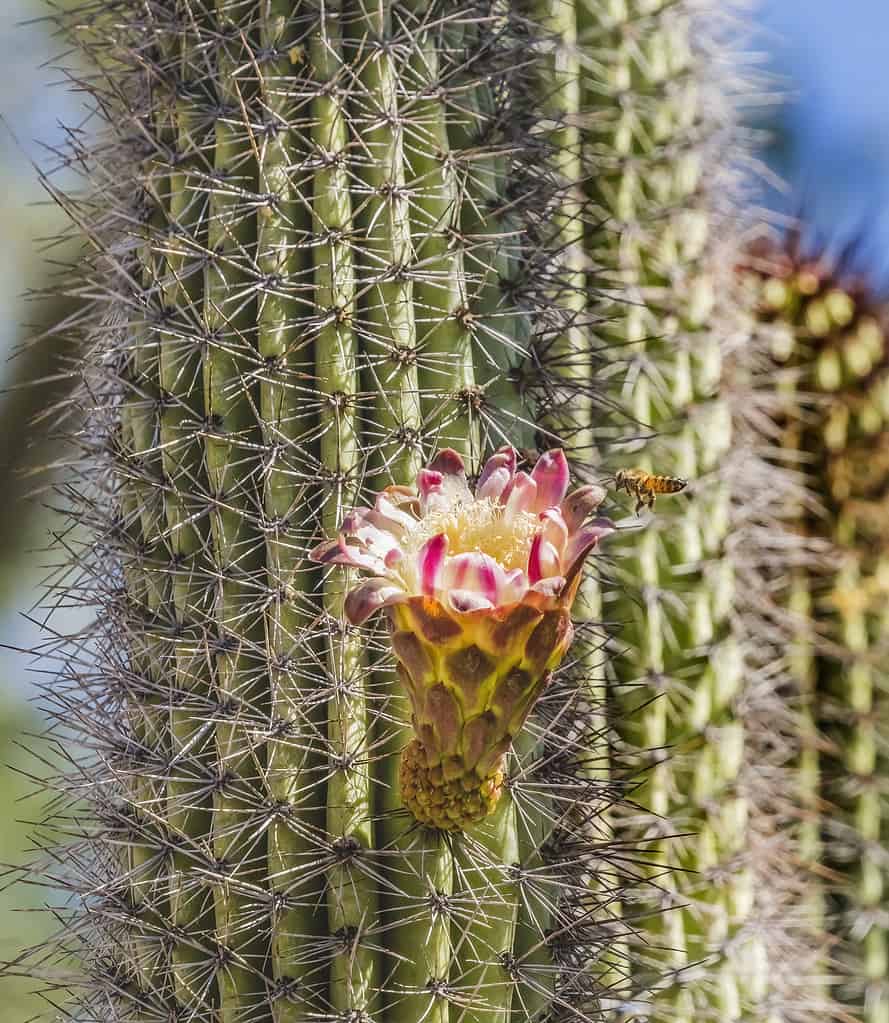
Organ pipe cactus flowers (pictured) can take decades to appear.
©iStock.com/bpperry
How to Grow an Organ Pipe Cactus
It’s not as challenging to grow an organ pipe cactus as you would imagine. It is one of those plants that can be grown in large quantities since it requires very little maintenance to provide good growth. This species of cactus is economical since you can also cultivate and propagate them to sell or gift to others who are just starting out.
If you are growing an this cactus indoors, you must move it outdoors throughout the day or arrange it so that it receives adequate light and heat. The best windows to choose from are those that face the sun for most of the day.
In order to prevent the sap of this species from drying up, you should turn off appliances that emit heat such as radiators or air conditioners in the area where your cactus is growing.
Repotting and Transplanting an Organ Pipe Cactus
If you purchase your established plant from a nursery, repotting is probably necessary. You can transfer it from a temporary pot to a permanent one at this point. This species does not like to be repotted or transplanted often, so try to find a pot that will accommodate a plant several times larger than what it is when purchased.
Choose a large container that can hold the roots as your cactus grows. When planting your cactus, you can also sterilize the potting soil mixture to lessen the likelihood of pathogen growth and thus, the need for additional repotting.
Pruning an Organ Pipe Cactus
The trimming needs of the organ pipe cactus are minimal. In order for the plant to use its nutrients for the healthy development of its living parts, remove faded blooms and dead branches. Aside from that, it should be left alone to grow its numerous stems.
Water Requirements for an Organ Pipe Cactus
The organ pipe cactus is a very drought-tolerant plant that doesn’t require regular watering. When the soil is entirely dry, water it well. To prevent water buildup while watering a potted cactus, water carefully and wait for the water to trickle out the bottom. Then, pour the extra water from the tray. This will ensure that your cactus does not have to sit in its water for too long, which can cause root rot. While watering your cactus, try not to spray water on the stem to keep it from decaying.
This species of cactus’s three main growing seasons are spring, summer, and fall. To keep the soil just a little bit moist, water once or twice every week. Water the soil only enough to prevent it from drying out too much over the winter, generally once a week.
It might be beneficial to use distilled or rainwater instead of tap water. There is a lot of calcium and other mineral salts in tap water. Soil compaction is often brought on by the prolonged usage of tap water.
Sunlight Requirements for an Organ Pipe Cactus
The organ pipe cactus needs enough sunshine to thrive and eventually blossom. It can be positioned on a balcony or in an open area of a garden to get as much sunlight as possible. That being said, prolonged exposure to intense or harsh sunlight should be avoided in the sweltering summer months. This species will have to be shaded or somewhat covered to prevent damage from high temperatures.
Soil Requirements for an Organ Pipe Cactus
The ideal soil conditions for organ pipe cacti are fertile, gravel-rich, water-permeable, and between pH 6.0 and 7.0. Ratios of 60% vermiculite, 20% coconut coir, and 20% sandy soil are commonly used as cacti mix for this species. You can also add a tiny bit of organic potting soil to the mix to improve its drainage capabilities.
To increase the soil’s air permeability, lightweight culture medium like vermiculite can be added in higher ratios. To improve soil fertility, you can also add eggshell powder or vermicompost to your mix.
The roots of organ pipe cacti are quite sensitive to low oxygen levels. If the soil is not adequately permeable to air and water, root rot might occur. Thankfully, it’s simple to figure out how permeable a soil mixture is.
While watering, the water should move swiftly through the medium rather than linger at the soil’s surface and slowly seep downward. To maintain the soil’s air permeability, repot and loosen the soil around your organ pipe cactus every few years but not more often. This species does not tolerate constant repotting!
Fertilizer Requirements for an Organ Pipe Cactus
Apply liquid fertilizer once a month to your organ pipe cactus during the growing seasons. Wintertime doesn’t call for fertilizer. When repotting your cactus in the spring or autumn seasons, a small amount of slow-release plant food can be thoroughly worked into the soil to boost its chance of adapting.
Use phosphate-potassium fertilizer before and after blooming and nitrogen fertilizer during the cactus’s seedling phase. The concentration of fertilizer ought to be as low as possible, as this species doesn’t tolerate harsh plant food.
It would be preferable to use a low concentration of fertilizer multiple times as opposed to a high concentration at once. If the base of the plant is yellow and is growing extremely slowly, excessive fertilizer may be the cause. In this case, fertilization should be stopped right away.
Temperature and Humidity Requirements for an Organ Pipe Cactus
The organ pipe cactus grows in tropical, subtropical, and semiarid areas that have little precipitation, direct and full sunshine, and scorching hot temperatures. 68 to 95 degrees F is ideal for the development of this cactus. The development of this species slows and dormancy sets in at temperatures lower than 50 degrees F or higher than 95 degrees F.
Your cactus should be planted in a well-ventilated area with a moderate air humidity level. Keep collected water and excessive humidity away from your plant. Average levels of indoor humidity should generally be fine. In areas with heavy rainfall, this plant will likely not thrive.
Pests and Diseases to Watch Out For
You should use caution while maintaining and caring for your organ pipe cactus since it is vulnerable to illnesses and pests. Scales, mealy bugs, and red spiders are the pests you should always be on the lookout for. This species of cactus, as was already described, is susceptible to root rot as well. Root rot can be remedied by reducing how much you water your plant. Pest prevention, on the other hand, requires more effort.
Organ pipe cactus stems are impacted by mealybugs and scales that feed on the plant’s sap. To deal with them, you can use organic insecticides or rubbing alcohol wipes.
Red spiders are another potential hazard. By draining the chlorophyll from the plant, the red spiders have an impact on the cactus’ growth speed and health. The color of the spiders depends on the sap that was swallowed, although they are often red in hue with two black dots on their backs.
Red spiders can be challenging to manage since they spin silk threads to wrap themselves up so they won’t be harmed by insecticides. To improve the efficacy of the insecticides your use, repeat your spraying every three to five days.
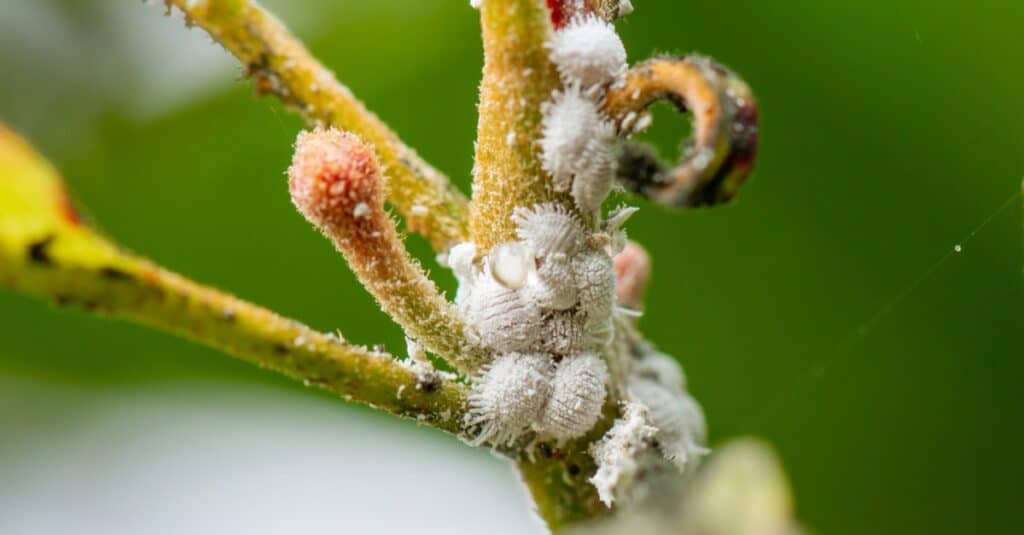
Mealybugs (pictured) can munch away at your organ pipe cactus if left alone for too long.
©phomphan/Shutterstock.com
Is It Hard to Grow an Organ Pipe Cactus?
In general, this is not a hard plant to grow at home or in your garden. That being said, you must live in USDA hardiness zones nine and up in order to plant this species outdoors. You should live in an area that does not have a lot of rainfall. Just as well, you will need to be able to accommodate this plant’s mature size, which means you’ll need about 20 square feet of space or more. If you can meet all of these requirements, you can absolutely grow an organ pipe cactus with ease!
Large, multi-limbed, and aesthetically appealing, the organ pipe cactus is suited to poor soils and hot, dry regions. Due to its size, it is seldom ever planted in gardens. However, given enough space, it can fit into desert and rock garden landscaping projects with ease. Also, because of their sluggish development, smaller specimens can be grown in pots for many years with minimal human intervention. Why not grow your own organ pipe cactus today?