
Quick Take
- A snail's shell does something similar to what tree rings do, but scientists just discovered it records a completely different kind of history. See how shells record history →
- Cyclones make these snails grow, but this only happens under a very specific condition that ordinary rain cannot replicate. Discover what triggers growth →
- A snail the size of your thumbnail could rewrite weather records for regions that predate modern meteorology, and that is why researchers are racing to dig deeper. Explore prehistoric climate hopes →
- During drought, these snails do something unexpected that makes their shells an even more precise weather instrument. See drought behavior explained →
Tree rings can tell us about a tree’s life. This includes how old the tree is, what climate conditions it has experienced, whether it withstood a fire, or whether it has had a pest infestation.
The rings on snails’ shells also hold a treasure trove of information. Scientists have discovered that snails carry weather records on their backs. As a result, researchers can better understand how weather events affected the planet well before they were tracked and recorded, potentially back into prehistoric times.
Continue reading
Snail Shells Document Cyclone Activity
Snails may be small, but the information they carry in their shells is invaluable. This is especially true for the Biggenden Banded Snails, whose shell bands record cyclone activity in their lifetimes.
According to a new study published in The Holocene, sudden growth in Biggenden Banded Snails found in Coalstoun Lakes National Park in Southeast Queensland is affected by cyclone activity. Researchers at the University of Queensland determined this after painstakingly examining shell fragments.
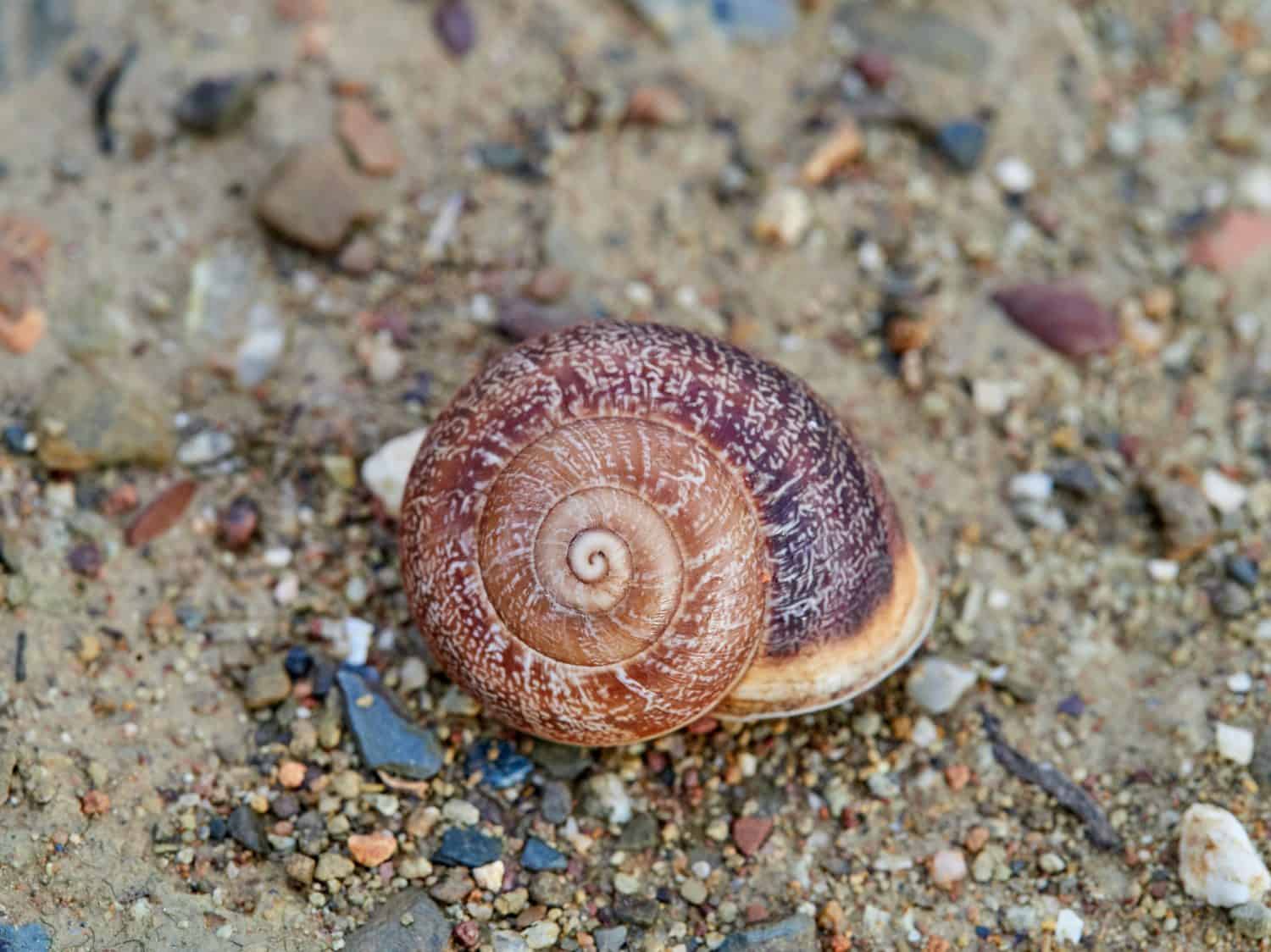
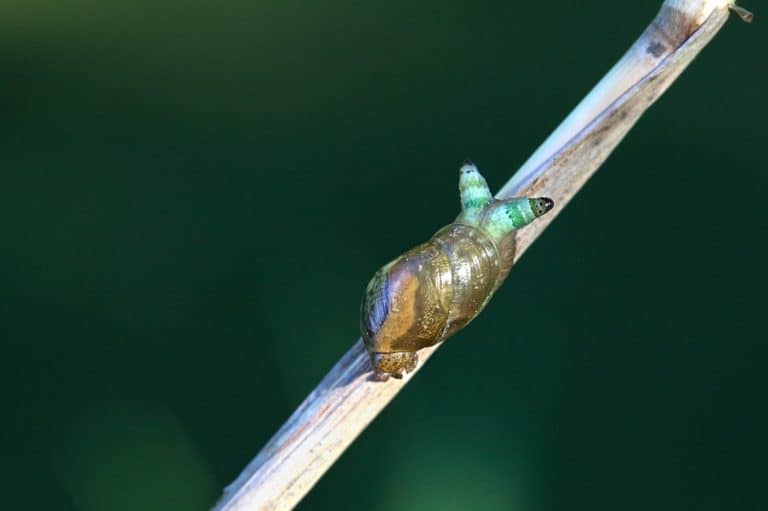
The Biggenden Banded Snail, with a shell similar to this banded snail, carries a weather history in its bands.
©Macronatura.es/Shutterstock.com
One snail the researchers collected was determined to be 4.5 years old through radiocarbon dating. According to Honorary Professor Shulmeister, this snail lived through the cyclones of 2015 and 2017, and its shell told the tale.
“Severe Tropical Cyclone Marcia and Tropical Cyclone Debbie both caused extreme rainfall within the Coalstoun Lakes National Park,” Shulmeister explained in a press release. “It shows that snail shells could be used to map extreme weather events for periods before modern meteorological records.”
If these snail shells can accurately record cyclone events, it raises the question of how far back the shells record weather in the region.
How Can Snail Shells Reveal Weather Patterns?
To determine whether shell growth was truly affected by cyclones, researchers studied small shell fragments. According to Dr. Nicholas Patton, the study’s first author, these fragments were just a millimeter in size. But despite their size, the fragments revealed an incredible amount of information about the snail and its habitat.
“We used high-resolution radiocarbon dating to determine the age of the growth bands in the shell,” Patton explained in the press release. “It contained elevated levels of radiocarbon from the nuclear tests in Australia in the 1960s, meaning we could date the growth bands and reveal the snail had lived for about 4.5 years.”
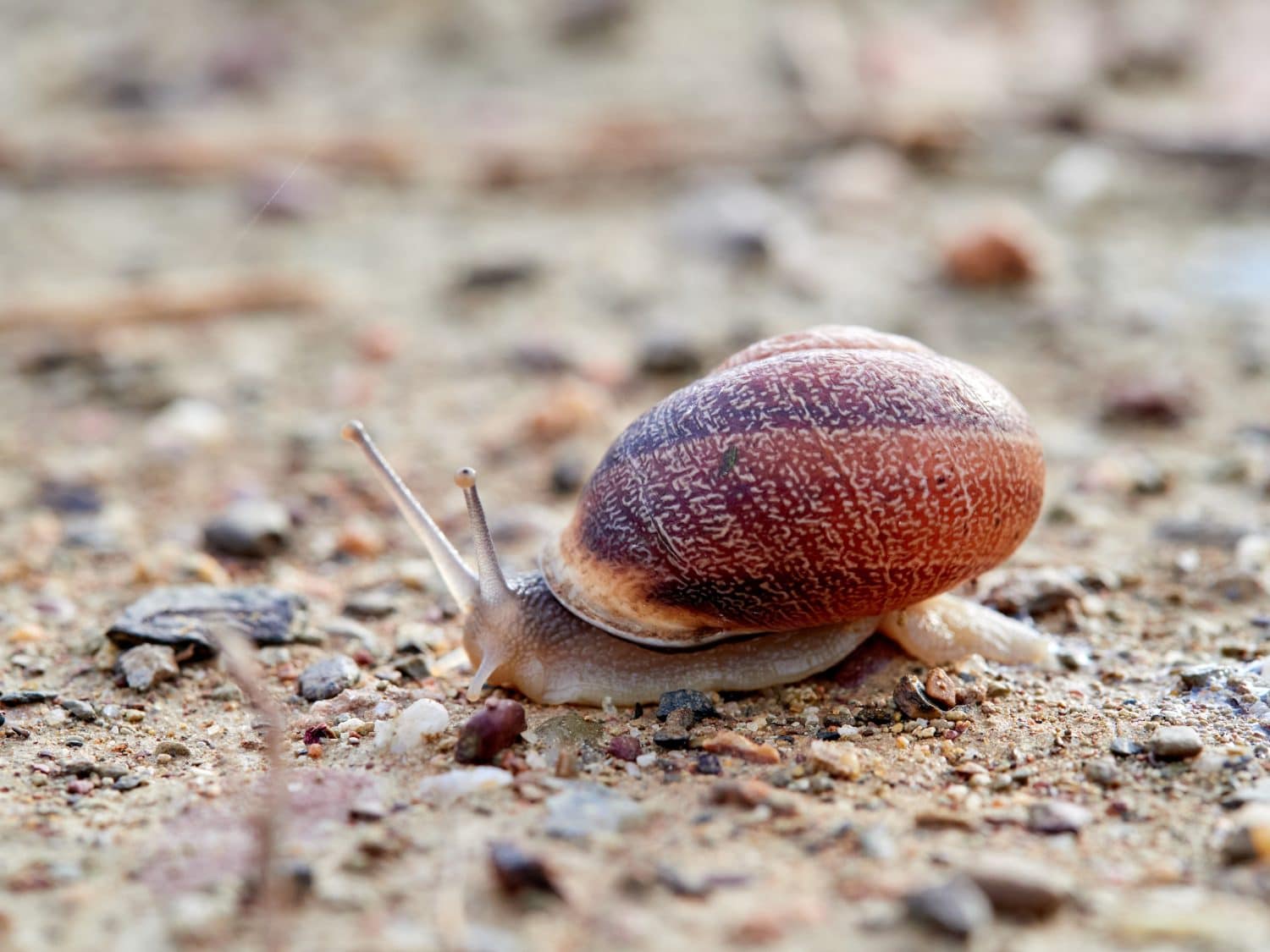
The Biggenden Banded Snail, similar-looking to this snail, was found to record weather patterns in its rings through radiocarbon dating.
©Macronatura.es/Shutterstock.com
Dr. Patton went on to explain that by analyzing the “oxygen and carbon stable isotopes” found in the bands of the shell, “the rainfall the snail experienced” was also revealed.
But it was not just the wet climate that determined whether the snails thrived. The snail’s size at the end of its life was directly affected by how many cyclones it experienced.
Snails Do Not Continuously Grow During Their Lifetimes
Unlike other animals that grow continuously from birth until adulthood, Biggenden Banded Snails do not. Instead, if weather conditions are unfavorable, growth stalls. As a result, the snail’s size during its lifetime is directly affected by the weather events it experiences.
Based on what researchers observed in the snails’ shells, rain alone does not cause the snails to grow. Snails grow rapidly when extraordinary weather conditions occur. During cyclones, the weather event brings more water to the environment and more food. The abundance of both, according to Shulmeister, spurs shell growth.
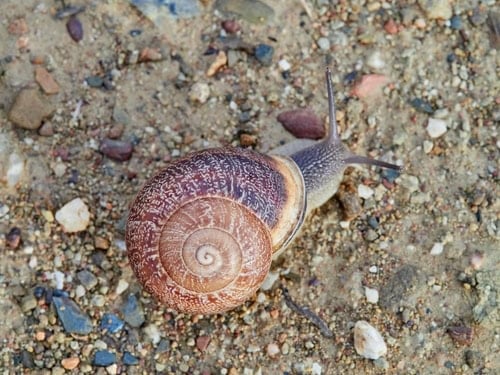
The Biggenden Banded Snail, similar to this snail, experienced significant growth only after cyclone activity.
©Macronatura.es/Shutterstock.com
“The results showed the snail was responding to extreme rainfall events rather than annual wetness,” Shulmeister stated in the press release. “Because we knew when the snail lived, the growth spurts could be linked to periods immediately following cyclones in 2015 and 2017.”
After a cyclone, specific positive habitat changes favor Biggenden Banded Snail shell growth. According to the study, those habitat changes include:
- Increased moisture levels in soil
- Increased plant growth important for both protection from drying out and as food
- Humidity increases, allowing snails to metabolize food more quickly and move around more efficiently
While snails may grow slowly with normal rainfall and an adequate food supply, their growth does not compare to what happens after cyclones. Only after these dramatic weather events does the Biggenden Banded Snail population grow significantly, stopping when their habitats can no longer sustain further growth.
What Happens to Snails During Drought
Given the dramatic growth of Biggenden Banded Snails during cyclones, it stands to reason that they would show little growth during drought. This is precisely what researchers found when analyzing the snails’ shells.
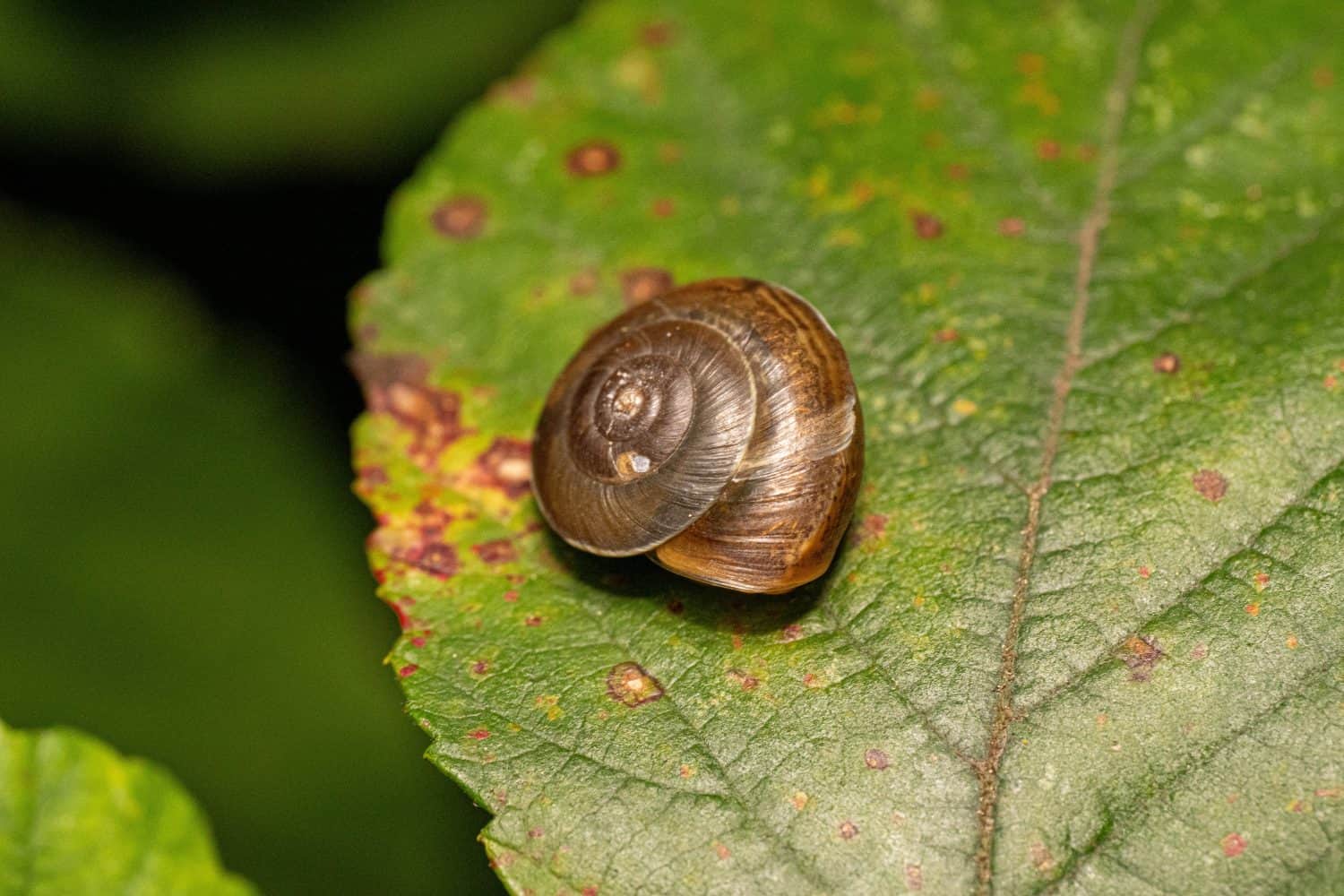
The Biggenden Banded Snail, similar to this snail, can go dormant and not experience shell growth during drought.
©Colombe Photographie/Shutterstock.com
During droughts, the snails showed little or no shell growth. Instead, they are believed to have conserved their metabolic energy. Snails do this to combat a lack of food and avoid drying out. The larger the snail’s shell, the more surface area it has to stay moist. Consequently, according to the study, the snail will experience the following during drought:
- Becomes dormant or nearly so
- Does not eat as much
- Does not grow its shell
- Seeks out wet leaf debris or crevices to stay wet
This information is interesting, as snails’ bodies are highly attuned to their climate. The larger the snail, the more weather events it has experienced. The smaller the snail, the fewer weather events it has experienced in its lifetime.
What Can Snails Tell Researchers About Prehistoric Times?
With the discovery that Biggenden Banded Snails can record weather events in their shells, researchers are excited to see what much older snail shells can reveal about the past.
According to the study, researchers hypothesize that as they dig deeper into sediment layers, they will find older snails. The eventual goal is to discover Biggenden Banded Snails from prehistoric times.
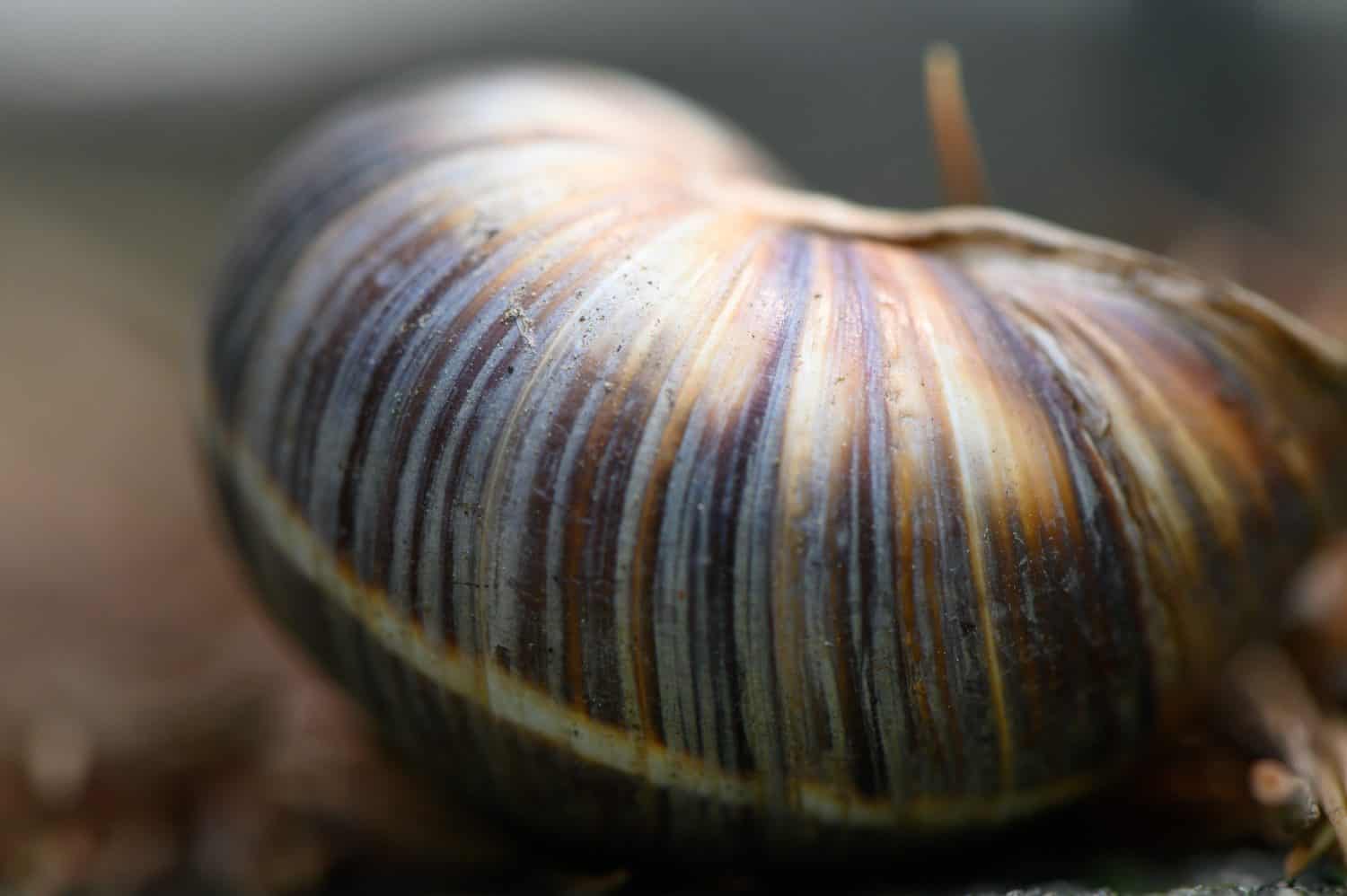
Researchers hope that the Biggenden Banded Snail, similar to this shell, will reveal secrets about what the climate was like during prehistoric times.
©Mixa74/Shutterstock.com
If these aged snails can be found, their shells could contain a wealth of information about the climate during their lifetimes. Because no records exist of weather patterns in Australia or other parts of the world before modern meteorological records began, snail shells could offer a glimpse into the past.
Snail shells could potentially indicate when cyclones occurred and how intense they were. They could also show when conditions were much drier. Both weather events would have significantly affected past flora and fauna.
Discovering that Biggenden Banded Snails can record weather patterns in their shells helps us understand more about the past. The more we understand the past, the better we can prepare for the future. This is especially true when weather patterns seem unpredictable, as they do today. Therefore, the more information available, the better.