
Quick Take
- 61 of 63 water sources have dried up, yet that is only part of why these horses are in crisis. See the dire conditions →
- A federal judge stepped in the day before the Riddle Mountain roundup was set to begin, leaving the horses still stranded. Read about the court order →
- Removing horses after a wildfire isn't just about the animals. The real threat to the land is something most people wouldn't think to worry about. Explore the ecological threat →
- Wild horses on western public lands already outnumber the federal target by more than three times, yet a sustainable solution remains out of reach. See the national overpopulation crisis →
In early September 2026, the Bureau of Land Management (BLM) began emergency operations to rescue wild horses in southeastern Oregon. Severe drought, record heat, dry winter conditions, and recent wildfires have left the region’s high desert without enough food or water, putting the animals at risk of starvation and dehydration.
In addition to saving the horses, these roundups are meant to ease pressure on damaged land so local vegetation and soil can recover. However, the operations have reignited legal battles and a long-standing debate over how many wild horses public lands can realistically support.
A Landscape Running Out of Food and Water
Southeastern Oregon’s high desert is facing extreme water and food shortages due to prolonged drought and recent wildfires. This situation has forced the Bureau of Land Management (BLM) to take emergency action in two key areas:
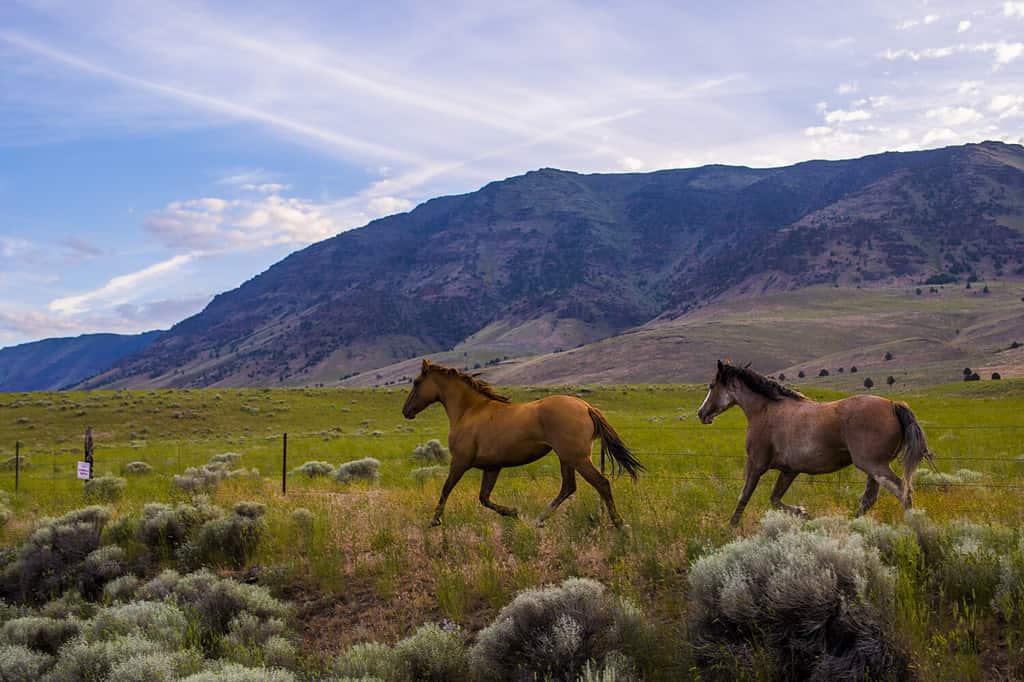
There are 17 Herd Management Areas in southeast Oregon managed by the BLM.
©BuckTheSystem/Shutterstock.com
- Sheepshead/Heath Creek Herd Management Area (Vale District): Severe drought has dried up 61 of the area’s 63 water sources. About 1,200 wild horses currently live in this area. However, federal managers estimate that the land can only sustainably support 500 to 900. The BLM plans to round up and remove up to 499 horses using helicopter drive-traps to ease pressure on the land and prevent starvation.
- Riddle Mountain Area (Burns District): Conditions are even more severe across this 28,000-acre landscape near Burns, Oregon, where the Bald Mountain Fire wiped out 70 percent of the food supply. The BLM plans a complete emergency removal of the area’s entire population of roughly 400 to 418 horses to allow the burned rangeland time to heal.
A Race Against Weather and the Calendar
The Sheepshead/Heath Creek Emergency Gather began September 4, 2026, but experienced frequent interruptions due to helicopter maintenance. As of September 23, 2026, the BLM has gathered 251 horses toward its 499-horse target, but has not yet announced a restart date to collect the remaining 248 animals. On September 19, the agency formally rescinded the area’s temporary public land closure while operations remain suspended.
The emergency gather at nearby Riddle Mountain — originally scheduled to start on September 9, 2026 — has also faced a setback. On September 8, a federal judge issued a temporary restraining order that stopped the wild horse roundup. As of September 23, 2026, the operation remains on hold.
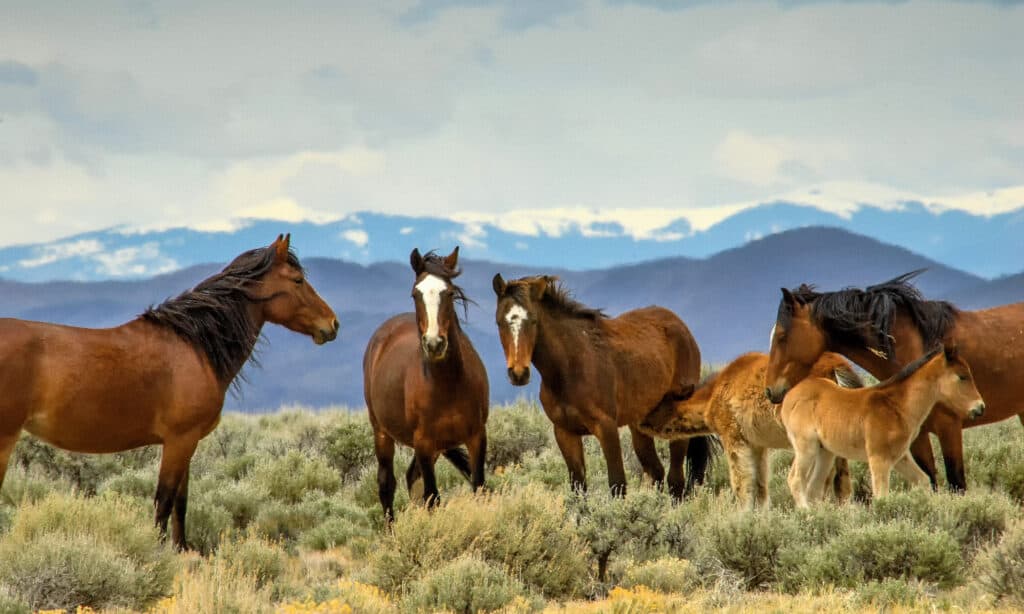
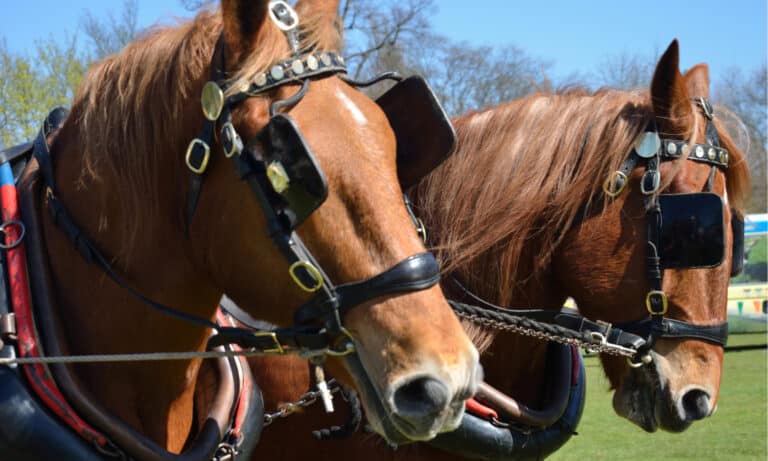
In the American West, wild horses are commonly referred to as mustangs.
©Adventure_Images/Shutterstock.com
These administrative and legal setbacks create a tight deadline to complete both roundups before winter. Burns District Manager Don Rotell warned that delaying operations into late fall risks severe weather that could make the area’s dirt access roads impassable and strand ground teams.
Giving Burned Rangelands a Chance to Recover
Removing wild horses after a wildfire is essential to protecting the land from long-term environmental damage. After intense wildfires, the fragile topsoil easily washes away during winter storms if plants don’t have time to regrow. Without a recovery period, invasive weeds can quickly overrun the damaged landscape, causing ecological damage that could persist for decades.
The BLM’s post-fire rehabilitation plan therefore calls for a multi-year rest period for affected public lands. To ensure equal protection and allow vegetation and soil to recover, this grazing restriction applies to both wild horses and livestock permittees during the recovery period.
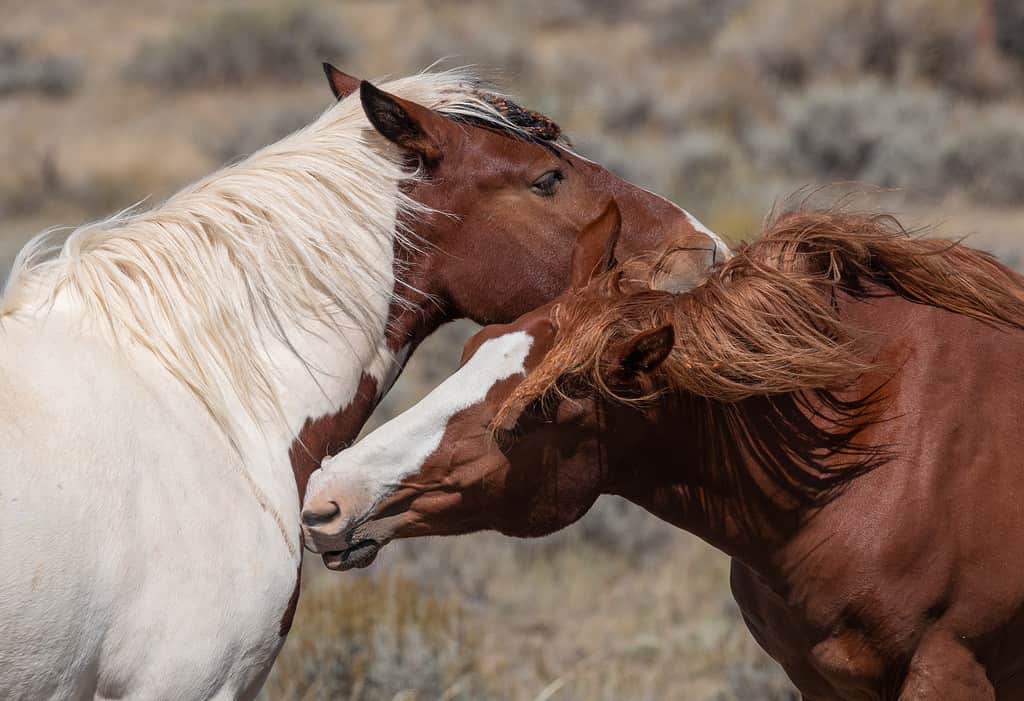
The wild horses of the American west are descendants of Spanish explorers from the 1500s.
©equigini/iStock via Getty Images
Where Do the Rescued Horses Go?
The emergency roundup is only the first step in a much longer process. Once captured, wild horses are transported to federal facilities — such as the Burns Wild Horse Facility — where they receive fresh water, high-quality feed, and veterinary care. Horses that are healthy and cleared by veterinarians will be listed on the BLM Online Corral for public adoption.
All operations — from field capture and transport to long-term holding — must follow the BLM’s Comprehensive Animal Welfare Program (CAWP) standards to prioritize safety and minimize distress.
A Growing Challenge Across the West
The situation in southeastern Oregon is part of a much larger challenge facing wild horse management across the American West, where environmental disasters are exposing gaps in federal land management capacity.
The BLM sets a target population (Appropriate Management Level) of about 27,000 wild horses and burros across western public lands. Today, roughly 87,000 live on these lands — more than three times that number.
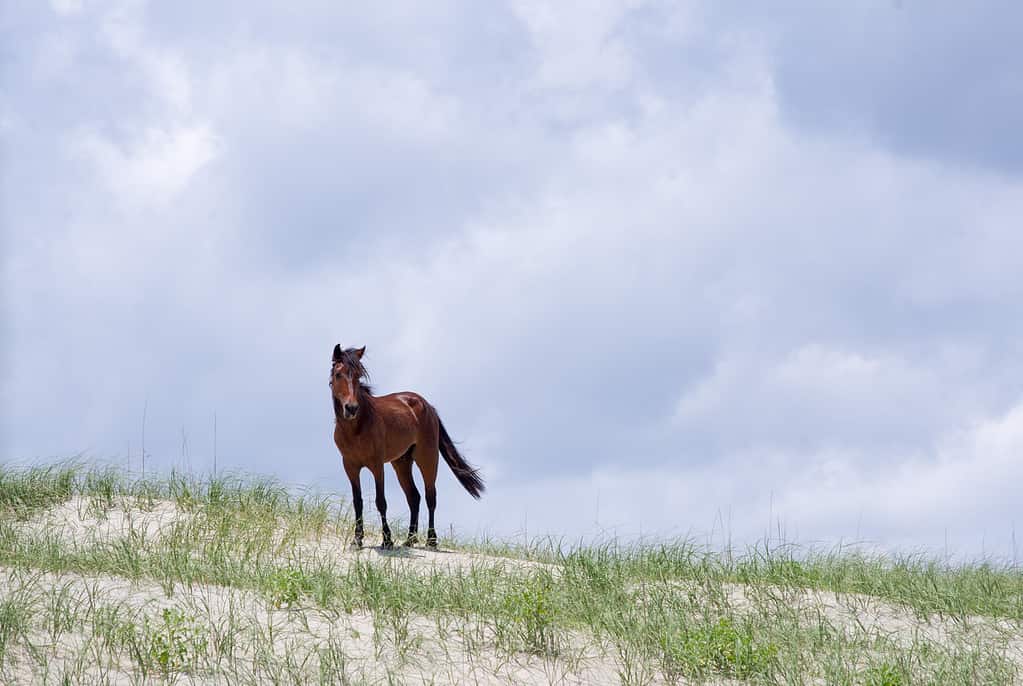
There are free-roaming wild horse populations in 10 states in the western United States.
©BHamms/Shutterstock.com
The 1971 Wild Free-Roaming Horses and Burros Act protects these animals from unauthorized capture, harassment, or death, limiting how federal agencies can manage herd sizes.
Drought and wildfire make that balance even more difficult, frequently destroying essential food and water sources and quickly turning overpopulation into a life-threatening emergency.
Long-term solutions — such as fertility control, public adoptions, range restoration, and adjusted herd limits — remain heavily debated among stakeholders, leaving federal agencies struggling to find a sustainable path forward.
In southeastern Oregon, these chronic issues have reached a breaking point. Severe wildfire damage and depleted resources are forcing emergency removals to save the horses from starvation, leaving managers, advocates, and local communities watching closely to see whether long-term solutions can keep pace with an increasingly unpredictable climate.