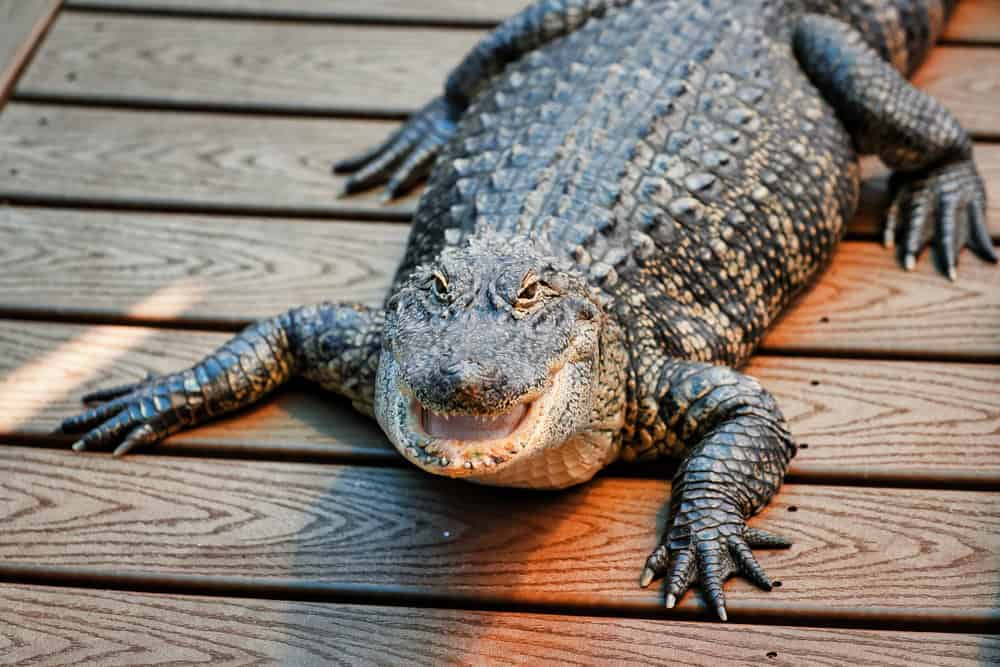

It’s not unusual for a home inspector to run across the unexpected when checking out an attic, but one inspector in North Carolina had the ultimate surprise. It’s not unheard of to find unwanted house guests living in an attic. You might anticipate finding mice, bats, or even raccoons nesting inside a home, however, not many people discover a fully grown alligator lurking in their attic.
In the video above from WSLS 10, the news team reports on a bizarre find during a home inspection. Dean Brown, a code enforcement official in Hanover County, North Carolina, had this to say regarding his inspection of a home undergoing construction, “I noticed what I thought was a fake, stuffed gator of some sort. And then I started continuing doing my job, then I looked back at him and realized he was moving and breathing.”
Brown continued, “That’s why I second-guessed what he was because he didn’t really move at first. He was kind of asleep, I guess. But once I shined my flashlight on his head, his eyes started to open, and he gave me a wink and let me know, ‘I’m alive.”

It’s estimated there are at least 1,000 alligators in North Carolina, though exact numbers can vary.
©meunierd/Shutterstock.com
Do Alligators Live in North Carolina?
Although they don’t often make their way inside homes, alligators do live in the swamps, ponds, and lakes of North Carolina. In the U.S., the biggest populations of American alligators are in Louisiana and Florida. However, they can also be found in Texas and as far north as North Carolina, which is as far north as their range gets. It’s estimated there are around 1,000 alligators living in North Carolina.
How Could an Alligator Make Its Way Up to an Attic?
After Brown discovered the alligator he called animal control who came to remove the reptile from the home. The county spokesperson Alex Riley told the Port City Daily it’s possible the alligator entered through a door that had been left open over the weekend. From there, the animal made the trek up two flights of stairs to hang out in the attic.
It’s hard to imagine an animal with such a heavy body and short legs climbing stairs, but alligators are more athletic than you might expect. As long as they have something to grip onto, they have the strength to pull themselves up.
Although it may have been the first time the county discovered an alligator in an attic, alligators are known to occasionally enter people’s homes. It’s more likely to happen when people build homes in alligator habitats. This house was in a neighborhood that bordered Bernard Creek. The creek empties into the Cape Fear River. The alligator likely wandered from the waterway in search of food and ended up in someone’s house.
Looking for a Mate?
Although we can’t be sure why the alligator climbed up to investigate the attic, it may have been looking for food. Or perhaps, it was looking for a mate. Alligator mating season in North Carolina starts in May, but alligators begin courting earlier when, much like dating, they take time to get to know each other. Wildlife experts say that North Carolina alligators begin courtship in April, but perhaps this one was getting a head start.
How Big Do Alligators Get?
The alligator found in the North Carolina attic was eight feet long. This may sound large, but male American alligators can grow up to 15 feet long and weigh 500 pounds. However, it’s more typical for them to stay around six feet long.
What to Do if You Encounter an Alligator?
Hopefully, you won’t find an alligator in your home. If you encounter one wandering around in the wild, experts have a few tips on keeping safe.
Alligators aren’t interested in attacking people, but that doesn’t mean you couldn’t get hurt or killed if one felt threatened by your presence. If you see an alligator, give it space and don’t approach it. Don’t try to get close for a picture or grab its tail. Alligators can get aggressive when startled or confused.
Wildlife experts also say not to feed alligators. Once alligators lose their fear of humans and associate people with food, things can get dangerous.
The North Carolina Wildlife Federation has other tips for avoiding an attack such as keeping your pets on a leash and keeping a distance of at least 50 feet. It’s also important to stay vigilant when you are in areas where alligators are likely to be.
Don’t Mess With a Baby Alligator
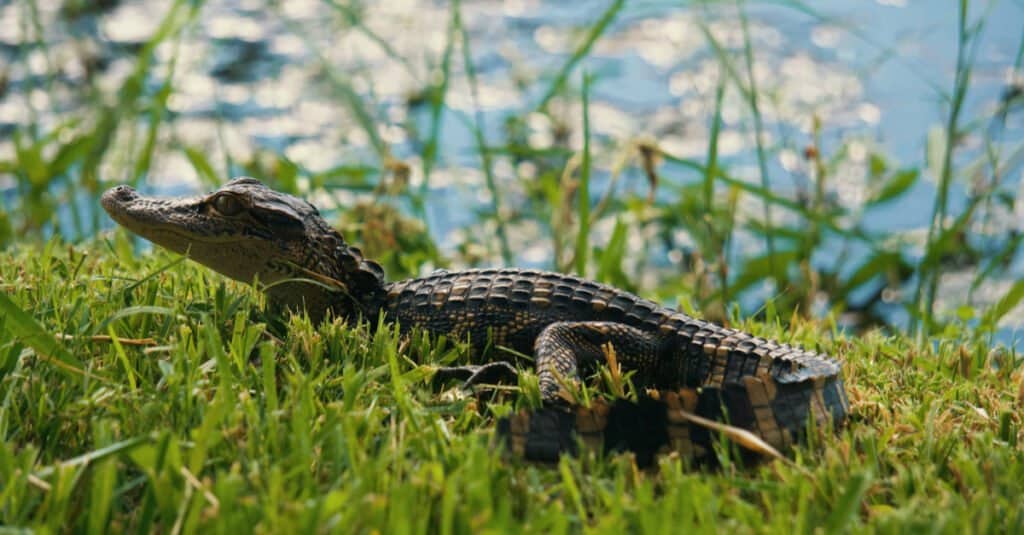
Baby alligators stay close to their mothers for the first couple of years.
©Ryancampbell/Shutterstock.com
No matter how cute that little one-foot-long baby alligator may be, don’t get too close, its mother is likely to be nearby. Alligators are attentive mothers. They guard their eggs until they hatch, then the mother carries the babies to nearby water. Babies stay with their mothers for about two years while she protects them from predators. If you try to get close to a baby alligator, its mother won’t be happy.