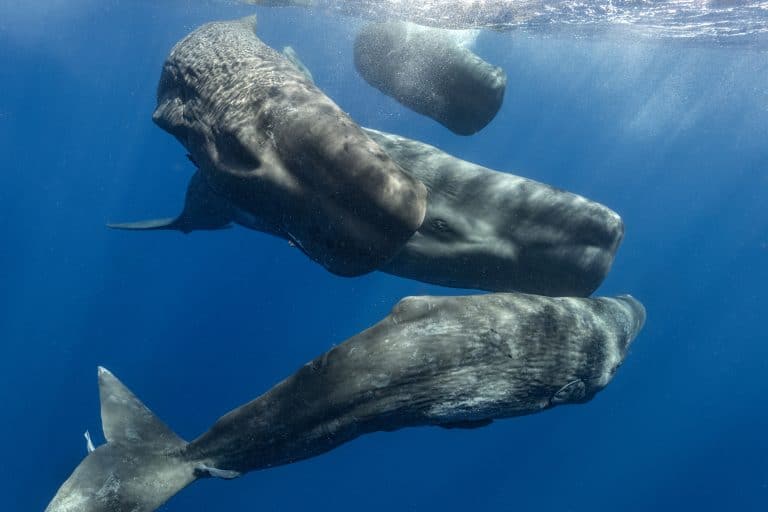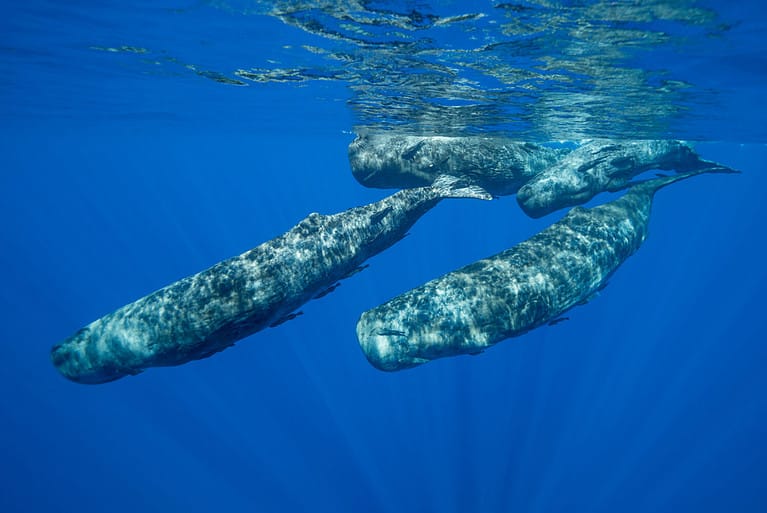

Sperm whales are water giants and can be found through the world’s oceans. They live in deep waters and can dive up 6,500 to 10,000 feet (2 to 3 km) below sea level, searching for prey. Sperm whales are the largest toothed predator and have the largest brain of any mammal. Spermaceti, also called sperm oil, gives this whale its name and is created by the organ of the same name in its head.
There are over 90 species of whale in the ocean and the largest is the Antarctic blue whale. Yet, sperm whales are near the top of the list for largest animals to ever live on Earth.
There are three different sperm whale species, each with varying sizes. They are considered endangered and are experiencing population decline. This article will reveal some of the largest sperm whales ever to be found. Let’s dive in!
The Largest Sperm Whale Ever Recorded
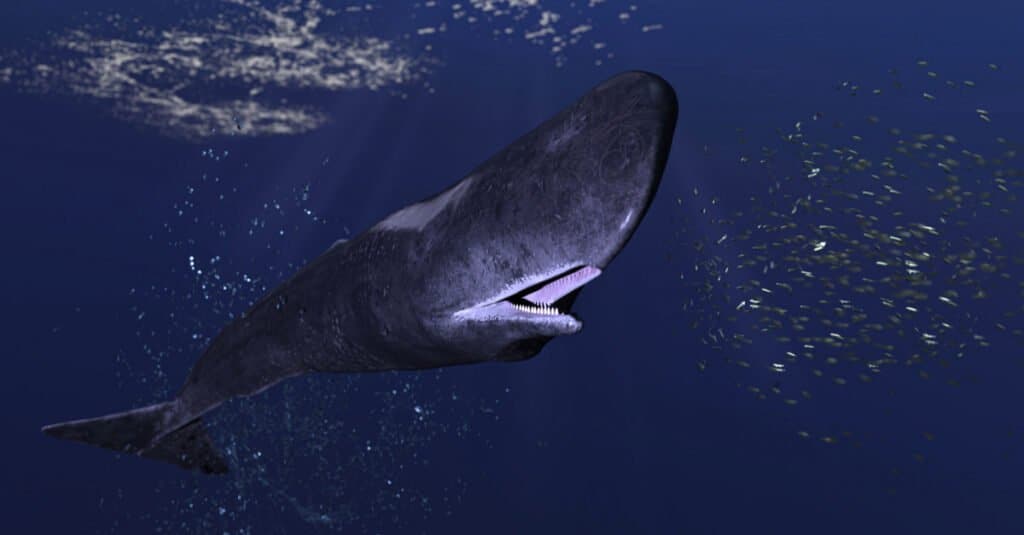
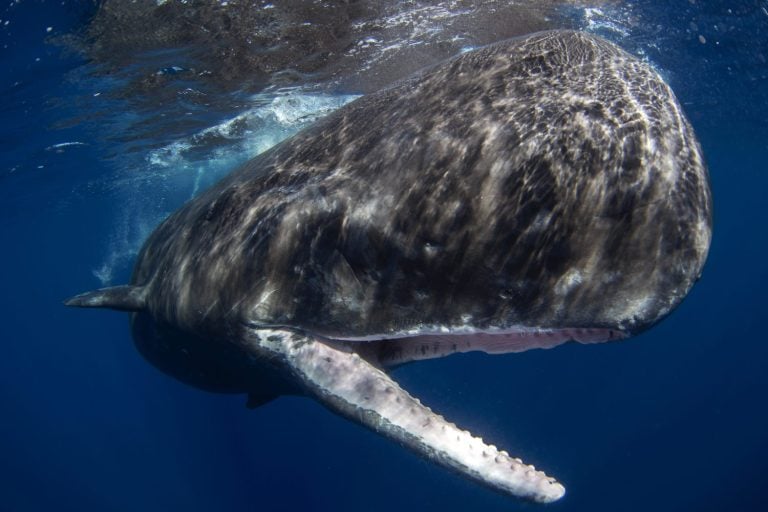
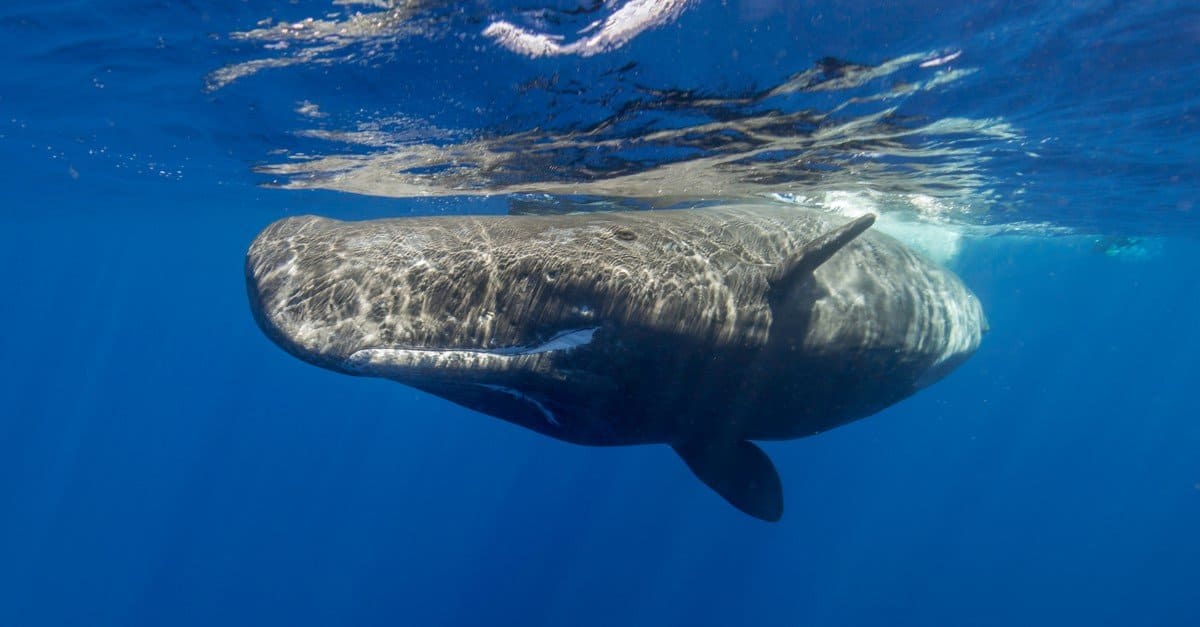
Sperm whales are the largest toothed mammal, and the specimen with the largest jaw is believed to have belonged to an 84-foot sperm whale.
©bekirevren/Shutterstock.com
Sperm whales are some of the largest whales in the world. Whalers have unofficially reported quite a few large specimens over the years. In fact, it is estimated that the sperm whale that inspired Herman Melville’s literary masterpiece Moby Dick was 85 feet long. While the largest confirmed sperm whale doesn’t quite reach the length of Captain Ahab’s nemesis, its length still boggles the mind.
The generally accepted largest sperm whale specimen measured 67 feet, 11 inches (20.7 m) as cited in Mark Carwardine’s 1995 book Animal Records—a bit more than the length of a cricket pitch (66 feet) or just shy of a seven-story building (70 feet). In 1950, this sperm whale was caught off the Kuril Islands, a volcanic archipelago that stretches more than 800 miles from Hokkaido, Japan, to the Kamchatka Peninsula in Russia. It separates the Sea of Okhotsk from the north Pacific Ocean. The Guinness World Records recognizes this measurement for largest toothed mammal. The sperm whale also holds the following records with Guinness World Records: heaviest brain, largest mammal to explode naturally, and largest jaw.
The specimen that earned the largest jaw record (16.1 inches or 5 meters) is said to have belonged to an 84-foot (24.6-m) behemoth—yet still not as large as Moby Dick. This specimen is on display at the Natural History Museum in London. While not authenticated, there are several more specimens on record that are even larger than the one officially recognized. “In our data set the longest measured length is 24 m[eters (or nearly 79 feet)], given for a male caught in the South Pacific in 1933. Even the next eight largest individuals (22.9–20.8 m [75–68 feet]) in our dataset are greater than the maximum length reported by Carwardine (1995) and recognized by Guinness Records,” writes McClain et al.
Whales of this size are rare, and humans often do not come across them. On average, adult male and female sperm whales grow to be about 52 (16 m) and 35 (11 m) feet long and weigh 45 and 15 tons, respectively. Even newborn sperm whales are giants; they are one of the largest newborn mammals. at birth, whale calves weigh about 1 ton and are 13 feet (4 m) long.
Sperm Whales Types
Sperm whales are one of the largest extant animals today, but evidence shows their ancestors have roamed waters for over 25 million years. Today, there are three types of sperm whale species: the pygmy sperm whale, dwarf sperm whale, and sperm whale.
The dwarf sperm whale and pygmy dwarf are much smaller than the average sperm whale. The pygmy sperm whale grows to 11 feet (3.5m) and weighs about 880lbs (400kg) when fully grown. Pygmy sperm whales and sperm whales belong to different families. The sperm whale is in the Physeteridae family, and the pygmy sperm whale is in the Kogiidae.
Dwarf sperm whales are the smallest whale and belong to the Kogiidae family. Their size ranges from 6.6 to 8.9 ft (2 to 2.7m), and they will weigh between 300 to 600lbs (136 to 272kg.) One of the main things these species have in common is the organ in their head that makes spermaceti. This substance is used for candles and ointments and is only found in sperm whales.
How Much Do Sperm Whales Eat
Sperm whales are the largest toothed predator, and they spend their time roaming deep waters looking for food. Being so large, sperm whales need to eat constantly and consume around 3.5 percent of their body weight daily. This means they can eat as much as 2700 lbs (1224.6kg) of daily food. Sperm whales feed on various sea life like squid, fish, octopus, and even sharks.
Are Sperm Whales Dangerous
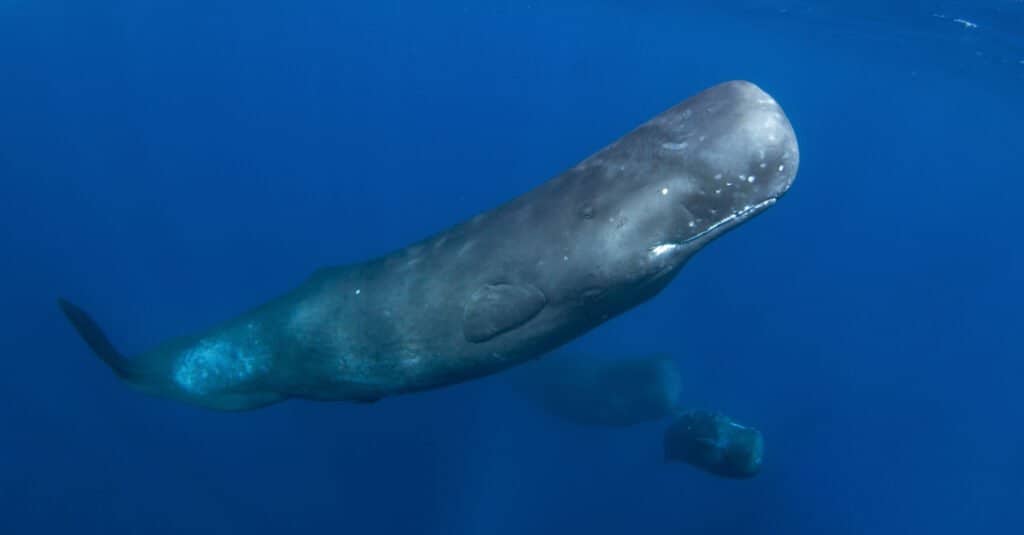
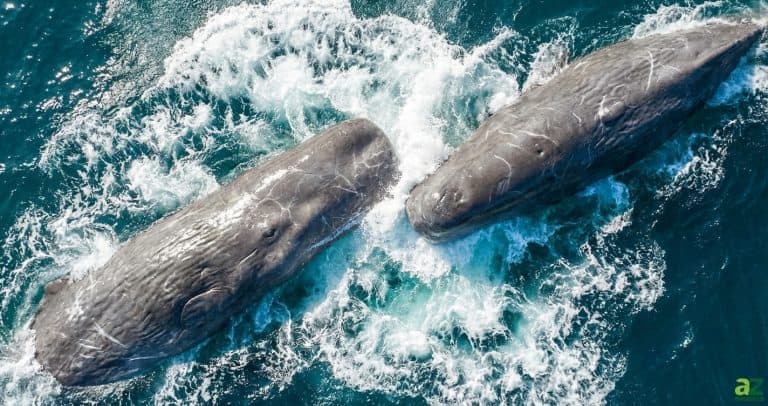
Despite their size, sperm whales are gentle creatures that aren’t looking to attack humans
©Martin Prochazkacz/Shutterstock.com
Sperm whales are definitely large enough to be dangerous, but that doesn’t mean they are set out to harm. If you have heard any fisherman’s tales, you might have heard of dangerous sperm whales attacking.
Sperm whales are friendly creatures and are not set out to harm humans. They will usually never attack humans and only go after their prey. We are actually more dangerous to sperm whales, which is why they have been declining in population. Sperm whales may become violent when hunted and attacked by whalers. When respected and not harassed, sperm whales and humans can coexist peacefully.
Why Sperm Whales Populations Are Declining
Commercial whaling has been around since the 1800s and is one of the reasons sperm whale populations have declined over the last few decades. Today we are trying to preserve and fix the damage caused in the past to this species. Sperm whales are considered endangered and are also being affected by the oceans changing habitat. Climate change and pollution are ways their homes have been changed which negatively affects them.
Sperm whales also have a long gestation period of 14 to 16 months. This extended period is higher than most animals, and one of the reasons populations have been slow to recover.
Sperm whales are giants, and whale watching is one of the best ways to see their size. You can see how large and beautiful these animals are when up close. Even though they spend most of their time in the water, they are mammals like humans. Preservation of sperm whales is essential in keeping this species from going extinct. Humans are the reason for their population loss but can also be the reason for their rebound.