D
Species Profile

Dodo

Raphus cucullatus

Mauritius' lost pigeon giant
Kit Leong/Shutterstock.com

Dodo Distribution

Click a location to explore more animals from that region

Endemic Species
Loading map...

Size Comparison

Human 5'8"
Dodo 2 ft 11 in

Dodo stands at 52% of average human height.

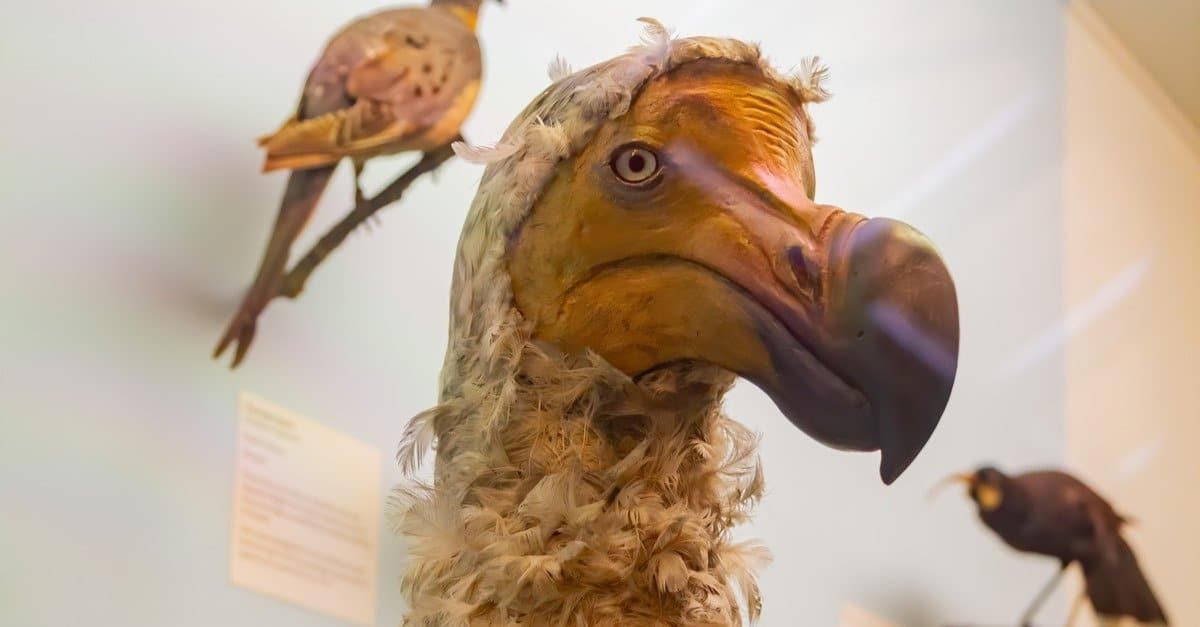
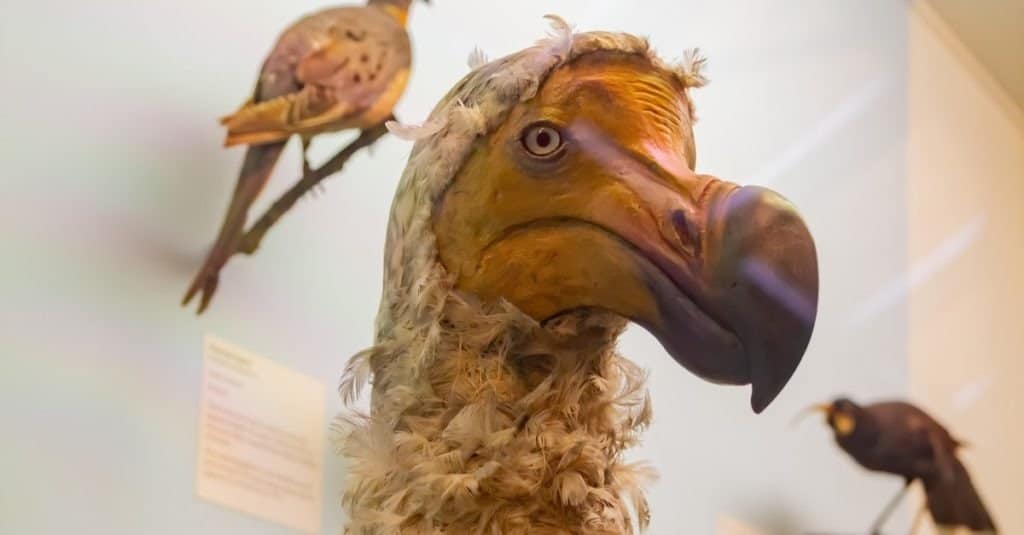
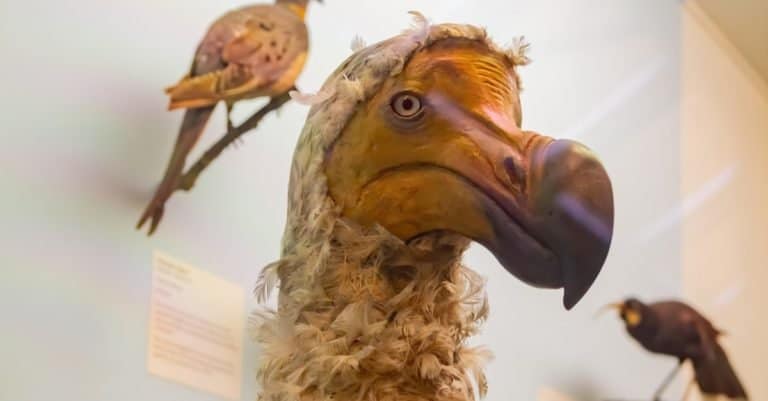
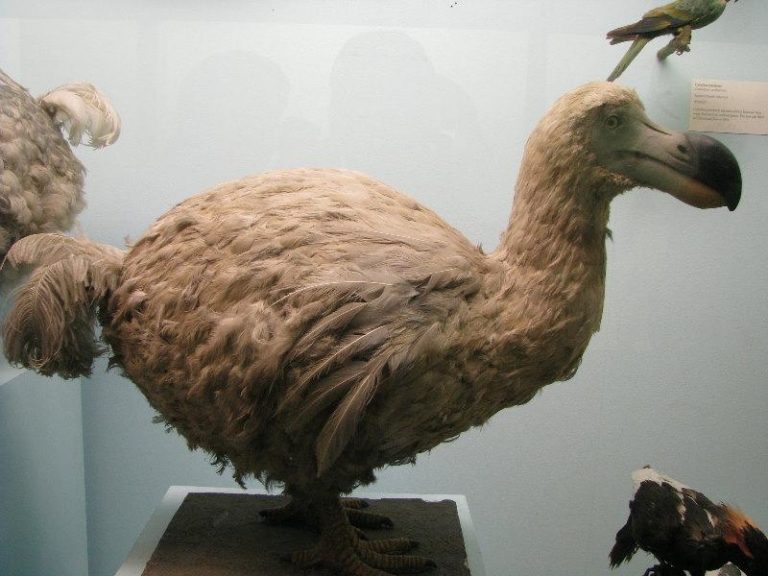
Dodo bird model display in The Natural History Museum on JUL 16, 2011 at London

At a Glance

Wild Species
Also Known As dodo bird, dront
Diet Frugivore
Activity Diurnal
Lifespan 20 years
Weight 18 lbs
Status Extinct
Did You Know?

Closest living relative is generally identified as the Nicobar pigeon; the dodo belongs to the pigeon and dove family.

Scientific Classification

The dodo was a large, flightless pigeon relative that lived only on Mauritius in the Indian Ocean. It became an emblematic example of human-driven extinction after the island’s colonization in the 17th century.

Kingdom
Animalia
Phylum
Chordata
Class
Aves
Order
Columbiformes
Family
Columbidae
Genus
Raphus
Species
Raphus cucullatus

Distinguishing Features

  • Large, robust-bodied, flightless bird closely related to pigeons and doves
  • Big hooked bill; small wings relative to body size
  • Stout legs; likely ground-nesting
  • Often depicted with grayish plumage and a tufted tail (historical depictions vary)

Physical Measurements

Height
2 ft 11 in (2 ft 7 in – 3 ft 3 in)
Length
3 ft 3 in (2 ft 11 in – 3 ft 7 in)
Weight
31 lbs (22 lbs – 40 lbs)
Tail Length
6 in (4 in – 8 in)

Appearance

Primary Colors
Secondary Colors
Skin Type Feathered body with localized bare skin on the face (around the bill/eye region); robust keratinous bill; scaly legs/feet typical of birds.
Distinctive Features
  • Extinct, island-endemic, flightless columbid (pigeon/dove family, Columbidae) formerly restricted to Mauritius (Indian Ocean).
  • Large body and small wings show it could not fly; adults stood about 1 meter tall with a very thick, heavy build. Exact weight and size vary and are not known.
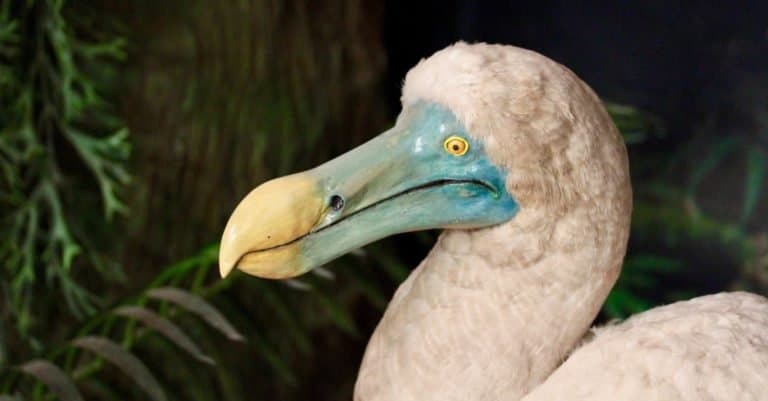
  • Disproportionately large, strongly hooked bill (often reconstructed as yellowish with a darker tip).
  • White tail tuft of curled feathers (a recurring feature in 17th-century descriptions/depictions).
  • Bare facial skin around the bill/eyes frequently shown in historical art (often reconstructed as bluish-gray).
  • Ground-associated lifestyle implied by limb robustness and flightlessness; island ground-nesting vulnerability is consistent with extinction drivers after 17th-century human contact (hunting/harvesting, habitat alteration, and introduced predators impacting eggs/chicks).
  • Not a ratite (not closely related to ostriches/emus); it is a specialized, flightless pigeon relative (Columbiformes: Columbidae).

Did You Know?

Closest living relative is generally identified as the Nicobar pigeon; the dodo belongs to the pigeon and dove family.

Estimated body mass was likely ~10.6-17.5 kg based on skeletal scaling, challenging older "very fat" depictions (Angst et al., 2011).

Early eyewitnesses described it as a ground-foraging bird that ate fallen fruits and other plant matter; the beak and gizzard likely handled tough foods.

The last widely accepted recorded sighting is from 1662 (Volkert Evertsz); extinction likely followed soon after, though exact date remains uncertain.

Mauritius had no native land mammals before people arrived; introduced pigs, rats, cats, and monkeys were major nest predators for ground-nesting dodos.

"Dead as a dodo" became a famous English idiom for something irreversibly gone, cementing the bird as a symbol of extinction.

Unique Adaptations

  • Flightlessness with reduced wings: energy shifted from flight to robust terrestrial locomotion on an island without native mammalian predators.
  • Powerful hindlimbs and heavy bones: built for walking and stability on the forest floor rather than aerial agility.
  • Large, hooked bill: suited to handling and tearing tough fruits/plant material; also consistent with opportunistic feeding.
  • Island endemism: evolved in isolation on Mauritius, a classic example of how specialized island species can be highly vulnerable to sudden new threats.
  • Pigeon-like crop and gizzard system (family trait): enabled rapid intake of food and later processing-useful where fruit falls in pulses.

Interesting Behaviors

  • Ground nesting: historical accounts indicate nests on the ground, making eggs/chicks highly vulnerable to introduced predators.
  • Frugivory/foraging on the forest floor: described eating fallen fruits, seeds, and plant parts; likely an opportunistic feeder in coastal/lowland forests.
  • Gizzard-based processing: like many pigeons, probably swallowed grit to help grind hard food items in the gizzard (inferred from Columbidae biology and dodo anatomy).
  • Low fear response to humans: early sailors repeatedly noted ease of capture-typical of island birds lacking predators, and a key vulnerability after human arrival.
  • Seasonal breeding likely tied to Mauritius' wet/dry cycles (inferred from island ecology and historical notes on breeding condition), though exact timing is debated.

Cultural Significance

The dodo (Raphus cucullatus) is a famous symbol of extinction caused by people. 17th-century colonization of Mauritius brought habitat loss, hunting, and predators (rats, pigs, cats), shaping conservation of island, ground-nesting birds. It appears in Carroll's Alice and the phrase dead as a dodo.

Myths & Legends

Because Mauritius had no Indigenous human population before European contact, the dodo has few true precolonial folk myths; instead, its "legend" is largely maritime and literary.

Early sailor tales portrayed the dodo as a comically tame, easy-to-catch bird-stories repeated in travelogues and ship narratives that helped build its lasting reputation for fearlessness.

A long-running naming tradition links "dodo" to Portuguese/early sailor slang meaning "fool" (often cited as related to *doudo/doido*), a story that stuck as the bird became a cautionary emblem.

In Victorian-era cultural memory, the dodo became a quasi-mythic creature of lost worlds-revived as a character in Lewis Carroll's works and later treated as a symbol of absurdity and disappearance.

Museum lore and Oxford storytelling often connect Carroll's inspiration for the Wonderland Dodo to dodo remains and images he knew-an anecdotal "origin legend" repeated in dodo exhibitions and popular histories.

Conservation Status

EX Extinct

No known individuals remaining.

Population Unknown

Life Cycle

Birth 1 chick
Lifespan 20 years

Lifespan

In the Wild
10–30 years
In Captivity
1–10 years

Reproduction

Mating System Monogamous
Social Structure Socially Monogamous
Breeding Pattern Seasonal
Fertilization Internal Fertilization
Birth Type Internal_fertilization

Direct records of dodo (Raphus cucullatus) mating are few because it went extinct. By family (Columbidae) links and reports, it is thought to be socially monogamous in the breeding season: pairs mate, likely lay one egg, and both parents care.

Behavior & Ecology

Social Flock Group: 3
Activity Diurnal
Diet Frugivore Fallen forest fruits (especially large, hard-seeded fruits taken from the ground)

Temperament

Notably unwary/tame toward humans and other novel animals in early accounts, consistent with evolution in the absence of mammalian predators on Mauritius prior to human arrival (Cheke & Hume 2008).
Generally described as placid and slow-moving; likely became defensive/territorial at close range or near nest/food, but detailed aggression displays are not documented.
Ground-oriented, sedentary forager; social tolerance probably moderate-able to aggregate at resources without strong flock coordination (inferred from reports and Columbidae ecology).

Communication

Poorly documented; historical descriptions suggest a low, simple call, sometimes compared in tone to a goose/gosling rather than the typical dove 'coo' Summarized in Cheke & Hume 2008
Likely produced pigeon-like low-frequency coos/grunts used for mate contact and short-range signaling Inferred from Columbidae; direct recordings impossible
Visual displays likely important at close range (inferred from Columbidae): head-bobbing, bowing/postural signaling, and wing/tail positioning during courtship or threat.
Tactile communication likely occurred within pairs Billing/allopreening), as in many pigeons/doves (inferred
Acoustic non-vocal sounds (e.g., wing claps) are not evidenced for dodos and should be considered unconfirmed.

Habitat

Biomes:
Tropical Dry Forest Tropical Rainforest Wetland
Terrain:
Island Coastal Plains Hilly
Elevation: Up to 2716 ft 6 in

Ecological Role

Forest-floor frugivore influencing plant recruitment via seed predation and (for some species) potential seed dispersal; also contributed to nutrient redistribution through droppings in Mauritian lowland forests.

Seed fate modification (seed predation and potential dispersal for swallowed fruits) Support of forest regeneration dynamics via selective feeding on fruiting plants Nutrient cycling and localized fertilization through feces in forest-floor habitats

Diet Details

Other Foods:
Fallen fruits Large seeds and pits Palm fruits Tough plant material Gastroliths

Human Interaction

Domestication Status

Wild

Raphus cucullatus (dodo) was a wild, flightless bird from Mauritius. It was never domesticated; humans hunted it and took specimens. After Dutch landings in 1598 it was hunted in the early 1600s. Introduced animals and habitat loss caused rapid decline and extinction by the late 1600s (last noted 1662, date uncertain).

Danger Level

Low
  • No known predatory threat; primarily risk would have been minor injury (pecking/bites or scratches) if handled or cornered.
  • Potential zoonotic risk cannot be assessed for an extinct species; as a bird, hypothetical risks would have been similar to handling other wild pigeons (e.g., general avian pathogens), but there are no direct data for the dodo.

As a Pet

Not Suitable as Pet

Legality: Not applicable-species is extinct; private ownership/acquisition is impossible. Any purported 'dodo' offered for sale would be fraudulent. Museum-held subfossil material is typically protected by national heritage and export laws; trade in genuine remains is tightly regulated and rarely permitted.

Care Level: Expert Only

Purchase Cost:
Lifetime Cost:

Economic Value

Uses:
Food (historical subsistence/resource use) Curiosity/collection (historical live capture and specimen trade) Scientific research value (subfossils, historical ecology, extinction studies) Cultural/symbolic value (icon of human-driven extinction) Tourism/education (indirect, via museums and conservation messaging)
Products:
  • meat (historically consumed by sailors/settlers; palatability variably described in period accounts)
  • specimens/parts (historical collection of skins/bones; today mainly subfossil bones in research collections)
  • imagery/branding (modern indirect economic use in media, museums, and national symbolism)

Dodos may have become synonymous with stupidity in pop culture, but these birds adapted and survived over millions of years in the relatively harsh environment of Mauritius. If anything doomed the dodo, it was an unfortunate victim of circumstance. After years of merciless hunting by humans and introduced species, the dodo went extinct around 1688. Most of what we know about the dodo comes from contemporary accounts and modern studies of its anatomy. A few specimens were brought back to Europe, which inadvertently helped to preserve the bones and soft tissue for study.

An Amazing Bird: 3 Dodo Facts

  • The dodo bird became quite popular all around the world after it appeared as a minor character in chapters two and three of Alice’s Adventures in Wonderland. In the book, the dodo starts a kind of free-for-all race where everyone is a winner by design. It is believed that the character was a stand-in for Lewis Carroll himself.
  • Although the dodo acquired a reputation for clumsiness, studies of its anatomy suggest that it was actually capable of running at high speeds.
  • The origin of the word dodo is unclear. It might have come from the Dutch words for sluggard (the Dutch also referred to it as a wallowbird). Another potential source is the Portuguese word for crazy, fool, or simpleton. Regardless of its origin, the word dodo had already entered the English language by the early 1600s.

Habitat and Evolution

Islands in the Indian Ocean - Mauritius island

Mauritius is the only known location where dodos ever lived.

When it was still alive, the dodo bird lived a solitary existence on the island habitat of Mauritius in the Indian Ocean, about 500 miles directly east of Madagascar. At the time, Mauritius was heavily covered in forests, so the dodo was likely adapted for life around dense foliage. The island was completely uninhabited by the time European sailors arrived, so it is possible they were the first humans to ever catch sight of a dodo.

Based on contemporary accounts, the dodo built its nest on the ground and surrounded it with grass. This also made them very vulnerable to feral mammals introduced to the island. Dodos more than likely only laid one egg at a time, so each egg lost to predators would be devastating for the population.

Since the island was a hotspot for tropical storms, the dodo had to evolve to be able to withstand the harsh winds by staying low to the ground and raising its young quickly before the stormy season. This meant heaviness and stability became more important to the dodo than flying.

Classification and Scientific Name
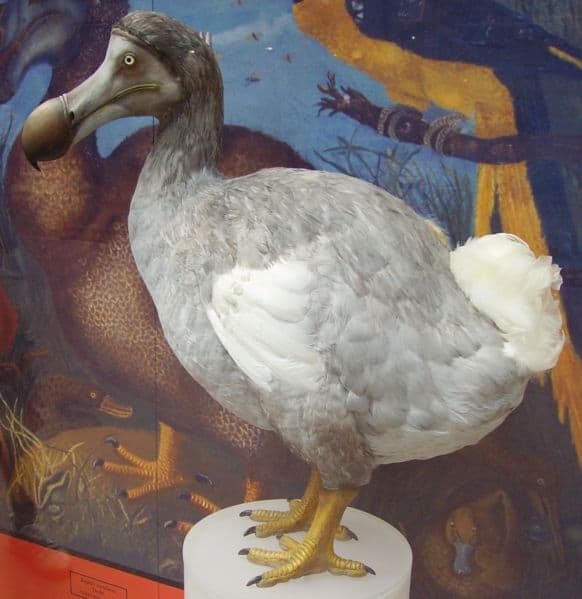
Some scientists believe dodos were related to modern-day pigeons and doves.

The scientific name of the dodo is Raphus cucullatus. This scientific name is derived from the Latin word cucullus for hood, perhaps a reference to the cowl-like head. The dodo was closely related to the solitaire birds of Rodrigues and Reunion, residing to the east and west of Mauritius. These species went extinct around the same time as the dodo. Most taxonomists consider the dodo to be a member of the family Columbidae with pigeons and doves, but others place it within separate classifications entirely.

Size, Appearance & Behavior

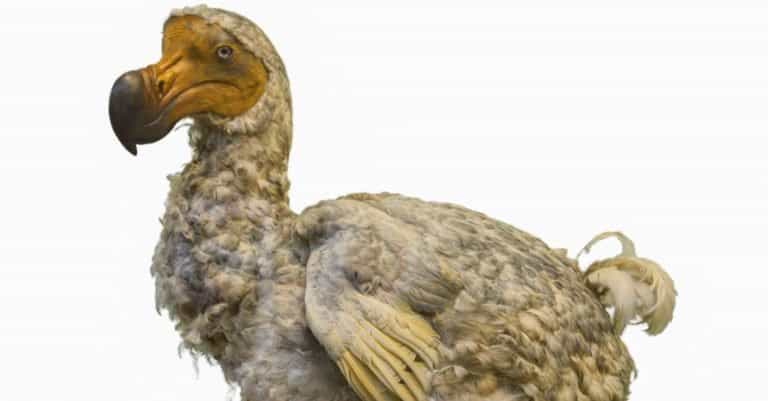
Based on reconstructions of its anatomy, it becomes instantly clear that the dodo has a similarly large, plump body shape as the turkey or chicken. It also has long legs, curly tail feathers, bare yellow feet, strong claws, and a featherless head. The short, undeveloped wings were obviously too small to support the body in flight, but they may have been used to maintain balance at top speeds. The big hooked beak, which was gray near the face and yellow or green toward the rounded tip, may have played an important role in hunting prey or resolving conflicts with other dodos.

Sailors gave conflicting facts about the dodo’s color. At different times, they mentioned that it was black or grey. But this may have been no contradiction at all since a modern study has revealed that the dodo most likely sported a brown-grey plumage, which became black while molting. This bird probably stood some 3 feet tall and weighed up to 50 pounds. The beak alone was some 9 inches long.

Most of the dodo’s unusual characteristics can be attributed to its isolation. With no known predators, the dodo gradually became bigger in size and lost its ability to fly. The rest of the body then adapted to compensate for flightlessness. Although it could run rather quickly, this species had few particular defensive adaptations, either physical or behavioral, and nested right out in the open. This left it completely exposed and vulnerable upon the arrival of settlers.

Diet
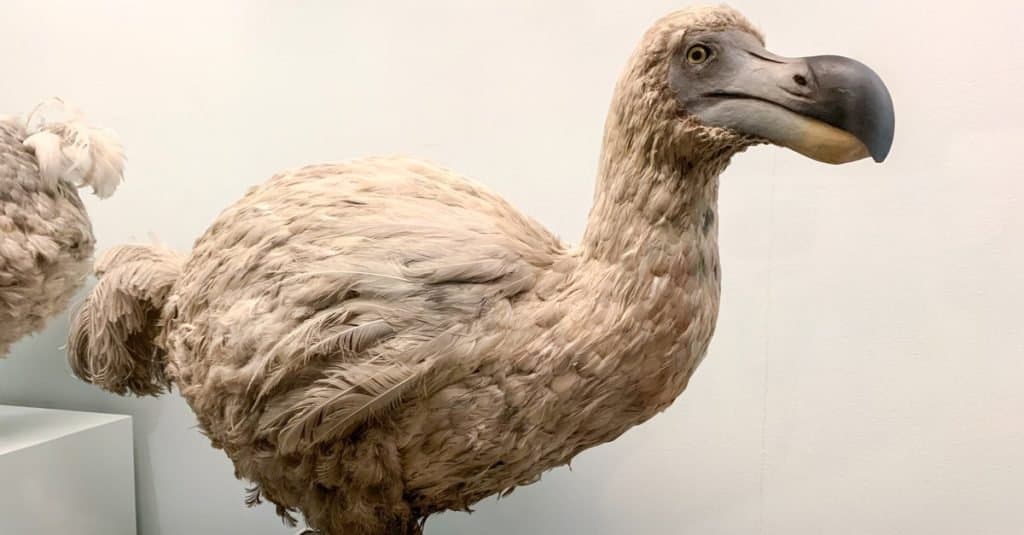
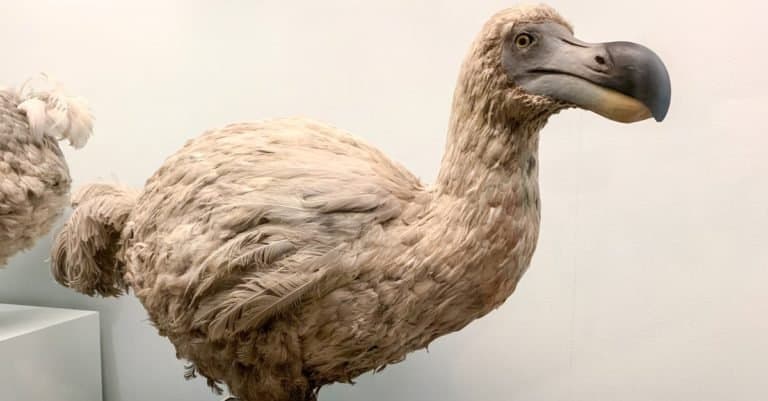
Stuffed dodo bird, an extinct flightless bird from Mauritius, east of Madagascar in the Indian Ocean.

It is thought that the dodo would hold stones in its beak to help grind up fruits and nuts.

Not a whole lot of information was ever recorded about this bird’s diet. Most of what we know is based on a single description, plus modern inferences from its anatomy.

What did the dodo eat?

The dodo most likely ate fruits, nuts, seeds, and roots. It’s also been suggested that they may have eaten crabs and other shellfish, but this is merely conjecture. Reports indicate that these birds could have swirled about stones and iron in their beaks to help break down their food for digestion. This unusual behavioral quirk is actually common among many animals.

Predators and Threats
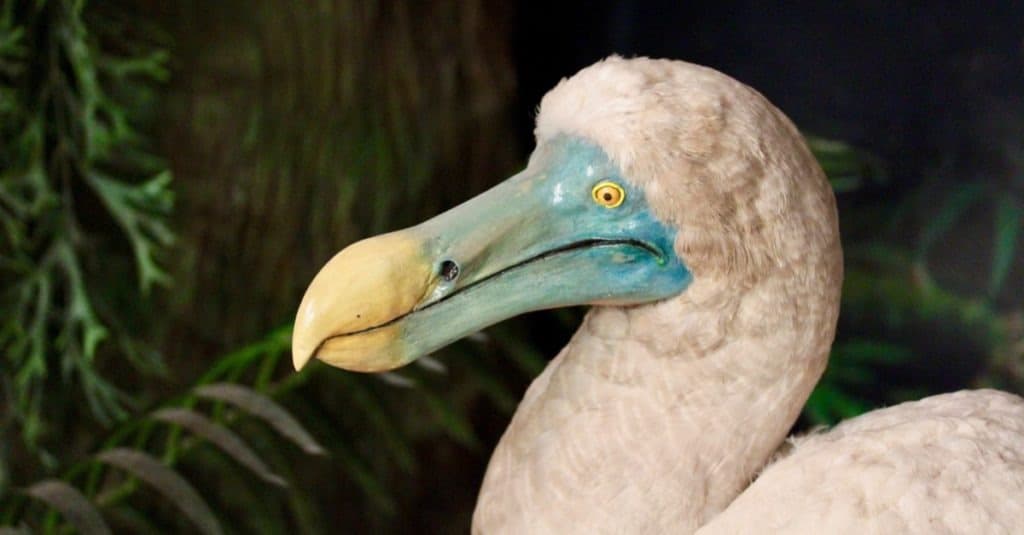
The dodo (Raphus cucullatus) is an extinct flightless bird that was endemic to the island of Mauritius.

Non-native species introduced to Mauritius sealed the fate of the dodo.

Until the arrival of people, these birds were almost completely free of predatory pressures of any kind. The isolation of its island habitat, which was too far out at sea to reach for predatory mammals and reptiles, was its main means of protection. It was also reported to bolster an impressively powerful bite to those who experienced it. Before they began to face the threat of invasive species introduced by settlers, the biggest threats to the dodo were environmental. Mauritius, by most accounts, was a tough place to live thanks to volcanic activity and frequent cyclones that forced dodos to alter their lives accordingly.

What ate the dodo?

Unaccustomed to predation, these birds made a very easy target for settlers, who killed them in large numbers and saved what they didn’t eat immediately for later. Reports indicate that the sailors could wander right up to the birds and kill them without resistance. But what probably sealed its fate was the introduction of deer, pigs, rats, cats, and monkeys, who preyed mercilessly on the exposed eggs or trampled the nests.

Reproduction, Babies, and Lifespan

Since this bird went extinct before the rise of modern scientific methods, very little is known about the reproductive habits of the dodo.

Contemporary observers wrote that it would produce only a single egg at a time, probably because it was under no particular predatory stress to produce more. Based on studies of its bone structure, one scientific study suggests that the chicks most likely hatched in August and then grew very quickly. This is perhaps because the chicks needed to develop into adulthood before the cyclones arrived between November and March and battered the island. The cyclones most likely reduced the availability of fruits and other vegetation. Based on very rough estimates, the bird may have lived for more than 20 years in the wild.

Population
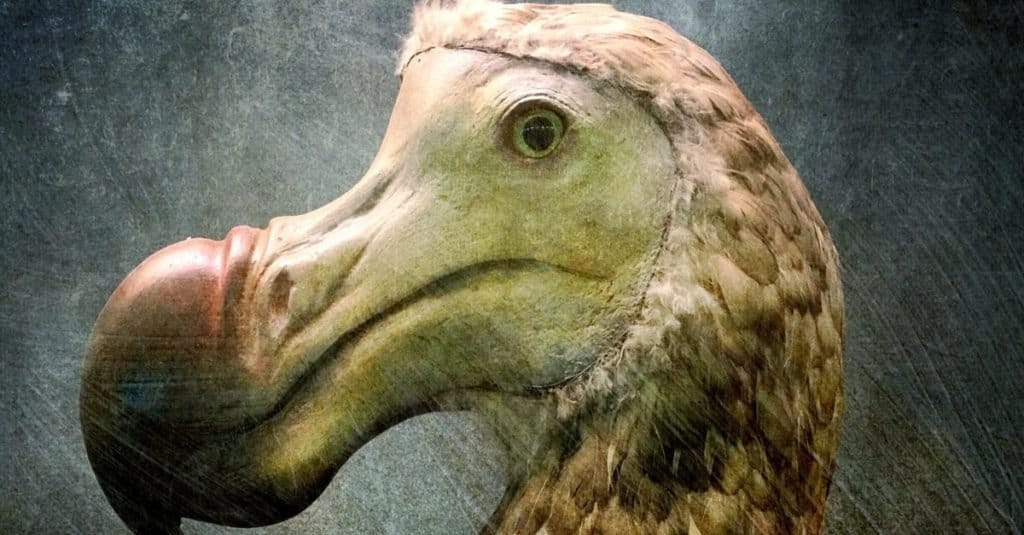
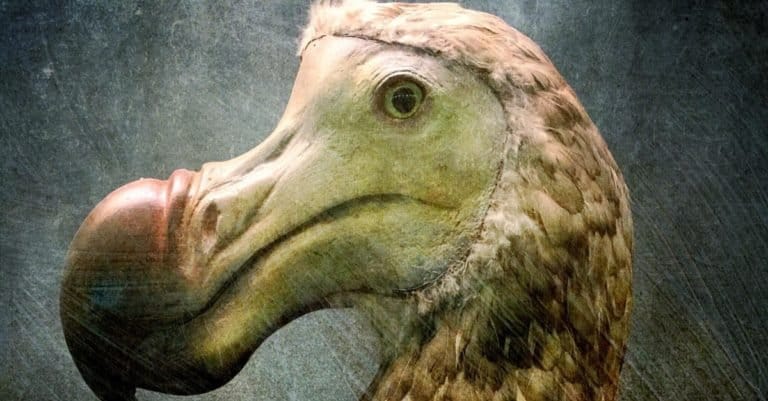
A dodo bird closeup portrait against an artistic background

The Dodo probably went extinct in 1688.

These birds probably went extinct shortly after the last sighting in 1688, about 90 years after they were first discovered. The population was likely not high to begin with, but the onslaught of new threats eventually led to its demise.

Active scientific projects, such as those by Colossal Biosciences, are attempting to revive the dodo using its sequenced genome and advanced gene-editing techniques. This plan involves editing the genes of the Nicobar pigeon, the dodo’s closest living relative, and using chickens as surrogate egg layers for the modified pigeon eggs.

View all 451 animals that start with D
How to say Dodo in ...
Czech
Dronte mauricijský
Danish
Dronte
German
Dodo
English
Dodo
Spanish
Dodo
French
Raphus cucullatus
Croatian
Dodo
Italian
Dodo
Hebrew
דודו
Dutch
Dodo
Hungarian
Dodó
Japanese
ドードー
English
Dodo
Polish
Drontowate
Portuguese
Dodó
Swedish
Dront
Turkish
Dodo

Sources

  1. Animal Diversity Web / Accessed December 31, 2020
  2. Britannica / Accessed December 31, 2020
  3. Thought Co / Accessed December 31, 2020
  4. BBC News / Accessed December 31, 2020
Corinna Cybele

About the Author

Corinna Cybele

My name is Corinna! In my profile photo you can see me with one of my two cats, Bisky! The other's name is Yma and she's a beautiful black Bombay kitty. I'm 24 years old and I live in Birmingham, AL with my partner Anastasia and like to spend my free time making music, collecting records and reading. Some other animals I've owned were a hamster, 2 chihuahuas and many different kinds of fish.

Thank you for reading! Have some feedback for us?


Dodo FAQs (Frequently Asked Questions)

Dodos were Omnivores, meaning they ate both plants and other animals.