

R
Species Profile

Red Wolf

Canis rufus

America's rarest wild wolf
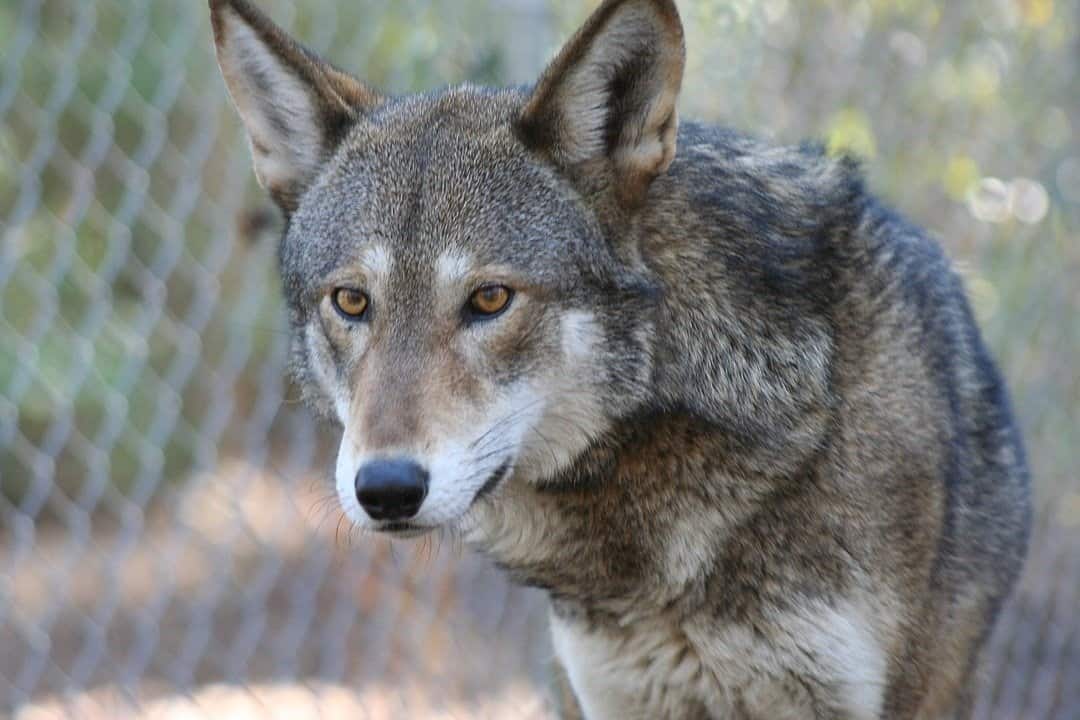
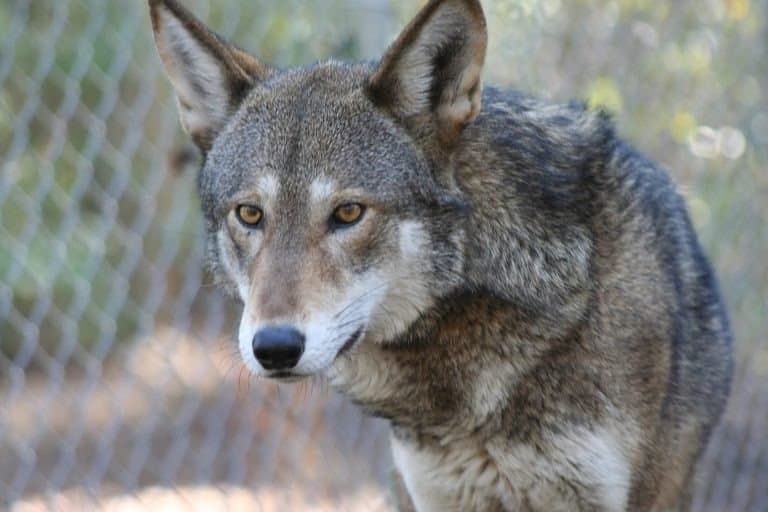
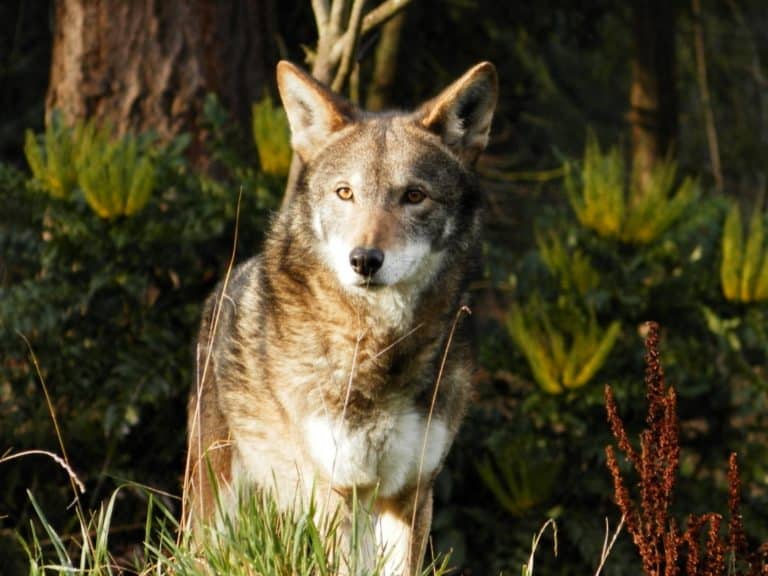
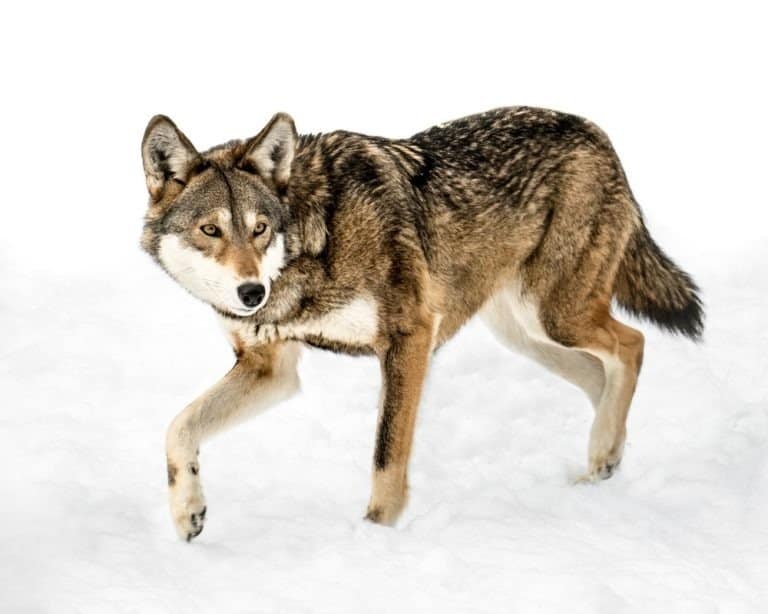
Red Wolf from United States / CC BY 2.0
Red Wolf at Sandy Ridge, USA

At a Glance

Wild Species
Also Known As Carolina wolf, Louisiana wolf, lobo rojo, loup rouge
Diet Carnivore
Activity Crepuscular+
Lifespan 6.5 years
Weight 36 lbs
Did You Know?

Taxonomy: the red wolf is Canis rufus (not a coyote, not a gray wolf), described as a distinct species in 1851 by Audubon & Bachman.

Scientific Classification

A medium-sized North American canid historically widespread in the southeastern United States; now critically limited in the wild, with intensive conservation management and a captive breeding program.

Kingdom
Animalia
Phylum
Chordata
Class
Mammalia
Order
Carnivora
Family
Canidae
Genus
Canis
Species
rufus

Distinguishing Features

  • Typically reddish-tan coat with darker saddle and pale underside (variable)
  • More slender and smaller than many gray wolves; larger than most coyotes
  • Long legs and relatively large ears compared with gray wolves
  • Often described as intermediate in appearance between gray wolf and coyote (partly reflecting gene flow in the region)

Physical Measurements

Males and females differ in size

Height
2 ft 2 in
2 ft 2 in (1 ft 12 in – 2 ft 4 in)
Length
5 ft 1 in (4 ft 6 in – 5 ft 5 in)
4 ft 6 in (4 ft – 4 ft 12 in)
Weight
60 lbs (49 lbs – 77 lbs)
51 lbs (40 lbs – 64 lbs)
Tail Length
1 ft 2 in (12 in – 1 ft 4 in)
1 ft 2 in (12 in – 1 ft 3 in)
Top Speed
30 mph
running

Appearance

Primary Colors
Secondary Colors
Skin Type Furred mammalian skin with a dense double coat (coarse guard hairs, insulating underfur); seasonally thicker in winter.
Distinctive Features
  • Medium-sized Canis rufus: head-body length 95-120 cm; tail length 30-40 cm; shoulder height ~66-79 cm (USFWS species accounts; IUCN Red List).
  • Adult mass commonly ~20-36 kg, males averaging larger than females (USFWS; IUCN).
  • Long-legged, lean build; relatively broad head and muzzle compared with coyotes; less massive than gray wolves.
  • Large feet and longer legs than coyotes; ears proportionally smaller and less pointed than coyote ears.
  • Pelage often shows reddish tones on ears/legs with darker grizzled back; tail frequently darker-tipped.
  • Native historical range: southeastern United States; current managed wild population/reintroduction centered in northeastern North Carolina (USFWS Red Wolf Recovery Program).
  • Conservation status: Critically Endangered on the IUCN Red List; ESA-listed as endangered in the U.S. (IUCN; USFWS).
  • Field ID caution: overlaps with coyote and wolf-like hybrids; taxonomy includes an ongoing hybridization/ancestry debate, so identification often relies on morphology plus genetic/management context (IUCN; USFWS).
  • Typical behavior relevant to appearance: mostly crepuscular/nocturnal and elusive in heavily managed landscapes; often travels in pairs or small family groups (USFWS).
  • Lifespan: wild commonly ~6-7 years; captive individuals can reach ~14-15 years (IUCN; AZA/USFWS husbandry summaries).

Sexual Dimorphism

Sexual dimorphism is modest: males average heavier and slightly longer-bodied, while coat coloration and pattern are generally similar between sexes. Differences are mainly size-related rather than ornamental.

  • Typically higher adult body mass (often upper part of ~20-36 kg range).
  • Slightly larger head and overall frame on average.
  • Typically lower adult body mass than males within the species' range.
  • Slightly smaller overall frame; pelage pattern generally indistinguishable from males.

Did You Know?

Taxonomy: the red wolf is Canis rufus (not a coyote, not a gray wolf), described as a distinct species in 1851 by Audubon & Bachman.

Size is mid-way between coyote and gray wolf: adults typically 20-36 kg, with a head-body length ~95-120 cm plus a ~30-40 cm tail (U.S. Fish & Wildlife Service species accounts).

Breeding is strongly seasonal: most mating occurs Jan-Mar; pups are usually born Apr-May after ~60-63 days' gestation (USFWS).

Litters commonly contain ~3-5 pups (reported range ~2-8), raised in a single family group with extensive alloparental care.

Wild lifespan is often ~6-7 years; in captivity individuals can reach ~14-15 years (USFWS captive program summaries).

The only long-running wild reintroduction population has been centered on the Albemarle Peninsula in northeastern North Carolina, intensively managed to reduce coyote hybridization (USFWS recovery program).

Unique Adaptations

  • Intermediate build for mixed habitats: longer legs and a relatively narrow, elongated frame aid efficient travel across coastal plain forests, pocosins, marsh edges, and agricultural mosaics.
  • Dietary flexibility: capable of switching between small prey, mesocarnivores, and seasonal carrion-important in fragmented, human-altered ecosystems.
  • Seasonal coat tones and pelage patterning: commonly shows reddish tones on ears, head, and legs with darker dorsal shading, improving concealment in leaf litter and pine understory.
  • Reproductive timing: tightly seasonal breeding (once per year) synchronizes pup rearing with spring prey pulses.
  • Behavioral plasticity under management: tolerance of radio-collaring, den monitoring, and managed interventions has been crucial to the species' conservation survival in the wild.

Interesting Behaviors

  • Monogamous pair-bonding: a breeding pair typically leads a small family group (often 2-8 animals), with older offspring helping rear pups.
  • Territoriality and communication: patrols, urine marking, scat deposition, and howling are used to advertise territory and maintain pair/family cohesion.
  • Crepuscular-to-nocturnal activity: in human-dominated landscapes, activity often shifts toward dusk, night, and dawn to reduce disturbance.
  • Den-site selection: dens can be in sandy knolls, hollow logs, brush piles, or excavated burrows; adults rotate pups among rendezvous sites as they grow.
  • Generalist predation and scavenging: hunts alone or cooperatively for small-to-medium prey (e.g., rabbits, rodents, nutria, raccoons, white-tailed deer fawns) depending on local availability.
  • Dispersal dynamics: juveniles may disperse tens of kilometers to find mates/territory; management sometimes uses "placeholder" sterilized coyotes to hold territories and limit hybridization until wolves can reclaim them (a documented USFWS strategy).

Cultural Significance

The red wolf (Canis rufus) once lived across the southeastern US and is a symbol of endangered-species recovery. Captive-bred from few founders in the 1970s and reintroduced on the Albemarle Peninsula, it faces habitat loss, human killing, and coyote hybridization, sparking debate.

Myths & Legends

In the 1800s writers and naturalists called southeastern wolves "red wolf" because of red fur on head and ears. The scientific name Canis rufus means "red dog/wolf," making people see them as red.

In the Southeast, many Native peoples tell stories of wolves as strong, social hunters and teachers of survival. Though called simply 'the wolf,' these tales are part of the Red Wolf (Canis rufus) native landscape.

Colonial settlers in the coastal Carolinas and Gulf coastal plain told of red or brown wolves, often called the Red Wolf (Canis rufus), haunting field and swamp edges, mixing real sightings with night folklore.

A modern conservation tale calls the "founder wolves" taken from coastal Texas and Louisiana in the 1970s the origin of today's Red Wolf (Canis rufus) population, a human rescue legend, not an old myth.

Conservation Status

CR Critically Endangered

Facing an extremely high risk of extinction in the wild.

Population Decreasing

Protected Under

  • U.S. Endangered Species Act (Endangered)
  • CITES Appendix I

Life Cycle

Birth 4 pups
Lifespan 7 years

Lifespan

In the Wild
3–12 years
In Captivity
10–15 years

Reproduction

Mating System Monogamy
Social Structure Cooperative Breeder
Breeding Pattern Long Term
Fertilization Internal Fertilization
Birth Type Internal_fertilization

Red wolves typically breed as a single dominant male-female pair within a pack, with nonbreeding yearlings/subadults helping provision and guard pups. Mating occurs mainly Jan-Mar; gestation is ~63 days and litters are commonly ~3-6 pups.

Behavior & Ecology

Social Pack Group: 4
Activity Crepuscular, Nocturnal, Cathemeral
Diet Carnivore White-tailed deer (Odocoileus virginianus)

Temperament

Strongly territorial and family-oriented (packs are typically an extended family); primarily crepuscular to nocturnal.
Generally wary of humans; avoids direct encounters; boldness increases near anthropogenic food sources.
High pair-bond stability; affiliative behaviors include close following, grooming, and cooperative pup care.
Intraspecific aggression is mainly territorial; conflicts peak during breeding/denning season boundaries.
Curious but cautious exploratory behavior in juveniles; dispersal typically occurs as subadults.

Communication

Long-distance howls used for territory advertisement, pack cohesion, and mate/offspring contact.
Barks (often short, repeated) during alarm contexts and close-range defensive encounters.
Growls/snaps during agonistic interactions over food, mates, or territorial intrusion.
Whines/whimpers for appeasement, solicitation, and parent-pup contact.
Yips/squeals in high-arousal social play and during intense social interactions.
Scent marking via urine, feces, and gland secretions to delineate territories and reproductive status.
Ground-scratching and raised-leg urination to amplify scent deposition at boundary routes.
Visual signaling: tail carriage, ear position, facial expressions, and body posture for dominance/submission.
Tactile contact (muzzle licking, nuzzling) reinforces pair bonds and parent-offspring relationships.
Route-based patrolling along roads/trails to maintain boundary cues and monitor intrusions.

Habitat

Biomes:
Temperate Forest Temperate Grassland Wetland
Terrain:
Coastal Plains Riverine Sandy Muddy
Elevation: Up to 1640 ft 5 in

Ecological Role

Native apex/mesopredator (depending on community context) in southeastern U.S. coastal plain ecosystems; regulates populations of medium-to-large herbivores and large rodents and can suppress smaller mesopredators through interference and exploitative competition.

Regulation of white-tailed deer recruitment via predation on fawns/juveniles Control of large semi-aquatic rodent populations (notably invasive nutria in coastal habitats) Trophic cascading effects that can reduce overbrowsing pressure and alter prey behavior/distribution Carrion provisioning to scavenger communities (via kills and scavenged remains) Potential suppression of mesopredators (e.g., raccoons) which may indirectly benefit ground-nesting birds and other prey species in some systems

Diet Details

Main Prey:
White-tailed deer Nutria Eastern cottontail and other rabbits Raccoon Muskrat Small mammals Birds and reptiles Carrion from deer and other mammals +2

Human Interaction

Domestication Status

Wild

Red wolf (Canis rufus) is a wild, not domesticated, federally protected canid. It is Critically Endangered (IUCN) and Endangered under the U.S. ESA. Populations survive mainly by intensive captive-breeding, reintroduction, and genetic management. Past killing, habitat loss, and coyote-driven hybridization caused declines; shooting, cars, traps, and poisoning remain threats.

Danger Level

Low
  • Bite risk if cornered/handled (e.g., during trapping, den approaches, or habituation/feeding).
  • Zoonotic disease risk common to wild canids (e.g., rabies exposure risk in principle; parasites), though direct human contact is typically rare under normal conditions.
  • Indirect conflict risk: rare or perceived livestock/pet predation can lead to human retaliation and unsafe interactions.

As a Pet

Not Suitable as Pet

Legality: Red Wolf (Canis rufus) cannot be kept as a private pet in the U.S. without federal permits. ESA endangered status and CITES Appendix I stop most trade; state laws add further limits.

Care Level: Expert Only

Purchase Cost:
Lifetime Cost:

Economic Value

Uses:
Ecosystem services (mesopredator control; trophic effects) Conservation employment and program funding (captive breeding, field monitoring) Education and non-consumptive wildlife value (zoos, outreach) Research value (genetics, carnivore management, hybridization control)
Products:
  • No legal consumptive products (hunting and commercial trade prohibited under ESA/CITES).

Relationships

The red wolf is the world’s most endangered canid and one of the rarest mammals.

The red wolf is a smaller, thinner cousin of the gray wolf, named for its reddish-tawny coat color, while in physical size it is between that of the coyote and gray wolf. This wolf species is native to the southeastern United States, though its habitat once extended from Texas in the west down to Florida and up into the Midwest. The U.S. Fish and Wildlife Service lists the red wolf as an endangered species with protected status in the first class under the Endangered Species Act of 1973.

4 Incredible Red Wolf Facts!

  • Scientists debate whether the red wolf is a new cross-species between a coyote and gray wolf, an ancient cross-species, a distinct wolf species with recent hybridization with the coyote, or a new, distinct wolf species altogether.
  • It was almost driven to extinction in the mid-1900s due to habitat destruction, predator-control programs, and excessive hybridization with coyotes. The species was declared extinct in the wild in 1980.
  • A captive-bred population of Texas red wolves was created in the Point Defiance Zoo and Aquarium between 1974 and 1980. They were reintroduced into eastern North Carolina in 1987.
  • The red wolf is one of the rarest animal species in the world.
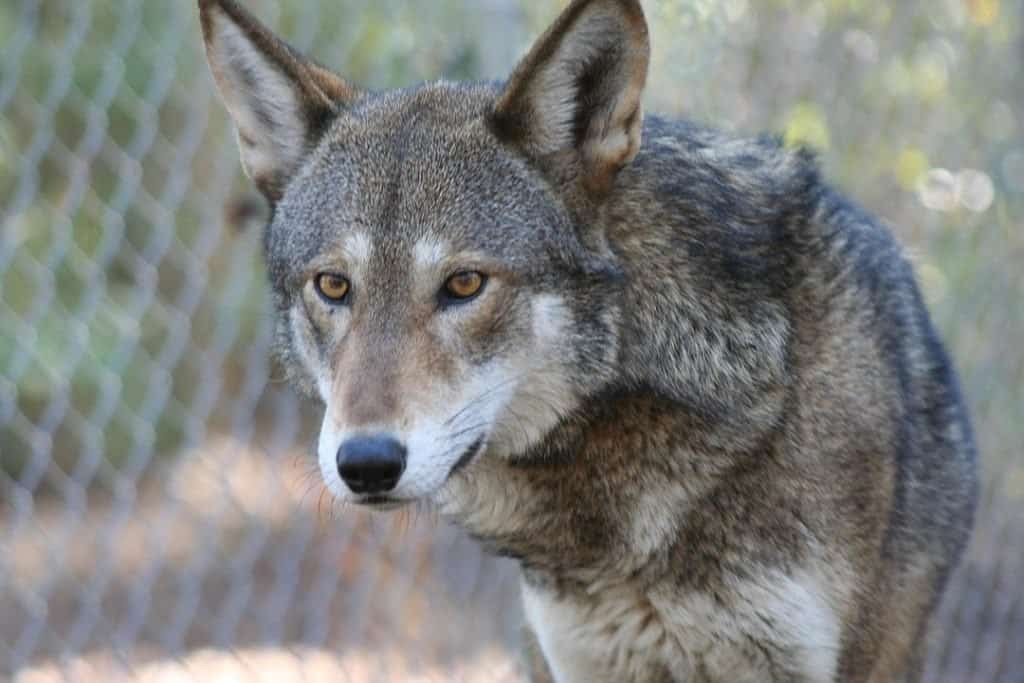
Red Wolf at Sandy Ridge, USA

A captive-bred population of red wolves was established at the Point Defiance Zoo and Aquarium.

Scientific Name

The scientific name of the red wolf is Canis lupus rufus or Canis rufus.

Canis lupus means “wolf dog” and it is a common part of the scientific name for various canine species, though by itself indicates wolf species, specifically the grey wolf.

Canis lupus rufus means “red wolf dog” while canis rufus means “red dog,” both owing to its red color, with Canis referring to the genus that includes wolves, coyotes, jackals, and dogs. On the other hand, the scientific name for the domestic dog is Canis lupus familiaris, literally “family wolf dog.”
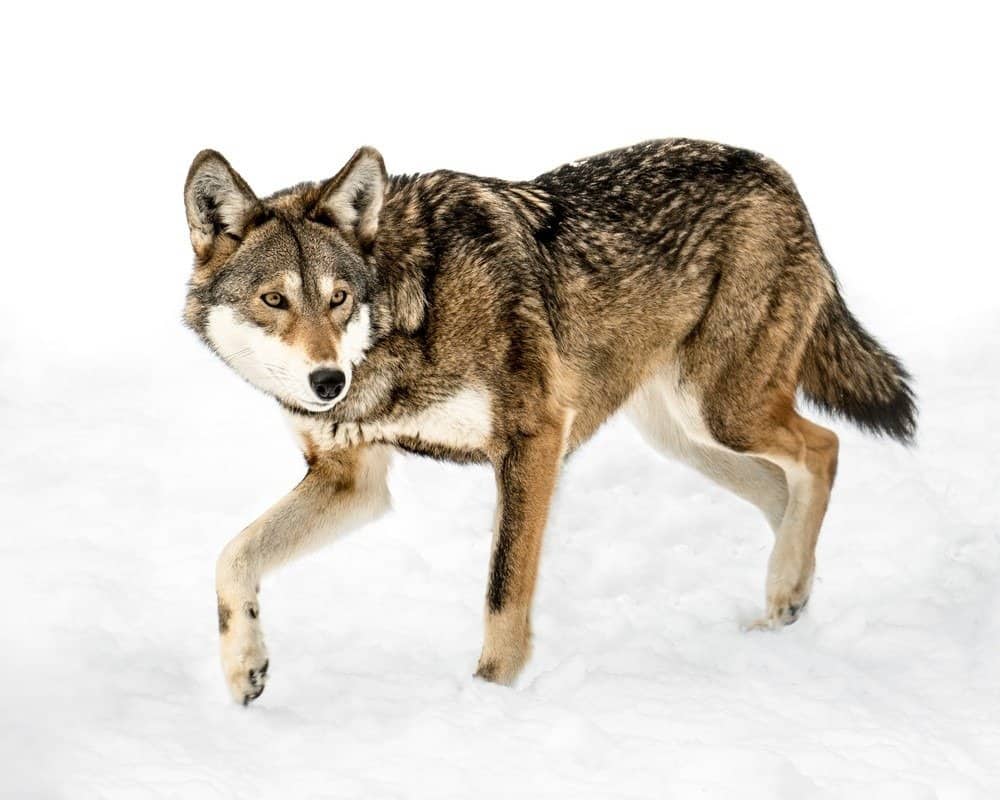
Female Red Wolf on a white background

The scientific name Canis lupus rufus means “red wolf dog.”

Types of Red Wolf

There is much debate over the taxonomic classification of the red wolf, which is sometimes a reason why the animal is not included on endangered lists. It is thought of as either a distinct separate species, a subspecies of the gray wolf, or a coywolf — a coyote-wolf hybrid, also known as the eastern coyote, or sometimes the woyote, that is a cross between the Canis latrans (coyote), Canis lupus (wolf or grey wolf), and Canis lupus lycaon (eastern wolf).

Since it’s disputed whether the red wolf is its own species, the topic of subspecies is also debatable.

In 1937, the zoologist Edward Alfonso Goldman proposed there were three subspecies of red wolf, two of which are now extinct — the Florida black wolf (Canis lupus floridanus) and the Mississippi Valley red wolf or Gregory’s wolf (Canis lupus gregoryi) — with the surviving species being the Texas red wolf. However, many consider both the Florida black wolf, which was declared extinct in 1908 due to being hunted and habitat loss, and Gregory’s wolf, which was found in and around the lower Mississippi River basin and became extinct in 1980, to be subspecies of the grey wolf.
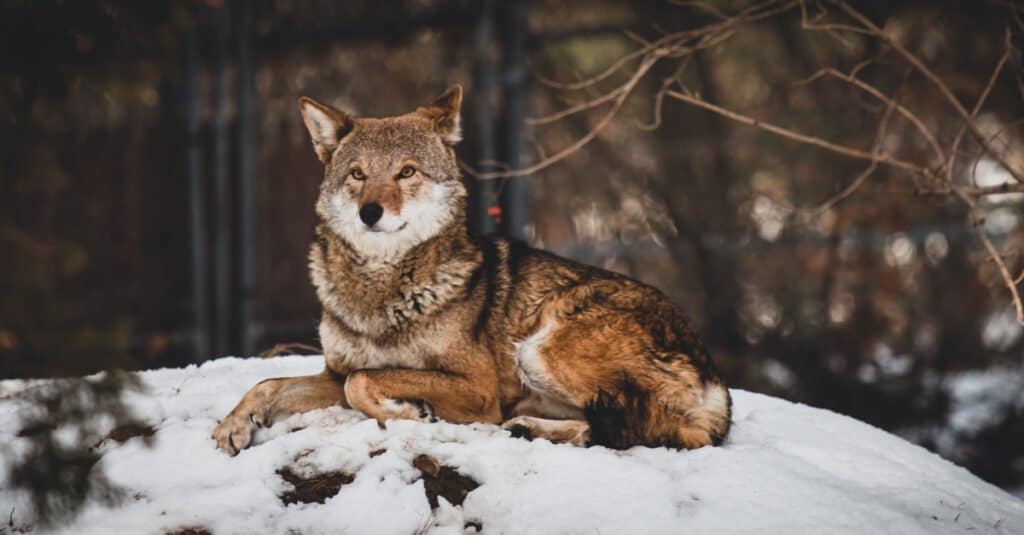
Rarest animal – Red wolf

There is much debate over the taxonomic classification of the red wolf.

Evolution and History

The red wolf’s evolutionary history is a topic of debate among scientists and there are several theories about the species’ origin. Some consider the red wolf as a close relative of Old World gray wolves, others think it developed separately from a New World ancestor that was similar to the coyote and could have belonged to the same species as the Great Lakes wolf, while another group believes that it originated in the past 400 years from grey wolves and coyotes breeding.

Fossil remains of what’s believed to be the red wolf were discovered in Florida that date back 10,000 years. From this and other data, paleontologist Ronald M. Nowak suggests that all North American and Eurasian wolves are descended from a now-extinct species called C. mosbachensis, which was spread across Eurasia 700,000–300,000 years ago in the Middle Pleistocene.
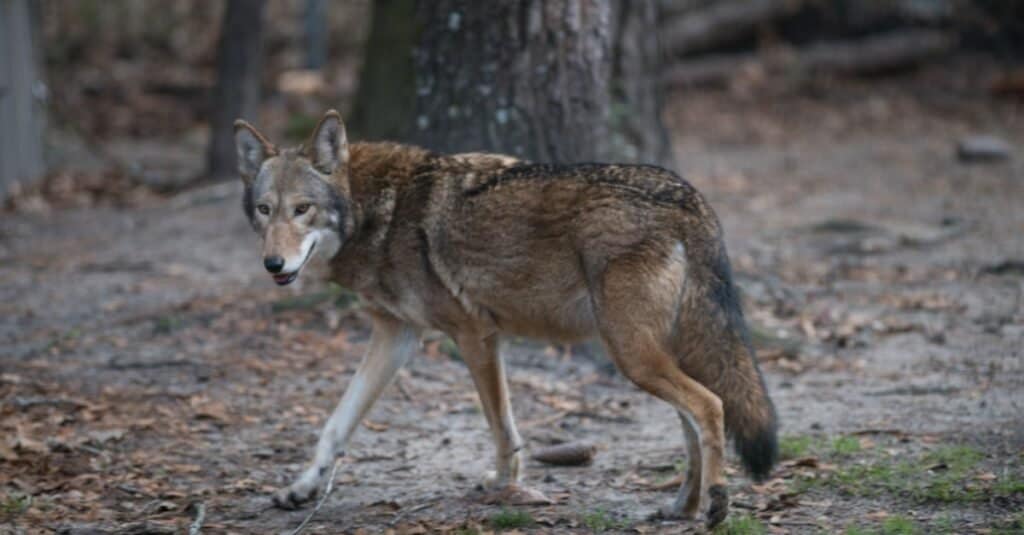
Types of Wild Dogs

There are several theories about the origins of the red wolf.

Appearance

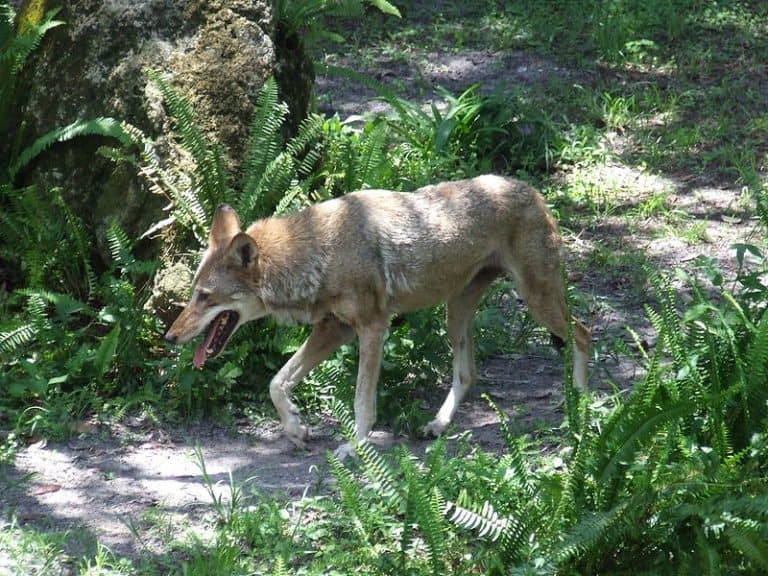
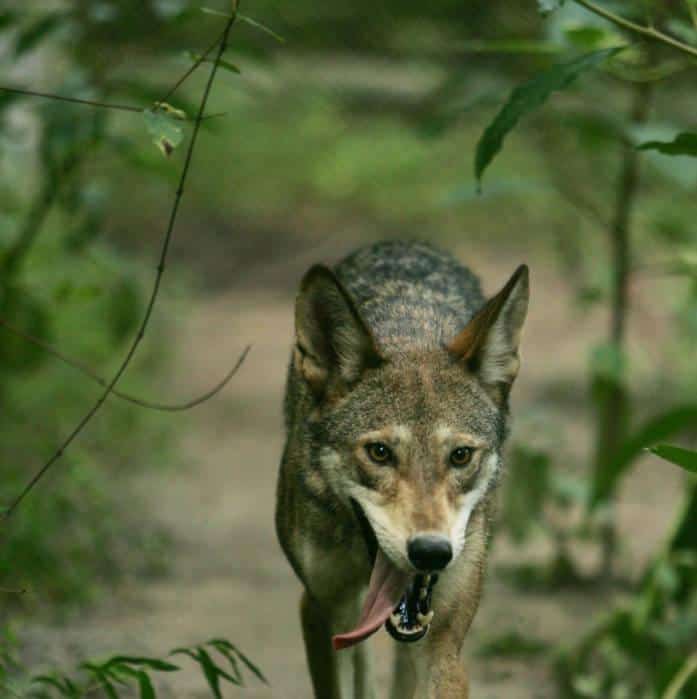
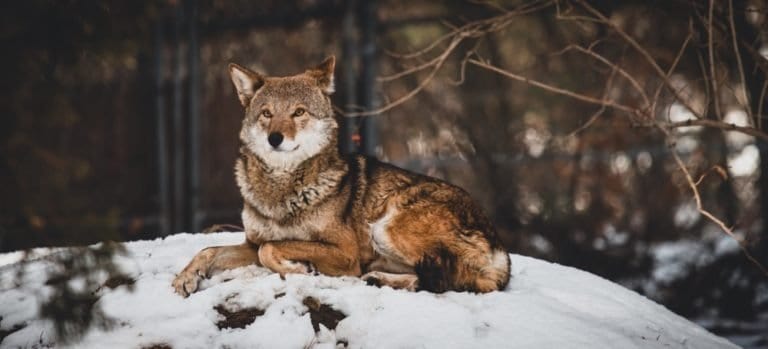
The red wolf’s size is between the coyote and the gray wolf, or the same as small grey wolves. It is closely related to the eastern wolf of eastern Canada. The sides and head consist of a mixture of tawny brown, light grey, and rusty red colors, while the chest and legs are red or tan and creamy white. There are light markings around the lips and eyes and some black along its back. It has a black-tipped bushy tail. During the fall, it grows a longer coat which it sheds for a lighter one in spring.

These wolves have shorter and wider muzzles than coyotes and slightly more rounded eyes. Unlike other Canis species, the red wolf has a cerebellum that more closely resembles the foxes of the Vulpes and Orocyon genera. It is distinct from both coyotes and coyote-wolf hybrids in terms of physical measurements, with long and slender limbs similar to a greyhound, and ears that are larger than those of either coyotes or grey wolves. Adult wolves are 4 to 5 feet in length with a height of 2 feet at the shoulder and a weight of 45 to 85 pounds.
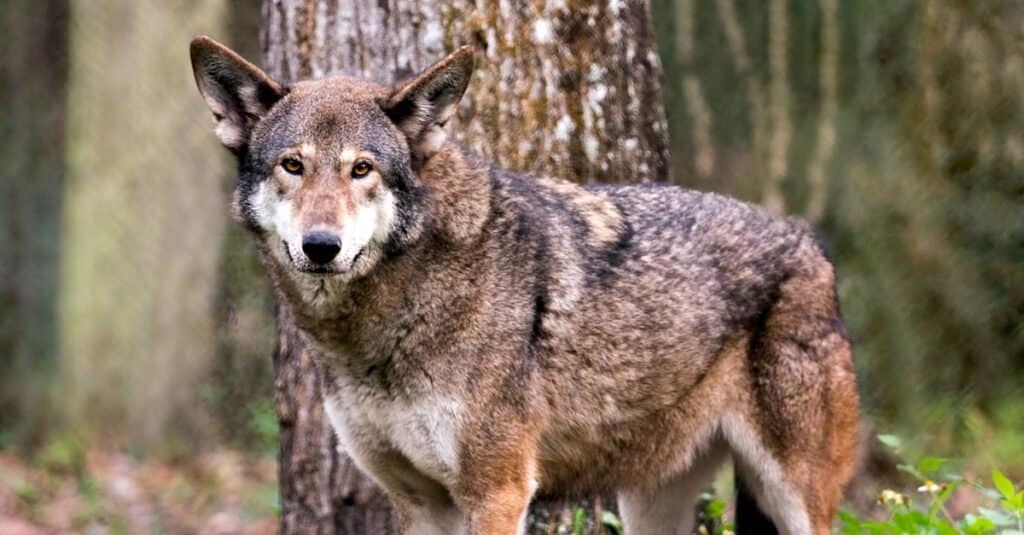
Red Wolf

Red wolves have shorter and wider muzzles than that coyotes and more rounded eyes.

Red Wolf vs. Coyote

Red wolves are often mistaken for coyotes because the two predators have similar appearances, sizes, and even coloration. The main differences between red wolves and coyotes are that red wolves are larger, and can weigh about twice as much as coyotes at their largest weight. In addition, coyotes have a different call that involves more yapping while red wolf calls are drawn out. Most importantly, red wolves are critically endangered while coyotes are an animal of least concern. Today red wolves have an extremely small range. A common problem is wolves being shot after being mistaken for coyotes, so it’s important to understand the differences between these two species.
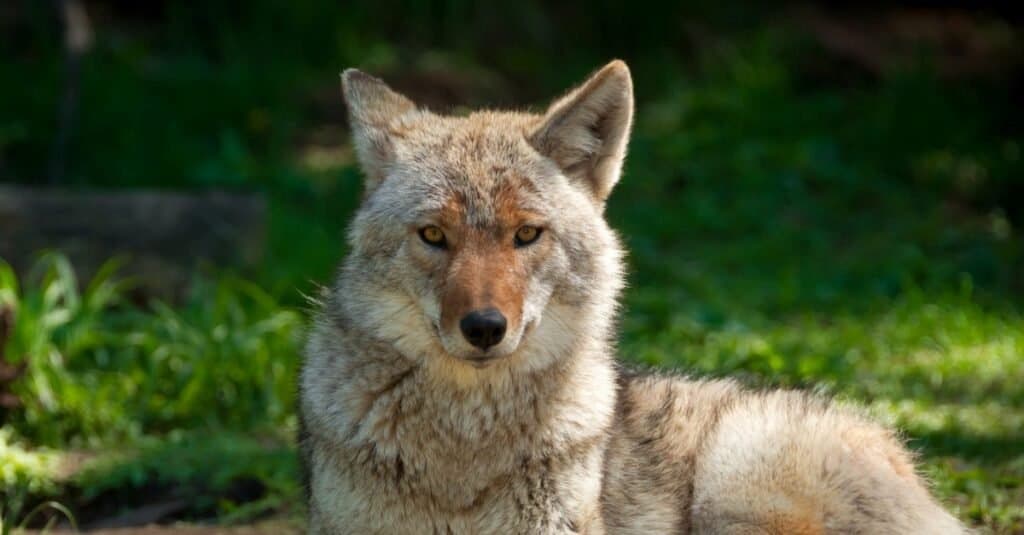
Do Coyotes Hunt in Packs

Red wolves are very similar in appearance to coyotes like the one above.

Behavior

Like other canines, a group of wolves is called a pack. These wolves are highly social and close-knit with their pack, which is a family group consisting of a breeding pair plus any of their offspring and possibly immediate relations for anywhere between two to eight members, but usually five to eight on average. Facts about their behavior show that it is more sociable than the coyote and less than the grey wolf.

The red wolf hunts alone or together with its pack, and it is very territorial toward strange wolves. It is most active during dusk and dawn. Incredibly shy and fearful around humans, it avoids them whenever possible. Sometimes, however, these wolves will build their dens fairly close to farms in order to easily spot prey in the fields, and they can help control pests.

Red wolves have a variety of vocalizations ranging from long howls to short barks. They also use non-audible forms of communication including scent marking, tail and ear position, and body language. There are currently not many facts regarding wolf communication and research continues to reveal new information.
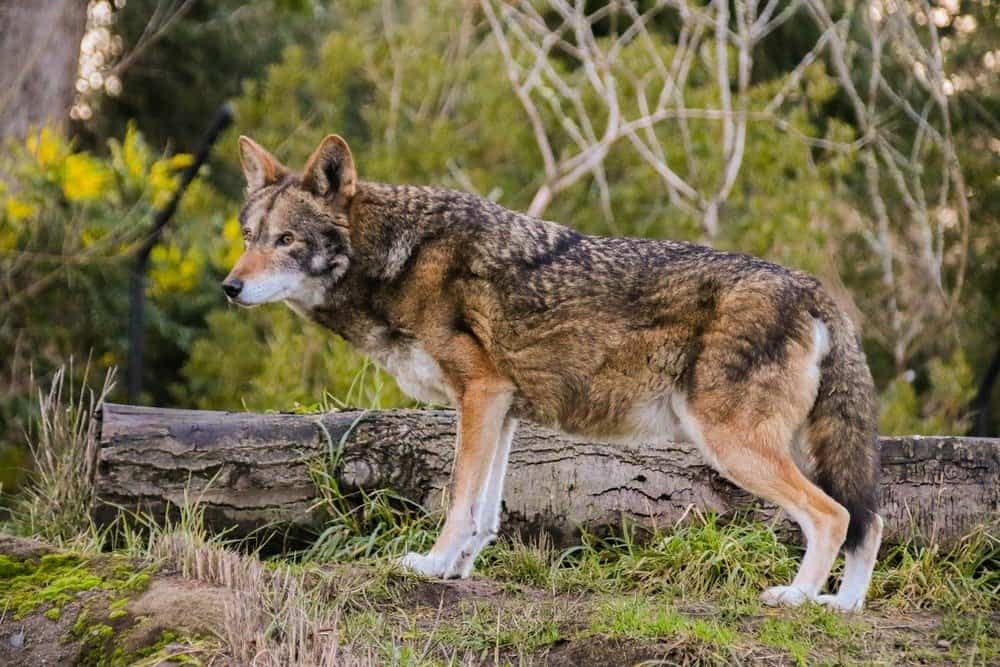
Red Wolf Conservation

The red wolf is able to hunt alone and most active during dusk and dawn.

Habitat

These wolves are native to the southeastern United States. In the past, its habitat extended from Texas to Florida and the Midwest, even as far up as central Pennsylvania. The wide range suggests a variety of habitats from bottom-land river forests and swamps to farmland and coastal prairies, showing they can thrive in most habits with adequate prey populations and little persecution by humans. North Carolina is currently the last habitat where wild red wolves are found.

Red wolves are living in captivity in several zoos in the U.S. You can see red wolves at:

North Carolina Zoo

The North Carolina Zoo houses more than 1,800 animals, including red wolves.

Diet

Red wolves, like other canid species, are ultimately omnivores, but their diet focuses on their main carnivorous needs. They hunt and eat white-tailed deer, raccoons, and other smaller mammals such as rabbits, mice, nutria, and other rodents. They eat between two to five pounds of food a day and can travel up to 20 miles or more a day to find food.

During the winter, it is easiest for them to find food due to the lack of concealing vegetation for their prey along with obvious tracks their prey leave in the snow. Spring is the time they find food sources to prepare for the upcoming litter of pups. Summer is the most difficult time of the year with concealing vegetation, more frequent movement of prey, and needing more energy to spend in the heat to find sources of food.
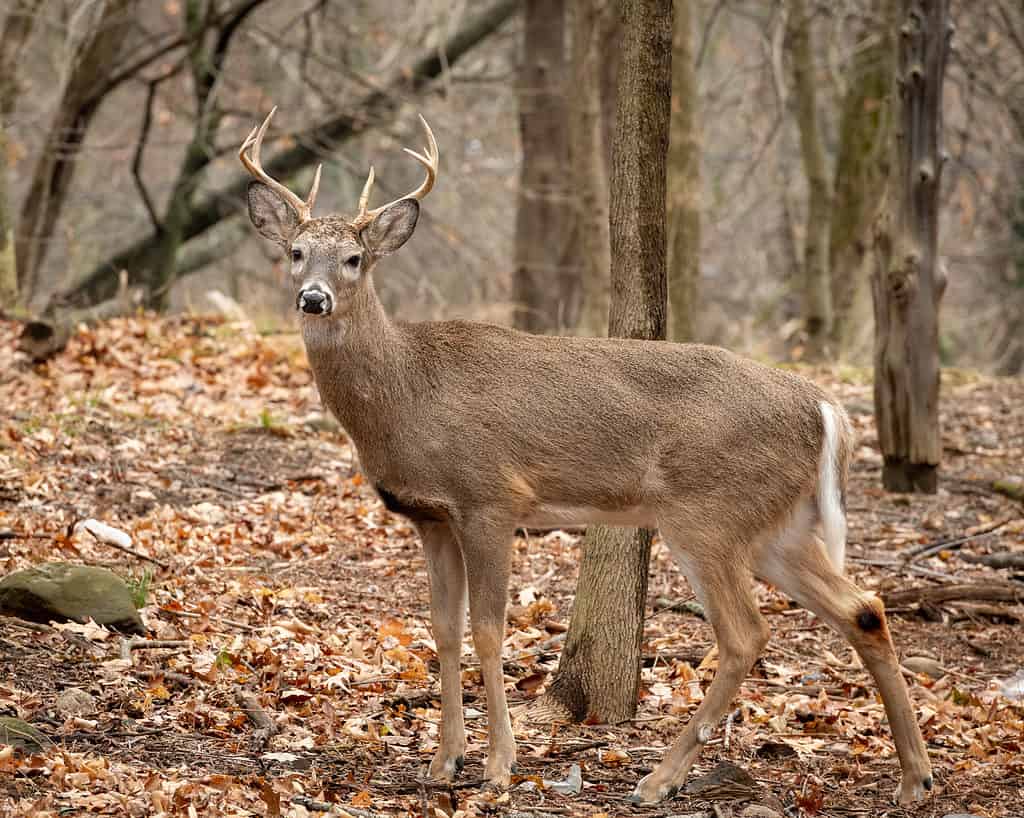
White-tailed deer

Red wolves hunt and eat white-tailed deer.

Predators and Threats

Red wolves have been known to kill cattle and some pets. They have often been mistaken for coyotes or other types of wolves, and hence killed by gunshot. Other factors that resulted in their population decline and species endangerment are cars, habitat loss from clearing woodlands to create farmland, predator-control programs in which they were treated as a threat to livestock and game, hybridization with coyotes, and poachers. Finally, inclement weather is a threat, with thunderstorms, floods, and hurricanes putting them in danger.

Hunter Aiming Rifle Gun

Humans are a threat to red wolves if mistaken for coyotes or other wolves.

Reproduction, Babies, and Lifespan

Red wolves mate for life as monogamous pairs, and they mate usually once a year, in January or February. The gestation period is eight to nine weeks. Pups are born anywhere from March to May and are hidden in concealed dens including hollow tree trunks, along stream banks, or abandoned dens of other animals. Litters contain six to seven pups, and both parents participate in rearing the young.

During the fall, the young wolves practice and perfect their hunting skills with the abundance of food available. At age six weeks the pups distance themselves from the den, reaching full size at one year and becoming sexually mature at three years. At one to two years of age, they find new acquaintances to form a breeding pair or family group. Red wolves typically live six to seven years in the wild and up to 15 years in captivity.
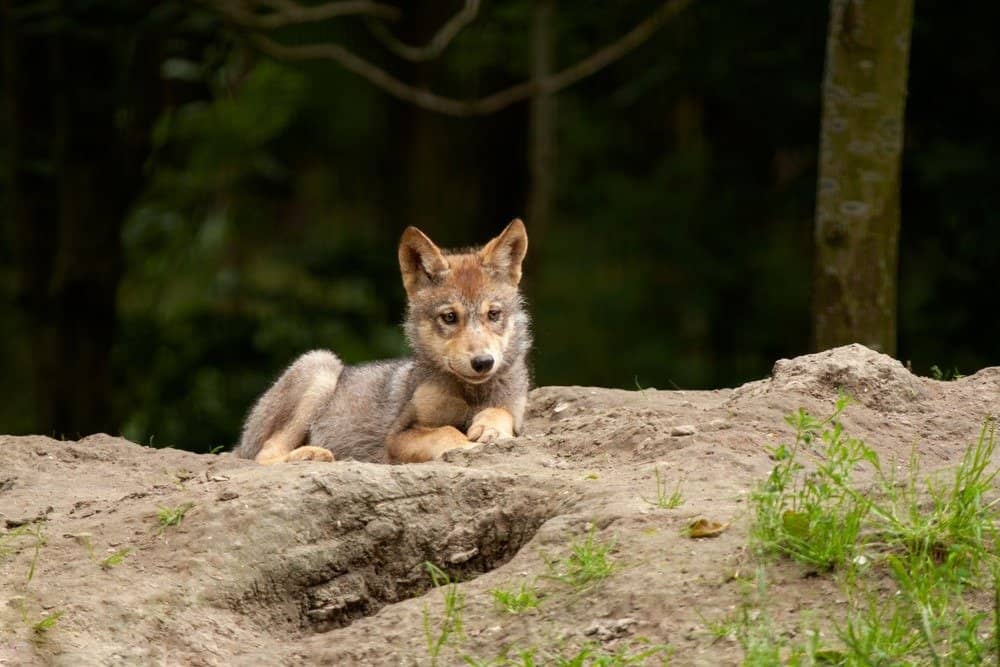
A young red wolf cub lying on the ground

Red wolf pups are born any time from March to May.

Population

The International Union for Conservation of Nature’s (IUCN) Red List classifies red wolves as a Critically Endangered species and are protected under the Endangered Species Act. Thanks to the efforts by the U.S. Fish and Wildlife Service for more than two decades, the 14 remaining red wolves captured at the brink of their extinction became the ancestors of those currently living in North Carolina. Few remain in the wild in North Carolina with greater numbers in the eastern region. The Wolf Conservation Center (WCC) is home to 18 red wolves as of the summer of 2020. The U.S. Fish and Wildlife Service reported in February 2023 that there were estimated to be 17-19 in the wild and 235 in captivity as part of its Red Wolf SAFE program.

IUCN

The IUCN’s Red List categorizes red wolves as an endangered species.

View all 181 animals that start with R

Sources

  1. Wikipedia / Accessed December 10, 2020
  2. National Geographic / Accessed December 10, 2020
  3. Defenders of Wildlife / Accessed December 10, 2020
  4. Just Fun Facts / Accessed December 10, 2020
  5. Florida Fish and Wildlife Conservation Commission / Accessed December 10, 2020
  6. Wolf Worlds / Accessed December 10, 2020
  7. Ducksters / Accessed December 10, 2020
  8. Kids Animal Facts / Accessed December 10, 2020
  9. U.S. Fish & Wildlife Service / Accessed December 10, 2020
  10. The Truth About Red Wolves / Accessed December 10, 2020
  11. Ref Wolf Review / Accessed December 10, 2020
  12. Endangered Wonders / Accessed December 10, 2020
  13. WCC / Accessed December 10, 2020
  14. Washingtonian / Accessed December 10, 2020
Catherine Gin

About the Author

Catherine Gin

Catherine Gin has more than 15 years of experience working as an editor for digital, print and social media. She grew up in Australia with an alphabet of interesting animals, from echidnas and funnel-web spiders to kookaburras and quokkas, as well as beautiful native plants including bottlebrushes and gum trees. Being based in the U.S. for a decade has expanded Catherine's knowledge of flora and fauna, and she and her husband hope to have a hobby farm and vegetable garden in future.

Thank you for reading! Have some feedback for us?


Red Wolf FAQs (Frequently Asked Questions)

Red wolves eat white-tailed deer and smaller mammals, mostly raccoons and rodents.