
A
Species Profile

Akita Shepherd

Canis lupus familiaris

Big heart, bold guardian, smart worker.
Anna Hoychuk/Shutterstock.com

Akita Shepherd Distribution

Click a location to explore more animals from that region

Invasive Species
Origin Location

This map shows the native origin of the Akita Shepherd. As a domesticated species, they are now found worldwide.

Loading map...

Size Comparison

Human 5'8"
Akita Shepherd 2 ft 1 in

Akita Shepherd stands at 36% of average human height.

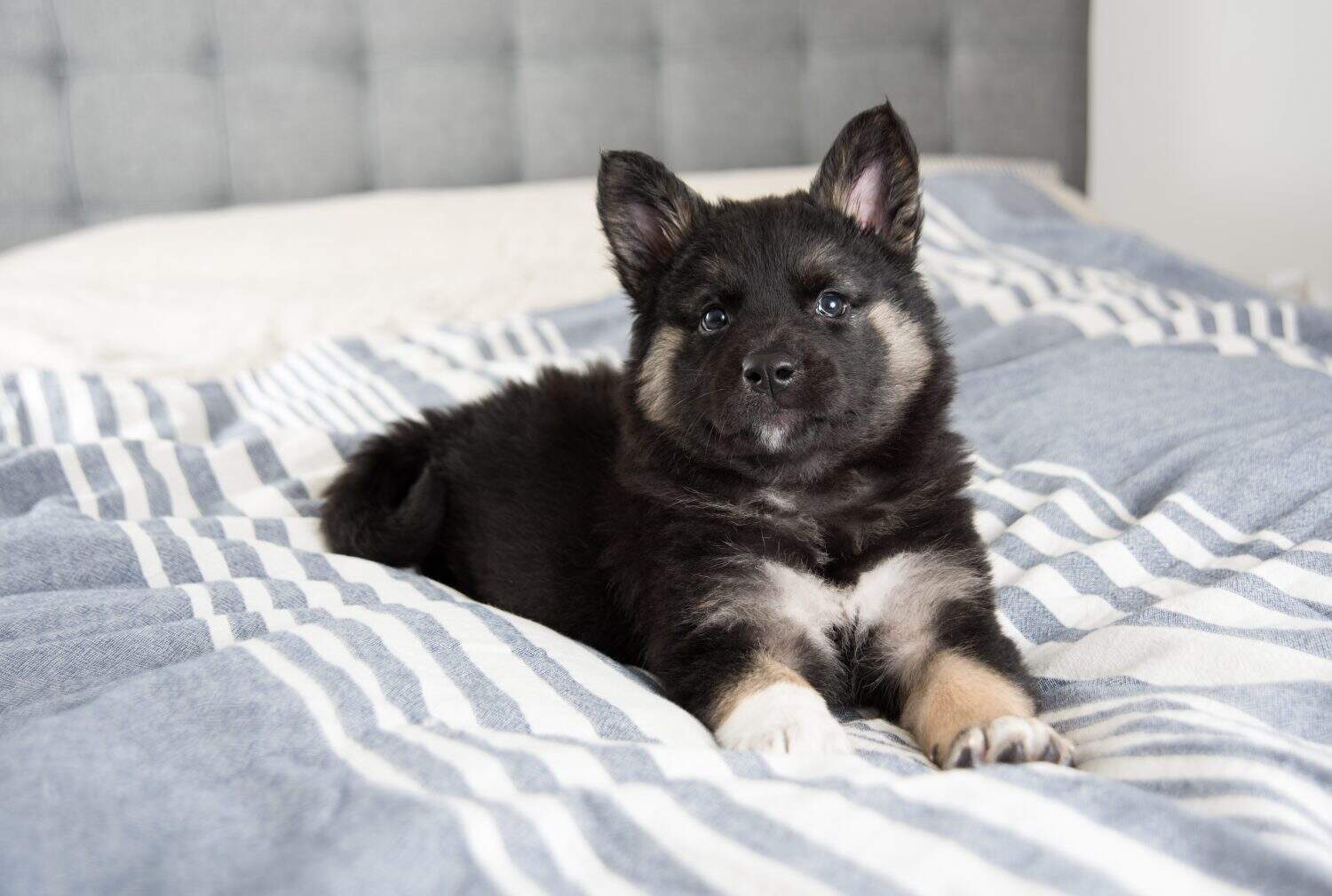
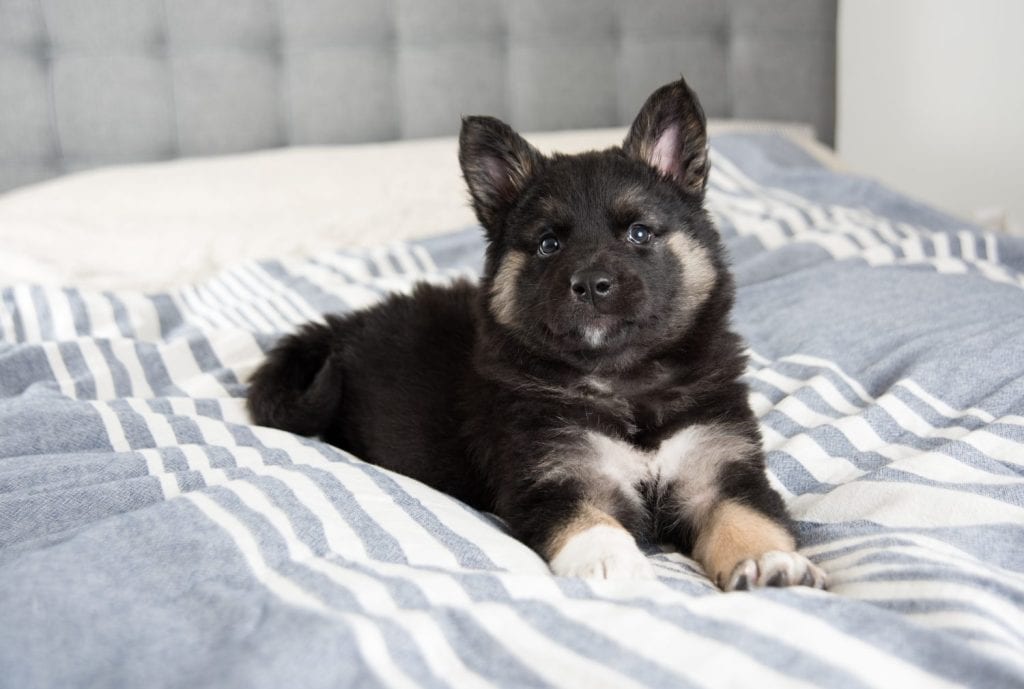
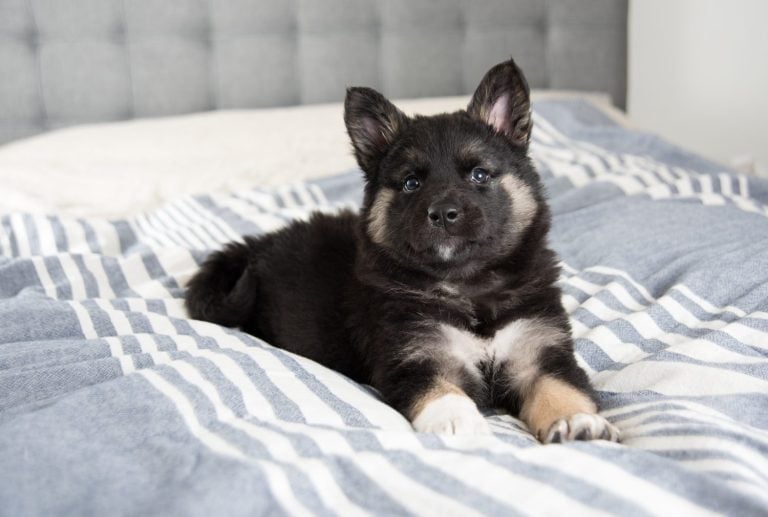
Akita and Shepherd Mix Black Fluffy Puppy

At a Glance

Domesticated
Also Known As Shepita, Akita German Shepherd Mix
Diet Omnivore
Activity Diurnal+
Lifespan 12 years
Weight 50 lbs
Status Not Evaluated
Did You Know?

Not a standardized pure breed: "Akita Shepherd" is a designer mix whose traits can swing toward either parent.

Scientific Classification

A domestic dog cross typically produced by breeding an Akita with a German Shepherd Dog, yielding a large, athletic, protective companion/working-type dog with variable appearance and temperament.

Kingdom
Animalia
Phylum
Chordata
Class
Mammalia
Order
Carnivora
Family
Canidae
Genus
Canis
Species
Canis lupus

Distinguishing Features

  • Large, muscular build; typically 30–50+ kg depending on parentage
  • Dense double coat common; coat colors often black/tan, sable, fawn, brindle, or white variants
  • Erect or semi-erect ears; head may be broader like Akita or more wedge-shaped like GSD
  • Tail may be curled (Akita-like) or more straight/saber (GSD-like)
  • Often strong guarding/protective instincts and high trainability, but temperament varies by individual

Physical Measurements

Males and females differ in size

Height
2 ft 2 in (2 ft – 2 ft 4 in)
1 ft 12 in (1 ft 9 in – 2 ft 2 in)
Length
3 ft 10 in (3 ft 5 in – 4 ft 3 in)
3 ft 7 in (3 ft – 4 ft 1 in)
Weight
99 lbs (79 lbs – 119 lbs)
71 lbs (55 lbs – 88 lbs)
Tail Length
1 ft 4 in (1 ft 2 in – 1 ft 6 in)
1 ft 3 in (12 in – 1 ft 6 in)
Top Speed
31 mph
About 40–50 km/h sprint

Appearance

Primary Colors
Secondary Colors
Skin Type Dogs have skin covered by fur. Coat types vary: some have a thick double coat (undercoat plus guard hairs), others a single coat. Many shed seasonally; allergies and parasites can hide in dense fur.
Distinctive Features
  • Domesticated canid (Canis lupus familiaris): compared with wild wolves, domestic dogs show extremely wide variation in body size, head shape, ear set, tail carriage, and coat type due to selective breeding.
  • Coat diversity: coats range from very short to very long; textures may be straight, wavy, or curly; and many dogs have either a single coat or a double coat with an insulating undercoat.
  • Color and markings vary widely: common markings include facial masks, tan points, brindling, white spotting, and ticking/speckling in breeds that carry those traits.
  • Ears and tail are highly variable: ears may be erect, semi-erect, or fully dropped; tails may be straight, sickle-shaped, curled, or carried low depending on breed type.
  • Build varies from slender to heavily built: domestic dogs can be lightly framed and leggy or stocky and muscular, with chest depth and limb angulation differing by breed.

Sexual Dimorphism

Often present in domestic dogs, though the degree varies by breed and individual. In many breeds, males tend to be larger and more robust through the head, neck, and overall frame, while females are often slightly smaller and lighter-boned.

  • Often broader head and thicker neck ruff (especially with Akita-influenced coat)
  • More pronounced musculature through shoulders and chest
  • May show more territorial display behaviors if under-socialized (training-dependent, not guaranteed)
  • Often a slightly finer head and lighter overall frame while still athletic
  • May appear more streamlined/angulated if German Shepherd traits are stronger
  • Can be equally protective; temperament differences are individual and training-dependent

Did You Know?

Not a standardized pure breed: "Akita Shepherd" is a designer mix whose traits can swing toward either parent.

Often inherits a dense double coat-expect seasonal "blowouts" of shedding.

Many combine the Akita's quiet watchfulness with the German Shepherd's eagerness to work and learn.

Common color range includes black/tan, sable, brindle, fawn, and white/cream influences from the Akita line.

Protective instincts can mature strongly in adulthood, so early socialization is especially important.

Their stamina and strength can make them excellent candidates for advanced obedience, tracking/nose work, or hiking companions.

Unique Adaptations

  • Human-directed social cognition (shared across domestic dogs vs. wolves): many read pointing/eye gaze well, aiding trainability.
  • Powerful, athletic build suited to strength + endurance work (a blend of Akita robustness and GSD agility).
  • Thick undercoat and weather resistance commonly support cold-climate comfort, though heat tolerance may be lower.
  • High territorial awareness and deterrent presence-useful for watchdog roles, but requires handler control to prevent over-guarding.
  • Variable ear set, coat length, and body proportions due to mixed ancestry-no single "correct" look, but many retain a wolf-like silhouette.

Interesting Behaviors

  • "Shadowing" family members (bonding closely and staying nearby), especially when the German Shepherd side is strong.
  • Reserved appraisal of strangers-often watching first, then deciding whether to engage (a common Akita-type trait).
  • Patrolling/guarding routines: pacing fence lines, checking doors/windows, or placing themselves between family and newcomers.
  • Mouthy herding-style play (nipping/grabbing at toys) can appear from German Shepherd ancestry-needs redirection to appropriate outlets.
  • High prey drive or chase behavior may show up; careful introductions with small pets and reliable recall training are important.
  • Same-sex tension or selectivity with other dogs can occur, reflecting Akita tendencies-structured social experiences help.
  • Strong "job" preference: they often settle best when given tasks (training games, scent searches, carrying a pack on hikes).

Cultural Significance

Akita Shepherd (Canis lupus familiaris), a modern companion and working dog mix of Akita and German Shepherd, combines loyalty, guarding heritage, and service work skills. As a domestic dog, it shows strong protective drive and needs firm training and socialization.

Myths & Legends

Hachiko (Japan): the Akita whose years-long vigil at Shibuya Station became a national tale of loyalty, commemorated by a famous statue.

Akita talismans (Japan): small Akita dog figurines have traditionally been gifted to new parents or the ill as symbols of health, protection, and good fortune.

Rin Tin Tin (U.S./Europe): the German Shepherd rescued from a WWI battlefield who became a silent-film star, shaping popular legends of the breed's intelligence and bravery.

Max von Stephanitz's founding story (Germany): the cavalry captain credited with developing the German Shepherd, often told as a deliberate quest to create the ideal working dog from regional herding lines.

Cerberus (Ancient Greece): the multi-headed dog guarding the Underworld's gate-an enduring myth casting dogs as watchful boundary-keepers between worlds.

Anubis (Ancient Egypt): the jackal/dog-headed funerary god who guides and protects souls, reflecting long-standing associations between canids and guardianship.

Romulus and Remus (Ancient Rome): the twins nursed by a she-wolf, a foundational legend linking canids with protection and origins of a people.

Conservation Status

NE Not Evaluated

Has not yet been evaluated against the criteria.

Population Stable

Life Cycle

Birth 6 pups
Lifespan 12 years

Lifespan

In the Wild
10–13 years
In Captivity
8–14 years

Reproduction

Mating System Polygynandry
Social Structure Managed Domestic
Breeding Pattern Transient
Fertilization Managed Selective
Birth Type Internal_fertilization

Behavior & Ecology

Social Pack Group: 4
Activity Diurnal, Crepuscular, Cathemeral
Diet Omnivore Meat-forward complete diet (high-quality kibble or balanced wet/raw-cooked formulas with poultry or beef as primary protein)

Temperament

Protective/territorial; strong watchdog and deterrent presence (more pronounced than the base gray wolf's typical avoidance of humans, and strongly shaped by domestic selection).
Loyal, handler-focused, and often "one-family" oriented; may be reserved or suspicious with strangers without early, ongoing socialization.
High intelligence and trainability with a tendency toward independence/decision-making; benefits from clear structure and reward-based training (harsh methods can increase defensiveness).
Moderate-to-high prey drive and chasing behavior may occur; careful introductions and management with small animals are often needed.
Dog-selective tendencies can appear (Akita influence), especially with same-sex dogs; early social exposure and controlled introductions reduce conflict risk.
Energy level: large, athletic, working-type; typically needs daily vigorous exercise plus mental work (tracking, obedience, protection sports, hiking, pulling/pack walks where appropriate).
Temperament varies by breed and individual. Many dogs are social and form strong bonds with people. Friendliness, boldness, trainability, and protectiveness vary with genetics, socialization, and training.
Care requirements (breed-specific): consistent socialization from puppyhood; structured enrichment (scent games, problem-solving); secure fencing; controlled greetings; regular coat maintenance (often double-coated; seasonal heavy shedding).
Health issues in Akita × German Shepherd: hip and elbow dysplasia, degenerative myelopathy (GSD), bloat/GDV in deep-chested dogs, hypothyroidism/autoimmune (Akita), skin allergies, cruciate ligament injuries—keep lean and use joint-friendly exercise.

Communication

Barking/alert barking More frequent and context-flexible than wolves; a key domestic-dog distinction
Low growls and warning rumbles during territorial or resource-guarding contexts.
Whining/whimpering for attention, frustration, or appeasement.
Howling or howl-like vocalizations Variable; may increase with sirens or group excitement
Play vocalizations (short barks, yips, grumbles) during social interaction.
Body posture displays: tall stance, forward weight shift, piloerection during alert/guard; relaxed loose posture during play.
Facial expressions and eye contact: hard stare/"watching" for assessment; soft eyes/blinks for appeasement.
Ear and tail carriage changes (often very informative in spitz/shepherd mixes); tail high/curled or stiff may signal arousal/alert.
Scent marking (urine marking, ground scratching) and investigation; uses olfaction heavily for environmental monitoring.
Mouth-based signaling: muzzle punches, inhibited mouthing during play; may use "blocking" with the body to control access to people/space.
Proximity/positioning: shadowing the handler, placing self between family and strangers Protective pattern
Touch signals: pawing, leaning, nudging; can be a bonding/attention-seeking behavior.
Vocal + posture combinations for escalation/de-escalation; early recognition and management reduce guarding-related incidents.

Habitat

Biomes:
Temperate Forest Boreal Forest (Taiga) Tundra Alpine Temperate Grassland Mediterranean Desert Hot Desert Cold Savanna Tropical Dry Forest Tropical Rainforest Wetland Freshwater Marine +8
Terrain:
Mountainous Hilly Plateau Plains Valley Coastal Island Riverine Volcanic Karst Rocky Sandy Muddy +7
Elevation: Up to 16404 ft 3 in

Ecological Role

Human-associated mesopredator/omnivorous scavenger; primarily a companion/guard/working dog rather than a wild ecosystem predator.

Protection/guarding and deterrence of intruders Assistance work (e.g., patrol, search-and-rescue, tracking) Pest control via opportunistic predation on rodents (where allowed/supervised) Human-animal social support/companionship

Diet Details

Main Prey:
Small mammals Birds and eggs Carrion and animal scraps
Other Foods:
Fruits Vegetables Grains and starches Plant ingredients

Human Interaction

Domestication Status

Domesticated

Canis lupus familiaris, the domestic dog, came from the gray wolf. Dogs split from wolves in the Late Pleistocene and were domesticated by about 15,000 years ago (possibly 20,000–30,000). Domestication began when less fearful wolves used human food. People later bred dogs for calmness, social skills, hunting, guarding, carrying, and companionship; most breeds are recent.

Danger Level

Moderate
  • Bite or injury risk increases with size/strength, inadequate training, poor socialization, or unmanaged guarding instincts.
  • Protective/territorial behavior can lead to aggression toward strangers entering the home/yard if not properly controlled.
  • Dog-directed aggression or high prey drive may cause incidents around other dogs/small animals, indirectly risking human injury during interventions.
  • Higher risk scenarios: off-leash exposure, unsupervised interactions with children, resource guarding, pain/illness, or fear-based reactivity.
  • HUBS (human interactions across the group): primarily family companionship and home-property guarding; participation in training clubs and canine sports; routine interactions with veterinarians, groomers, shelters/rescues, and municipal animal-control systems; occasional use as deterrent/protection dogs and as active outdoor companions (hiking/running).

As a Pet

Suitable as Pet

Legality: Generally legal as a domestic dog in most jurisdictions. However, local rules may restrict or impose requirements on large guarding-type dogs or dogs labeled 'aggressive'; housing/insurance breed restrictions sometimes include German Shepherd- or Akita-type dogs. Verify city/county/HOA and rental/insurance policies.

Care Level: Experienced

Purchase Cost: Up to $2,000
Lifetime Cost: $20,000 - $65,000

Economic Value

Uses:
Companion animal Personal protection/guarding (informal) Working/sport dog (limited, individual-dependent) Training/behavior services market Pet products and veterinary services
Products:
  • companionship
  • paid training and obedience services
  • working roles in sport/activities (tracking, obedience, protection sports where appropriate)
  • pet insurance policies and veterinary care demand
  • grooming and shedding-management products
  • breeding/sale of puppies (where ethically practiced)

Quick Take

  • Owners must maintain a 14-mile weekly exercise quota to prevent destructive behavior.
  • The 120-pound male frame necessitates specific feeding schedules to avoid fatal stomach expansion.
  • This intelligent hybrid displays paradoxical resistance during training due to its stubborn lineage.
  • Precise puppy socialization is mandatory to mitigate the high-strung risks associated with this large breed.

The Akita Shepherd was created during the 1950s and is a mix of two big, strong dog breeds: the Akita Inu and the German Shepherd. These two breeds synergize well together. The Akita is a loyal and brave working dog that is descended from an ancient Japanese lineage. It belongs to the “spitz” group; this is a type of dog with long, thick fur, pointed ears and muzzle, and a curly tail. The German Shepherd is a courageous, all-purpose working or herding dog that originated in Germany in the late 19th century.

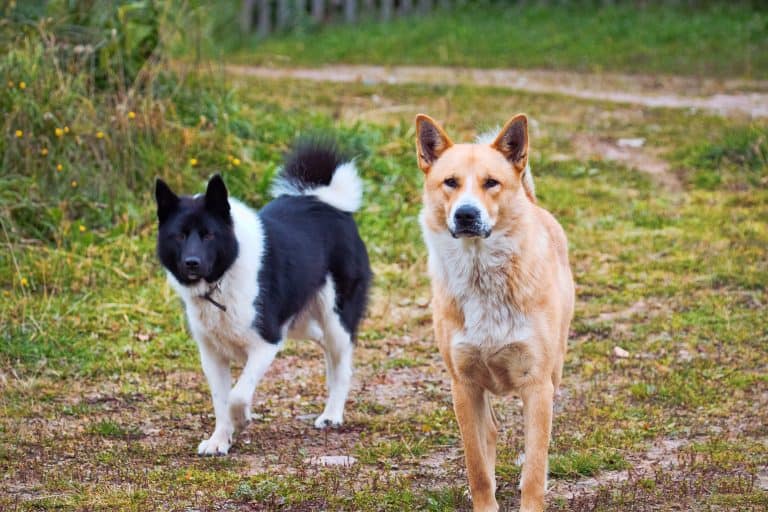
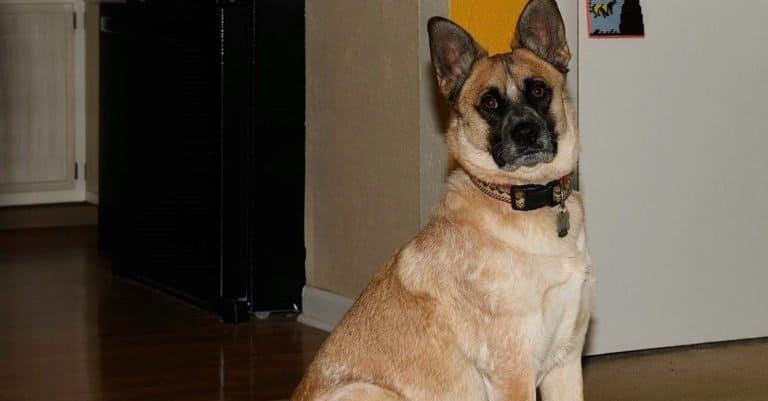
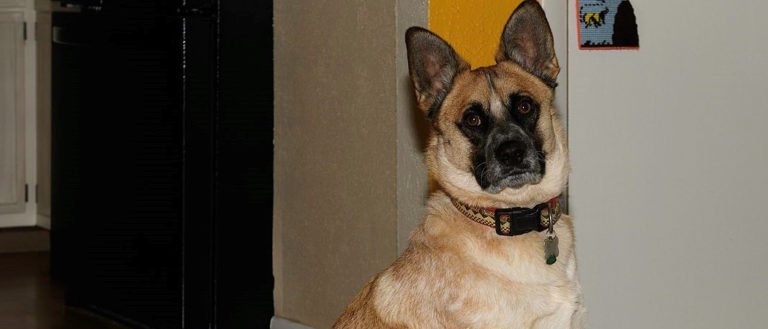
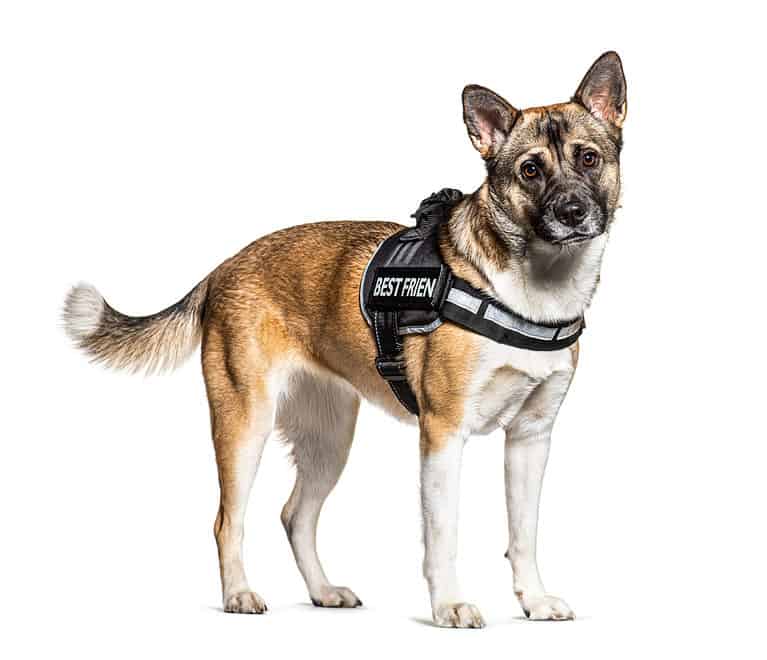
As a mixed-breed “designer dog,” the Akita Shepherd can have many different combinations of physical traits. But most of these dogs will combine the body of the German Shepherd with the face and curling tail of an Akita. The medium-length dense coat will have some combination of black, white, gray, brown, brindle, or red colors. These dogs may also inherit some degree of German Shepherd facial markings.

A comprehensive infographic titled 'Akita Shepherd: The Powerful and Loyal Hybrid' featuring illustrations of the dog, size comparisons against human silhouettes, and a care guide with icons.
120 pounds of loyalty comes with high-stakes health risks most owners don't expect. Master the mandatory exercise quotas and specific feeding schedules required to keep this powerful designer hybrid safe. © A-Z Animals

3 Pros And Cons Of Owning An Akita Shepherd

ProsCons
Courageous and Alert
The Akita Shepherd has the natural instinct of a guard dog.
High Maintenance
The Akita Shepherd will demand a lot of time and effort from its owner.
Loyal and Friendly
This crossbreed can form a deep bond with its owner.
Stubborn
This hybrid dog might have its own idea of how to do things.
Hard-Working and Trainable
The Akita Shepherd can be taught to perform lots of different tricks and tasks.
Health Problems
This dog does have the tendency to develop serious conditions.

Size And Weight

The Akita Shepherd is a big dog with a muscular frame. Males tend to be slightly larger and a little more aggressive than females on average.

Height (Male)26 to 28 inches
Height (Female)24 to 26 inches
Weight (Male)75 to 120 pounds
Weight (Female)75 to 110 pounds

Common Health Issues

The Akita Shepherd, unfortunately, has quite a long list of potential health problems it may inherit from either parent, including progressive retinal atrophy, congenital heart defects, hemophilia, allergies, cancer, bloat, hip and elbow dysplasia (which causes the joints to temporarily dislocate), degenerative myelopathy (which affects the spinal cord), and Von Willebrand’s disease (a bleeding disorder).

As a result of these conditions, the dog’s average lifespan is about 10 to 13 years. While some of these health conditions may be completely unavoidable, you can always minimize the odds of your dog developing problems by doing your homework beforehand. You should always avoid puppy mills and low-quality breeders that don’t screen for health problems. You should also schedule regular visits to the vet.

Temperament

The Akita Shepherd has a loyal personality, a courageous bearing, keen intelligence, and a strong, muscular build that makes them very well-suited as a guard dog and defender of the home. But this does not necessarily mean they are anti-social and reserved. The Akita Shepherd can be just as loving, affectionate, and playful toward its owner as any other type of dog. They will benefit most of all from a highly active owner who can provide them with plenty of mental and physical stimulation. If they do not receive enough attention, then they may resort to some unwanted and destructive behavior.

How To Take Care Of The Akita Shepherd

The Akita Shepherd can be a somewhat difficult dog to care for. The grooming process isn’t too involved, but they do require a lot of food and exercise. They will also sometimes push boundaries and test your patience a bit. But these active, engaging, and playful companions will reward you with their endlessly fascinating behavior and affectionate nature. If you have any other questions or concerns about pet ownership, then you should talk with your vet.

The Best Dog Food
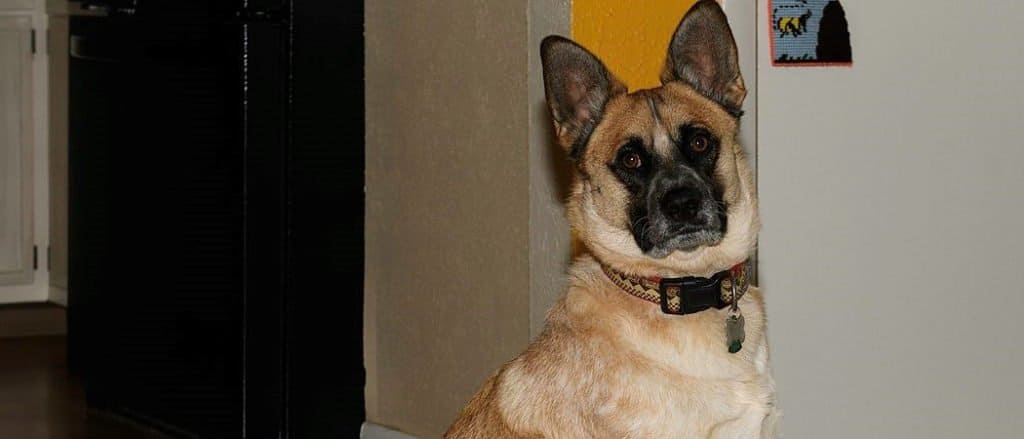
Akita Shepherd close-up

Akita Shepherds may have a slight tendency to gain weight.

An adult Akita Shepherd may require several cups of high-quality dry food every single day. Of course, the exact amount will depend on the age, size, and activity level of your dog. If your dog has a history of bloating, then you might want to divide the food up into multiple meals per day. Eating too rapidly could cause the dog’s stomach to expand dangerously. This crossbreed may also have a slight tendency to gain weight, so do not leave out too much food or give it a lot of treats.

Maintenance And Grooming

The Akita Shepherd only needs weekly brushes with a simple slicker brush or (for longer coats) a pin brush to remove loose hair, although grooming may need to take place daily during the heavy shedding season. No other special actions are required to keep the coat in peak condition. Bathing with an appropriate shampoo should only be done when the dog gets particularly dirty.

Owners will need to clip the nails about once every month or two to keep them from becoming uncomfortable for the dog. You should also try to clean out the ears regularly and brush the teeth almost daily with dog-based toothpaste.

Training

The Akita Shepherd is an intelligent hybrid dog that will obey human commands very diligently if trained properly from a young age. That does not mean the training process will be easy, though. The Akita Shepherd may inherit a slight stubborn streak from one of its parents, giving it a mind of its own.

This dog needs the guidance of a firm owner who acts the part of the leader but doesn’t raise their voice or react in an overly negative manner. This dog should respond best to positive reinforcement methods. If you need some help with the training process, then you might want to contact a local trainer.

Exercise
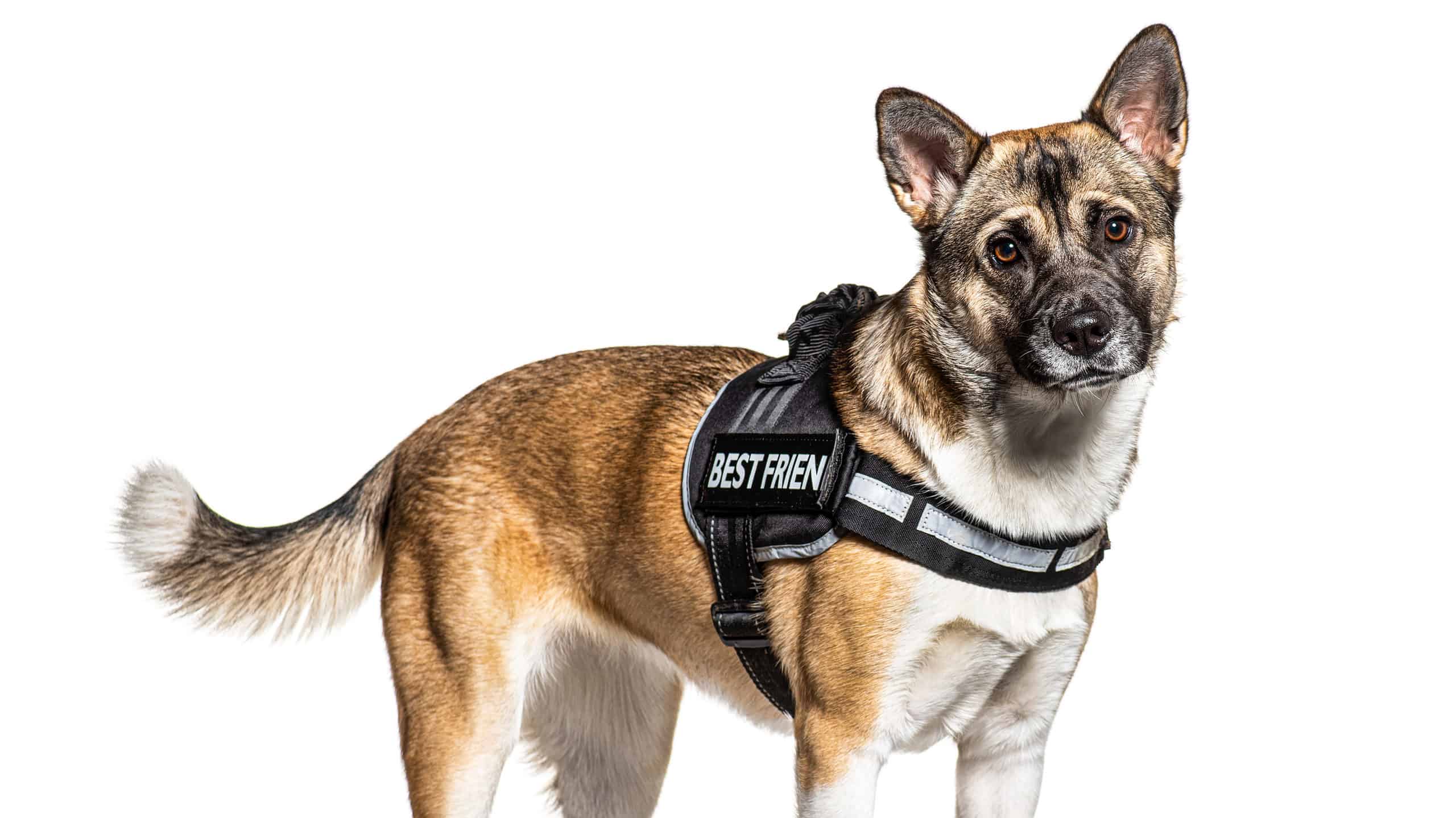
Shepkita isolated

The Akita shepherd, or shepkitas, are very strong and athletic and should get at least 1 hour of exercise daily.

The Akita Shepherd is a very strong, athletic, and hard-working mix. As a result, it should get at least an hour of exercise every single day. This is the equivalent of around 14 miles a week. Owners should try to mix up this activity with long walks/runs, games, sports, playtime, tricks, fetching, and plenty of other tasks and jobs. The Akita Shepherd does best with large yards, parks, or other open lands in which it can run around and play. Fortunately, once its daily exercise needs have been fulfilled, the Akita Shepherd knows how to settle down and relax.

Puppies

In order to become a well-adjusted adult, puppies need to undergo socialization and training as early as possible. Obedience classes and doggie daycare are optional, but they may help your dog adapt well to life among people and other pets. Owners might also want to think about the benefits of crate training. While it isn’t strictly necessary, the crate can offer a calm refuge for your puppies. It’s also a good housetraining tool.

Akita Shepherds And Children

These dogs should be loyal and protective members of the entire family. However, due to its immense size and sometimes high-strung nature, this mix probably does better with older children than younger children.

Dogs Similar To The Akita Shepherd

If you are a fan of the Akita Shepherd, then there are numerous working and spitz-type dogs that it resembles.

  • Siberian Husky: Loyal, proud, and outgoing, the big and strong Siberian Husky is another spitz-type dog in the working group. Originally bred by the Siberian Chukchi people as a companion and sled dog, this breed is characterized by thick fur, keen eyes, and somewhat mischievous behavior.
  • Samoyed: Originally bred by the semi-nomadic Samoyedic people of Siberia, the Samoyed is another friendly and tireless working dog that hails from the frigid north. It is characterized by the indelible coat of long, all-white fur.
  • Shiba Inu: As the source of endless internet jokes, the Shiba Inu is another alert and active Japanese working/hunting spitz like the Akita. Today, it is the most popular companion dog in all of Japan. It might be a good choice for owners who want a smaller version of the Akita Shepherd.
View all 328 animals that start with A

Sources

  1. Doggie Designer / Accessed May 21, 2021
  2. Wag Walking / Accessed May 21, 2021
Melissa Bauernfeind

About the Author

Melissa Bauernfeind

Melissa Bauernfeind was born in NYC and got her degree in Journalism from Boston University. She lived in San Diego for 10 years and is now back in NYC. She loves adventure and traveling the world with her husband but always misses her favorite little man, "P", half Chihuahua/half Jack Russell, all trouble. She got dive-certified so she could dive with the Great White Sharks someday and is hoping to swim with the Orcas as well.
Connect:

Thank you for reading! Have some feedback for us?


Akita Shepherd FAQs (Frequently Asked Questions)

The Akita Shepherd is a crossbreed between an Akita Inu and a German Shepherd. Loyal, protective, and eager to please, it will form a deep and lasting bond with its owner. While its parent breeds do have a reputation for being a little aggressive and standoffish around strangers, a properly socialized and trained Akita Shepherd should have an even temperament and behave very well around people with no problems. Owners should be aware, however, that this dog is an investment. It does require a lot of time and effort to care for.