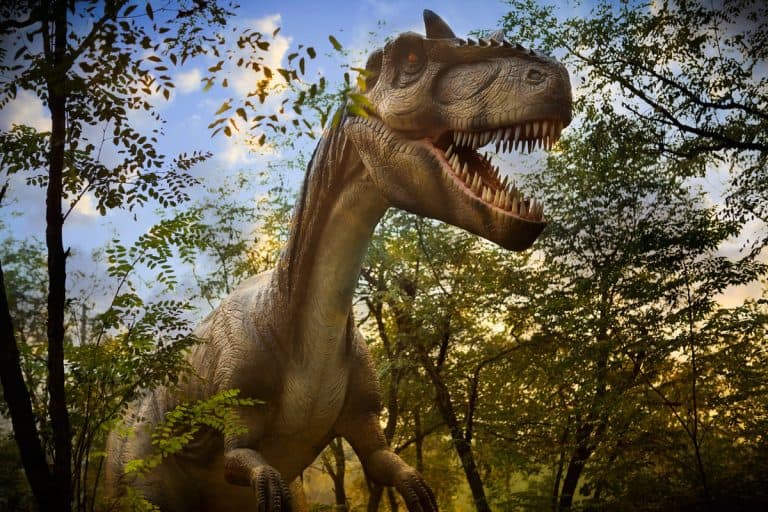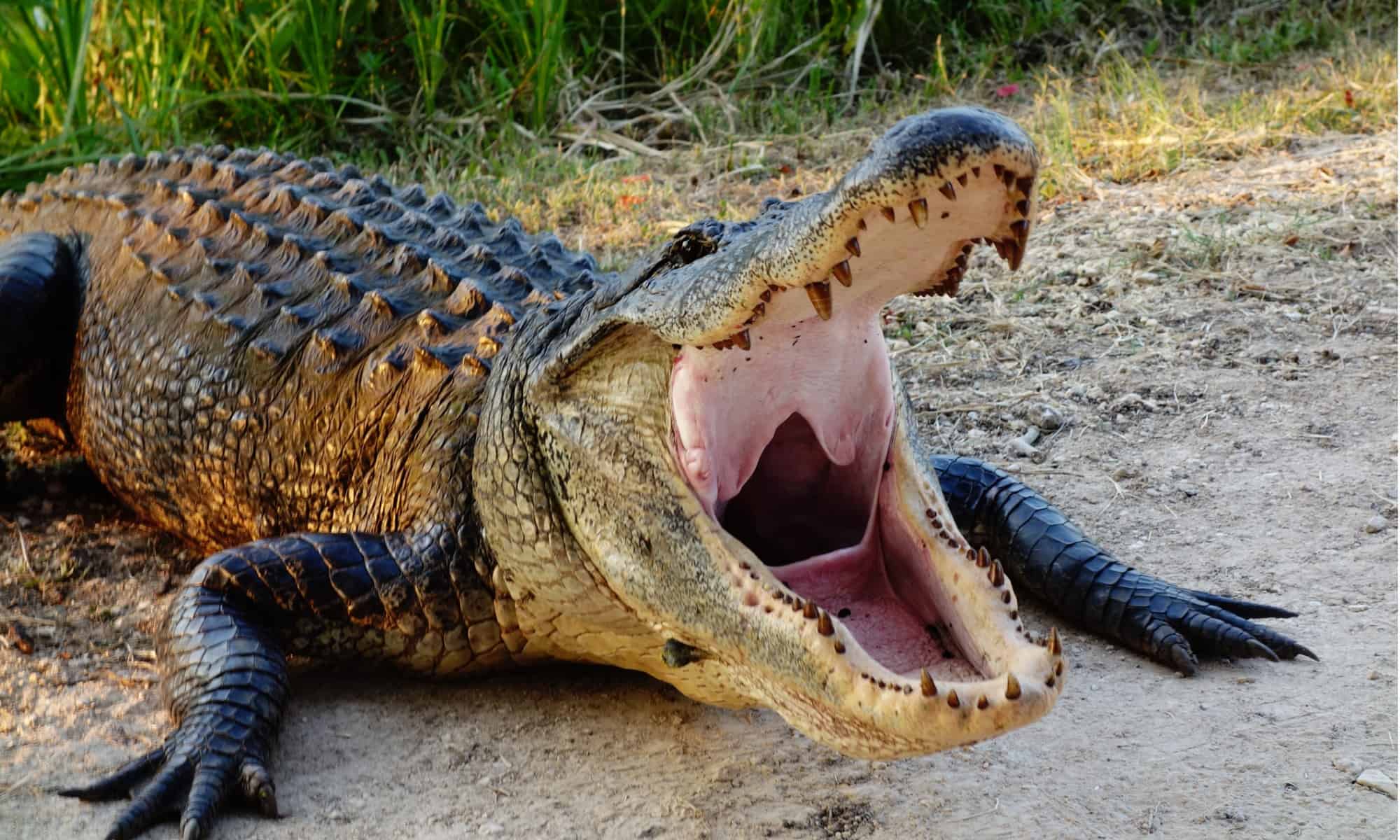

Alligators date back to the Mesozoic era, when dinosaurs roamed the Earth. They’re actually quite closely related to dinosaurs, and even share a common ancestor. There were several species of prehistoric alligators, including the giant Deinosuchus, the strong, turtle-eating Brachychampsa, the oldest alligator Prenasalis, and the close relative to the American alligator, Alligator mefferdi. In this article, we’ll discuss these alligators, their history, and how long alligators have been around.
The Background on Alligators: Were There Prehistoric Alligators?
The first alligator lived 245 million years ago. They were around in the Mesozoic era, in the time of the dinosaurs. Alligators are one family of animals in the order Crocodilia, which belongs to the subclass of reptiles known as Archosauria. Other Archosaurs are dinosaurs, Pterosaurs (flying reptiles), and birds. This means that alligators, along with birds, are actually the closest living relatives to dinosaurs.
Alligators are very adaptive, enough so that they survived the extinction of dinosaurs, although scientists don’t know precisely how they managed this. Today, alligators look much the same as they did millions of years ago. They’re also at the top of the food chain, and humans are their only predators.
However, humans have done a lot of damage to the alligator population. The Chinese alligator is nearing extinction, with a wild population of around 150. The only other extant alligator species, the American alligator, was first listed as endangered in 1967. However, the animal was able to recover in the 80s and is now classified as “Least Concern” by the IUCN.
Deinosuchus: The Largest Alligator to Ever Live
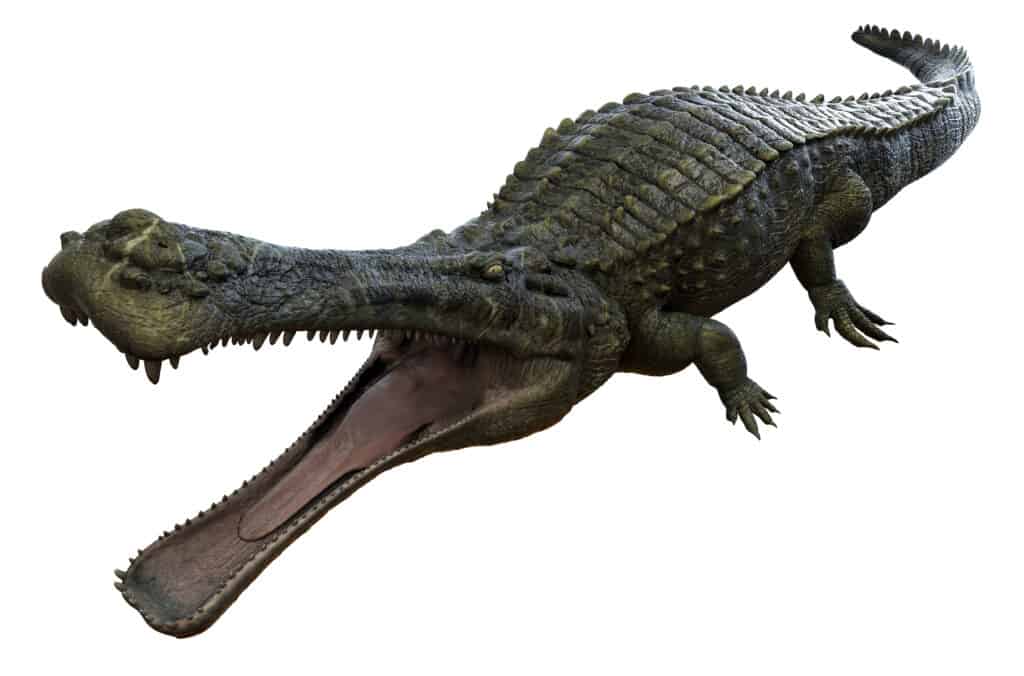
Deinosuchus was much larger than today’s alligators.
©Herschel Hoffmeyer/Shutterstock.com
83 to 72 million years ago, the continent of North America was split into several islands. One of these islands, called Laramidia, was home to the Deinosuchus.
Deinosuchus translates directly to “terrible crocodile.” Indeed, dinosaurs and other prey must’ve seen this ferocious, predatory creature as just that! Actually, more similar to today’s alligators, this crocodilian reached lengths up to 36 feet and weighed up to 7 tons. This placed them solidly at the top of the food chain as North America’s largest predator of its time. Bite marks have been found in large dinosaur fossils, suggesting that it was likely capable of taking down large prey. Another indicator of this is that this alligator had large, pointed teeth and a powerful jaw. These were suited to hunting large prey and piercing through armor.
A smaller Deinosuchus, or perhaps another alligator species, also lived to the east of Laramidia, on the island of Appalachia. These reptiles’ bite marks have been found in turtle fossils, suggesting that they may have had a similar diet to today’s alligators (which eat fish, turtles, snakes, birds, and small mammals). It’s possible that they leaned toward eating shellfish and turtles, much like Chinese alligators of today.
The reason for the Deinosuchus’s large size seems to be its life span and slow growth. Rather than rapid development, as the dinosaurs had, Deinosuchus alligators developed at a leisurely pace.
They also had slow metabolisms, which allowed them to go longer without eating than creatures with faster digestive systems. This also allowed them to live longer, and they likely lived an average of around 50 years, the same as alligators of today.
Other Prehistoric Alligators
Prehistoric crocodilians (alligators and crocodiles) had a variety of body shapes that we no longer see today. They also behaved slightly differently. Some were land-dwellers, others sea creatures, while some could both swim and walk on land. However, alligator ancestors are still quite recognizable to us, appearing very similar back then to the way they are now.
Brachychampsa
Brachychampsa lived near the time the dinosaurs went extinct. Evidence of their survival exists both millions of years before and millions of years afterwards, meaning that they survived what the dinosaurs couldn’t.
We can’t be sure why, although we do know that alligators are very adaptive animals. We also know that they have slow metabolisms that allow them to go longer without food than dinosaurs would’ve been able to — although birds, another animal to make it through the extinction, have very fast metabolisms as well.
Brachychampsa had rounded teeth. These were used to break open shells, and it’s thought that turtles were their main source of food.
Whether this animal was more closely related to alligators or crocodiles has been debated, although it is currently listed as an alligator species.
Mefferdi
Alligator mefferdi is the closest extinct relative to the American alligator we know today. Differences include a shorter snout and a slightly different skull.
However, they are so similar that there is debate about whether or not they’re simply still American alligators.
Prenasalis
Alligator prenasalis is the oldest known alligator to ever exist. Many fossils have been found, and this creature seems to have existed primarily in South Dakota.
Following the Fossil Trail
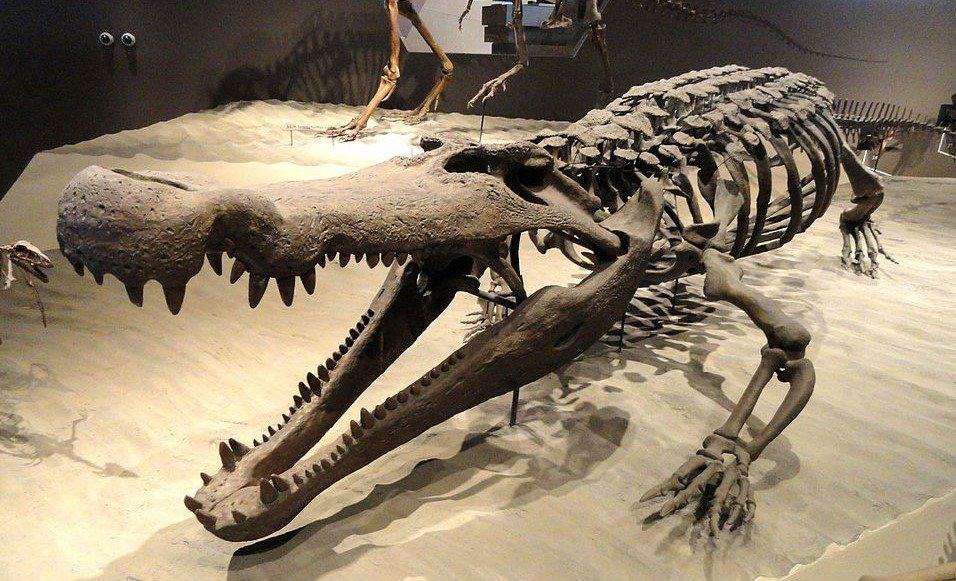
Alligator and other crocodilian fossils have been found across the world.
Scientists can place these ancient ancestors according to where the fossils have been found. In North America, it’s no surprise that many of the alligator fossils have been found in Florida, where they are most abundant today. The fossils appear most often in freshwater habitats, where other animals typical of those areas also lived, such as aquatic turtles, waterfowl, and amphibians. Some alligator fossils have been found in dry areas, as they can travel on land, but that is less typical.
Ancestors of caiman alligators, typical of South America, have been unearthed. The oldest recorded fossil of a Chinese alligator was found in Japan, dated from the late Pliocene period, about three million years ago.
Alligators Today
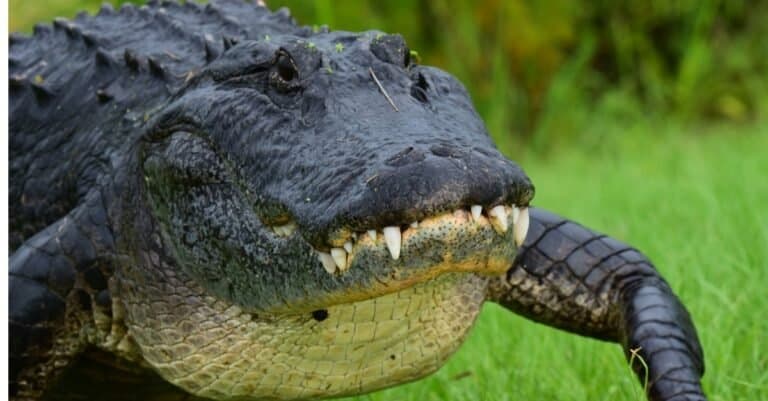
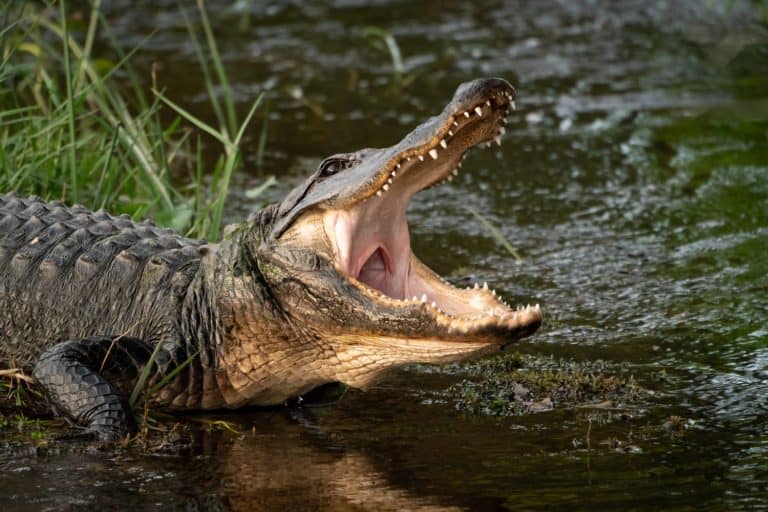
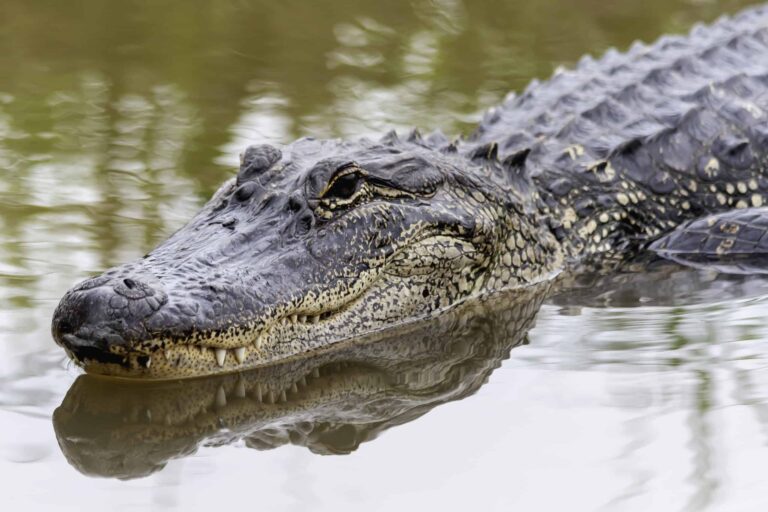
There are two species of alligators living today: the American alligator and the Chinese alligator. The American alligator is native to the United States, while the Chinese alligator lives in China, residing in the basin of the Yangtze River.
The two have a few primary differences aside from their habitats:
- American alligators are much larger than Chinese alligators. Chinese alligators measure at around five feet, while American alligators grow over 11 feet long.
- Chinese alligators have pointier snouts. They also point upward, while American alligators’ snouts are flatter in appearance.
- Chinese alligators have blunt teeth specialized to eat shelled animals. In comparison, American alligators also eat animals such as turtles, so their teeth are sharper.
- Chinese alligators have armor all over their bodies. American alligators lack armor on their undersides.