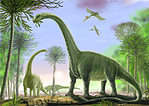
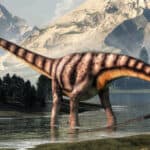
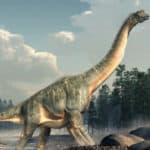
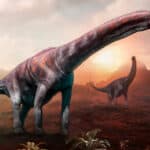
The giant dinosaurs called Sauropoda were the largest animals that roamed the earth during the Jurassic and Cretaceous periods.
The clade Sauropoda refers to an entire group of dinosaurs known as Sauropods. They had long necks and tails and were some of the largest dinosaurs that we know of when measured from tip to tail. Even though they were giants of their day, Sauropods were actually herbivores and ate plants.
Sauropoda Facts
- There are around 100 species of Sauropods described and classified, although scientists are constantly evaluating evidence to refine their knowledge of these giant dinosaurs.
- Even the smallest Sauropod species were as long as 20 feet. The larger species could be over 100 feet long!
- All Sauropods were herbivores and only ate plants.
- Only a few Sauropoda species were prey for Tyrannosaurus rex because most lived during different time periods.
- Some juvenile Sauropods formed their own herds, separate from the adults.
Description & Size
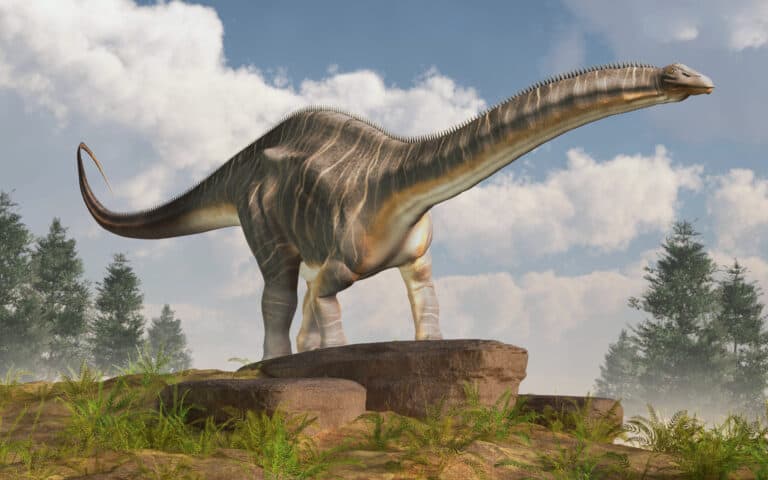
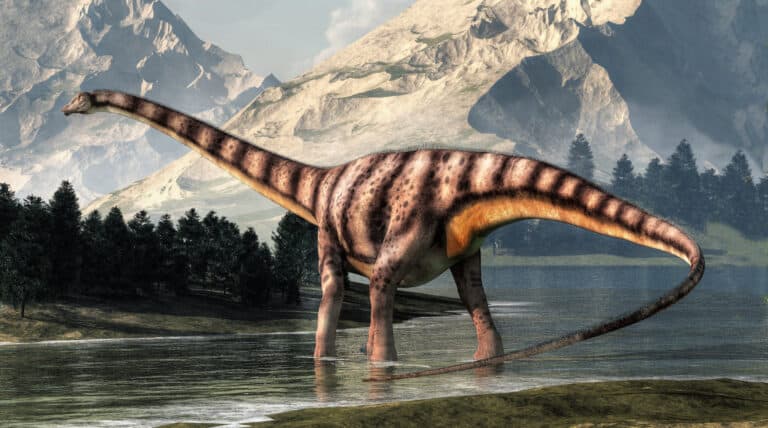
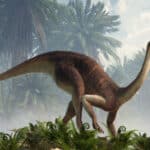
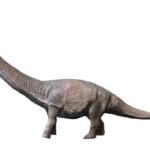
Sauropoda had long tails, long necks, and long legs. They ranged from around 20 feet long to over 100 feet long. While they were longer than they were tall, they still stood above animals still alive today. The tallest Sauropod species was over 70 feet tall. These were some truly large dinosaurs!
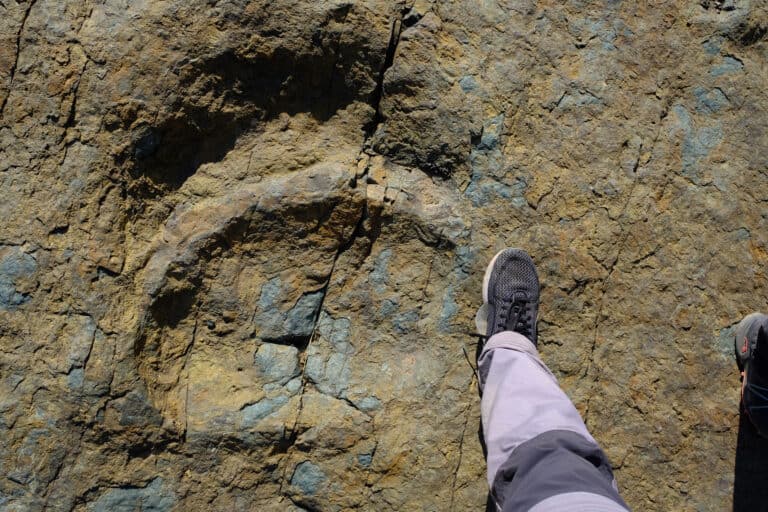
They stood on four powerful legs. The back two were especially strong, which helped them support their large bodies. Even their feet were massive, based on footprints found in Western Australia. The footprint was 5.6 feet long, which helped scientists determine that the Sauropod that made it was likely just over 100 feet long.
Sauropods had strong muscles throughout their bodies, particularly in their neck and tail. They could whip their tails around either in defense or as other behavior to show dominance. They had air sacs in their bones. This kept their limbs lighter, which made it possible for these giants to lift their long necks and move their long tails. Birds have similar features which allow them to fly.
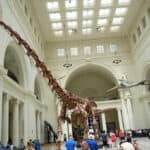
The strong limbs suggest that Sauropoda may have been able to rear up on their hind legs. A display at the American Museum of Natural History in New York City shows a Sauropod rearing up, using its powerful tail as the third support in a tripod stance. This could have been a stance meant to show dominance, scare off predators, or reach higher into the trees for food.
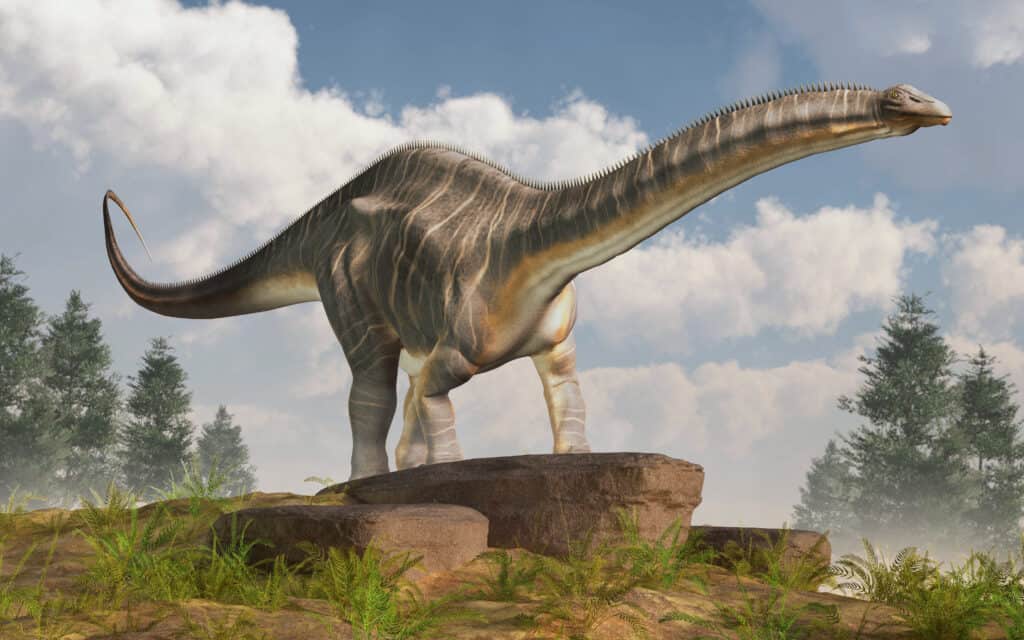
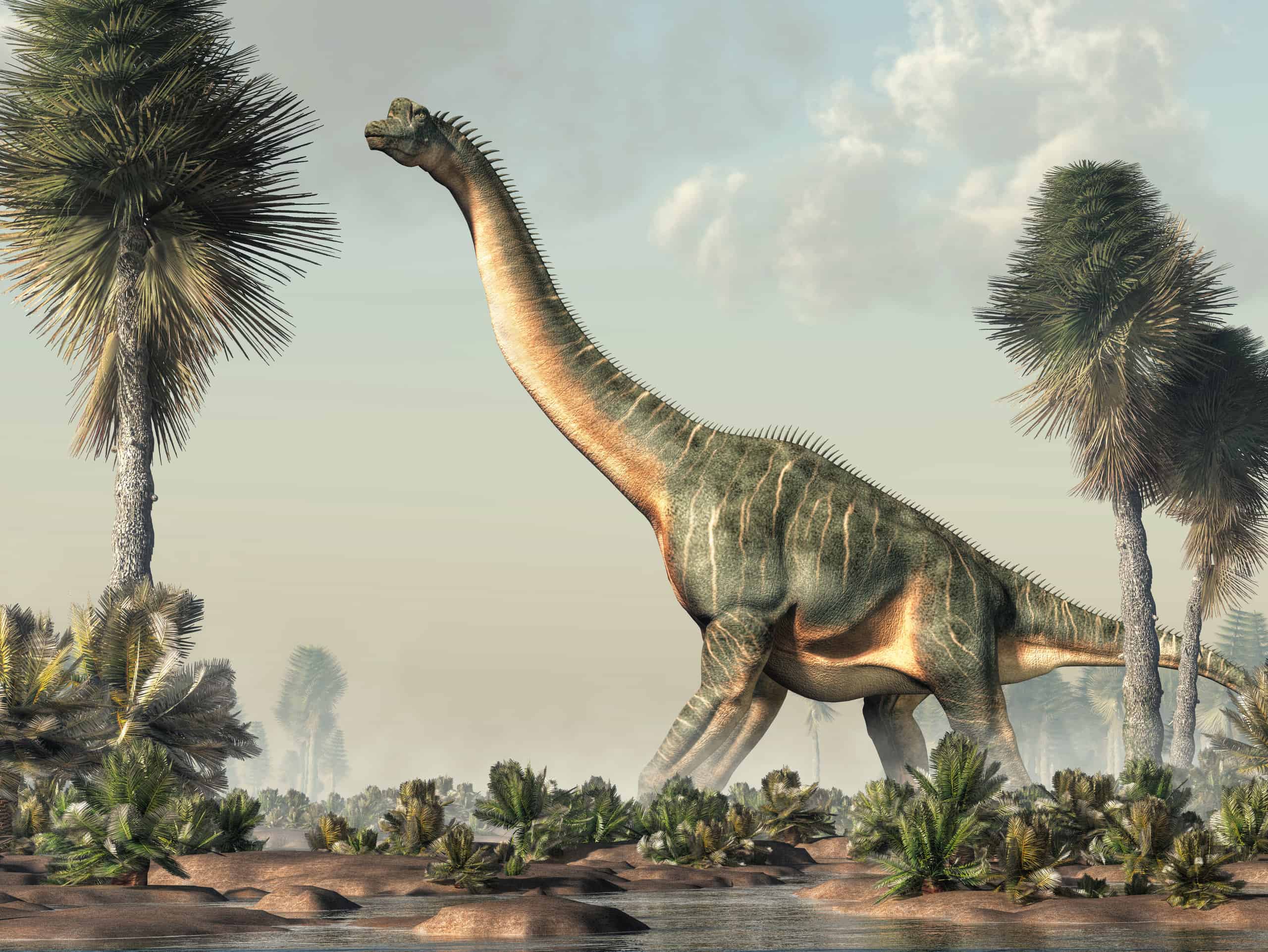
One of the largest dinosaurs, Sauropod ate only plant life.
©Daniel Eskridge/Shutterstock.com
Diet – What did Sauropods eat?
Sauropods had to eat a lot to keep up their large size. Because of this, their teeth frequently fell out and became worn. They developed a high tooth replacement rate, which allowed them to keep up their enthusiastic appetites. Larger teeth took longer to grow than smaller teeth, but some species replaced teeth as often as every two weeks.
All Sauropoda were herbivores but they did not all eat the same plants. Some foraged close to the ground while others used their long necks to get to leaves high up in the trees. This probably helped multiple species coexist without competing for the same food. It likely played a role in their evolution and development as well.
Habitat — When and Where It Lived
Scientists initially thought that Sauropods may have lived in the water because they believed that they couldn’t support their massive size and weight on land. Their hollow bones made their skeletons much lighter, however, and evidence shows that they did live on land. Sauropods favored coastal areas where their food was plentiful.
Sauropods lived in all areas of the world, although they were not able to thrive in cold climates. Fossil evidence of Sauropoda has been discovered on every continent. They lived during the Jurassic and Cretaceous periods, between 201 and 66 million years ago. Sauropods were most plentiful and had the widest distribution during the late Jurassic. Keeping in mind that the earth looked much different during the time of the dinosaurs, it is interesting to see how they migrated to new places, their population spread, and they evolved into many different species.
Threats and Predators
One of the apex carnivorous dinosaurs of this period was the fearsome Tyrannosaurus rex. While we often think of the T. rex as preying on all dinosaurs, it actually lived during the Cretaceous period. Apatosaurus, Diplodocus, Barosaurus, Brachiosaurus ,and Camarasaurus are all Sauropods that lived during the Jurassic period and would not have crossed paths with the giant T. rex.
Other Sauropods, such as the Alamosaurus, and T. rex did live during the same time period and in the same places, so these carnivores likely went after Sauropods as a source of food. Because Sauropods were so large, not many carnivores could take them on. The Allosaurus was one of the dominant predators during the Jurassic period. Other carnivores included Dilophosaurus and bird-like dinosaurs belonging to the Coelurosauria clade.
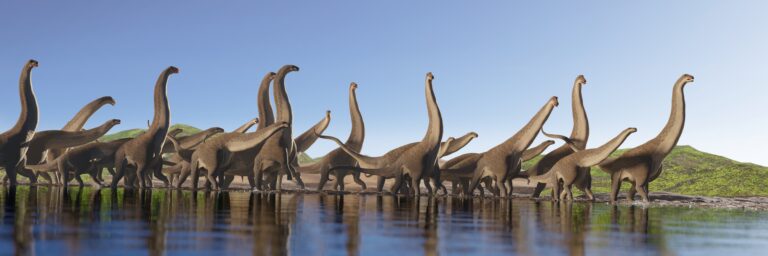
Many species of Sauropoda lived together in herds and protected their young from predators. However, juvenile Sauropods were self-sufficient in many cases. Some species even lived separately as juveniles and adults due to their different food needs during these periods of development. This would have been a time when Sauropods were more vulnerable to predators. For this reason, they developed herding to work together to deter and fight off meat-eating dinosaurs.
Discoveries and Fossils – Where It Was Found
The very first Sauropod discovery was a tooth, discovered in England in 1699. Given their giant size, it is amazing that the first evidence that scientists found was something so small. At the time, no one knew of dinosaurs as an extinct group of animals, and research into fossils and remains was just beginning. The tooth was cataloged and described but it was not until many years later that researchers identified it as a dinosaur tooth and later as a Sauropod.
English paleontologist Richard Owen, who later developed the term and identification for the Dinosauria clade, scientifically described the first Sauropod specimens in 1841 and called them Cardiodon and Cetiosaurus. Based on just a few tooth fossils, he imagined that the animals were closer to crocodiles or other marine reptiles. As paleontologists discovered more fossils, they continued to speculate that they were related to birds, reptiles, or marine animals. In 1878, the Sauropod clade was formed and further fossils were classified within it.
Extinction – When did it die out?
Around 66 million years ago, an asteroid hit the earth, leading to the extinction of around 75% of all species at the time. Known as the Cretaceous–Paleogene extinction event, it marked the end of the Cretaceous period. Sauropods, along with many other species, went extinct during this sudden event.
Some scientists speculate that some species of Sauropods in certain areas were already competing for food and resources with other dinosaurs. Because of the sudden mass extinction of so many species, we will never know how this competition may have impacted the Sauropod population over time.
Similar Animals to the Sauropod
Sauropoda Pictures
View all of our Sauropoda pictures in the gallery.

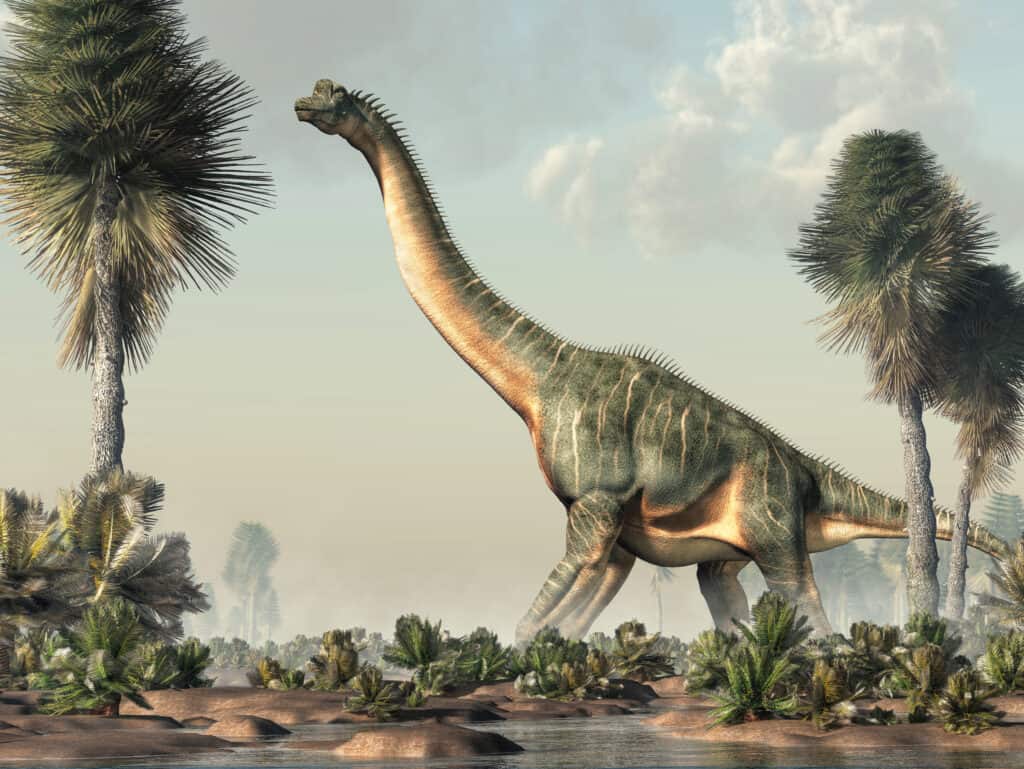
Daniel Eskridge/Shutterstock.com
Sources
- Smithsonian / Accessed October 2, 2022
- UC Berkeley / Accessed October 2, 2022
- AMNH / Accessed October 2, 2022
- NHM, UK / Accessed October 2, 2022