
Quick Take
- Photographing a wild rabbit once carried the same legal weight as hunting a bison, and the bizarre reason why reveals something unexpected about early conservation thinking. See what the law covered →
- The permit wasn't just rare. Getting one required something you'd never expect from a wildlife photography license. Discover the permit's origins →
- Despite being an active law for decades, it was never once used to prosecute anyone, leaving open the question of what it was really for. Find out why it was revised →
- Cameras were considered a threat to Wyoming wildlife long before anyone thought to regulate them, and the season that triggered the most alarm is probably not what you would guess. See which season alarmed legislators →
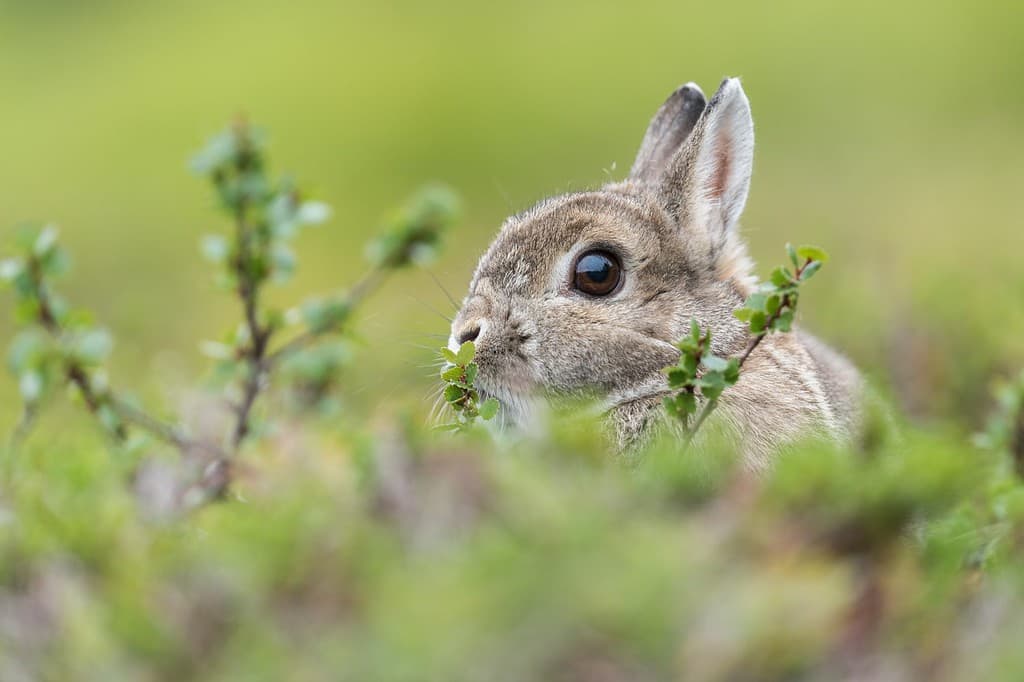
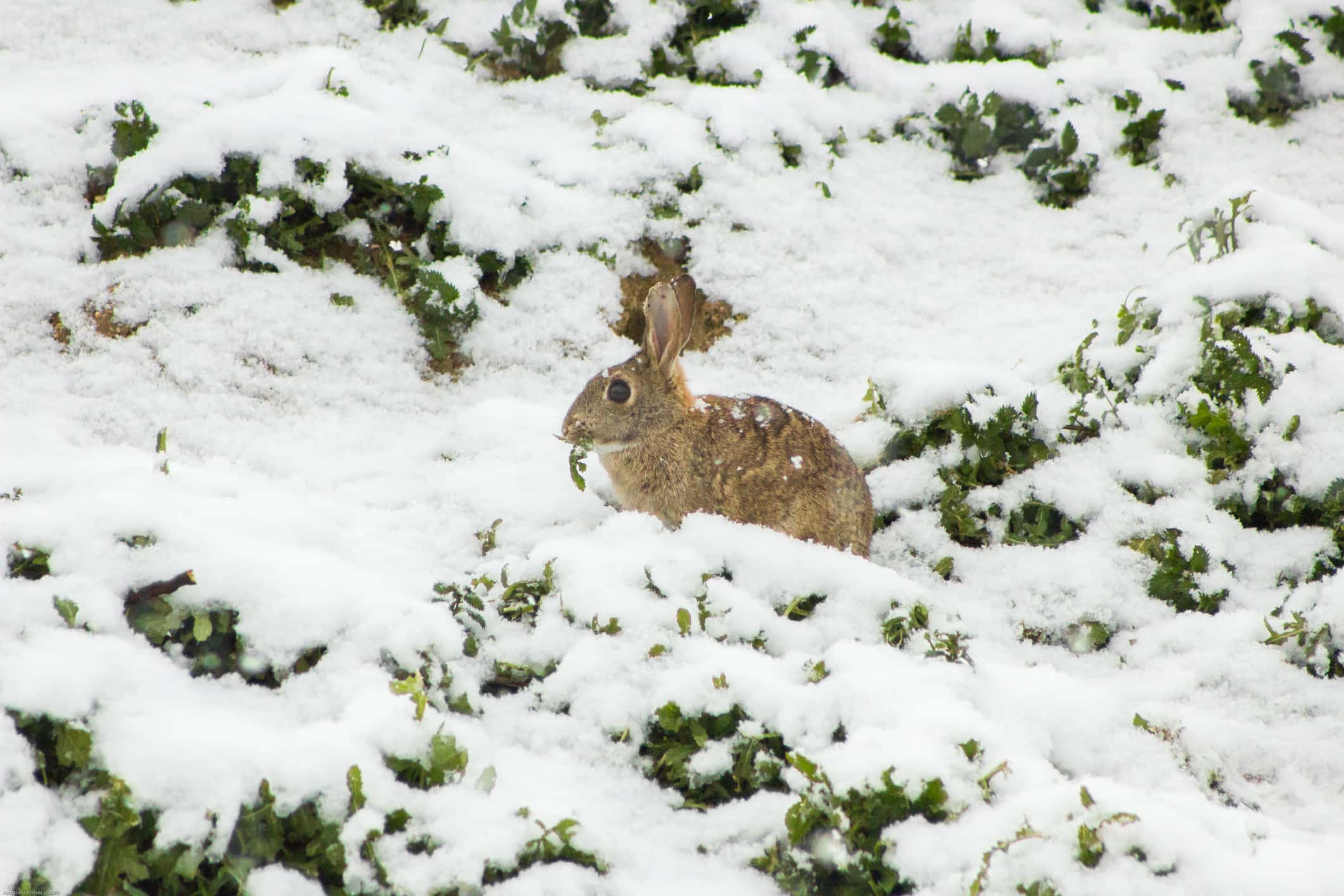
A rabbit enjoys a snack.
©oyvindpe/Shutterstock.com
When the subject of odd American laws comes up, you might have heard the one about how it’s illegal to photograph a rabbit in Wyoming between January and April, and have been surprised by the tender attitude Wyomingites have for the well-being of wildlife, before dismissing it as a joke. But just like many such weird laws (for example, it really is illegal to pretend to be a member of the clergy in Alabama), this embellished bit of legal lore is based on a real (and now defunct) Wyoming law designed to protect wildlife and raise funds for conservation.
What Did the Law Really Say?
The law, passed in 1921, made it illegal for anyone to photograph game animals between January and April without a permit. A permit wasn’t easy to get; not only did it cost $5.00, but applicants were required to submit a “recommendation of two well-known and responsible electors of this State” along with the payment to the State Fish and Game Commissioner.
Game animals have been regulated in Wyoming since it became a territory; the state attracts hunters from around the world who can purchase a license for a chance to hunt iconic Western species like bison, elk, bighorn sheep, pronghorn antelope, and even black bears. What makes this law particularly interesting is that it applied not only to famous and photogenic animals like moose, but also to rabbits, turkeys, squirrels, and ducks.
What Inspired the Law in the First Place?
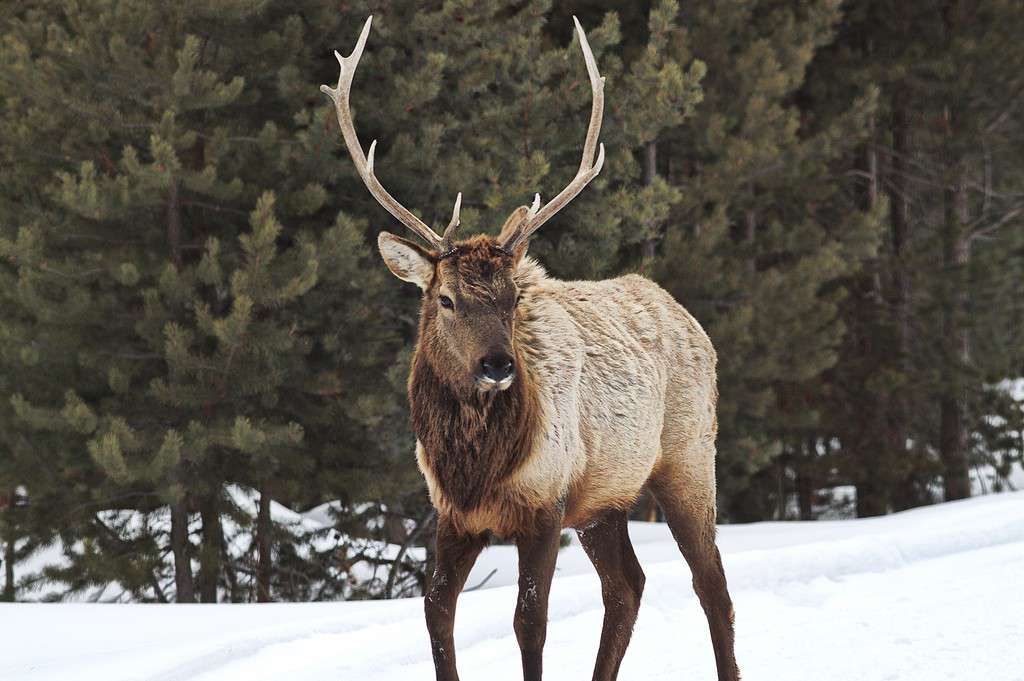
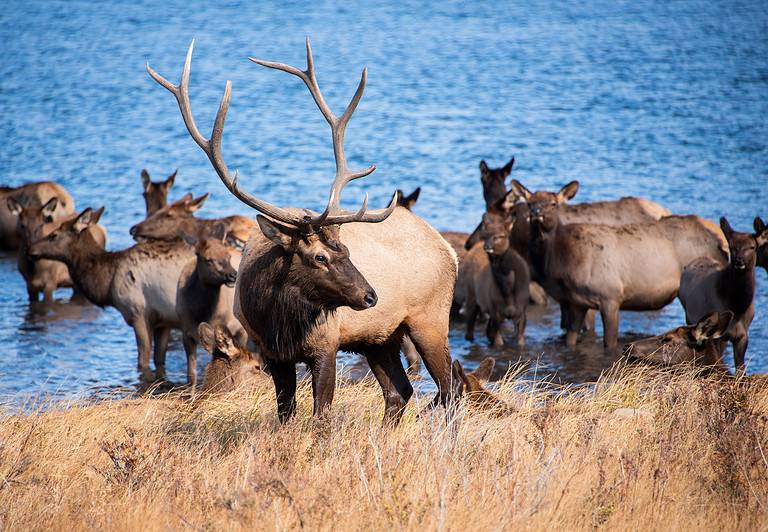
A bull elk stands in Yellowstone National Park.
Wyoming is famous for its biodiverse wilderness, but this has only been maintained through careful regulation and conservation efforts. In the 60 years after Wyoming was organized into a territory in 1868, populations of wildlife trended downwards because of the popularity of hunting, especially sport and trophy hunting. In 1886, the Territory of Wyoming set a bag limit for big game and charged a license fee of $2 for residents and $50 for nonresidents. In 1899, after Wyoming became a state, the state began charging nonresidents a $10 fee to hunt and used these funds to establish the position of State Game Warden.
In 1921, wild game populations continued to dwindle in Wyoming, and the Wyoming Legislature created the Wyoming Game and Fish Commission. Just as hunting license fees had funded previous conservation efforts, legislators hoped that photographers could also be a source of revenue for the new commission, so they passed the law requiring photographers to obtain permits in the same year.
Photography was an increasingly popular hobby in the 1910s and 1920s, as cameras became smaller, more affordable, and lightweight. As faster shutters and more sensitive film became available, it became easier for photographers to capture animals in their natural habitats, especially professionals with access to high-end gear.
But why was a permit required only during the winter months? The deep snowdrifts of a Wyoming winter mean that travel is very energy intensive, especially for large, photogenic animals like elk. A writer in 1916 expressed concern that the number of photographers pursuing elk in Wyoming was harming the animals. Because herd animals tend to congregate in winter months, the author points out that winter can be an ideal time for photographers. Legislators in Wyoming hoped to raise funds from photographers while also helping protect the economically important game animals during their most sensitive time of year.
Why Was the Law Overturned?
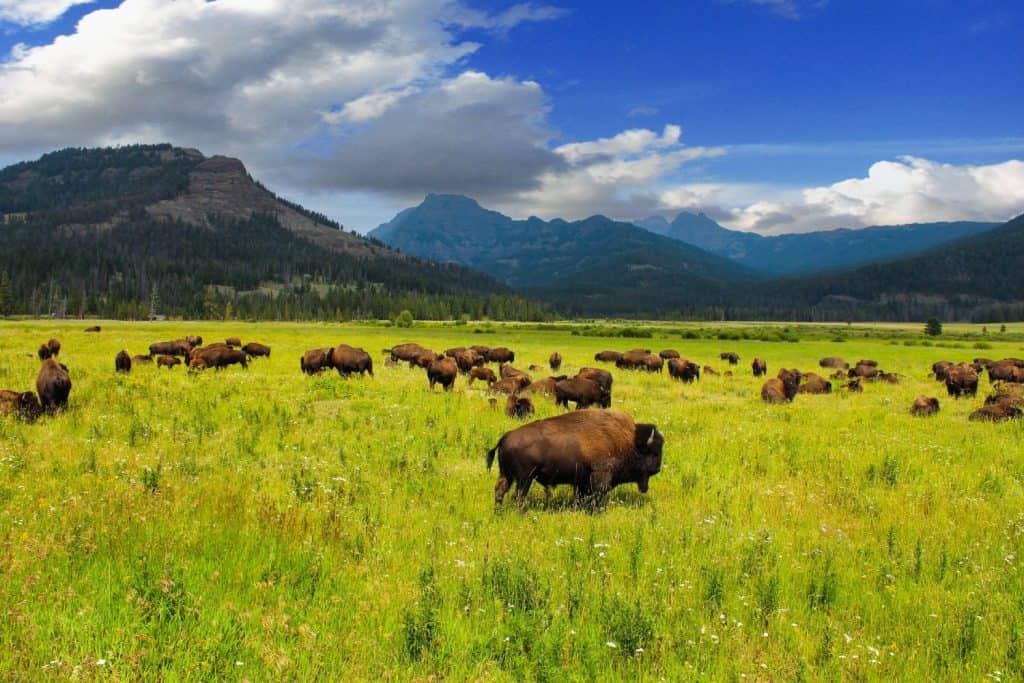
Wild bison graze in one of Wyoming’s mountainous valleys.
©MisterStock/Shutterstock.com
Though this law did help raise money for Wyoming’s Game and Fish Commission in its early years, there is no record of anyone being prosecuted for taking photos of wild game without a permit. By 1969, state law had been revised to regulate only commercial photography, and this law was no longer on the books. Today, it is legal to photograph wildlife in Wyoming for personal use. However, commercial photographers must obtain permits from the regulatory agencies that manage the lands where they wish to take photographs.
How Can Photographers Be More Mindful of Wildlife?
The concerns that drove the creation of this law are not trivial, and today wildlife are protected from photographers by laws against the harassment of animals and by regulations that govern how close a photographer or viewer may approach an animal. Make sure that your activity does not disrupt the normal behaviors of wildlife, such as feeding, breeding, or taking shelter. Be aware of the impact you are having on wildlife, and try to ensure that your actions do not significantly alter the behavior of the animals you wish to observe!