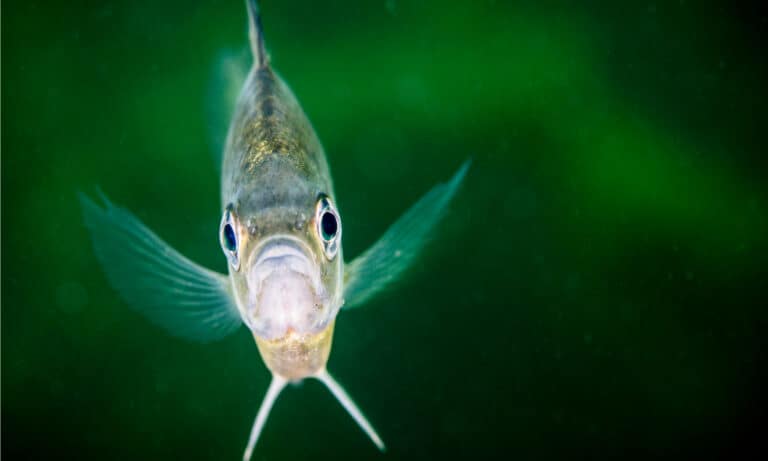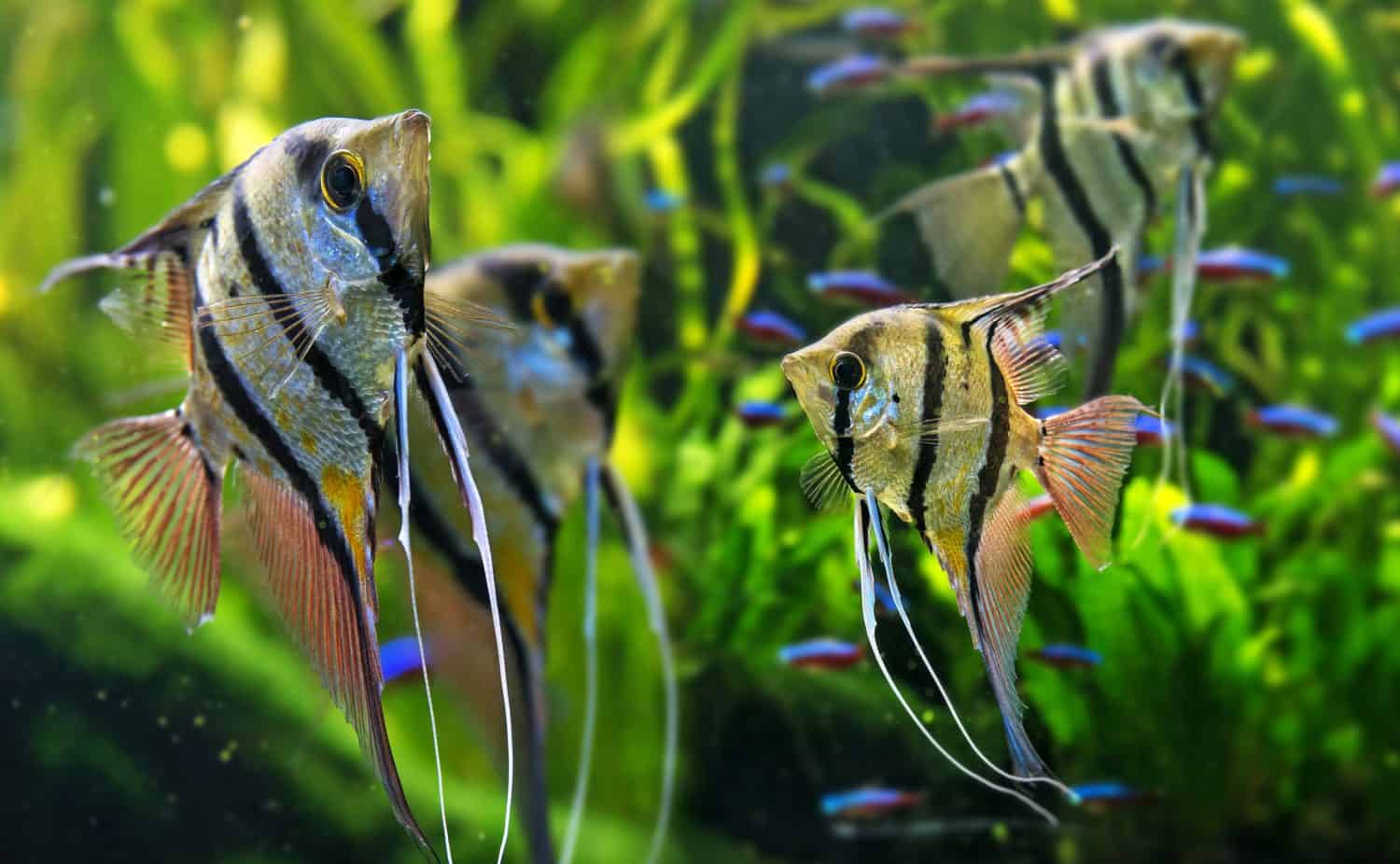

Because it is difficult, if not impossible to determine the sex of juvenile angelfish (Pterophyllum), they are best purchased as a group, allowing them to naturally form pairs. This is considered the most reliable method for obtaining a breeding pair. However, once they mature, there are a few defining characteristics that differentiate female and male angelfish. Continue reading to learn what to look for when attempting to discern whether an angelfish is female or male.
Size and Growth
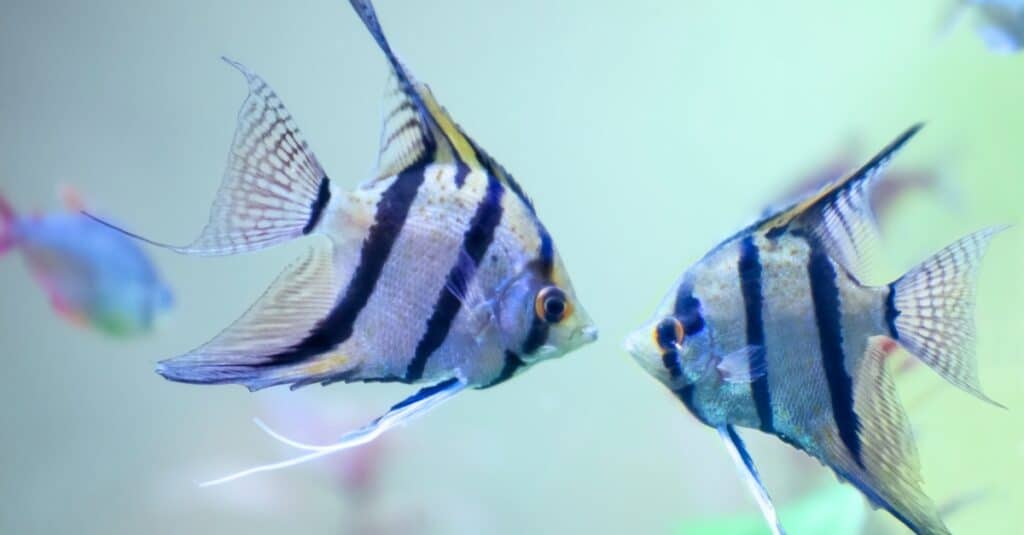
Silver angelfish enjoy living alongside other members of their species.
©iStock.com/TatianaMironenko
Male angelfish are typically a little larger than female angelfish. In some species, the male angelfish can grow up to 30 percent larger than a female angelfish. Both female and male angelfish reach their full adult size between 8 and 12 months of age. However, males often have a growth spurt and reach their full size faster than females.
Angelfish reach sexual maturity between 6 and 12 months of age, while they are still physically growing and have not reached their full adult size. This means they can breed before they are fully grown, which can also help in determining their sex.
Body Shape
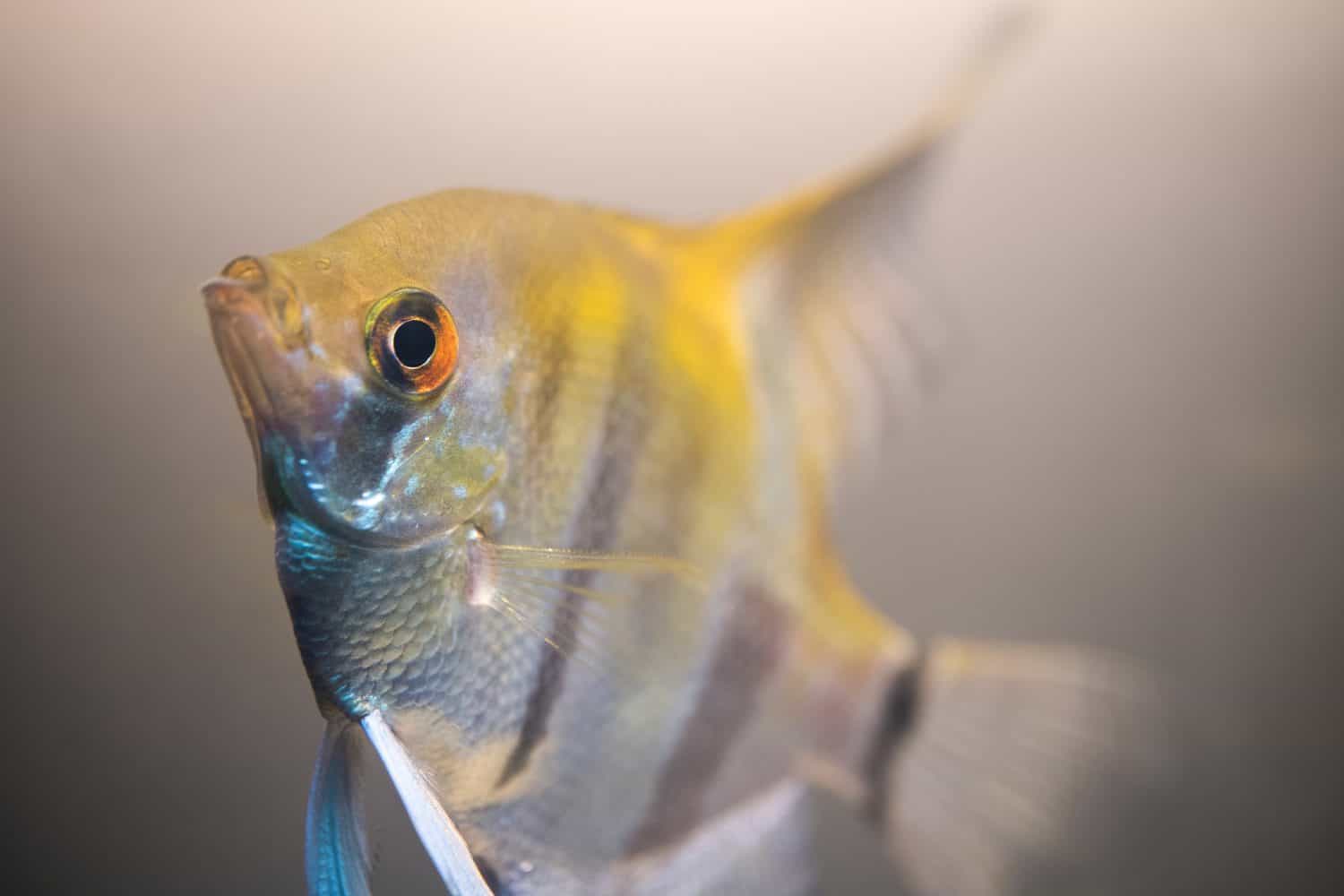
Sex is nearly impossible to determine in juvenile angelfish, which is one reason it is recommended to purchase several at one time; this allows them to naturally form pairs.
©CsaboPhoto/Shutterstock.com
The differences in body shape between male and female angelfish are among the fastest and easiest ways to determine their sex. Male angelfish tend to have a more rounded, almost circular body, and mature males often develop a pronounced, rounded nuchal hump or crown on their forehead.
Female angelfish typically have a more angular body shape and a smoother, more rounded profile. Viewed from the front, a female’s body may appear wider, particularly when she is full of eggs.
Ventral Fins
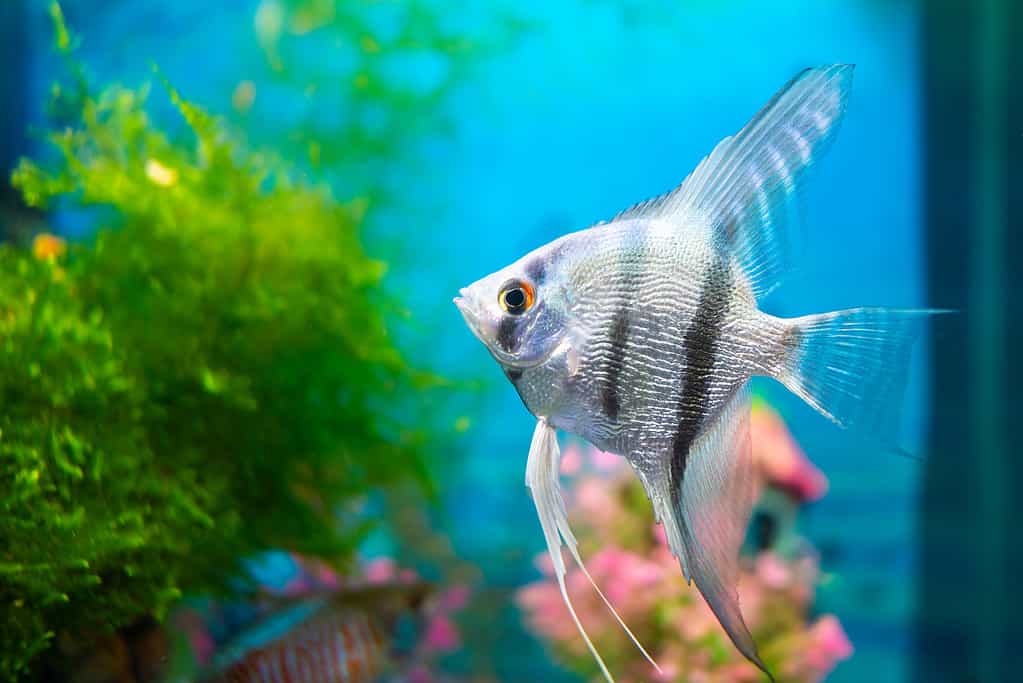
The ventral fins of the angelfish help them navigate their surroundings.
©Staras/iStock via Getty Images
The angelfish’s ventral fins, also called pelvic fins, are the long, stringy appendages on their underside. Angelfish use their ventral fins for balance, navigation, and sensing their environment. The shape of these fins is also a key way to distinguish between male and female angelfish. Males reportedly have forked, frayed ventral fins, while females have rounded, intact fins. However this is not the most accurte way of determining the sex of an angelfish.
Breeding Tubes
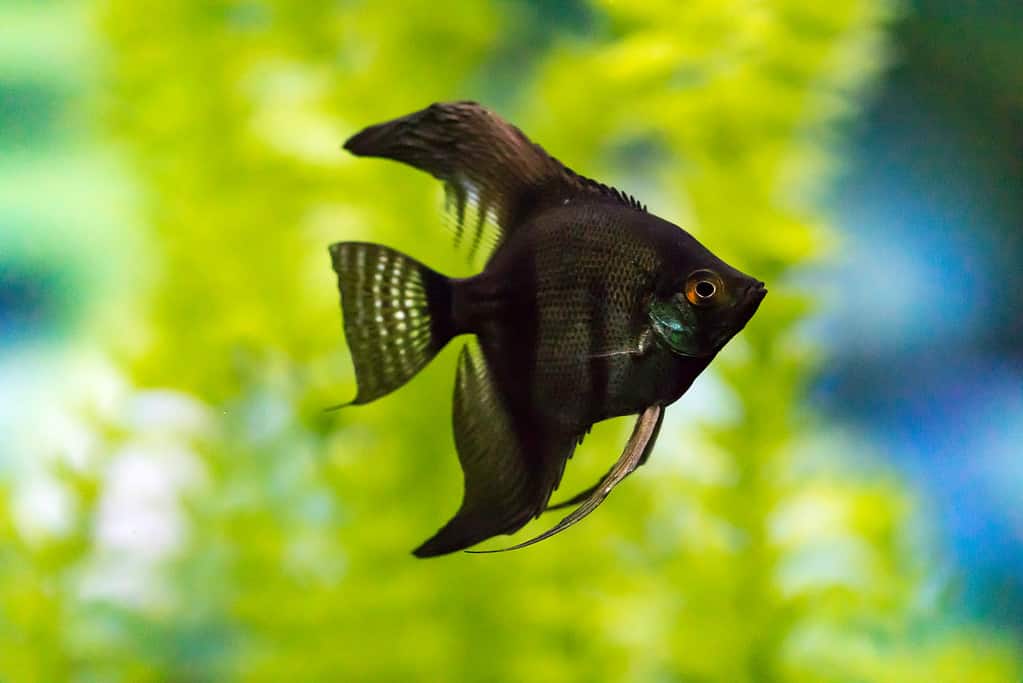
How long do angelfish live? 8 to 12 years on average
©Saad315/Shutterstock.com
Once they have sexually matured, one of the most reliable ways to distinguish between angelfish sexes is by examining the angelfish’s breeding tube, a small, tube-like organ that appears on the underside of a mature angelfish. Sexually mature male angelfish have a thin, pointed breeding tube, while females have a thicker, blunter, and more rounded breeding tube. Breeding tubes are not always visible; they only extend when angelfish are ready to breed.
Behavior
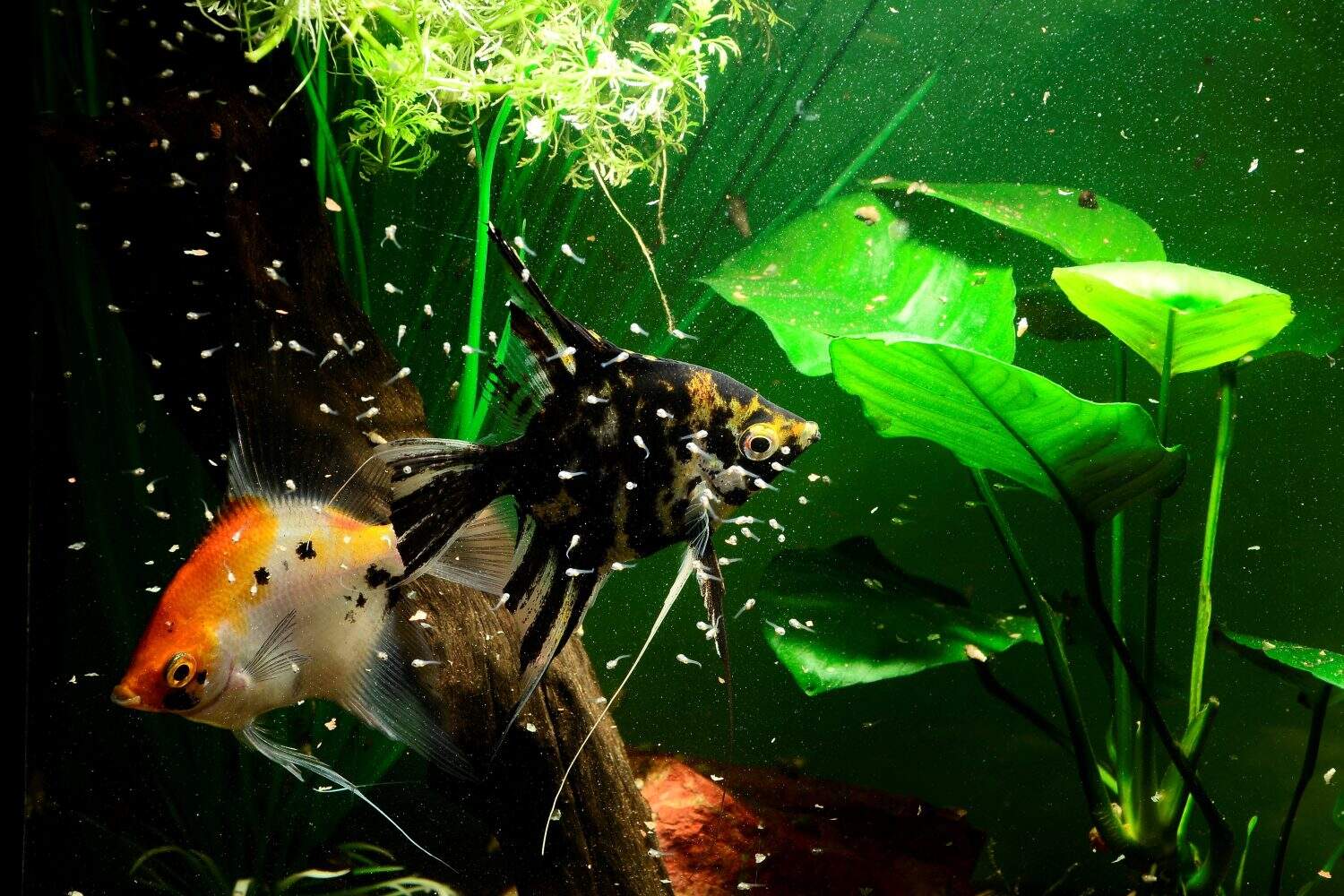
Angelfish exhibit different behaviors in captivity and in the wild.
©JuanCarlosPalauDiaz/Shutterstock.com
Sexually mature male and female angelfish exhibit exceptionally different behaviors. Male angelfish display more territorial and dominant behaviors, often chasing away other males and relentlessly pursuing females as part of courtship.
Females may also be aggressive, especially when they are defending their eggs, but their behavior is less about dominance and more about egg-laying and nurturing.
Can Two Male Angelfish Be in a Tank Together?
Male angelfish are typically more aggressive than females.
©Saad315/Shutterstock.com
Male angelfish are considered more aggressive than females but typically do well together in a tank when there are no female angelfish present. However, male angelfish can be territorial and may show increased aggression if females are present. Both males and females can be aggressive, so it is important to provide adequate space and hiding spots in the tank to minimize conflict.