
Quick Take
- Despite their name, Australian Shepherds have almost nothing to do with Australia, and their true origin is far more surprising.
- Some coat colors are actively avoided by breeders, and the reason has nothing to do with how hard they are to achieve. Most owners would never guess why. See why breeders avoid it →
- One stunning color variation comes with a serious hidden health risk that even experienced owners overlook. Explore the health risks →
- A black and white Aussie is often mistaken for a completely different breed, and there is a genetic reason the two look so alike. See the Border Collie mix-up →
Despite their name, Australian shepherds actually originated in the Western United States and are thought to be descended from herding dogs brought over from Europe, though whether their primary ancestors were British or Spanish breeds remains debated among historians. Their lineage traces back to the Pyrenees region between Spain and France. In the 19th century, many of these dogs migrated to Australia before eventually relocating to California during the Gold Rush. Because these shepherds and their livestock arrived in North America directly from Australian ports, American ranchers mistakenly assumed the dogs were native to the Land Down Under and labeled them Australian Shepherds, though the breed was ultimately refined and standardized by American cattlemen. Continue reading to learn more about these herding dogs.

The Australian shepherd is a cattle dog that is often mistaken as coming from Australia.
©Alpeek/Shutterstock.com
Appearance
Australian Shepherds have a weather-resistant double coat that insulates them against both heat and cold, featuring a dense undercoat and a straight-to-wavy topcoat. Genetically, some Aussies are born with naturally bobbed tails, while others are born with full, long tails. The American Kennel Club (AKC) official breed standard requires Australian shepherds to have a docked or naturally bobbed tail not exceeding four inches, effectively pressuring American breeders to dock them to compete.
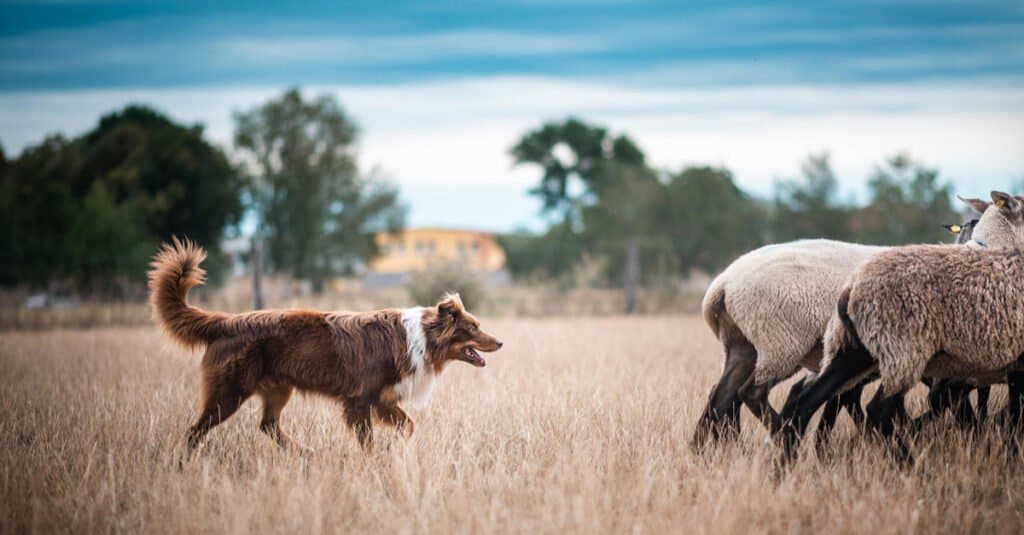
The Australian shepherd is one of the most popular dog breeds in the United States.
©Ellis Berankova/Shutterstock.com
Size
Australian shepherds stand between 18 and 23 inches at the shoulder and weigh between 40 and 65 pounds, with males typically ranging from 50 to 65 pounds and females from 40 to 55 pounds. They are an athletic, high-energy breed that requires between one and two hours of daily exercise.
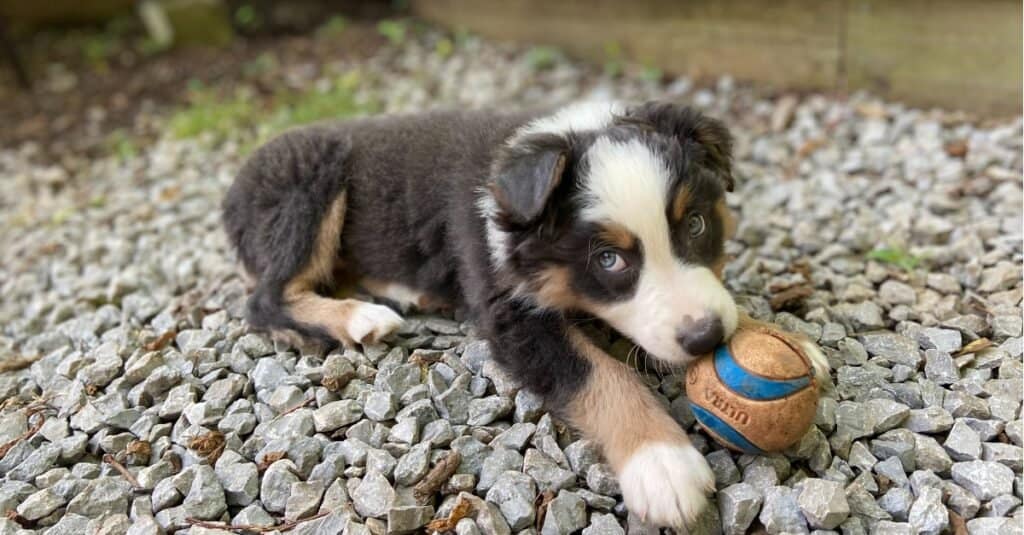
Australian shepherds are wonderful pets.
©iStock.com/Brad Covington
Health Issues
The Australian shepherd is reasonably healthy but may develop issues with age. Hearing and vision issues can result from the double merle gene, which can cause Australian shepherds to be born deaf or blind. Dogs that inherit the blindness gene typically have white fur, often accompanied by light blue eyes. Hip dysplasia is also common in the breed.
Australian shepherds generally live between 12 and 15 years and come in numerous color combinations:
Red
Red is one of the four AKC-recognized standard Australian shepherd coat colors, along with black, blue merle, and red merle. However, solid red, often called red bicolor or red tricolor, appears less frequently than black or merle varieties because it is a recessive trait. For a puppy to be born red, it must inherit a copy of the recessive red gene from each parent; if even one parent passes on a dominant black gene, the puppy will be black rather than red. While this simple inheritance model makes red mathematically less common than dominant black coats, reputable breeders can still routinely produce red puppies by pairing dogs that carry the red gene.
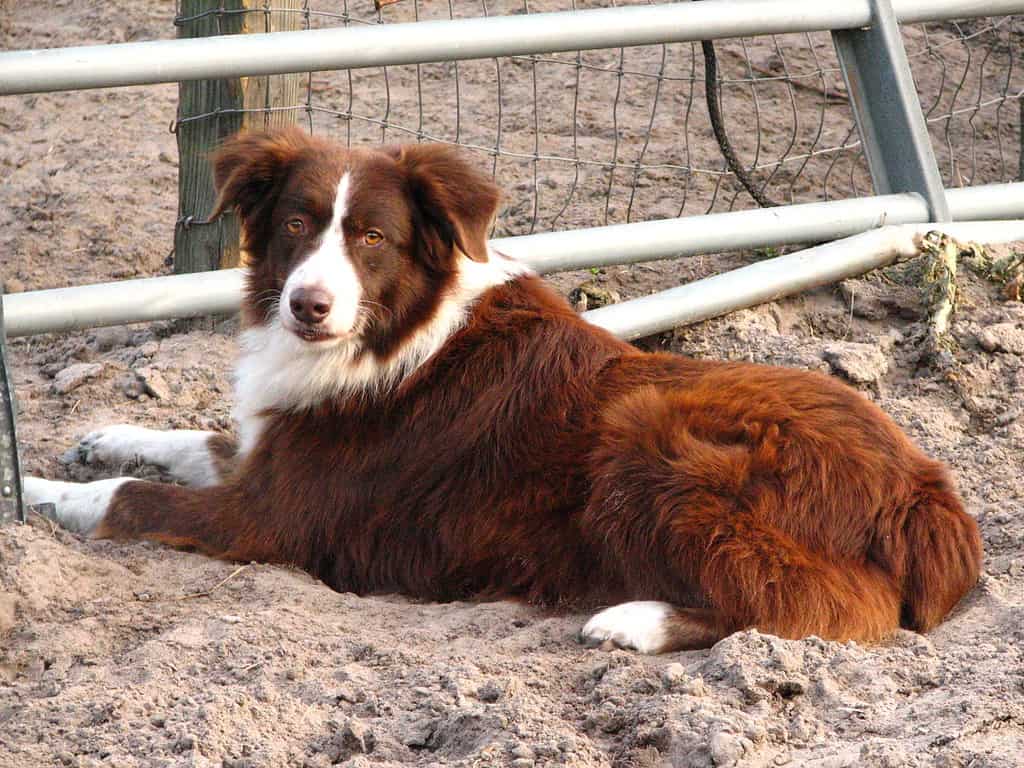
A red Australian shepherd is very rare. This photo is of a red bi-color Australian shepherd.
Dilute
The dilute coat in Australian shepherds is a non-standard, faulted trait that gives the dog a washed-out, faded appearance. This effect is governed by a simple recessive gene on the D Locus (dd), meaning a puppy will only display a dilute coat if it inherits a copy of the mutation from both parents. When active, the gene prevents pigment from distributing evenly through the hair shaft. This dilutes genetically black dogs to a slate or steely-gray hue and genetically red dogs to a pale beige, fawn, or lilac tone. Because both the ASCA and the AKC require all recognized colors to be “strong, clear, and rich,” dilute coats are penalized in the show ring.
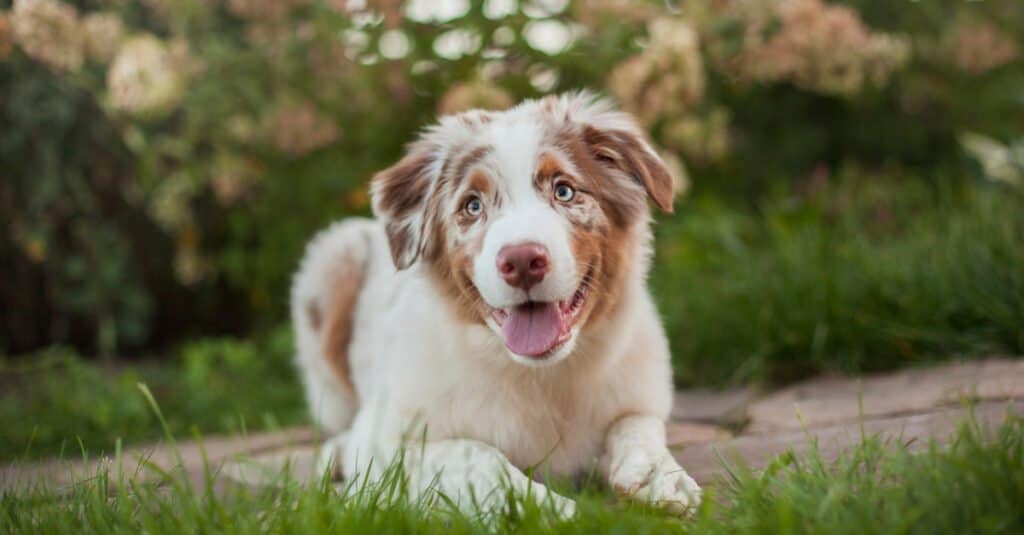
The dilute Aussie can be any shade, but a watered-down version of the actual color is usually seen.
©Maria Ulzutueva/Shutterstock.com
Black and Tan
The black and tan Australian shepherd coat features a solid black base combined with warm copper or tan points, creating a bicolor look without any white markings. These distinct tan accents typically appear above the eyes, on the cheeks, across the chest, and down the legs.
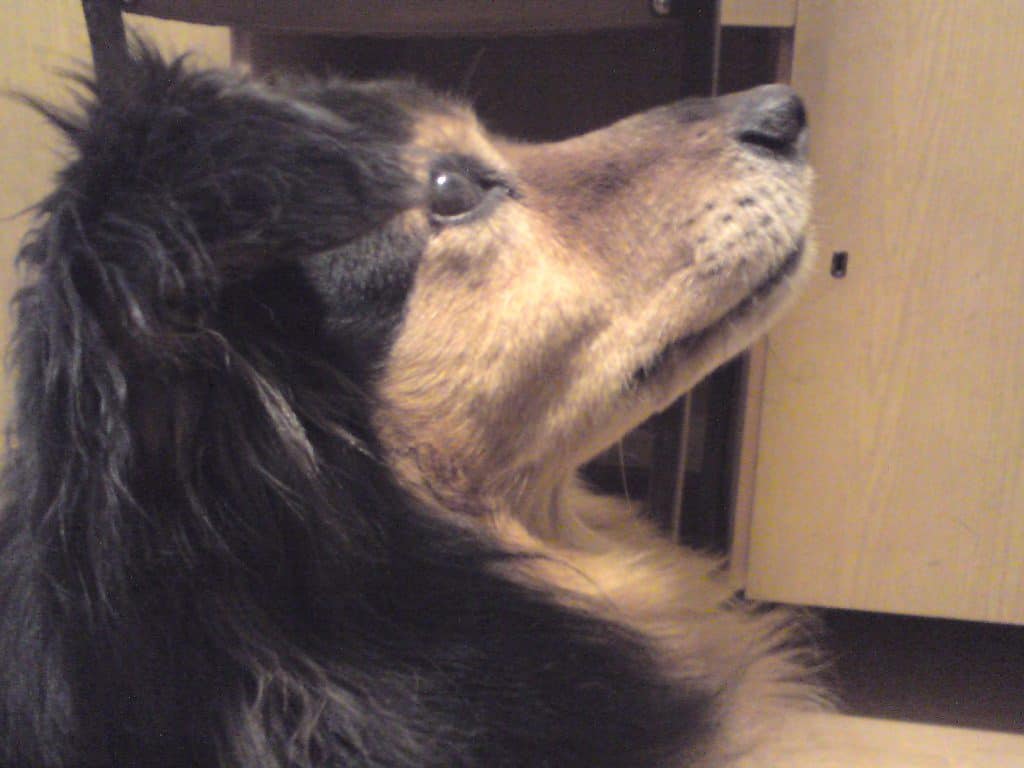
A black and tan Australian shepherd has a bicolor coat.
The black and tan Australian shepherd is extremely rare and resembles a rottweiler. The dog has tan markings on its face, neck, chest, and sometimes feet and tail. These dogs also have deep golden brown eyes.
Yellow
The Australian shepherd can inherit a yellow recessive gene that makes copper and tan markings appear to take on a more yellowish hue. Yellow Aussies can be as light as a pale yellow or as dark as a golden yellow. For a dog to display a yellow coat, both parents must pass on the yellow recessive E-locus gene. These dogs may display other colors, but those colors can take on a yellowish tint.
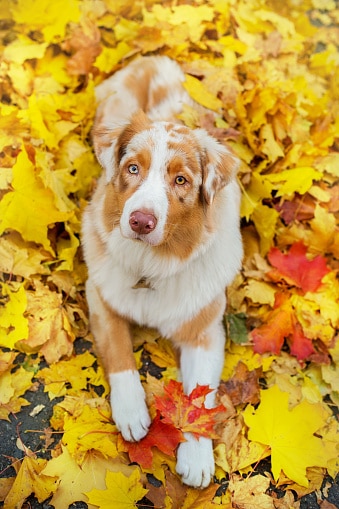
A yellow Australian shepherd is very rare but is a beautiful golden retriever shade of orangish yellow.
©Nemyrivskyi Viacheslav/ via Getty Images
Reputable breeders avoid producing cream or yellow Australian shepherds because a yellow coat masks the merle pattern. This hidden merle status creates a heightened risk of accidental merle-to-merle breeding, which frequently results in double merle puppies that are blind or deaf. Because of these severe health risks, major breed registries such as the AKC and ASCA classify the yellow coat as a disqualifying fault.
Black with Hazel Eyes
Most black Australian shepherds have deep brown eyes, but some have the rarest eye color among black Aussies: hazel, a combination of green and brown. It is also very rare to find a completely black Australian shepherd.
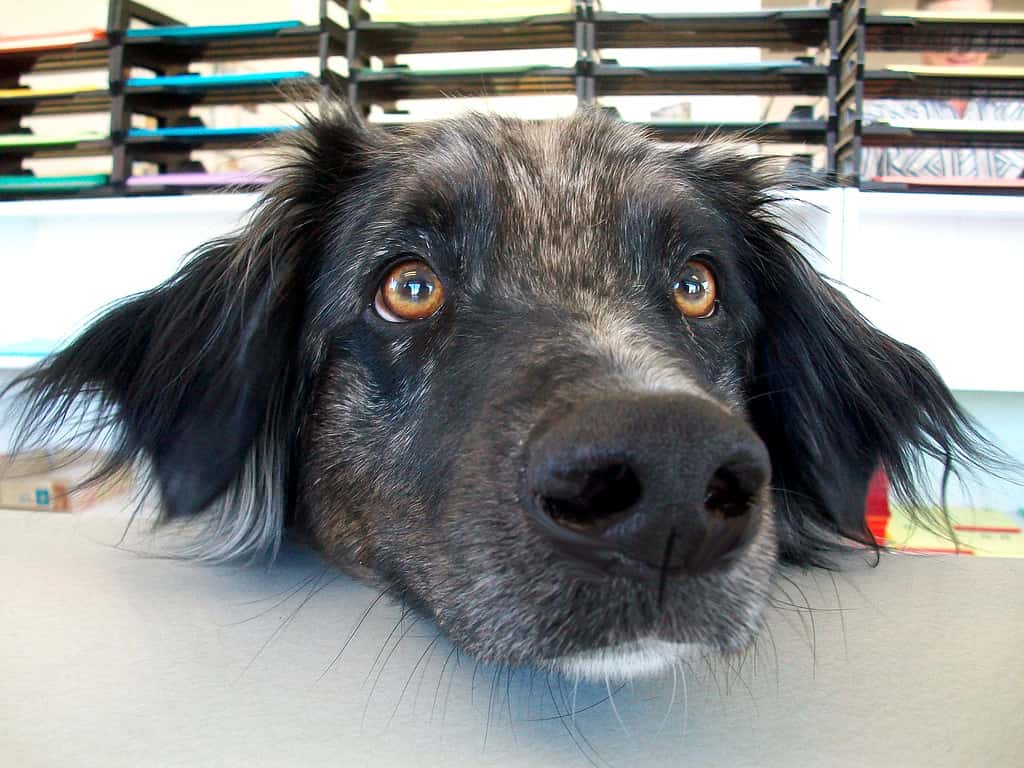
A black merle Australian Shepherd with brown eyes. A photo of a black Australian shepherd with hazel eyes is almost as hard to find as the actual dog.
Red with Blue Eyes
Although blue eyes are not uncommon in Australian shepherds, they are most associated with blue merle coats. Solid-color red tri or red bi Aussies almost always have brown, amber, or hazel eyes because they lack the specific merle gene dilution required to produce blue eye pigment. When a red Aussie does have blue eyes, it is due to the random pigment-modifying effects of the merle gene.
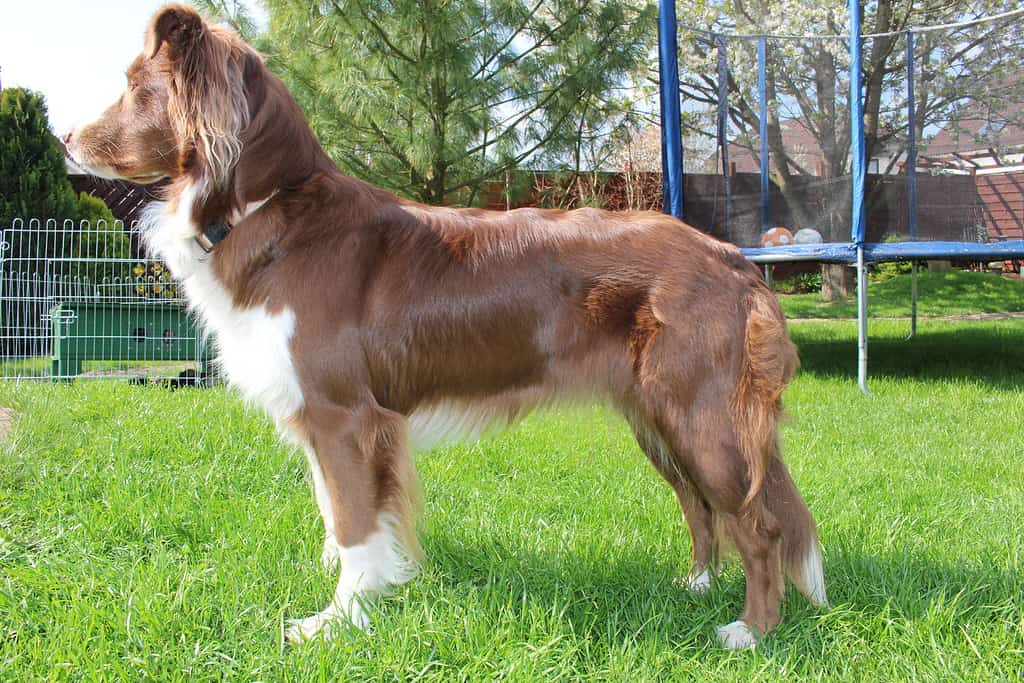
Red Australian shepherds do not typically have blue eyes.
Double-Merle
The double merle Australian Shepherd results from breeding two merle-patterned dogs together, giving each puppy a 25% chance of inheriting two copies of the merle gene (one from each parent). This genetic combination drastically reduces pigment production, resulting in coats that are predominantly white, often alongside blue eyes or pink noses.
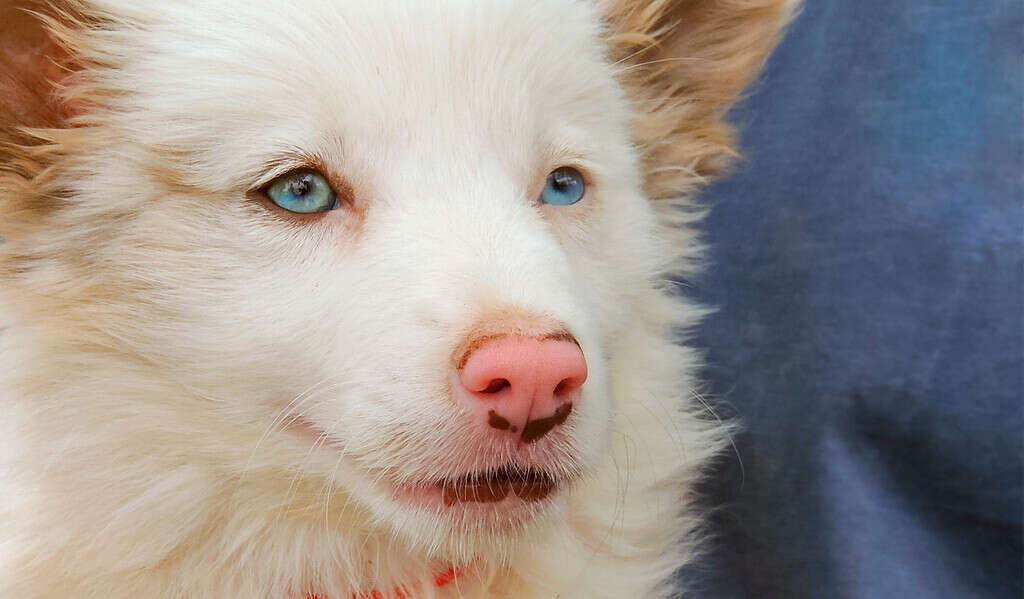
Not every double-merle dog is deaf or blind, but many are.
©Monique Oliveira/ iStock / Getty Images Plus via Getty Images
The lack of pigment in critical areas often causes severe congenital health issues, including partial or complete deafness, blindness, and other eye deformities. Though these dogs can live happy lives with proper care, the condition is entirely preventable by avoiding merle-to-merle pairings.
Red Merle with Marbled Eyes
The red merle Australian shepherd has a coat of red or liver patches scattered over a lighter buff, cream, or silver background. This pattern, caused by the merle gene, also affects pigmentation in the eyes. As a result, these dogs frequently display mesmerizing amber, blue, or hazel eyes, as well as heterochromia (different color eyes) or marbled eyes featuring split colors or flecks within a single iris.
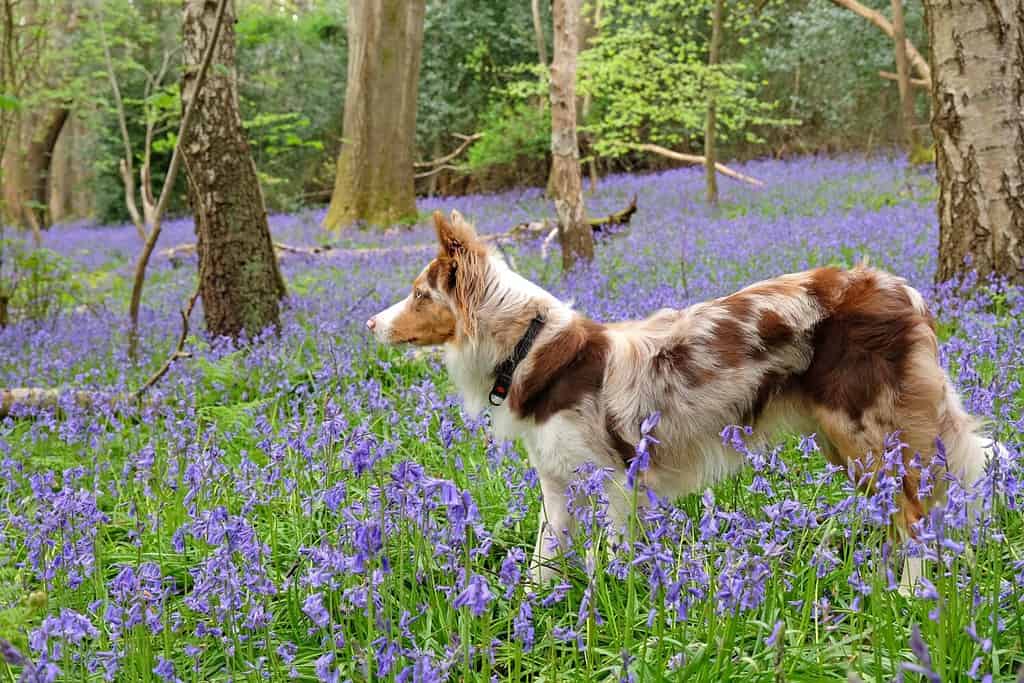
Red Merle Aussies with marbled eye color are some of the prettiest Australian shepherds.
©Alex Manders/Shutterstock.com
Black and White
The black and white Australian shepherd, often called a black bi, features a solid black coat accented by crisp white markings on the chest, neck, legs, and face.
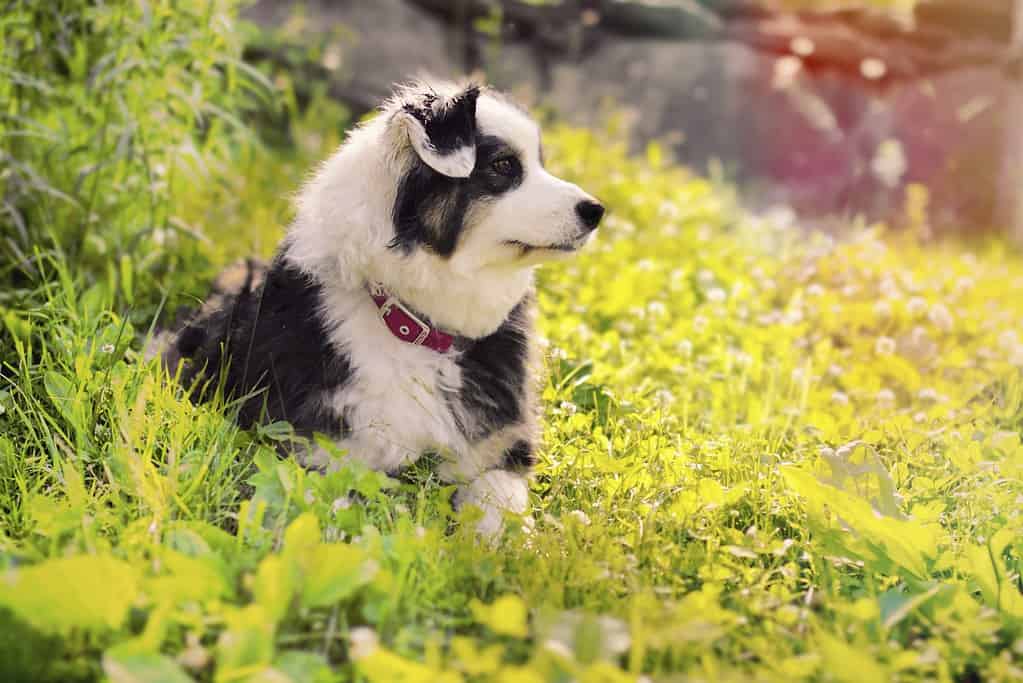
A black and white Australian shepherd is not as common as the tricolor black dogs though some people just like the bi-color dogs more.
Blue Merle TriColor
The blue merle tricolor Australian shepherd features a coat pattern created by the merle gene diluting a black base into a mottled grey-blue and black marbling, with white accents and tan or copper points.
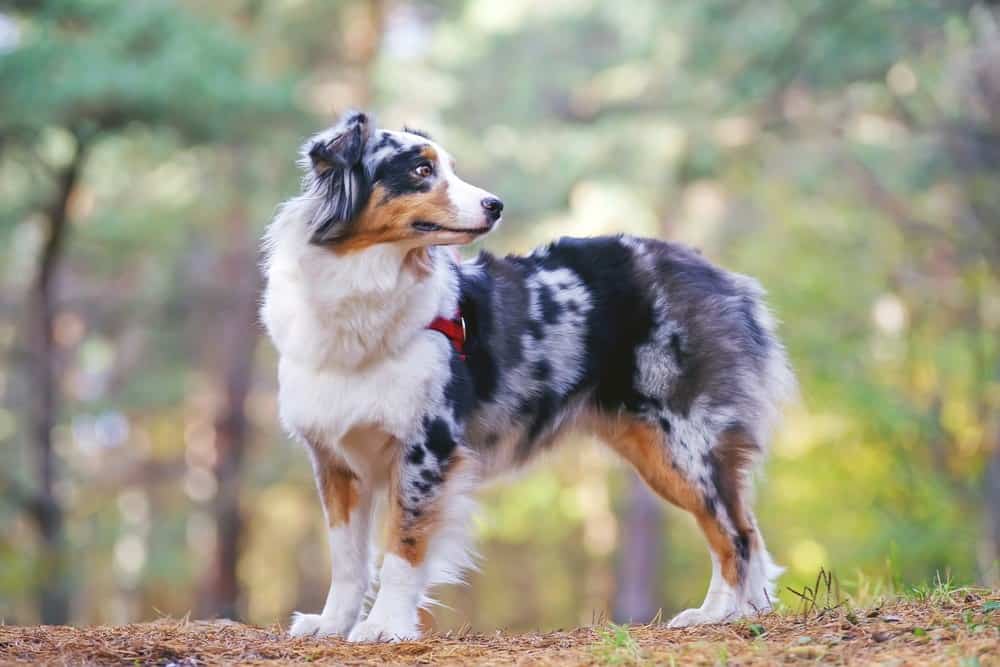
The tricolor Australian shepherds are one of the most sought-after color variations.
©Eudyptula/Shutterstock.com
Blue Merle and White
The blue merle and white Australian Shepherd has a striking coat with diluted gray-blue, black patches, and white markings. The merle gene randomly lightens areas of black fur to create this unique, marbled look.
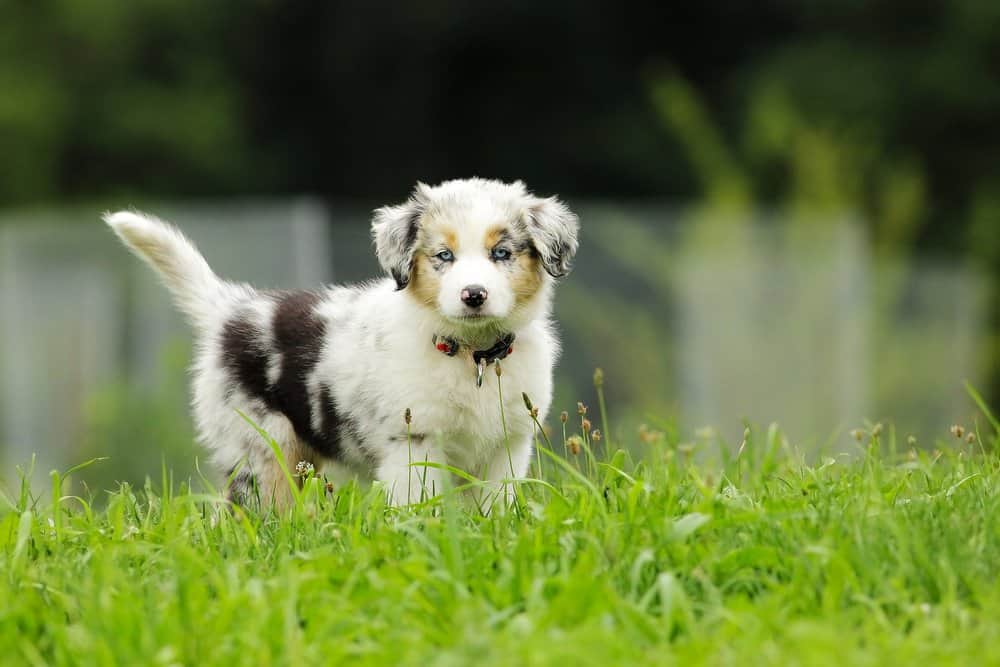
Blue merle and white Aussies are the second most popular blue merle color type. The above puppy is not a white and blue merle variation because it has tan on its face.
©zzsulc/Shutterstock.com
Black Tricolor
The black tricolor Australian Shepherd is a popular working dog with a deep black coat, crisp white markings, and warm copper points.
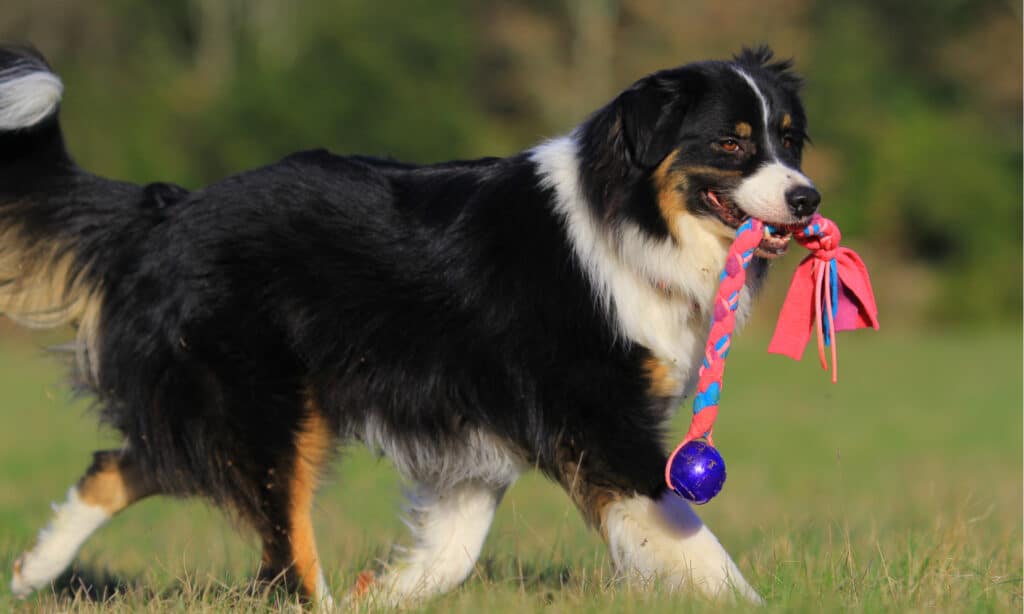
The black tricolor Australian shepherd is one of the more common color combinations.
©Melounix/Shutterstock.com