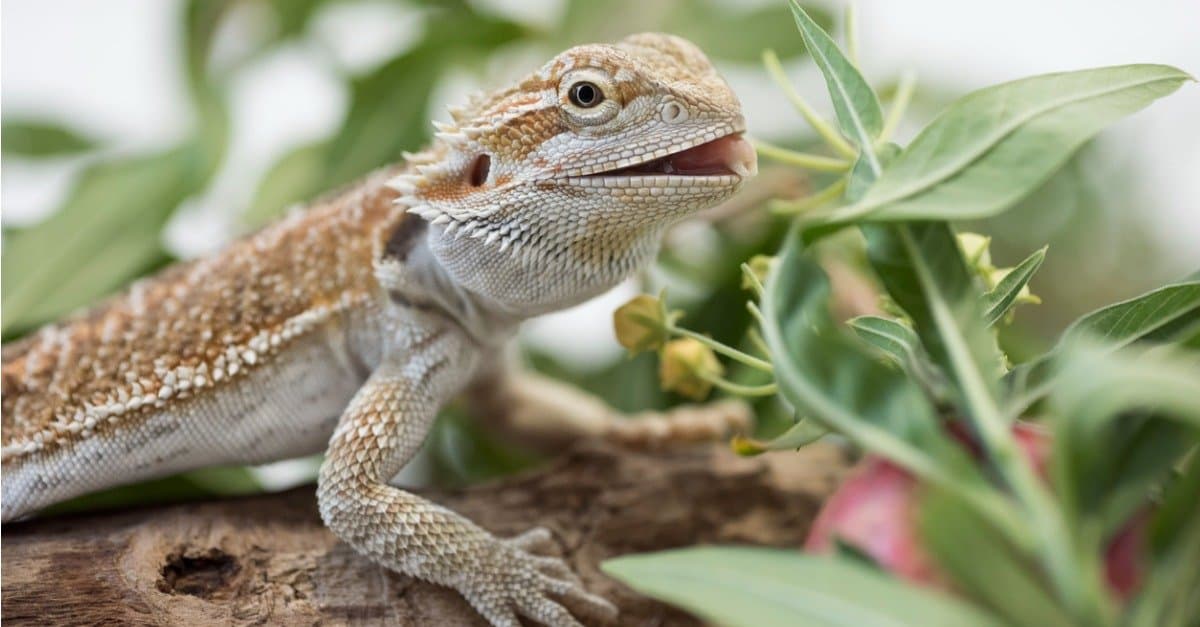

Bearded dragons are a popular choice for those interested in keeping a reptile as a pet. Their name comes from the beard of scales around their neck. Bearded dragons are known to have unique personalities. They wave to acknowledge other dragons or humans, love to sunbathe, and many enjoy walks on leashes. The bearded dragon can thrive on a wide variety of foods, but what exactly do they eat?
The Bearded Dragon’s Diet in the Wild
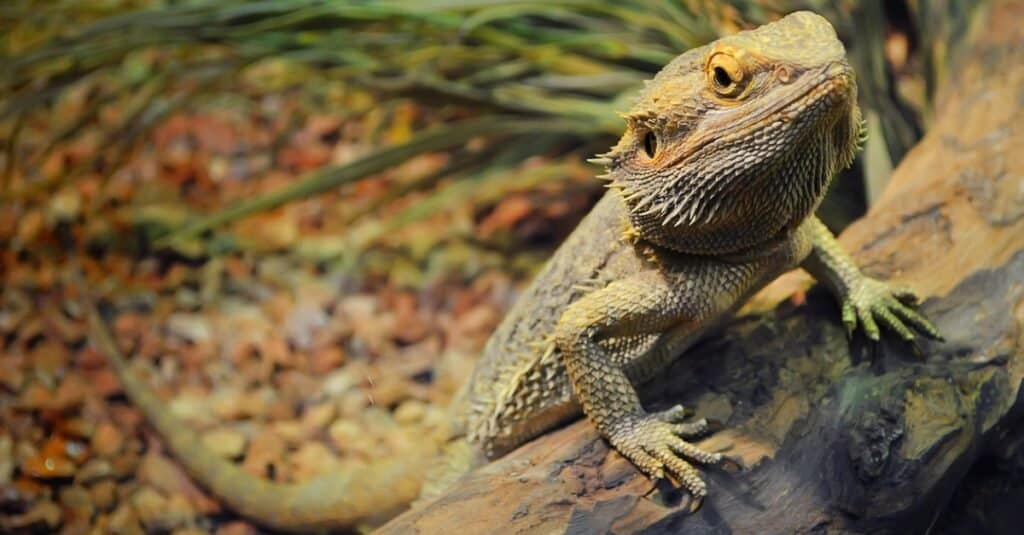
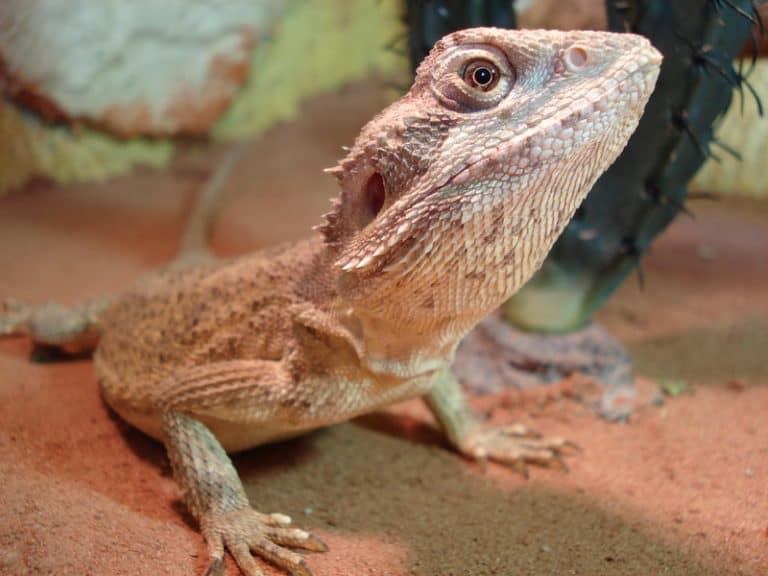
The bearded dragon is found in the wild in Australia.
©Shinedawn/Shutterstock.com
Bearded dragons are opportunistic omnivores. In the wild, they feed on plant matter, including fruit, flowers, and leaves. They also eat invertebrates like termites, crickets, and beetles. Bearded dragons may eat vertebrates as well, including rodents and smaller lizards.
Although there are eight different species of bearded dragons, wild dragons all have similar diets, with variations based on age, preference, and resources available in their specific habitats. For example, juvenile bearded dragons tend to eat more insects, while adult dragons eat more vegetation.
Some of the foods bearded dragons typically eat in the wild include:
- Insects and other invertebrates (termites, crickets, beetles, and worms)
- Fruit
- Leaves
- Flowers
- Rodents
- Small lizards
The Bearded Dragon’s Diet in Captivity
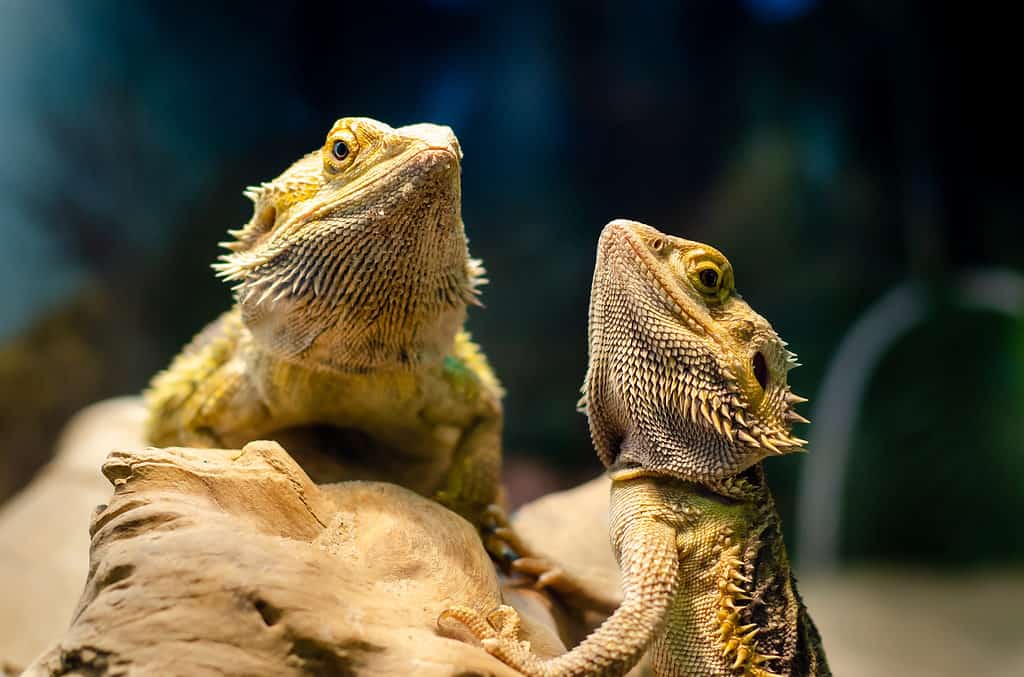
In captivity, bearded dragons enjoy insects, fruit, and vegetables.
©Lutsenko_Oleksandr/Shutterstock.com
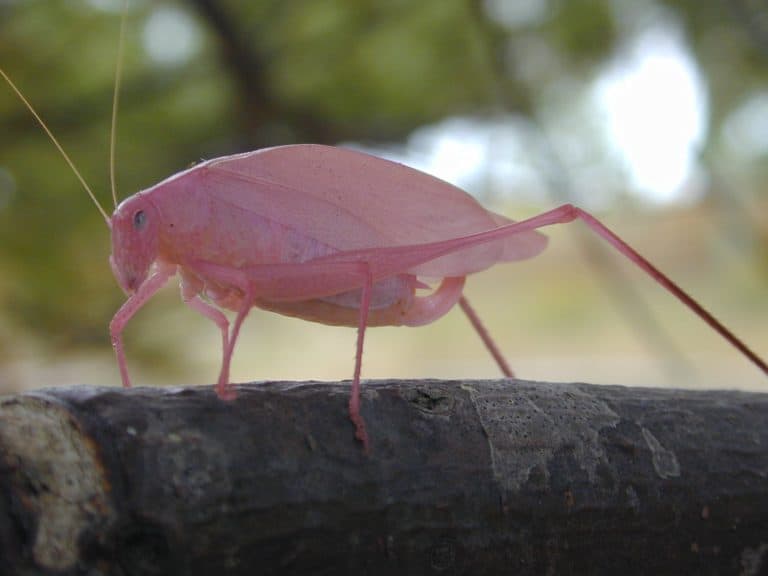
Bearded dragons in captivity eat a similar diet of insects and plant matter. The insect most commonly associated with bearded dragons is the cricket. However, they also eat dubia roaches, locusts, and black soldier fly larvae. Bearded dragons also enjoy different types of worms, such as earthworms, superworms, redworms, and butterworms.
Bearded dragons eat fruit as well. Several commonly available options from the grocery store — such as apples, strawberries, grapes, melons, and peaches — are popular with bearded dragons. They also enjoy vegetables. Bell peppers, cabbage, celery, peeled cucumber, zucchini, collard greens, mustard greens, and carrots are nutritious and enjoyable for them.
The following list includes some of the foods bearded dragons in captivity eat:
- Insects (crickets, dubia roaches, locusts)
- Insect larvae (black soldier fly larvae)
- Invertebrates (earthworms, superworms, redworms, and butterworms)
- Fruit (apples, strawberries, grapes, melons, peaches, raisins)
- Vegetables (bell peppers, cabbage, celery, cucumber, zucchini, greens, and carrots)
In addition to insects, fruit, and vegetables, there are some different plants and herbs bearded dragons may enjoy. Fresh herbs such as sage, basil, thyme, and oregano are popular. They also enjoy grasses such as lemongrass, dandelion greens, and clover. Flowers, including hibiscus, carnations, and rose petals, are a nice treat for many bearded dragons as well.
How Bearded Dragons Hunt
Bearded dragons in captivity capture insects just as they would in the wild. When they see an insect, they quickly unfurl their sticky tongues to grab it, then pull the prey into their mouths. Once in their mouths, their teeth and powerful jaws make quick work of the prey.
Many pet owners offer their bearded dragons live insects during feedings. Allowing a bearded dragon to hunt live insects in its enclosure can provide both enrichment and food.